
Reviewed · TOKYO FOOD TOURS
Tokyo: Night Foodie Tour in Shinjuku
The best part of this Shinjuku food tour is the contrast: an itamae shapes seasonal nigiri in front of you, then you grill Wagyu beef at your own table, then wander through neon-lit Kabukicho for a drink or Japanese sweets. The food is the main event, but the walk between stops gives the evening its sense of place.
I like the way the guide handles the parts of Shinjuku that can leave first-time visitors guessing, especially the small restaurant entrances and maze-like streets. I also like the high-quality, modest portions: this is a tasting evening rather than a contest to see who can eat the most. The drawback is the price, $127 per person, and the final snack or bar stop may feel less special than the sushi and Wagyu.
- Three distinct food stops: Seasonal omakase sushi, Wagyu yakiniku, and a Japanese dessert, snack, or drink.
- A useful Shinjuku orientation: Walk through Kabukicho and Golden Gai with a local English-speaking guide.
- Hands-on Wagyu cooking: Grill thin slices of beef yourself on a traditional Japanese BBQ stove.
- Small-group feel: Private or small-group bookings are available, which helps the guide adjust the evening to your pace.
- Thoughtful family option: Children can be taken to a Japanese snack restaurant instead of an alcohol-focused bar.
- Strong track record: The experience has a 4.8 rating from 275 bookings, with frequent praise for the guides and food quality.
In This Review
- Why This Three-Hour Shinjuku Food Tour Works
- Meeting at the Black Pillar Near Shinjuku West Exit
- First Stop: Chef-Prepared Omakase Sushi
- Walking Through Kabukicho Between Meals
- Second Stop: Grilling Wagyu at a Yakiniku Restaurant
- The Final Stop: Dessert, Drinks, or Japanese Snacks
- A Short Look at Golden Gai
- What the $127 Price Really Buys
- Who Will Enjoy This Evening Most
- Practical Tips for a Smoother Night
- Should You Book the Shinjuku Night Foodie Tour?
- FAQ
- How long does the Tokyo Shinjuku food tour last?
- Where is the meeting point?
- How do I find the guide?
- What food is included?
- Is alcohol included?
- Can children join the tour?
- Can the tour accommodate allergies or dietary restrictions?
- Is the tour wheelchair accessible?
Why This Three-Hour Shinjuku Food Tour Works
Shinjuku is easy to admire and hard to read. Around the station, you face department stores, office towers, restaurants, bars, hotels, and crowds moving in every direction. Kabukicho adds glowing signs, narrow lanes, tiny eateries, and a nightlife scene that can feel exciting one minute and confusing the next.
That is where this tour earns its keep. You are not simply handed a list of restaurants. Your guide leads you from the black pillar of the old Kyu-Ome-kaido, near the Uniqlo Shinjuku Nishiguchi shop, into three food stops that would be difficult to select and reach on your own.
The experience is advertised as three hours, while the detailed schedule allows about three and a half hours. That extra time matters because the evening includes meals, short neighborhood walks, explanations about food customs, and time to settle into each restaurant.
Guides vary by date. Past bookings have included Tosh, Kazu, Yohei, Yuki, Molly, Hiro, Fuji, Max, Amy, Ken, Rai, and others. The strongest guide reports praise clear English, warmth, help with ordering, and good explanations of Japanese customs. Your guide will shape the evening, so this is partly a food tour and partly a personal introduction to Shinjuku.
Meeting at the Black Pillar Near Shinjuku West Exit
The meeting point is in front of the black pillar of Kyu-Ome-kaido, next to the Uniqlo Shinjuku Nishiguchi shop. It is a seven to eight-minute walk from the West Exit of JR Shinjuku Station.
Look for a guide holding an orange MagicalTrip sign. Shinjuku Station has many exits and can be a poor place to improvise, so allow extra time to get out of the station and locate the correct street. Bring cash, since it is listed as something to have with you.
The tour returns to the same general meeting location at the end. You will not need to arrange transport between stops. The food places are reached on foot, with short guided walks through Shinjuku.
If you're still narrowing it down, here are other tours in Kabukicho we've reviewed.
First Stop: Chef-Prepared Omakase Sushi
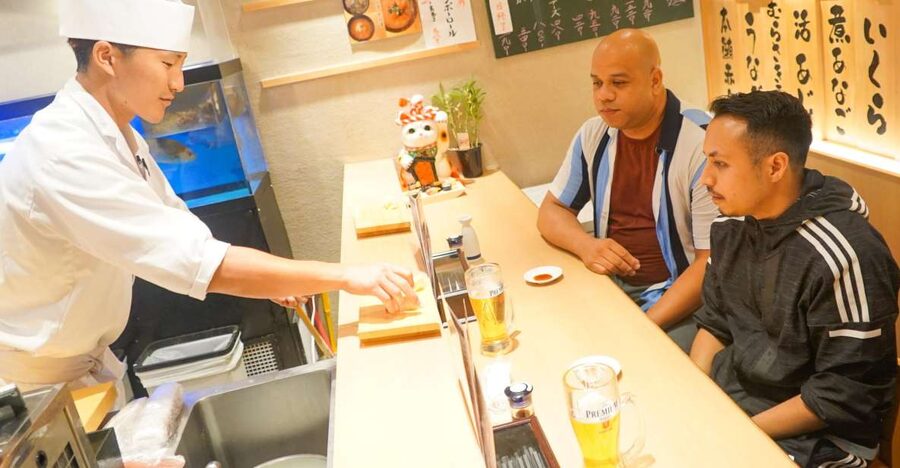
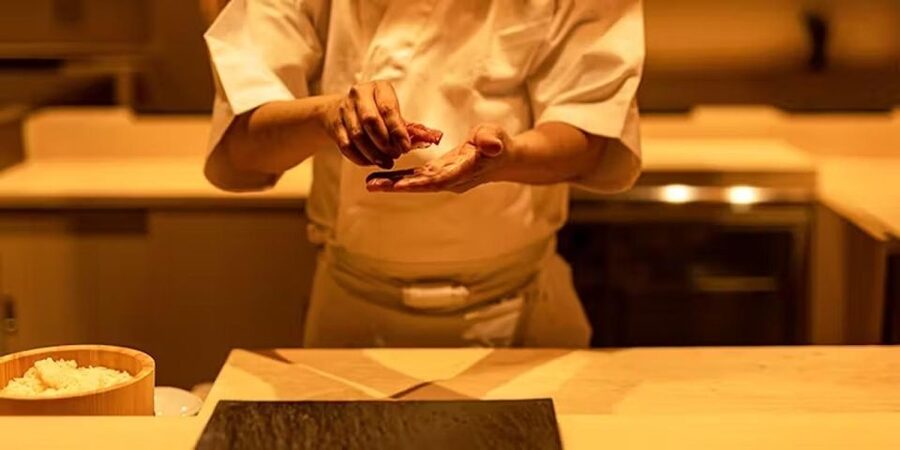
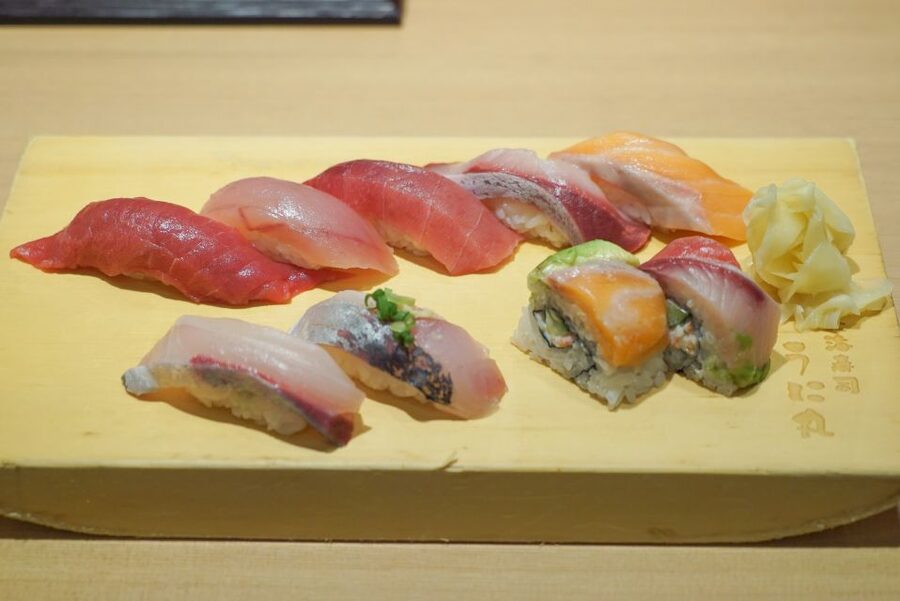
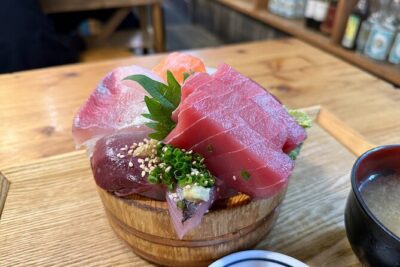
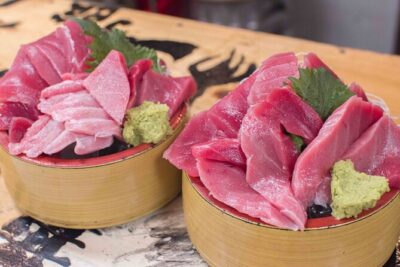
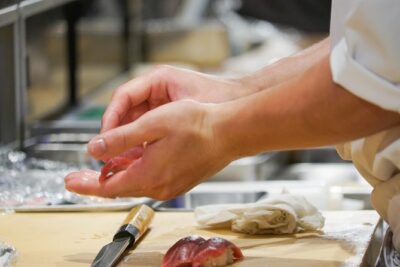
The evening begins at a local sushi restaurant. The key feature is omakase, meaning the chef chooses the seasonal sushi. An itamae prepares fresh nigiri directly in front of you, turning the first meal into a small performance as well as dinner.
This format is useful if you are new to Japanese sushi. Instead of scanning a menu full of unfamiliar fish and trying to guess what to order, you can watch the chef work and let the guide explain what is being served and how to eat it.
The sushi course is included, and a vegetarian menu is available. Still, you should discuss food needs before booking. The operator cannot promise an allergy-free meal because the restaurants run their own kitchens, and substitutions may not always be possible. The guide will try to make adjustments at other stops, but strict allergies require caution.
The sushi is one of the most consistently praised parts of the evening. Several bookings describe it as exceptionally fresh and memorable. One useful warning comes from a repeat theme in the feedback: portions are modest but high-end. If you arrive expecting a large sushi dinner, you may leave this stop wanting more. The strength is quality and presentation, not sheer quantity.
For families, the guide may work with the restaurant to offer a simpler selection. One guide arranged salmon-focused sushi for an 11-year-old, though this kind of adjustment should not be treated as guaranteed.
Walking Through Kabukicho Between Meals
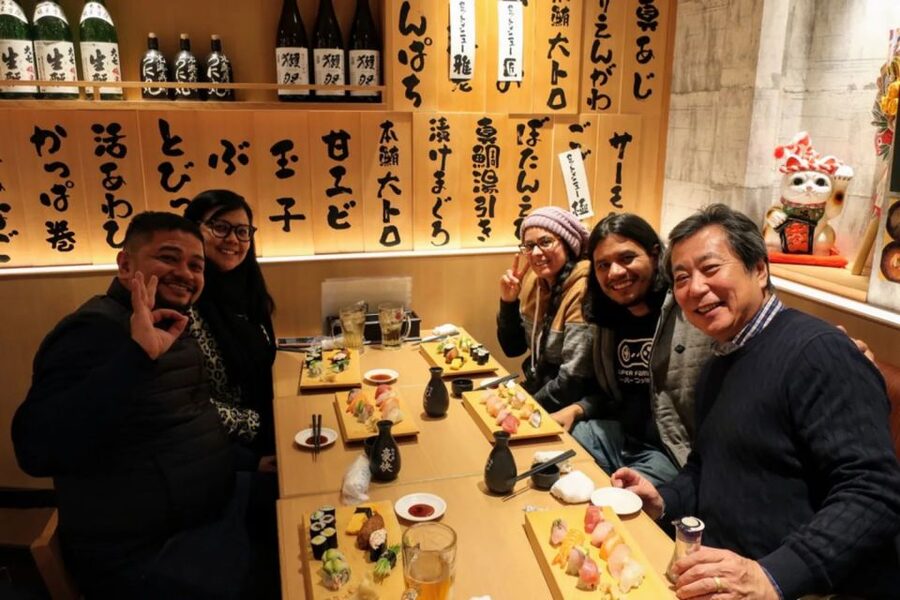
After sushi, the guide takes you through Kabukicho. The scheduled neighborhood walk is about ten minutes, but the street movement and explanations help connect the meals to the district around them.
Kabukicho is famous for its signs, bars, restaurants, and late-night energy. It is also a place where a visitor can miss the point by seeing only the bright main streets. A guide can explain the area’s layout and point out places that are easy to pass without noticing.
This is not a long sightseeing tour, and you should not expect a full survey of Shinjuku. Think of it as useful context between meals. Guides such as Fuji, Chihiro, Max, and Ken have been especially praised for explaining local customs, the history of Kabukicho, and the food culture along the route.
The walking is part of the pleasure, but it also brings practical concerns. Shinjuku streets can be crowded, and rain can make the route slower. One booking described a guide helping the group through heavy rain and a sea of umbrellas. Wear comfortable shoes, keep your group together, and prepare for the season. Summer temperatures in Tokyo can reach 40°C, while winter lows can fall to -5°C.
Second Stop: Grilling Wagyu at a Yakiniku Restaurant
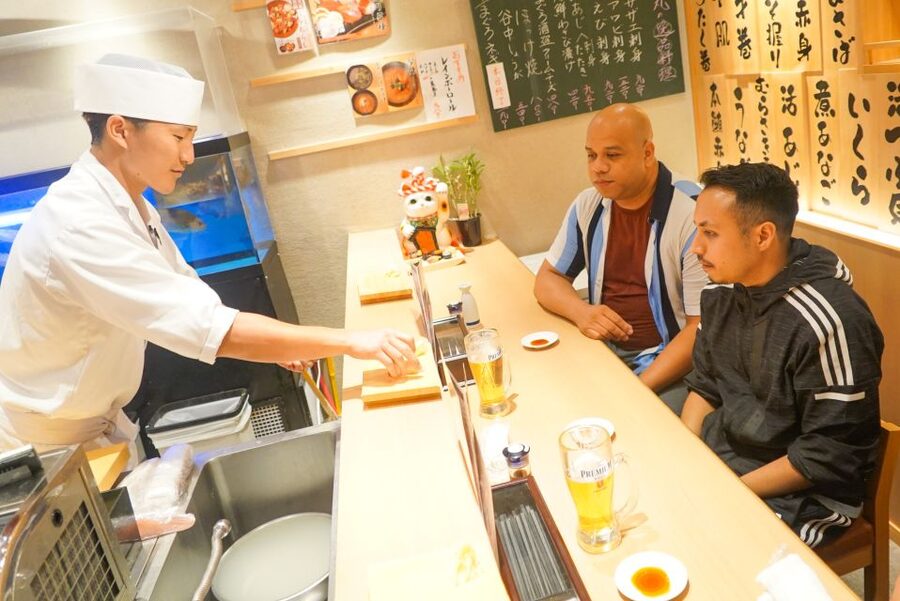
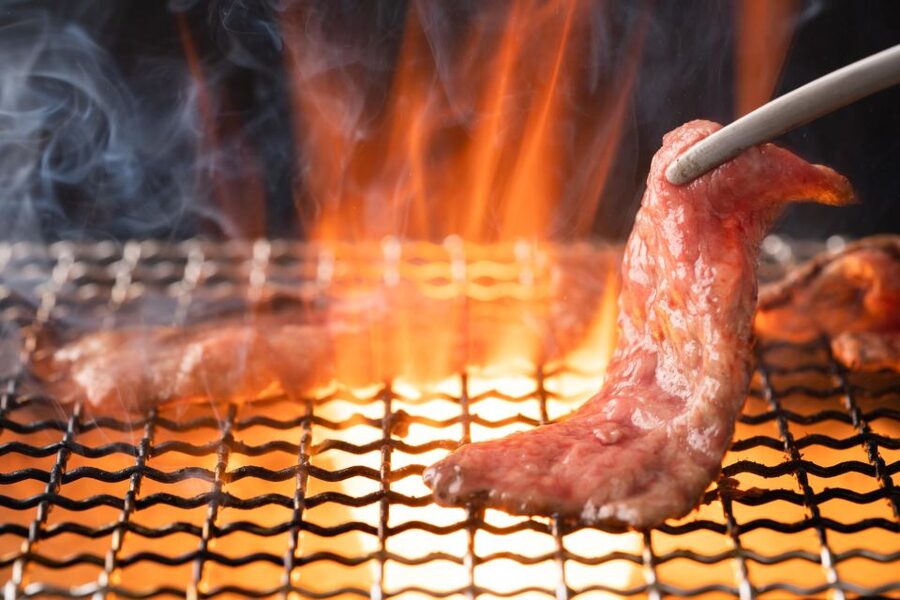
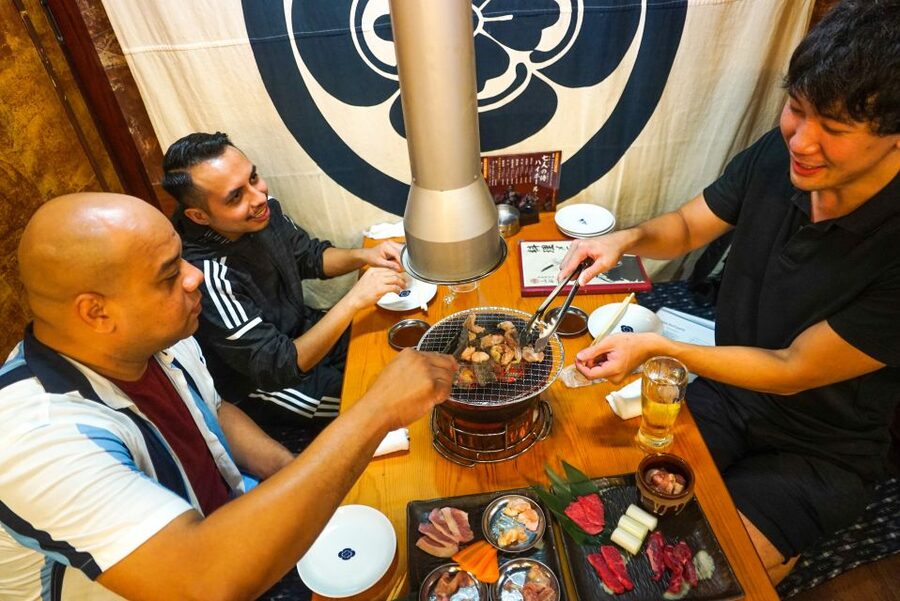
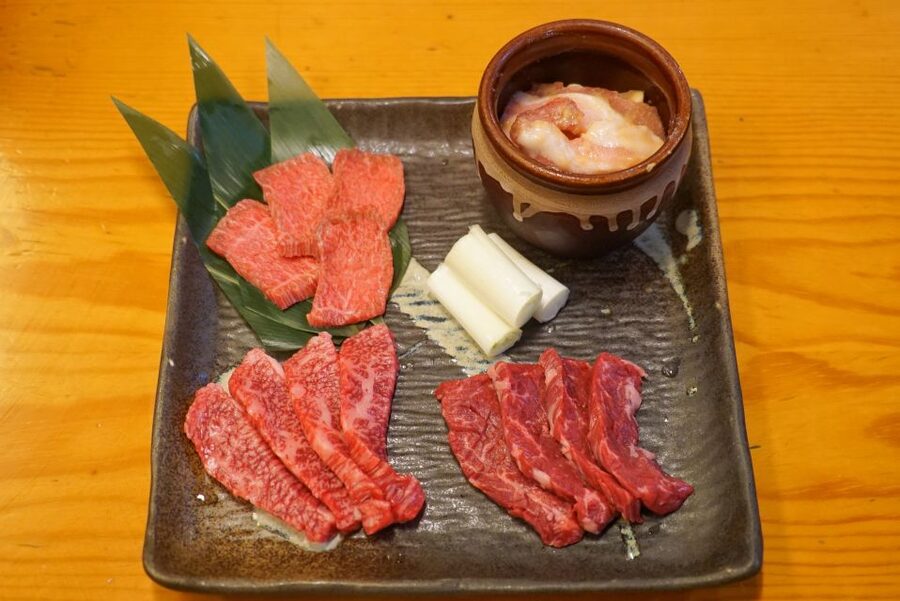
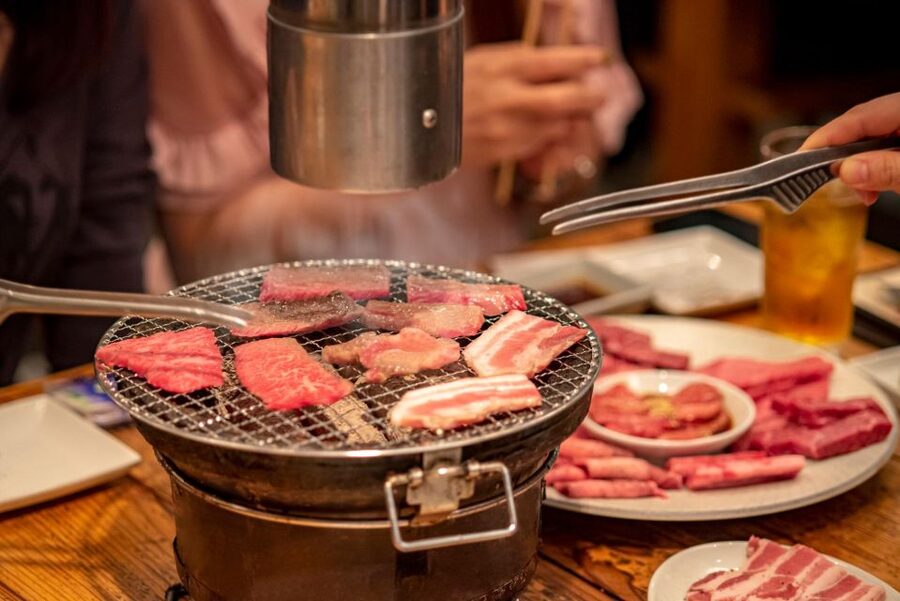
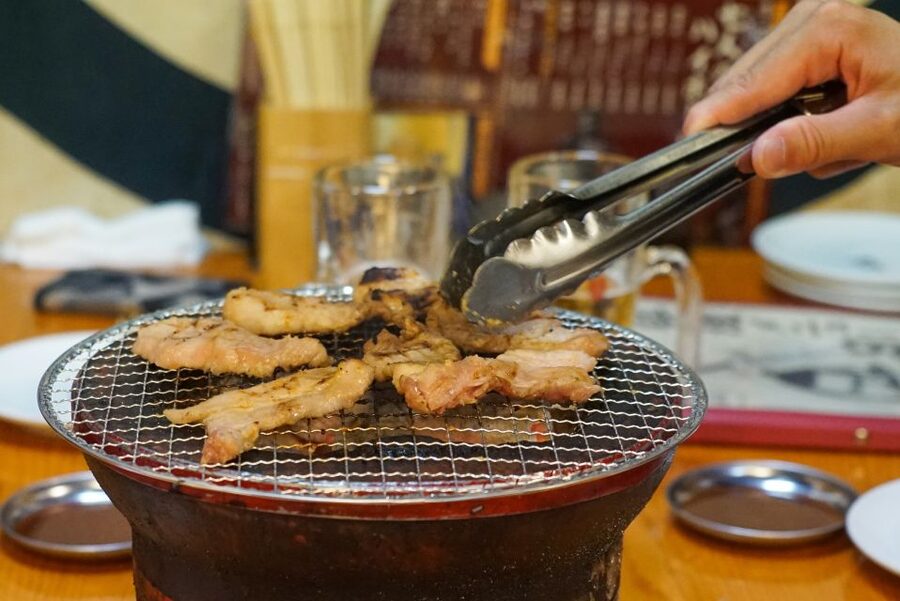
The second meal is the tour’s most hands-on stop. At a yakiniku restaurant near Shinjuku West or Kabukicho, you grill thin slices of Wagyu beef yourself over a Japanese BBQ stove.
Your guide explains how to cook the meat and how to enjoy it. This matters because the cooking time is short, and overcooking a thin slice can change the texture quickly. The meal gives you a taste of Japanese meat culture in a way that is more active than simply receiving a finished dish.
The Wagyu course is included, and a vegetarian menu is available. As with the sushi stop, dietary substitutions are not guaranteed. Ask ahead if you have allergies or strict restrictions.
This is where the tour often feels worth its price. The food is described as premium, and you get the novelty of cooking it yourself. Some diners have used a salt block during the meal, rubbing the grilled beef over it for extra seasoning. That small touch helps make the stop more memorable than an ordinary restaurant dinner.
The portions remain controlled. One useful way to think about this tour is three polished tastings, not three full restaurant meals. You should arrive hungry, but do not expect an all-you-can-eat yakiniku session.
The Wagyu stop also balances the sushi nicely. Sushi asks you to notice freshness, knife work, rice, and texture. Yakiniku asks you to participate. Together, they show two different sides of Japanese dining without making the night feel like one long lecture.
The Final Stop: Dessert, Drinks, or Japanese Snacks
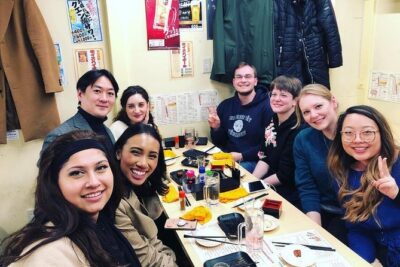
The last restaurant or bar provides a softer finish. Depending on the group and venue, you may receive dessert, an alcoholic drink, or time with Japanese snacks. Two drinks are included overall, and extra food or drinks can be purchased.
For families with children, the guide selects a Japanese snack restaurant. Some bookings describe a nostalgic snack stop with packets of sweets, crackers, and savory treats. Other evenings end with a drink at a local bar or snack bar.
This stop is less predictable than the first two because the exact venue can vary. That flexibility is useful for mixed groups, but it also means the finish may not match the quality of the sushi and Wagyu for every person. One evening ended at an interesting sweets venue that was not quite as strong as the earlier meals. Another group loved the unusual snack selection and considered it a highlight.
I would treat the final stop as a social ending rather than the reason to book. It gives you time to talk with your guide, try something distinctly Japanese, and wind down after the main courses.
The legal drinking age in Japan is 20. If you are under 20, traveling with children, or simply do not drink, tell the guide so the final stop can be arranged appropriately.
A Short Look at Golden Gai
The route includes a guided walk near Golden Gai. This compact district is known for its narrow lanes and tiny drinking establishments, many with only a handful of seats.
You may not spend a long time inside a Golden Gai bar, and the schedule allows about ten minutes for the guided portion. That is enough for a look and some context, not a full nightlife crawl.
This brief stop works well because it keeps the focus on food. You get a glimpse of one of Shinjuku’s most distinctive areas without committing the entire evening to bar-hopping. If you want a late night afterward, you will already have a better sense of where you are.
What the $127 Price Really Buys
At $127 per person, this is not a cheap way to get dinner. You are paying for seasonal sushi, a full Wagyu meal, two drinks, dessert or another drink, a three to three-and-a-half-hour guided evening, local navigation, and tour photos.
The value improves if you are nervous about ordering in Japanese, short on time, or eager to eat at places you would not find on your own. The guide removes much of the guesswork and can explain what is on the plate, how to cook it, and which customs matter.
The value is weaker if you already know Shinjuku well, speak Japanese, and prefer choosing your own small restaurants. You could spend less by ordering individual dishes and drinks yourself, though you would lose the guide, the planned sequence, and the food explanations.
Small groups help justify the cost. A private booking or a small group allows more conversation and makes it easier for the guide to notice dietary needs or adjust explanations. Several bookings have involved only one or two people, while others describe friendly small groups.
The 4.8 rating from 275 bookings supports the idea that the experience is dependable, especially for food quality and guide service. Still, your exact evening depends on the assigned guide and the restaurants available that night.
Who Will Enjoy This Evening Most
I would recommend this tour to first-time Tokyo visitors who want a gentle introduction to Shinjuku after dark. It is also a good choice for solo visitors who would rather share dinner with a small group than decode the district alone.
Food-focused couples and families can also make good use of it. The route includes well-known Japanese food styles but presents them in a way that does not require advanced knowledge. Children can join, although the nightlife setting and late timing may not suit every family.
You should think twice if you need a wheelchair or stroller. Parts of the route are not accessible, and the experience is not suitable for wheelchair users.
It is also not the right choice for anyone seeking large portions, a long sit-down dinner at one restaurant, or a fixed menu with guaranteed allergy substitutions. The tour is built around variety, guidance, and atmosphere.
Practical Tips for a Smoother Night
- Eat lightly beforehand: You will receive food at three stops, but the portions are tasting-sized at the sushi and Wagyu restaurants.
- Wear walking shoes: The route connects several venues through busy streets and includes Kabukicho and Golden Gai.
- Carry cash: It is specifically recommended for the experience.
- Arrive early: JR Shinjuku Station is large, and the meeting point is outside the West Exit area.
- Tell the operator about food restrictions: Vegetarian menus are available, but allergy-free preparation and substitutions cannot be guaranteed.
- Bring weather protection: Tokyo can be intensely hot or cold, and rain can slow the walk.
- Save room for the last stop: Dessert and Japanese snacks are part of the evening’s range, even if they are not always the strongest course.
- Ask questions: The guides are praised for helping with ordering and explaining sushi, Wagyu, sake, shochu, customs, and local history.
Should You Book the Shinjuku Night Foodie Tour?
Book it if you want high-quality Japanese food with a guide who can make Shinjuku easier to understand. The combination of chef-prepared sushi, self-grilled Wagyu, and a snack or drink stop gives you a broad taste of the district in one evening.
The price is high, but the food and personal guidance make it reasonable for a first night in Tokyo, especially if you value convenience and cultural explanation. Skip it if you prefer independent restaurant-hopping, need guaranteed allergy control, or want a very large dinner.
For the best fit, choose a small or private group if that option suits your budget. You will get more time with the guide, more help ordering, and a better chance to ask about the places you pass. This is a polished introduction to Shinjuku, with enough local detail to make the neon streets feel less bewildering.
FAQ
How long does the Tokyo Shinjuku food tour last?
The activity is advertised as three hours, while the detailed schedule allows about three and a half hours with the guide.
Where is the meeting point?
Meet in front of the black pillar of Kyu-Ome-kaido, next to the Uniqlo Shinjuku Nishiguchi shop. It is a seven to eight-minute walk from the West Exit of JR Shinjuku Station.
How do I find the guide?
The guide will be holding an orange sign marked Magical Trip.
What food is included?
The experience includes a seasonal omakase sushi course, a full Wagyu beef meal, two drinks, and dessert or an alcoholic drink. Vegetarian menus are available.
Is alcohol included?
Two drinks are included, and alcohol is available. The legal drinking age in Japan is 20.
Can children join the tour?
Yes. The tour is open to all ages. For families with children, the final stop can be a Japanese snack restaurant rather than an alcohol-focused venue.
Can the tour accommodate allergies or dietary restrictions?
Vegetarian menus are available, but allergy-free preparation cannot be guaranteed. Substitutions may not be possible at every stop, though the operator will try to make adjustments at other locations.
Is the tour wheelchair accessible?
No. Some locations are not accessible by wheelchair or stroller, and the activity is not suitable for wheelchair users.
More tours in Kabukicho we've reviewed
Tokyo Food Tours, compared.
 ★ 5.0Tokyo: Shinjuku Food Tour (13 Dishes at 4 Local Eateries)From $86
 ★ 4.9Tokyo: Shinjuku Food Tour (15 Dishes and 4 Eateries)From $853 hours
 ★ 5.0Best of Shinjuku: Izakaya Food Tour (4 Stops, 14+ Tastings)From $92
 ★ 5.0Tokyo Night Foodie Tour in Shinjuku – Seasonal Sushi, Wagyu BeefFrom $111
 ★ 5.0Eat and Drink Like a Local: Tokyo Ueno Food Tour-Taverns&RamenFrom $95
 ★ 5.0Tokyo: Shibuya Food Tour (13 dishes and 4 Eateries)From $77