
Reviewed · SAMURAI & NINJA EXPERIENCES
Tokyo: Samurai Sword Academy in the Hometown of Last Samurai
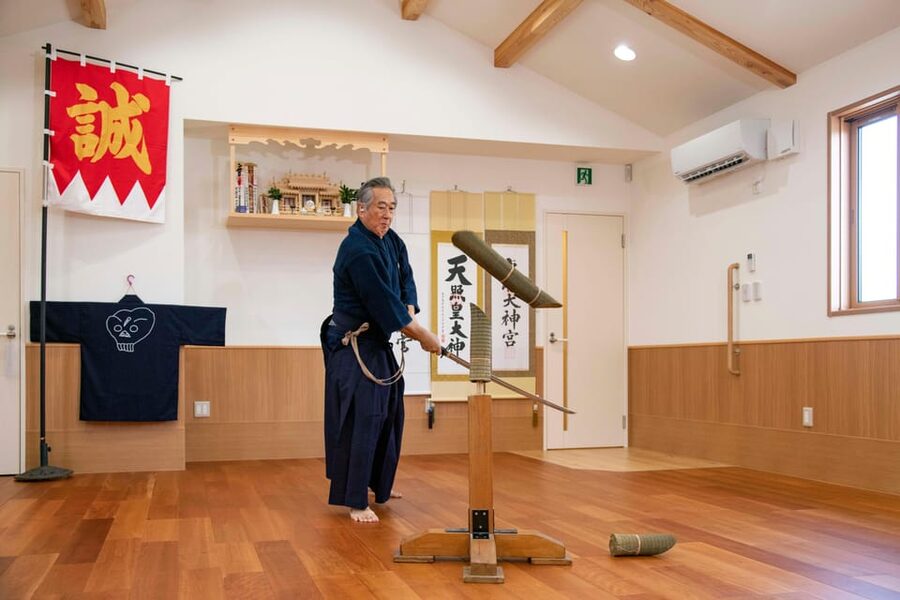
The most unusual thing about this two-hour samurai class is that it takes place in Hino, the hometown of the Shinsengumi, rather than in a staged tourist set. You train inside the Tennen Rishin-ryu Hino Dojo, where this Edo-period sword tradition is still practiced today.
I like the small class size, limited to four people, and the careful progression from posture and footwork to kata and sword handling. I also like the human link to the past: Masao Inoue, chairman of the dojo, is a descendant of Shinsengumi executive Genzaburo Inoue.
The main consideration is that this is a physical activity with real equipment, not a quick photo opportunity. You need reasonable fitness, focus, and comfort with standing and moving. It is not suitable for children under 18, pregnant people, wheelchair users, or people with several listed medical conditions.
In This Review
- Key points to know before booking
- Why this Hino sword class feels different
- Your first five minutes from Hino Station
- Changing into dogi, hakama, and Shinsengumi colors
- Posture and footwork come before the sword
- Handling a Japanese sword with care
- The people behind the lesson
- Is $116 a fair price for two hours?
- Who should book this experience?
- Planning the rest of your Hino visit
- My recommendation for this samurai class
- FAQ
- Where does the samurai sword experience take place?
- How far is the dojo from Hino Station?
- How long does the activity last?
- How many people can join the class?
- Which sword style will I learn?
- Who leads the experience?
- Are clothing and swords provided?
- Is the experience offered in English?
- Who cannot take part?
Key points to know before booking
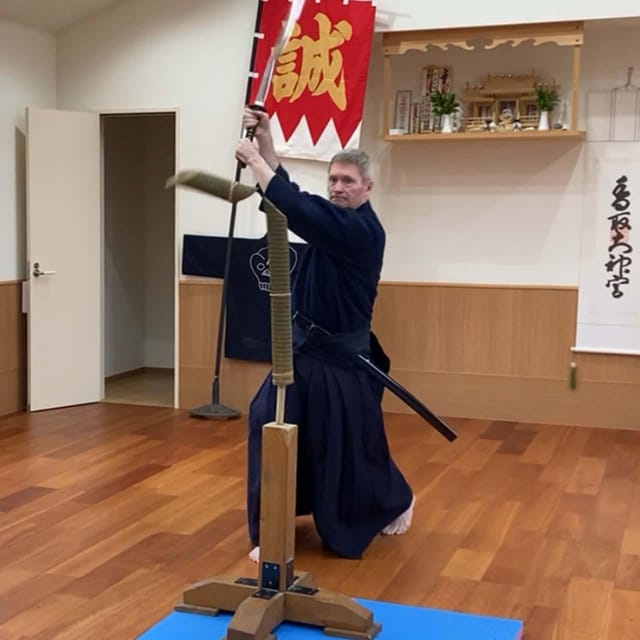
- Train in a working Hino dojo: The class takes place at the Tennen Rishin-ryu Hino Dojo, on the second floor of the Inoue Genzaburo Museum.
- Learn the Shinsengumi style: You practice Tennen Rishin-ryu, the swordsmanship linked with the famous late-Edo-period group.
- Start with safe fundamentals: Instructors teach posture, foot placement, wooden-sword movements, and kata before you handle a Japanese sword.
- Wear the full outfit: Dogi, hakama, and the Shinsengumi’s dandara baori are provided for the session.
- Meet a direct family link to the past: Masao Inoue leads the program and descends from Genzaburo Inoue.
- Allow time for Hino: The dojo is a five-minute walk from Hino Station on the JR Chuo Line, outside central Tokyo.
Why this Hino sword class feels different
Tokyo offers plenty of samurai-themed entertainment, but this experience works on a different level. You are not watching actors perform a sword fight or posing with a plastic prop. You are entering a real dojo and learning a traditional form of Japanese swordsmanship under instructors who still practice it.
Tennen Rishin-ryu began in the Edo period. At the end of that period, swordsmen from Hino formed the Shinsengumi, a group remembered as one of the strongest bands of swordsmen of its time. The Shinsengumi are often called the Last Samurai because they belonged to the final years of the samurai era.
That history gives the class a clear sense of place. Hino is not simply a convenient suburb for an activity. It is tied directly to the people and style being discussed. The Inoue Genzaburo Museum adds another layer, since the meeting point is connected to a Shinsengumi figure and Masao Inoue is his descendant.
I would not book this class only for a costume photograph. The clothing is part of the fun, but the real point is learning how a sword is held, how the feet move, and why the body must stay controlled. The atmosphere is serious without being cold. The instructors are described as patient, friendly, and encouraging, which matters when you are trying to remember several movements at once.
A few more Tokyo tours and experiences worth a look
Your first five minutes from Hino Station
The venue is about a five-minute walk from Hino Station on the JR Chuo Line. That makes the trip fairly simple, but you should still allow enough time to find the Inoue Genzaburo Museum and reach the second floor before the class begins.
This is one of the practical tradeoffs. The activity is in Tokyo prefecture, but not in the central districts most people picture when they hear Tokyo. If your sightseeing is based around Asakusa, Shibuya, or the eastern side of the city, Hino takes planning. The short walk from the station helps, but the train journey itself may take a worthwhile part of your day.
The reward is a quieter, more local setting and a stronger connection to the Shinsengumi story. You are not squeezing a sword lesson into a crowded entertainment complex. You are going to the place where the tradition and local history meet.
The small group limit of four is especially useful here. You get room to watch the instructor, repeat movements, and receive corrections. In a large class, a beginner can easily copy the wrong foot position and keep repeating it. Here, the teaching can move at a steadier pace.
Changing into dogi, hakama, and Shinsengumi colors
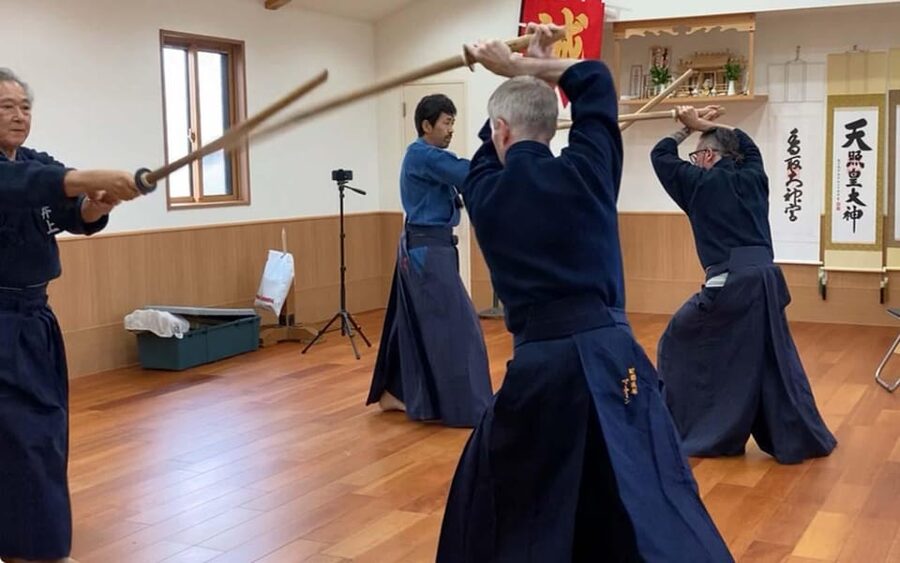
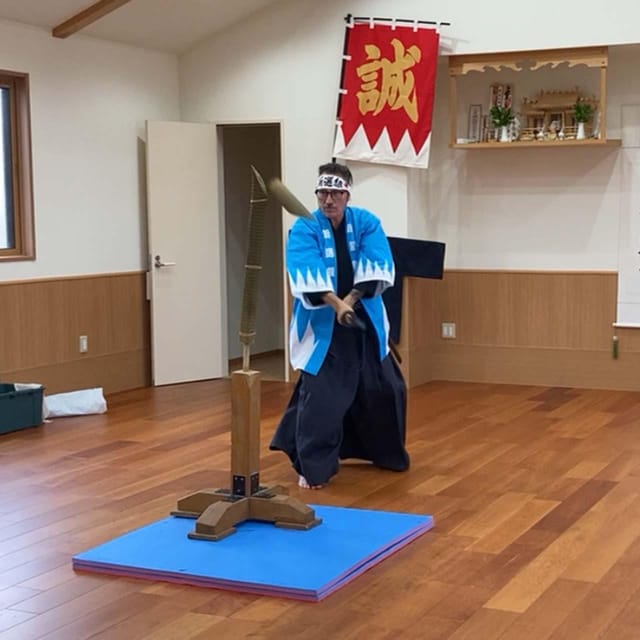
The program provides a dogi and hakama, the practice uniform traditionally associated with Japanese martial arts. You also wear the dandara baori, the distinctive coat associated with the Shinsengumi.
The clothing does more than create a good photograph. A hakama changes how you think about your feet and stance. The outfit also helps mark the shift from ordinary sightseeing to formal practice. You should arrive ready to listen and follow directions, rather than treating the session as a costume rental with a few sword poses.
You do not need to bring fancy equipment. The wooden sword, Japanese sword, practice clothing, and instructors are included in the $116 price. Wear something practical underneath and expect to move, bend, and stand for much of the class.
The class is offered in English and Japanese. English support makes the session possible for international visitors, though the precise nature of instruction can vary by instructor and group. Martial arts also rely on demonstration, so watching closely is just as important as listening.
Posture and footwork come before the sword
The class begins with the basics. You learn how to stand, how to place your feet, and how to move without losing balance. This may sound simple, but it is the part that keeps the later sword work controlled.
The instructors also explain why correct foot placement matters, including how it can help prevent injury. That practical detail is valuable for beginners. You are not just memorizing a pose because it looks traditional. You are learning how the body supports the movement.
Next comes practice with a wooden sword. This gives you time to understand the shape of the movements before handling a Japanese sword. You work through sword actions and kata, or set forms, with the instructor showing each step.
Do not expect to master the kata in one session. The point is to gain a feel for the discipline and sequence. The instructors adjust the pace and offer support if you are slower at remembering the forms. That patient approach is important because a sword lesson can become frustrating if the class rushes ahead.
I like this staged structure. It gives the experience substance without pretending that two hours can turn you into a swordsman. You learn enough to understand the demands of the art, while still having time for the more memorable final activity.
Handling a Japanese sword with care
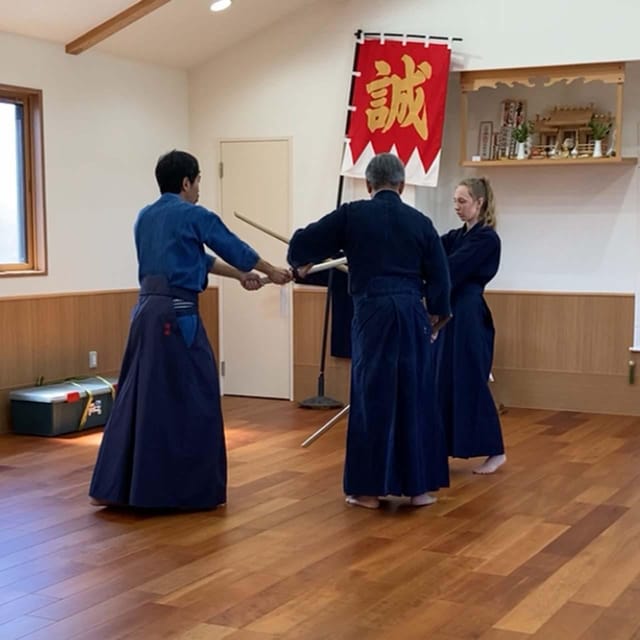
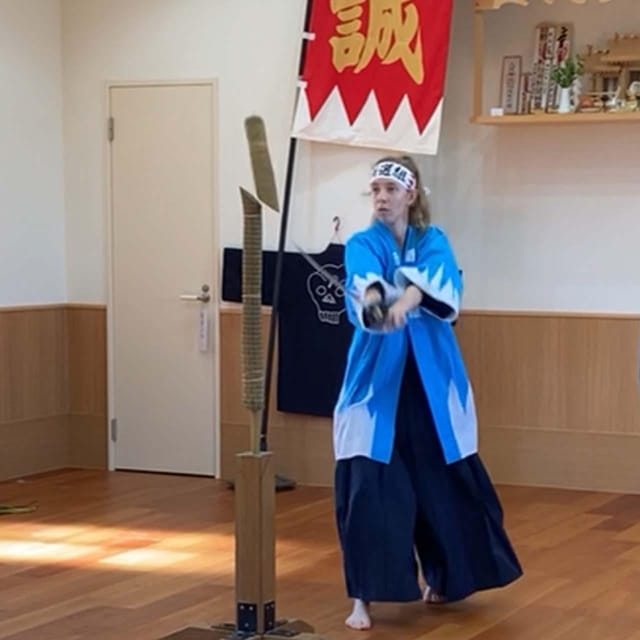
Later, you get to handle a real Japanese sword. This is the moment many people will be waiting for, but it is also when the class requires the most attention.
A Japanese sword carries both cultural meaning and physical risk. The instructions, controlled setting, and earlier wooden-sword practice help prepare you for this part. You should treat every direction as essential, not optional. The experience is rewarding because it feels real, but that realism is also why it demands respect.
The final cutting exercise involves tatami mats. You practice applying the movement you have learned rather than simply swinging at a target. The action gives you a direct sense of timing, angle, and follow-through, and it makes clear why posture and footwork came first.
This is not a sword-fighting duel against another person. The class includes duel practice with the wooden sword, but the real-sword section is presented as a controlled cutting exercise. That distinction matters if you are comparing this with theatrical combat shows or more casual samurai photo sessions.
The cutting portion may be the most exciting part, but it should not overshadow the training. If you focus only on the final cut, you miss what makes the experience worthwhile: the connection between the small movements taught at the start and the result at the end.





The people behind the lesson
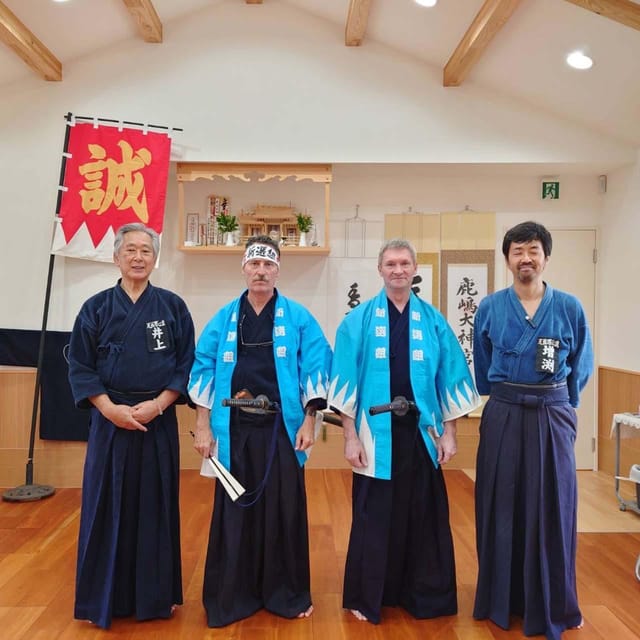
Masao Inoue leads the program as chairman of the Tennen Rishin-ryu Hino Dojo. His descent from Genzaburo Inoue gives the class a personal link to the Shinsengumi rather than a general historical theme.
You also work with instructors who teach the physical details. Their style is described as a mix of seriousness and warmth. That balance is well suited to a class like this. The subject deserves respect, but first-time students also need room to make mistakes without feeling embarrassed.
The strongest part of the teaching is the attention to process. You are shown not only what to do, but why certain movements matter. The instructors correct posture, foot placement, and handling in a way that helps you understand the logic of the style.
The class can also include background about the dojo and Hino. That makes the setting more meaningful. A map of Shinsengumi-related places may be provided at the end, giving you a way to continue exploring the area after the lesson.
There is also a final surprise included in the experience. The details are not specified, so I would not book based on that alone. It is better understood as a pleasant closing touch after the main training.
Is $116 a fair price for two hours?
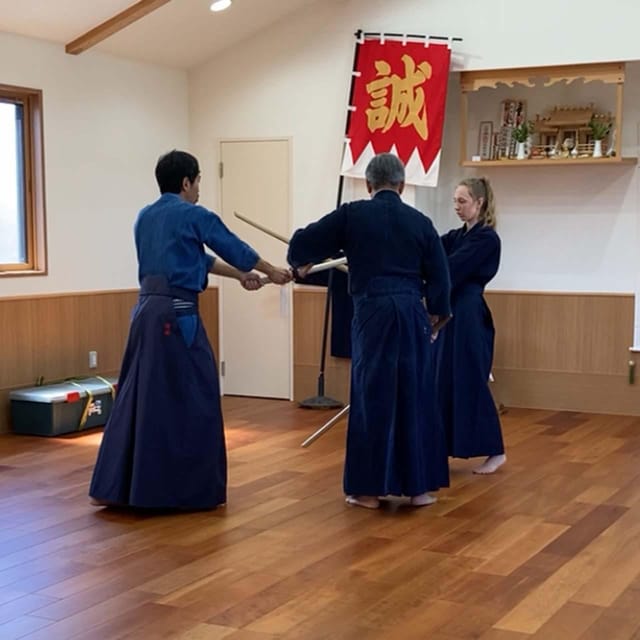
At $116 per person, this is not a budget activity. You can find cheaper cultural demonstrations in Tokyo, and many museums cost far less. The value here comes from access, instruction, equipment, and the setting.
The price includes a master, an instructor, swordsmanship training, a wooden sword, a Japanese sword, dogi, hakama, and the Shinsengumi coat. You are also paying for a class capped at four participants, rather than a large group rotating through a quick demonstration.
That small group matters. Personal corrections are a major part of learning a martial art, especially when you are handling a sword. The included clothing and equipment also mean you do not need to rent or buy anything separately.
I think the price makes the most sense for someone who wants a serious cultural activity and has a real interest in samurai history or Japanese martial arts. If you mainly want a fast costume photograph, it is expensive for what you need. If you value hands-on teaching, a real dojo, and a direct family link to the Shinsengumi, the cost is easier to justify.
You also receive two hours of focused time, not just a few minutes of sword handling. The class builds toward the real-sword exercise, so the experience has a clear beginning, middle, and end.
Who should book this experience?
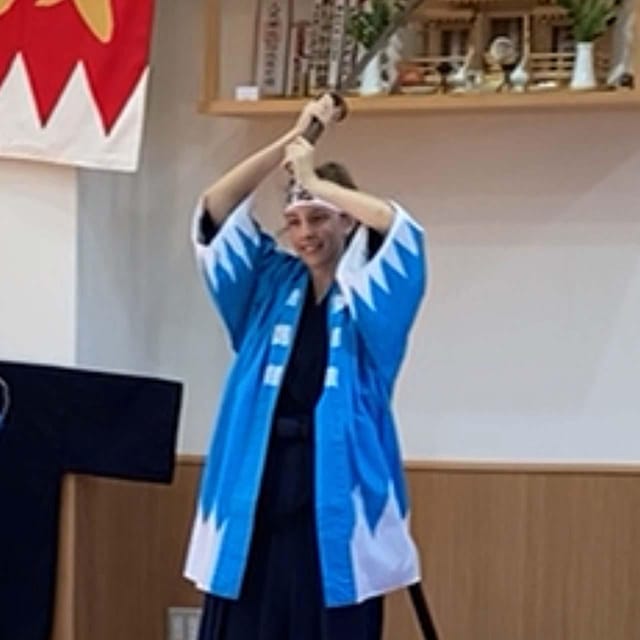
This is a strong choice for adults interested in Japanese history, traditional martial arts, or unusual day trips from central Tokyo. It suits beginners because no prior sword experience is stated as necessary, and the training begins with basic stance and footwork.
It is also a good fit if you prefer small classes and direct contact with an instructor. The limit of four participants makes this more personal than many group activities.
You should have a reasonable level of fitness and be comfortable standing and moving. The activity is not suitable for pregnant people, people with back, heart, or mobility problems, wheelchair users, people with vertigo, people recovering from recent surgery, or people with a low level of fitness. It is also not suitable for anyone under 18 or over 75, or for someone with a cold or altitude sickness.
Those restrictions are worth taking seriously. A sword class requires balance, control, and attention. If you are unsure about your physical ability, contact the provider before reserving.
Planning the rest of your Hino visit
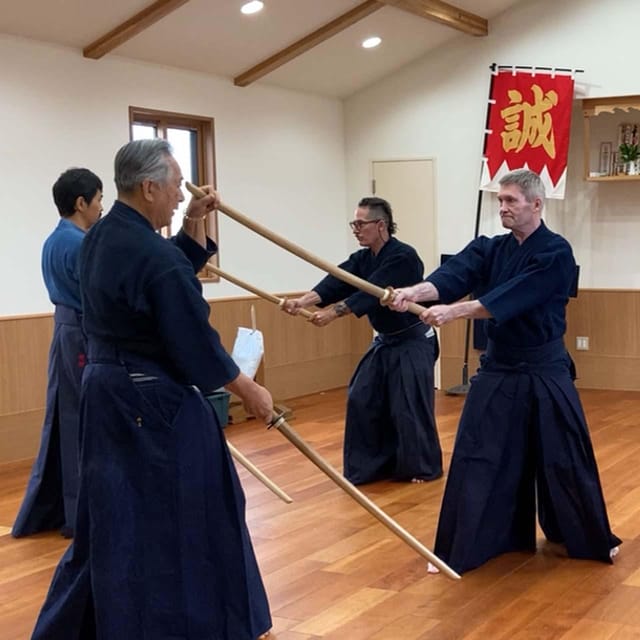
The activity lasts two hours, so you can pair it with other Hino sightseeing if you plan carefully. The meeting point itself is the second floor of the Inoue Genzaburo Museum, making it a natural place to learn more about the local Shinsengumi connection.
You could also use the map provided at the end to identify nearby historical sites. The available information does not promise a guided walking tour, so do not assume that the sword class includes transport or a full town tour. Think of the map as a useful follow-up rather than part of the two-hour lesson.
The most important planning tip is to protect your arrival time. The dojo is close to Hino Station, but you still need to locate the museum, reach the correct floor, and change before training begins. The activity offers free cancellation up to 24 hours in advance and a reserve-now, pay-later option, which can help if your Tokyo schedule is still shifting.
My recommendation for this samurai class
Book it if you want an authentic, hands-on connection to the Shinsengumi and are happy to travel beyond central Tokyo. The combination of a real dojo, a four-person class, traditional clothing, wooden-sword instruction, and controlled katana handling is unusual.
Skip it if you want a passive show, a short photo stop, or an activity with no physical demands. Two hours of instruction requires concentration, and the final sword work should be approached with respect.
For the right person, this is one of the more meaningful samurai experiences available near Tokyo. You leave with more than a costume photograph. You gain a basic feel for the discipline, a better sense of why the Shinsengumi remain so important in Hino, and a direct connection to a sword tradition that is still practiced today.
FAQ
Where does the samurai sword experience take place?
It takes place on the second floor of the Inoue Genzaburo Museum, at the Tennen Rishin-ryu Hino Dojo.
How far is the dojo from Hino Station?
The venue is about a five-minute walk from Hino Station on the JR Chuo Line.
How long does the activity last?
The swordsmanship experience lasts two hours.
How many people can join the class?
The group is limited to four participants.
Which sword style will I learn?
You will learn Tennen Rishin-ryu kenjutsu, the swordsmanship associated with the Shinsengumi.
Who leads the experience?
Masao Inoue, chairman of the Tennen Rishin-ryu Hino Dojo and a descendant of Shinsengumi executive Genzaburo Inoue, leads the program with an instructor.
Are clothing and swords provided?
Yes. The experience includes a dogi and hakama, a dandara baori, a wooden sword, and a Japanese sword.
Is the experience offered in English?
Yes. Instruction is available in English and Japanese.
Who cannot take part?
The activity is not suitable for pregnant people, children under 18, wheelchair users, people with back, heart, mobility, or balance problems, people with recent surgeries or low fitness, people with a cold or altitude sickness, and people over 75.
More Samurai & Ninja Experiences in Tokyo
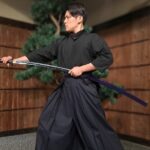
More tours in Tokyo we've reviewed







Samurai & Ninja Experiences, compared.
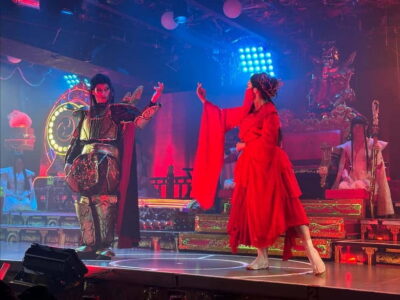 ★ 4.5Tokyo: Samurai Restaurant Show Ticket with 2 DrinksFrom $551h 30m
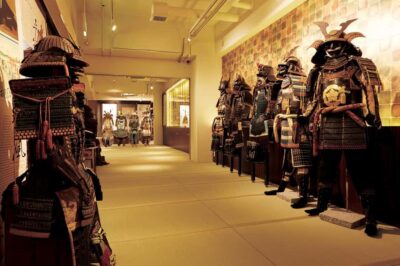 ★ 4.6Tokyo: Samurai Ninja Museum Guided tour and ExperienceFrom $27
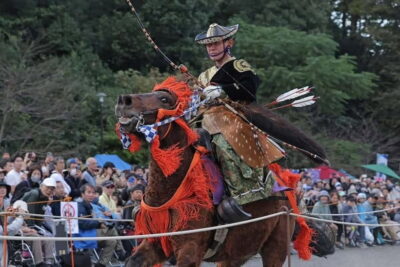 ★ 5.0Tokyo: Samurai Sword & Archery Class from Samurai DescendantFrom $1933 hours
 ★ 5.0Best Samurai Experience in TokyoFrom $65
 ★ 5.0Ninja Experience (Family Friendly) at Samurai Ninja Museum TOKYOFrom $47
 ★ 4.6Tokyo: Samurai Entertainment Night Show in Kanda ShrineFrom $412 - 3 hours