
Reviewed · SAMURAI & NINJA EXPERIENCES
Samurai Training in Tokyo: Swords, Bushido & Mental Discipline
The most interesting part of this Tokyo experience is that it treats samurai training as more than sword swinging. You learn Bushido, etiquette, and mental discipline before handling a wooden sword, then practice posture, breathing, strength, and one formal combat kata. I like that the session includes both a live sword demonstration and quiet exercises such as meditation and silent walking. I also like the private format, which gives you time to ask questions instead of being hurried through a group performance.
The main consideration is the two-hour limit. You will learn a real sequence and several training methods, but you will not become a seasoned swordsman in one visit. The experience requires at least two participants, and the final one-on-one sparring is guided practice, not a full-contact fight.
In This Review
- Key points to know before booking
- Starting at the Kojimachi dojo
- Samurai etiquette before sword practice
- Breathing and meditation to settle the mind
- Wooden swords, heavy sticks, and silent walking
- Learning one formal combat kata
- Matcha, sweets, and a quiet change of pace
- Wearing samurai clothing and taking the photo
- The scroll certificate and what you take home
- Is $85.66 a fair price?
- Who should book this experience?
- Should you book the samurai training?
- FAQ
- Where does the samurai training take place?
- How long does the experience last?
- Is the experience private?
- Is English instruction available?
- Do I need previous martial arts experience?
- What type of sword will I use?
- Is traditional clothing included?
- What refreshments are provided?
- Do I receive a souvenir?
- How many people are needed to book?
- What is the cancellation policy?
Key points to know before booking
- Training takes place in Kojimachi: The dojo sits in a Tokyo district once connected with the inner grounds of Edo Castle.
- Bushido comes before the blade: Expect etiquette, breathing, meditation, posture, and focus work before sword drills.
- You learn one authentic combat kata: The aim is to give you a usable form to remember, not a long list of disconnected moves.
- Traditional clothing is provided: You can train in samurai attire and take a commemorative photo.
- The cultural break is part of the lesson: Matcha green tea and Japanese sweets offer a calm pause between drills.
- The experience is private and in English: Only your group participates, with translation support available when needed.
Starting at the Kojimachi dojo
Your meeting point is Samurai Sword Tokyo at 4-chōme-2-1 Kōjimachi, in Chiyoda City. The area is near public transportation, and the activity ends at the same location, so you do not need to plan a separate ride across Tokyo afterward.
The setting matters. Kojimachi is not presented as a movie set or a staged castle attraction. It is linked with the former inner grounds of Edo Castle, where samurai once trained. That does not mean you are practicing in a preserved samurai compound, but the neighborhood gives the session a useful connection to Tokyo’s past.
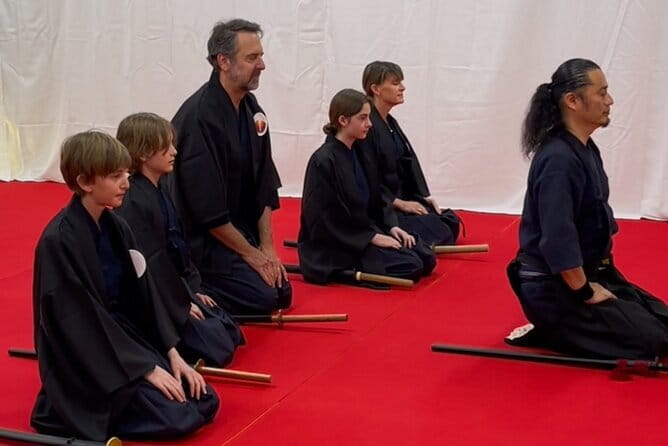
This is a private activity, so only your group takes part. That is a strong advantage if you want to ask about sword etiquette, Bushido, or Japanese martial arts without worrying about slowing down a large class. It also makes the experience a better fit for families, couples, and small groups with different levels of interest.
At least two participants are required. Keep that rule in mind when planning a solo Tokyo visit. The published price is about $85.66 per person, and the activity is normally booked around 37 days ahead, so booking early is sensible if you have fixed dates.
A few more Tokyo tours and experiences worth a look
Samurai etiquette before sword practice
The session begins with the conduct expected of a samurai. This is important because the sword work makes more sense once you understand the discipline around it. You are introduced to respect, controlled movement, and the spirit of Bushido rather than being pushed straight into theatrical combat.
The instructors explain the ideas behind the training in English. The names Sensei Oedo and Yukiji are associated with the teaching team, and English translation support is available. The exact instructor mix may vary, but the structure is designed for visitors who do not speak Japanese.
I appreciate this opening because it gives the activity a cultural center. Samurai training was not simply about speed or force. Bowing, attention, restraint, and awareness are part of how the lesson is framed. You may find this section slower than expected if you came mainly for sword action, but it keeps the experience from becoming a costume photo stop with a prop weapon.
The instructors also provide background on samurai history and sword skills. You can ask questions throughout, which is especially helpful if you want to understand how a formal kata differs from the sword choreography seen in films.
Breathing and meditation to settle the mind
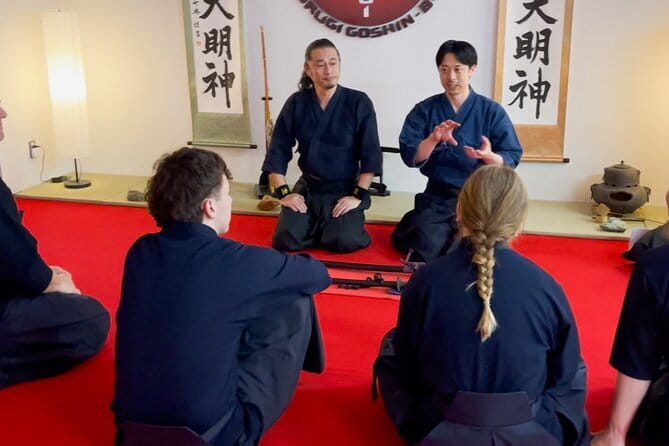
After the introduction, you work on breathing and meditation. These exercises are meant to calm the mind and prepare you for controlled movement. They may sound simple, but they change the mood of the session. Instead of rushing from one activity to the next, you are asked to pay attention to posture, breath, and concentration.
This mental side is one of the best reasons to choose this experience over a basic sword demonstration. You are not only watching a martial art. You are learning why a practitioner needs composure before making a movement.
The lesson is beginner-friendly, so you do not need previous martial arts training. Most travelers can participate, and the activity information does not list special fitness requirements. Still, you should expect to stand, move, and practice drills for much of the session. Anyone with physical limitations should consider the demands of sword practice and ask the provider before booking.
Wooden swords, heavy sticks, and silent walking
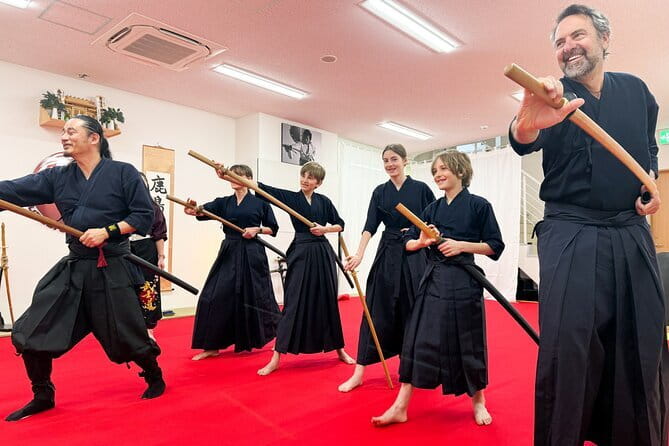
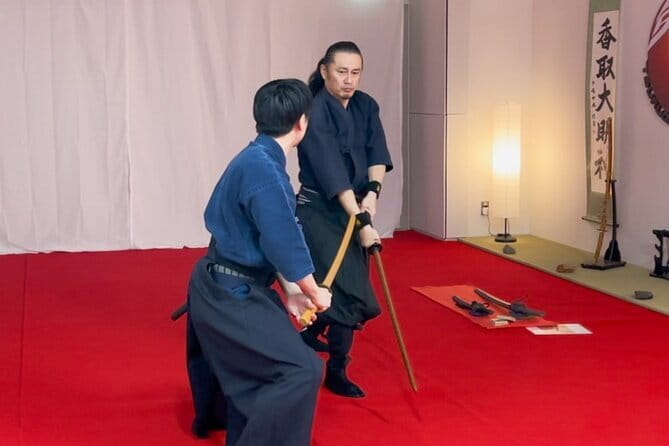
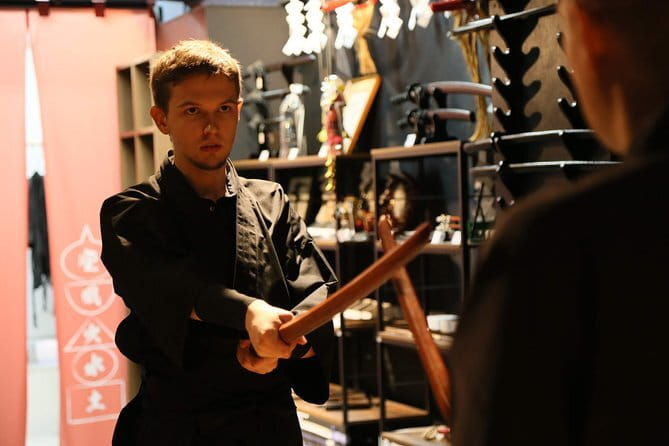
The physical training starts with wooden sword movements. You learn how to hold and move the sword safely, then practice basic drills under instruction. The wooden weapon keeps the focus on technique and control rather than the danger or spectacle of a sharp blade.
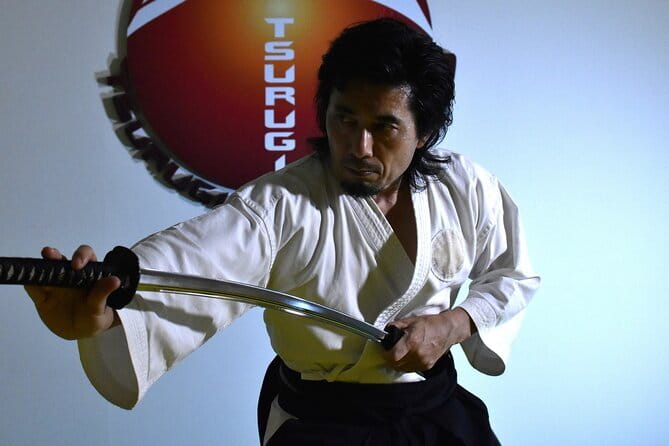
A live sword demonstration by the instructor is included. This gives you a clear example of the precision being taught, while your own practice remains beginner-level and supervised.
The lesson also includes strength work with a heavy stick. That detail gives the session more range than a standard photo opportunity. You are asked to use your body with control, building awareness of weight, balance, and movement.
Then comes silent walking, described as a ninja-like test of posture and focus. This may be one of the more unusual parts of the class. Walking without noise forces you to notice how you place your feet, how you carry your weight, and how much movement you make without thinking.
I like this combination because it shows that martial training is not just arm work. The experience links the sword to the whole body. The possible drawback is that visitors wanting nonstop swordplay may find the strength and walking exercises less exciting. They are valuable, but they are not flashy.
Learning one formal combat kata
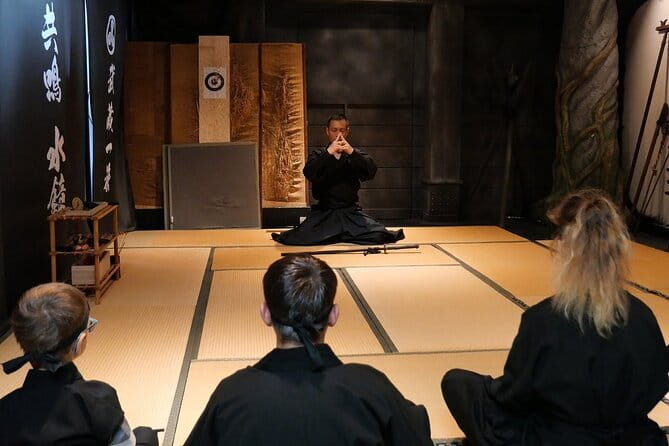
The main technical goal is to learn one authentic samurai combat kata. A kata is a set sequence of movements, practiced in a particular order. Learning one form properly is more useful than racing through many techniques you will forget as soon as you leave Tokyo.
You first practice the movements with guidance, then work on applying them in one-on-one sparring with an instructor. The word sparring should be understood in context. This is a controlled training exercise designed to help you use the movements, not a competitive match or a full-contact bout.
The instructor can correct your posture, timing, and sword path. Since the class is private, you should have room to ask why a movement is performed in a certain way. That personal attention is a major part of the value at $85.66.
The lesson is suitable for all ages according to the supplied information, but the practical experience will depend on your comfort with standing and moving. Children should take part with the adults responsible for them, and the private format may help the instructor adjust the pace for your group.




Matcha, sweets, and a quiet change of pace
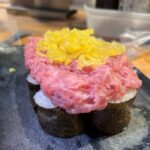
During the break, you receive matcha green tea and traditional Japanese sweets. This is not just a snack stop added to fill time. It gives the session a distinctly Japanese rhythm, with a quiet pause between physical training and the final activities.
The sweets and tea also help explain the contrast within samurai culture. The experience moves from discipline and combat to calm, hospitality, and ceremony. You can use the break to ask questions about the training, samurai customs, or the meaning of Bushido.
Do not expect a full meal. Matcha and sweets are a cultural refreshment, not lunch. If you book the class around a meal, plan to eat separately before or afterward.
Wearing samurai clothing and taking the photo
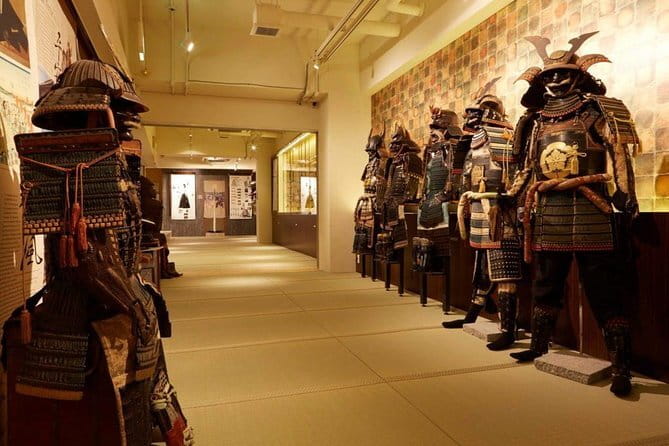
Samurai uniform rental is included. Changing into traditional attire helps mark the activity as a special event, and it gives the instructor a chance to explain how presentation and etiquette fit together.
At the end, the instructor will take a commemorative photo with you in costume. This is a practical perk for anyone who wants a good record of the experience without arranging a separate photographer. You may want to bring a phone for additional photos, but the included photo is the key souvenir image.
The costume element is fun, but it is not the heart of the session. If you want only a dressed-up photo, a themed attraction may be quicker and cheaper. Here, the clothing works best as part of a longer lesson that includes movement, history, and ceremony.
The scroll certificate and what you take home
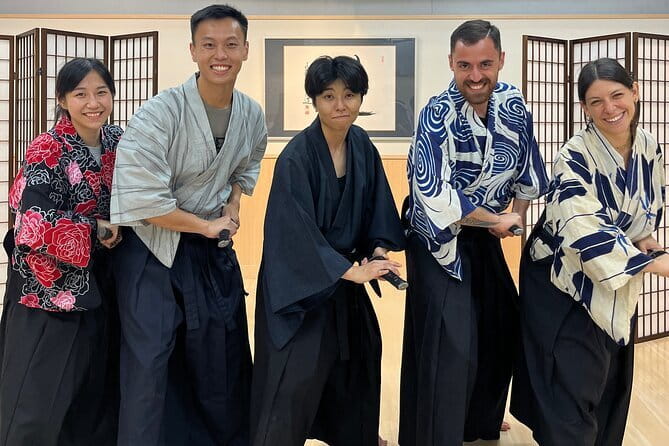
You receive a personalized scroll-style certificate with your name and the techniques learned. It is a more meaningful souvenir than a generic ticket or printed image because it records your participation in the training.
The certificate does not mean you have earned a formal rank in a martial arts school. Think of it as a keepsake marking your introduction to the class and its techniques. That distinction is worth understanding, especially if you have serious martial arts experience or expect official certification.
Along with the certificate, you leave with a basic kata, an understanding of samurai etiquette, and a better sense of how breathing and posture affect movement. You may also remember the quieter parts of the lesson, particularly the meditation and silent walking, long after the sword drills have faded.
Is $85.66 a fair price?
At about $85.66 per person, this is not the cheapest cultural activity in Tokyo. The value comes from what is included: roughly two hours of private instruction, uniform rental, a live sword demonstration, English guidance, matcha and sweets, a personalized certificate, and a photo.
A short sword demonstration alone would offer less participation. A costume rental and photo session would offer less instruction. This experience combines both with a cultural explanation of Bushido and samurai history.
The private format is the biggest reason the price can make sense. Your group gets the instructor’s attention, and you can ask questions freely. If you are booking for two people, the total cost is higher than a large group class, but you are paying for a more focused session.
The value is weaker if you dislike structured instruction, meditation, or repeated drills. You should also avoid booking it solely because you expect a dramatic sword fight. This is a lesson in discipline and form, with a controlled sparring exercise at the end.
Who should book this experience?
I would recommend it to you if you want an activity that lets you participate in Japanese culture rather than simply look at it. It suits first-time martial arts students, couples, families, and small groups looking for something different from temples, shopping, and food tours.
It is also a good choice for anyone interested in Bushido, Japanese swords, or traditional training methods. The English instruction and translation support make the subject accessible, even if you know little about samurai culture.
You may want to choose another activity if you need a fully relaxed sightseeing stop, have difficulty standing or moving, or want to handle a real blade. The swords used for participant drills are wooden, while the instructor provides the live demonstration.
The class requires at least two participants, so solo visitors need to confirm that their booking meets the minimum. Toilets are available in the building, and the activity is near public transportation. No private transportation or air-conditioned vehicle is included, but you do not need either for a two-hour session based at one dojo.
Free cancellation is available up to 24 hours before the start time. Changes or cancellations inside that window are not accepted for a refund, so leave yourself some room if your Tokyo plans are uncertain.
Should you book the samurai training?
Book it if you want a hands-on cultural lesson with real structure, not a staged performance. The strongest features are the private instruction, the focus on Bushido and mental discipline, and the chance to learn one formal kata instead of collecting a few showy sword moves.
The experience is especially worthwhile when you value context. You learn why etiquette, breathing, silence, and posture matter before you practice the blade. The matcha, sweets, costume, photo, and scroll certificate add memorable touches without replacing the training.
Skip it if you want a long martial arts course or an intense combat session. Two hours gives you a thoughtful introduction, not mastery. For most visitors, though, this is a well-balanced way to spend part of a Tokyo day, with enough physical action to feel involved and enough cultural explanation to make the activity matter.
FAQ
Where does the samurai training take place?
The experience starts and ends at Samurai Sword Tokyo, 4-chōme-2-1 Kōjimachi, Chiyoda City, Tokyo 102-0083, Japan.
How long does the experience last?
The training lasts approximately two hours.
Is the experience private?
Yes. Only your group participates in the private activity.
Is English instruction available?
Yes. The experience is conducted in English, with an English guide covering sword skills, Bushido, and samurai history. Translation support may also be available.
Do I need previous martial arts experience?
No. The class is beginner-friendly, and most travelers can participate.
What type of sword will I use?
You practice sword movements with a wooden sword. The instructor also gives a live sword demonstration.
Is traditional clothing included?
Yes. Samurai uniform rental is included, and you can take a commemorative photo in traditional dress.
What refreshments are provided?
Matcha green tea and traditional Japanese sweets are provided during the break.
Do I receive a souvenir?
Yes. You receive a personalized scroll-style certificate with your name and the techniques you learned.
How many people are needed to book?
A minimum of two participants is required.
What is the cancellation policy?
You can cancel up to 24 hours before the experience start time for a full refund. Cancellations or changes made less than 24 hours before the start time are not accepted for a refund.
More Samurai & Ninja Experiences in Tokyo
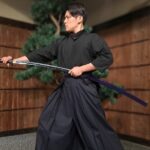
More tours in Tokyo we've reviewed








Samurai & Ninja Experiences, compared.
 ★ 4.5Tokyo: Samurai Restaurant Show Ticket with 2 DrinksFrom $551h 30m
 ★ 4.6Tokyo: Samurai Ninja Museum Guided tour and ExperienceFrom $27
 ★ 5.0Tokyo: Samurai Sword & Archery Class from Samurai DescendantFrom $1933 hours
 ★ 5.0Best Samurai Experience in TokyoFrom $65
 ★ 5.0Ninja Experience (Family Friendly) at Samurai Ninja Museum TOKYOFrom $47
 ★ 4.6Tokyo: Samurai Entertainment Night Show in Kanda ShrineFrom $412 - 3 hours