
Reviewed · SAMURAI & NINJA EXPERIENCES
Tokyo Samurai Experience: Kyudo (Archery) and Swordsmanship
The best part of this Asakusa experience is the quick change from sightseer to samurai in hakama. You put on traditional clothing, learn how to hold a katana, and try Japanese archery, all inside a one-hour session that keeps the pace moving.
I like the mix of kyudo and swordsmanship, since the bow feels quite different from Western archery. I also like the playful rank game and the chance to enjoy Japanese snacks while staff take photos. The main limitation is time: one hour gives you a fun introduction, not serious martial-arts training.
In This Review
- Key points at a glance
- Changing into a samurai in Asakusa
- A short history lesson with a playful rank system
- Kyudo, Japanese archery with its own rhythm
- Learning the katana stance and pose
- Why the staff matter in a one-hour lesson
- Snacks, photos, and the value of the $96 price
- Who will enjoy this experience most
- Practical details before you book
- Should you book the Tokyo Samurai Experience?
- FAQ
- Where does the Tokyo Samurai Experience take place?
- How long does the activity last?
- What is included in the price?
- Do I need previous archery or sword experience?
- Is the activity taught in English?
- Is the experience suitable for children?
- What should I wear or bring?
- Can I cancel the booking for a refund?
Key points at a glance
- Hakama for many sizes: Traditional clothing helps turn a short activity into a memorable photo session.
- Kyudo feels different: The Japanese bow and its movements are not simply a copy of Western target shooting.
- Katana basics: You learn the stance, grip, and pose rather than full sword fighting.
- Samurai rank game: A light competition adds structure and gives children and adults a reason to join in.
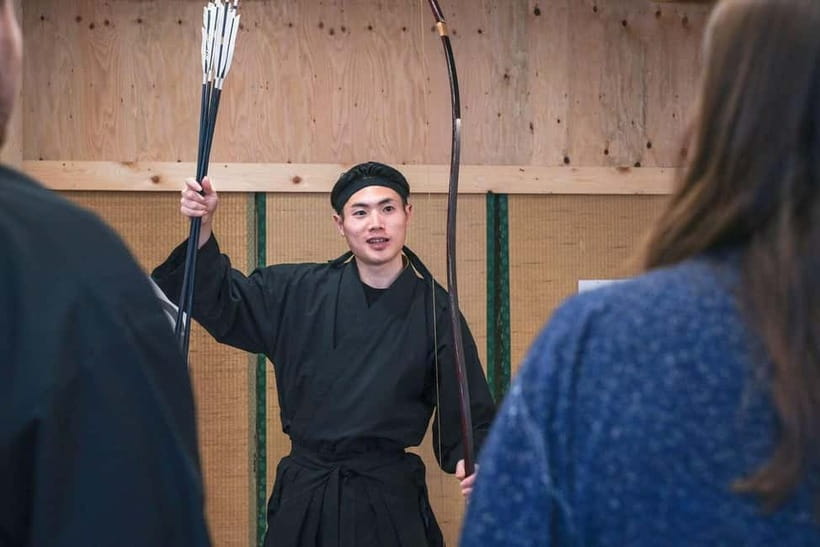
- English-speaking instruction: Staff adjust explanations to your level, with instructors including Mori and Joe.
- Asakusa location: The activity is at the Heiwa Building, 2 Chome 6-11, on the fifth floor.
Changing into a samurai in Asakusa
This activity begins with the part many people will remember most: changing into a samurai outfit. The hakama set gives you the right look for the lesson and makes the included photographs much more fun than ordinary tourist snapshots.
A range of heights and sizes is available, so the clothing is intended for a broad mix of participants. You should still arrive in comfortable clothes and shoes. You will be moving, posing, and handling equipment, so this is not the moment for stiff formalwear or shoes that pinch.
The outfit also has a practical use. Once you are dressed, the activity feels less like a demonstration and more like a small role-playing lesson. You are not simply watching an instructor hold a bow or sword. You are given a character, a rank to pursue, and a few simple skills to practise.
The meeting point is easy to miss if you are hurrying through Asakusa. Go to the Heiwa Building at Tokyo, Taito-ku, Asakusa, 2 Chome 6-11, and take the elevator to the fifth floor. Plan to arrive 10 minutes early, especially if you need a moment to find the building.
A few more Tokyo tours and experiences worth a look
A short history lesson with a playful rank system
Before the practical training begins, staff give you an introduction to samurai history and traditions. The activity does not aim to be a full academic lesson. Instead, it gives you enough background to understand the role you are about to play.
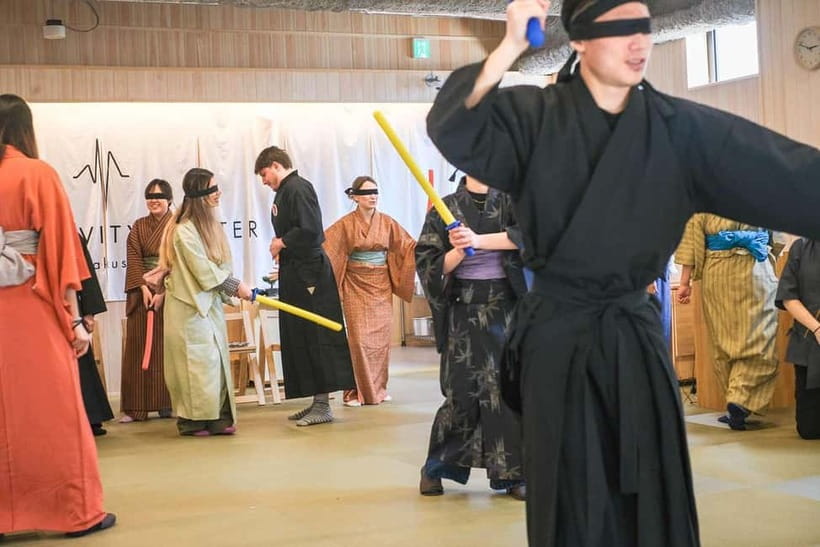
That introduction leads into a mini-game used to determine your samurai rank. The game is one of the smartest parts of the session because it gives the group an immediate goal. You may be aiming for the position of general, or shogun, rather than simply taking turns with equipment.
Do not take the ranking too seriously. Losing does not end the activity. The real training starts after the game, and the competitive element is there to make the lesson lively. It works well for families and groups of friends because everyone has a reason to pay attention and cheer each other on.
I would treat this opening as a warm-up rather than a serious test of historical knowledge. The value is in getting people involved quickly. Children can enjoy the game, while adults receive a simple introduction to the samurai idea of discipline and rank.
Kyudo, Japanese archery with its own rhythm
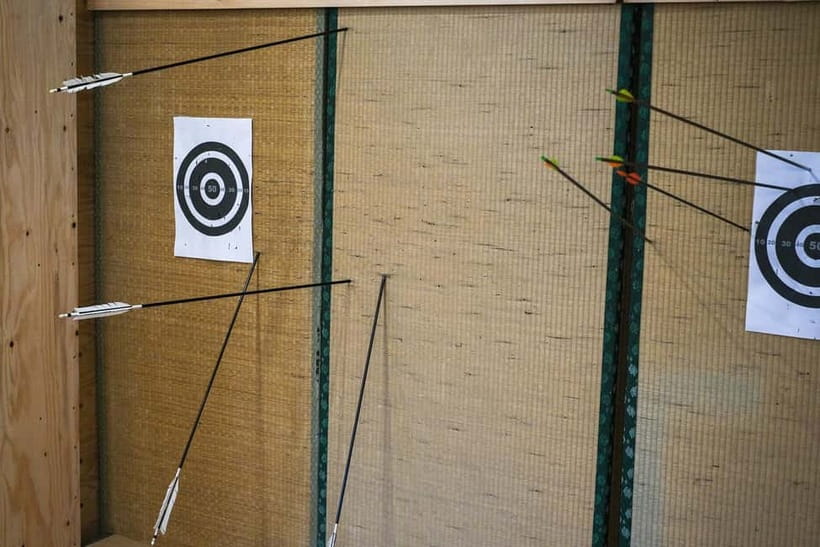
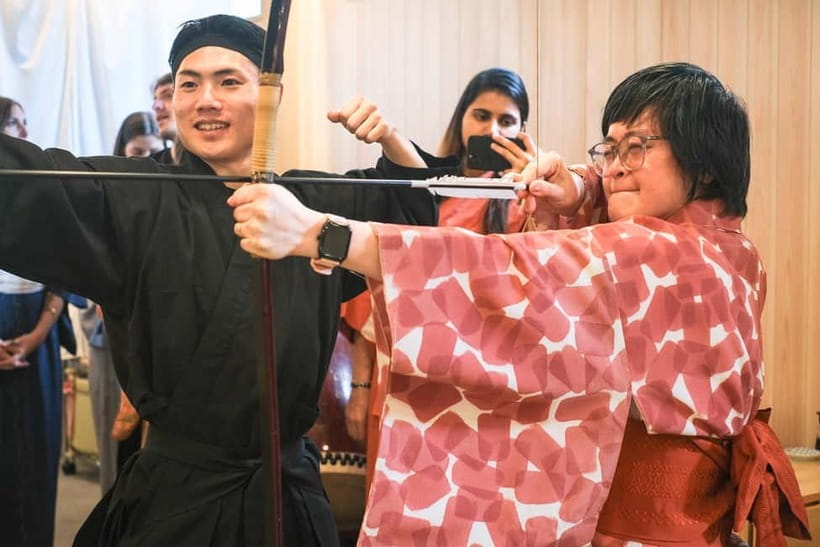
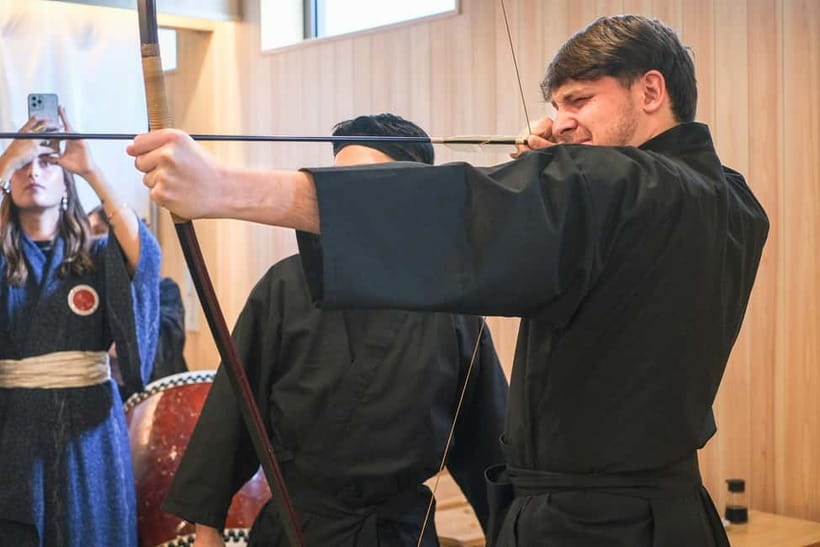
The bow lesson is the most distinctive skill in the experience. Kyudo is a Japanese martial art with a long tradition, but it is not simply Western archery with a different name. The posture, handling, and overall feel are different enough to make the comparison interesting.
You use a traditional Japanese bow and receive guidance on how to hold and use it. The purpose is an introductory try, not a full kyudo course. In one hour, you will not master the discipline, but you can begin to see why the movements require care and control.
The lesson also becomes a friendly contest. You compete with your companions as you work toward the shogun position. This adds energy, though you should keep your expectations sensible. The activity is designed for beginners, so the competition is part of the fun rather than a test of athletic ability.
No prior experience is needed. English-speaking staff explain the movements in straightforward terms and adjust their instruction to your level of English. That matters here, because archery depends on small physical details. A clear explanation of stance and hand position is far more useful than a long speech about samurai history.
If you have tried Western archery before, pay attention to the differences instead of assuming you already know what to do. The Japanese bow is presented as a separate tradition, and learning its basic handling is one of the main reasons to choose this activity over a generic target-shooting session.
Learning the katana stance and pose
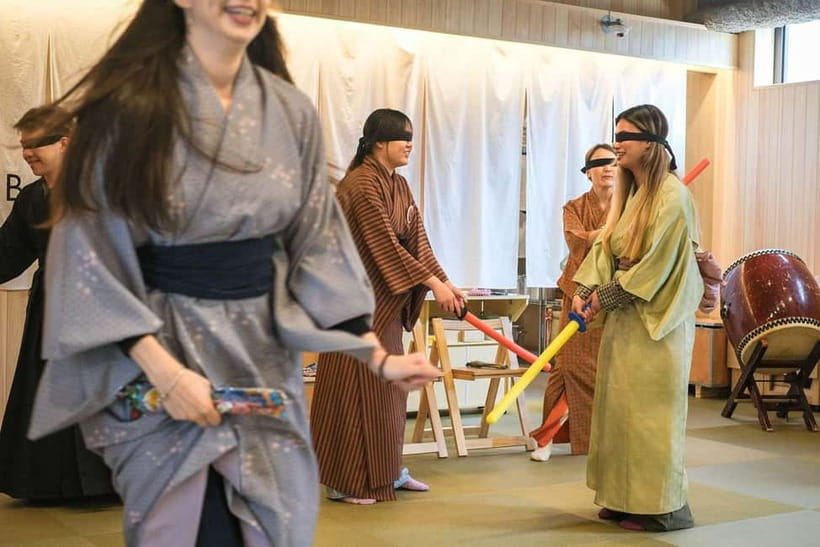
The sword portion focuses on how to hold a single-edged katana and how to stand with it. You practise the pose and the basic way of handling the sword, with staff correcting and guiding you as needed.
This is not a sword-fighting class. There is no promise of advanced combat technique, and the short duration makes that clear. Think of it as an introduction to the visual language of the samurai: stance, grip, posture, and controlled presentation.
That may sound simple, but it works well alongside the bow lesson. Kyudo asks you to pay attention to measured movement, while the katana section gives you a strong pose and a memorable object to hold. Together, they create a better sense of the warrior tradition than either activity alone.
The katana section is also likely to be the easiest part for photographs. Staff help take pictures, so you do not have to rely entirely on a hurried self-timer. You can pose in the hakama with the sword and record the moment for family or friends at home.
Keep in mind that the photographs depend on the group and the available time. Staff make photo-taking part of the experience, but one hour must cover dressing, instruction, games, archery, sword work, snacks, and pictures. If photographs are your top priority, be ready to pose promptly when the opportunity comes.
Why the staff matter in a one-hour lesson
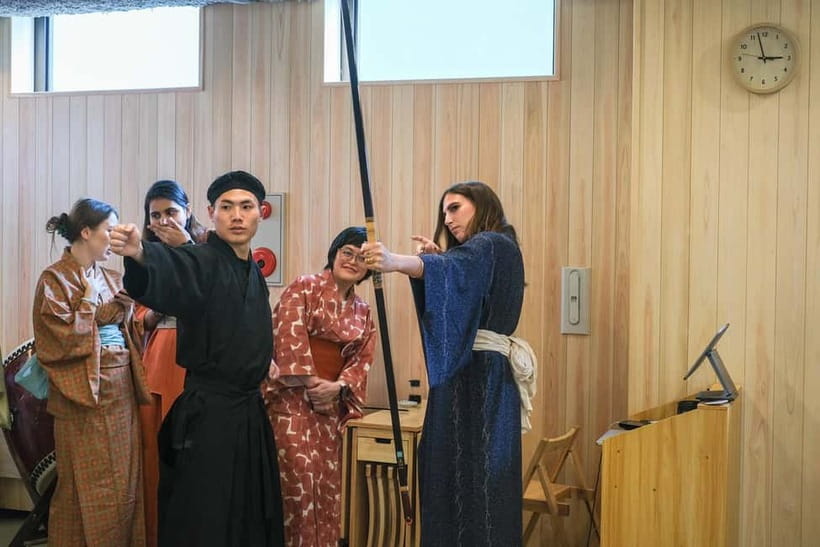
A short activity lives or dies by its instructors. Here, the teaching is in English, and the staff are prepared to make the explanations simple. That is useful for mixed groups, families, and anyone who feels unsure about joining a martial-arts activity in Japan.
Instructor Mori is described as patient and pleasant, which is exactly what you want when handling unfamiliar equipment. Instructor Joe is also noted for friendly, clear instruction, with particular appeal for children and young adults. You may not have either instructor on your specific session, but these names give you a sense of the teaching style offered at the center.
The staff also help with photographs and can offer suggestions about other experiences and shopping in the area. That extra local advice can be useful after the class, though I would treat it as a bonus rather than a central feature.
The strongest signs point to a warm, informal teaching approach. The activity is not built around stern discipline or a demanding workout. You get guidance, encouragement, and enough structure to feel that you have learned something without being expected to perform like a martial-arts expert.





Snacks, photos, and the value of the $96 price
At $96 per person, this is not a cheap way to fill an hour. The price makes more sense if you value the full package: traditional clothing, use of a Japanese bow and katana, bilingual instruction, snacks, a group game, and staff-assisted photographs.
You are paying for access to a prepared activity in central Tokyo, not just ten minutes of posing with a prop sword. The dressing process, explanations, and two different martial-arts sections give the hour a clear shape.
Still, the time is short. If your goal is serious kyudo practice or detailed sword training, this will feel limited. You should choose it for a hands-on cultural introduction, not for technical mastery.
The value improves for families and small groups who want an activity everyone can share. The rank game creates a common story, the clothing produces memorable pictures, and the lessons are accessible even when participants have different ages or fitness levels.
Japanese snacks are included, but they should not be the reason you book. They add a pleasant cultural touch and a pause in the session. The main value comes from taking part, learning the basics, and coming away with photographs that show you doing something rather than simply standing beside a famous sight.
Who will enjoy this experience most
I would recommend this to first-time visitors who want a short cultural activity in Asakusa. It fits neatly into a day of sightseeing and does not require a full afternoon or any previous training.
Families are a strong match. The activity is family-friendly, and the mini-game gives younger participants a clear role. Children and young adults are also likely to enjoy the visual side of the experience, especially the hakama, katana poses, and photos.
Groups of friends can have fun with the friendly competition. The shogun goal gives the bow portion a little extra drama, even if nobody takes the ranking seriously.
It may be less suitable for someone seeking a quiet, formal introduction to Japanese martial arts. The tone is active and playful, with costumes, snacks, photographs, and a game all packed into a short session. That is a strength for many people, but it may not suit someone looking for long periods of meditation or detailed historical study.
The activity is wheelchair accessible. The instructions also state that no prior experience is required, so you do not need to arrive fit, trained, or familiar with Japanese weapons.
Practical details before you book
The center is in Asakusa, at 2 Chome 6-11 in the Heiwa Building. Use the elevator to reach the fifth floor, and contact the activity provider if you have trouble finding the entrance.
Wear comfortable clothes and shoes. You will change into the traditional outfit, but easy clothing will make the process simpler. Alcohol and drugs are not allowed.
The session lasts one hour, with starting times depending on availability. Since the schedule includes several parts, arriving late could cut into your time for dressing, archery, sword practice, or pictures. Arriving 10 minutes before the start is a sensible rule.
The activity can be cancelled up to 24 hours in advance for a full refund. You can also reserve now and pay later, which helps if your Tokyo plans are still shifting.
Should you book the Tokyo Samurai Experience?
Book it if you want a short, active Asakusa experience with costumes, basic kyudo, katana handling, snacks, and photos. The mix is broad enough to keep families and groups engaged, while the English instruction makes the practical lessons approachable.
Skip it if you want in-depth martial-arts training or a long historical lecture. One hour cannot provide that, and the $96 price requires you to care about the complete experience rather than one individual activity.
For most visitors, the best reason to book is the combination. You dress as a samurai, learn why Japanese archery feels different, practise a sword pose, compete for rank, and leave with pictures. That is a lot of character and activity in a compact session at the edge of a busy day in Tokyo.
FAQ
Where does the Tokyo Samurai Experience take place?
It takes place at BUB Activity Center in the Heiwa Building, Tokyo, Taito-ku, Asakusa, 2 Chome 6-11. Take the elevator to the fifth floor.
How long does the activity last?
The experience lasts one hour. Starting times depend on availability.
What is included in the price?
The experience includes traditional clothing, use of a traditional Japanese bow and katana, Japanese snacks, and bilingual staff.
Do I need previous archery or sword experience?
No. Prior experience is not necessary.
Is the activity taught in English?
Yes. The instructor language is English, and bilingual staff keep the explanations simple and adjust them to your level of English.
Is the experience suitable for children?
Yes. It is family-friendly, and the activity information specifically recommends it for children and young adults.
What should I wear or bring?
Bring comfortable shoes and wear comfortable clothes.
Can I cancel the booking for a refund?
Yes. You can cancel up to 24 hours before the activity for a full refund. You can also reserve now and pay later.
More Samurai & Ninja Experiences in Tokyo
More tours in Tokyo we've reviewed







Samurai & Ninja Experiences, compared.
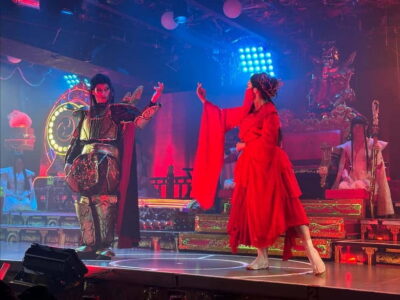 ★ 4.5Tokyo: Samurai Restaurant Show Ticket with 2 DrinksFrom $551h 30m
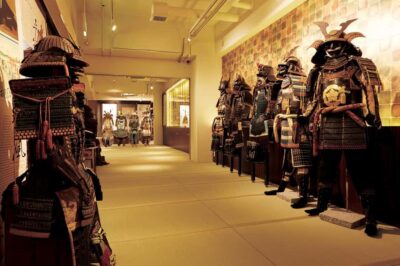 ★ 4.6Tokyo: Samurai Ninja Museum Guided tour and ExperienceFrom $27
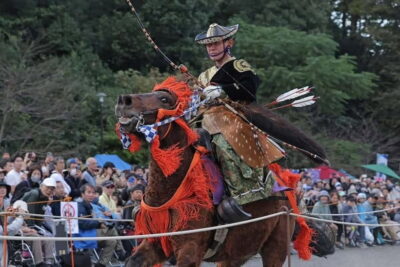 ★ 5.0Tokyo: Samurai Sword & Archery Class from Samurai DescendantFrom $1933 hours
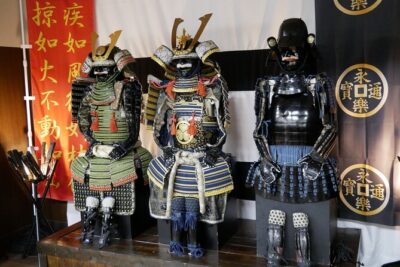 ★ 5.0Best Samurai Experience in TokyoFrom $65
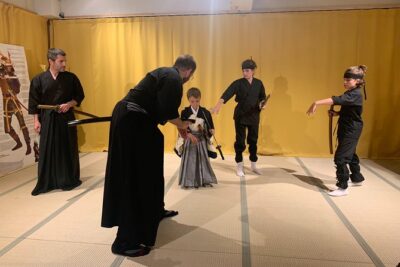 ★ 5.0Ninja Experience (Family Friendly) at Samurai Ninja Museum TOKYOFrom $47
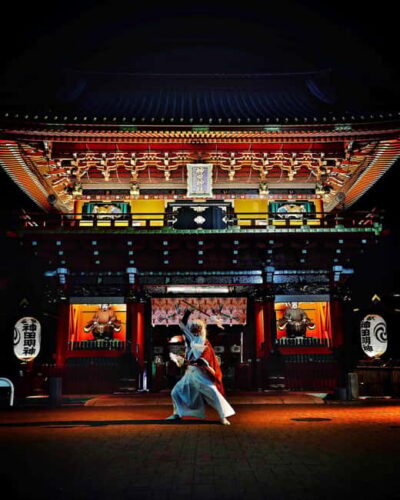 ★ 4.6Tokyo: Samurai Entertainment Night Show in Kanda ShrineFrom $412 - 3 hours