
Reviewed · SAMURAI & NINJA EXPERIENCES
SAMURAI EXPERIENCE in Tokyo(Harajuku)【SAMURAI’ve】
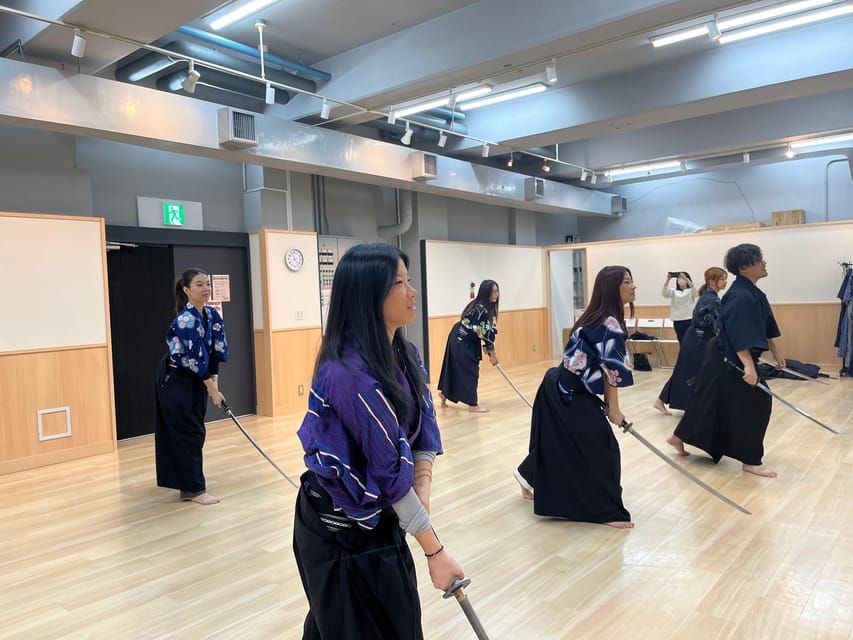
A samurai workshop in Tokyo gives you more than a quick costume photo. In one hour, you learn Reigi sahou, the manners and formal conduct linked with samurai, put on a kitsuke kimono, and practice safe sword movements before trying stylized fight scenes called Tachimawari.
I like the compact format and the friendly, clear instruction. I also like that the class ends with photos, so you leave with a keepsake instead of just a short lesson. The main consideration is time: one hour goes quickly, and this is an introduction to stage-style sword movement, not formal martial arts training.
In This Review
- Key points at a glance
- Entering the red door near Harajuku
- First lesson: samurai manners and Reigi sahou
- Putting on the kitsuke kimono
- Learning the basic sword movements
- Tachimawari, the stage-fight section
- Finishing with sword-in-hand photographs
- What the $70 price includes
- Who will enjoy this most
- Planning the hour well
- How the language options affect the class
- The strongest reasons to book
- Should you book the samurai workshop?
- FAQ
- Where does the samurai workshop take place?
- How far is the dojo from the nearest stations?
- How long does the activity last?
- How much does the experience cost?
- What languages are available?
- What is included in the price?
- Do I need to bring a kimono or sword?
- Can children join?
- Is the activity wheelchair accessible?
Key points at a glance
- Small class size: The group is limited to 10 people, giving you a better chance to follow the instructor closely.
- Three language options: Instruction is available in English, Japanese, and Chinese.
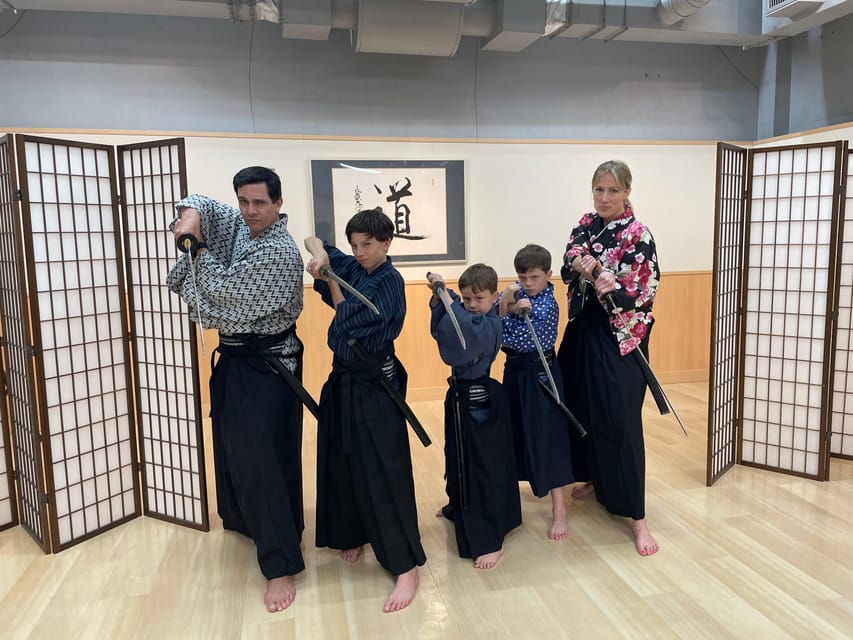
- Kimono and sword included: You wear a samurai kimono and use a sword during the workshop.
- Stage combat practice: Tachimawari teaches the stylized movements used in sword-fighting scenes.
- Harajuku location: The dojo is about five minutes from Kitasandou Station and eight minutes from Harajuku Station.
- A good family activity: Children aged five and older can join, and one family found the session especially fun with kids.
Entering the red door near Harajuku
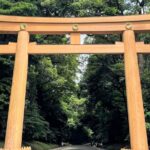
The dojo sits a short walk from two useful train stations. From Kitasandou Station, allow about five minutes. From Harajuku Station, allow about eight minutes. At the venue, look for the red door, then go to the second-floor basement.
That unusual entrance detail matters. Tokyo addresses can be hard to match with a venue, especially when you are moving through a busy neighborhood. I would save the meeting instructions on your phone and arrive with enough time to find the door without rushing.
The location works well before or after time in Harajuku. You are not committing half a day to a distant cultural site. Instead, you can fit the workshop into a morning or afternoon of shopping, cafés, and nearby sights.
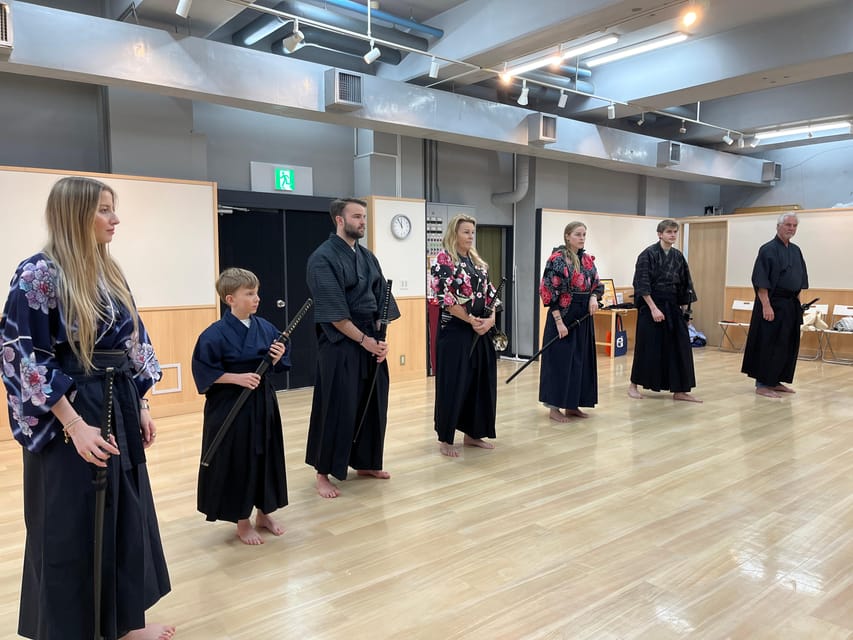
The class is limited to 10 participants. That is small enough for the instructor to watch your form, but it is still a group activity rather than a private lesson. If you are hoping for long one-on-one coaching, this format may feel brief. If you want a social activity with a little structure, the group size should work nicely.
A few more Tokyo tours and experiences worth a look

First lesson: samurai manners and Reigi sahou
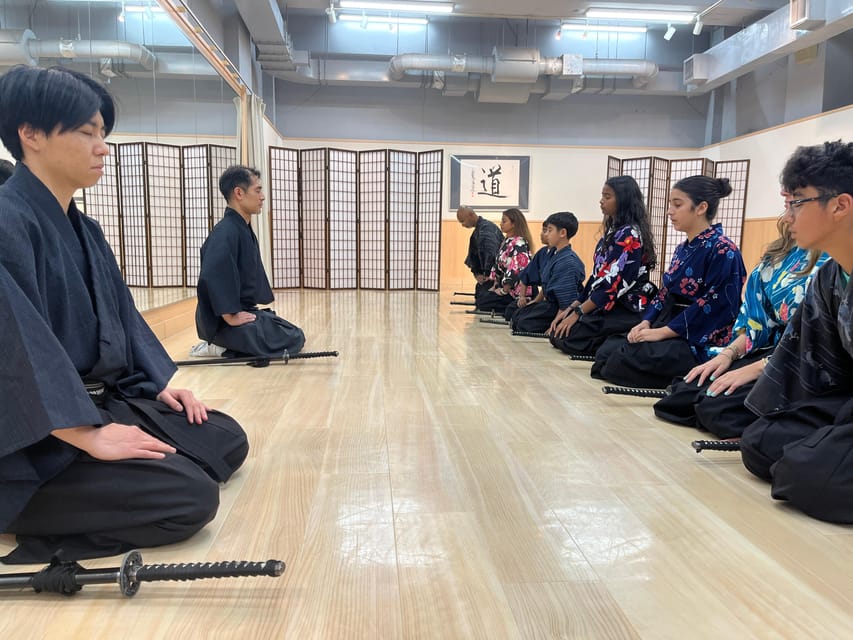
The session begins with Reigi sahou, the etiquette and manners expected of a samurai. This gives the workshop a useful cultural frame before the sword work starts.
You are not simply handed a costume and a prop. The class first introduces the way a samurai is expected to act, with attention to posture, respect, and formal conduct. That opening helps explain why the kimono and sword are treated as more than photo accessories.
The etiquette lesson is also a practical way to settle into the activity. You can learn the basic tone of the workshop before moving into physical practice. For many people, this will be the most distinctly Japanese part of the hour, since it connects the action to behavior and ceremony.
The instruction is offered in English, Japanese, or Chinese. That language choice is useful for mixed groups and international families. English instruction can still include unfamiliar Japanese terms, so listen for the demonstrations as much as the words. The movement and visual examples help make the lesson easier to follow.
Putting on the kitsuke kimono
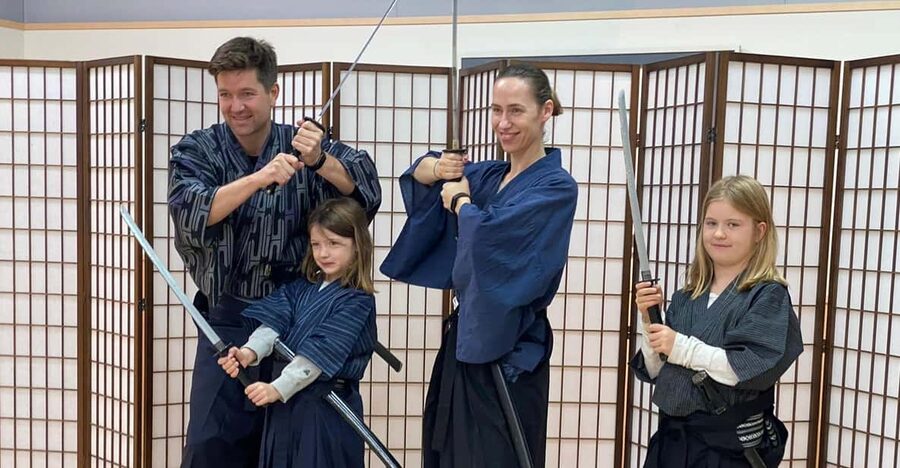
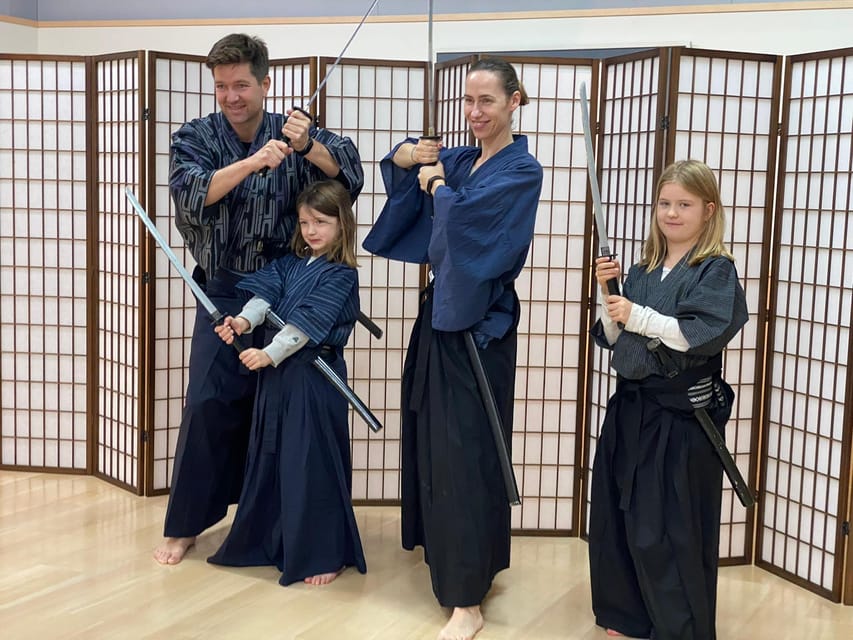
Next comes the kitsuke kimono. You learn how to put on the garment correctly and dress in a samurai style for the rest of the session.
This step adds real value to the price. Many costume activities simply hand you an outfit for a quick picture. Here, you get a short lesson in how the clothing is arranged and worn. The process also changes how you move, since you need to pay attention to posture and controlled gestures.
Wear comfortable clothes underneath. You do not need to bring a kimono or sword, since the samurai kimono and equipment are provided. Comfortable clothing will make changing and moving through the lesson easier.
The supplied information does not specify how many sizes or styles of kimono are available, so I would not book this expecting a tailored costume fitting. Think of it as a hands-on introduction to samurai dress, followed by a photo opportunity.
For families, the kimono portion can be one of the most memorable parts. Children aged five and older may join, provided they can take part safely and follow the instructor. The activity is open to people of any age and gender who have the samurai spirit, but children under five cannot participate.
Learning the basic sword movements
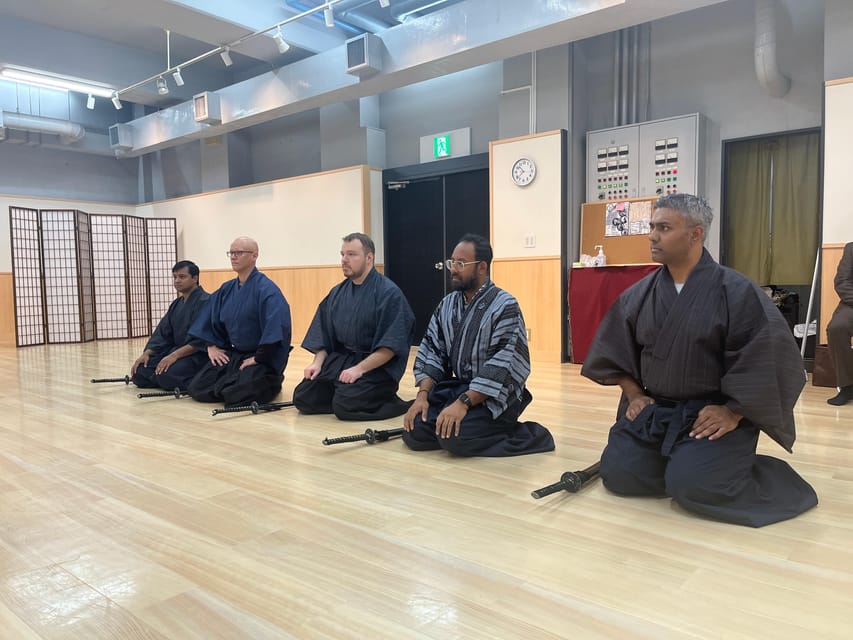
Once you are dressed and oriented, the instructor teaches basic samurai sword-fighting moves. The focus is on learning new actions that you can show friends and family at home, rather than completing a serious martial arts course.
That distinction is important. This is a one-hour cultural workshop with stage-style movement. You should expect an accessible introduction, not a graded lesson in kenjutsu or a certificate of martial arts skill.
The instructor is active in video and stage productions, which fits the structure of the class. You are learning movements connected to performance as well as samurai tradition. The teaching should help you look controlled and convincing while keeping the activity approachable for beginners.
The strongest feedback about the class centers on the instructors being friendly, patient, and good at explaining the movements. One French-speaking participant found the activity interesting and enjoyable even though the instruction was in English. That suggests the demonstrations carry a lot of the lesson.
Pay attention to foot placement and the pace of each movement. You may be tempted to swing the sword quickly, but the appeal of the activity is controlled action. The instructor sets the rhythm, and you should follow that lead rather than trying to add your own dramatic flourishes.
Tachimawari, the stage-fight section
The most playful part of the workshop is Tachimawari. These are stylized movements used in sword-fighting scenes for the stage and screen.
Here, you put the earlier lesson into a short performance setting. The aim is not to fight another person in a competitive sense. Instead, you practice the timing, poses, and movements that make a sword scene look clear and dramatic.
This section gives the hour a natural build. First you learn how a samurai should behave. Then you put on the kimono. After that, you learn the basic moves and use them in a stage-style sequence.
I like this format because it gives beginners a clear goal. You are not left waving a sword without context. You have a sequence of skills that leads to a fun final performance.
You should still keep your expectations realistic. The supplied details do not promise a full choreographed show or a long duel. Tachimawari is best understood as a short, guided taste of stage combat. If you want serious sword training, look for a longer martial arts course. If you want a lively cultural activity that works for first-timers, this is a better fit.





Finishing with sword-in-hand photographs
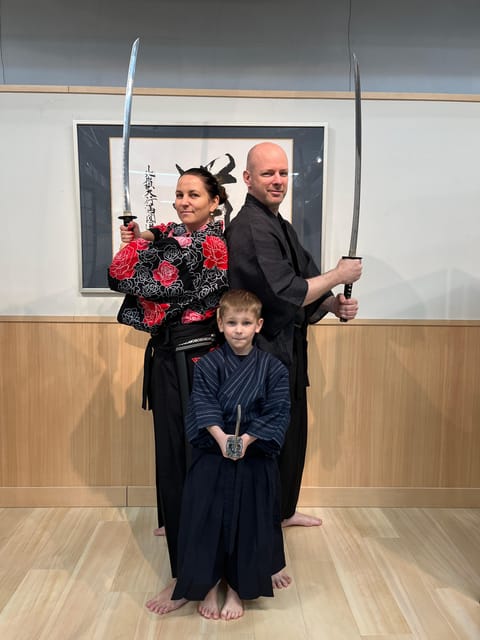
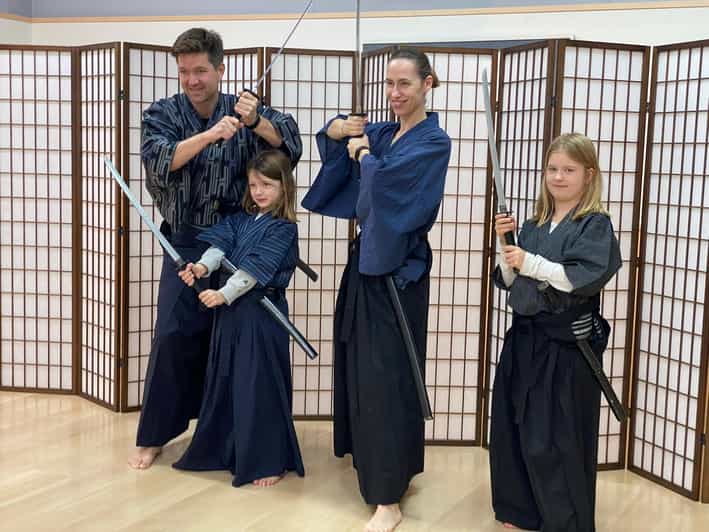
The workshop ends with a photo session. You pose in the samurai kimono while holding a sword, giving you a clear souvenir of the class.
This final part is more useful than it may sound. The photo gives the session a definite ending, and it lets you show the difference between the casual visitor who entered the dojo and the costumed samurai who leaves it. For families and friends, it creates an easy shared memory.
The activity includes the photoshoot, but the available details do not say how many photographs you receive or how they are delivered. I would ask the instructor on the day if you want to know the exact photo arrangements.
Bring a phone or camera if you want extra personal pictures, but follow the instructor’s directions around the sword and costume. The class is designed for pictures, yet safety and posture should come first.
What the $70 price includes
At $70 per person, this is not the cheapest one-hour activity in Tokyo. The price makes more sense when you count the separate pieces: an instructor, samurai etiquette, kimono use, sword-fighting instruction, Tachimawari practice, and a photoshoot.
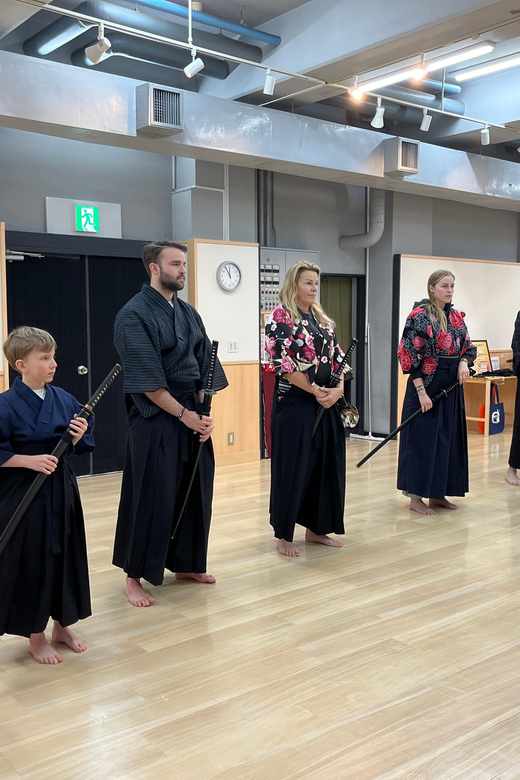
You are paying for a guided activity with provided equipment, not just admission to a room. The small group limit also helps. With no more than 10 participants, the instructor can demonstrate and correct basic movements more effectively than in a large tourist group.
The value depends on what you want. I would consider it a good buy if you enjoy hands-on cultural activities, want a family-friendly memory, or have always wanted to try a samurai costume without spending several hours at a distant attraction.
I would be more cautious if your main goal is advanced sword training. The one-hour schedule leaves time for dressing, etiquette, movement practice, stage combat, and photos. That is a full program, but it cannot provide deep technical training.
Food and drinks are not included. Transportation to the dojo is also your responsibility. Since both nearby stations are within a short walk, that should be easy to manage, but you should still include the local train fare in your activity budget.
Who will enjoy this most
I think this workshop suits several types of visitors:
- Families with older children: Children under five cannot join, but children five and older are welcome. The class combines dress-up, movement, and photos in a way that gives children several things to look forward to.
- First-time visitors to Japan: The etiquette and kimono sections provide cultural context, while the sword practice keeps the activity lively.
- Fans of stage and film samurai: Tachimawari offers a taste of how sword-fighting scenes are shaped for performance.
- Small groups of friends: You can learn the movements together, pose for photos, and take a new activity home as a shared story.
- Visitors with a tight schedule: One hour is easy to fit around a day in Harajuku.
I would not choose it for anyone who cannot stand comfortably or move through the workshop. Wheelchair users cannot take part, and the activity involves dressing and physical sword movements. The details do not list other medical restrictions, so anyone with concerns should check with the provider before booking.
Planning the hour well
Reserve a time that leaves you calm before and after the session. The class itself lasts one hour, but you need to allow time to reach the red door and find the basement dojo.
Wear comfortable clothing. The instruction specifically recommends this, and it is sensible because you will change into a kimono and practice controlled movement. Avoid treating the session like a formal dinner or a long walking tour.
The activity offers free cancellation up to 24 hours before the start time for a full refund. You can also reserve now and pay later, which is useful when you are arranging a Tokyo schedule that may change.
Because the group is capped at 10, popular time slots may be limited. Check the available starting times before building the rest of your day around the class. The exact start times vary by availability.
How the language options affect the class
English, Japanese, and Chinese are available. That gives the workshop broad appeal, especially for families or friends who do not share the same first language.
The class relies on physical demonstration, which is helpful. One participant specifically found the English-language instruction worthwhile, and the instructors have been praised for explaining the movements clearly and keeping a friendly tone.
Still, this is a cultural activity with Japanese terms such as Reigi sahou and Tachimawari. You may not understand every word instantly. Watch the instructor’s posture and timing, then copy the movement carefully.
If you are booking for a mixed-language group, confirm the preferred language when you reserve. The available languages are listed, but the exact language arrangement for your specific session is not stated.
The strongest reasons to book
The best reason to book is the combination of cultural detail and playful action. You learn manners, put on a kimono, handle a sword, practice stage movements, and finish with photos. Each part supports the next.
I also like the tone suggested by the feedback: instructors are friendly, smiling, and clear. That matters in a short activity. A rushed or overly formal teacher could make beginners feel awkward, while a warm instructor can help you relax and enjoy the costume and movement.
Families have a particularly strong reason to consider it. One parent described having great fun with the children, and the class is open to children aged five and older. The sword is part of a supervised stage-style lesson, not an invitation to rough play.
The main limitation is the short duration. You will get a taste of samurai conduct and performance, not a full study of Japanese martial traditions. Book it for the hands-on fun and cultural setting, not for expert-level sword credentials.
Should you book the samurai workshop?
You should book this experience if you want a short, active Tokyo activity with a clear cultural theme. It works especially well for families, friends, first-time visitors, and anyone who prefers learning by doing.
At $70, the value is strongest when you make use of every part: listen during the etiquette lesson, take the kimono dressing seriously, follow the sword demonstrations, join the Tachimawari sequence, and enjoy the final photographs.
Skip it if you need wheelchair access, are booking for a child under five, or want a long and technical martial arts course. For everyone else, this is a cheerful way to spend an hour near Harajuku, with enough structure to feel meaningful and enough play to keep it fun.
FAQ
Where does the samurai workshop take place?
It takes place at a dojo in Tokyo near Harajuku. Enter through the red door and go to the second-floor basement.
How far is the dojo from the nearest stations?
The dojo is about a five-minute walk from Kitasandou Station and about an eight-minute walk from Harajuku Station.
How long does the activity last?
The workshop lasts one hour.
How much does the experience cost?
The listed price is $70 per person.
What languages are available?
Instruction is available in English, Japanese, and Chinese.
What is included in the price?
The price includes the instructor, a samurai kimono to wear, a samurai etiquette lesson, a sword-fighting experience, and a photoshoot.
Do I need to bring a kimono or sword?
No. A samurai kimono and sword are provided as part of the activity.
Can children join?
Children aged five and older can join. Children under five are not suitable for the activity.
Is the activity wheelchair accessible?
No. The activity is not suitable for wheelchair users.
More Samurai & Ninja Experiences in Tokyo
More tours in Tokyo we've reviewed








Samurai & Ninja Experiences, compared.
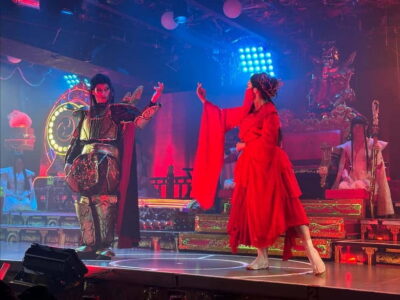 ★ 4.5Tokyo: Samurai Restaurant Show Ticket with 2 DrinksFrom $551h 30m
 ★ 4.6Tokyo: Samurai Ninja Museum Guided tour and ExperienceFrom $27
 ★ 5.0Tokyo: Samurai Sword & Archery Class from Samurai DescendantFrom $1933 hours
 ★ 5.0Best Samurai Experience in TokyoFrom $65
 ★ 5.0Ninja Experience (Family Friendly) at Samurai Ninja Museum TOKYOFrom $47
 ★ 4.6Tokyo: Samurai Entertainment Night Show in Kanda ShrineFrom $412 - 3 hours