
Reviewed · HISTORICAL TOURS
Tokyo Private Tour to Learn History and Shinto
Tokyo’s religious sites make more sense when someone explains the symbols in front of you. This six-hour private tour links Nezu Shrine, Sensoji Temple, Asakusa Shrine, and Meiji Jingu, with subway rides between them and a guide who meets you in your hotel lobby.
I like the mix of quiet shrine paths and famous city sights, especially Nezu’s red torii tunnel and the chance to see a traditional wedding procession at Meiji Jingu. I also like the private format: guides such as Yoshinori, Yoshi, and Kono have been praised for clear explanations, warm energy, and help with Tokyo’s train system. The drawback is the pace. Four major sites in six hours means plenty of walking, and your own subway fares and some admission charges are extra.
In This Review
- Key points to know before booking
- Why this tour works for learning Tokyo’s religious traditions
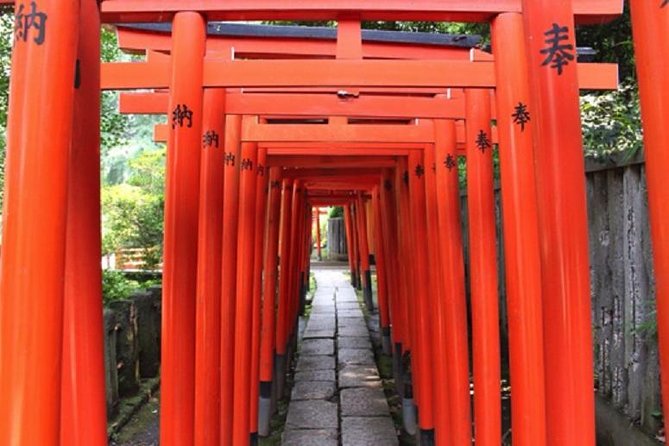
- Nezu Shrine and the Senbon Torii tunnel
- Sensoji Temple and Asakusa’s grand first impression
- Asakusa Shrine and the story of the three brothers
- Meiji Jingu and modern Shinto
- What the subway adds to the experience
- The private format and the guides
- Is $123.57 per person good value?
- Timing, weather, and practical details
- Who should book this Tokyo shrine tour?
- FAQ
- How long does the Tokyo private history and Shinto tour last?
- Which sites are included?
- Is hotel pickup available?
- Is this a private tour?
- Is an English-speaking guide included?
- Are my subway fares included?
- Are food and drinks included?
- Are admission fees included?
- Can I cancel for a full refund?
- What happens if bad weather cancels the tour?
Key points to know before booking
- Four important religious sites in six hours: See Nezu Shrine, Sensoji Temple, Asakusa Shrine, and Meiji Jingu in one private outing.
- A useful first lesson in Shinto: Learn how shrines differ from Buddhist temples, and how Japanese design uses gates, sculptures, buildings, and symbols.
- Nezu’s Senbon Torii: Walk through a bright red tunnel of torii gates, one of the tour’s most distinctive stops.
- Subway travel with personal help: Your guide leads the way through Tokyo’s public transport system, which can make later independent sightseeing easier.
- Private and family-friendly: Your group has the guide to itself, and the experience is described as suitable for children and adults.
- Budget for extra costs: The price is $123.57 per person, but customer transportation, food, drinks, and listed admission fees are not included.
Why this tour works for learning Tokyo’s religious traditions
This is not simply a parade of famous buildings. The route gives you a useful introduction to two major strands of Japanese religious life: Shinto and Buddhism.
Shinto is closely tied to Japanese mythology, nature, local communities, and the imperial tradition. Buddhist temples often have different layouts, figures, and rituals. Seeing both types of site in one day lets you compare them while the details are still fresh.
I like this approach for a first visit because religious buildings can otherwise feel like a collection of attractive gates and roofs. A guide can explain why a structure matters, what a sculpture represents, and how people use the site today. That context is especially valuable at places such as Sensoji and Meiji Jingu, where crowds can make it easy to rush through without noticing much.
The tour is also practical. You use the subway with your guide instead of spending the day in a private vehicle. That keeps the experience tied to ordinary Tokyo life and gives you a chance to learn the basics of moving around the city. One visitor specifically credited guide Yoshi with helping them understand the train system.
Other private tours in Tokyo


Nezu Shrine and the Senbon Torii tunnel
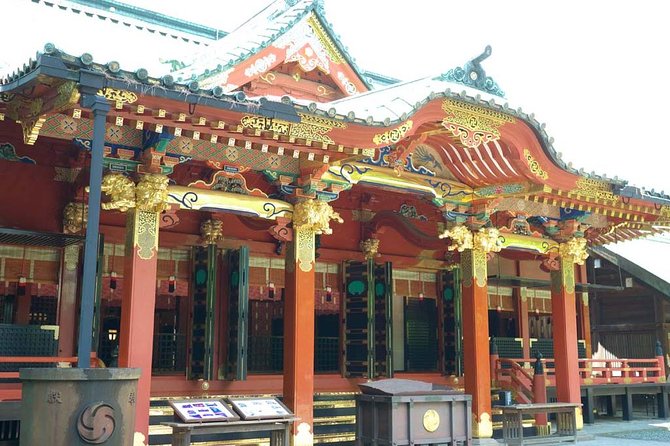
Nezu Shrine is the quieter and more visually distinctive opening stop. The shrine is dedicated to gods from Japanese mythology and is said to have a 1,900-year history. Seven buildings on the grounds are designated as important cultural properties by Japan.
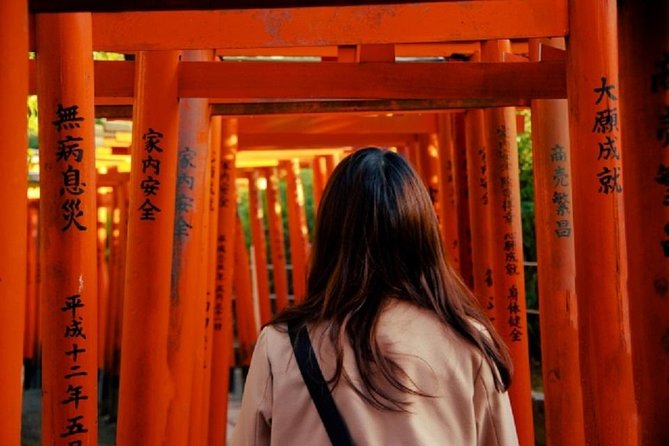
The main attraction for many people will be Senbon Torii, a passage lined with bright red torii gates. Walking through this tunnel gives you one of the clearest visual introductions to Shinto shrine design. Torii mark the entrance to sacred space, and the repeated gates create a strong contrast with Tokyo’s modern streets.
Set aside time to look beyond the photographs. The tour description points to Japanese design, symbolic artwork, and delicate sculpture, all of which are easier to appreciate when your guide explains what you are seeing. Nezu is also a good place to begin because its scale and atmosphere can feel less overwhelming than the city’s biggest religious attractions.
The scheduled visit is about one hour. Admission is not included, so check the final booking details for the current charge. The available information does not give an amount.
Sensoji Temple and Asakusa’s grand first impression
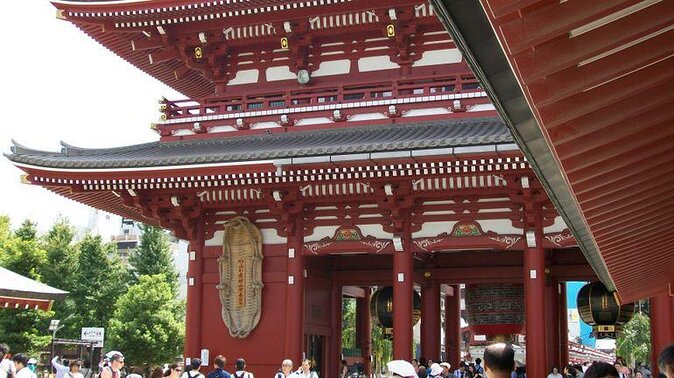
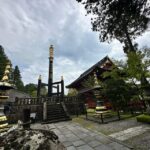
Sensoji is one of Tokyo’s best-known attractions, and it is a very different experience from Nezu Shrine. The temple grounds include a five-story pagoda and the Hozo-mon Gate, also called the Treasure-House Gate.
This is where the tour shifts from a smaller shrine setting to a major historic temple complex. The architecture is larger and more formal, and the site has enough important features to fill an hour without feeling like a quick photo stop. Your guide can help you focus on the details instead of simply following the crowd.
Sensoji is a Buddhist temple, while the next stop, Asakusa Shrine, is Shinto. Visiting them close together is useful. You can ask direct questions about the difference between the two traditions while standing in the same neighborhood.
Admission is not included at Sensoji. Again, no fee is supplied in the tour details, so do not assume the full price covers every possible entrance cost. The site is close to public transportation, but the route involves walking between stations and religious sites.
Asakusa Shrine and the story of the three brothers
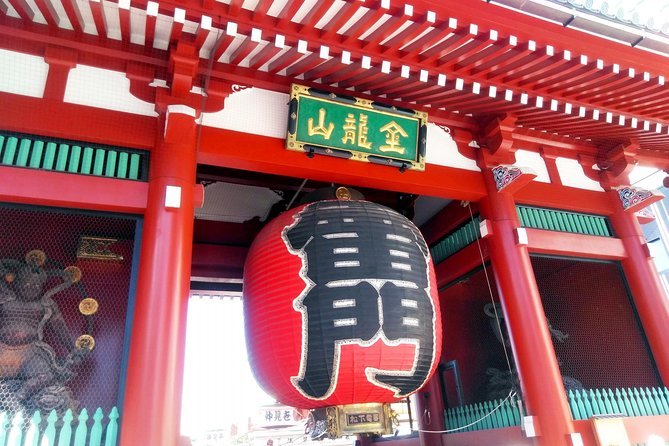
Asakusa Shrine sits in the same broad sightseeing area as Sensoji, but it has its own religious identity. It is a Shinto shrine connected with the three brothers associated with the founding story of Sensoji.
The shrine is also known as Sanja Gongen, and its Sanja Festival in May is counted among Edo’s three major festivals. That detail gives you a link between the shrine and Tokyo’s older community traditions. You are not just looking at an isolated building. You are seeing a place tied to local stories and one of the city’s major annual events.
The listed visit lasts about one hour, though the walking distance and exact time spent at each stop may depend on your group. Admission is free according to the tour information. Having a guide here is useful because the connection between Sensoji Temple and Asakusa Shrine is easy to miss if you only follow the usual sightseeing route.
I would pay attention to how the two sites feel side by side. The tour does not ask you to choose between temple and shrine traditions. It lets you see both and ask questions while the comparison is immediate.
Meiji Jingu and modern Shinto
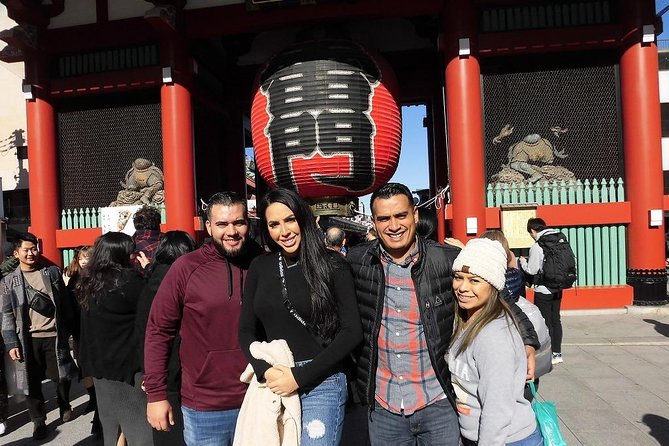
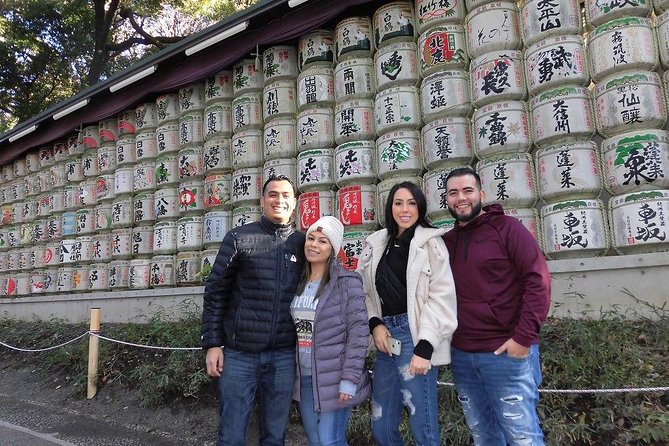
Meiji Jingu was built in 1920 and enshrines Emperor Meiji and Empress Meiji. It draws Japanese worshippers and international visitors throughout the year, making it one of the most important Shinto stops on the route.
This visit adds a newer chapter to the tour’s story. Nezu gives you a shrine with ancient roots, while Meiji Jingu represents a major early twentieth-century shrine connected with the imperial family. Your guide can explain how the site fits into Japanese culture and why people continue to visit it.
One appealing detail is the possibility of seeing a traditional Japanese wedding procession. There is no guarantee, of course, but the chance adds a living, present-day element to the visit. You may also see worshippers carrying out ordinary religious customs, which helps keep the experience from becoming only an architecture lesson.
Meiji Jingu is also described as a power spot, a place many people visit for spiritual benefit. You do not need to share that belief to understand its cultural importance. The key value is seeing how Shinto functions as part of contemporary Japanese life.
Admission is free, and the stop is scheduled for about one hour.
Other historical tours in Tokyo
What the subway adds to the experience
The subway is not just a way to fill the gaps between stops. It is part of the tour’s teaching value.
Your guide leads you between sites using public transportation. The guide’s own public transportation costs are included, but your fares are not. Bring money or a usable payment method for your own rides, and remember that food and drinks are also separate.
Tokyo’s rail network can seem confusing at first. Station names, exits, transfers, and crowds can make a simple journey feel like a small puzzle. A private guide can show you how the system works while taking you to places you already want to see.
That said, the tour is not a dedicated subway lesson. The main purpose is the religious and cultural sightseeing. You should see the transport help as a useful bonus rather than the sole reason to book.
The route also means you will walk a lot. One Spanish-speaking participant described covering much of Tokyo by metro and walking extensively, while also seeing a great deal. That is a fair description of the day: efficient, active, and rewarding if you are comfortable being on your feet.
The private format and the guides
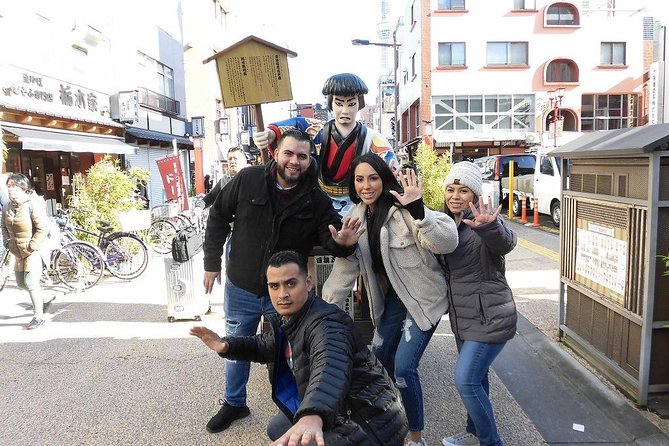
The private setup is one of the strongest reasons to consider this experience. Only your group participates, so you can ask questions without holding up a large bus group. The guide can also adjust explanations for children, adults, or a mix of ages.
The available guide names include Yoshinori, Yoshi, and Kono, though you should not assume a particular person will lead your tour unless confirmed at booking. Yoshinori is described as friendly and helpful with suggestions for what to do after the tour. Yoshi is praised for making the subway easier to understand and for bringing a relaxed, family-like warmth to the day. Kono is described as energetic, organized, and good at explaining the stories connected with each shrine.
Those qualities matter here. Religious sites reward questions. You may want to know why a gate is painted red, how to behave at a shrine, or why a temple and shrine share a neighborhood. A guide who explains clearly and keeps the day moving can make a big difference.
The tour is in English, with an English-speaking professional guide included. The information also includes feedback in Spanish, but it does not say that Spanish guiding is available. If language support beyond English matters to you, confirm it before booking.
Is $123.57 per person good value?
At $123.57 per person, the tour is not the cheapest way to visit these sites. You could reach religious attractions independently using Tokyo’s subway system, and several stops are free. The price is paying for more than admission.
You are getting about six hours of private guiding, hotel-lobby pickup, route planning, cultural explanations, and help with public transportation. For a first day in Tokyo, that can save time and reduce the stress of figuring out four separate locations.
The value improves when you are traveling as a small private group and want a flexible conversation rather than a general audio guide. It may also suit families, since adults can ask detailed questions while children get help understanding unfamiliar customs and buildings.
The value is weaker if you already know Tokyo’s train system, have studied Shinto and Buddhism, or prefer to visit one or two sites slowly. Four stops create breadth, but not unlimited time. You will get an overview of each place rather than a long, quiet study of one shrine.
Group discounts are offered, though the available information does not state the discount amount. Compare the total cost for your group before booking, especially since your own transportation and certain admission charges are extra.
Timing, weather, and practical details
The experience lasts approximately six hours and begins with a meeting in your hotel lobby. Pickup is offered, which is helpful in a city where simply finding the correct station exit can take time.
Confirmation is normally received at booking. If you book within two days of the tour, confirmation may take up to 48 hours and depends on availability. The experience is near public transportation, and most people can participate.
Good weather is required. If poor weather causes cancellation, you are offered another date or a full refund. You can cancel for a full refund up to 24 hours before the start time. Cancellations or changes made less than 24 hours before the start time are not accepted for a refund, and the cut-off follows local Tokyo time.
Wear comfortable shoes and plan for a full, active morning or afternoon. The supplied details do not state an exact accessibility arrangement, so contact the provider if you need specific mobility support.
Who should book this Tokyo shrine tour?
I would recommend it most strongly to first-time visitors who want a clear introduction to Japanese religious culture without managing the route alone. It also suits families, couples, and small groups who prefer private conversation and a guide who can adjust the pace.
It is a good choice if you want to learn how to use the subway, see both Buddhist and Shinto sites, and understand why the buildings and symbols matter. The combination of Nezu’s red torii tunnel, Sensoji’s pagoda and treasure gate, Asakusa Shrine’s founding story, and Meiji Jingu’s imperial connection gives you a solid sweep of Tokyo’s religious landmarks.
I would think twice if you dislike walking, want lots of free time for shopping, or prefer a slow visit to one major temple. The day covers four sites, and the subway connections make it active. Also remember that $123.57 per person does not cover your own transportation, food, drinks, or listed admission fees.
If those limits fit your plans, this is a useful way to start a Tokyo visit. You leave with more than a set of shrine photographs. You also get a working introduction to Shinto, Japanese Buddhist sites, and the city’s subway system.
FAQ
How long does the Tokyo private history and Shinto tour last?
The tour lasts approximately six hours.
Which sites are included?
The route includes Nezu Shrine, Sensoji Temple, Asakusa Shrine, and Meiji Jingu Shrine.
Is hotel pickup available?
Yes. The guide meets you in your hotel lobby.
Is this a private tour?
Yes. Only your group participates.
Is an English-speaking guide included?
Yes. An English-speaking professional guide is included.
Are my subway fares included?
No. Public transportation costs for customers are not included. The guide’s public transportation to and from the sites is included.
Are food and drinks included?
No. Food and drinks are not included.
Are admission fees included?
No. The tour details state that admission fees are not included for customers. Asakusa Shrine and Meiji Jingu Shrine are listed as free.
Can I cancel for a full refund?
Yes. You can cancel at least 24 hours before the start time for a full refund. Cancellations or changes made less than 24 hours before the start time are not refunded or accepted.
What happens if bad weather cancels the tour?
If poor weather causes cancellation, you are offered a different date or a full refund.
More Historical Tours in Tokyo
More Private Tours in Tokyo

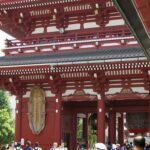
More tours in Tokyo we've reviewed










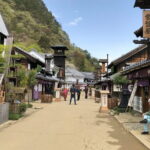
Historical Tours, compared.
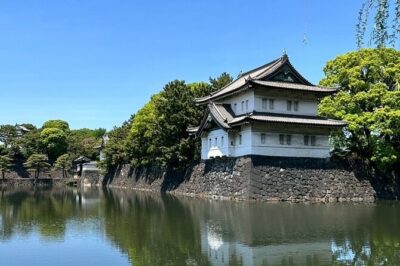 ★ 5.0Tokyo: Imperial Palace and Shogun Historical Walking TourFrom $22
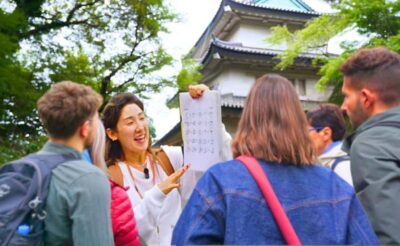 ★ 4.9Tokyo: Imperial Palace Japanese History Walking TourFrom $32
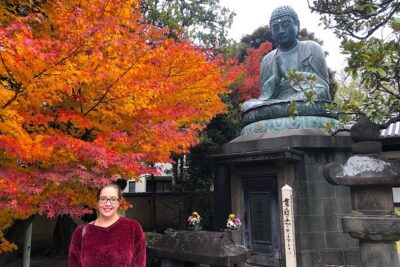 ★ 5.0Yanaka Walking Tour: Historic and Traditional District of TokyoFrom $72
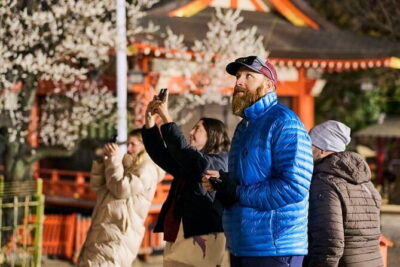 ★ 5.0Tokyo: Shinjuku Historical Walking Tour & Secret BackstreetsFrom $25
 ★ 4.5Mt. Fuji Heritage Tour: Traditional Villages, Lakes & ShrineFrom $5010 hours
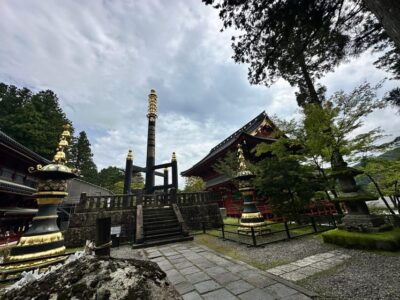 ★ 4.9From Tokyo: Nikko World Heritage Site Private Full-Day TripFrom $4831 day