
Reviewed · SHIBUYA TOURS
Tokyo Private Tour: One Day Highlights and Optional Shibuya Sky
Tokyo is easiest to understand when you see its old temples and modern streets in the same day. This private outing links Senso-ji in Asakusa with Shibuya Sky, then adds Meiji Jingu, Takeshita Street, Hachiko, and the famous crossing.
I like the personal format, especially the chance to ask questions and adjust the pace. I also like that your guide handles Tokyo’s public transportation, a real help on a first visit. The main consideration is the packed schedule: seven hours, many train rides, and a moderate amount of walking leave little room for lingering.
In This Review
- Key points to know before booking
- Why this seven-hour route works
- Starting in Asakusa with Kengo Kuma’s information center
- Kaminarimon and Nakamise Street
- Senso-ji, Tokyo’s essential temple stop
- Asakusa Shrine and Sumida Park
- Using Tokyo’s public transportation with a guide
- Shibuya Sky and the city from 230 meters up
- Shibuya Crossing and Hachiko
- Meiji Jingu and the quieter side of Harajuku
- Takeshita Street and modern Tokyo style
- The private guide is the main value
- Who will get the most from this tour
- Practical details that affect your day
- Should you book this Tokyo day tour?
- FAQ
- How long does the Tokyo private tour last?
- What time does the tour start?
- Is hotel pickup included?
- Is transportation included?
- Is Shibuya Sky admission included?
- How many people can join the private tour?
- What is included in the price?
Key points to know before booking
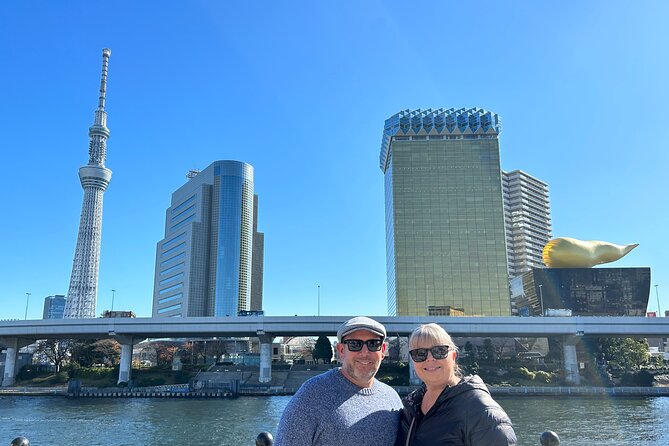
- Asakusa gives you Tokyo’s best old-and-new contrast: Senso-ji, Asakusa Shrine, Sumida Park, and Tokyo Skytree views all fit into the morning.
- Shibuya Sky admission is included: You get access to the observatory roughly 230 meters above the city, including the Sky Edge when conditions allow.
- Your guide leads the train journeys: Public transportation is included, while taxis and private cars are not.
- The tour is genuinely private: One person can book, and groups of up to 10 participate together.
- Hotel pickup and drop-off cover Tokyo’s 23 wards: The listed start time is 9:30 a.m.
- Guides can shape the day around your needs: Past guide assignments have included Rie, Keita, Yoko, Takeshi, Emiko, Kaori, and Shizuko.
Why this seven-hour route works
This is a first-look tour, not a slow study of one neighborhood. In about seven hours, you move from Buddhist Asakusa to the high-rise energy of Shibuya, with a wooded shrine and youth-fashion street in between.
That range is the tour’s main strength. You see Tokyo as a city of layers rather than a single postcard view. The day also gives you practical orientation, since your guide accompanies you on public transportation and can explain how to move between major districts.
The private setup matters here. Tokyo’s stations can be confusing, and a guide can help with directions, fares, platform choices, and timing. Past guide experiences included help exchanging JR Pass vouchers, explaining how to buy train tickets, and showing guests how to calculate fares.
The route is busy, though. The scheduled stops add up to less than the full tour time, with the remaining time used for train travel and moving through crowded areas. You should expect a quick pace rather than long museum visits or extended shopping.
A few more Tokyo tours and experiences worth a look


Starting in Asakusa with Kengo Kuma’s information center
The morning begins at the Asakusa Culture Tourist Information Center, an eight-story building designed by Japanese architect Kengo Kuma. You have about 15 minutes here, and admission is free.
The building itself is worth noticing. It is a useful first stop because it gives you a visual introduction to Asakusa before you enter the temple district. From the center, you can also take in the busy streets and the surrounding mix of older religious buildings and newer Tokyo construction.
Do not expect a full architectural tour. The stop is brief, so your guide will likely use it as a starting point and orientation point rather than a major attraction. That is sensible on a day already filled with major sights.
Kaminarimon and Nakamise Street
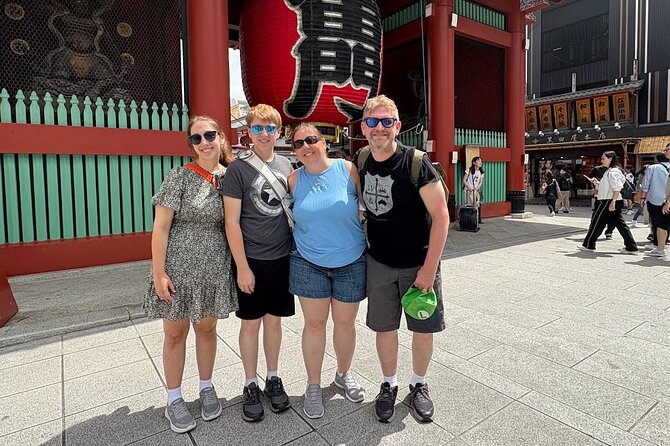
From the information center, you walk toward Kaminarimon, the Thunder Gate. Its large lantern is one of Asakusa’s best-known symbols and marks the entrance to Senso-ji.
The gate leads to Nakamise Shopping Street, a roughly 250-meter approach lined with shops and food stalls. You have about 15 minutes here, which is enough to take in the scene and perhaps make a quick purchase, but not enough for a relaxed shopping session.
This is one place where a private guide adds useful context. The approach is not just a route to the temple. It is part of the temple experience, with traditional-style goods, snacks, and souvenirs arranged along the path. You can ask your guide what is worth your time and what is better saved for later.
The short timing is a drawback if you enjoy browsing. If you see something you want, tell your guide early. The schedule moves on to Senso-ji.
Senso-ji, Tokyo’s essential temple stop
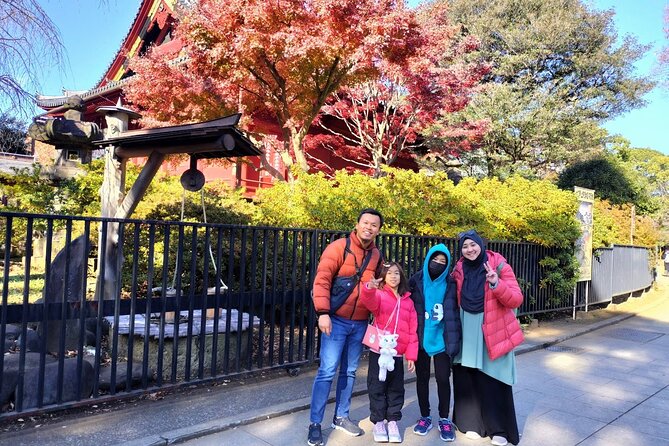
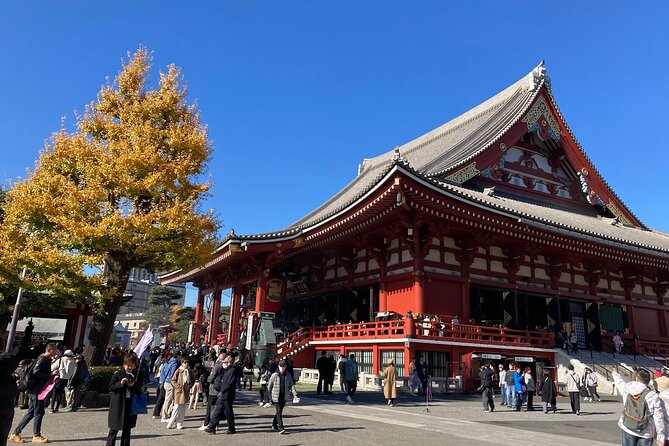
Senso-ji is the center of the Asakusa visit. You have about 30 minutes to see the temple, and admission is free.
This Buddhist temple is one of Tokyo’s most colorful and popular religious sites. Its origin is tied to a local legend from the year 628, when two brothers reportedly found a statue of Kannon in the Sumida River. The temple grew around that story and became a major place of worship.
The visit is about more than a quick photograph. Look at the temple’s gates, rooflines, incense area, and surrounding courtyards. Your guide can explain Buddhist customs and help you understand what you are seeing, rather than leaving you to guess at the rituals.
Thirty minutes is enough for an introduction, especially when the route includes several other districts. It is not enough for a quiet, unhurried temple visit at a busy time of day. If religious sites are your main interest, tell your guide at the start so the pace can be adjusted where possible.
Asakusa Shrine and Sumida Park
A short walk brings you to Asakusa Shrine, a Shinto shrine close to Senso-ji. You spend about 10 minutes here.
The contrast is useful. Senso-ji represents Buddhism, while Asakusa Shrine belongs to Japan’s native Shinto tradition. The shrine is smaller and quieter in scale than its famous neighbor, so this stop works as a quick lesson in the two religious traditions found side by side in Japan.
The next stop is Sumida Park, also scheduled for about 10 minutes. The park runs along the Sumida River and offers clear views toward Tokyo Skytree. This is a photo stop and a chance to catch your breath after the temple area.
You will not have time for a long riverside walk. Still, the Skytree view gives the morning a useful visual marker. Asakusa shows you historic Tokyo, while the tower points toward the city’s modern reach.
Other private tours in Tokyo



Using Tokyo’s public transportation with a guide
The tour includes public transportation, but not taxis, private cars, or buses. That detail shapes the whole experience.
You will travel between districts by train or subway with your guide. This is practical because the route covers Asakusa, Shibuya, Harajuku, and nearby areas in one day. It also teaches you how Tokyo works, which can be more useful than being driven between sights.
Your guide can help with ticket purchases, transfers, and station navigation. Several guide experiences connected with this tour included explanations of fares and train use, as well as help with rail-pass matters.
The tradeoff is that you must walk through stations and stay with the group. Tokyo rail stations can involve stairs, corridors, and crowds. The tour asks for moderate physical fitness, so comfortable shoes are a wise choice. Service animals are allowed, and the route is near public transportation throughout.
Shibuya Sky and the city from 230 meters up
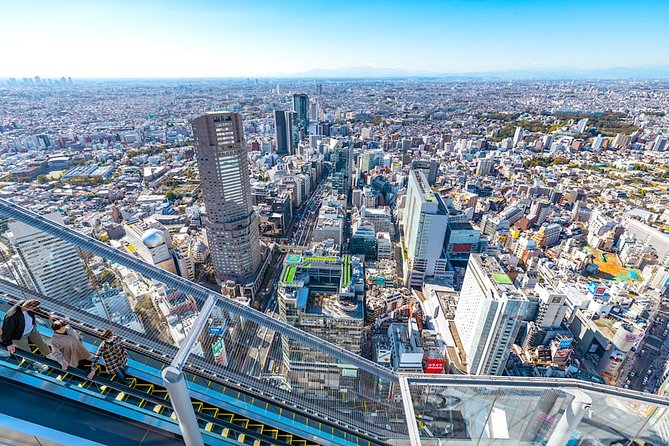
Shibuya Sky is the visual high point of the day. Admission is included, and the scheduled visit lasts about 30 minutes.
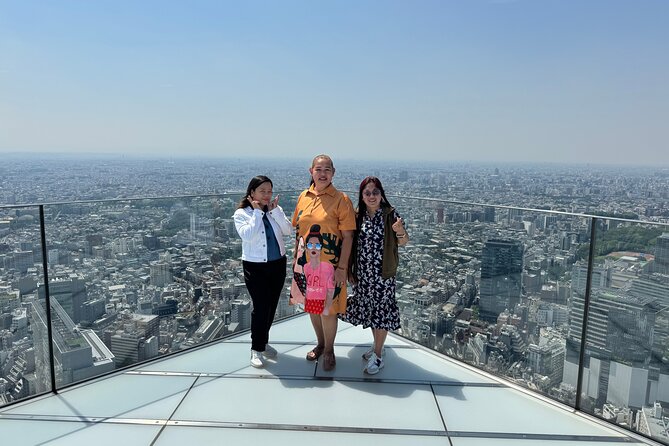
The observatory rises roughly 230 meters above the ground, making it the highest point in the Shibuya district. The Sky Edge is the signature feature, where you can look down toward the city from an open-air corner.
This is a strong addition to a walking tour because it changes your view of Tokyo. On the street, Shibuya feels immediate and crowded. From above, the district becomes a pattern of roads, buildings, rail lines, and moving people.
The outdoor area depends on conditions. High winds can close it, even when the building remains open. That happened during one tour, so you should treat the Sky Edge as weather-dependent rather than guaranteed. The included ticket still gives the tour real value, but the best outdoor view is not entirely within the operator’s control.
The 30-minute allocation keeps the day moving. If you want time for a long photo session, shopping, or a drink in the building, this tour may feel too rushed.
Shibuya Crossing and Hachiko
After the observatory, you visit Shibuya Crossing for about 15 minutes. The crossing near Shibuya Station is famous for the large number of people moving through it at each signal change.
Your guide can help you understand the crossing as part of daily Tokyo life, not just a famous image seen online. The experience is brief, but you have enough time to cross, look back at the intersection, and take in the scale of the surrounding buildings.
Nearby, the Hachiko statue gets about five minutes. The bronze dog honors Hachiko, remembered for his loyalty, and the plaza around the statue is a common meeting place.
Five minutes is enough to see the statue and hear the basic story. It is not a separate attraction requiring a long visit. The value comes from its location beside the station and crossing, making it an efficient part of the Shibuya section.
Meiji Jingu and the quieter side of Harajuku
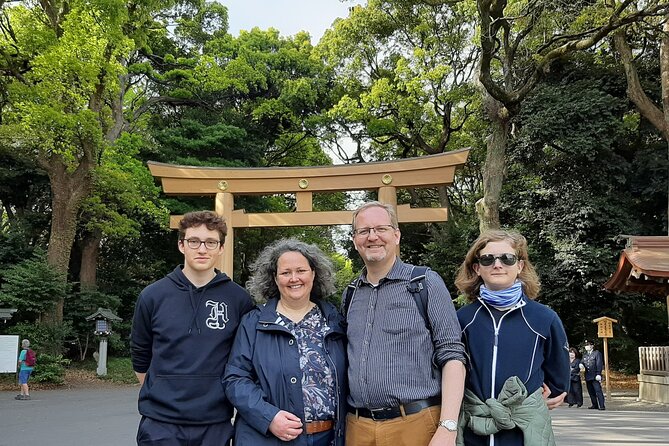
Meiji Jingu receives the longest scheduled stop, about 45 minutes. The Shinto shrine is dedicated to the deified spirits of Emperor Meiji and Empress Shoken.
Its position beside busy Harajuku Station creates one of Tokyo’s sharpest contrasts. You move from crowded streets into a large shrine setting with a very different mood. The visit gives you time to see the approach, shrine buildings, and religious customs without the stop feeling like a rushed photograph.
Your guide can explain the shrine’s role and the respectful behavior expected at a Shinto site. That sort of explanation is especially helpful if this is your first visit to Japan.
Even 45 minutes is still an introduction. The route does not promise an extended walk through every part of the shrine grounds. The schedule also places Meiji Jingu after Shibuya, so you may reach it later in the day when your legs are beginning to feel the distance.
Takeshita Street and modern Tokyo style
The last scheduled stop is Takeshita Street, a roughly 350-meter street across from JR Harajuku Station. You have about 30 minutes to look around.
Takeshita-dori is aimed at Tokyo’s fashion-conscious youth culture. Its shops and street scene show a very different side of the city from Senso-ji and Meiji Jingu. This is the place to watch current style, browse small stores, and see the Harajuku district at street level.
The timing is enough for a walk and a quick look at shops. It is not enough for serious shopping, and you may need to choose between browsing and simply taking in the street. If you want to buy clothing or souvenirs, mention that to your guide so the final portion can fit your priorities.
This stop also gives the day a sensible ending. You finish with contemporary Tokyo after spending the morning among temples and shrines.
The private guide is the main value
At $178.38 per person, the price is easiest to judge by the size of your group and the help you want.
For one person or a small group, it is a sizeable expense. The price includes an English-speaking guide, public transportation, hotel pickup and drop-off within Tokyo’s 23 wards, admission fees and taxes, and photos of tour participants. Food, drinks, and private transportation cost extra.
For a group of several people, the private format becomes more attractive. You are not sharing the guide with unrelated participants, and the group can ask for help with personal interests, dietary needs, religious needs, or mobility concerns. Up to 10 people can book together.
The strongest guide experiences connected with this tour involved flexibility and care. Rie, also introduced as Molly, was praised for clear English and attention to dietary requirements. Keita was especially useful for adding local eateries and helping a young adult enjoy the day. Yoko and Eriko were described as adaptable and well organized, while Shizuko was noted for continuing to communicate after the tour and helping with directions.
Guide assignments vary, so you cannot book a specific person unless the operator confirms it. Still, the pattern is clear: the guide is not just there to point at buildings. The best use of the tour is to ask questions, learn the train system, and adjust the time toward what matters most to you.
A few customized outings also included Muslim-friendly planning, halal food, prayer time, Tokyo Mosque, and maps showing halal restaurants. Those additions are not part of the standard route as presented, so you should request them in advance rather than assume they are included.
Who will get the most from this tour
I would choose this experience for a first day in Tokyo, especially if you want a broad introduction without planning every train connection yourself. Families and older relatives may also appreciate the guide’s help with navigation and the ability to keep the group together.
It suits you best if you want:
- Major sights in several districts
- A private English-speaking guide
- Help learning Tokyo’s rail system
- Hotel pickup and drop-off in the 23 wards
- A flexible day rather than a large group excursion
- A mix of temples, shrines, shopping streets, and city views
It is less suitable if you want deep time at each location. The 30 minutes at Senso-ji, 30 minutes at Shibuya Sky, and 30 minutes at Takeshita Street are useful introductions, but they do not allow for extensive shopping or careful photography.
It may also be tiring for anyone uncomfortable with public transportation, crowds, or moderate walking. Private does not mean chauffeured. You still use trains and walk through busy districts.
Practical details that affect your day
The listed start time is 9:30 a.m., and pickup is offered from hotels in Tokyo’s 23 wards. Drop-off is also included within those wards.
The tour accepts bookings from one person and allows a maximum of 10 people per booking. It is a private activity, so only your own group participates.
Confirmation is provided at booking. Free cancellation is available if you cancel at least 24 hours before the local start time. Cancellations or changes made inside that 24-hour window are not accepted for a refund.
Bring shoes suited to walking and train stations. Food and drinks are not included, so plan to ask your guide about a meal break if you need one. Since the schedule is tight, tell the guide at the beginning if you have dietary restrictions, prayer needs, shopping goals, or a family member who needs a slower pace.
Should you book this Tokyo day tour?
Book it if you want Tokyo’s major first-time sights tied together by a private guide who can explain both culture and transportation. The combination of Senso-ji, Meiji Jingu, Shibuya Crossing, and Shibuya Sky gives you a strong sense of the city’s range.
I would be especially inclined to book for a first visit, a short stay, or a family group that values practical help. The price makes more sense when split among several people, and the included transit, admission to Shibuya Sky, and hotel transfers add useful value.
Skip it if you prefer slow mornings, long meals, or hours devoted to one neighborhood. This is a brisk overview. Its success depends on using the guide well, asking for adjustments, and accepting that each stop is a carefully timed introduction rather than a complete visit.
FAQ
How long does the Tokyo private tour last?
The experience lasts approximately seven hours.
What time does the tour start?
The listed start time is 9:30 a.m.
Is hotel pickup included?
Yes. Hotel pickup and drop-off are included for hotels within Tokyo’s 23 wards.
Is transportation included?
Public transportation is included. Private taxis, cars, and buses are not included.
Is Shibuya Sky admission included?
Yes. Admission to Shibuya Sky is included in the tour. The open-air Sky Edge can close because of conditions such as high winds.
How many people can join the private tour?
A minimum of one person can book, and a maximum of 10 people can participate in one booking. Only your group takes part.
What is included in the price?
The price includes an English-speaking guide, public transportation, hotel pickup and drop-off within Tokyo’s 23 wards, all fees and taxes, and photos of tour participants. Food and drinks are not included.
More 1-Day Tours in Tokyo

More Private Tours in Tokyo
More Shibuya Tours in Tokyo

More tours in Tokyo we've reviewed






Shibuya Tours, compared.
 ★ 5.0Official Street Go-Kart in ShibuyaFrom $76
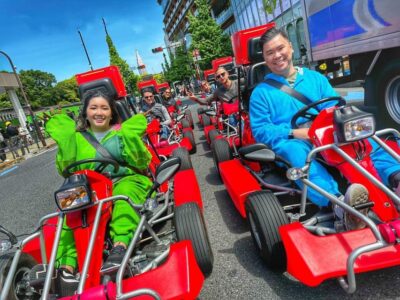 ★ 4.9Tokyo: Street Kart Experience in ShibuyaFrom $741 hour
 ★ 5.0Shibuya Meltdown Nightlife Tour: All-You-Can-Drink Bar HoppingFrom $106
 ★ 5.0Shibuya Official Street Go-Kart in Shibuya AnnexFrom $69
 ★ 5.0Tokyo: Shibuya Food Tour (13 dishes and 4 Eateries)From $77
 ★ 5.0Best of Shibuya Food TourFrom $217