
Reviewed · MT FUJI DAY TRIPS
Tokyo: Mount Fuji Private Tour with Scenic Lunch Experience
Mount Fuji is the star, but the best part of this private day is how easily you can shape it around the weather, your walking pace, and your group. You may visit the Chureito Pagoda, peaceful shrines, Fuji Five Lakes, and a thatched-roof village, then sit down to lunch with the mountain in view.
I like the private vehicle for up to six people, especially when traffic or family needs force a change of plan. I also like the countryside lunch, a welcome pause from photo stops and souvenir shops. The main caution is time: Tokyo traffic can eat into a 10-hour day, and the long list of possible stops means you may need to choose rather than see everything.
In This Review
- Key points at a glance
- Why a private Fuji day can work so well
- The road from Tokyo to Mount Fuji
- Mount Fuji Fifth Station at 2,300 meters
- Chureito Pagoda and the 400-step climb
- Iyashi no Sato, old houses and local crafts
- Lake Kawaguchi and the lunch that anchors the day
- Saiko Lake and the Bat Cave
- Oshino Hakkai and the Fuji Five Lakes area
- Kitaguchi Hongu Fuji Sengen Shrine
- Optional hot spring and the Hakone section
- Guides, language, and the human side of the day
- Is $330 good value for up to six people?
- Who should book this Fuji tour?
- My verdict: book it for flexibility, not for a checklist
- FAQ
- How long is the Mount Fuji private tour?
- What is included in the $330 price?
- Is lunch included?
- Does the tour visit Chureito Pagoda?
- Is hotel pickup available in Tokyo?
- Does the tour operate in bad weather?
- Is the tour wheelchair accessible?
Key points at a glance
- Lunch with a Fuji view: Eat at a quiet restaurant beside Lake Kawaguchi or at a family-run farmhouse serving seasonal Japanese food.
- Flexible private touring: Your guide can adjust the day for weather, traffic, children, older relatives, or your preferred mix of nature and culture.
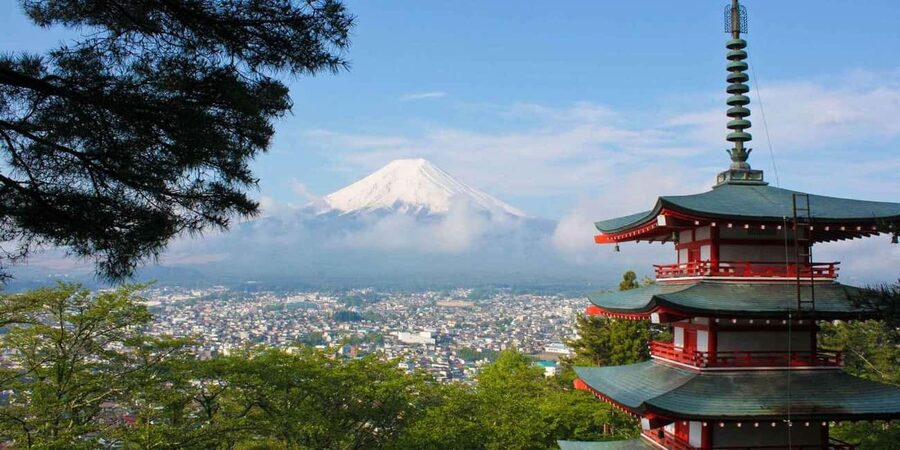
- Chureito Pagoda viewpoint: Allow for roughly 400 stairs to reach the famous photo spot above Arakura Fuji Sengen Shrine.
- Cultural stops beyond the postcard view: Iyashi no Sato and Kitaguchi Hongu Fuji Sengen Shrine add crafts, old buildings, and quiet forest paths.
- Private transport from Tokyo: Hotel pickup, drop-off, Wi-Fi, bottled water, fuel, tolls, and parking are included.
- A strong group value: At $330 for up to six people, the price works out especially well when shared by a family or small group.
Why a private Fuji day can work so well
A Mount Fuji day from Tokyo is not a quick outing. The drive takes about two hours each way, and traffic can stretch that further. On a public coach tour, you follow the clock. Here, your guide can change the order, shorten a stop, or skip a place when the road slows down.
That matters because Fuji is a weather-dependent sight. A clear morning may give you a perfect view, while clouds can gather by afternoon. Guides such as Ali, Sarfy, and Rana have been praised for making sensible changes, helping with photographs, and keeping the day calm when plans shift.
You travel in a private car or van with Wi-Fi and bottled water. Pickup and drop-off cover hotels and accommodations within Tokyo’s 23 wards. For a group of six, this is far more comfortable than splitting into taxis or trying to coordinate several train and bus connections.
The flexibility is useful for families, too. One recent group skipped some stops to suit young children and older grandparents. That is the right way to approach this tour: treat the route as a menu, not a race.
A few more Tokyo tours and experiences worth a look



The road from Tokyo to Mount Fuji
Your day begins with hotel pickup, followed by the drive toward Fuji’s countryside. The journey is long enough that an early start makes sense, though the available start time depends on booking availability.
The first important choice is the weather. If Fuji is visible, your guide may put the biggest viewpoints early. If clouds cover the summit, you can spend more time at shrines, lakes, villages, and craft areas instead of waiting at one lookout.
The private car also gives you a place to leave shopping bags and take a break between walks. Bring comfortable shoes. Several stops include stairs, uneven ground, or paths around wooded areas.
Mount Fuji Fifth Station at 2,300 meters
Mount Fuji Fifth Station is listed as a one-hour visit and sits at about 2,300 meters. It is the highest point on this route that most visitors can reach by road, making it a memorable place to see the mountain from close range.
You will find souvenir shops, cafés, restaurants, and a Shinto shrine. It is not a quiet wilderness stop, but it offers a different view from the lakes below. The air can also feel cooler here, so bring a jacket even if Tokyo feels warm.
The road to the Fifth Station can be affected by seasonal conditions or severe weather. The guide may adjust the plan if access or visibility is poor. Since this is a photo stop rather than a mountain climb, do not expect a hiking experience.
Chureito Pagoda and the 400-step climb
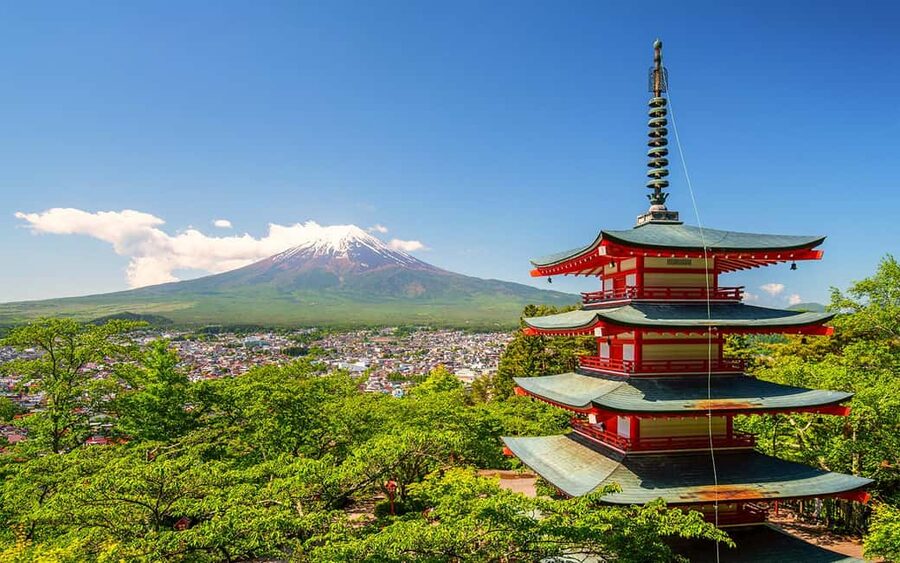
The Arakura Fuji Sengen Shrine and Chureito Pagoda provide the classic Fuji photograph: red pagoda, wooded hillside, and Mount Fuji beyond. The combination is striking, but the view requires effort.
You should expect about 400 stairs to reach the main viewpoint. The climb may be tiring for children, older relatives, or anyone with limited mobility. Take your time, and tell your guide if you would rather stay near the lower shrine grounds.
The reward is one of the strongest photo stops of the day when the sky is clear. Your guide can help with taking pictures, which is useful when your whole group wants to appear in the frame. Bring some yen for small purchases, including the exclusive capsule-toy style souvenirs available at the site.
The shrine itself adds a calmer side to the stop. You are not simply visiting a lookout. You are also passing through a Japanese religious site, so quiet behavior and suitable clothing are wise.
Iyashi no Sato, old houses and local crafts
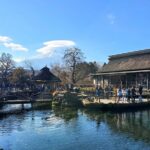
Iyashi no Sato, also called the Healing Village, is a restored thatched-roof hamlet with mountain views and artisan workshops. It gives the day a human scale after the grand Fuji viewpoints.
You can browse traditional crafts and walk among old-style buildings. The village is especially useful if you want more than scenic photographs. It shows how rural Japan is presented and preserved for visitors, with hands-on craft work adding interest.
The exact order of this stop may change. It is not included in every version of the longer stop list, so confirm the final route with your guide at the beginning of the day. That is one advantage of the private format: you can ask to give the village more time if crafts and traditional buildings appeal to you.
Other private tours in Tokyo


Lake Kawaguchi and the lunch that anchors the day
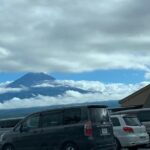
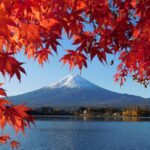
Lake Kawaguchi is one of the best places to pause and look at Fuji from lower ground. Depending on the day, you may stop for photographs at the lakeshore or at a restaurant with a view of the water and mountain.
Lunch is included and is one of the most appealing parts of this experience. The meal may be served at a quiet restaurant overlooking Lake Kawaguchi, or at a family-run farmhouse with garden views and seasonal Japanese dishes.
That difference matters. This is not simply a fast meal grabbed beside a highway. A seated countryside lunch gives you time to enjoy the setting and taste local food without watching the clock every few minutes. You should still confirm the exact restaurant arrangement, since the venue can depend on the route and availability.
The meal is also a practical break. A full day of shrines and viewpoints can become tiring, especially with children or older family members. I would rather spend an unhurried hour over lunch than force in one more rushed photo stop.
Saiko Lake and the Bat Cave
Saiko Lake sits among forests and feels quieter than the better-known viewpoints around Lake Kawaguchi. The stop is suited to people who want trees, water, and a little exploration between the major Fuji photographs.
The nearby Bat Cave adds a more unusual element. This is not just another lake lookout. You get a chance to explore a natural site surrounded by woodland, though paths and surfaces may be uneven.
Comfortable shoes are important here. Ask the guide about the walking conditions before entering, particularly if anyone in your group has balance or mobility concerns. Not every stop on the tour is fully wheelchair accessible, and special arrangements should be discussed in advance.
Oshino Hakkai and the Fuji Five Lakes area
Oshino Hakkai is listed as a short, 30-minute stop. It is a pleasant place to see clear ponds, traditional buildings, local snacks, and Fuji views when the weather cooperates.
The stop can be crowded, especially around popular walking and shopping areas. One practical approach is to stay focused on the ponds and views rather than trying to browse every shop. If you have children, the short visit may be just right. If you want a slower look at the village, ask your guide to trade time from another stop.
The route also includes Lake Yamanaka, another scenic water stop where you may see swans and fish. These smaller lake visits help you compare Fuji from different angles, although the day can feel hurried if you try to include every lake, shrine, village, and hot spring.
Kitaguchi Hongu Fuji Sengen Shrine
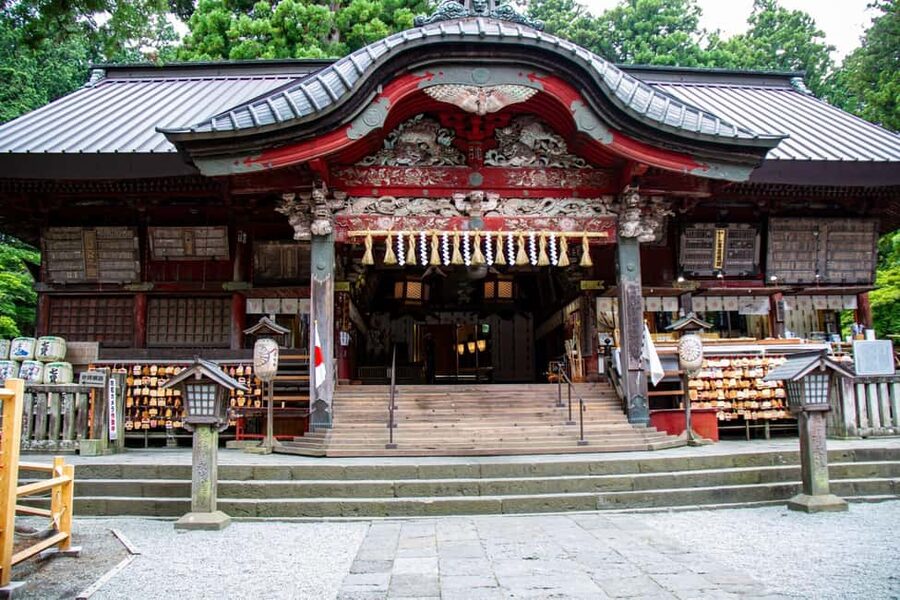
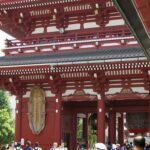
Kitaguchi Hongu Fuji Sengen Shrine is described as roughly 1,900 years old and sits at the base of Mount Fuji. Its large torii gate, old trees, and quiet approach provide a clear change of mood from the busy photo sites.
This is a place to slow down. The forest setting and traditional architecture make it a good stop for anyone interested in Japanese religious culture, not only mountain views. Some shrine or temple areas may require you to remove your shoes before entering.
You should allow your guide to explain the basic customs, then observe what people around you are doing. The private setting makes it easier to ask questions without holding up a bus full of people.
Optional hot spring and the Hakone section
The supplied route also includes a hot spring visit with up to two hours for a guided visit and free time, plus stops in Hakone and at Lake Ashi. These locations can make the day appealing to someone who wants both Mount Fuji and a taste of Hakone.
But this is where planning becomes important. A 10-hour tour from Tokyo cannot give every stop a long visit, particularly when the route includes Fuji Fifth Station, Chureito Pagoda, several lakes, Oshino Hakkai, a shrine, lunch, a hot spring, Hakone, and Lake Ashi.
Ask at pickup which version of the route is realistic for your date. You may need to choose between more time around the Fuji Five Lakes and adding Hakone. A private tour gives you that choice, but it does not remove the physical distance or traffic.
Guides, language, and the human side of the day
English and Japanese guiding are available. Named guides who have led this experience include Ali, Sarfy, and Rana. Ali is described as patient and flexible, Sarfy as a friendly driver who gives seasonal advice, and Rana as a guide who made the route more enjoyable through explanations along the way.
The feedback is not uniformly perfect. One visitor had difficulty understanding the guide’s English and ended the tour early. That is worth taking seriously if detailed English commentary is central to your plans. When booking, confirm the guide language and explain how much interpretation you want.
Photography help is included. This sounds minor, but it is valuable at Chureito Pagoda and the lakes, where getting the mountain, pagoda, and group into one image can be awkward. Guides can also suggest which stops are worth keeping when clouds or crowds change the day.
Is $330 good value for up to six people?
At $330 per group, the value is strongest when six people share the cost. That works out to $55 each before any personal spending, and the fee includes private transport, hotel pickup and return, guide service, Wi-Fi, bottled water, fuel, tolls, parking, and the countryside lunch.
A couple will pay more per person, but may still find the cost reasonable for a private 10-hour day with door-to-door transport. You are paying for time and control as much as for admission or sightseeing.
The price does not include personal expenses or optional activities. Bring yen because some rural shops and restaurants do not accept credit cards. Alcohol and drugs are not permitted.
Free cancellation is available up to 24 hours before departure, and you can reserve while paying later. The tour operates year-round, rain or shine, though severe weather can lead to route changes.
Who should book this Fuji tour?
I would recommend it for families, small groups, and anyone who values a private vehicle over a fixed coach schedule. It is also a good fit if you want a mix of Fuji photographs, shrines, village crafts, lakes, and a proper lunch.
It suits photography-minded visitors because the guide helps with pictures and can adjust stops for light, crowds, and weather. It also works for first-time Fuji visitors who want advice instead of having to choose every location alone.
I would hesitate if you want a slow, detailed visit at every stop. The route offers many possibilities, but the drive from Tokyo and unpredictable traffic limit how much time you have on the ground. People with mobility concerns should also ask about accessible arrangements before booking, since stairs and uneven paths are part of several visits.
My verdict: book it for flexibility, not for a checklist
This is a good choice when you want Mount Fuji your way. The scenic lunch, private transport, photography help, Chureito Pagoda, Iyashi no Sato, Saiko Lake, and old shrine paths give the day more range than a single lookout visit.
Book it if you can accept a flexible route and are willing to drop a stop when traffic or weather demands it. Ask the guide at the start to rank the day’s priorities, especially if you want both the Fuji Five Lakes and Hakone. For a group sharing the $330 cost, the mix of comfort, control, and countryside access makes this a strong value.
FAQ
How long is the Mount Fuji private tour?
The tour lasts 10 hours, including hotel pickup and return within Tokyo’s 23 wards.
What is included in the $330 price?
The price covers a private group of up to six people, an English or Japanese-speaking guide, private car or van transport, Wi-Fi, bottled water, hotel pickup and drop-off, parking, tolls, fuel, and a countryside lunch.
Is lunch included?
Yes. The included lunch takes place at a countryside restaurant with Fuji views. It may be beside Lake Kawaguchi or at a family-run farmhouse serving seasonal Japanese dishes.
Does the tour visit Chureito Pagoda?
Yes. The route includes Arakura Fuji Sengen Shrine and Chureito Pagoda. Reaching the main viewpoint involves about 400 stairs.
Is hotel pickup available in Tokyo?
Yes. Pickup is available from hotels or other accommodations within Tokyo’s 23 wards. You need to provide your accommodation details when booking.
Does the tour operate in bad weather?
The tour operates year-round in rain or shine. Severe weather may require an adjustment to the route.
Is the tour wheelchair accessible?
The activity is described as wheelchair accessible, but not all locations are accessible. Contact the provider in advance to discuss special arrangements, since some stops include steps or uneven paths.
More Lunch Experiences in Tokyo


More Private Tours in Tokyo
More Mt Fuji Day Trips in Tokyo
More tours in Tokyo we've reviewed



Mt Fuji Day Trips, compared.
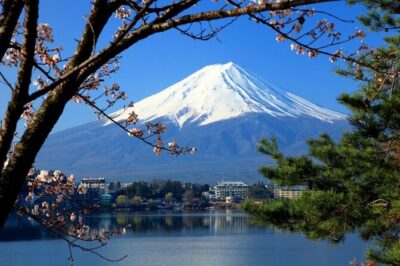 ★ 5.0Mt Fuji and Hakone 1-Day Bus Tour Return by Bullet TrainFrom $163
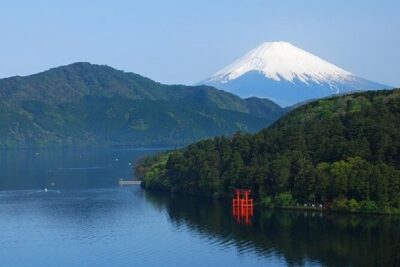 ★ 4.0Mt Fuji & Hakone Cruise, Drum Show Bullet Train 1 Day from TokyoFrom $149
 ★ 4.4Tokyo Mt Fuji 5th St & Hakone Cruise Bus Tour w/Bullet TrainFrom $15410 hours
 ★ 4.5From Tokyo: Mount Fuji Full-Day Sightseeing TripFrom $6810 hours
 ★ 4.7Tokyo: Mt. Fuji Tour, Hakone Ropeway, Owakudani, Lake AshiFrom $5410 hours
 ★ 4.4Tokyo:Mt.Fuji,Kawaguchiko Oishi Park,Arakurayama Sengen ParkFrom $5410 hours