
Reviewed · TOKYO
Tokyo: Make Your Own Hanko Stamp — Unique Cultural Souvenir
A Japanese hanko is more than a souvenir. It is a personal seal used as a mark of identity, and this 90-minute Otemachi workshop lets you design and carve one inside a traditional Tokyo seal shop. You choose your name in kanji or katakana, then work with a local craftsman to turn it into a small stone stamp.
I like two things right away: the group is limited to four people, and the finished seal comes with its own case. You are not simply watching a demonstration or buying a ready-made trinket. You make the design yourself, with help from a multilingual guide and the shop staff.
The main drawback is the price, $154 per person, for a short activity. It makes the most sense if you value hands-on craft and a personal keepsake more than a packed sightseeing schedule. Transportation and personal purchases are extra.
In This Review
- Key Points
- Why a Hanko Makes a Better Souvenir Than Another Key Ring
- Meeting in Otemachi and Entering the Seal Shop
- Choosing Between Kanji and Katakana
- Carving Your Personal Seal With Local Help
- The First Red Impression
- What the $154 Price Really Covers
- Who Will Get the Most From This Workshop
- Language Support and the Role of the Interpreter
- Booking Flexibility for a Fixed 90-Minute Plan
- What the Small Group Changes
- Should You Book the Tokyo Hanko Workshop?
- FAQ
- How long does the hanko workshop last?
- Where is the meeting point?
- What languages are available?
- How many people can join the workshop?
- What is included in the price?
- Do I need previous carving experience?
- Can children join the activity?
- Is the workshop wheelchair accessible?
- Can I cancel for a full refund?
Key Points
- Design your name in kanji or katakana: A multilingual guide explains the meaning of the characters before you choose.
- Carve the seal yourself: Staff support you throughout, so no prior carving skill is needed.
- Work in a real traditional seal shop: The setting gives the activity more substance than a standard souvenir stop.
- Keep a functional memento: Your completed hanko comes in a protective case and can be stamped with red ink.
- Enjoy a small private group: A maximum of four participants allows close help from the local staff.
- Plan for all weather: The workshop takes place indoors and is wheelchair accessible.
Why a Hanko Makes a Better Souvenir Than Another Key Ring
I like souvenirs that carry a story. A hanko does that neatly. In Japan, personal seals have long been used as a sign of identity and authenticity. Your finished stamp is small, light, and easy to pack, but the process behind it gives it more meaning than a shop-bought object.
You begin by deciding how your name will appear. Depending on the name, the guide may help you choose kanji characters with suitable meanings or use katakana, the Japanese script commonly used for foreign names. This is one of the most useful parts of the workshop because the choice is not just a visual one. You learn what the characters represent and why one design may suit your name better than another.
I would not expect a perfect translation of every Western name into a single elegant kanji phrase. Names can require judgment, and the guide is there to explain the options. That small conversation is part of the cultural value. You leave with a seal that reflects a decision you made, rather than a generic Japanese symbol selected from a shelf.
If you're still narrowing it down, here are other tours in Tokyo we've reviewed.


Meeting in Otemachi and Entering the Seal Shop
The meeting point is the Lawson in front of Taihodo, at the Shin-Otemachi Building, 2-2-1 Otemachi, Chiyoda-ku. You should allow enough time to find the building and the convenience store, since Otemachi is a major business district with large buildings and busy underground connections.
A multilingual host welcomes you there and leads the workshop. Support is available in English, French, Spanish, Italian, and Chinese. That matters during the name-design stage, when a small language misunderstanding could affect the character choice.
The shop itself is a long-established traditional seal shop. The activity takes place indoors, so rain or heat will not spoil your plans. The setting is a useful part of the visit. You are not only being shown a craft in a classroom made for tourists. You are working in a place dedicated to making hanko.
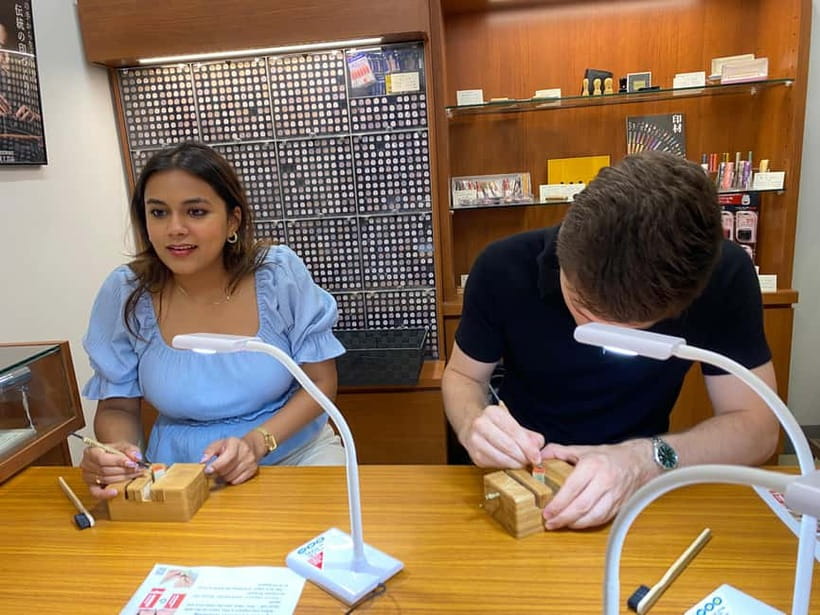
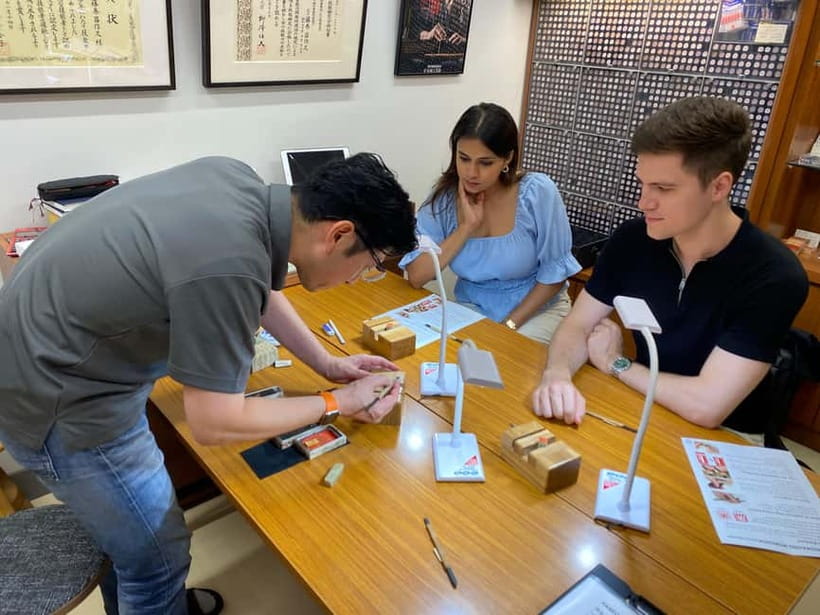
The arrangement is a private group with no more than four participants. I see that as a major advantage for a carving activity. Four people can ask questions without waiting through a large class, and staff can give closer help when you hold the carving tool.
Choosing Between Kanji and Katakana
The name-design stage is where the workshop becomes personal. You discuss your name with the guide and choose either kanji or katakana. The guide explains the meaning of the selected characters, helping you understand what will appear on your seal rather than treating the script as decoration.
Kanji can give a name a more symbolic feel because each character carries meaning. Katakana offers a direct way to represent foreign names in Japanese writing. Neither choice is automatically better. I would choose based on the explanation you receive and the look you want, not on trying to force your name into the most elaborate design.
You also choose a calligraphy style. This changes the character of the final seal. A more formal style may feel traditional, while another style may be easier to read. The available choices are explained at the shop, so you do not need to know Japanese calligraphy before arriving.
Take a moment here. Once the design moves into the carving stage, changes may not be simple. Ask the guide to repeat a character’s meaning if you are unsure, and look carefully at the final design before you start. This is a practical tip, not a warning meant to make the process tense. The name selection is one of the few parts you control completely.
Carving Your Personal Seal With Local Help
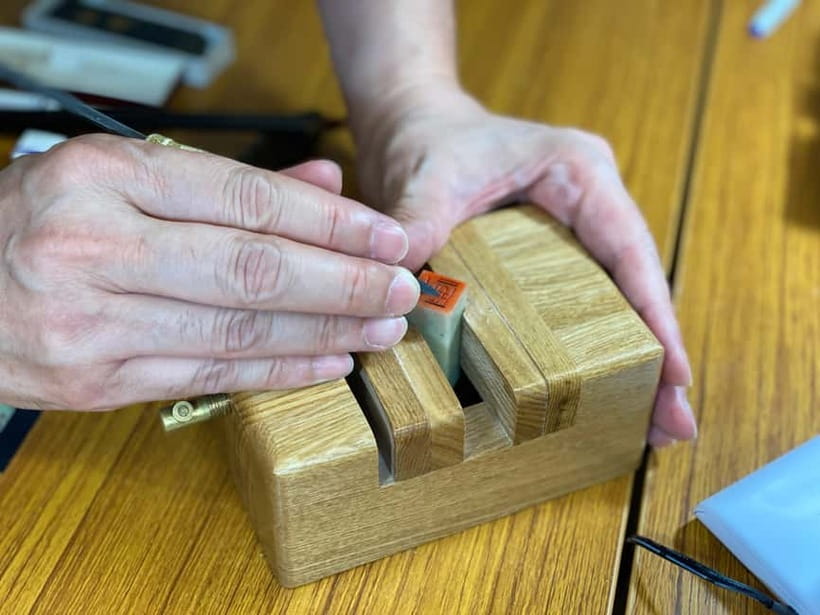
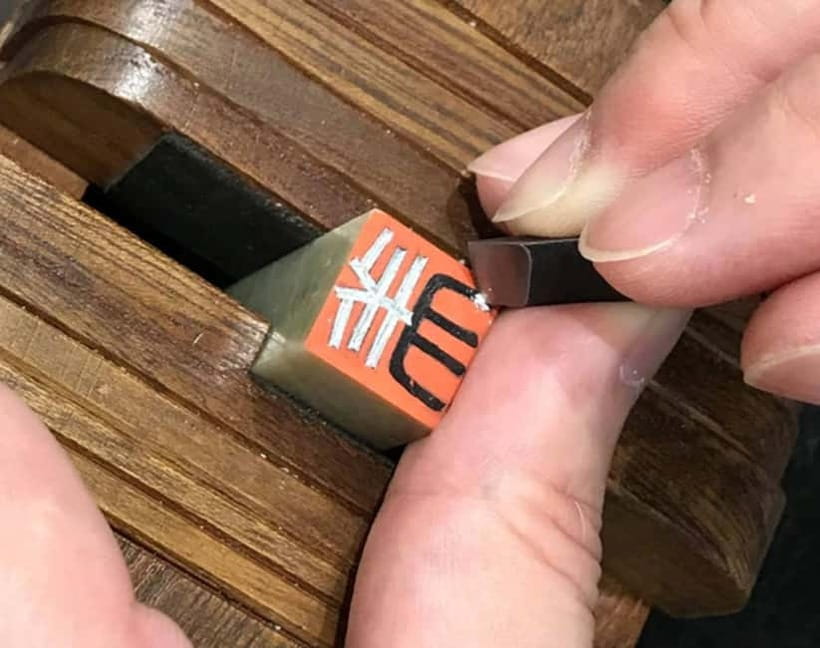
After the design and style are set, you begin carving. The staff guide you through the process and help with safety and precision. You do not need previous experience, which is important because most people will not have carved a seal before.
The balance here is well judged. You are doing the hands-on work, but you are not left alone with a tool and a difficult block of material. The local craftsman works directly with the group, while the interpreter or multilingual guide helps communication run smoothly. That combination lets you take part without needing technical knowledge.
Your carving will have the marks of a first attempt. That is part of the charm. This is not a factory-made souvenir disguised as a craft lesson. You take home an object connected to the time you spent making it. At the same time, staff support means the final result should remain a usable seal rather than an unfinished experiment.
I would treat the carving as a focused activity. The full session lasts 90 minutes, and much of that time is given to design, instruction, and careful work. You will not be racing between sights, but you will need to pay attention. Children under five may attend as observers, but they cannot carve. Older children can take part with staff support, though an adult should consider how well they handle a small, careful task.
The First Red Impression
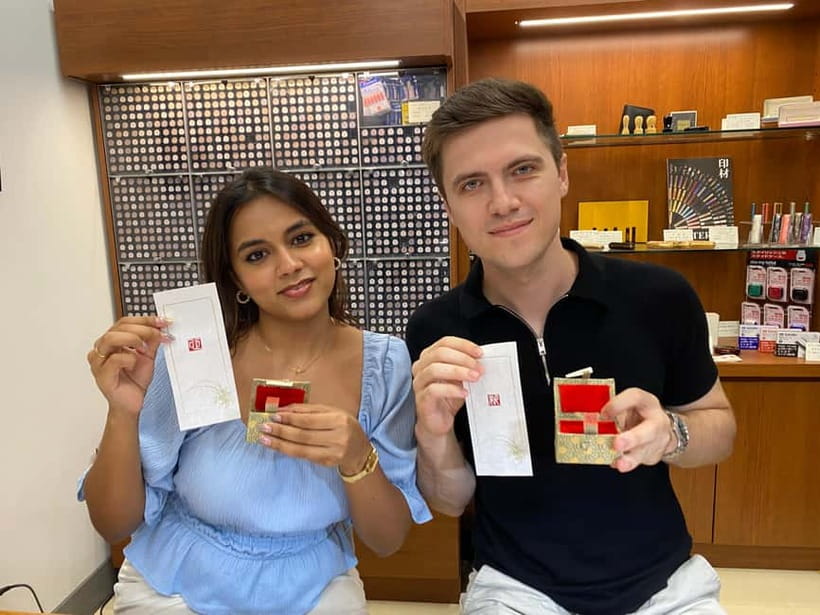
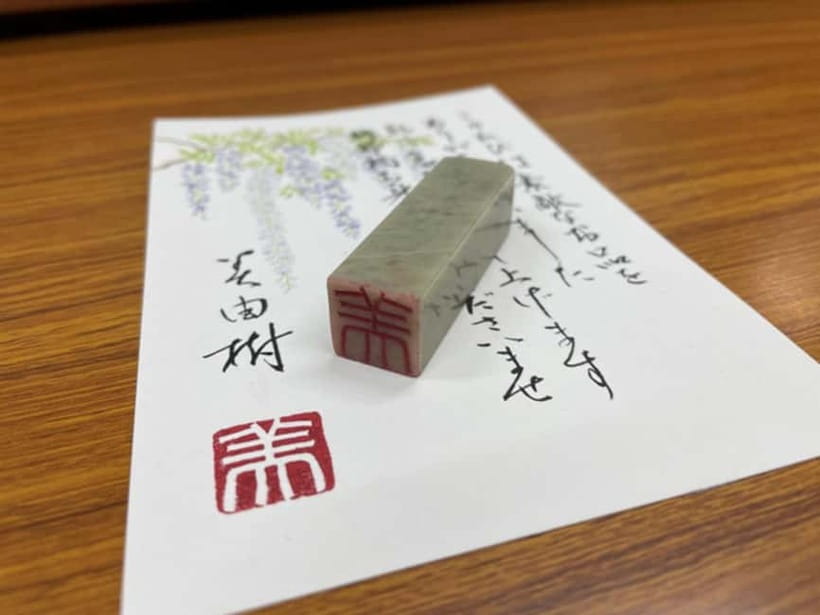
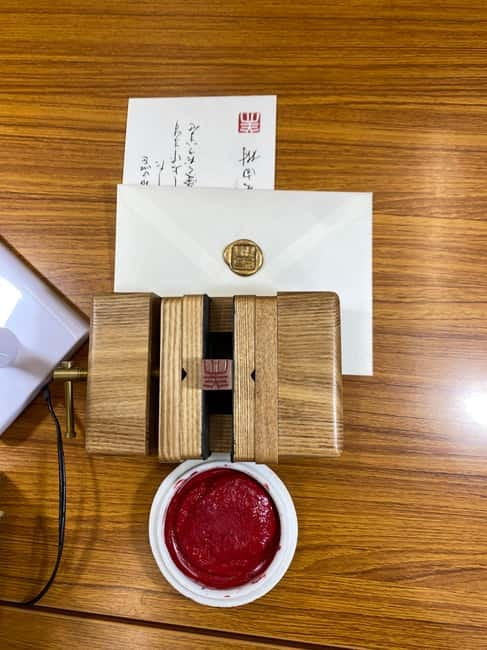
When your hanko is finished, you stamp it with traditional red ink. This first impression is the satisfying payoff. You see the characters appear in a strong red mark, and you can take commemorative photos of the result.
The stamping also helps you understand how the seal works. A hanko is not only an object to display. It is a personal mark, and the act of pressing it onto paper connects the souvenir to its practical role in Japanese life.
Your original hanko comes with a seal case. That inclusion improves the value because you do not need to find separate protection for a small object that could otherwise get lost in your luggage. The case also makes the souvenir feel finished and ready to keep.
The seal may become a useful desk object, a travel memory, or a personal stamp for cards and craft projects. The supplied information describes it as a functional and symbolic memento, but I would not assume it replaces an official Japanese seal for legal or administrative use. Its value here is personal and cultural.




What the $154 Price Really Covers
At $154 per person, this is not a budget activity. A short workshop can look expensive beside a museum ticket or a casual craft class. I would judge the price by what is included and by how much personal attention you receive.
The fee covers the original hanko, carving, the seal case, and a multilingual guide. You also get access to the traditional shop, direct help from experienced local staff, name-design support, and a private group limited to four people. Those details make the cost easier to understand than a simple 90-minute souvenir purchase.
The value is strongest for someone who wants a made-by-you object and a cultural explanation. If you only want a Japanese stamp for decoration, you can likely find cheaper souvenirs. If you enjoy crafts, have a special name you want to represent, or are tired of buying things that could come from any airport shop, the price becomes more reasonable.
Transportation is not included, and personal shopping costs are separate. The activity begins at the stated Otemachi meeting point, so you need to arrange your own way there. Because the meeting point is specific, I would save the full address before setting out: Lawson in front of Taihodo, Shin-Otemachi Building, 2-2-1 Otemachi, Chiyoda-ku.
Who Will Get the Most From This Workshop
I would recommend this for adults and families who enjoy making something with their hands. It suits a first visit to Tokyo, but it also works for a return visit when you have already seen the major sights and want a quieter cultural activity.
It is especially good for:
- People who want a souvenir tied to their own name
- Couples or families who can compare different character and calligraphy choices
- Visitors interested in Japanese writing and traditional crafts
- Anyone who prefers a small private group to a large class
- Children old enough to follow careful carving instructions
- Visitors who need an indoor plan in uncertain weather
It may not suit you if you want a fast, casual activity with little concentration. The process involves choosing characters, selecting a style, and carving with care. You also need to decide if a 90-minute craft session is worth $154 rather than spending that time on another Tokyo sight.
The activity is wheelchair accessible, and staff can assist if needed. Pets are not allowed. Those details make it easier to plan for a mixed-age or mixed-mobility group, but young children under five remain observers only.
Language Support and the Role of the Interpreter
Language support is central to this activity, not a minor extra. The available languages are English, French, Spanish, Italian, and Chinese. You need to understand the character meanings and the carving instructions, so having help in a familiar language can make the session more relaxed.
One verified account described an interpreter helping the group communicate while the craftsman worked directly with them. That is the arrangement I would want here: the guide handles the explanations, while the local craftsperson focuses on the seal itself.
No individual guide or craftsman names are provided, so you should not book this expecting a named host. The important point is the language range and direct staff support. You can join with confidence even if you cannot read Japanese.
Booking Flexibility for a Fixed 90-Minute Plan
The session lasts 90 minutes, with starting times based on availability. That length fits well between other plans in central Tokyo. I would avoid placing it beside a must-not-miss timed attraction, though. The workshop has several stages, and you will want a little breathing room for finding the meeting point.
The activity offers reserve-now-and-pay-later booking, which can help if your Tokyo schedule is still shifting. You can also cancel up to 24 hours in advance for a full refund. Those terms are useful for a trip with uncertain weather or changing plans, but you still need to check the selected time when booking.
Because the workshop is indoors, it runs in all weather conditions. That gives you a reliable option on a rainy day, but it also means the activity does not provide an outdoor break from Tokyo’s streets. I would pair it with nearby Otemachi or central Tokyo plans rather than crossing the city just for the workshop.
What the Small Group Changes
A maximum of four participants makes a real difference here. In a large class, the design explanation could become a quick presentation and the carving help could feel rushed. With four people, you have a better chance to ask about your name, calligraphy style, and technique.
The private format also works well for a group with different interests. One person can focus on the meaning of the characters, another can ask about the craft, and everyone can carve at their own pace within the session. The staff can assist if someone feels unsure about the tool or the design.
The tradeoff is that the small capacity may limit available times, especially if you are booking close to your visit. I would reserve once your Tokyo dates are firm, while keeping the 24-hour cancellation option in mind.
Should You Book the Tokyo Hanko Workshop?
Book it if you want a souvenir that records your own choices and effort. The best parts are the name-design discussion, direct help from the local craftsman, the small group, and the finished hanko with its case. The perfect score from the three listed ratings fits the strengths of the activity: kind staff, clear explanations, and a memorable local setting.
Think twice if you are measuring value only by minutes or if $154 feels high for a 90-minute session. This is not a broad introduction to Tokyo, and it does not include transport or shopping. It is a focused craft workshop.
My call is simple: book it for personal meaning, not for sightseeing volume. If you would enjoy seeing your name become a Japanese seal, learning why the characters were chosen, and taking home something you helped carve, this is a strong pick. If you prefer inexpensive souvenirs or a packed city tour, spend your budget elsewhere.
FAQ
How long does the hanko workshop last?
The workshop lasts 90 minutes.
Where is the meeting point?
Meet at the Lawson in front of Taihodo, in the Shin-Otemachi Building at 2-2-1 Otemachi, Chiyoda-ku, Tokyo.
What languages are available?
Live guide support is available in English, French, Spanish, Italian, and Chinese.
How many people can join the workshop?
The activity is a private group with a maximum of four participants.
What is included in the price?
The price includes the original hanko seal, carving fee, seal case, and multilingual guide.
Do I need previous carving experience?
No. Previous experience is not required, and staff support you throughout the carving process.
Can children join the activity?
Children under five may join as observers but cannot carve. The activity is designed for all ages.
Is the workshop wheelchair accessible?
Yes. The workshop is wheelchair accessible, and staff can assist if needed.
Can I cancel for a full refund?
Yes. You can cancel up to 24 hours in advance for a full refund.
More tours in Tokyo we've reviewed





Tokyo, compared.
 ★ 5.0Mt Fuji and Hakone 1-Day Bus Tour Return by Bullet TrainFrom $163
 ★ 5.01-Day Tokyo Bus TourFrom $129
 ★ 4.6Tokyo: teamLab Planets TOKYO Digital Art Museum Entry TicketFrom $251 day
 ★ 4.0Mt Fuji & Hakone Cruise, Drum Show Bullet Train 1 Day from TokyoFrom $149
 ★ 5.0Tokyo: Shinjuku Food Tour (13 Dishes at 4 Local Eateries)From $86
 ★ 4.4Tokyo Mt Fuji 5th St & Hakone Cruise Bus Tour w/Bullet TrainFrom $15410 hours