
Reviewed · WORKSHOPS
Tokyo Keen Japanese Knife and Sashimi Workshop
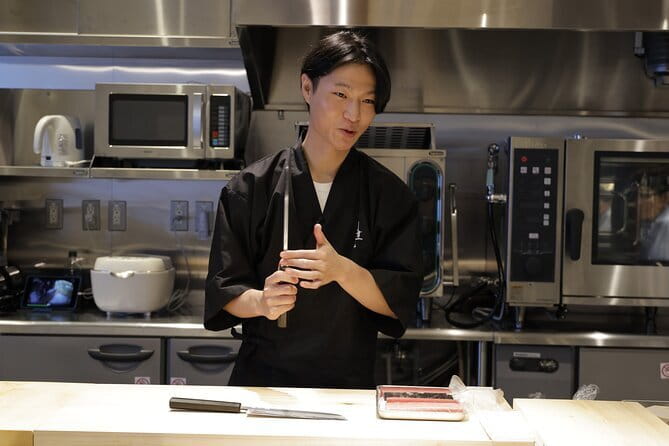
A Japanese knife can change how you cut fish, and this Tokyo workshop lets you feel that difference yourself. You’ll learn how these knives are made, watch Chef Naoya demonstrate sashimi cutting, then use the blade before preparing tuna zuke-don for lunch. I especially like the hands-on sharpening lesson and the chance to eat a dish you prepared yourself. The class is capped at eight people, though the $130.78 price may feel high if you only want a quick cooking lesson.
I also like the patient bilingual instruction from Chef Naoya and interpreter Hiromi. The session covers culture, knife care, cutting technique, and cooking rather than treating the knife as a simple souvenir. The main consideration is that the workshop lasts about two hours, so it offers a focused introduction, not a full professional chef course.
In This Review
- Key points to know before booking
- What this Tokyo knife workshop is really about
- Watching Chef Naoya demonstrate Japanese knife work
- Getting your hands on the knife
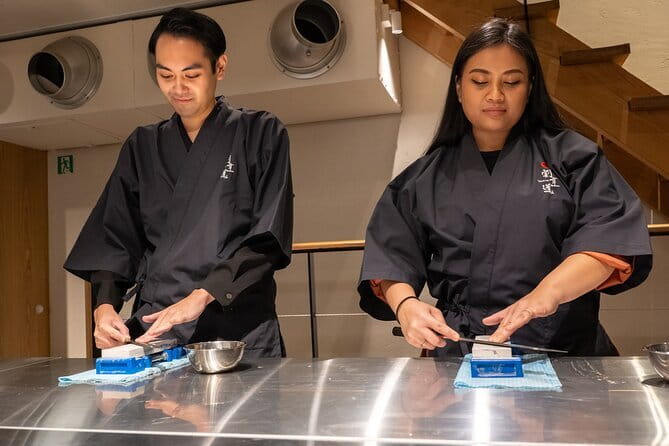
- Learning to sharpen with a Japanese whetstone
- Making zuke-don for lunch
- Why the small group matters
- What is included for the $130.78 price
- Who will enjoy this class most
- Timing, meeting point, and booking advice
- The best reasons to book, and the main cautions
- Should you book the Tokyo Japanese Knife and Sashimi Workshop?
- FAQ
- How long does the Japanese knife and sashimi workshop last?
- Where does the workshop meet?
- How many people can join the class?
- Is lunch included?
- What kind of fish is used?
- Are drinks included?
- Do I need to bring knives or an apron?
- Is the class taught in English?
- Can I cancel for a full refund?
Key points to know before booking
- Sharpen on a whetstone: You’ll learn a basic Japanese knife-sharpening method, even if you have never used a wet stone before.
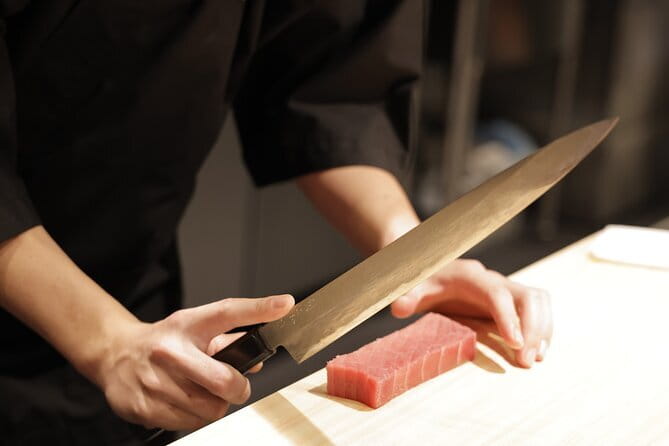
- Cut sashimi yourself: After watching the demonstration, you’ll handle a Japanese knife and practise cutting raw fish.
- Make tuna zuke-don: Your lunch is a rice bowl topped with sashimi marinated in a seasoned sauce, served with miso soup.
- Small class size: A maximum of eight participants allows for close instruction and repeated practice.
- Bilingual support: Chef Naoya leads the practical work, with Hiromi helping explain the class in English.
- Useful extras: Tools, aprons, drinks, original sake tasting, a certificate, and a 10 percent same-day shop discount are included.
What this Tokyo knife workshop is really about
This is not simply a class on how to hold a knife. It presents the Japanese knife as a working tool shaped by craft, custom, and food culture.
You begin with an explanation of how a Japanese knife is made and why different knives are used for different jobs. That background matters because sashimi cutting is not just about force. The angle, sharpness, and direction of the cut affect the texture of the fish.
I like this opening because it gives purpose to the practical lessons that follow. Instead of sharpening a blade as an isolated activity, you learn why the edge matters and how Japanese knife work differs from the approach many home cooks use.
The workshop takes place at Kappodo H.Q., the Tokyo D Kitchen Studio in Nishiazabu, Minato City. The listed address is 2-chome 21-12 DK Building, Tokyo 106-0031. The studio is near public transportation, but private transportation is not included, so you’ll need to make your own way there.
A few more Tokyo tours and experiences worth a look

Watching Chef Naoya demonstrate Japanese knife work
The demonstration is the visual center of the class. Chef Naoya shows how a Japanese knife is used to cut sashimi, giving you a clear model before you try it yourself.
This is where the class earns its place over a standard cooking lesson. Sashimi cutting looks simple when an expert does it, but the method depends on controlled movement and a very sharp blade. You’ll see that the knife is meant to do the work, rather than being pushed and hacked through the fish.
The teaching style is supported by Hiromi, the English interpreter. That is useful for a class built around small physical details. A short explanation of blade position or cutting direction can make a large difference when you are holding the knife yourself.
The instruction is designed for beginners. You do not need to arrive with Japanese knife experience, and the class includes guidance for first-time whetstone users. Still, you should expect to pay attention and follow directions carefully. This is a practical skill session, not a demonstration where you sit back and watch the whole time.
Getting your hands on the knife
After the demonstration, you use a Japanese knife to cut sashimi. This is the moment when the talk about sharpness becomes real.
The class gives you a chance to notice how little pressure is needed when the blade is properly prepared. You’ll also get a better feel for the difference between watching a professional and repeating the movement yourself. The pace allows practice, and the instructor can correct your technique as you work.
I see this as one of the strongest parts of the experience. Many food tours let you taste a dish or watch a chef prepare it, but this session asks you to take part in a skill that is closely tied to the final meal.
There is also a practical lesson here for your own kitchen. You may not recreate restaurant-level sashimi at home after one class, but you can carry away a better sense of how to make clean cuts and how to treat a sharp knife with care.
Learning to sharpen with a Japanese whetstone
While the fish marinates, you learn how to sharpen a Japanese knife using a whetstone. The timing is smart because it keeps the class moving while the zuke sauce does its work.
The sharpening lesson is aimed at beginners. The instructor helps you understand the basic movement and how to keep the blade in contact with the stone. This is not presented as a quick trick. It is a maintenance skill that takes patience, but the class gives you a useful first step.
You may find this more valuable than expected. A good knife becomes less useful if you do not know how to care for it. Learning to sharpen properly also helps you understand why Japanese knives require careful handling.
The supplied tools and apron are included, so you do not need to bring workshop equipment. If you already own a Japanese knife, the lesson may help you care for it more confidently. If you are new to quality knives, it gives you a basis for comparing blades at home or in Tokyo shops.
Making zuke-don for lunch
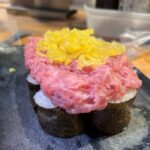
Once you have practised cutting, you prepare zuke-don. This is a bowl of rice topped with marinated sashimi, usually tuna, although the fish can change depending on availability.
The process connects the knife lesson to a complete Japanese meal. You are not cutting fish merely for practice. You use it in the bowl you will eat at the end of the workshop.
The marinated fish rests while you work on sharpening, then you assemble the dish. Your lunch includes the tuna bowl you made and miso soup. Drinks are included as well, with a tasting of Kappodo’s original sake. Tea may also be available as part of the meal service, based on the experience details provided.
I like this finish because it gives the workshop a clear reward without turning lunch into the only point of the activity. The food is both a meal and a measure of what you learned. Cleanly cut fish and well-prepared rice make the knife practice feel useful.
If you do not eat raw fish, this activity may not be a good match. The central dish is sashimi zuke-don, and no alternative meal is specified. The fish used can vary, but the workshop is clearly built around marinated raw fish.




Why the small group matters
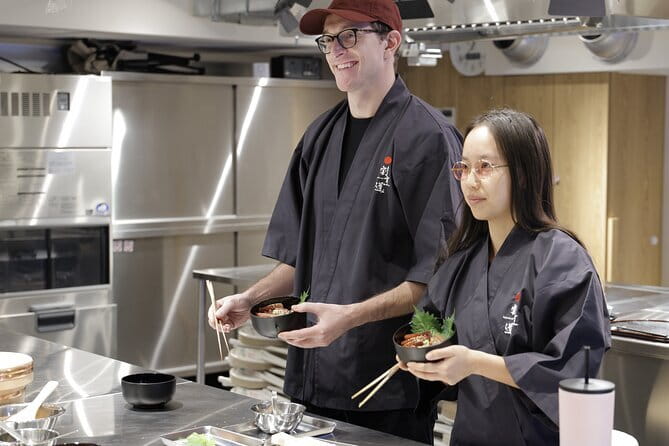
The class accepts no more than eight participants. That is a meaningful limit for a lesson involving knives and sharpening stones.
With fewer people, you should have a better chance to see the demonstrations and receive direct help while cutting or sharpening. The practical format works best when the instructor can watch your hand position instead of speaking to a large room.
The class may also feel more personal if fewer people book your date. One past booking had only a participant and the teaching team, though you should not assume every session will be that small.
The bilingual setup is another advantage for international visitors. Chef Naoya teaches the craft, while Hiromi helps bridge the language gap. The instruction is delivered in Japanese and English, and the emphasis is on patient demonstrations and repeated practice.
What is included for the $130.78 price
At $130.78 per person, this is not a low-cost lunch activity. The price makes more sense when you count the workshop elements together.
You receive:
- About two hours of instruction
- Use of all tools
- An apron for the lesson
- Knife-making and knife-culture explanations
- A knife-work demonstration
- Sashimi-cutting practice
- Japanese whetstone sharpening instruction
- A cooking class
- The zuke-don lunch you prepare
- Miso soup
- A tasting of original sake
- A tour guide
- A participation certificate
- A 10 percent discount at the first-floor shop on the same day
The shop discount may add value if you plan to buy a Japanese knife or related item after class. Do not treat it as an automatic saving, though. It only helps if you were already considering a purchase, and the price of shop items is not provided.
I would book this for the instruction, food, and access to the tools, not for the certificate. The certificate is a pleasant keepsake, but the real value is leaving with a basic understanding of sharpening and sashimi technique.
Compared with a short cooking class, the workshop covers more ground. Compared with a full knife-making course, it is a brief introduction. Your decision should depend on which of those experiences you want.
Who will enjoy this class most
This workshop suits you if you have a real interest in Japanese food, kitchen tools, or practical crafts. It is especially useful for home cooks who already own good knives or are considering buying one.
It also works well for a food-focused Tokyo itinerary. The lunch is part of the lesson, and the preparation gives you more connection to the dish than simply ordering tuna over rice in a restaurant.
You do not need advanced cooking skills. The instruction is intended to be friendly to people from abroad, and beginners receive help with the whetstone. Still, you should be comfortable handling a sharp knife and interested in active participation.
The experience is less suitable if you want a broad tour of Tokyo, a market visit, or a long meal. You stay at the studio, and the activity ends back at the meeting point. It is also not the right pick if raw fish is not part of your diet.
Timing, meeting point, and booking advice
The workshop lasts approximately two hours. That makes it easy to fit into a Tokyo day, but you should allow extra time to reach Nishiazabu and find the DK Building before the start.
The meeting point is Kappodo H.Q., Tokyo D Kitchen Studio, at the Nishiazabu address listed above. The end point is the same place. No private transportation is provided, though the studio is near public transportation.
This experience is often booked about 46 days ahead. That booking pattern suggests you should reserve early if your Tokyo dates are fixed, especially because the class has a maximum of eight people.
Confirmation is provided at booking. Free cancellation is available up to 24 hours before the local start time for a full refund. Cancellations or changes made less than 24 hours before the start are not accepted for a refund. The class also requires a minimum number of participants, and if that minimum is not reached, you will be offered another date or experience, or a full refund.
The best reasons to book, and the main cautions
The strongest reason to book is the combination of explanation and practice. You learn about knife culture, watch a professional, cut sashimi, sharpen a blade, and prepare lunch in one compact session.
The instructors are another important part of the choice. Chef Naoya and Hiromi provide a Japanese and English teaching team, and the class puts emphasis on patience, questions, and repeated practice. That should help if you are curious but unsure about using a whetstone or slicing raw fish.
The main caution is the price. At $130.78, you are paying for a specialist class rather than a casual cooking activity. You should also consider the focused nature of the experience: there is no private transportation, no wider Tokyo sightseeing, and no specified substitute for the sashimi-based lunch.
Should you book the Tokyo Japanese Knife and Sashimi Workshop?
Book it if you want to understand Japanese knives by using one, not just looking at one in a shop. The sashimi practice, whetstone lesson, bilingual instruction, and zuke-don lunch give you a practical two-hour introduction with a clear connection between craft and food.
I would especially recommend it to home cooks, food lovers, and visitors considering a Japanese knife purchase. The 10 percent shop discount is a useful extra on the day, but it should not be your reason for booking.
Skip it if you dislike raw fish, want a cheaper meal-based class, or prefer a general Tokyo tour. For everyone else, this is a focused and worthwhile way to spend two hours, with a skill you can keep practising long after the tuna bowl is gone.
FAQ
How long does the Japanese knife and sashimi workshop last?
The workshop lasts approximately two hours.
Where does the workshop meet?
It starts and ends at Kappodo H.Q., Tokyo D Kitchen Studio, at DK Building, 2-chome 21-12, Nishiazabu, Minato City, Tokyo 106-0031.
How many people can join the class?
The activity has a maximum of eight participants.
Is lunch included?
Yes. You prepare a zuke-don rice bowl topped with marinated sashimi, and the meal also includes miso soup.
What kind of fish is used?
Tuna is normally used for the zuke-don, but the fish can vary depending on availability.
Are drinks included?
Yes. The experience includes a tasting of Kappodo’s original sake. Tea is also associated with the meal details.
Do I need to bring knives or an apron?
No. All tools and aprons used during the lessons are included.
Is the class taught in English?
The instruction is provided in Japanese and English, with Chef Naoya teaching and Hiromi assisting as interpreter.
Can I cancel for a full refund?
Yes. You can cancel at least 24 hours before the local start time for a full refund. Cancellations or changes made less than 24 hours before the start are not refunded or accepted.
More Workshops & Classes in Tokyo
More tours in Tokyo we've reviewed





Workshops, compared.
 ★ 5.0Sushi Making Tokyo Roll and Authentic Japanese Sushi ClassFrom $59
 ★ 4.9Tokyo: Roll and Authentic Sushi Making Class in AsakusaFrom $581h 40m
 ★ 5.0Tokyo Shinjuku Chopsticks Making ClassFrom $20
 ★ 4.9Tokyo: Sushi Making Class in a Happi Coat near a Famous SpotFrom $421h 30m
 ★ 4.8Chopstick Making Workshop in GinzaFrom $251 hour
 ★ 5.0Tokyo Sushi Making Class in Tsukiji with Professional ChefFrom $49