
Reviewed · HAKONE DAY TRIPS
Hike Japan Heritage Hakone Hachiri with certified mountain guide
Hakone Hachiri gives you something many Hakone day trips miss: a chance to walk the old road instead of simply stopping at its famous sights. Over about 8 kilometers, you follow the steep route once used by Edo-period travelers, linking Lake Ashi, the cedar-lined Tokaido road, Yamanaka Castle ruins, and Mishima.
I like the small group size, capped at six, and the way guide Aki, also called Akihiro, connects the trail to everyday Japanese history. I also like that the day finishes in Mishima rather than returning to Hakone, making it useful for a larger Japan itinerary. The main drawback is that this is a full seven-hour outing with hills, buses, and uneven paths, so it needs moderate fitness and decent weather.
In This Review
- Key points to know before you book
- Walking the old Tokaido through Hakone
- The first climb to Amazake Tea House
- Lake Ashi, Heiwa no Torii, and the cedar avenue
- Hakone Checkpoint and the meaning of the road
- Lunch in Hakone-machi and the bus connection
- Yamanaka Castle ruins and changing Fuji views
- Ending in Mishima at the shrine and river
- What the $158.52 price really covers
- Who will get the most from this hike
- Weather, cancellation, and practical planning
- Should you book Hakone Hachiri?
- FAQ
- Where does the Hakone Hachiri hike begin?
- Where does the tour end?
- How far do you walk?
- Is Mt Fuji guaranteed to be visible?
- Are meals included?
- Are transportation costs included?
- How many people can join the tour?
Key points to know before you book
- An 8-kilometer walk through history: Follow the old Tokaido route, including stone paving, cedar trees, a checkpoint, and mountain paths.
- Aki leads a very small group: The maximum is six people, and the guide holds national certification plus a wilderness first aid certificate.
- Lake Ashi is only part of the day: You also see Heiwa no Torii, Yamanaka Castle ruins, Mishima Taisha, and the Genbe River.
- Mt Fuji depends on the sky: You may see it from several angles, especially around Lake Ashi and the castle ruins, but clouds can hide it.
- Transport is built into the route, not the price: A shared taxi and local buses help bridge sections, with about ¥2,000 expected for transport.
- Plan for extra costs: Lunch is around ¥2,000, and the trip from Mishima to Odawara by Shinkansen costs about ¥2,500.
Walking the old Tokaido through Hakone
The heart of this outing is Hakone Hachiri, a Japan Heritage route tied to the old Tokaido Highway. During the Edo period, this road connected Edo, now Tokyo, with Kyoto. The Hakone section was no gentle stroll. It crossed steep mountain terrain, and its stone-paved stretches still give you a feel for the effort involved.
I like this route because it puts Hakone’s famous scenery into context. Lake Ashi is not just a photo stop, and the cedar avenue is not simply a pretty forest. They are pieces of an old travel corridor, explained as you walk.
You meet at Hakone-Yumoto Station at 9:00 in the morning. From there, the group uses a shared taxi to reach the trailhead. That extra ride costs about ¥2,000 for the shared taxi and buses used during the day, but it saves you from spending valuable walking time on ordinary road sections.
The group is limited to six people. That matters on a trail day. Aki can keep the pace personal, stop to explain details, and take family photos, something he has done for visitors on this experience. His calm manner is another plus for a long day on foot.
A few more Hakone tours and experiences worth a look
The first climb to Amazake Tea House
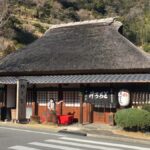
The opening walk lasts about an hour and leads toward the Hakone Amazake Tea House area. The route includes a woodcraft village, where you can see artisans working with local wood.
This is a good start because it eases you into the day with both scenery and local craft. You are not rushed from one famous viewpoint to the next. Instead, the guide has room to explain how people lived, worked, and moved through the Hakone mountains.
The tea house itself is one of the old-road highlights. The name refers to amazake, a traditional sweet rice drink. Amasake and snacks are not included, so bring some yen if you want something along the way. The tour information does not promise a specific tasting, so think of this stop as a cultural pause rather than a guaranteed food experience.
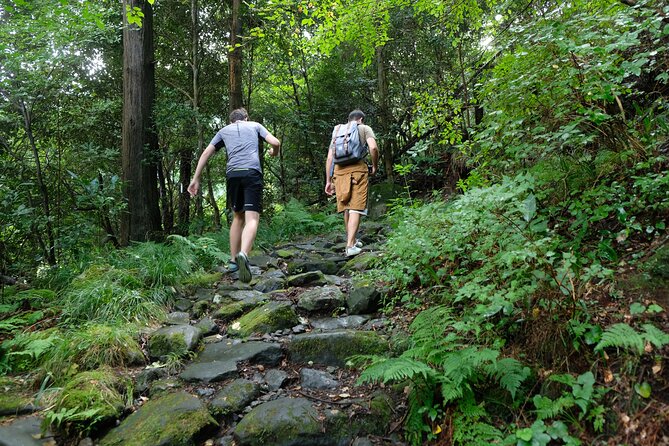
The path can be steep and uneven. Wear shoes suited to walking, not smooth-soled city footwear. The tour is not described as a technical mountain climb, but you should be comfortable with several hours of walking and mountain slopes.
Lake Ashi, Heiwa no Torii, and the cedar avenue
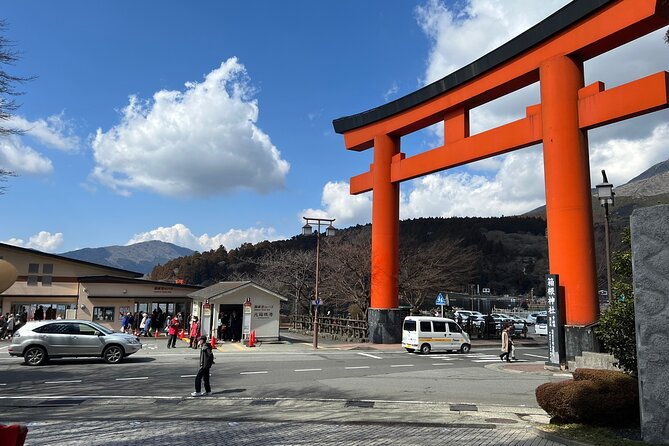
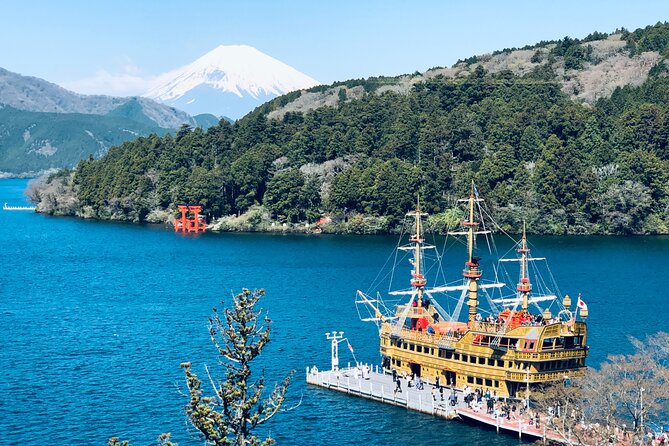
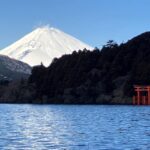
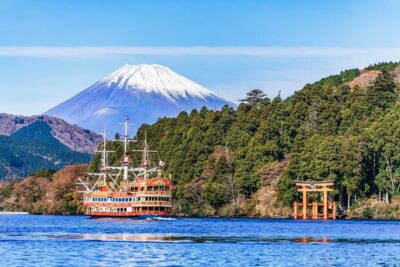
After reaching Lake Ashi, you walk along the shore near Motohakone. This is one of the day’s strongest visual sections. The famous Heiwa no Torii gate sits at the water, and Mt Fuji may appear behind it when the weather cooperates.
The view is wonderfully dependent on conditions. On a clear day, the combination of lake, shrine gate, and Fuji is the classic Hakone scene. On a cloudy or rainy day, you still get the lake and forest, but Fuji may disappear entirely. The route can operate in poor weather only if conditions allow, and the operator may cancel for safety or weather reasons.
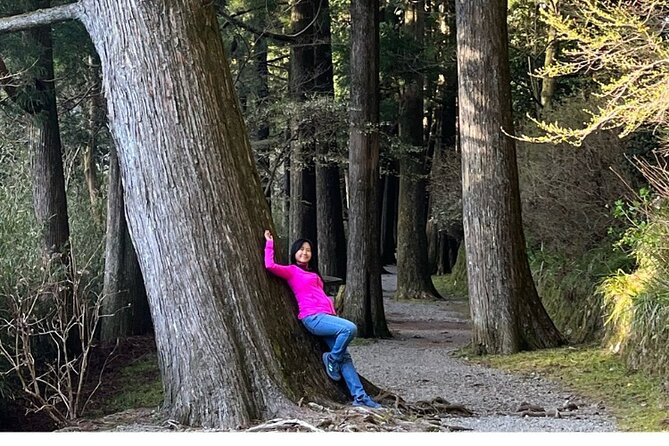
The walk continues through Hakone’s great cedar avenue. Huge cedar trees line the old road, creating a shaded corridor that feels very different from the open lakefront. The trees are part of what makes this section memorable, but the surface underfoot is still an old road, not a smooth pavement path.
You should also expect some public sightseeing activity around Lake Ashi. This is the most popular part of the route, and it may feel busier than the quieter mountain sections later in the day. The reward is access to sights that are difficult to understand fully if you only view them from a sightseeing boat or roadside stop.
Hakone Checkpoint and the meaning of the road
The cedar avenue leads toward Hakone Checkpoint. In Edo-period Japan, this checkpoint worked much like an immigration control station today. The guide explains its role in controlling movement along the Tokaido route and why this crossing through the mountains mattered.
I find this kind of explanation more useful than a list of dates. The checkpoint helps you picture the old road as a working route, not a scenic walking trail created for modern visitors. Merchants, officials, families, and samurai all had reasons to pass through this difficult stretch.
The stop lasts about 30 minutes. That is enough time for an explanation and a look around without turning the middle of the day into a long museum visit.
Lunch in Hakone-machi and the bus connection
Lunch comes near Hakone Checkpoint, at a local Japanese restaurant. Your meal is not included, and you should budget about ¥2,000 for lunch. The exact restaurant and menu are not specified, so do not book this expecting a particular dish.
After lunch, a local bus takes you toward the Shizuoka side of the Hachiri route. This is not a flaw in the experience. It is part of the practical way the route is handled, especially since a temporarily closed section is skipped by bus before you resume walking.
Still, the transport adds a little uncertainty to the rhythm of the day. You are not walking every part of the historic route from Hakone to Mishima. Instead, the tour combines the best available walking sections with ordinary local transport. For most people, that is a sensible tradeoff. It keeps the day manageable and avoids a closed section, but purists hoping to cover every meter should understand the plan.
Bus and shared taxi costs are separate from the tour price. The expected total is around ¥2,000 for transportation between the trail sections.
Other guided tours in Hakone

Yamanaka Castle ruins and changing Fuji views
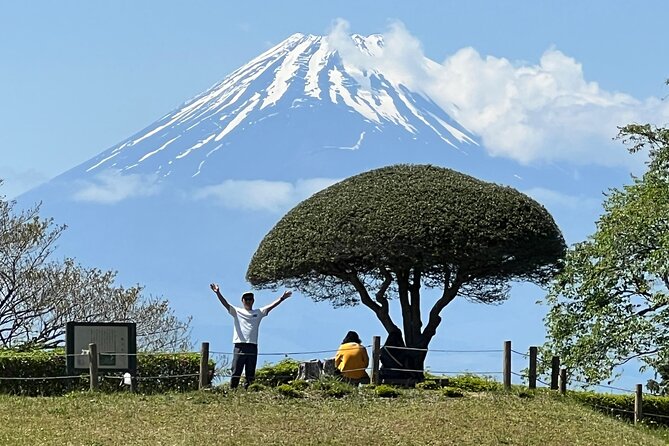
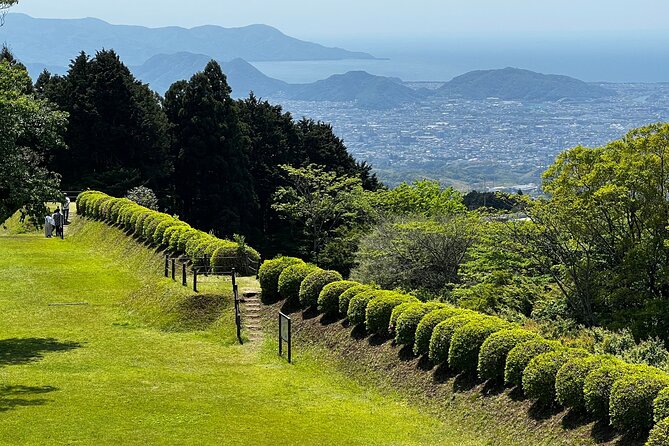
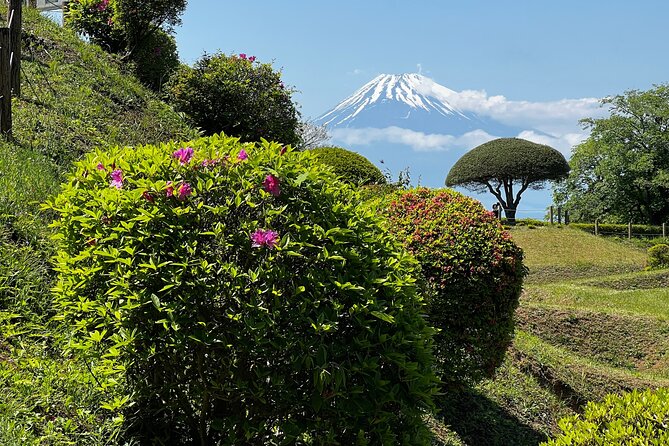
The route continues to Yamanaka Castle ruins, where you spend about an hour. The ruins sit along the Hachiri Heritage path and offer another chance to see Mt Fuji, weather permitting.
This stop changes the mood of the day. At Lake Ashi, you have water, shrine architecture, and the famous torii gate. At Yamanaka Castle, you get open mountain views and the remains of a defensive site linked to the old road network.
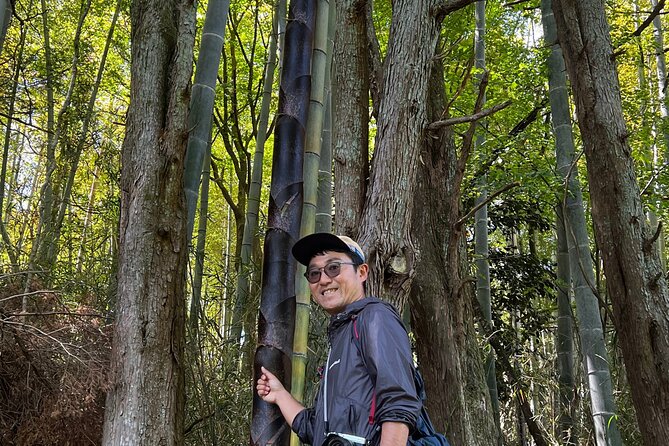
The guide’s historical explanations are especially useful here because ruins can otherwise be hard to read. Walls, earthworks, and fragments rarely explain themselves. Aki helps connect the site to the routes and power struggles of earlier Japan, while also pointing out the surrounding nature.
The Fuji view is never guaranteed. If clouds arrive, the castle ruins still provide a worthwhile historical stop, but you should not choose this trip solely for a perfect Fuji photograph. The day includes several viewing angles, which improves your odds, but it cannot control the weather.
Ending in Mishima at the shrine and river
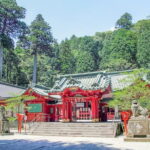
The final hour brings you into Mishima. The route visits Mishima Taisha, described as the city’s largest shrine, and the Genbe River before ending at Mishima Station.
This ending gives the day a satisfying change of setting. You begin in the mountain resort world of Hakone and finish in a city with its own shrine and river life. It also makes the tour practical for travelers continuing south or returning toward Tokyo.
At Mishima Station, you can take a Shinkansen to Odawara in about 15 minutes for roughly ¥2,500, or continue to Tokyo in about 45 minutes for around ¥4,400. Buses also serve Hakone and other areas of Izu. These fares are not included, so keep enough money available for the trip after the hike.
Finishing at a transport hub is a major advantage if you are moving through Japan rather than staying several nights in Hakone. It saves you from retracing the route back to Hakone-Yumoto.
What the $158.52 price really covers
At $158.52 per person, this is not a cheap walking tour. But the price makes more sense when you look at what you are buying: roughly seven hours with a nationally certified guide, a route that requires local transport planning, and access to several historic sites spread across two prefectures.
The group limit of six is important value. You are not paying for a large bus excursion with a fixed script. Aki can adjust explanations and help keep the group together across walking and bus sections. A wilderness first aid certificate also adds reassurance on a mountain route, though you still need to take responsibility for your own shoes, clothing, water, and fitness.
The real extra cost is probably around ¥4,000 before the return journey: about ¥2,000 for lunch and about ¥2,000 for shared taxi and local buses. Add the onward Shinkansen fare from Mishima if you need it.
A group discount is available, though the exact saving is not stated. The tour uses a mobile ticket, and confirmation is provided when you book.
Who will get the most from this hike
I would choose this for you if you want more than Hakone’s standard cable cars, boats, and lake viewpoints. It suits people who enjoy learning how a place worked, not just photographing it.
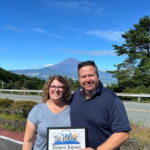
It is also a strong choice for families or small groups who want a private-feeling day without booking a fully private tour. Aki has a reputation for being kind, patient, and good at taking photos, which can be useful when everyone wants a picture together.
You need moderate physical fitness. The total walking distance is about 8 kilometers, and the route includes slopes and old stone paths. The day lasts around seven hours, so it is not ideal if you want a relaxed half-day outing or if uneven mountain trails are difficult for you.
Service animals are allowed, and the activity is near public transportation. Those details help, but the combination of hiking, buses, and weather exposure means you should still check that the full route suits your needs before booking.
Weather, cancellation, and practical planning
Weather is the biggest variable. Mt Fuji views are possible but not promised, and rain or clouds can change the experience from a scenic viewpoint day into a forest and history walk.
The experience is non-refundable and cannot be changed after booking. If the operator cancels because of poor weather, you are offered another date or a full refund. Because of that strict policy, I would avoid booking it too early in a weather-sensitive part of your itinerary unless your schedule gives you some flexibility.
Wear proper walking shoes and carry money for lunch, snacks, amazake, buses, and the onward train. The tour starts at Hakone-Yumoto Station and ends at Mishima Station, so plan your accommodation and luggage around that one-way route.
This experience is often booked about 61 days ahead. That suggests you should reserve early if your Japan schedule is fixed, especially since only six places are available.
Should you book Hakone Hachiri?
Book it if you want a history-led mountain walk with a small group, local transport, and a useful finish in Mishima. Aki’s calm guiding style, first-aid training, and habit of adding personal touches such as family photos make the day feel more attentive than a standard group excursion.
Skip it if you want guaranteed Mt Fuji views, a completely flat walk, or a tour where every transportation cost is included. The weather policy is strict, the day is long, and part of the route is covered by bus because of a temporary closure.
For the right kind of visitor, this is one of the better ways to understand Hakone. You walk the old road, see the lake and cedar avenue, learn why the checkpoint mattered, visit castle ruins, and finish in a different city. That is a full day, but it is a useful and memorable one.
FAQ
Where does the Hakone Hachiri hike begin?
The tour begins at Hakone-Yumoto Station in Hakone. The meeting time is 9:00 am.
Where does the tour end?
The experience ends at Mishima Station after visiting Mishima Taisha and the Genbe River.
How far do you walk?
You walk about 8 kilometers in total. The tour lasts approximately seven hours.
Is Mt Fuji guaranteed to be visible?
No. Mt Fuji can be seen from different points along the route if weather permits, including near Lake Ashi and Yamanaka Castle ruins.
Are meals included?
No. Lunch is not included. You should budget around ¥2,000 for lunch, and amazake and snacks are also separate.
Are transportation costs included?
No. Shared taxi and local bus fares cost about ¥2,000 in total. The Shinkansen from Mishima to Odawara or Tokyo is also separate.
How many people can join the tour?
The tour has a maximum of six people. A national certified professional guide with a wilderness first aid certificate leads the experience.
More Historical Tours in Hakone

More Guided Tours in Hakone
More Hakone Day Trips in Hakone

More tours in Hakone we've reviewed
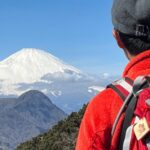


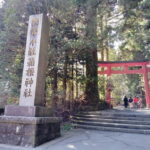
Hakone Day Trips, compared.
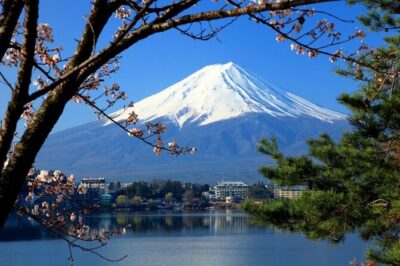 ★ 5.0Mt Fuji and Hakone 1-Day Bus Tour Return by Bullet TrainFrom $163
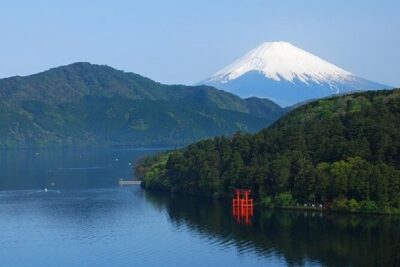 ★ 4.0Mt Fuji & Hakone Cruise, Drum Show Bullet Train 1 Day from TokyoFrom $149
 ★ 4.4Tokyo Mt Fuji 5th St & Hakone Cruise Bus Tour w/Bullet TrainFrom $15410 hours
 ★ 4.7Tokyo: Mt. Fuji Tour, Hakone Ropeway, Owakudani, Lake AshiFrom $5410 hours
 ★ 4.2Tokyo: Mt. Fuji 5th Station & Hakone Cruise 1-Day Bus TourFrom $12911 hours
 ★ 5.0Private Tour to Mt. Fuji and Hakone (Fully Licenced Operator)From $497