
Reviewed · JDM & CAR CULTURE
Membership Car Club GTR35 LibertyWalk Daikoku car meet photoshoot
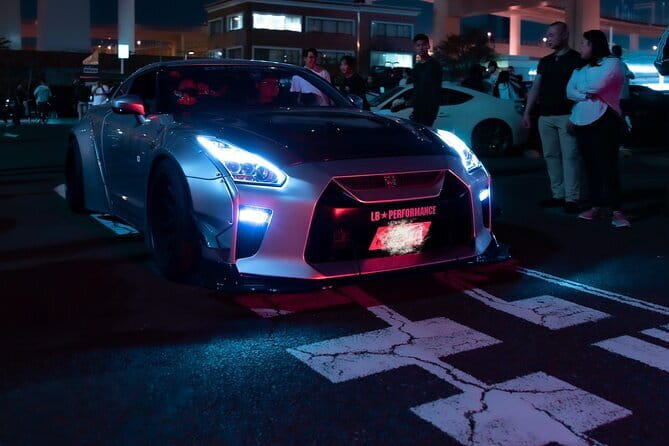
Tokyo’s car culture comes alive when you leave Akihabara in a tuned JDM car and head for Daikoku Parking Area, the famous meeting ground south of the city. The route uses the Wangan, passes Rainbow Bridge, stops at A-PIT Super Autobacs, and ends with a Tokyo Tower photo stop. It is the closest this itinerary gets to a Fast and Furious-style night without pretending public roads are a racetrack.
I like the mix of real car culture and Tokyo sightseeing, rather than a simple ride around the block. I also like the club feel: small shared cars, several drivers, and the chance that other members may join the convoy at A-PIT. The main concern is organization. Some bookings have reportedly ended with no driver at the meeting point and no response, while tall passengers may find the back seat very tight.
In This Review
- Key points to know before booking
- Why this four-hour car-club ride is different
- Starting in Akihabara: manga, electronics, and horsepower
- On the Wangan, where the road has a reputation
- Rainbow Bridge and Tokyo Bay views
- A-PIT Super Autobacs: Japan’s tuner shop
- Daikoku Parking Area, the main reason to go
- Tokyo Tower closes the night with a classic view
- What the $215 price really buys you
- Seating, weather, and reliability matter
- Who will enjoy this most
- Should you book the Gaijin Tuned car-club ride?
- FAQ
- Where does the car-club experience begin?
- Where does the activity end?
- How long does the experience last?
- Is the tour private?
- What vehicle is used?
- Is Daikoku Parking Area included?
- Are attraction tickets included?
- What else is included in the price?
- Can I cancel for a refund?
Key points to know before booking
- A four-hour night ride begins at Animate Akihabara, near the anime and electronics center of Tokyo.
- The Wangan route connects the ride to Japan’s street-racing legend, including the old Midnight Club story.
- A-PIT Super Autobacs gives you a look at Japan’s tuner shopping culture, with parts, clothing, magazines, and car accessories.
- Daikoku Parking Area is the main event, with about an hour set aside for cars, photos, and conversation.
- The ride is shared, with up to three people per car and 12 people in total, so seating and vehicle choice may vary.
- The advertised focus is a Liberty Walk GT-R R35, but past outings have also included cars such as an S15 Silvia and other club vehicles.
Why this four-hour car-club ride is different
This is not a standard sightseeing circuit in a minibus. Gaijin Tuned presents itself as a Tokyo car club built around a passion for Japanese car culture. You meet near Animate Akihabara, climb into one of the club’s cars, and spend the evening moving through Tokyo’s expressway system and car scene.
That distinction matters. A normal city tour may show you Tokyo Tower and Rainbow Bridge from a coach window. Here, the road itself is part of the attraction. The sound, shape, and attention drawn by a tuned car are central to the evening.
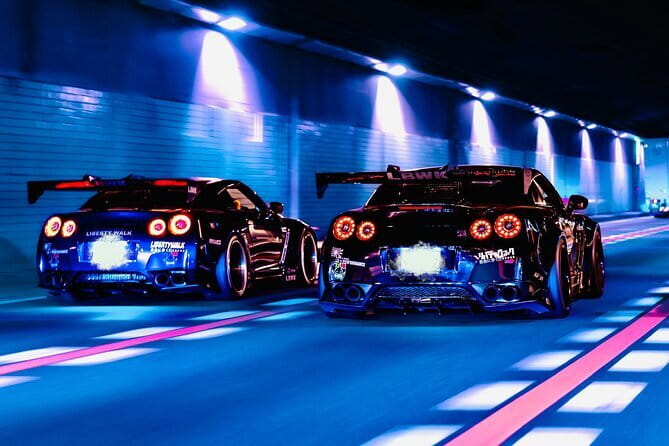
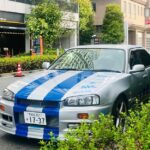
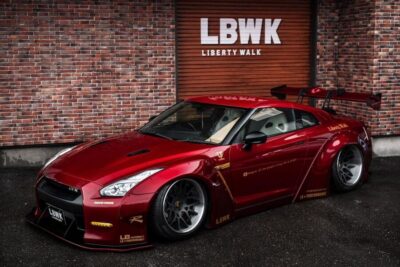
The advertised centerpiece is a Liberty Walk GT-R R35, one of Japan’s most recognizable modern performance cars. Liberty Walk styling is famous for wide fenders and an aggressive stance, so the car is as much a visual object as a fast machine. Still, you should not assume every booking guarantees one specific car. Past accounts describe rides in an S15 Silvia, other GT-Rs, and a wider group of club cars.
The strongest praise centers on the drivers. Fernando, Henrique, Timi, Julie, Samir, Hitomi, and Oliveira are among the names associated with especially well-received outings. The exact driver depends on the date, but the best part of the setup is the personal contact with people who clearly enjoy the cars rather than simply transport you between stops.
A few more Tokyo tours and experiences worth a look
Starting in Akihabara: manga, electronics, and horsepower
The meeting point is Animate Akihabara, at 4 Chome 3-1 Sotokanda. This puts you in one of Tokyo’s most distinctive neighborhoods before the car portion even begins.
Akihabara is famous for electronics shops, anime goods, manga, video games, trading cards, and maid cafes. Yodobashi Multimedia Akiba fills a huge building with electronics and hobby goods, while Radio Kaikan packs several floors with toys, collectibles, and cards. If you arrive early, you can easily turn the meeting point into part of your evening.
Give yourself enough time to find Animate and check messages before the stated departure. The meeting point is near public transportation, but the activity returns there only at the end, so keep anything you do not need for the ride secured and easy to carry.
The group is shared rather than private. The stated arrangement is three people per car, with a maximum of 12 people. That is small enough to feel like a club outing, but it also means you do not control the car, driver, or seat unless the operator confirms otherwise.
On the Wangan, where the road has a reputation
The Wangan, or Bayshore route, is more than a useful highway link. It is part of Japanese car mythology. The long expressway became associated with high-speed night runs and the Midnight Club, a legendary group in Japan’s street-racing lore.
You are not booking a race, and public-road safety rules still apply. The appeal is the feeling of moving through Tokyo’s illuminated expressway network in a serious performance car, with the city and bay opening around you.
This is also where expectations need a little trimming. A car club ride can feel dramatic, but traffic, road conditions, and local rules shape the pace. The experience is best understood as a spirited cruise and photo outing, not a guaranteed high-speed thrill.
If you love Japanese cars, the Wangan section gives the evening context. You are not simply riding in a modified vehicle. You are following a route tied to a whole subculture of tuning, night driving, and car photography.
Rainbow Bridge and Tokyo Bay views
Rainbow Bridge links Odaiba with central Tokyo across the northern part of Tokyo Bay. Its lit suspension structure is one of the city’s most familiar sights, and the route offers a change of mood from the enclosed expressway.
The bridge is especially useful for photography because it brings together several Tokyo themes: modern infrastructure, the bay, Odaiba’s man-made island, and the city skyline. The itinerary includes Rainbow Bridge during the outward route and again later, giving you more than one chance to see it from the road.
Do not expect a long formal sightseeing stop here. The bridge is part of the drive, not a separate walking visit. If you want detailed photos, keep your phone ready and ask the driver about safe stopping points rather than trying to photograph while the car is moving.
A-PIT Super Autobacs: Japan’s tuner shop
The approximately 30-minute stop at A-PIT Super Autobacs is one of the most useful parts of the evening for anyone interested in how Japanese car culture works beyond the meet itself.
A-PIT is described as Japan’s largest auto parts and accessories shop. It serves owners who come for maintenance items, performance parts, car-care products, clothing, and accessories. JDM owners also use it as a place to wash their cars and meet other enthusiasts.
For you, the value is seeing a retail space built around the car hobby. You can browse key chains, stickers, magnets, clothing, magazines, and parts. Japanese car magazines are particularly practical souvenirs because editions sold overseas can be limited and costly. If you collect automotive print, this is a better shopping stop than a generic gift shop.
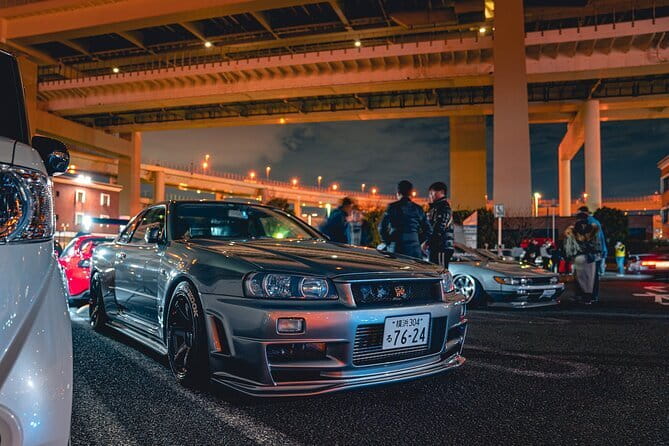
The stop can also become a staging point for the larger club group. Some outings have picked up additional cars here, including Mustangs, Chasers, Type Rs, and WRXs. That possibility adds variety, though it is not a fixed promise. The number and type of cars joining will depend on the night.
Thirty minutes is enough for a quick look and a few purchases, but not enough for a long technical shopping session. If you are serious about buying parts, remember that transporting bulky items home could be inconvenient.
Other photography tours in Tokyo
Daikoku Parking Area, the main reason to go
Daikoku Parking Area is the heart of this experience. It is a major rest area on the expressway system and a famous gathering point for car enthusiasts from the Greater Tokyo region.
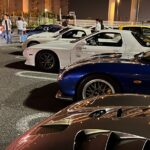
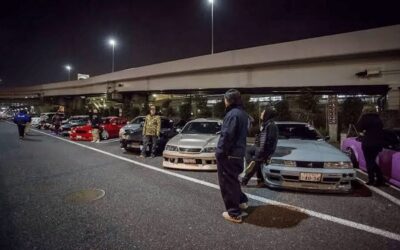
The stop lasts about one hour. That is a useful amount of time for walking around, taking photos, looking at different builds, and speaking with club members. The appeal is variety. You might see polished JDM sports cars, tuned sedans, American cars, and other unusual vehicles gathered in one place.
The atmosphere can change from night to night. A car meet is not a museum with a fixed display, so the number and type of cars are never guaranteed. Weather, day of the week, local enforcement, and ordinary owner schedules can all affect what appears.
That unpredictability is part of the charm, but it is also why you should avoid booking this only because you expect one famous model. Go for the setting, the club convoy, and the chance to see Japanese car culture as a living scene.
You should also follow the driver’s instructions at the parking area. Daikoku is an operating rest stop, not a private event venue. Stay clear of traffic, do not touch cars without permission, and take photos respectfully.
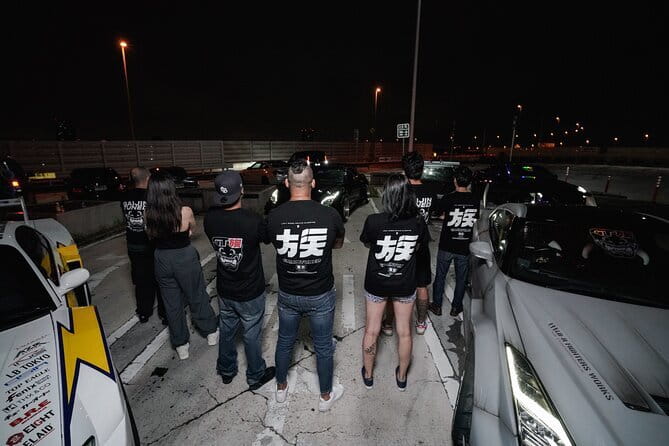
The strongest descriptions of the evening focus on the ride into Daikoku as much as the parking area itself. Seeing several tuned cars arrive together can be more memorable than simply being dropped off. That convoy feeling is one reason this costs more than an ordinary Tokyo photo walk.
Tokyo Tower closes the night with a classic view
After Daikoku, the route returns toward Tokyo and includes another Rainbow Bridge passage before a short stop at Tokyo Tower.
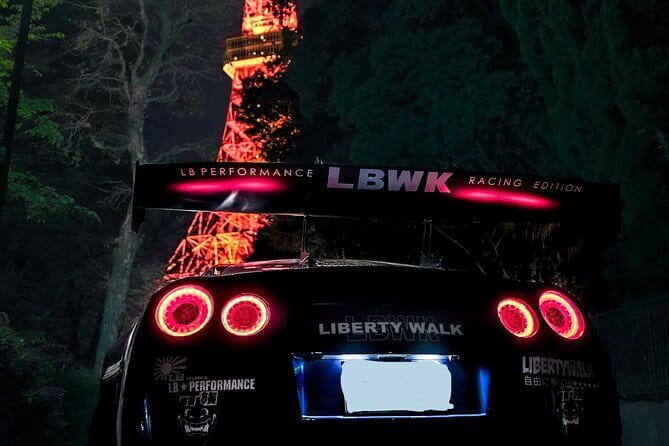
The Tokyo Tower stop lasts about 20 minutes and is for exterior photos. Admission is not included, but no admission ticket is needed for the stated photo stop. The tower rises 333 meters in central Tokyo and became a symbol of Japan’s postwar economic growth after opening in 1958.
This is a smart final stop because it balances the modern car focus with one of Tokyo’s classic landmarks. You get photos of the car against a familiar city symbol, rather than ending the night at an anonymous roadside location.
Twenty minutes is brief. You are not visiting the observation decks or touring the tower interior. Think of it as a planned photo opportunity, then a return to Animate Akihabara.
What the $215 price really buys you
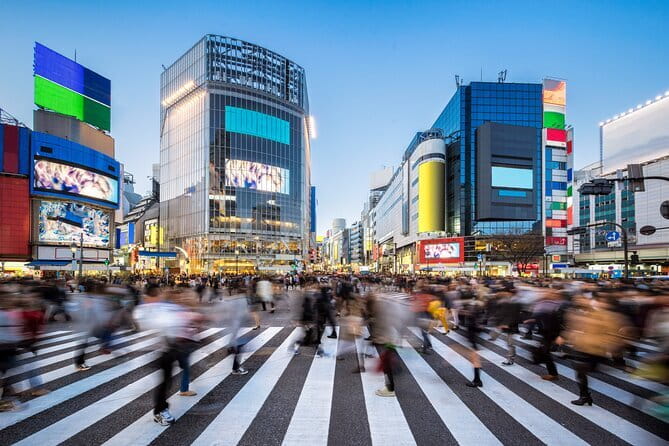
At about $215.18 per person, this is a premium half-day activity. The price includes an air-conditioned vehicle and parking fees, but not a private tour. You are paying for access to the club setting, the performance-car ride, the route to Daikoku, and the time spent with drivers who participate in this scene.
For a dedicated JDM fan, the value can be strong. A ride in a Liberty Walk GT-R or another distinctive club car, a Wangan cruise, A-PIT, Daikoku, and Tokyo Tower would be difficult to reproduce independently in one evening. You would also need to solve the transport problem to Daikoku, which is not a simple walk-in city attraction.
For a casual visitor, the price is harder to justify. You will spend much of the four hours seated in a car, and the sightseeing stops are short. If your main goal is Tokyo Tower or Rainbow Bridge, cheaper city tours can cover those sights in greater detail.
The price also does not buy exclusivity. With three people per car and up to 12 people in the group, you share the experience. That can be part of the fun, especially if you want the feeling of joining a club convoy, but it may disappoint anyone expecting a private chauffeur ride.
Seating, weather, and reliability matter
The biggest comfort issue is the back seat. One account describes the ride as very cramped for a passenger over six feet tall. Low, modified sports cars are built for style and performance, not generous rear-seat space.
If you are tall or have limited mobility, contact the provider before paying and ask how seating will be arranged. The supplied details say most people can participate, but that does not guarantee comfortable seating in every car.
The activity depends on good weather. If poor weather cancels the outing, you are offered another date or a full refund. You can cancel for a full refund up to 24 hours before the start time. Inside that window, the payment is not refunded and changes are not accepted.
There is one serious practical warning. Some bookings have reportedly involved a driver failing to appear at Animate Akihabara, followed by unanswered calls and messages. That conflicts sharply with the many positive accounts of smooth communication and friendly drivers.
Because of that risk, I would confirm the meeting details shortly before the activity, save the provider’s contact information, and avoid scheduling an important flight or fixed evening reservation immediately afterward. The activity ends back at the meeting point, but traffic and car-meet conditions can affect timing.
Who will enjoy this most
I would recommend it first to people who can name the cars they hope to see. You will get the most from the evening if you care about Liberty Walk, GT-Rs, Silvias, the Wangan story, tuning shops, and the social side of Japanese car culture.
It also works well as a special gift. One parent booked it for a 13-year-old Liberty Walk fan, and the car-focused format made the occasion memorable. Families should still consider the shared seating and the fact that the outing lasts four hours.
You may enjoy it less if you want a calm, structured city tour with long stops and a guaranteed schedule. The event is built around cars and club energy, not museums, architecture, or food.
Should you book the Gaijin Tuned car-club ride?
Book it if Daikoku Parking Area is high on your Tokyo wish list and you want to arrive as part of a car group rather than reach it by ordinary transport. The Wangan route, A-PIT stop, tuned vehicles, and Tokyo Tower photos create a well-shaped evening for serious car fans.
I would book with two conditions. First, confirm the exact car and seating arrangement, since past rides have used different vehicles and the back seats can be tight. Second, confirm the pickup shortly before departure because the no-show reports are too serious to ignore.
If the operator confirms your booking and you accept the shared format, this can be a memorable way to see Tokyo through its car culture. If you need guaranteed reliability, a private vehicle, or roomy seating, choose a different option.
FAQ
Where does the car-club experience begin?
It begins at Animate Akihabara, located at 4 Chome 3-1 Sotokanda, Chiyoda City, Tokyo 101-0021, Japan.
Where does the activity end?
The experience ends back at the meeting point in Akihabara.
How long does the experience last?
It lasts approximately four hours.
Is the tour private?
No. It is a shared tour, with three people per car and a maximum group size of 12 people.
What vehicle is used?
The experience is promoted around a Liberty Walk GT-R R35. Past outings have also used cars such as an S15 Silvia and other club vehicles, so you should confirm the exact vehicle for your date.
Is Daikoku Parking Area included?
Yes. The route includes about one hour at Daikoku Parking Area, and parking fees are included.
Are attraction tickets included?
No attraction admission tickets are included. The Tokyo Tower stop is for exterior photos, and the itinerary does not include entry to the tower.
What else is included in the price?
An air-conditioned vehicle and parking fees are included. The listed price is about $215.18 per person.
Can I cancel for a refund?
You can cancel at least 24 hours before the start time for a full refund. Cancellations or changes made less than 24 hours before the experience are not accepted for a refund. If poor weather causes the operator to cancel, you are offered another date or a full refund.
More Photography Tours in Tokyo
More JDM & Car Culture in Tokyo
More tours in Tokyo we've reviewed

JDM & Car Culture, compared.
 ★ 4.7FAST&FURIOUS EXPERIENCE Tokyo Car Club membershipFrom $138
 ★ 4.8GT-R35 800hp Club Membership – secret underground car meetFrom $205
 ★ 4.8Tokyo: Fast & Furious Tokyo Drift 3 Experience (Kaila Yu SP)From $157
 ★ 4.8Tokyo: Daikoku JDM Car Meet & Night Car Culture TourFrom $984 hours
 ★ 4.8Secret Car Meet: R34 Skyline Car Club MembershipFrom $236
 ★ 4.7Tokyo Drift: Daikoku PA Supreme Car Experience 大黒PAFrom $583 hours