
Reviewed · IMPERIAL PALACE & SHOGUN TOURS
Tokyo walking tour around Imperial Palace and Tokyo Station
Tokyo’s modern power center and imperial past meet on this compact walk. In two hours, you’ll move from the red-brick face of Tokyo Station through Marunouchi’s polished office district to the Imperial Palace Outer Garden, Nijubashi, and Sakuradamon Gate. The contrast is the point: corporate Tokyo on one side, palace walls and ceremonial gates on the other.
I like the small group limit of four, which gives your guide room to answer questions and adjust the route. I also like the strong introduction to the city: guides such as Mikio, Masahito, and Miho have been praised for adapting the walk to their guests, including making it engaging for teenagers. The main consideration is pace. You cover several sites in two hours, so this is a highlights walk, not a slow architectural study.
In This Review
- Key points to know before you book
- Why this short Tokyo walk works
- Meet by the Marunouchi South Exit
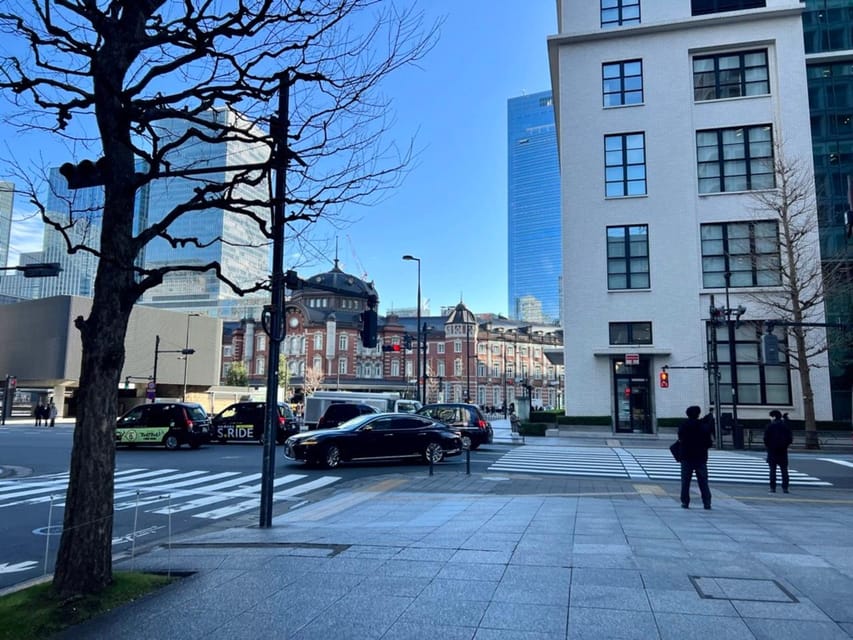
- Tokyo Station, a grand first stop
- Marunouchi Building and the business district
- KITTE and the view back to Tokyo Station
- Meiji Seimei Kan and a change in architectural tone
- Nijubashi, the classic Imperial Palace view
- Sakuradamon Gate closes the route
- What the small group changes
- Who will get the most from this walk
- Practical value at $49
- Should you book the Imperial Palace and Tokyo Station walk?
- FAQ
- How long is the walking tour?
- Where does the tour meet?
- Where does the tour finish?
- Which languages are available?
- How many people can join the group?
- Can I cancel for a full refund?
Key points to know before you book
- Tokyo Station begins the story: You see the famous station facade and learn about the Marunouchi district around it.
- KITTE adds a useful city view: The former Japan Post building offers a view toward Tokyo Station from above.
- Marunouchi mixes old and new: The route includes the Marunouchi Building, Meiji Seimei Kan, and high-end shopping streets.
- Nijubashi is the visual payoff: The stone and iron bridges give you a classic Imperial Palace view from the Outer Garden.
- Sakuradamon Gate adds historical weight: The final palace-area stop gives the walk a more serious sense of place.
- Four people is the maximum: This suits you if you prefer conversation over a large guide-led group.
Why this short Tokyo walk works
Tokyo can feel like a city of disconnected districts. One minute you are under giant station signs, and the next you are facing palace grounds, broad avenues, and old gates. This tour gives you a clear thread through one of the city’s most important areas.
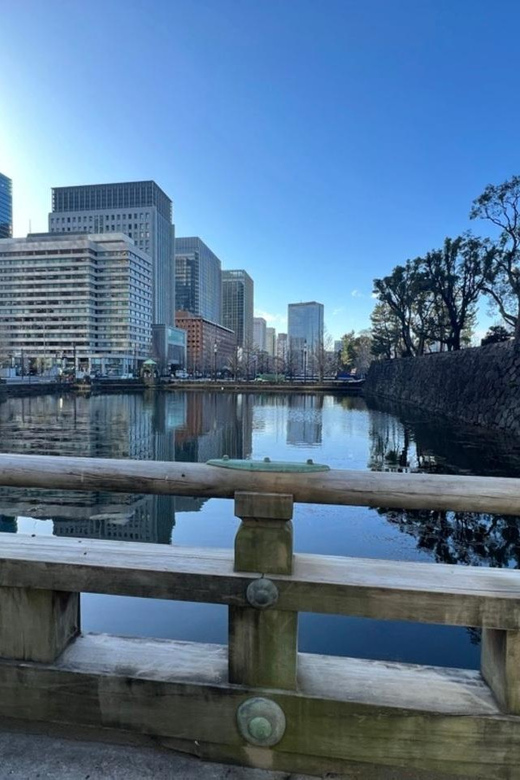
The route follows the Marunouchi district, developed by Mitsubishi from 1890 onward. That detail helps explain why the area feels so orderly and businesslike. Marunouchi is not just a collection of shiny towers. It grew beside the Imperial Palace as a major center of commerce, and the walk lets you see that relationship on foot.
You do not enter the inner grounds of the Imperial Palace on this route. Instead, you visit the Outer Garden and look toward Nijubashi and the Front Gate area. That distinction matters. If you want a palace interior tour, this is not it. If you want a well-organized introduction to the streets and views around the palace, the route makes good sense.
At $49 per person, the value rests mainly in the guide. You can walk through Tokyo Station and Marunouchi by yourself, of course. The fee becomes more useful when you want someone to explain what you are seeing, answer questions, and shape the route around your interests. With only up to four participants, you are paying for personal attention rather than transport or admission tickets.
A few more Tokyo tours and experiences worth a look

Meet by the Marunouchi South Exit
The meeting point is in front of the police box near Tokyo Station’s Marunouchi South Exit, at 1-9-1 Marunouchi, Chiyoda-ku. This is a sensible starting point, but Tokyo Station is large, so give yourself time to find the correct exit and police box.
The tour finishes at Kasumigaseki Station. That is useful if you plan to continue sightseeing or return by subway, but it is not the same place where you begin. You should have your next destination in mind before the walk ends.
The tour is offered in Japanese and English. Since the group is capped at four, you can expect a more direct exchange with your guide than on a standard coach or large walking tour. The available guide names include Mikio, Masahito, and Miho, though the specific guide for your date may vary.
Tokyo Station, a grand first stop
Tokyo Station receives about ten minutes of guided attention. That may sound brief, but it is enough for a first look at the building and its place in the city.
The station’s Marunouchi side is the part most associated with classic Tokyo photographs. From here, you get a strong sense of scale. Trains, office workers, shoppers, hotels, and historic architecture all meet around one enormous transport hub.
I like beginning here because it gives you an immediate orientation point. You are not starting in an anonymous side street. You are standing at one of Tokyo’s best-known addresses, with the Imperial Palace area ahead and the commercial district spreading around you.
The short timing also tells you how to use the tour. Your guide will point out important features and provide context, but you should not expect a long photography session or a detailed tour of the station interior. If the facade is a major priority, plan to return later for your own pictures.
Marunouchi Building and the business district
The walk continues to Marunouchi Building for about ten minutes. This stop helps show how the district functions today. Marunouchi is closely linked with large companies, upscale shopping, dining, and modern office life.
The useful part is the change in mood from the station. Tokyo Station feels like a gateway for the whole country. Marunouchi Building feels more focused on the daily business of the capital. Your guide can connect those two settings and explain why this district became so important.
You will also pass through high-end streets and see how the area was developed around the Imperial Palace. The architecture is polished rather than rustic. This is a good stop for you if you enjoy urban design and want to understand how Tokyo combines commercial use with formal public spaces.
If your main interest is temples, small lanes, or traditional houses, this section may feel less rewarding. The appeal is not quaintness. It is the way modern Tokyo frames the palace district.
KITTE and the view back to Tokyo Station
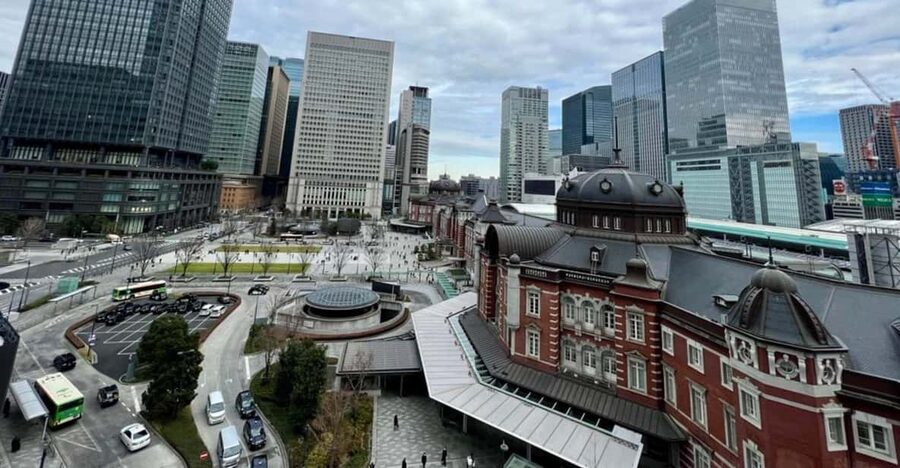
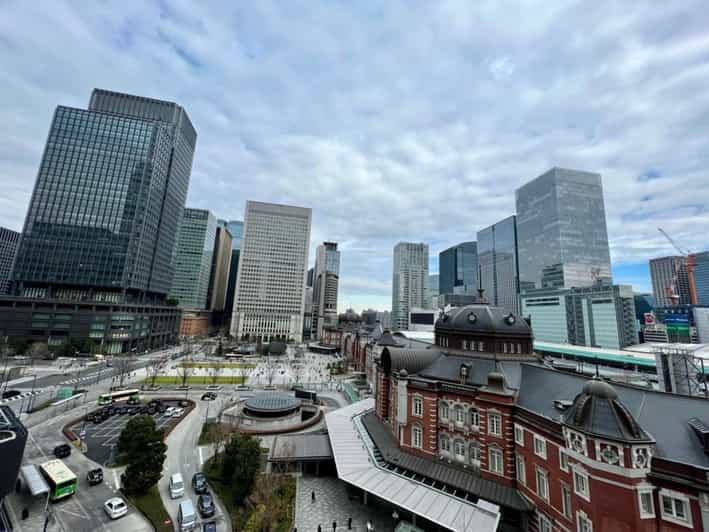
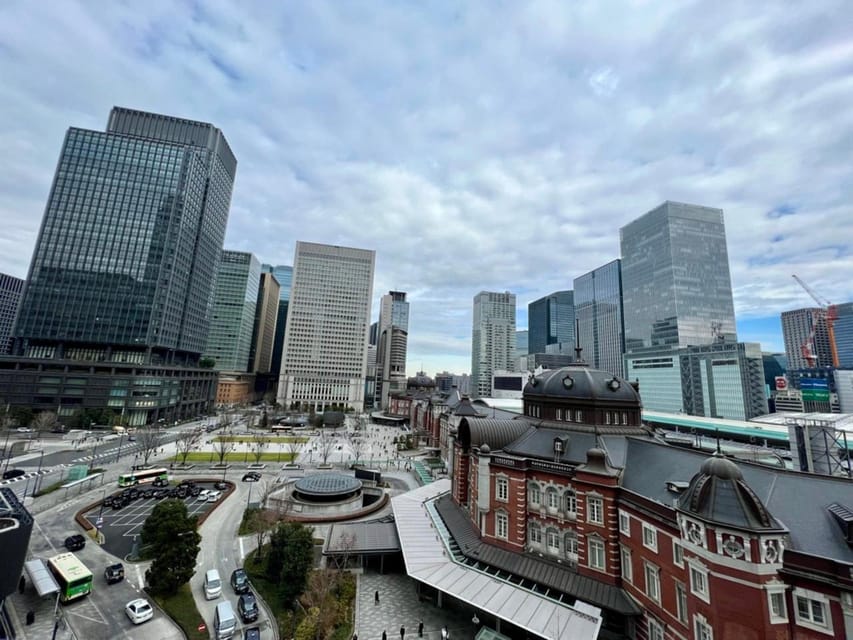
KITTE Marunouchi receives around fifteen minutes. The building is associated with the Japan Post building, and the route includes a view toward Tokyo Station from the KITTE building.
This is one of the most practical photo opportunities on the walk. From the building, you can place the station’s full exterior in context instead of seeing only one section from street level. The view also makes the district’s layout easier to understand.
Your guide may use this stop to explain how the former postal site connects with the newer commercial Marunouchi. That mix is typical of Tokyo, where older public institutions and newer retail spaces often sit close together.
Fifteen minutes is enough for a look and some photographs, but do not expect a long shopping break. KITTE is included as part of the route, not as a free period to explore every floor. Keep your attention on the meeting instructions and the group’s timing.
Other walking tours we've reviewed in Tokyo



Meiji Seimei Kan and a change in architectural tone
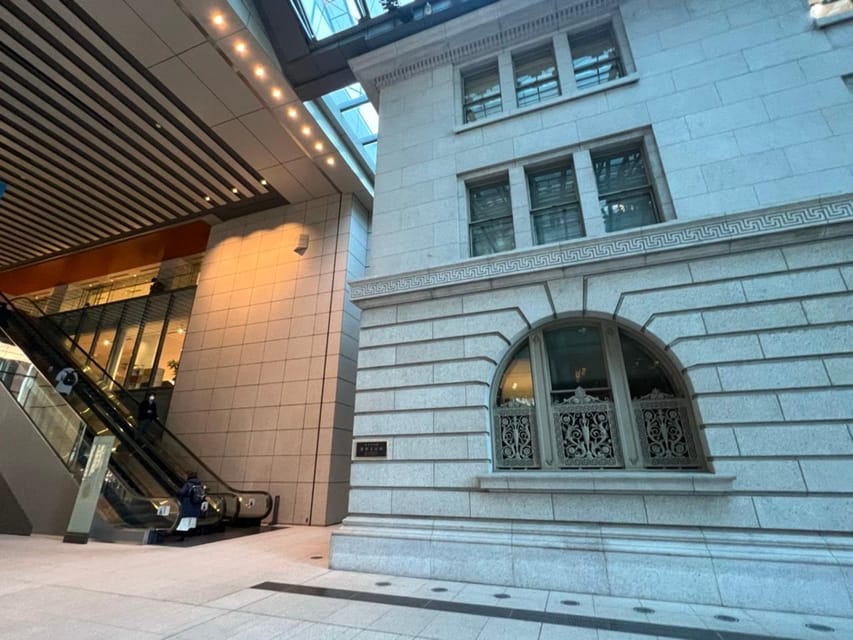
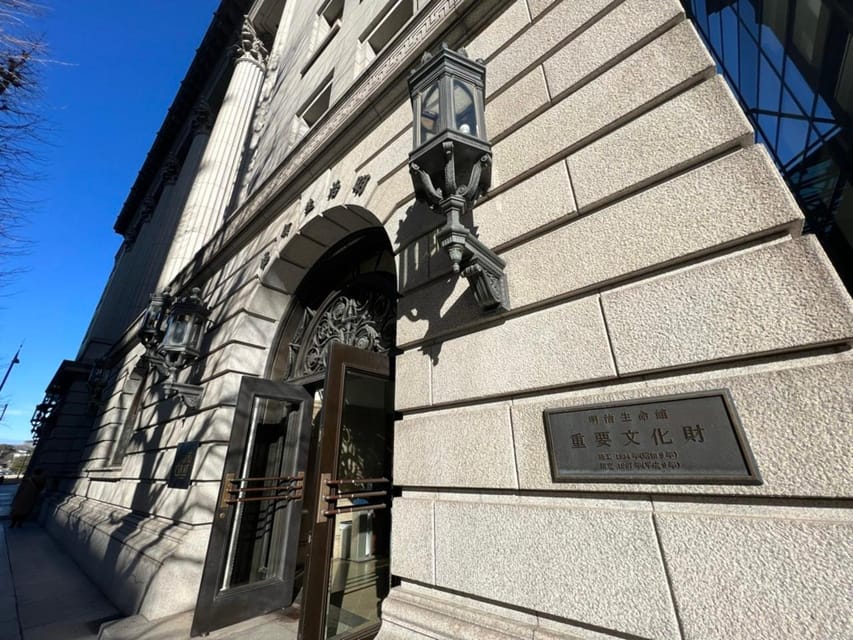
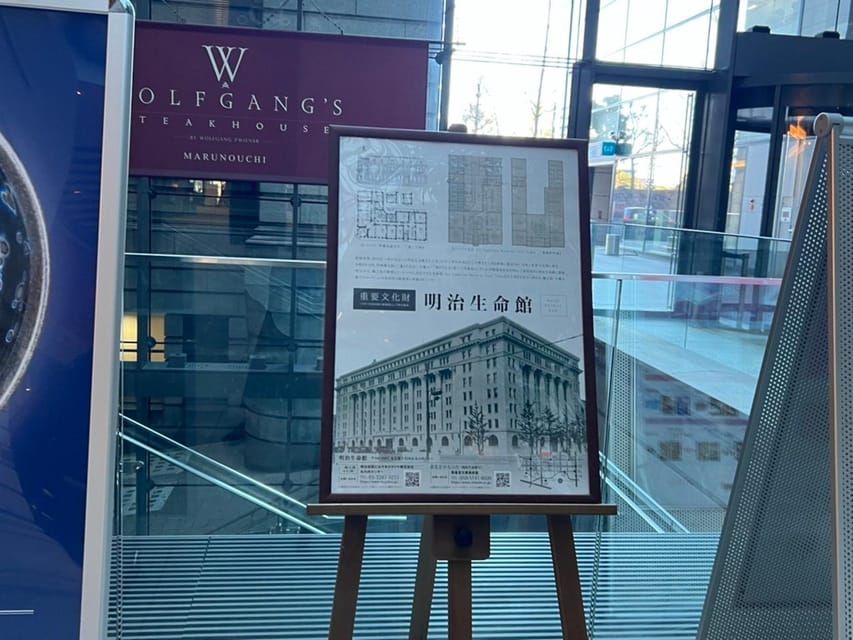
The Meiji Seimei Kan receives the longest stop before the palace area, about thirty minutes. That gives your guide time to discuss the building in greater detail and lets you slow down after the station and commercial streets.
This elegant Meiji Life Insurance Company building provides a different face of Marunouchi. The route is not only about glass towers and retail. Here, you get a more formal example of the district’s architectural character and its connection to Japan’s modern financial institutions.
I find this stop especially useful for putting the surrounding streets into context. A building like this can look attractive in a photograph, but a guide can point out why it matters within the wider development of Marunouchi.
The thirty-minute allocation also makes this a key portion of the walk. If you enjoy buildings, city planning, or the visible marks of Japan’s modernization, you will likely appreciate the extra time. If you prefer moving quickly from one famous sight to another, this may seem long. Tell your guide what interests you. Masahito has been praised for asking about preferences and adjusting the route to match expectations.
Nijubashi, the classic Imperial Palace view
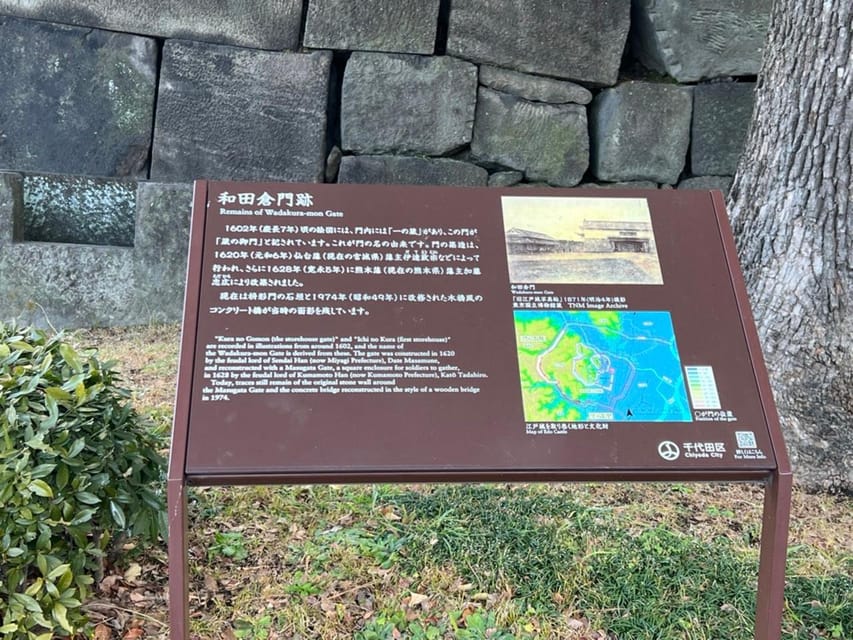
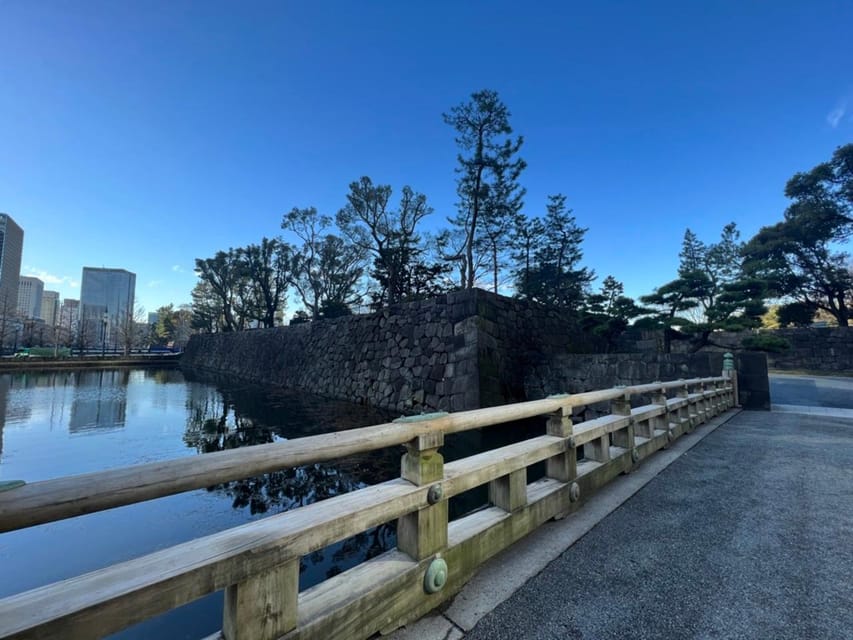
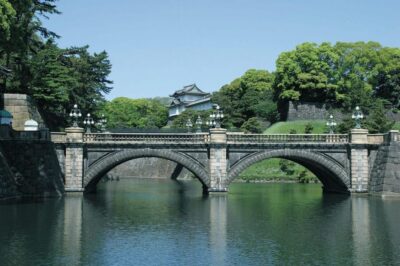
The route then reaches Nijubashi, with about thirty minutes for a guided visit. Nijubashi refers to the stone and iron bridges at the Front Gate of the Imperial Palace, and this is likely the most recognizable palace view on the tour.
From the Outer Garden, you can take in the formal approach toward the palace area. The bridge, open space, and carefully arranged setting create a sharp contrast with the office buildings you have just passed. Tokyo has not hidden its imperial center behind a distant suburban wall. It sits beside the capital’s financial core.
Your guide will explain the bridge’s history and the traditions connected with the palace entrance. That context is valuable because the view can otherwise seem simple: a bridge, a gate, and a broad open area. The story gives the scene more meaning without requiring a long museum visit.
Remember that you are viewing the palace area from outside. The route does not promise entry into the inner palace grounds, and Nijubashi is best understood as an exterior viewpoint. You will want comfortable shoes here, since the tour is entirely on foot and the itinerary gives you several outdoor stops.
Sakuradamon Gate closes the route
The final guided stop is Sakuradamon Gate, with about twenty-five minutes before the walk ends at Kasumigaseki Station. This gate gives the tour a strong finish because it feels more historical and defensive than the sleek streets near Tokyo Station.
Sakuradamon is part of the Imperial Palace area, and your guide can explain its role and setting. The stop also lets you see how the palace grounds connect with the government district around Kasumigaseki.
Ending here rather than returning to Tokyo Station is practical for a one-way walking route. You avoid retracing your steps and finish near another important central Tokyo district. It also means you should not book the tour assuming you will be back at the station exactly two hours later.
What the small group changes
A group of four or fewer can make a real difference. You can ask about architecture, Japanese history, shopping, public life, or the route itself without waiting for a large crowd to quiet down.
The guide feedback points to flexibility as a major strength. Mikio adjusted the experience for a family with two teenagers and kept the walk engaging as a learning activity. Masahito asked about personal interests and was open to a wide range of questions. Miho provided a useful first look at Tokyo for someone staying near the Imperial Palace.
Those details suggest the tour works best when you participate. Bring questions. Tell the guide if you care more about buildings, palace history, photography, or getting your bearings in central Tokyo. A small group makes that conversation possible.
The tradeoff is that the experience depends heavily on the individual guide. The tour is not built around entry tickets, demonstrations, or a long list of included activities. Its quality comes from explanation and interaction. The named guides have received top marks, but you should still think of this as a guide-led orientation walk rather than a fixed theatrical presentation.
Who will get the most from this walk
I would recommend this tour to you if you are staying near Tokyo Station, Marunouchi, or the Imperial Palace and want a focused introduction during your first days in the city. It covers several major sights without asking you to spend half a day on the route.
It also suits families. The experience with two teenagers shows that a good guide can turn the buildings and palace setting into a conversation rather than a dull march between photo stops. The small group makes it easier for a guide to adjust explanations for different ages.
Architecture fans will find plenty to notice at Tokyo Station, Marunouchi Building, KITTE, and Meiji Seimei Kan. The tour is also useful for first-time visitors who want to understand how Tokyo’s commercial center relates to the Imperial Palace.
I would choose something else if you want extensive palace access, a food focus, or a neighborhood walk through old Tokyo. This route is formal, central, and architectural. It gives you an excellent slice of the capital, but not every side of it.
Practical value at $49
The price is reasonable if you value a private-feeling group and clear local explanation. You receive a two-hour live guided walk, but no transport, meals, or listed admission benefits. The sights themselves are public views, so the tour’s value is not in getting you through a locked door.
Think of the $49 as an orientation fee. You are paying to connect Tokyo Station, the Marunouchi district, KITTE, the Meiji Seimei Kan, Nijubashi, and Sakuradamon into one understandable route.
The booking terms also reduce some risk. You can cancel up to 24 hours ahead for a full refund, and you can reserve while paying later. Starting times vary, so you need to check availability for your date. Those flexible terms are useful when your Tokyo schedule is still taking shape.
Should you book the Imperial Palace and Tokyo Station walk?
Book it if you want a short, personal introduction to central Tokyo with a strong mix of modern city life and palace-area views. The best reasons are the small group, the KITTE view back to Tokyo Station, and the chance to ask a guide direct questions at Nijubashi and Sakuradamon.
Skip it if you want to enter the Imperial Palace or spend hours at each sight. For everyone else, especially first-time visitors staying nearby, this is a sensible way to get your bearings. Arrive early at the Marunouchi South Exit, wear comfortable shoes, and use the guide’s flexibility. That is where this $49 walk earns its keep.
FAQ
How long is the walking tour?
The tour lasts two hours.
Where does the tour meet?
You meet in front of the police box near Tokyo Station’s Marunouchi South Exit, at 1-9-1 Marunouchi, Chiyoda-ku, Tokyo 100-0005.
Where does the tour finish?
The walk finishes at Kasumigaseki Station.
Which languages are available?
The live guide service is available in Japanese and English.
How many people can join the group?
The group is limited to four participants.
Can I cancel for a full refund?
Yes. You can cancel up to 24 hours in advance for a full refund.
More Walking Tours in Tokyo
More Imperial Palace & Shogun Tours in Tokyo

More tours in Tokyo we've reviewed










Imperial Palace & Shogun Tours, compared.
 ★ 5.0Tokyo: Imperial Palace and Shogun Historical Walking TourFrom $22
 ★ 4.9Tokyo: Imperial Palace Japanese History Walking TourFrom $32
 ★ 4.9Tokyo: Imperial Palace and Shogun Walking TourFrom $162 hours
 ★ 5.0Imperial Palace East Garden and Edo Castle Walking Tour in TokyoFrom $25
 ★ 4.8Tokyo: Imperial Palace East Gardens Walking TourFrom $192h 30m
 ★ 4.5Tokyo: Imperial Palace, Sensō-ji Temple, & Tokyo Tower TourFrom $404 hours