
Reviewed · ASAKUSA TOURS
Tokyo: Asakusa & Senso-ji Temple 1.5-Hour Guided Tour
Asakusa’s Senso-ji is not just another stop for a quick temple photo. This is Tokyo’s oldest temple, with a tradition said to reach back 1,400 years, and the tour shows you how to approach it properly. I like the hands-on purification ritual and the chance to draw an omikuji fortune, rather than simply walking past the details.
I also like the compact route from Kaminarimon to Nakamise Shopping Street, with an English-speaking guide explaining what you are seeing. The main consideration is time: 90 minutes gives you a useful introduction, but not a slow, wandering visit to every corner of the grounds.
In This Review
- Key points at a glance
- Why Senso-ji works so well as a first Tokyo temple
- Starting at Asakusa Culture and Tourism Center
- Kaminarimon: the 20-minute introduction
- Senso-ji Temple and the meaning of ritual
- Drawing an omikuji fortune
- Nakamise Shopping Street in 15 minutes
- What the $27 price includes
- The guide makes the short format work
- Who should book this Asakusa tour?
- Timing, flexibility, and practical planning
- Should you book this Senso-ji experience?
- FAQ
- How long is the Asakusa and Senso-ji Temple tour?
- Where does the tour begin?
- How will I find the guide?
- Which language is the tour offered in?
- What places are included?
- How much time is spent at Senso-ji Temple?
- Are incense and omikuji included?
- Is food included?
- Is the tour wheelchair accessible?
- Can I cancel for a full refund?
Key points at a glance
- Purify before entering: Learn how to use the water fountain and incense as part of a traditional temple visit.
- Meet at a useful landmark: The tour begins inside the Asakusa Culture and Tourism Center on the second floor.
- See Kaminarimon first: The famous entrance gate provides a clear introduction to Asakusa and Senso-ji.
- Draw an omikuji fortune: The fee is included, and the results can be surprisingly direct.
- Browse Nakamise Street: Spend time with traditional snacks and souvenirs on the approach to the temple.
- Small-group flexibility: Private or small-group options are available, and the tour is wheelchair accessible.
Why Senso-ji works so well as a first Tokyo temple
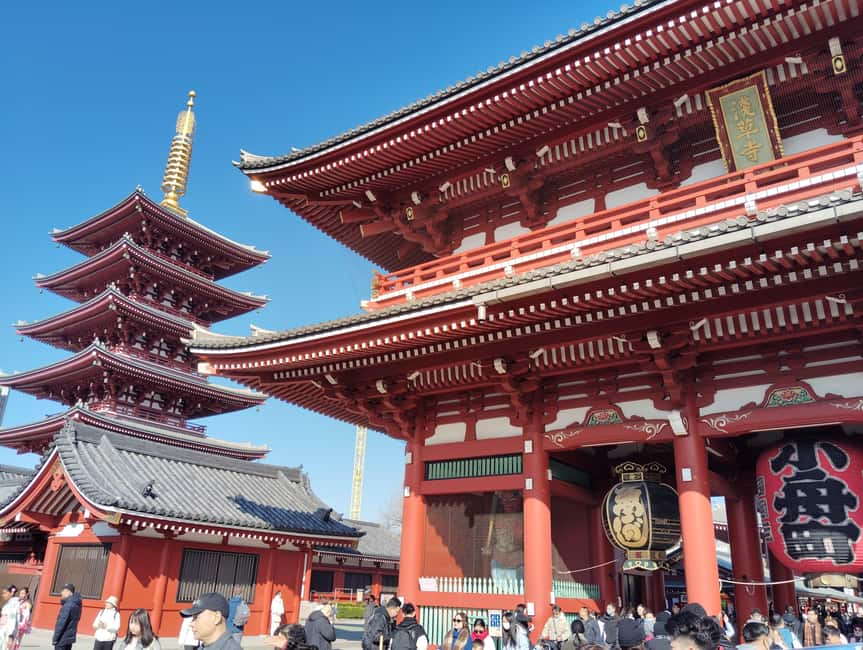
Senso-ji gives you a strong first look at Japanese Buddhist temple customs without asking you to spend half a day on a large guided program. The grounds include temple halls and five-story pagodas, while the surrounding streets provide the food, shopping, and human activity that make Asakusa feel like a complete neighborhood visit.
The temple’s main image is a hidden Buddha image. You will not see it, but that unseen presence is central to the temple’s religious meaning. For me, this is one reason a guide adds value. Without some context, Senso-ji can look like a grand collection of gates, incense burners, and photo stops. With an explanation, the visit becomes a lesson in how faith has shaped this part of Tokyo for many centuries.
The experience is also practical. You do not need to arrive already knowing how to bow, wash your hands, offer incense, or approach the main hall. The guide leads you through those steps, so you can take part with respect instead of guessing.
A few more Tokyo tours and experiences worth a look


Starting at Asakusa Culture and Tourism Center
The meeting point is inside the Asakusa Culture and Tourism Center on the second floor. Look for the guide holding a yellow sign. This is a sensible place to meet because it is indoors and easy to identify before you head toward the temple area.
Arrive with enough time to locate the center and get settled. The supplied details do not give a required arrival time, so you should check your booking confirmation for the exact meeting instructions. Since the tour begins inside the center, you do not need to search around the temple gates for a guide.
The route is wheelchair accessible, which is useful for visitors who need a more manageable introduction to Asakusa. Still, the experience includes walking through a major temple area and a shopping street, so you may want to confirm any personal mobility needs when booking.
Kaminarimon: the 20-minute introduction
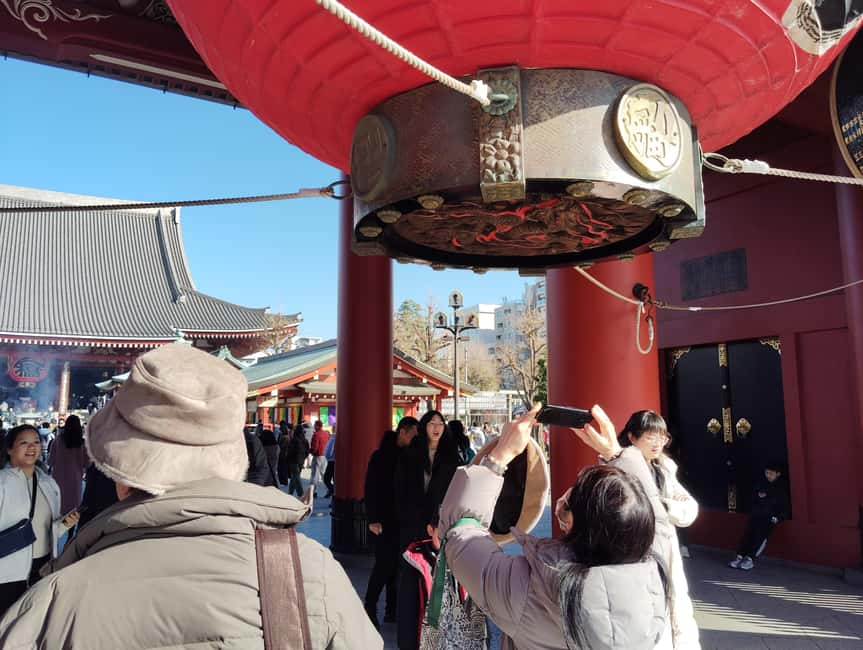
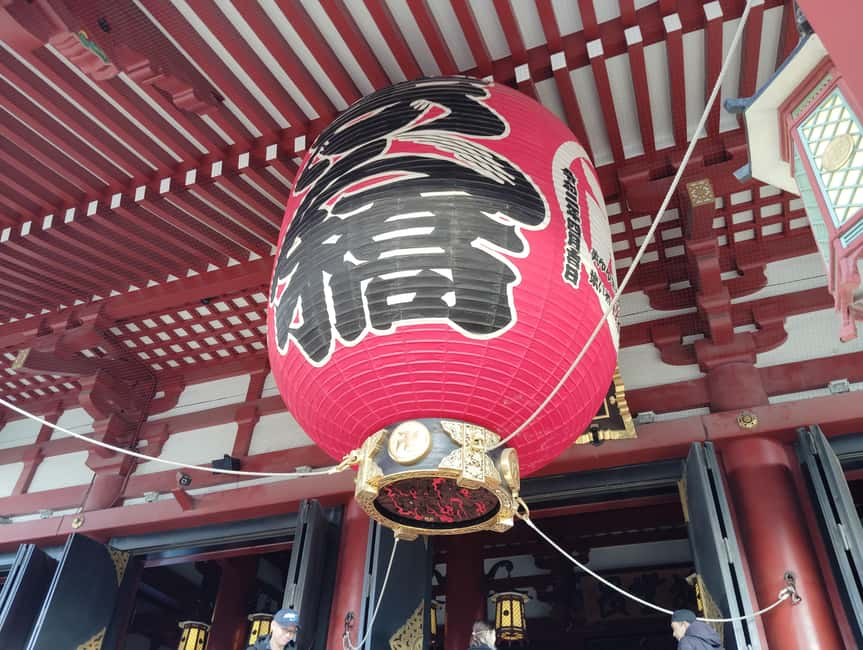
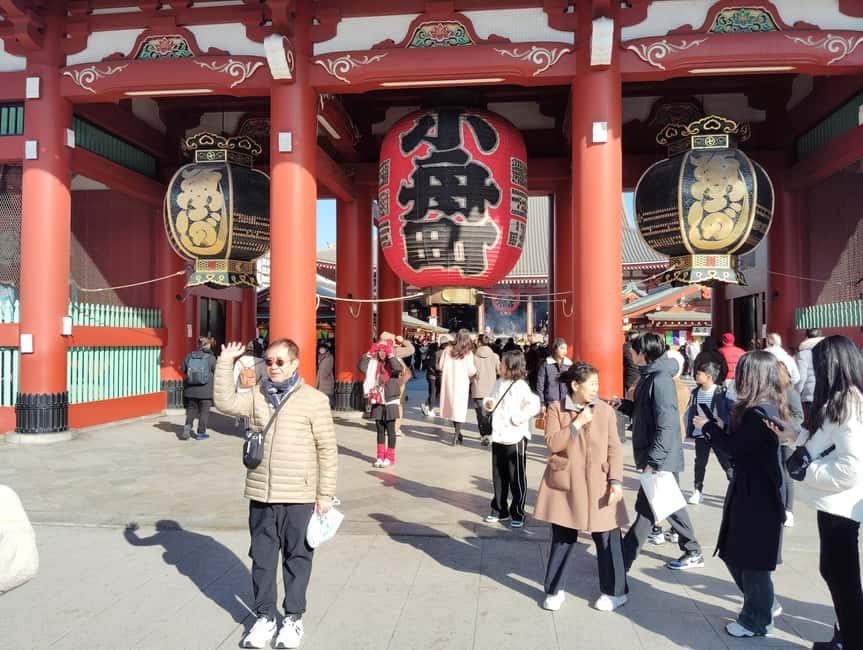
The first stop is Kaminarimon, or Thunder Gate. The tour allows about 20 minutes here for guided sightseeing and walking. This gives you time to get your bearings before entering the long approach to Senso-ji.
Kaminarimon is an important visual marker for Asakusa. It frames the temple visit and helps explain why the area is so closely tied to Senso-ji. Your guide can place the gate and the surrounding temple precinct in context, rather than leaving you with a single photograph and no sense of how the pieces fit together.
Twenty minutes is enough for an introduction, but it is not an invitation to linger at every angle. If you want extensive photography or a quiet look at the gate, you may need to return after the tour. That is not a flaw in the route. It simply reflects the need to keep the group moving toward the temple.
Senso-ji Temple and the meaning of ritual
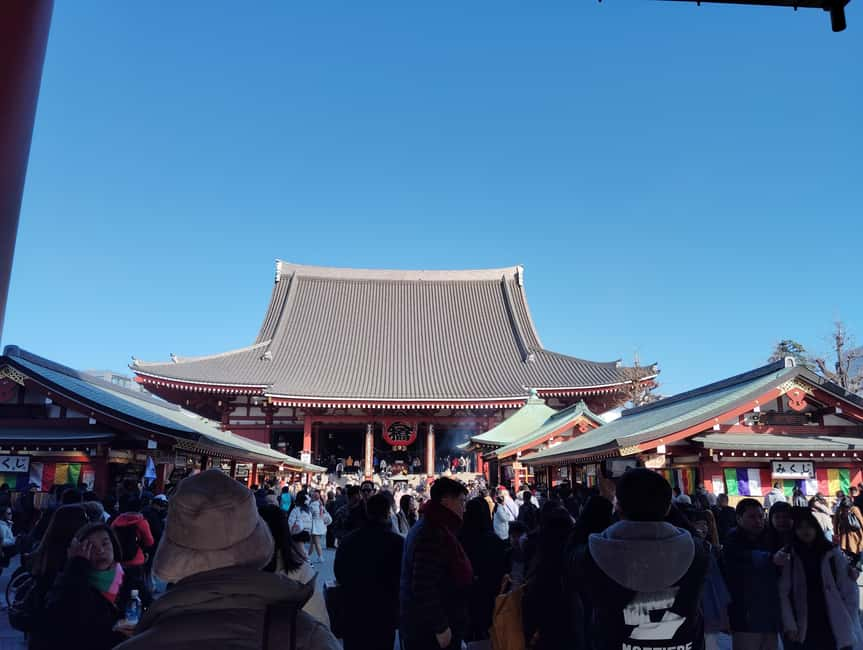
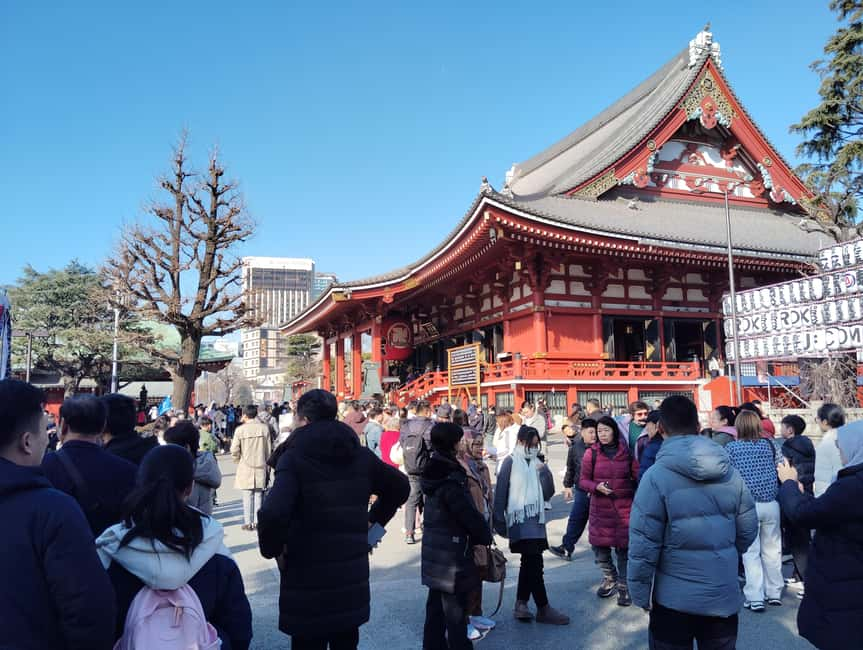
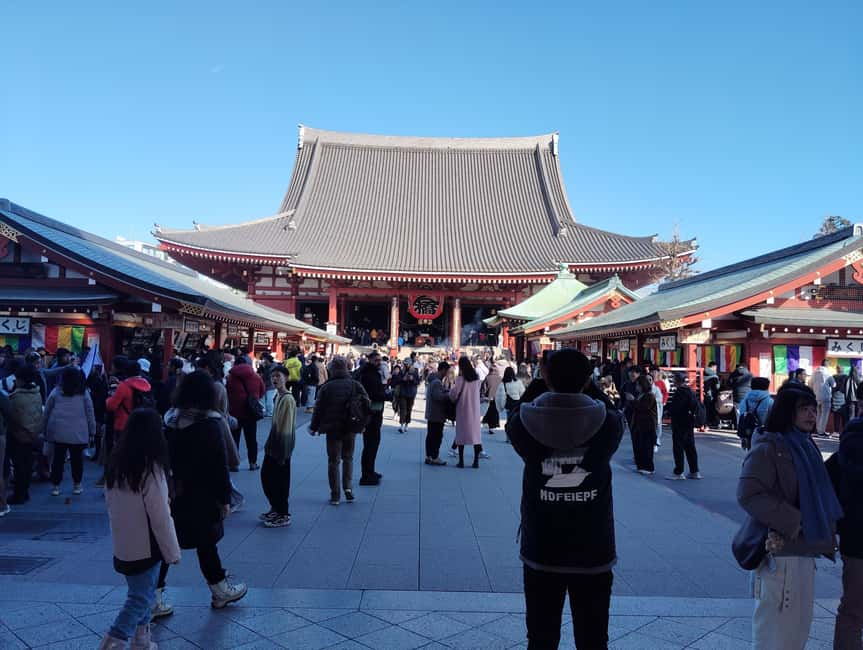
The main temple visit lasts about 50 minutes, making it the heart of the experience. This is where the guide explains temple etiquette, the long religious tradition of Senso-ji, and the steps involved in preparing yourself for a visit.
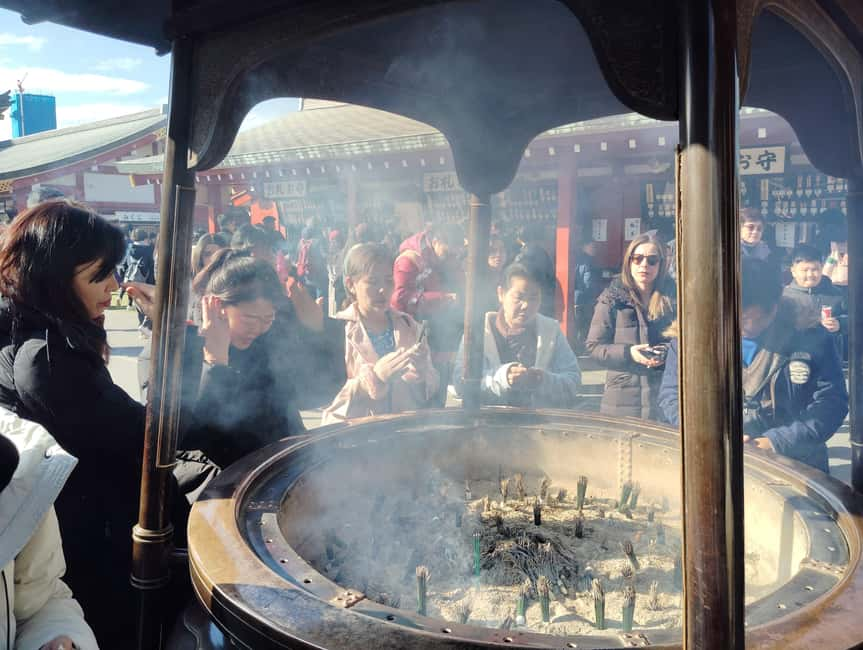
The water purification ritual is one of the most useful parts for a first-time visitor. You use water to purify your hands and mouth before approaching the sacred area. The point is not to perform a complicated ceremony. It is to pause, pay attention, and enter with a clean body and a respectful frame of mind.
The tour also includes incense. The incense fee is covered, so you do not need to keep small change ready for this part. You will be shown how the offering fits into the visit and how incense helps mark the transition from the busy approach to the more focused temple experience.
I like this format because it turns etiquette into something you do, not something you read in a guidebook. You may still want extra time afterward if you prefer to watch the flow of worshippers quietly or take photographs without keeping pace with a group.
Senso-ji reportedly has a 1,400-year history and remains a major place of faith in the Kanto region. The temple grounds contain several halls and five-story pagodas, giving the site more depth than the main hall alone suggests. The guide’s role is especially useful here, since the visual scale can make it hard to know what deserves your attention first.
Drawing an omikuji fortune
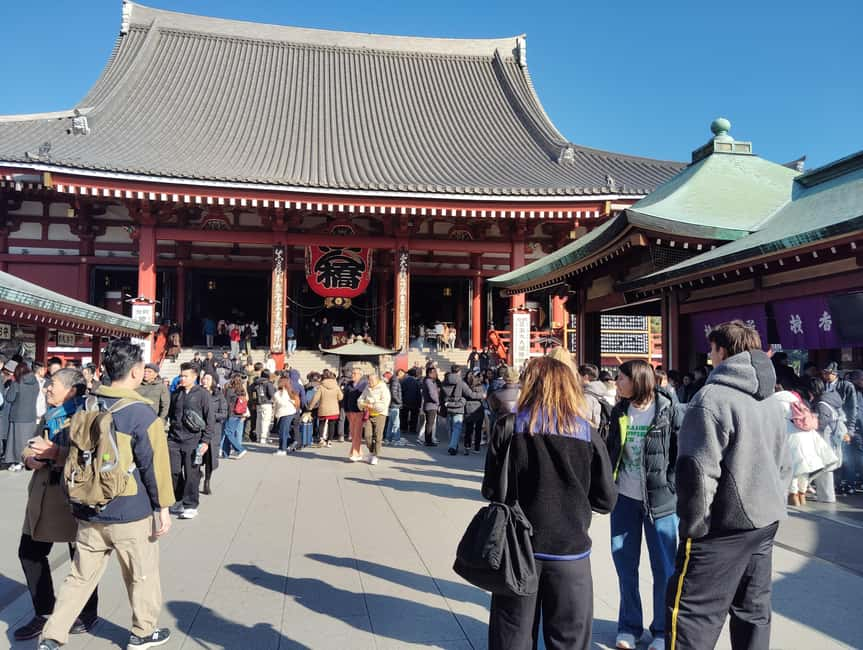
The omikuji fortune is another included part of the visit. You draw a written fortune, and the activity is known for results that can be surprisingly frank. It offers a small, memorable way to take part in a familiar temple custom.
The value here is less about predicting your future than about learning how a common Japanese religious and cultural practice works. Your guide can explain what to do with the result and how it fits into the temple visit. The supplied information does not promise a particular type of fortune, so go in ready for whatever paper you draw.
Because the omikuji fee is included, this is an easy addition to the tour. You do not have to decide if the experience is worth an extra payment once you are there. It is already part of the $27 price.
A few more Tokyo tours and experiences worth a look
Nakamise Shopping Street in 15 minutes
After the temple, the route continues along Nakamise Shopping Street for about 15 minutes. This traditional shopping street runs toward the temple and is lined with places selling snacks and souvenirs.
The short stop lets you see how religious visits and everyday commerce meet in Asakusa. You might find traditional sweets, small gifts, and items connected with Japanese culture. The information provided does not specify individual shops or food tastings, so treat this as a guided stroll rather than a food tour.
Fifteen minutes is enough to notice the character of the street and decide where you want to return. It is not enough for a relaxed shopping session, especially if you want to compare souvenirs or stop for food. I would use the tour to learn the layout, then come back on your own if something catches your eye.
The experience finishes at Senso-ji’s Kaminarimon gate. That is convenient if you want to continue exploring Asakusa after the guide leaves. You will already be in the main temple district, with the shopping street and temple grounds close at hand.
What the $27 price includes
At $27 per person, this tour is priced as a short orientation rather than a full-day cultural program. The fee includes an English-speaking guide, incense, and the omikuji fortune. Those included ritual costs matter because they keep the price straightforward.
The main value comes from interpretation and confidence. You are paying for someone to explain the order of a temple visit, point out the meaning behind the grounds, and help you take part without making an etiquette mistake. If you already know Senso-ji well and are comfortable with Japanese temple customs, you may prefer to explore independently.
For a first visit to Tokyo, I think the price is reasonable. A 90-minute guided walk can save you from skimming past the important details, while still leaving most of your day open. Private and small-group options are available, though the supplied information does not give separate prices or exact group sizes. Check those details before selecting your booking.
Food and drinks are not included. That is easy to manage in Asakusa, but keep it in mind if you expect a meal or snack tasting to be part of the tour. Nakamise Street is included for sightseeing and shopping, not as a stated food stop.
The guide makes the short format work
The activity is offered in English with a live guide. Two recent bookings specifically praised Yohei, with one short assessment calling him awesome and another noting that he did a fantastic job and helped the group learn a lot. That gives you a useful name to look for when booking, although the information does not promise that Yohei will lead every departure.
A good guide matters more on a temple visit than on a simple walk between landmarks. The key questions are not just where to go, but why you purify, what the incense means, how the hidden Buddha image shapes the temple’s identity, and how to behave around worshippers.
The current rating is 5 out of 5 from three reviews. That is a perfect score, but it is also a small sample. I would treat it as encouraging evidence about the guide experience, not as a guarantee that every group will have the same pace or personality.
Who should book this Asakusa tour?
I would point this tour toward several types of visitors:
- First-time Tokyo visitors who want a clear introduction to a major temple.
- Short-stay visitors who need a focused 90-minute activity.
- Families and mixed-age groups who benefit from a guide handling etiquette and logistics.
- Visitors curious about Japanese customs who want to participate in purification, incense, and omikuji.
- People who prefer small groups or private tours and want to avoid a large scheduled program.
It may be less useful if you have already spent time at Senso-ji or prefer to explore religious sites in silence. The route is brisk, and the shopping stop is brief. You should also avoid expecting a full Asakusa food crawl or a deep exploration of every hall.
Timing, flexibility, and practical planning
The total duration is 90 minutes, with approximately 20 minutes at Kaminarimon, 50 minutes at Senso-ji, and 15 minutes at Nakamise Shopping Street. The remaining time covers movement between stops and the start and finish arrangements.
Starting times vary, so check availability when choosing a date. The tour offers free cancellation up to 24 hours in advance for a full refund. You can also reserve now and pay later, which helps if you are still arranging a Tokyo schedule.
The activity is wheelchair accessible. Since private and small-group formats are available, you can choose a setup that better fits your party, subject to the options shown when you book. English is the stated tour language.
Wear shoes and clothing that make walking easy, and keep your hands free for the short shopping stop. The provided information does not state a dress code, but Senso-ji is an active place of worship. Modest, respectful behavior is the sensible choice.
Should you book this Senso-ji experience?
Book it if you want more than a quick photograph at Kaminarimon. The strongest reasons are the practical temple instruction, the included incense and omikuji, and the chance to understand Senso-ji’s 1,400-year religious tradition in a short visit.
Skip it if you want hours of independent browsing, a food-focused outing, or a detailed tour of every building. At $27, this is a good-value primer for first-time visitors, especially if you want a guide to make the customs feel clear rather than mysterious. The positive feedback about Yohei is encouraging, but the small review sample means you should keep expectations sensible.
FAQ
How long is the Asakusa and Senso-ji Temple tour?
The tour lasts 90 minutes.
Where does the tour begin?
It begins inside the Asakusa Culture and Tourism Center on the second floor.
How will I find the guide?
The guide will be holding a yellow sign.
Which language is the tour offered in?
The live tour guide speaks English.
What places are included?
The route includes Kaminarimon, Senso-ji Temple, and Nakamise Shopping Street.
How much time is spent at Senso-ji Temple?
The guided temple visit lasts about 50 minutes.
Are incense and omikuji included?
Yes. The incense fee and omikuji fee are included.
Is food included?
No. Food and drinks are not included.
Is the tour wheelchair accessible?
Yes, the activity is wheelchair accessible.
Can I cancel for a full refund?
Yes. You can cancel up to 24 hours in advance for a full refund.
More Guided Tours in Tokyo


More Temples & Meditation in Tokyo
More Asakusa Tours in Tokyo

More tours in Tokyo we've reviewed










Asakusa Tours, compared.
 ★ 4.8Tokyo: Japanese Dance Cabaret Theater Asakusa-Kaguwa TicketFrom $492 hours
 ★ 4.7Tokyo: Meiji Shrine, Asakusa, Skytree Bus Tour and CruiseFrom $12210 hours
 ★ 4.9Tokyo: Roll and Authentic Sushi Making Class in AsakusaFrom $581h 40m
 ★ 4.8Tokyo: Asakusa Walking Tour with Sensoji Temple VisitFrom $222 hours
 ★ 5.0Tokyo Asakusa Rickshaw TourFrom $42
 ★ 4.5Tokyo Panoramic 1 Day: Meiji Shrine, Asakusa, Odaiba and SKYTREE®From $85