
Reviewed · MUSASHINO
3-Hour Manga Drawing Workshop in Tokyo
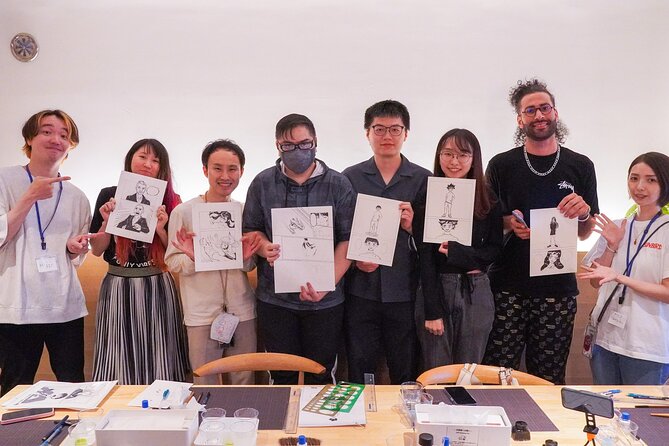
The best part of this three-hour manga workshop is that you create a complete one-page comic, not just a quick character sketch. A professional manga artist guides you from pencil roughs to ink, black fills, and effect lines, using the same basic tools that give manga its clean, graphic look.
I like the small group, capped at five, and the chance to ask direct questions about Japan’s manga industry. I also like that beginners get sample designs to follow, while confident artists can ask for more help, including advice for left-handed drawing. The main consideration is language: the class is taught in Japanese, though the slides are also in English and the organizer can speak fluent English.
In This Review
- Key points at a glance
- Starting in Kichijoji at 1:30 pm
- Building a one-page comic from pencil to ink
- What the professional instruction adds
- A Japanese-language class with English help
- Why the $97.73 price can make sense
- The two-hour option compared with the full workshop
- Who will get the most from this class
- What to bring and how to prepare
- Timing, transport, and cancellation
- Should you book the three-hour workshop?
- FAQ
- Where does the manga workshop take place?
- What time does the activity start?
- How long does the workshop last?
- Is the class taught in English?
- Do beginners need drawing experience?
- What will I make during the workshop?
- Are drawing tools provided?
- Can I cancel for a full refund?
Key points at a glance
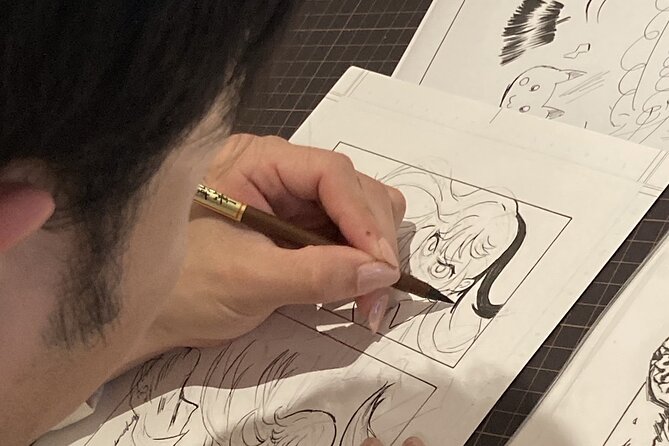
- Create a finished A4 manga page: You sketch, ink, fill black areas, and take the artwork home.
- Learn from a professional manga artist: The artist offers hands-on advice, while Natsuko Sensei and the organizer help with communication.
- Small class of five or fewer: The format gives you room to ask questions and request drawing help.
- Near Kichijoji and the Ghibli Museum: The workshop begins at 1:30 pm in Musashino, making it easy to pair with time in the area.
- English support is built in: Instruction is spoken in Japanese, but the slides include English.
- A hands-on souvenir: You use manga paper and specialized inking tools, then bring your finished page home.
Starting in Kichijoji at 1:30 pm
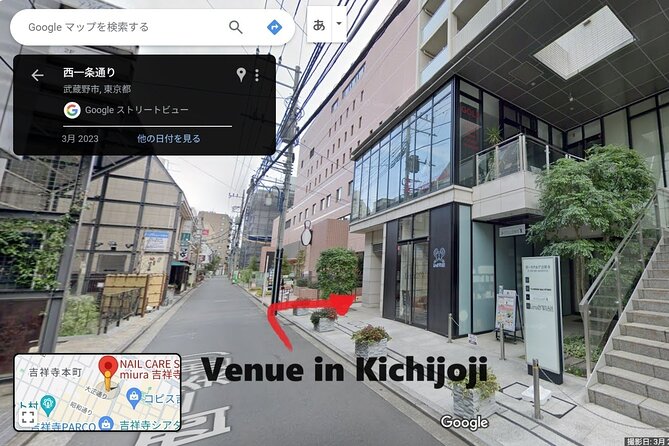
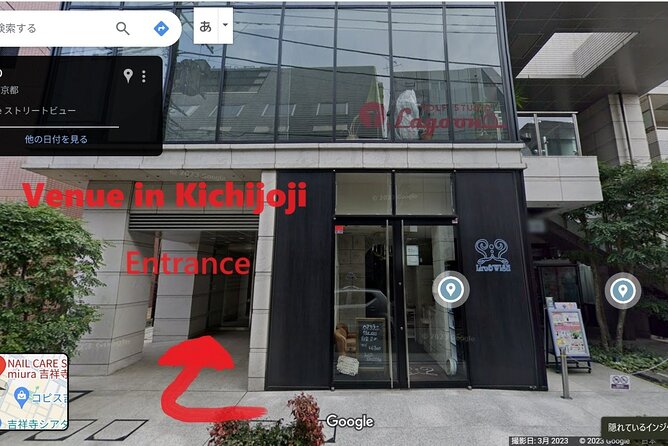
The workshop takes place in Kichijoji, in Musashino, at H-Square Kichijoji, 2-chome 46, Kichijoji Honcho. The start time is 1:30 pm, and the activity finishes back at the same meeting point.
That location matters because Kichijoji is also the area near the Ghibli Museum in Mitaka. The workshop itself is the main event, but you can plan the afternoon around this part of western Tokyo. The supplied details do not say how long it takes to reach the studio from a particular station, so allow enough time to find the building and arrive ready to begin.
This is not a drop-in craft table. The three-hour schedule gives the class a proper beginning, middle, and end. You start with an idea and a pencil sketch, then gradually turn it into a page with the bold lines and graphic effects associated with manga.
The group limit of five is one of the strongest practical features. In a large art class, you may wait for help just when your lines go wrong. Here, the instructor has a better chance to look at your page and explain what to change.
If you're still narrowing it down, here are other tours in Musashino we've reviewed.



Building a one-page comic from pencil to ink
The first stage is sketching on A4 manga paper. You begin with a rough drawing, using samples for guidance if you need them. This is helpful for beginners because a blank sheet can be more intimidating than a difficult technique.
The samples also give you a clear target. You do not need to arrive with a polished story or a developed drawing style. The goal is to work through the stages of a manga page, learning by doing rather than listening to a long lecture.
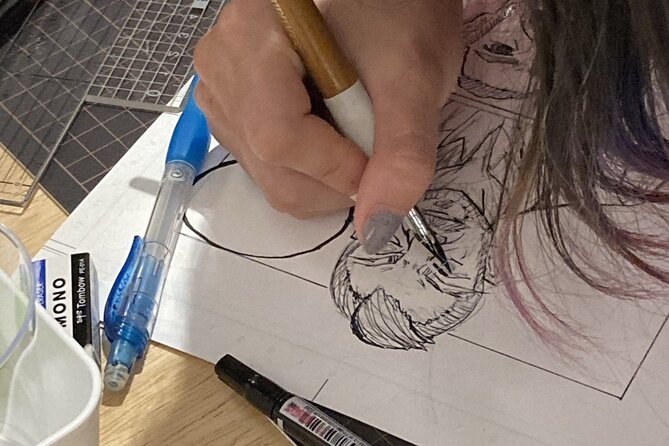
After the pencil work comes inking. This is where the class introduces specialized manga tools. Inking demands more care than a normal pen drawing because each line becomes part of the final image. The process lets you see how manga artists turn a loose sketch into something sharper and more deliberate.
You then paint the black areas. This step sounds simple, but it changes the balance of the page. Black fills help separate forms and give the drawing a stronger visual rhythm. For many beginners, this is the point when the page starts to look like manga rather than an ordinary pencil illustration.
If you finish early, the artist can teach concentration lines and other effects. These lines can suggest speed, focus, impact, or movement. They are a small detail, but they show how manga communicates action without relying only on realistic drawing.
The class description says effect work depends on available time, so you should not treat every advanced technique as guaranteed. The core session is the page itself: sketching, inking, and black paint. Extra effects are a useful bonus for anyone who works quickly.
What the professional instruction adds
The professional manga artist is there to teach the three-hour course gently, which is important if you are new to manga tools. You are not expected to know how to hold every pen, place every line, or make a page look polished from the start.
The artist does not speak fluent English, but this does not leave you without support. The organizer can speak fluent English, and the instruction slides include English alongside the Japanese teaching. That combination should help with the broad steps, while demonstrations and the page in front of you carry much of the practical lesson.
Natsuko Sensei is specifically praised for explaining manga tools and answering questions about the industry. That makes this more than a drawing session. If you are curious about how professional manga is made, this is a chance to ask about the working side of the art while you have an artist and organizer in front of you.
One useful detail is the help available for different drawing levels. Samples are provided for each level, so you can follow a simpler model instead of struggling with an ambitious design. At the same time, the instructor can offer advice to people with more drawing experience.
Left-handed participants should also feel comfortable asking for guidance. One participant received clear advice despite being left-handed, a practical point that matters in an activity involving wet ink, hand position, and line direction.
A Japanese-language class with English help
The workshop is conducted in Japanese. That is the main language point to consider before booking. English slides are used during instruction, and the organizer speaks fluent English, but the manga artist does not.
You should be comfortable with a class where some explanation comes through visual examples, demonstrations, and translated slides rather than continuous English conversation. If you have detailed questions, the organizer can help communicate them.
For many people, the language mix may actually fit the subject. Manga is a Japanese art form, and hearing the technical instruction in Japanese gives the class a direct connection to the culture. Still, if you need every step explained in English, this may require patience.
The small group helps here. With no more than five people, you have a better chance to point to your page, ask for clarification, and receive a practical demonstration. You do not need to rely on language alone when the problem is visible on the paper.
Why the $97.73 price can make sense
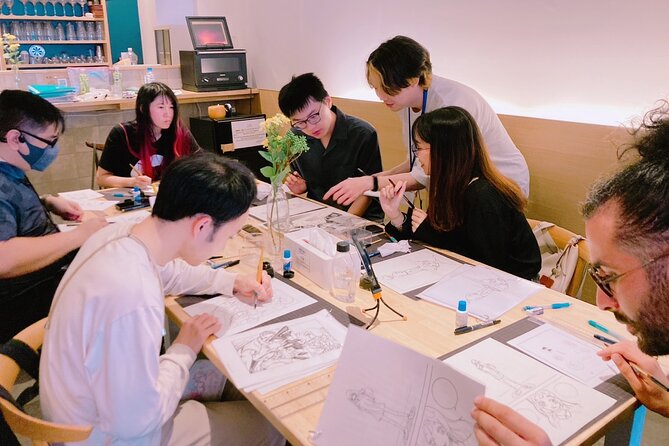
At $97.73 per person, this is not a budget souvenir activity. The value comes from the length of the class, the professional instruction, the small group, the supplied tools, and the finished artwork you take away.
You are paying for three hours of guided work rather than a short demonstration. The class covers several stages, and you get time to ask questions about both drawing and the manga industry. For someone who already enjoys manga or wants a serious introduction to its production methods, that makes the price easier to justify.
The workshop also includes the equipment and materials needed for the session. You only need to bring yourself, which keeps the preparation simple. The exact brand or type of each tool is not specified, but the class does use specialized manga equipment rather than ordinary stationery alone.
There is also a less expensive two-hour option. That class is handled by management staff rather than a professional manga artist. You ink an existing pencil sketch, paint black, add speech bubbles and lines, and, if time allows, apply screen tones in one place.
That shorter class may suit you if you want to try manga techniques at a lower price. The three-hour course is the better match if you want to build a page from your own rough sketch and ask an artist about the craft and industry.

The two-hour option compared with the full workshop
The shorter workshop is worth understanding because it clarifies what you receive in the three-hour session. In the two-hour class, the pencil sketch is already prepared. You begin with inking, then add black paint, speech bubbles, and lines.
You may also apply simple screen tones in one chosen area if time permits. Screen tones add texture and shading to a manga page, so this option still offers useful hands-on work. It simply removes the initial drawing stage and the direct teaching from a professional artist.
Choose the two-hour version if your main goal is to handle manga tools and finish a compact exercise. Choose the three-hour version if you want the fuller process, from rough concept to finished page.
The supplied information does not give the two-hour price, so I cannot make a precise savings comparison. The practical difference is clear, though: the longer course buys more time, more guidance, and a more complete creation process.
Who will get the most from this class
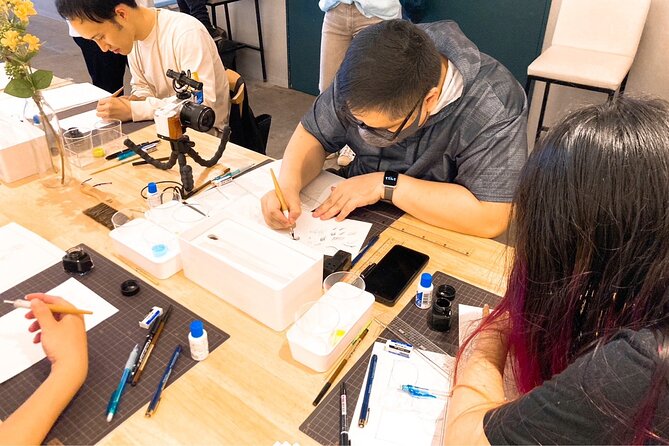
This workshop suits beginners because the samples make the process approachable. You do not need to arrive with a manga portfolio or years of drawing practice. The artist can guide you through the steps, and the small class allows room for questions.
It also fits people who already draw and want to try authentic manga tools. You can ask about line work, inking, black areas, concentration lines, and other effects instead of simply copying a picture at a casual art table.
Manga fans who want a cultural activity should find the industry questions especially useful. You get a physical souvenir, but the stronger memory may be learning how a page is built one layer at a time.
Families and groups should note that the activity is capped at five people, so it is better for a small party than a large tour group. The information says most people can participate, and service animals are allowed. No special fitness ability is required because the work is done at the drawing table, though that seating detail is not specifically described.
What to bring and how to prepare
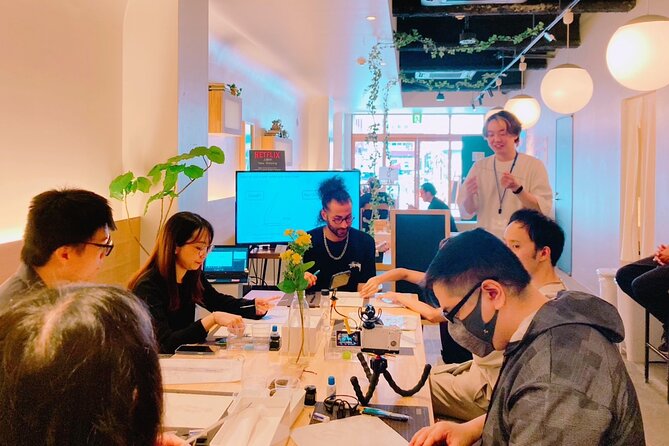
All tools needed for the workshop are provided. You do not need to pack pens, paper, or manga supplies. Bring yourself, arrive on time, and come ready to spend three focused hours on one page.
It helps to think about your drawing level before you arrive. Beginners can use the samples, while experienced artists may want to prepare a few questions about technique or the manga industry. Since instruction is in Japanese, looking closely at the English slides and demonstrations will be part of the learning process.
The finished page is your souvenir. It is more personal than a mass-produced item because you create it during the session. Keep that in mind when deciding how much value you place on making something with your own hands.
The activity is booked about 11 days ahead on average. That suggests you should not leave it until the final day of a Tokyo stay, especially if your schedule around Kichijoji is tight. Confirmation arrives when you book, and mobile ticketing makes entry straightforward.
Timing, transport, and cancellation
The 1:30 pm start gives you a useful afternoon activity, but you should protect the full three-hour window. The experience ends at the meeting point, so it is not a point-to-point tour that carries you onward to another Tokyo sight.
The meeting point is near public transportation, though the supplied details do not name a specific station or give walking directions. Check the location carefully before setting out, particularly because the address uses Japanese formatting and the studio is in a city neighborhood rather than a major landmark building.
Free cancellation is available up to 24 hours before the local start time for a full refund. Changes or cancellations inside that 24-hour period are not accepted for a refund. The class also requires a minimum number of participants, and if that minimum is not reached, you are offered another date or experience, or a full refund.
Should you book the three-hour workshop?
Book it if you want more than a quick Tokyo souvenir. The three-hour class gives you a complete page, professional instruction, specialized tools, English slide support, and a small group where questions are welcome.
The strongest reasons to choose it are the artist-led format and the chance to ask about the manga industry while you work. Natsuko Sensei’s fluent English support is reassuring, especially since the professional artist teaches in Japanese.
Skip it if you want a fully English-language class, a low-cost activity, or a quick drop-in lesson. In that case, the shorter workshop may be a better fit, though it does not include the same artist-led process.
For manga fans, curious beginners, and anyone who enjoys making a physical souvenir, the $97.73 price is fair for three hours of focused instruction. You leave with more than a drawing. You leave knowing how a manga page takes shape.
FAQ
Where does the manga workshop take place?
The workshop takes place at H-Square Kichijoji, 2-chome 46, Kichijoji Honcho, Musashino, Tokyo 180-0004. It is in Kichijoji near the Ghibli Museum in Mitaka.
What time does the activity start?
The workshop starts at 1:30 pm.
How long does the workshop last?
The three-hour manga workshop lasts approximately three hours and ends back at the meeting point.
Is the class taught in English?
The workshop is conducted in Japanese, but the instruction slides also include English. The organizer can speak fluent English, while the professional manga artist does not speak fluent English.
Do beginners need drawing experience?
No. Beginners are welcome, and samples are available for different skill levels to help you work through the drawing process.
What will I make during the workshop?
You will create a one-page comic on A4 manga paper. The process includes sketching, inking, painting black areas, and, if you finish early, learning concentration lines and other effects.
Are drawing tools provided?
Yes. All tools needed for the workshop are provided, so you only need to bring yourself.
Can I cancel for a full refund?
Yes. You can cancel at least 24 hours before the local start time for a full refund. Cancellations or changes made less than 24 hours before the start are not accepted for a refund.
More tours in Musashino we've reviewed
Musashino, compared.
 ★ 5.0The 10 Tastings of Tokyo With Locals: Private Street Food TourFrom $199
 ★ 5.0EXCLUSIVE Tokyo Secret: Kichijoji Small-Group Food & Bar HoppingFrom $105
 ★ 5.0Explore Kichijoji: Walk Through One of Tokyo’s Beloved DistrictsFrom $45
 ★ 5.0Samurai Guide Sho’s:Kichijoji Night Training–Drink & Dish PairingFrom $97
 ★ 5.0Tokyo Kichijoji Twilight: Explore Instagram-Worthy Hidden SpotsFrom $39