
Reviewed · TEMPLES & MEDITATION
Shinto Shrine Tour: Explore Japanese Culture in Tokyo
The best thing about this tour is its simple idea: three very different Shinto shrines in three hours, with a guide explaining what you are seeing instead of leaving you to puzzle over gates, statues, prayers, and symbols. I like the private format, since your group can ask questions and move at a pace that suits you. I also like that public transportation and entrance fees are included, so the route is easier to manage.
The main drawback is the pace and walking. One guest found the route tiring, and a knee injury made it harder still. If you have limited mobility, ask about the amount of walking before booking. The meeting point is convenient, but the tour does not include transportation to Harajuku Station or from the final shrine.
In This Review
- Key points at a glance
- What this private Tokyo shrine tour really offers
- Meiji Jingu: Tokyo quiets down among the trees
- Kanda Shrine: an old shrine in the city center
- Tokyo Daijingu: a shrine known for marriage
- Learning how to pray, not just where to take pictures
- The walking, transport, and three-hour timetable
- Is $206.26 a fair price?
- Who will enjoy this experience most
- Practical advice before you book
- Should you book this shrine tour?
- FAQ
- How long does the Shinto Shrine Tour last?
- Where does the tour begin?
- What time does the tour start?
- Which shrines are included?
- Is this a private tour?
- Is an English-speaking guide included?
- Is public transportation included?
- Are entrance fees included?
- Is hotel pickup available?
- What happens if I arrive late?
- Can children join the tour?
- What should I wear?
- What happens in bad weather?
- Can I cancel and receive a refund?
Key points at a glance
- Three shrines, three different moods: Visit forested Meiji Jingu, historic Kanda Shrine, and marriage-associated Tokyo Daijingu.
- Private group setting: Only your party participates, giving you room to ask questions and request rests.
- Hands-on shrine etiquette: Learn how to purify yourself, approach the worship hall, and pray respectfully.
- Guides bring the subject to life: Past guides include Ami, Hitomi, Shunsu, Atsuko Kobayashi, Asami, Ken, and Katsunori Fujiwara.
- Public transportation is included: You do not have to work out the route between the shrines on your own.
- Plan for a brisk morning: The three-hour schedule includes three one-hour stops and walking between them.
What this private Tokyo shrine tour really offers
Shinto is often described as Japan’s indigenous religious tradition, but this experience presents it in a practical way. You learn how shrine customs fit into Japanese life, mythology, and ideas about purity, good fortune, marriage, and success.
That approach matters. A shrine visit can look simple from the outside: pass through a torii gate, wash your hands, bow, place a coin, and pray. Yet each action has a reason, and small details can be easy to miss if you are on your own.
Your English-speaking guide explains the customs as you go. Guides named in past tours include Ami, Hitomi, Shunsu, Atsuko Kobayashi, Asami, Ken, and Katsunori Fujiwara. The guide assigned to you may be different, but the experience is designed around direct explanation rather than a scripted audio tour.
The private format is useful for families, couples, and small groups with mixed interests. You can ask why a particular statue is present, how a shrine differs from a Buddhist temple, or how a ritual relates to daily life. You are not sharing the morning with a large crowd or waiting for a guide to catch up with a group.
The tour begins at 9:00 a.m. at Harajuku Station. It ends somewhere different from the starting point, so check the final location before planning lunch or another appointment.
A few more Tokyo tours and experiences worth a look

Meiji Jingu: Tokyo quiets down among the trees
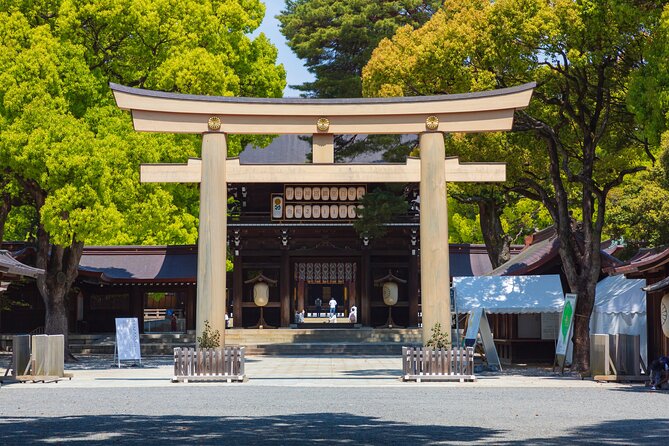
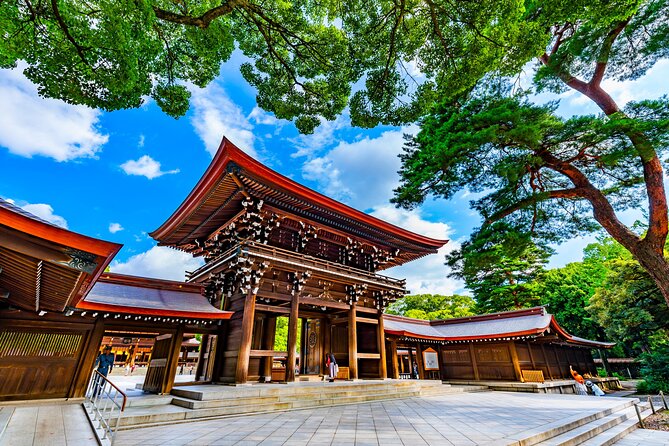
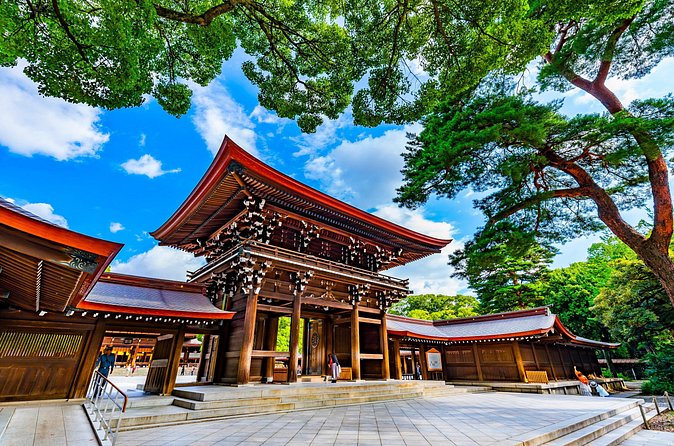
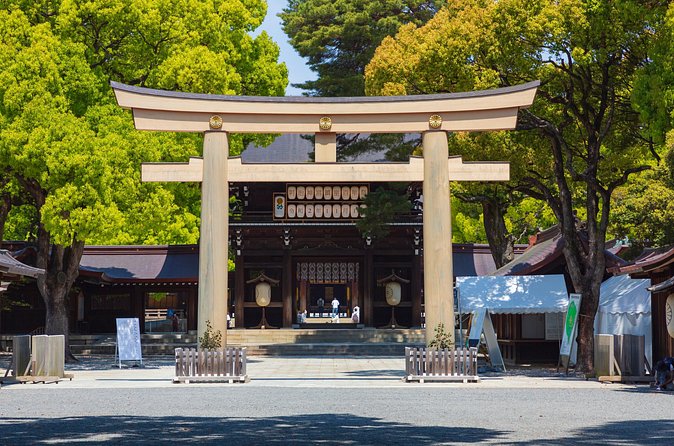
Meiji Jingu is the natural first stop. It is dedicated to the souls of Emperor Meiji and Empress Shoken, and its broad forest setting gives you a sharp change from the streets around Harajuku.
The forest was formed with trees donated from different parts of Japan. That detail gives the shrine more meaning than a pretty walk through greenery. It connects the site to the country as a whole, while the shrine itself recalls the emperor and empress associated with the Meiji period.
You receive about one hour here, with admission included. The guide can point out the proper way to enter, purify yourself, and pray. You also get time for photographs, though this is a place where respectful behavior matters more than collecting a quick snapshot.
I would pay close attention to the transition from the station area to the shrine grounds. The contrast helps you understand why shrines are often placed behind gates and trees. The setting creates a pause between city life and worship.
This is likely to be the most immediately memorable stop for many people. One guest called Meiji Jingu a different world, and that description makes sense as a practical travel observation: the trees and ceremonial approach give this visit a stronger sense of separation than a shrine surrounded closely by city buildings.
The tradeoff is walking. A forest approach can be lovely, but it is not the easiest part of the morning for someone with sore knees or limited stamina. Wear comfortable shoes and tell your guide if you need a break.
Kanda Shrine: an old shrine in the city center
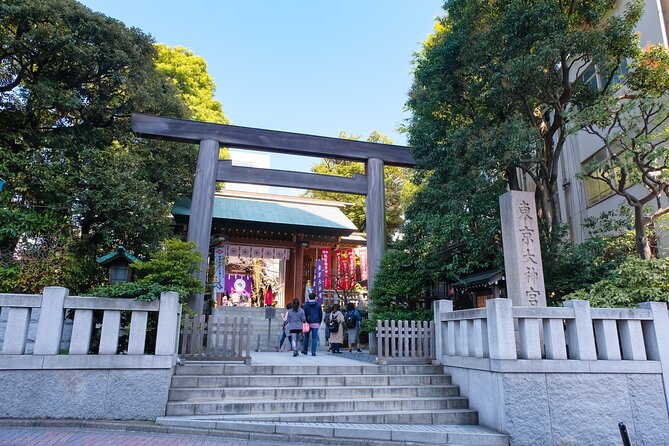
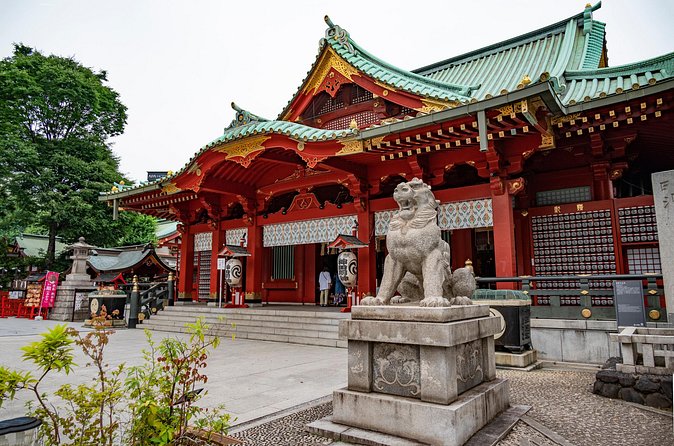
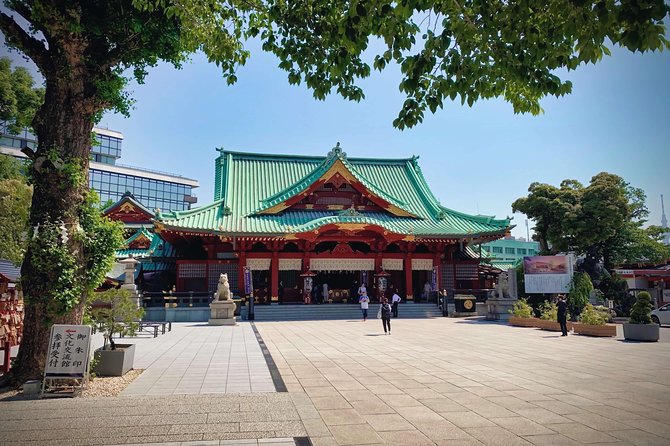
The second stop is Kanda Shrine in Chiyoda. Its origins reach back 1,270 years, although fire and earthquakes have led to repeated rebuilding of the present structure.
That rebuilding gives your guide a useful opening. You can learn how a Japanese shrine can be ancient in identity even when its visible buildings are not from the earliest period. The lesson is less about looking at one untouched object and more about understanding continuity through disasters, repairs, and renewed worship.
Kanda Shrine offers a different setting from Meiji Jingu. Instead of a large wooded approach, you see a shrine tied closely to central Tokyo. The change helps prevent the tour from becoming three versions of the same visit.
Your hour here is used for more than photographs. You can ask about the shrine’s deities, symbols, and the customs that guide the visit. The exact explanation will depend on your guide, but past guides such as Hitomi and Atsuko Kobayashi were praised for connecting shrine details with Japanese culture and the Meiji period.
This is also a good point to ask questions that came up at Meiji Jingu. By the second shrine, the basic actions should feel less mysterious, and you can focus more on why each place has its own character.
The route between stops uses public transportation. That is a real benefit in Tokyo, where a short distance on a map can involve several confusing choices. You still need to walk through stations and between the transport system and shrine grounds, so the included transport does not mean a seated tour.
Tokyo Daijingu: a shrine known for marriage
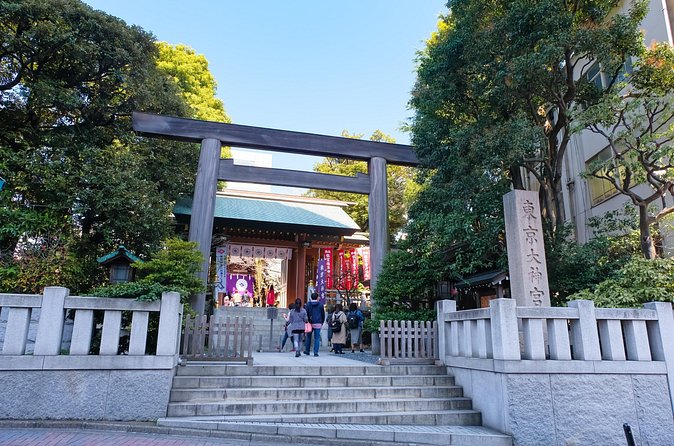
The final stop is Tokyo Daijingu, often called O-Ise-sama in Tokyo because of its enshrined deities. It is also known for the god of marriage and has a particular appeal for people interested in relationships and good fortune.
This shrine gives the route a more personal finish. At Meiji Jingu, the focus is strongly tied to the imperial couple and the forest setting. At Kanda Shrine, age and repeated rebuilding provide the main story. At Tokyo Daijingu, the subject turns toward marriage, wishes, and the role of shrine visits in personal hopes.
You have about one hour here. Use it to review the etiquette you learned earlier, ask final questions, and take photographs. The guide can explain how the shrine’s reputation shapes the way people approach it.
Because the tour ends at a different location, Tokyo Daijingu is not simply a return to Harajuku. That can work well if your next plan is in central Tokyo, but you should not book the tour immediately before a time-sensitive reservation unless you allow extra time.
Learning how to pray, not just where to take pictures
The most useful part of this activity is the instruction in shrine behavior. You learn how to purify yourself, how to pray for good fortune, and how shrine customs relate to ideas such as success and marriage.
A guide can correct the uncertainty that many first-time visitors feel. You might wonder where to bow, what to do at the purification fountain, or how much of the ritual is expected from a visitor. The tour gives you a respectful framework rather than asking you to copy strangers.
This is also where the experience goes beyond sightseeing. The tour presents Shinto as a way of life connected to Japanese culture, not only as a formal religion. That distinction is useful because modern shrine visits can include religious practice, family milestones, seasonal customs, personal wishes, and simple cultural habit.
Past guides were praised for explaining statues, symbols, history, and the relationship between Shinto and Japanese life. Ken was also able to suggest a fugu restaurant to one participant, although food is not part of the tour and restaurant help should be treated as an extra courtesy, not a promised feature.
Bring questions. A private guide is most valuable when you use that access. Ask about something you can see, rather than trying to absorb a long lecture all at once.





The walking, transport, and three-hour timetable
The stated duration is about three hours, with one hour allocated to each shrine. That makes the tour efficient, but it also means the schedule is fairly full.
You begin at Harajuku Station at 9:00 a.m. and travel by public transportation to the other shrines. The guide handles the route, which saves you from studying train connections and station exits during a short visit.
Still, public transport involves walking, stairs, platforms, and changes of scene. One guest described the route as a very long walk, so I would not treat this as an easy, sit-down cultural outing. Comfortable shoes are essential. If you have an injury, tell the guide early and use the private format to request rests.
The tour is subject to favorable weather. In a typhoon or other extreme weather, you are offered an alternative date or a full refund. Ordinary rain may still affect comfort, so check the forecast and dress sensibly.
The stated dress code is smart casual. You do not need formal clothing, but neat, respectful attire is the sensible choice for shrine visits. Children can participate, but they must be accompanied by an adult.
Is $206.26 a fair price?
At $206.26 per person, this is not a bargain-priced shrine walk. The value depends heavily on your group size and on how much you want explanation rather than independent sightseeing.
For that price, you receive a private experience, a professional English-speaking guide, public transportation between shrines, entrance fees, and roughly three hours of instruction and touring. You also save the work of planning a route across Tokyo.
A solo visitor or couple may find the cost harder to justify. If you are comfortable using Tokyo’s transport system and reading up on shrine etiquette, you can visit shrines independently for less.
For a family or small group, the private setup makes more sense. You are paying for shared guide time, not a seat on a large coach. Group discounts are available, though the exact reduced price is not provided here, so check the booking total for your party.
I see the strongest value for first-time visitors who want cultural context in a short window. If you have only one morning for Shinto sites, three carefully chosen shrines give you more range than spending the whole time at one place.
Who will enjoy this experience most
I would recommend this tour to you if you want to understand what you are doing at a shrine, not simply photograph the buildings. It suits first-time visitors to Japan, families with questions, and small groups that prefer a private guide.
It is also a good fit if you have limited time in Tokyo. The route covers three major sites without asking you to plan the order, work out the transport, or research each shrine beforehand.
You may want to skip it if you prefer slow, unstructured wandering. The three-hour timetable is purposeful, and the route includes enough walking to make it tiring for anyone with mobility concerns.
It is less suited to anyone expecting food, hotel pickup, or a full-day cultural program. Food and drinks are not included. You arrange your own way to Harajuku Station and from the ending point, and gratuities are optional.
The experience has a rating of 5 from 18 ratings, with 100 percent recommending it. The strongest praise centers on the guides’ friendliness, clear explanations, cultural insight, and patience. Those qualities matter here because the buildings alone do not explain how to visit a shrine respectfully.
Practical advice before you book
Meet at Harajuku Station, at 1 Chome-18 Jingumae, Shibuya, Tokyo 150-0001, at 9:00 a.m. Give yourself enough time to find the meeting point. If you are late, the guide waits up to 30 minutes, after which the tour is treated as canceled.
Wear comfortable shoes and smart-casual clothing. Carry water, since food and drinks are not included, and allow extra time after the final shrine because the activity ends somewhere different.
Confirmation is normally sent at booking. If you book within seven days of travel, confirmation may arrive within 48 hours and depends on availability.
The cancellation terms require care. The activity is described as non-refundable and unchangeable, with no refund if you cancel or request an amendment. Extreme weather is treated separately, with an alternative date or full refund offered in the event of a typhoon or other severe conditions.
Should you book this shrine tour?
Book it if you want a private, guided introduction to Shinto and have only one morning in Tokyo. The three stops give you useful variety: a forest shrine tied to Emperor Meiji, an old city shrine shaped by rebuilding, and a site associated with marriage and personal wishes.
The price is high for simple sightseeing, but easier to defend if you are traveling as a group and want cultural explanation, included transport, and a guide who can respond to your questions. Skip it if you are watching every yen, dislike walking, or prefer to explore shrines independently.
For the right visitor, this is a focused way to turn three shrine visits into a better understanding of Japanese customs and daily life.
FAQ
How long does the Shinto Shrine Tour last?
The tour lasts approximately three hours, with about one hour at each of the three shrines.
Where does the tour begin?
It begins at Harajuku Station, at 1 Chome-18 Jingumae, Shibuya, Tokyo 150-0001, Japan.
What time does the tour start?
The scheduled start time is 9:00 a.m.
Which shrines are included?
The route includes Meiji Jingu Shrine, Kanda Shrine, and Tokyo Daijingu Shrine.
Is this a private tour?
Yes. Only your group participates in the activity.
Is an English-speaking guide included?
Yes. A professional English-speaking tour guide is included.
Is public transportation included?
Yes. Public transportation between the shrines is included. Transportation to Harajuku Station and from the departure point is not included.
Are entrance fees included?
Yes. Entrance fees are included.
Is hotel pickup available?
No. Hotel pickup and drop-off are not included.
What happens if I arrive late?
The guide will wait up to 30 minutes after the scheduled start time. If you do not arrive within that period, the tour is considered canceled.
Can children join the tour?
Yes. Children may participate, but they must be accompanied by an adult.
What should I wear?
The stated dress code is smart casual. Comfortable shoes are also a practical choice because the tour includes walking.
What happens in bad weather?
If the tour is canceled because of a typhoon or other extreme weather, you are offered an alternative date or a full refund.
Can I cancel and receive a refund?
The activity is described as non-refundable and cannot be changed for any reason. If you cancel or request an amendment, the amount paid will not be refunded.
More Temples & Meditation in Tokyo
More tours in Tokyo we've reviewed




Temples & Meditation, compared.
 ★ 4.7Tokyo: Meiji Shrine, Asakusa, Skytree Bus Tour and CruiseFrom $12210 hours
 ★ 4.8Tokyo: Asakusa Walking Tour with Sensoji Temple VisitFrom $222 hours
 ★ 4.6Nikko: Kegon Falls, Lake Chuzenji & Toshogu TempleFrom $8911 hours
 ★ 4.5Tokyo: Kamakura & Enoshima Day Trip including Temple TicketsFrom $589 hours - 570 minutes
 ★ 4.5Tokyo: Nikko Toshogu Shrine and Kegon Waterfall TourFrom $8410h 30m
 ★ 4.5Tokyo Panoramic 1 Day: Meiji Shrine, Asakusa, Odaiba and SKYTREE®From $85