
Reviewed · FOOD
Okonomiyaki making experience~Japanese popular food
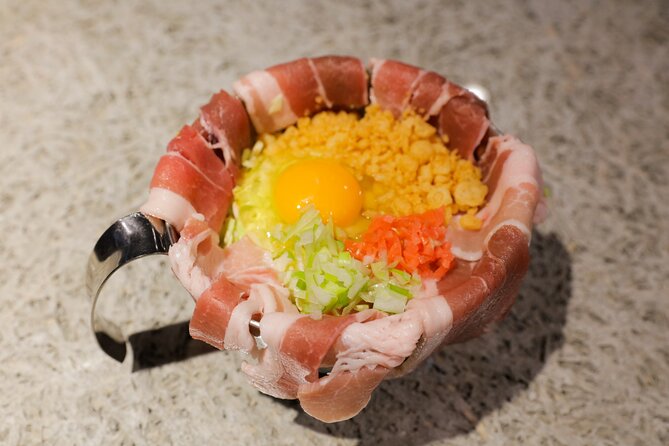
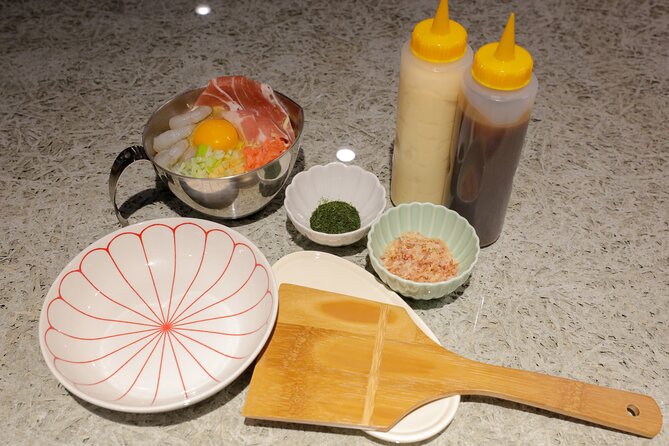
The best part of this Tokyo experience is that you do not just order okonomiyaki, you help make it. You mix cabbage, batter, and your choice of meat or seafood, then cook the pancake on a hot griddle and finish it with sauce, mayonnaise, and aonori.
I like the one-hour format, which fits neatly into a busy day in Shinjuku. I also like the friendly language support, with Nina and another English-speaking guide working alongside the chef. The main thing to consider is that the short class gives you a taste of okonomiyaki making, not a long cooking course.
In This Review
- Key points to know before booking
- Making Tokyo soul food in Shinjuku
- What happens during the one-hour class
- Choosing between meat and seafood
- English guidance and the role of Nina
- Why the private format matters
- What you get for $39.02
- Getting to the Shinjuku meeting point
- The taste and texture of the finished okonomiyaki
- Who should book this experience
- Booking, cancellation, and weather details
- Should you book this okonomiyaki class?
- FAQ
- Where does the okonomiyaki activity start?
- Where does the activity finish?
- How long does the experience last?
- How much does it cost?
- Is this a private activity?
- Can I choose the type of okonomiyaki?
- Are food and drinks included?
- Is cancellation free?
Key points to know before booking
- You choose meat or seafood: Pick the okonomiyaki style that suits your appetite.
- You cook on the griddle: The meal is prepared as part of the activity, not simply served to you.
- English support is available: Nina and another English-speaking guide help explain the process.
- It is a private activity: Only your own group takes part.
- The meeting point is in Shinjuku: You must arrange your own transport to A house with flowers.
- An extra pancake may be possible: Some sessions allow you to make a second one to take home.
Making Tokyo soul food in Shinjuku
Okonomiyaki is often described as a Japanese pancake, but that simple label does not tell the whole story. The dish is built from flour, eggs, cabbage, and other ingredients, then cooked on a griddle and covered with bold toppings.
What makes it special for you is the hands-on part. Okonomiyaki is not a delicate dish that demands perfect knife skills or restaurant training. It is flexible, filling, and made for sharing. You get to see the mixture come together, watch it cook, and add the sauces that give it its familiar finish.
This food is common in Japanese homes, festivals, and restaurants. That gives the class a useful place in a Tokyo itinerary. You are not simply sampling an exotic dish for a few bites. You are learning about a casual food that many people in Japan eat in ordinary settings.
I also like that the activity keeps the focus narrow. There are no extra sightseeing stops or long lectures to pad out the hour. You meet, prepare the okonomiyaki, cook it, and eat it at the same location.
A few more Tokyo tours and experiences worth a look

What happens during the one-hour class
The activity begins at a house with flowers, at Japan, 160-0022 Tokyo, Shinjuku City, Shinjuku, 3-chōme67 第6三和ビル 4階. The name may be easy to overlook in a busy part of Tokyo, so I would allow enough time to locate the building and confirm the entrance before the start.
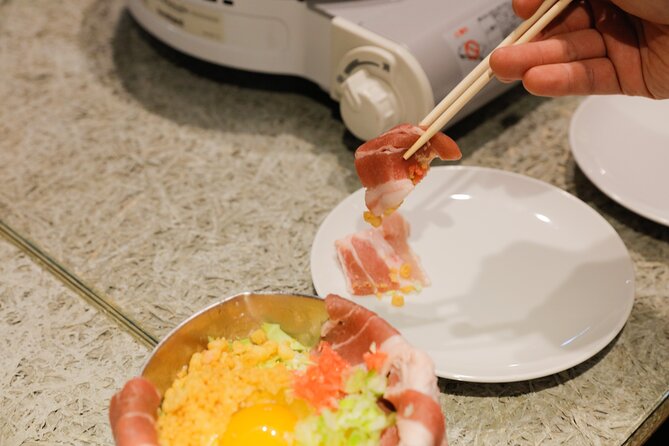
Once inside, the chef and English-speaking guides explain the dish and the basic steps. The exact order of instruction is not set out in detail, but you can expect the class to cover the batter, the cabbage and other ingredients, the choice between meat and seafood, and the cooking process on the griddle.
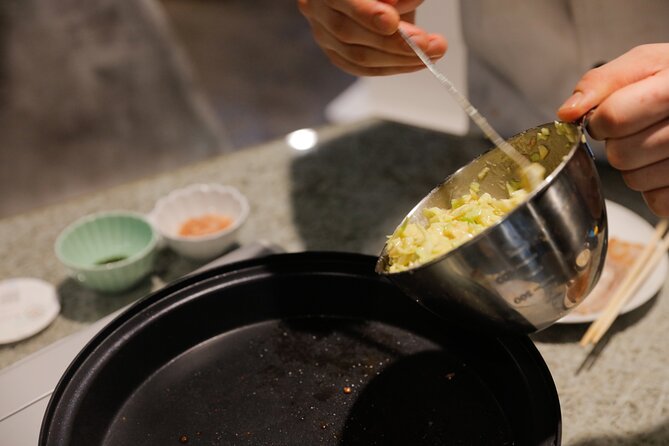
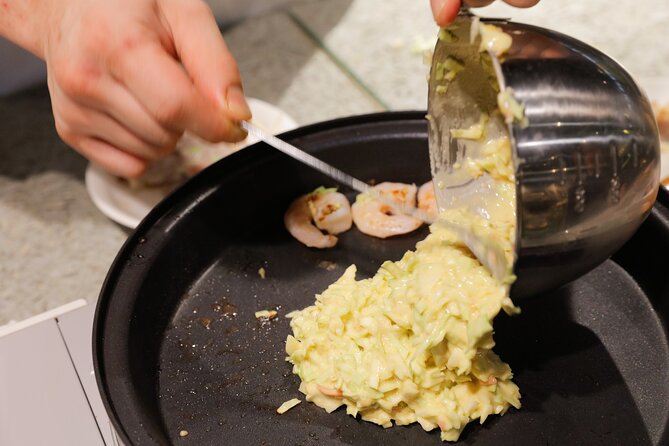
You then prepare the mixture. The basic batter combines flour and water, with eggs, cabbage, and selected additions worked in. Okonomiyaki is forgiving by nature, so the activity suits people who want to cook but do not want a high-pressure lesson.
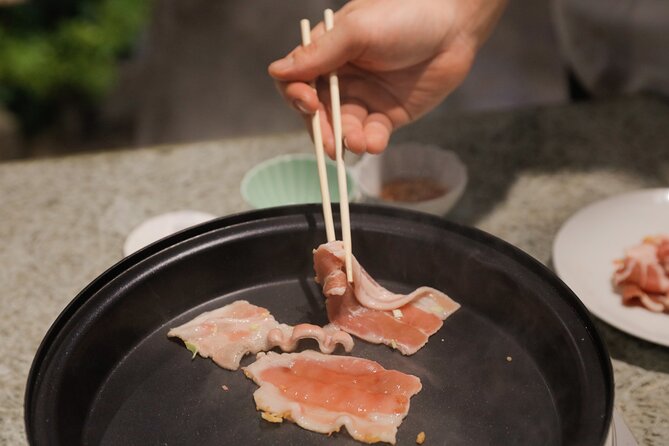
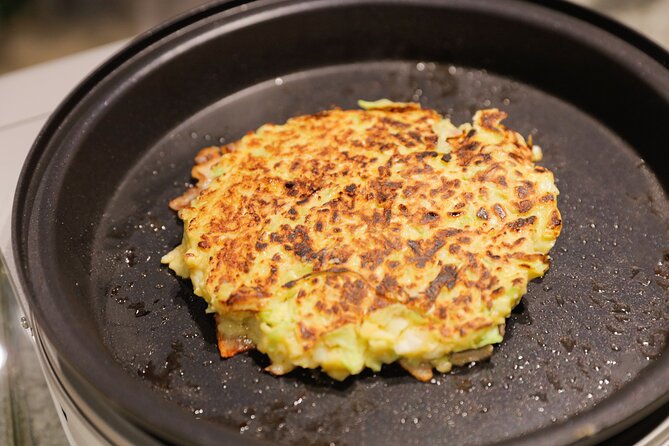
The griddle is the heart of the class. You cook the pancake there rather than watching a chef do everything for you. This is where the experience becomes more memorable than a standard meal. You have to pay attention to the shape, the heat, and the moment when it is ready to turn or serve.
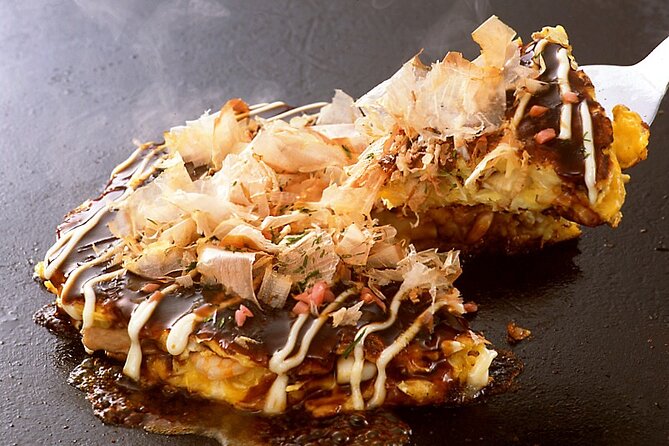
After cooking, you add the classic finishing touches. These include okonomiyaki sauce, mayonnaise, and aonori, a dried seaweed topping. The sauces bring sweetness, salt, and richness, while the seaweed adds a distinctly Japanese flavor and appearance.
The activity ends back at the meeting point. Since the total duration is about one hour, you should plan it as a compact food experience rather than a full evening meal. Lunch and dinner are not included, although the okonomiyaki itself gives you something substantial to eat during the class.
Choosing between meat and seafood
The two stated choices are meat and seafood. This is helpful if you have a clear preference, but the information does not specify the exact meat or seafood ingredients used in each version.
If you are comfortable with both, ask the guides or chef what is available when you arrive. That simple question can help you choose based on the day’s preparation and your own appetite.
The seafood option may appeal to you if you want a flavor that feels closely tied to Japan’s coastal food culture. The meat option may be the safer choice if you prefer a more familiar, hearty pancake. I would not assume that one is better. Okonomiyaki is designed to adapt to different tastes.
If you have food allergies or strict dietary needs, ask before booking or contact the provider. The available information confirms the main ingredients and the two broad choices, but it does not confirm vegetarian, vegan, gluten-free, or allergy-safe versions.
English guidance and the role of Nina
Language can make a cooking class either easygoing or frustrating. Here, the experience includes two friendly English-speaking guides working with the chef. Nina is specifically named as one of the guides, and her role includes translating and helping people follow the class.
That support matters because the cooking itself is only part of the activity. You also want to understand when to add ingredients, how to use the griddle, and how to finish the dish. Having the chef present alongside English support gives you a better chance of following the process without guessing.
You should still expect a simple, practical lesson rather than a formal culinary lecture. The class lasts about an hour, and the main goal is to make and enjoy okonomiyaki. The English guides help keep the activity friendly and understandable, while the chef brings the cooking expertise.
This setup is especially useful for solo visitors. A private booking means you are not placed with a large mixed group, and the guides can focus on your party. Couples, families, and small groups should also find the format easy to manage.
Why the private format matters
This is a private activity, so only your own group participates. That gives you more control over the pace and mood than a large public food tour.
For a solo participant, the private arrangement can make the class feel less awkward. You are not trying to keep up with a room full of strangers or waiting for several groups to finish the same step.
For a family or group of friends, the setup makes the cooking feel social. You can compare your choices, help each other with the griddle, and enjoy the finished dish together. The activity is also suitable for most people according to the participation information, though specific dietary or mobility questions should be checked in advance.
The tradeoff is that private activities can offer less of the spontaneous social contact you might get in a shared class. If meeting other people is your main reason for booking a food experience, this may feel more contained.




What you get for $39.02
At $39.02 per person, the price includes all fees and taxes. It does not include bottled water, additional meals or drinks, lunch, dinner, or transportation to the meeting point.
I see the value in the price mainly through the combination of instruction, food, English assistance, and a private setting. You are paying for more than an okonomiyaki meal because you take part in making it. The chef and guides also reduce the language barrier, which is useful if you have never prepared the dish before.
The one-hour duration keeps the cost from turning into a major time commitment. You can fit the activity between other Shinjuku plans, making it easier to justify than a longer cooking course.
Still, this is not the best choice if you are looking for a full meal with drinks, several dishes, or a long cultural program. You may need to budget separately for lunch or dinner, depending on when you book it. Bottled water is also not included.
The chance to make a second okonomiyaki and take it home is a pleasant extra when offered, but I would not treat it as guaranteed. The core value is the class and the meal you prepare during the scheduled hour.
Getting to the Shinjuku meeting point
The meeting point is near public transportation, but transportation expenses are not included. You need to make your own way to A house with flowers, at the listed Shinjuku address.
Shinjuku is a practical base for this activity because it is easy to combine with other plans in central Tokyo. Even so, the address includes a building name and a fourth-floor location, so I would avoid arriving at the last second.
Use your mobile ticket and booking confirmation as you make your way there. Confirmation is provided at the time of booking. The available information does not name a specific train station exit, so check the exact route before leaving your hotel.
The activity returns to the same meeting point when it ends. That makes the next part of your day simple. You do not need to arrange a second pickup location or calculate where a food tour will finish.
The taste and texture of the finished okonomiyaki
The finished dish combines a soft, savory center with the texture of cooked cabbage and whatever meat or seafood you choose. The griddle gives the outside structure, while the sauce and mayonnaise make each bite rich and strongly flavored.
Aonori adds a light seaweed note and gives the pancake its familiar Japanese look. The final toppings are not just decoration. They are a key part of the flavor, and adding them yourself helps you see how the dish changes from a plain cooked pancake into okonomiyaki.
You should expect a filling dish, but not a multi-course meal. The class centers on one popular Japanese food, and the listed price does not include other dishes or drinks.
I like this kind of meal for the middle of a busy sightseeing day. It is more substantial than a quick snack, yet the activity is short enough that you can still visit other parts of Tokyo afterward.
Who should book this experience
I would recommend this class to you if you want a hands-on food activity without giving up half a day. It suits solo visitors, couples, families, and private groups who want a simple way to try a Japanese staple.
It is also a good pick if English support is important. Nina and another English-speaking guide work with the chef, so you have help understanding the process and enjoying the cooking.
Families may like the forgiving nature of okonomiyaki. You do not need to produce a perfect restaurant dish for the activity to work. The cooking is part of the fun, and the finished pancake is still meant to be eaten.
Food-focused visitors will appreciate the local connection. Okonomiyaki is not presented as a rare specialty reserved for special occasions. It is everyday Japanese comfort food, served in homes, at festivals, and in restaurants.
I would think twice if you dislike cooking at a table, have strict dietary restrictions, or want a broad introduction to Japanese cuisine. The class focuses on one dish, and the available details do not confirm special menus or ingredient substitutions.
Booking, cancellation, and weather details
You can cancel for a full refund up to 24 hours before the start time. Cancellations or changes made less than 24 hours before the activity are not accepted for a refund.
The experience requires good weather, and poor weather can lead to a different date or a full refund. It also requires a minimum number of participants. If that minimum is not reached, you can receive a different date or experience, or a full refund.
Those rules are worth checking if your Tokyo schedule is tight. The free cancellation window is useful, but the 24-hour cut-off is firm.
Should you book this okonomiyaki class?
Book it if you want a short, friendly, private cooking activity in Shinjuku, especially if you like the idea of making your own meal instead of simply sitting down at a restaurant. The English-speaking guides, chef-led instruction, meat or seafood choice, and mobile ticket make it straightforward for many visitors.
At $39.02, the price is reasonable for a one-hour private food lesson with fees and taxes included. Just remember that drinks, transportation, and any other meal are extra. If you want a full cooking school or a broad tasting tour, choose something longer. If you want to make one of Japan’s most approachable comfort foods and enjoy the result soon after, this is a practical pick.
FAQ
Where does the okonomiyaki activity start?
It starts at A house with flowers, Japan, 160-0022 Tokyo, Shinjuku City, Shinjuku, 3-chōme67 第6三和ビル 4階.
Where does the activity finish?
The activity ends back at the same meeting point.
How long does the experience last?
The experience lasts approximately one hour.
How much does it cost?
The listed price is $39.02 per person.
Is this a private activity?
Yes. Only your own group participates in the activity.
Can I choose the type of okonomiyaki?
Yes. You can choose between a seafood version and a meat version.
Are food and drinks included?
The activity includes its stated fees and taxes and the okonomiyaki-making experience. Bottled water, additional meals, drinks, lunch, and dinner are not included.
Is cancellation free?
Yes, you can cancel for a full refund if you cancel at least 24 hours before the experience start time. Changes or cancellations made less than 24 hours in advance are not accepted for a refund.
More Food Experiences in Tokyo

More tours in Tokyo we've reviewed










Food, compared.
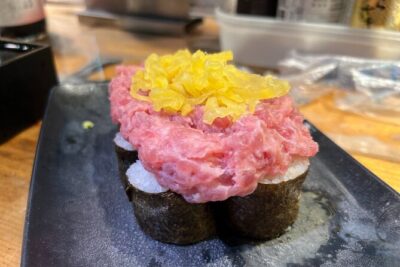 ★ 5.0Tokyo: Shinjuku Food Tour (13 Dishes at 4 Local Eateries)From $86
 ★ 5.0Tokyo Tsukiji Fish Market Food and Culture Walking TourFrom $99
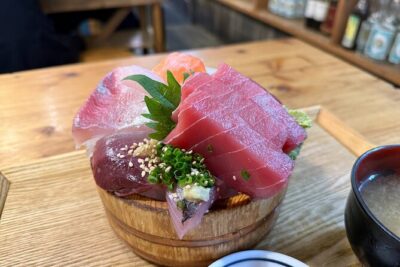 ★ 4.9Tokyo: Shinjuku Food Tour (15 Dishes and 4 Eateries)From $853 hours
 ★ 5.0Best of Shinjuku: Izakaya Food Tour (4 Stops, 14+ Tastings)From $92
 ★ 5.0Tokyo: Tsukiji Fish Market Food and Walking tourFrom $30
 ★ 5.0Tokyo Night Foodie Tour in Shinjuku – Seasonal Sushi, Wagyu BeefFrom $111