
Reviewed · TEA CEREMONY & MATCHA
Tokyo: Casual Japanese Tea Ceremony Experience
The best part of this Tokyo tea experience is that it removes the pressure from a formal ceremony. You learn the meaning behind the gestures, whisk your own bowl of matcha, and taste a traditional sweet without worrying about making a cultural mistake.
I like the small group limit of eight, which leaves room for questions and photos. I also like the clear, friendly teaching style praised by name in feedback about Midori, especially the careful explanation of the ceremony’s history and each step. The main drawback is simple: this is a casual lounge session, not a full formal ceremony, and kimono rental is not included.
In This Review
- Key points to know before booking
- A gentle first step into the way of tea
- What happens at Tokyo Tourist Lounge Asakusa
- Learning to whisk your own matcha
- The meaning behind each gesture
- Why the small group size matters
- How the $25 price measures up
- What this is, and what it is not
- Where it fits in an Asakusa day
- Who should book this tea experience
- Booking, cancellation, and practical details
- Should you book it?
- FAQ
- How much does the tea ceremony experience cost?
- How long does the activity last?
- Where does the activity start?
- Where does the activity end?
- Is kimono rental included?
- How many people can join the session?
Key points to know before booking
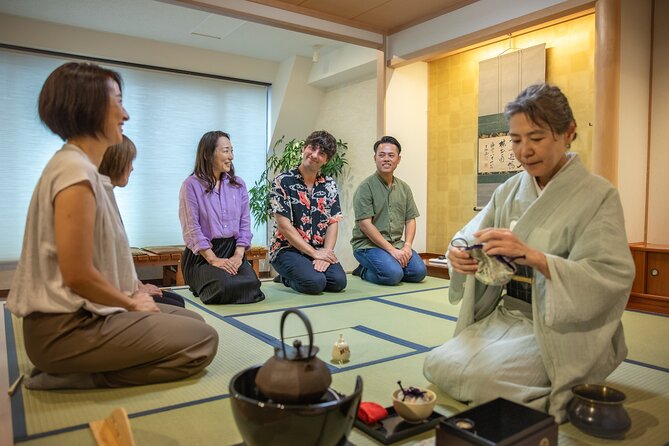
- You make your own matcha: The host shows you how to whisk powdered green tea, then gives you time to prepare and drink your own bowl.
- The setting is relaxed: You learn tea customs without the strict rules and formality that can make a traditional ceremony feel intimidating.
- Japanese sweets are part of the tasting: The tea is served with an authentic sweet, giving you the classic balance of bitter matcha and delicate sweetness.
- Groups are capped at eight: This is intimate enough for questions, photos, and personal guidance.
- The meeting point is in Asakusa: Start at Tokyo Tourist Lounge Asakusa, on the fifth floor at 2-18-15 Kaminarimon.
- The price is modest: At $25 per person for about an hour, it offers an easy cultural activity to add between Asakusa sights.
A gentle first step into the way of tea
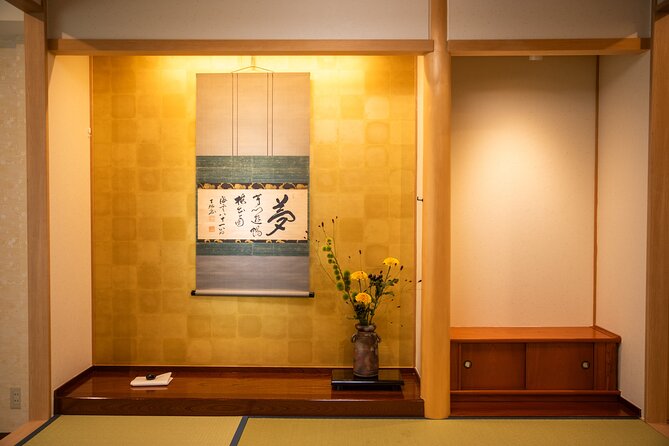
Japanese tea ceremony can look demanding from the outside. There are careful movements, set arrangements, special bowls, and rules about how to sit, turn, receive, and drink. That beauty is part of the appeal, but it can also leave a first-time visitor worried about doing the wrong thing.
This session takes a softer approach. You sit comfortably while your host explains what each action means, from pouring the hot water to presenting the tea. The purpose is not to test your manners. It is to help you understand the ideas of harmony and hospitality that shape Japanese tea culture.
I think that makes this a good choice early in a Tokyo trip. You get enough background to recognize matcha, sweets, tea utensils, and polite gestures later on, perhaps at a temple, a Japanese restaurant, or a more formal cultural event.
The experience lasts about one hour. That is long enough to learn the basic process and prepare your own tea, but short enough to fit into a day of sightseeing. You will not spend half a day committed to a ceremony when you may still want to see Senso-ji, stroll Nakamise-dori, or explore the rest of Asakusa.
A few more Tokyo tours and experiences worth a look

What happens at Tokyo Tourist Lounge Asakusa
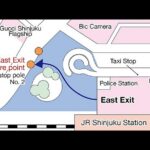
Your starting point is Tokyo Tourist Lounge Asakusa, at 5F, 2-18-15 Kaminarimon, Taito City, Tokyo 111-0034. The location is near public transportation, which helps if you are building the activity into a busy day.
The session begins with an introduction to Japanese tea culture. Rather than rushing straight to the bowl and whisk, the host explains the background and purpose of the ceremony. This matters because matcha preparation is more than a recipe. The order of the actions, the care given to the bowl, and the way tea is offered all express respect between host and guest.
You should expect a teaching session rather than a silent performance. The host explains the steps and invites questions, so you can ask about the utensils, the tea, or the customs as you go. That open format is useful if you have little knowledge of Japan or are concerned about a language barrier.
The relaxed format also allows photos. In a strict ceremony, you might hesitate to lift your phone or interrupt the mood. Here, photography is welcomed, provided you still pay attention to the host’s instructions and the people sharing the session.
Learning to whisk your own matcha
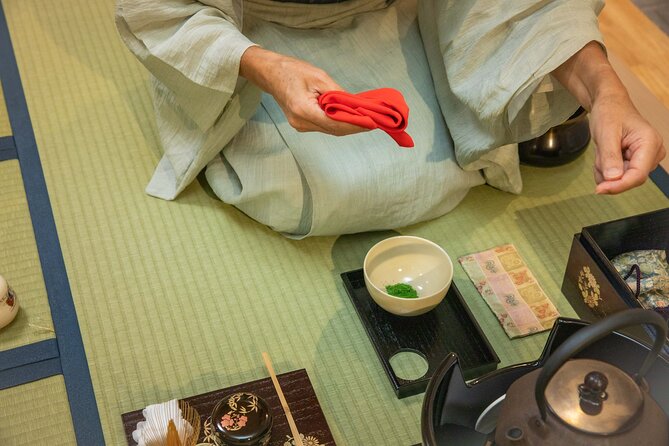
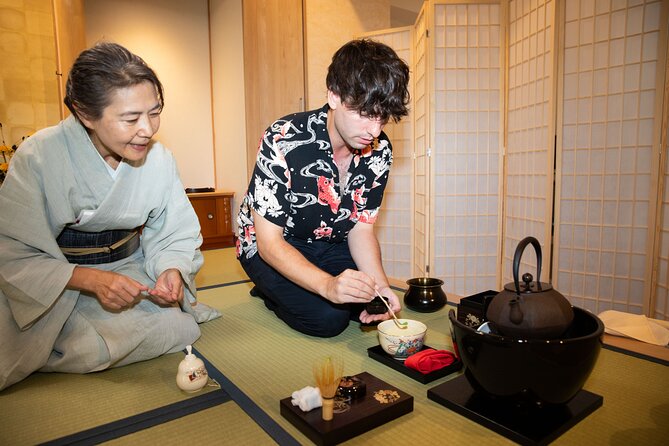
The hands-on part is the heart of the activity. You learn how to combine powdered green tea and water, then whisk the mixture into your own bowl of matcha.
That simple motion takes some practice. The host guides you through it rather than expecting you to know what to do. You can focus on the feel of the whisk, the look of the tea, and the rhythm of the movement without worrying about producing a perfect bowl.
This is where the casual approach earns its keep. A formal ceremony may ask you to watch quietly and follow a precise sequence. Here, you take part. You see how matcha is made and gain a better sense of the effort behind the drink you order in a café or encounter in a Japanese sweet shop.
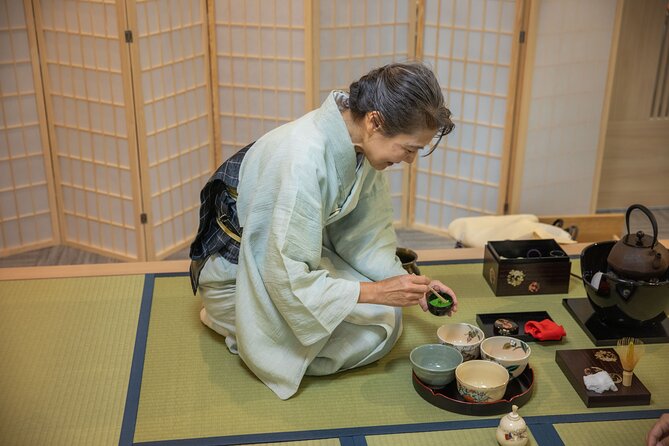
You then taste the freshly prepared tea at your own pace. Matcha has a strong, grassy bitterness that can surprise anyone expecting ordinary green tea. The accompanying Japanese sweet is not an afterthought. Its delicate sweetness helps balance the tea and gives you a more traditional tasting experience.
The information provided does not specify the exact sweet or the brand of matcha used, so you should not expect a particular variety. What you can count on is the chance to taste authentic Japanese sweets alongside freshly prepared matcha.
The meaning behind each gesture
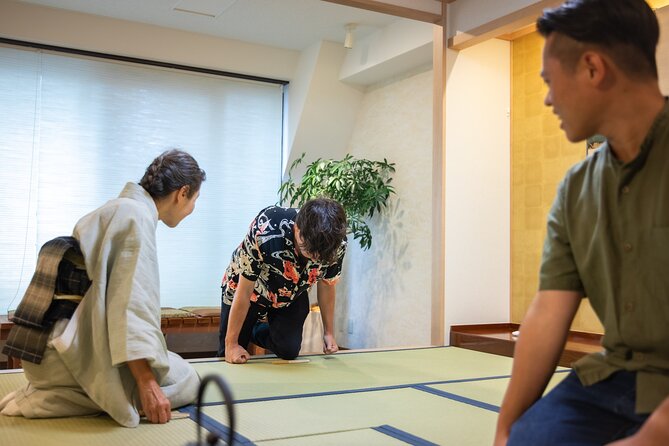
The strongest cultural element here is the explanation. You are not just shown how to whisk tea. You learn why the host pours water, presents the bowl, and follows a certain order.
The ceremony’s focus on harmony and hospitality offers a useful window into Japanese customs. The host prepares something carefully for you, and you receive it with attention and respect. Even in a casual setting, those ideas remain at the center.
One account singled out the detailed history and explanation of every ceremony process. That is important for choosing this session over a simple matcha-making class. You get the practical skill of whisking tea, but also some context for the tradition around it.
Midori is praised by name for kind teaching and a warm welcome. The provider is Localized Walking & Food Tours, and the exact host may depend on the session, so you should treat Midori’s presence as something to confirm rather than a guarantee. Still, the personal, patient teaching style is a useful guide to the tone you can expect.
Why the small group size matters
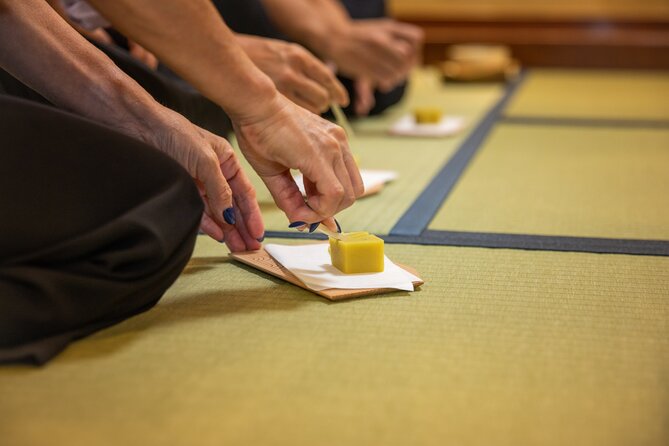
The maximum group size is eight people. That is not a private class, but it is small enough to keep the session personal.
You have a better chance to hear the explanations clearly and ask a question without stopping a large crowd. When you whisk your tea, the host can give basic direction and watch how each person is doing. The group size also makes the experience less exposed if you are nervous about using the whisk for the first time.
A small group can still feel less quiet and private than a one-on-one ceremony. If you want a deeply formal, silent setting, this is not the right format. If you want a friendly introduction with other people present, the size should work well.
The relaxed social tone is particularly helpful for families, first-time visitors to Japan, and anyone who wants cultural context without a long lecture. You are encouraged to ask questions and take photos, so the session has a practical, conversational feel.




How the $25 price measures up
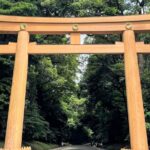
At $25 per person, this is a reasonably priced cultural activity in central Tokyo. The session includes tea and coffee, plus the chance to prepare and taste matcha and enjoy a Japanese sweet.
The value comes from the combination of instruction and participation. A quick cup of matcha would cost less, but it would not explain the customs or let you make the tea yourself. A formal ceremony may offer greater spectacle and ritual, but it can also cost more and require a stronger commitment to etiquette.
For one hour, the price is easy to fit into a Tokyo itinerary. You do not need to reserve an entire morning or give up a major sightseeing plan. I see it as a practical add-on for a day in Asakusa, especially if you want one activity that engages your hands and attention rather than sending you from one photo stop to the next.
The value is lower if you are already an experienced matcha maker or have attended several tea ceremonies. In that case, the casual introduction may feel basic. For beginners, the clear guidance and chance to ask questions make the fee easier to justify.
What this is, and what it is not
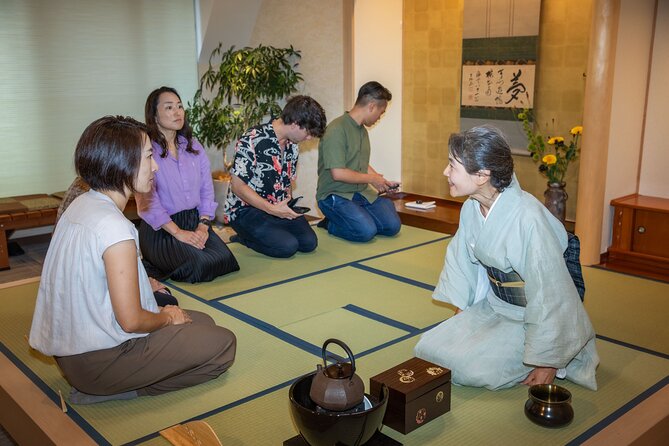
This is a cultural introduction, not a strict traditional ceremony. You will learn about the way of tea, taste matcha, prepare your own bowl, and hear explanations in a comfortable lounge.
You should not book it expecting to wear a kimono. Kimono wearing and rental are not included. You also should not expect a full formal setting with every traditional rule observed in silence. The relaxed format is the point.
That difference is not a flaw, but it should guide your choice. If you want to understand the basics and participate without stress, the format is a strong match. If you are seeking ceremony as a highly formal art form, look for a different experience built around traditional dress, strict etiquette, and a more structured setting.
The casual style also makes this a good option for people who have limited time or feel unsure about cultural customs. The host handles the instructions, and you can ask what to do instead of guessing.
Where it fits in an Asakusa day
The activity begins and ends at the same meeting point, Tokyo Tourist Lounge Asakusa. That makes planning straightforward. You do not have to figure out a separate return point or arrange a second transfer after the tea session.
Asakusa is one of Tokyo’s best areas for pairing a cultural activity with sightseeing. The meeting point’s Kaminarimon address places you in the area around Senso-ji and Nakamise-dori, though the provided details do not give a walking time from the lounge to those sights. Allow your own transfer time and arrive with enough margin to find the fifth-floor meeting point.
A morning session could give your day a calm start before temple sightseeing. An afternoon booking could offer a quiet break after walking through the Asakusa streets. Since the activity lasts about an hour, you can plan another meal or attraction before or after it.
The tour ends where it starts, which is convenient but means there is no guided walk through Asakusa afterward. You are booking the tea experience, not a broader neighborhood tour.
Who should book this tea experience
I would choose this for a first visit to Japan, especially if you want a low-pressure introduction to a custom you may see elsewhere. It also suits repeat visitors who missed tea culture on an earlier trip and want something short, hands-on, and easy to understand.
It is a good fit for:
- First-time matcha drinkers
- People concerned about making an etiquette mistake
- Couples and families seeking a calm cultural activity
- Anyone who enjoys learning by doing
- Visitors with only an hour to spare in Asakusa
- Photographers who want an experience where photos are permitted
You may want something else if you are mainly interested in kimono rental, a private ceremony, or a highly formal ritual. Those elements are not included here.
The experience also depends on your taste in matcha. The drink is powdered green tea with a pronounced flavor, not a mild café tea. The sweet served alongside it helps, but you should still expect matcha to be the focus.
Booking, cancellation, and practical details
You receive confirmation at the time of booking, and the ticket is mobile, so you can keep the booking on your phone. Public transportation is nearby, making the Asakusa meeting point practical for most Tokyo itineraries.
Free cancellation is available if you cancel at least 24 hours before the local start time. Within 24 hours, you receive no refund, and changes are not accepted. Keep that deadline in mind before you lock the activity into a tightly packed sightseeing day.
The experience ends back at the starting point. Tea and coffee are included, while kimono wearing and rental are not.
Should you book it?
Book this if you want a friendly, affordable introduction to matcha that gives you something to do, not just something to watch. The small group, open questions, photo-friendly format, and clear explanation of ceremony steps make it especially useful for beginners.
Skip it if your goal is a full formal tea ceremony in traditional dress. For everyone else, $25 buys a relaxed hour of cultural context, Japanese sweets, and the satisfying chance to whisk your own tea in Asakusa.
FAQ
How much does the tea ceremony experience cost?
The price is $25 per person.
How long does the activity last?
The experience lasts approximately one hour.
Where does the activity start?
It starts at Tokyo Tourist Lounge Asakusa, 5F, 2-18-15 Kaminarimon, Taito City, Tokyo 111-0034, Japan.
Where does the activity end?
The session ends back at the meeting point.
Is kimono rental included?
No. Wearing a kimono and kimono rental are not included.
How many people can join the session?
The activity has a maximum of eight participants.
More Tea Ceremony & Matcha in Tokyo

More tours in Tokyo we've reviewed






Tea Ceremony & Matcha, compared.
 ★ 5.0Matcha Making Class in Tokyo with Authentic Japanese Sweets SetFrom $21
 ★ 5.0Tokyo: Traditional Tea Ceremony with a Tea MasterFrom $381 hour
 ★ 4.5Dynamic Tokyo: Tokyo Tower, Tea Experience, Bay Cruise Day TourFrom $99
 ★ 4.9Tokyo: Matcha Making Experience with Mochi Sweets in AsakusaFrom $221 hour
 ★ 4.7Tokyo: Matcha and Kimono ExperienceFrom $57
 ★ 5.0Tea Ceremony Workshop in Tokyo by the Experienced InstrucorFrom $38