
Reviewed · SAMURAI & NINJA EXPERIENCES
Train in Samurai Swordsmanship and Defeat the Demon in Tokyo
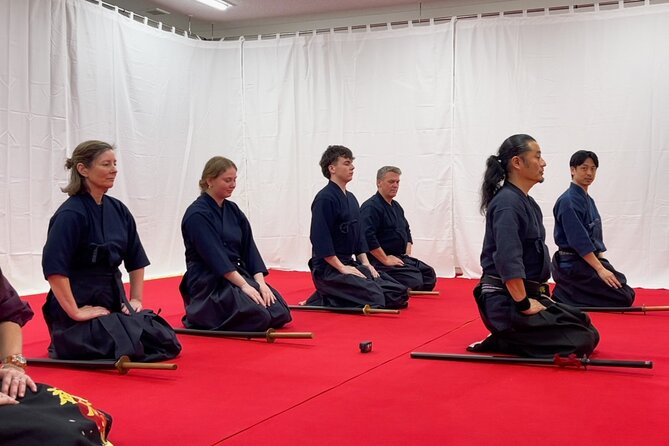
The most unusual part of this Tokyo activity is that you are not sitting through a sword show. You take part in a four-chapter story, beginning with samurai training and ending in a symbolic battle against an oni, or Japanese demon. Along the way, you practice etiquette, breathing, posture, strikes, blocks, and mental focus.
I like the small group of no more than six, which should give you room to follow instructions and ask questions. I also like the personal finish: a scroll with your name and the techniques you learned, plus a commemorative photo in samurai dress.
The main thing to consider is the short, staged nature of the battle. This is a two-hour cultural activity with theatrical storytelling, not a full martial arts course or a real combat test. If you want a serious long-term sword program, this will feel introductory.
In This Review
- Key points at a glance
- Entering the Tsurugi Samurai Squad in Kojimachi
- The Prologue: Yokai, oni, and the Night Parade
- The Training chapter: posture, breath, and controlled movement
- Wearing samurai clothing and setting the scene
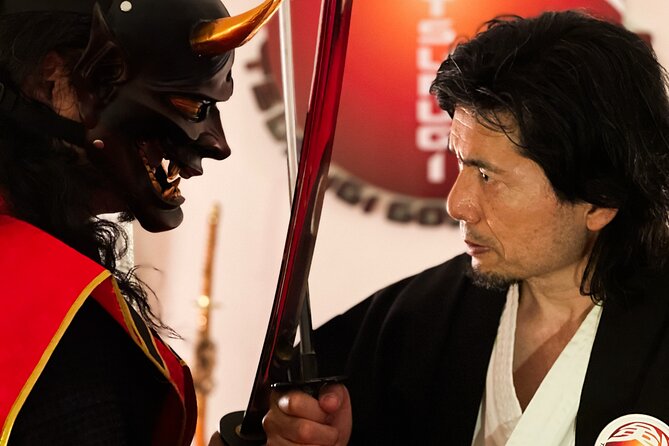
- The Battle chapter: facing the Demon
- The Recognition chapter: tea, photos, and your named scroll
- What the price means at $84.70
- Who will enjoy this Tokyo sword experience
- Practical details before you book
- Should you book it?
- FAQ
- Where does the samurai sword experience take place?
- How long does the activity last?
- Is the activity conducted in English?
- How many people can join?
- What is included in the price?
- Can I cancel for a full refund?
Key points at a glance
- A four-part samurai story: Move from Prologue to Training, Battle, and Recognition rather than watching a standard demonstration.
- Practical sword instruction: Learn basic etiquette, breathing, posture, offensive moves, defensive moves, and focus.
- A symbolic oni battle: Use what you have learned in a dramatic final challenge against the Demon.
- Small English-friendly setting: The group limit is six, and the instruction is provided in English.
- Traditional touches included: Wear a samurai uniform, try matcha with Japanese sweets, and pose for a photo.
- A personalized keepsake: Take home a scroll bearing your name and the skills covered during the session.
Entering the Tsurugi Samurai Squad in Kojimachi
The experience begins at the International Goshin-Budo Association in Kojimachi, Chiyoda City. The meeting point is at MK Kojimachi Building, 4-chome 21, near public transportation. You return to this same location at the end, so you do not need to arrange a separate ride back across Tokyo.
The setting is useful for a short activity because you can reach it by public transport and spend the full two hours on the program itself. Private transportation is not included, and there is no air-conditioned vehicle, but that should not matter much here since this is a stationary indoor lesson rather than a day trip.
The group size matters. With a maximum of six people, the instructors can keep the session personal without making it a private booking. You might attend alone, with a partner, or with family and still have a chance to take part rather than simply stand at the edge of a large class.
The English-language format also removes one common worry. The guide explains sword skills, Bushido, and samurai history in English, so you can follow the meaning behind the movements instead of copying gestures without context.
A few more Tokyo tours and experiences worth a look

The Prologue: Yokai, oni, and the Night Parade
The story begins with the old Japanese idea of Hyakki Yakō, the Night Parade of a Hundred Demons. In this tradition, yokai and oni are supernatural beings said to move through the world at night. The tale gives the lesson a clear frame: you are not simply learning a few sword motions, you are preparing for a trial.
The story then turns to the return of the Demon. The oni was sealed away in ancient times, but its power has come back to the modern world. The Tsurugi Samurai Squad is presented as the group that once fought and sealed it, and you are invited to join its ranks.
This is a playful setup, but it also tells you what kind of activity this is. The session blends martial arts instruction with fantasy theater and personal reflection. The Demon represents fear, doubt, and weakness within, so the final contest is meant to be symbolic rather than frightening in a serious sense.
I find this useful for families and first-time participants because it gives the lesson a simple goal. You know why you are learning each movement and what the final exercise is building toward. The storyline also helps the activity feel more memorable than a short lesson followed by a posed photograph.
The Training chapter: posture, breath, and controlled movement
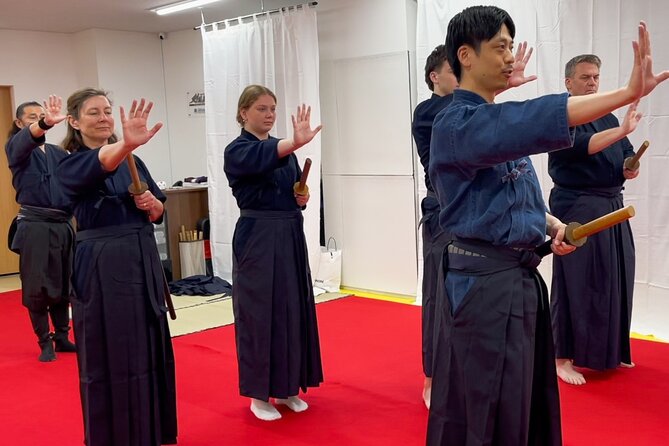
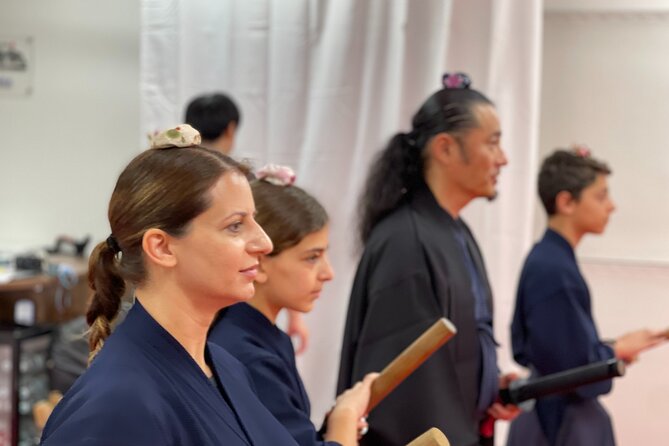
The core of the visit is the training section. You learn samurai etiquette first, then work on breathing, posture, strikes, blocks, and focus. These basics matter more than flashy sword swings. Good posture and controlled breathing give you a way to stay calm and follow instructions, even if you have never held a training sword before.
The emphasis on Bushido and samurai spirit adds a cultural layer. You are not only shown how to move your arms. You are introduced to ideas of discipline, courage, and composure, then asked to connect those ideas with the physical practice.
A live sword demonstration by the instructor is included. That gives you a clear picture of the movements before you try them yourself. It is also a useful distinction from an activity that simply hands you equipment and asks you to copy a routine.
The lesson includes offensive and defensive techniques. That balance makes the session feel more complete than a demonstration focused only on striking. You learn how the movements fit together, then prepare to use them in the final battle.
Still, keep your expectations sensible. The information describes an introduction to sword skills, not a certification course or a full study of Japanese martial arts. You will gain a taste of the discipline and learn a set of techniques for the activity. You will not become a trained swordsman in one afternoon.
Wearing samurai clothing and setting the scene
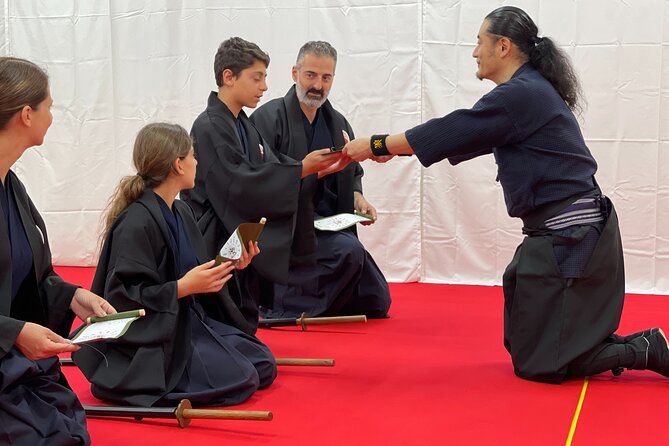
A samurai uniform is provided during the lesson. This is practical as well as visual, since it helps create a clear difference between ordinary sightseeing and the role you are playing in the session. You can also take photographs in the outfit, including a commemorative photo with the samurai team.
For many people, the clothing will be one of the best parts for photographs. It gives families and couples a shared activity and creates a tangible memory of the visit. If you are traveling alone, the included photo means you still have a record of the experience without needing to ask another person to take it.
The outfit also supports the four-chapter structure. You are dressed for training, put through the trial, and then recognized at the end. That progression may feel theatrical, but it gives the two hours a satisfying shape.
The program is family-ready, and most people can participate. The available information does not give a specific minimum age, clothing size range, or physical restriction list, so you should ask the provider directly if those points matter to your booking. A normal level of comfort with standing and controlled movement is a sensible expectation, but no detailed medical requirements are provided.
The Battle chapter: facing the Demon
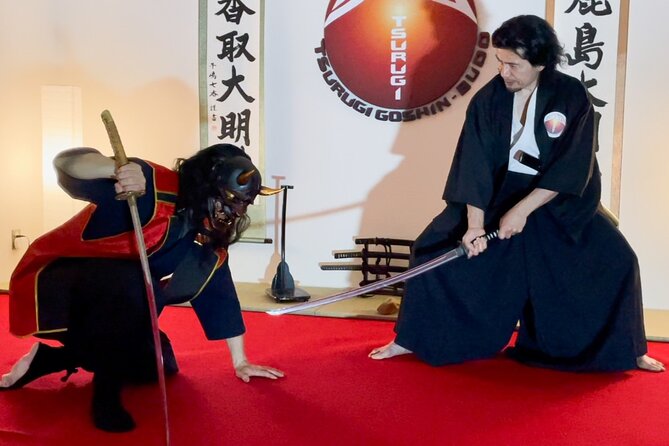
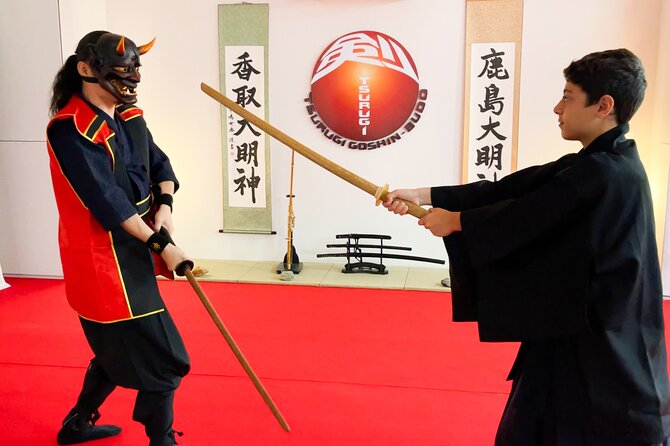
The final challenge is a symbolic confrontation with the oni. You use the offensive and defensive movements taught earlier and bring them together in a staged clash of spirit and shadow.
This part is designed as the payoff, not as an unpredictable fight. The Demon represents the fears and doubts inside you, so the point is courage and concentration rather than physical strength. That makes the battle accessible to beginners who may not feel athletic or experienced.
I would approach this section with the right mindset. You are taking part in a samurai fantasy story, not entering a contact sport. The drama comes from the setting, the role-play, and the sequence you have practiced. If you want a hard sparring session, this is not the right choice. If you want a safe, guided challenge with a clear beginning and end, it fits well.
The battle is also where the small group helps. Six participants or fewer means the instructor can keep the activity organized and make sure everyone gets a role. A larger group might make the story feel less personal, especially during the final scene.





The Recognition chapter: tea, photos, and your named scroll
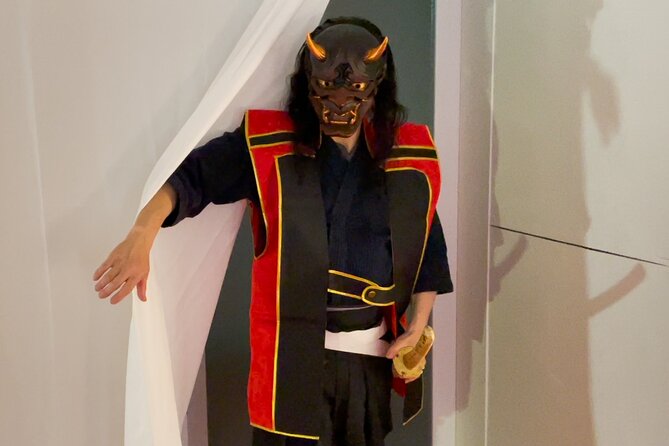
After the trial, the experience closes with recognition. You receive a personalized scroll with your name and the techniques you learned. It is a stronger keepsake than a generic souvenir because it records your participation in the story and gives the activity a personal ending.
Authentic matcha tea and Japanese sweets are also provided. This small refreshment adds a quiet pause after the training and links the activity to another familiar part of Japanese culture. It is not a meal, so you should eat beforehand if you need substantial food, but it is a pleasant final touch.
The commemorative photo completes the package. Together, the scroll, tea, sweets, and photograph make the ending feel more considered than a simple thank-you and exit. The program is clearly built around memory-making, which is helpful if you are choosing an activity for a birthday, family outing, or special day in Tokyo.
What the price means at $84.70
At $84.70 per person, this is not the cheapest cultural activity in Tokyo. You are paying for a two-hour guided session, uniform rental, live demonstration, English instruction, a small group, refreshments, a photograph, and a personalized scroll.
The value depends on what you want from the booking. If your priority is to see a polished sword performance, you may find better value in a show. If you want to handle the lesson yourself, learn basic techniques, wear the clothing, and take part in a story, the price is easier to justify.
The six-person limit is important when judging the cost. A low price for a crowded class may not offer much personal attention. Here, the smaller format should make it easier to follow the instructor and take part in the Battle chapter.
The scroll and photo also have real value for a celebration. This is a good birthday gift for a partner or a shared family activity, especially since one participant described receiving it as a birthday present and learning both samurai tradition and offensive and defensive skills.
The overall rating is five stars from five submitted ratings, so the early response is very positive. That is encouraging, though the sample is still small. I would treat the rating as a useful signal, not as proof that every participant will want the same mix of training and fantasy storytelling.
Who will enjoy this Tokyo sword experience
I would put this near the top of the list for:
- Families looking for an activity everyone can understand and enjoy together.
- Couples seeking a shared experience with photographs and a keepsake.
- Solo visitors who want a small English-language activity with a clear social structure.
- First-time visitors interested in samurai culture but not ready for an advanced martial arts class.
- Fans of Japanese legends, oni stories, and role-playing.
- Anyone marking a birthday or another special occasion.
The activity also suits people who like lessons with a goal. You learn a sequence, put it into practice, and receive recognition at the end. The structure can make the time pass quickly.
I would hesitate if you dislike staged storytelling, costume activities, or symbolic battles. You may also want a different program if your main interest is historical research, advanced swordsmanship, or a long technical lesson. The experience gives you an introduction, not a full course.
Practical details before you book
The activity lasts about two hours and starts and ends at the International Goshin-Budo Association in Kojimachi. Toilets are available in the building, and the location is near public transportation.
A mobile ticket is provided, and confirmation is received at booking. Since the experience is often booked about 29 days ahead, reserving early makes sense if your Tokyo dates are fixed, especially for a small group with only six places.
Free cancellation is available if you cancel at least 24 hours before the local start time. Cancellations made inside that window are not refunded, and late changes are not accepted. Check your plans before booking, particularly if your Tokyo schedule includes weather-sensitive or timed activities.
The supplied details do not list a dress code, exact age range, or equipment restrictions. Uniform rental is included, so you do not need to bring samurai clothing. For children, older adults, or anyone with movement concerns, contact the International Goshin-Budo Association before paying.
Should you book it?
Book this if you want to take part in a compact samurai story rather than watch one from the seats. The small group, English instruction, uniform rental, hands-on sword basics, oni battle, matcha, photo, and named scroll make it a well-rounded two-hour activity.
Skip it if you want serious combat training or a strictly historical lecture. For most first-time visitors, though, the mix of controlled practice and theatrical fun offers a memorable way to connect with samurai ideas without giving up half a day in Tokyo.
FAQ
Where does the samurai sword experience take place?
It starts and ends at the International Goshin-Budo Association in the MK Kojimachi Building, 4-chome 21, Kojimachi, Chiyoda City, Tokyo 102-0083. The location is near public transportation.
How long does the activity last?
The experience lasts approximately two hours.
Is the activity conducted in English?
Yes. An English guide explains sword skills, Bushido, and samurai history.
How many people can join?
The activity has a maximum of six participants.
What is included in the price?
The price includes samurai uniform rental, a live sword demonstration, English instruction, matcha tea and Japanese sweets, a commemorative photo with samurai, and a personalized scroll with your name and the techniques learned.
Can I cancel for a full refund?
Yes, if you cancel at least 24 hours before the experience start time. Cancellations made less than 24 hours in advance are not refunded, and late changes are not accepted.
More Samurai & Ninja Experiences in Tokyo
More tours in Tokyo we've reviewed







Samurai & Ninja Experiences, compared.
 ★ 4.5Tokyo: Samurai Restaurant Show Ticket with 2 DrinksFrom $551h 30m
 ★ 4.6Tokyo: Samurai Ninja Museum Guided tour and ExperienceFrom $27
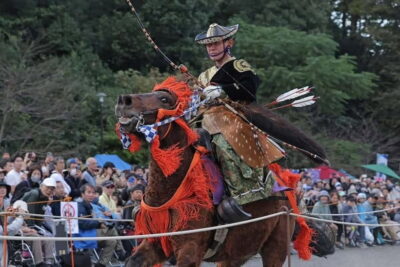 ★ 5.0Tokyo: Samurai Sword & Archery Class from Samurai DescendantFrom $1933 hours
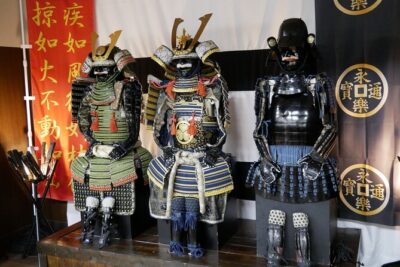 ★ 5.0Best Samurai Experience in TokyoFrom $65
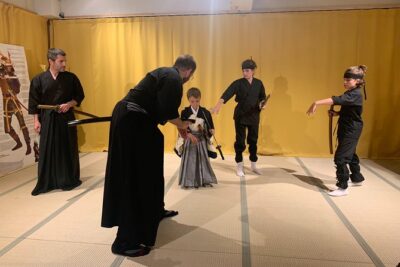 ★ 5.0Ninja Experience (Family Friendly) at Samurai Ninja Museum TOKYOFrom $47
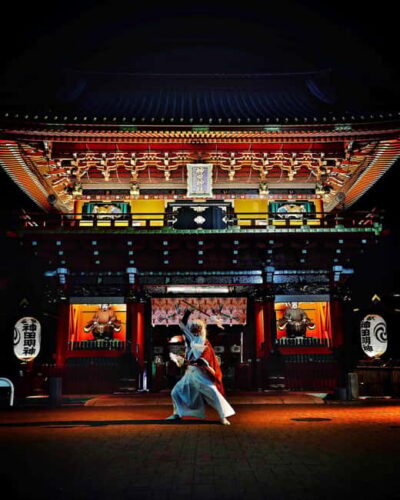 ★ 4.6Tokyo: Samurai Entertainment Night Show in Kanda ShrineFrom $412 - 3 hours