
Reviewed · SAMURAI & NINJA EXPERIENCES
Samurai Experience in Tokyo / SAMURAI’ve
The best part of SAMURAI’ve is that you do not just watch a sword demonstration. You put on a samurai costume, learn how to draw and handle a metal practice katana, then work through a short fighting sequence with professional performers. It is a lively way to spend an hour in Tokyo.
I like the clear step-by-step format, which moves from dressing and etiquette to basic sword work and a final performance. I also like the family-friendly teaching style: Master Shin is praised for mixing humor with careful instruction, while the assistants take plenty of photographs.
The main drawback is the tight schedule. One hour goes quickly, and the morning and afternoon start times need close attention. A booking-time mix-up caused one person to miss the class entirely, so check your confirmed start time rather than relying on a calendar shortcut.
In This Review
- Key points before you book
- Putting on the kimono in Sendagaya
- Learning samurai etiquette before sword work
- Handling the metal practice katana
- The final tachimawari sequence
- Photos that capture more than a costume change
- What the optional samurai show adds
- Is $71.85 a fair price?
- Choosing the right start time in Tokyo
- Who will enjoy SAMURAI’ve most
- Booking advice and cancellation terms
- Should you book this samurai class?
- FAQ
- How long does the samurai experience last?
- Where does the activity take place?
- What does the program include?
- Is the sword real?
- Can children participate?
- How many people can join the class?
- Can I cancel for a full refund?
Key points before you book
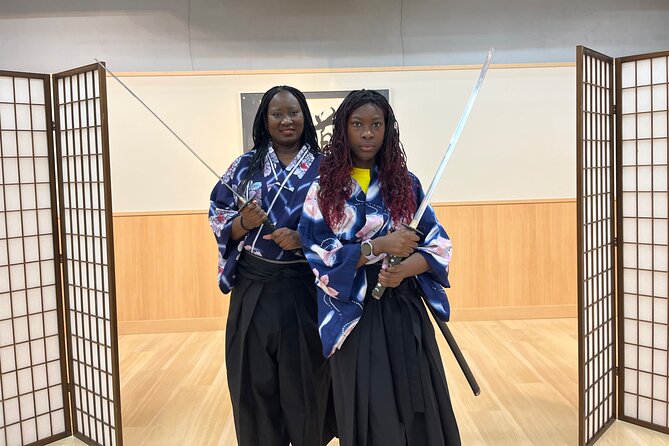
- You wear a full samurai-style costume, including a kimono, before beginning the lesson.
- The sword is metal but not sharp, and it has enough weight to feel like a real object in your hands.
- Professional samurai performers teach the class, including Master Shin, who is praised for working well with children and teenagers.
- The lesson covers etiquette as well as sword movements, giving the activity more cultural substance than a simple photo session.
- The final sequence is the most entertaining part, as you combine the moves you have learned into a short performance.
- An optional samurai show is available for an extra fee, if you want more stage action after the class.
Putting on the kimono in Sendagaya
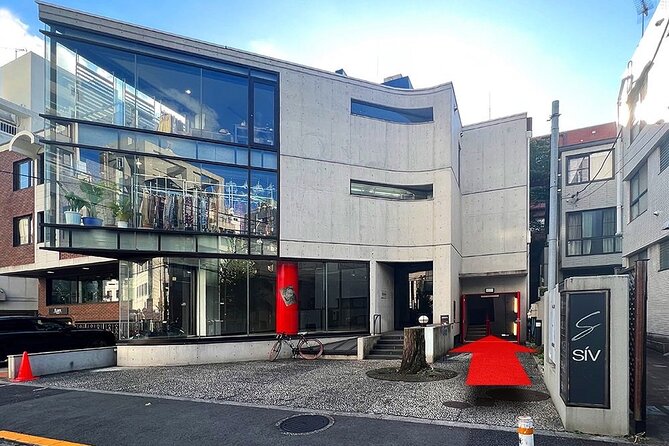
Your one-hour session takes place at SAMURAI’ve in Sendagaya, part of Tokyo’s Shibuya district. The studio is at Shibata Building B2, near public transportation, and the class returns to the same location when it ends.
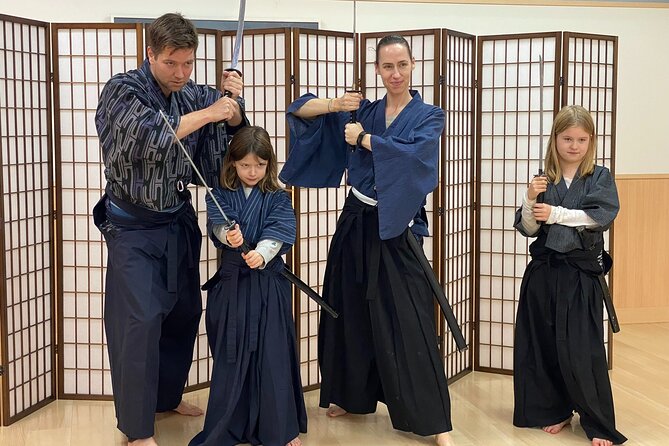
The first step is kitsuke, or putting on the costume. You learn how the kimono is worn and get ready for the lesson in clothing that makes the photographs feel far more convincing than a quick photo with a plastic prop. The costumes are supplied, so you do not need to bring anything special.
This part also sets the tone. You are not immediately handed a sword and told to swing it. You first get into the role, then learn the manners connected with it. The costume can be a little restrictive compared with ordinary sightseeing clothes, but that is part of the point. It makes you slow down and pay attention to posture.
The studio was described as clean and neat, an important detail when costumes are shared. The space is also set up for a group session, with a maximum of 19 people. That is large enough to create a social atmosphere, but it also means you should not expect a private lesson or unlimited one-to-one coaching.
A few more Tokyo tours and experiences worth a look
Learning samurai etiquette before sword work
The second stage is reigi sahou, the basic etiquette and manners associated with the samurai. This gives the class a useful cultural layer. You learn that sword handling is not presented as random action, but as a practice tied to discipline, respect, and controlled movement.
I appreciate this pause before the action begins. Many costume activities in Tokyo focus almost entirely on dressing up and taking pictures. Here, the etiquette lesson helps explain why the movements are formal and why the sword is handled with care.
The instructors are professional samurai performers who work in shows and events. That matters because they know how to demonstrate movement clearly and keep a group engaged. Their job is not only to teach technique, but also to make the final sequence look good.
For children and young teenagers, this section may be especially useful. It gives them something to remember beyond the costume. One family brought a 10-year-old and a 14-year-old, and both enjoyed the session. Master Shin was also praised for keeping young teens interested while maintaining a safe, controlled tone.
Handling the metal practice katana
Next comes the basic lesson. You learn the main movements used in the class, including the basics of samurai sword fighting and the act of drawing a sword. The supplied katana is a metal fake sword. It is not sharp along the edge, but it still has enough weight to feel serious in your hands.
That weight is a plus. A very light plastic sword would make the activity feel like a costume prop. The metal practice sword gives you a better sense of controlled movement, balance, and timing. At the same time, you need to follow instructions closely and avoid treating it like a toy.
The lesson is designed for beginners. You do not need previous martial arts or stage-combat experience. The instructors break the movements into manageable parts, then show you how they fit together. The exact amount of individual correction will depend on the size of your group, so a full private coaching session should not be expected.
This is also where comfortable behavior matters more than athletic ability. You do not need to be especially strong or flexible. Paying attention to the instructor, keeping your movements controlled, and remembering the sequence will help more than trying to swing with force.
The final tachimawari sequence
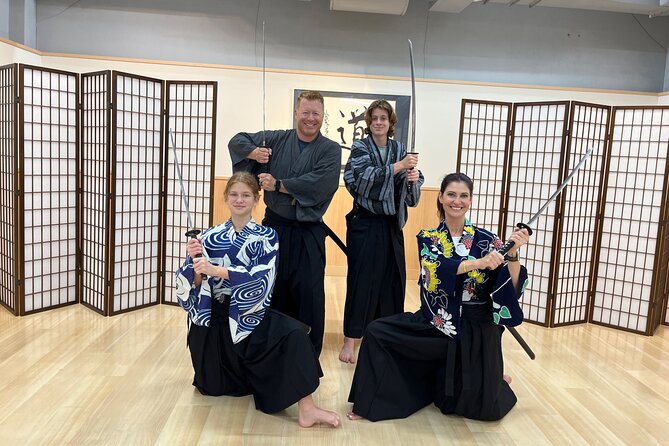
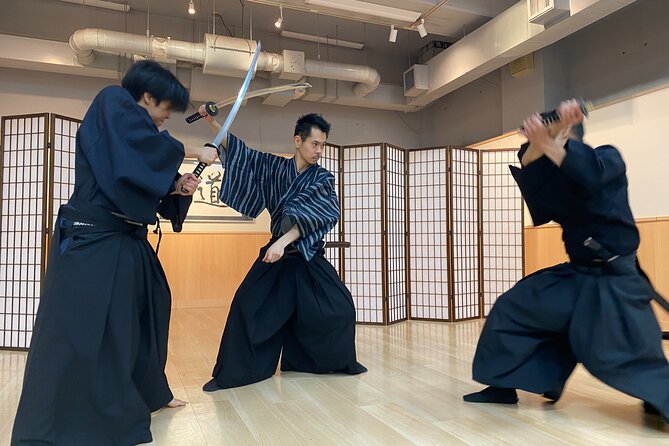
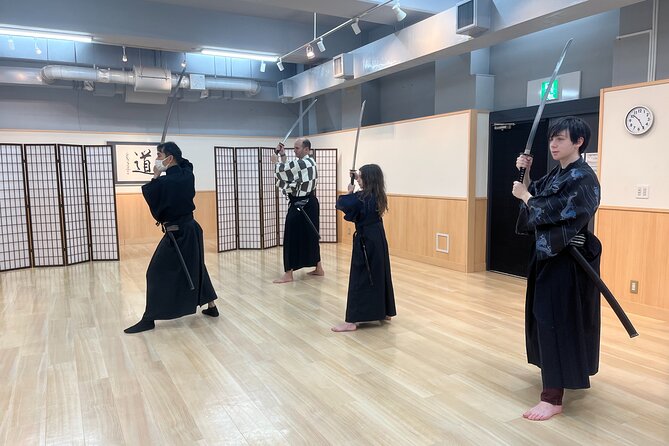
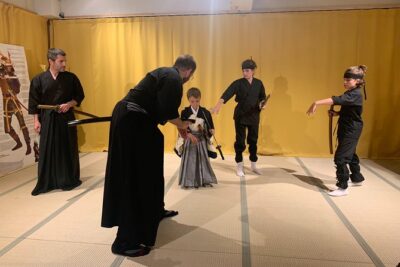
The most active section is tachimawari, the staged sword-fighting portion. You use the movements from the lesson in a short choreographed sequence. This is not a real fight, and the practice sword is used for performance rather than combat.
The final sequence is where the class comes together. You have the costume, the formal posture, the sword, and a set of movements to remember. Even a simple sequence feels satisfying because you can see how the earlier lessons fit into one performance.
The instructors keep the tone light and encouraging. Master Shin, in particular, is praised for using humor with younger participants. That helps when people forget a movement or feel awkward in costume. You should expect some laughter and repetition rather than a stern martial-arts examination.
There is one practical limit: the class lasts about an hour. Dressing, etiquette, instruction, sword practice, staged fighting, and photographs all share that time. You will learn the basics, not complete a long training course. If you want an extended martial arts lesson, this will feel brief. If you want a concentrated cultural activity with hands-on action, the pace works well.
Photos that capture more than a costume change
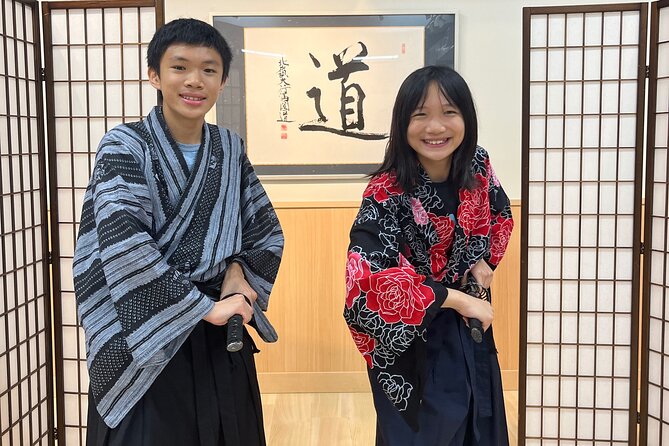
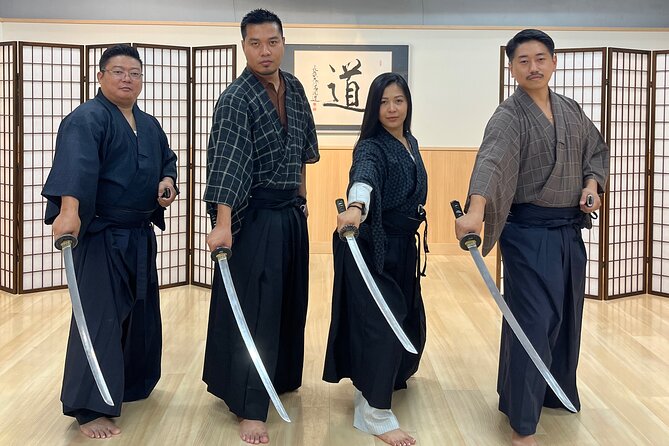
The session ends with a photo shoot. The assistant takes many pictures, which is helpful because you can concentrate on the activity instead of trying to manage a phone while holding the sword.
The photos are one of the strongest reasons to choose this class over a standard stage performance. You do not just see samurai clothing from a distance. You get photographs of yourself wearing it, holding the sword, and taking part in the staged sequence.
The costume also gives the photos a more complete look. You have already learned the posture and basic etiquette, so the pictures can reflect what you practiced rather than being a quick dress-up snapshot. Families and groups of friends should find this part particularly useful.
Still, remember that the photos are built into a busy one-hour program. You may receive many pictures, but the session is not primarily a professional portrait appointment. The priority is learning and taking part in the group activity.





What the optional samurai show adds
The instructors can arrange a samurai performance during the program for an additional fee. This is separate from the included class, costumes, and practice katana, so you should confirm the extra cost before adding it.
The show may suit you if you want to see the instructors perform at a professional level rather than only teach beginner movements. Their experience in shows and events gives them a performance background that can add stage polish to the visit.
You do not need the extra performance to get the main activity. The class already includes instruction, sword practice, staged fighting, and photographs. I would treat the show as an optional add-on for people who want more spectacle, not as a necessary part of the basic booking.
Is $71.85 a fair price?
At $71.85 per person, this is not the cheapest short activity in Tokyo. The session lasts about one hour, so the price can look high if you measure value only by time.
The better comparison is with what is included. You receive the costume, a metal practice katana, instruction from professional performers, a structured lesson in etiquette and sword movements, a staged sequence, and photographs. You are paying for a guided activity with equipment and wardrobe, not simply entry to a show.
The value is strongest for families, couples, and small groups who want a shared memory and a change from temples, shopping, and food stops. It is also useful on a rainy day because the activity is indoors, although the supplied information does not give further details about the studio’s facilities.
Group discounts may improve the price for larger bookings. With a maximum group size of 19, the class can accommodate a family gathering or a group of friends, but the experience will not have the personal attention of a private session.
The strongest positive signs are consistent: the instructors are described as patient, friendly, and professional; the class is considered fun and informative; and the final sequence is remembered as a highlight. The low rating in the available feedback came from missing the activity after a start-time confusion, not from criticism of the sword lesson itself. That makes timing the key booking concern.
Choosing the right start time in Tokyo
The listed sessions run from 10:30 a.m. to 11:30 a.m. and from 3 p.m. to 4 p.m. Select the time that fits your sightseeing plan, then check the exact time on your confirmation.
Do not assume a calendar link has imported the correct start time. One booking was affected when a calendar entry defaulted to noon, leading to a late arrival and a missed session. Set your own reminder using the confirmed local time, and allow enough time to reach the Sendagaya meeting point.
The morning class can work well before an afternoon of sightseeing. The later session may fit better after lunch, though you should avoid creating a rushed connection with another timed activity. Since the class ends where it begins, you can plan your next stop from the same neighborhood.
The activity is near public transportation, but the supplied details do not specify the nearest station or walking time. Use the full address, Japan, 151-0051 Tokyo, Shibuya, Sendagaya, 3-chōme 312, Shibata Building B2, when planning your route.
Who will enjoy SAMURAI’ve most
This experience is a good match for families with children and teenagers. The lesson is active without requiring advanced fitness, and the instructors’ friendly style helps younger participants stay involved. The photo session also gives families a shared record of the day.
It suits adults who want a hands-on cultural activity rather than another observation-only attraction. You learn terms, manners, and basic movements, then put them into practice. That makes the hour feel more purposeful than simply renting a costume for pictures.
It is also a natural choice for friends or couples who enjoy theatrical activities. The staged fight gives you something to do together, and the group format lets you meet other people without requiring forced social interaction.
You may want to skip it if you dislike costumes, staged fighting, or structured group instruction. The class is not a quiet museum visit, and you will need to participate in front of other people. It is also a poor fit if you want serious martial arts training, since the program is a short introductory experience.
Booking advice and cancellation terms
Confirmation is received at booking, and mobile tickets are available. Most people can participate, but the program is group-based and capped at 19 participants.
Free cancellation is available up to 24 hours before the start time for a full refund. Cancellations or changes made less than 24 hours before the scheduled start are not accepted for a refund, and the cut-off follows Tokyo local time.
I would book this earlier rather than leave it until the last day. The activity is booked, on average, about 70 days ahead, which suggests that popular dates and convenient time slots can fill well before a Tokyo visit.
Should you book this samurai class?
Book it if you want an hour of guided action, cultural explanation, and memorable photographs, especially if you are visiting with children or teenagers. The patient instructors, clean costumes, metal practice swords, and final choreographed sequence give the class more substance than a simple photo stop.
Think twice if your schedule is tight or if you want a long lesson. The hour is packed, and the start time must be checked carefully. For the right audience, though, SAMURAI’ve offers a fun break from sightseeing and a practical way to experience samurai performance culture without committing to a full-day activity.
FAQ
How long does the samurai experience last?
The experience lasts approximately one hour. The listed sessions run from 10:30 a.m. to 11:30 a.m. and from 3 p.m. to 4 p.m.
Where does the activity take place?
The meeting point is SAMURAI EXPERIENCE in Tokyo, also called SAMURAI’ve, at Shibata Building B2, 3-chōme 312 Sendagaya, Shibuya, Tokyo, Japan, postal code 151-0051.
What does the program include?
The program includes a samurai costume and a metal fake katana. The class also covers kimono dressing, samurai etiquette, basic sword movements, staged sword fighting, and a photo shoot.
Is the sword real?
The supplied katana is a metal fake sword. It is not sharp along the edge.
Can children participate?
Most people can participate, and the experience has been enjoyed by families with children and teenagers. The available information does not state a specific minimum age.
How many people can join the class?
The activity has a maximum of 19 participants.
Can I cancel for a full refund?
Yes. You can cancel up to 24 hours before the experience start time for a full refund. Cancellations or changes made less than 24 hours before the start time are not accepted for a refund.
More Samurai & Ninja Experiences in Tokyo
More tours in Tokyo we've reviewed











Samurai & Ninja Experiences, compared.
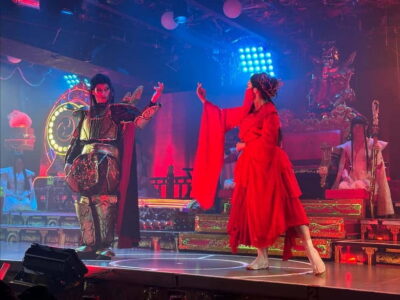 ★ 4.5Tokyo: Samurai Restaurant Show Ticket with 2 DrinksFrom $551h 30m
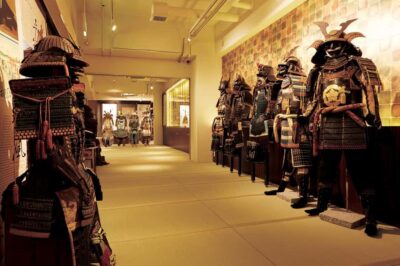 ★ 4.6Tokyo: Samurai Ninja Museum Guided tour and ExperienceFrom $27
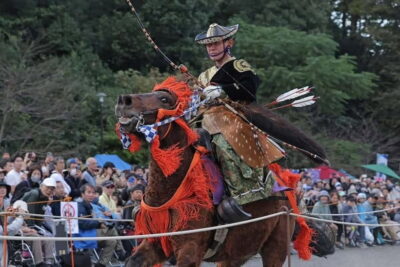 ★ 5.0Tokyo: Samurai Sword & Archery Class from Samurai DescendantFrom $1933 hours
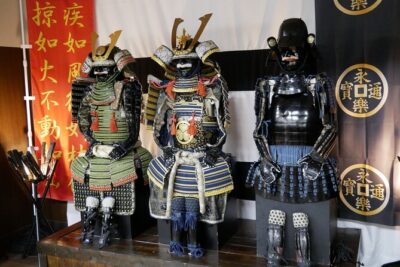 ★ 5.0Best Samurai Experience in TokyoFrom $65
 ★ 5.0Ninja Experience (Family Friendly) at Samurai Ninja Museum TOKYOFrom $47
 ★ 4.6Tokyo: Samurai Entertainment Night Show in Kanda ShrineFrom $412 - 3 hours