
Reviewed · NARITA
Tokyo Layover Tour with a Local – Private & Tailored to You
Tokyo Layover Tour with a Local turns a long airport wait into a real visit to the city. You meet a private local host, ride public transit into Tokyo, and spend up to eight hours on an itinerary shaped around your interests. That might mean Sensō-ji and old Tokyo, Shibuya and Harajuku, anime in Akihabara, or a Japanese meal chosen with your guide.
I like the one-to-one format, since your host can adjust the pace and skip sights that do not interest you. I also like that the return airport train ticket is included, and the tour ends at a train terminal rather than leaving you to solve the last leg yourself.
The main caution is time. Eight hours includes airport transfers and travel around Tokyo, so bad weather, luggage trouble, or a slow start can trim your sightseeing. You need a long, comfortable layover, not a tight connection.
In This Review
- Key points at a glance
- Turning a Narita layover into a Tokyo visit
- Meeting your host and catching the train
- Ueno Park: a gentle first walk
- Sensō-ji and the old side of Tokyo
- Shibuya Crossing from street level or above
- Harajuku and Omotesando: choose your style
- Shinjuku and a local-approved meal
- Akihabara for anime, games, and family interests
- The guides make the difference
- What the price includes, and what it does not
- Practical concerns before you book
- Who should book this Tokyo layover tour?
- FAQ
- How long does the Tokyo layover tour last?
- Does the tour operate from both Narita and Haneda airports?
- Are airport train tickets included?
- Is the itinerary fixed?
- Are food, drinks, and attraction tickets included?
- Can I cancel for a full refund?
Key points at a glance
- Private from start to finish: Only your group takes part, with a host matched to your interests after a short questionnaire.
- Airport access is built in: Narita departures use the Keisei Skyliner, while Haneda departures use the monorail, with return tickets included.
- Tokyo by train and on foot: You get a practical introduction to public transportation instead of seeing the city only through a car window.
- A flexible sightseeing menu: Possible stops include Ueno Park, Sensō-ji, Shibuya, Harajuku, Omotesando, Shinjuku, and Akihabara.
- Guides can make the day personal: Ayaka, Nobu, Mari, Api, Izumi, and Leon are among the hosts praised for flexibility, warmth, and help with navigation.
- You pay for time and ease: Food, attraction tickets, and most city transport cost extra, but the private planning and airport return can be worth it.
Turning a Narita layover into a Tokyo visit
Narita Airport is well outside central Tokyo, so a layover excursion only works when you have time to spare. This experience is designed around that problem. Instead of guessing which train to take or trying to squeeze in one hurried landmark, you have a local host who helps turn a loose block of free time into a workable day.
The listed price is $310.59 per person. That is not a cheap airport-side activity, especially if you are traveling alone. You are paying for a private guide, a tailored plan, airport rail tickets, and help navigating a city that can feel confusing on a first visit.
For a couple or family, the calculation looks better because the private format gives you your own host and may allow group discounts. The value is strongest when you care about seeing Tokyo rather than simply resting at the airport, and when you would otherwise lose time figuring out trains, neighborhoods, and directions.
The tour lasts about eight hours, though the host time is offered as either six or eight hours. Travel time counts within that period. The schedule is not a promise to visit every neighborhood listed in the sample route. Think of those places as a menu, not a fixed race through Tokyo.
Other private tours in Narita



Meeting your host and catching the train
At Narita, the stated meeting point is the JR EAST Travel Service Center at Terminal 1. The arrangements are also flexible, and you can request a meeting at your hotel or another practical spot near the start of the experience. After booking, you fill out a short questionnaire about your interests and preferences, which helps match you with a suitable local host.
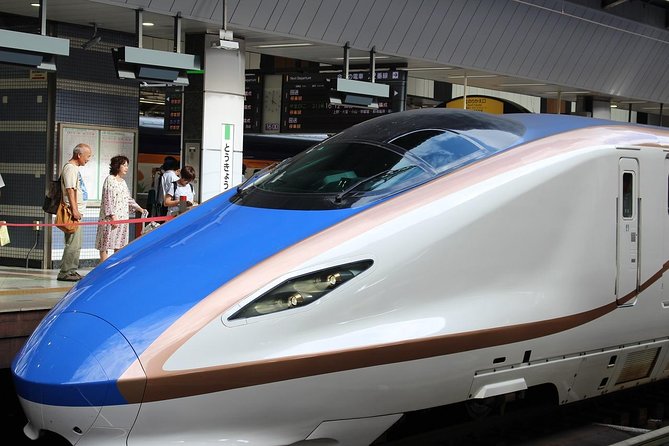
The airport transfer uses the Keisei Skyliner from Narita. From Haneda, the transfer uses the monorail. Return tickets for the relevant airport train are included, which is a useful detail when your mind is already busy with luggage, terminals, and flight times.
You should still treat the airport transfer as part of the sightseeing clock. The trip from the airport into Tokyo takes time, and the same is true on the way back. Your host can help you ride the system, but you remain responsible for allowing enough time to reach your flight.
The public transit element is one of the experience’s strongest features. Instead of being insulated in a private vehicle, you see how Tokyo works at street level. You walk between stations and sights, use the train network, and get a practical sense of the city’s scale.
One guide helped a family visit a small-town street market, Akihabara, a video game venue, and a sushi restaurant. Another helped a guest recover a bag lost at the airport. Those details show the real value of a private host: the day can respond to what actually happens, not just follow a printed schedule.
Ueno Park: a gentle first walk

Ueno Park is a sensible opening stop after a flight. It gives you space to stretch your legs before the denser parts of Tokyo, and it is especially attractive during cherry blossom season. The park also places you near several important cultural sights, though the exact stops depend on your plan and timing.
I would use Ueno as a reset rather than a place to linger for hours. After airport trains and terminal corridors, a walk through the park can help you get your bearings. You might ask your host about the neighborhood, Japanese customs, or the best way to handle the rest of the day.
The drawback is seasonal. Cherry blossoms are not present year-round, and weather affects how pleasant a park walk feels. A winter visit may be less comfortable, and rain can make this opening section less appealing. One person specifically advised checking the forecast before booking a winter layover tour.
Sensō-ji and the old side of Tokyo
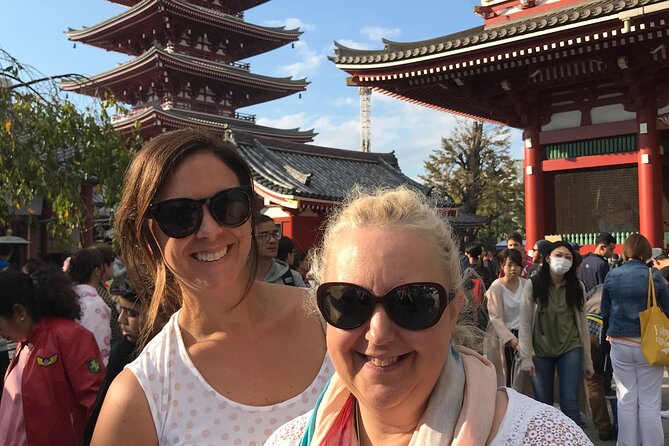
Sensō-ji in Asakusa is described as Tokyo’s most important temple, and it is one of the clearest places on this route to connect the modern city with Japanese religious practice. You can see the temple precinct, learn basic cultural context, and walk through one of Tokyo’s best-known historic areas.
A local host is useful here because a quick photograph at the gate only gives you part of the experience. Your guide can explain what you are seeing and help you approach the temple respectfully. This is also a good stop for travelers who want old Tokyo rather than only neon, shopping, and pop culture.
Sensō-ji can be crowded, particularly at popular times, so do not expect quiet contemplation throughout. The tour does not include attraction tickets, though the temple visit itself may not require a paid entry for the main precinct. Your guide can help clarify the practical details on the day, but the supplied price does not cover paid sights.
Shibuya Crossing from street level or above
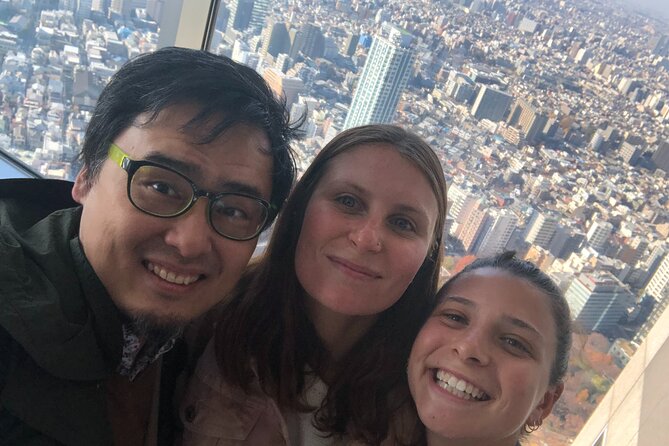
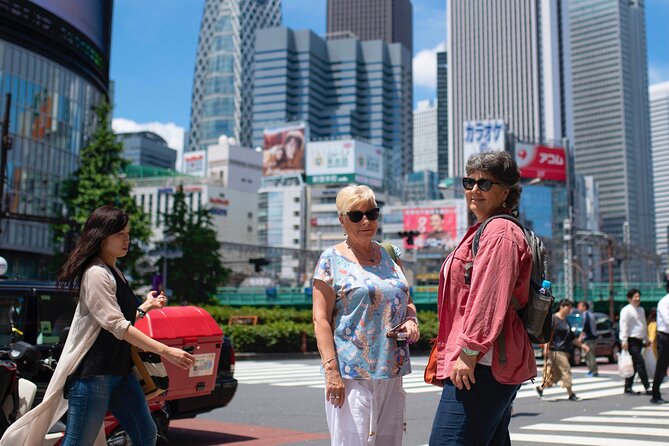
Shibuya offers the fast-moving side of Tokyo. The famous crossing gives you a quick burst of city energy, and the tour can include a walk through the intersection or a view from above at the Magnet department store.
I like having both options. Crossing the street puts you in the action, while an elevated view helps you understand the pattern of people moving below. If you are tired, a viewpoint may be easier than spending more time in the crowd.
Shibuya is not a slow neighborhood stop. You will be dealing with crowds, trains, signs, and a lot of movement. That makes it a strong choice for a first glimpse of modern Tokyo, but a poor choice if you want a quiet, unhurried afternoon.



Harajuku and Omotesando: choose your style

Harajuku is presented as a center of youth pop culture, with cosplay and unusual fashion often part of the visual appeal. If that sounds fun, ask your host to focus there. It can be an entertaining contrast to the temples and parks earlier in the day.
If Harajuku is not your style, the suggested alternative is Omotesando. This gives you a more relaxed street experience, with a different feel from the colorful youth culture associated with Harajuku. The private format matters here because you are not stuck following a preset interest that does not suit you.
The tour does not promise that you will encounter particular costumes or events. Pop-culture sights change, and the day’s atmosphere depends on timing. Treat Harajuku as a flexible neighborhood choice, not a guaranteed performance.
Shinjuku and a local-approved meal
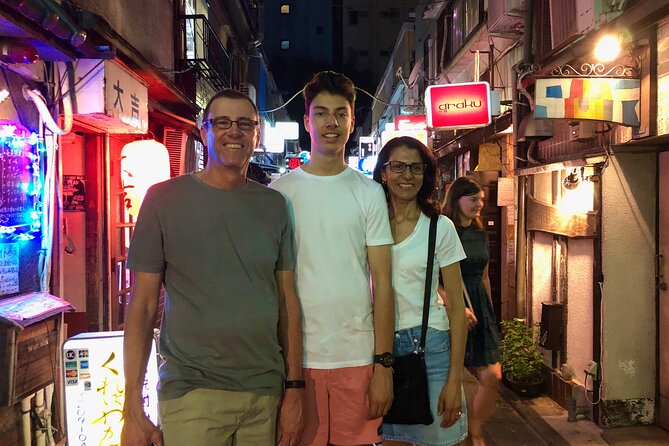
Shinjuku adds another major side of Tokyo, with its dense streets, tall buildings, shops, train connections, and late-day energy. The tour can finish here with recommendations for a Japanese meal chosen with help from your host.
Food and drinks are not included, so you pay directly for anything you order. That is a drawback if you expected an all-inclusive outing, but it also means you can choose the price and style of meal that suits you. You can ask your guide for something quick and practical or spend more time over dinner, depending on your flight schedule.
A local recommendation can be more useful than a generic restaurant list, particularly when you have only one meal in Tokyo. Still, the guide cannot remove the basic time limits. A leisurely meal in Shinjuku may mean dropping another neighborhood, and you should keep your departure time firmly in mind.
Akihabara for anime, games, and family interests
Akihabara is not listed as a guaranteed stop, but it has appeared in a successful family itinerary. That day included an anime-focused visit, a video game venue, Mario Kart play, sushi, and a small street market. This is a good example of how the questionnaire and private format can shape the outing around a specific interest.
If anime, games, or Japanese pop culture matter to you, say so clearly when you complete the questionnaire. You should also tell the host how much walking, shopping, and food time you want. The more precise you are, the easier it is to build a useful route within the six or eight-hour window.
Do not assume every activity or venue fee is included. Attraction tickets are excluded, as are food, drinks, and transportation costs beyond the airport transfer. The listed experience provides the guide and airport rail tickets, while optional spending remains yours.
The guides make the difference
The most important variable is the person assigned to you. Api was praised for making Tokyo feel like a friend was showing the city around, while Nobu was singled out for moving efficiently through the train network and covering more sights than expected.
Ayaka is described as flexible and good at matching a layover to personal interests. Mari focused on old Tokyo and even helped with a lost airport bag. Izumi met a guest at a Narita hotel and helped with public transit, while Leon arrived on time with a plan based on the requested sights.
These examples point to a useful booking strategy: give honest answers in the questionnaire. State your must-see places, food interests, mobility needs, children’s interests, and tolerance for fast pacing. A private tour can be wonderfully personal, but only if the host knows what you want.
The experience has a 4.7 rating, with 92 percent recommending it, based on 12 ratings. That is a positive signal, though the small number means you should not treat it as a guarantee of a perfect match. The host assignment and your own communication will shape the day.
What the price includes, and what it does not
At $310.59 per person, the tour costs more than a self-guided train ride through Tokyo. The included value comes from the private host, itinerary planning, airport pickup by rail, and return train ticket. You also avoid spending your layover learning the basics of the city’s transit system alone.
You must budget separately for meals, drinks, attraction tickets, and transportation beyond the airport transfer. The wording also says that the host time can be customized, with six- or eight-hour options available. Confirm the exact duration and any price change before committing if your schedule does not fit the standard plan.
For a solo visitor, the cost may be hard to justify unless you value guidance and have a particularly long layover. For a family, the private setup can make more sense, especially when a group discount applies. It is also valuable for anyone anxious about returning to Narita or Haneda on time.
Practical concerns before you book
You need a layover long enough to absorb airport formalities, train travel, sightseeing, and the return journey. The tour itself is about eight hours, but your full airport schedule must allow additional time before the next flight. A short connection is not a sensible match.
Comfort matters, too. The experience combines trains and walking. Rain, winter cold, luggage problems, and fatigue can reduce what you manage to see. One guest still had a good day in poor weather and with luggage trouble, but that is a reminder to pack for conditions and keep your plan flexible.
The activity is private, and most people can participate. Service animals are allowed, and the meeting point is near public transportation. Since the experience includes city walking and train transfers, you should tell the host about any needs in the questionnaire.
Free cancellation is available up to 24 hours before the start time for a full refund. Changes or cancellations inside that window are not accepted for a refund, and the cut-off follows local time.
Who should book this Tokyo layover tour?
I would recommend it to a first-time Tokyo visitor with a long Narita or Haneda layover who wants more than a quick airport escape. It is especially suited to families, solo visitors uneasy about the train system, and people with a clear interest such as old Tokyo, anime, food, or major city sights.
I would skip it if your layover is tight, you dislike walking and public transit, or you prefer to explore slowly without watching the clock. The price also makes less sense if you are happy to plan your own train route and visit one nearby neighborhood.
For the best result, list two or three priorities rather than asking to see everything. A focused day with a host like Ayaka, Nobu, Mari, Api, Izumi, or Leon is more useful than a rushed checklist. Book this experience when the private guidance and airport return are worth paying for, and when your layover gives you enough room to enjoy Tokyo instead of worrying about your next flight.
FAQ
How long does the Tokyo layover tour last?
The experience lasts about eight hours. A six-hour option is also available, and the host time includes travel time.
Does the tour operate from both Narita and Haneda airports?
Yes. Narita airport transfers use the Keisei Skyliner, while Haneda airport transfers use the monorail.
Are airport train tickets included?
Yes. Return tickets for the Keisei Skyliner from Narita or the monorail from Haneda are included.
Is the itinerary fixed?
No. You complete a questionnaire after booking so the experience can be matched to your interests and preferences. The meeting point can also be arranged with your host.
Are food, drinks, and attraction tickets included?
No. Food, drinks, attraction tickets, and transportation costs beyond the airport transfer are not included.
Can I cancel for a full refund?
Yes, if you cancel at least 24 hours before the experience start time. Cancellations or changes made less than 24 hours beforehand are not eligible for a refund.
More Private Tours in Narita
More tours in Narita we've reviewed
Narita, compared.
 ★ 4.5Narita Airport (NRT) Private Transfer to Central TokyoFrom $166
 ★ 4.5Private arrival Transfer from Narita Airport(NRT) to central Tokyo cityFrom $92
 ★ 5.0Narita Airport(NRT): Private Transfer to Tokyo/Yokohama 1-9paxFrom $127
 ★ 4.5Airport transfer: Narita, Haneda (Tokyo), HND-NRT Airport shuttleFrom $224
 ★ 5.03 Day Japan Highlights Tour: Tokyo, Mt.Fuji, Nara, Kyoto, OsakaFrom $1,310
 ★ 4.0Shared Arrival Transfer : Narita International Airport to Hotel (Central Tokyo)From $108