
Reviewed · MT FUJI DAY TRIPS
Private tour to Mount Fuji and Hakone from Tokyo
Mount Fuji is the star here, but the best feature is the choice: you can spend the day around the Fuji Five Lakes or focus on Hakone’s lake, shrine, volcano, and open-air museum. I like the private vehicle and hotel pickup, which spare you the fuss of public transport from Tokyo. I also like the mix of photo stops, sacred places, and outdoor scenery.
The main catch is that the advertised price does not cover every cost. The Fuji bus ride costs ¥3,000 per person, and the Hakone Ropeway, Mount Fuji 5th Station, and Open-Air Museum also list admission charges separately. Confirm which route you want, what is included, and who will guide you before paying.
In This Review
- Key points to know before booking
- What this private Mount Fuji and Hakone tour really offers
- Chureito Pagoda gives you the classic Fuji photograph
- Oshino Hakkai adds water, village charm, and a slower pace
- A cedar-lined shrine explains Fuji’s sacred side
- Lake Kawaguchiko is the day’s main Fuji base
- Oishi Park is a short but photogenic stop
- Mount Fuji 5th Station takes you higher
- Hakone Shrine and Lake Ashi bring a different mood
- The Hakone Ropeway and Owakudani show volcanic Hakone
- The Open-Air Museum adds art to the final five
- Private transport is the real value
- What the guide can add to the day
- Timing, weather, and practical comfort
- Who should book this experience
- Should you book it?
- FAQ
- How long does the private Mount Fuji and Hakone tour last?
- How many people can join the private tour?
- Can I choose between the Mount Fuji and Hakone routes?
- Is hotel pickup available?
- Is lunch included?
- Can I cancel for a full refund?
Key points to know before booking
- Choose your region: Select the first six Mount Fuji-area stops or the final five Hakone stops rather than assuming you will comfortably cover all 11 in one day.
- Private group of up to five: Your party gets its own air-conditioned vehicle and does not share the day with a large coach group.
- Strong photo lineup: Chureito Pagoda, Lake Kawaguchiko, Oishi Park, Lake Ashi, and the Hakone Ropeway offer very different views.
- Aizaz may be your guide: One especially positive account names Aizaz and praises his friendly manner and willingness to adjust the day.
- Budget for extras: Lunch is not included, and several transport or admission costs are separate.
- Weather matters: Poor conditions can lead to a new date or a full refund, which is important for a Mount Fuji day.
What this private Mount Fuji and Hakone tour really offers
This is a long day from Tokyo, lasting about 10 hours. That sounds generous, but Mount Fuji and Hakone cover a wide area, so the route choice matters. The experience gives you a private vehicle, an English-speaking guide, and hotel pickup, then lets you concentrate on one of two clusters of sights.
The first cluster covers Mount Fuji and the nearby Fuji Five Lakes area. It includes Chureito Pagoda, Oshino Hakkai, Kitaguchi Hongu Fuji Sengen Shrine, Lake Kawaguchiko, Oishi Park, and Mount Fuji 5th Station.
The second cluster focuses on Hakone. You visit Hakone Shrine, Lake Ashi, the Hakone Ropeway, Owakudani Valley, and the Hakone Open-Air Museum.
I would not assume that all 11 stops are included in a relaxed, complete day. The wording gives you a choice between the first six Fuji stops and the last five Hakone stops. Ask the provider to confirm your selected route, the pickup time, and the extra charges before departure.
A few more Tokyo tours and experiences worth a look
Chureito Pagoda gives you the classic Fuji photograph
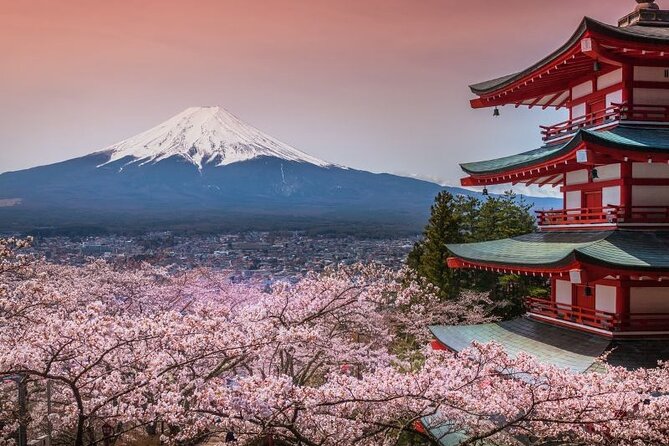
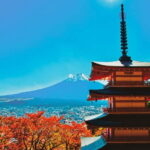
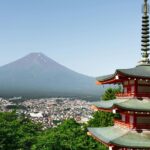
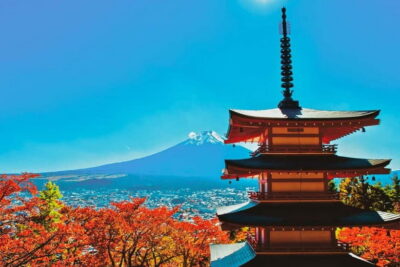
The day’s first Fuji stop is Chureito Pagoda in Arakurayama Sengen Park. The famous view places the five-story red pagoda, Mount Fuji, and the surrounding town in one frame.
You have about 45 minutes here, with admission included. Reaching the best viewpoint involves a climb, so wear shoes you can manage on steps. The effort is worthwhile for photographers, especially in spring when cherry blossoms may frame the pagoda or in autumn when the trees turn color.
The view depends heavily on weather. Mount Fuji can disappear behind cloud, and no private guide can fix that. Still, the pagoda remains a worthwhile cultural and scenic stop even when the mountain is shy.
Oshino Hakkai adds water, village charm, and a slower pace
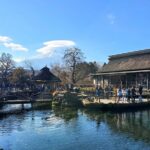
Oshino Hakkai is a small scenic village built around eight clear ponds fed by underground spring water from Mount Fuji. You get about 30 minutes to see the ponds, traditional-style houses, and mountain views.
This stop provides a useful change from lookout points. Instead of simply photographing Fuji from far away, you see how water from the mountain shapes the local setting. The short visit is enough for a look around, though it may feel tight if you want to linger, take many photographs, or browse the area.
The ponds are the reason to come, so keep your attention on the water and the surrounding village rather than treating this as a quick photo stop only.
A cedar-lined shrine explains Fuji’s sacred side
Kitaguchi Hongu Fuji Sengen Shrine sits at the foot of Mount Fuji and was once a starting point for pilgrims climbing the mountain. Its towering cedar trees, large torii gates, and quiet grounds give the day a more spiritual feel.
You have 30 minutes here, with admission included. That is enough to walk through the main area and appreciate the scale of the trees and gates. The shrine is particularly useful if you want more than scenery. It shows that Fuji has long been treated as a sacred mountain, not just a pretty peak for photographs.
As with many shrine visits, the experience rewards a calm walk rather than a rushed checklist. Your guide can help explain the setting, but the information provided does not promise a detailed lecture at every stop.
Lake Kawaguchiko is the day’s main Fuji base
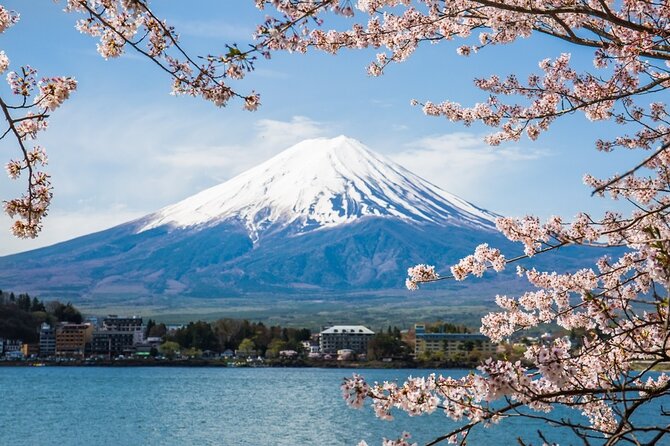
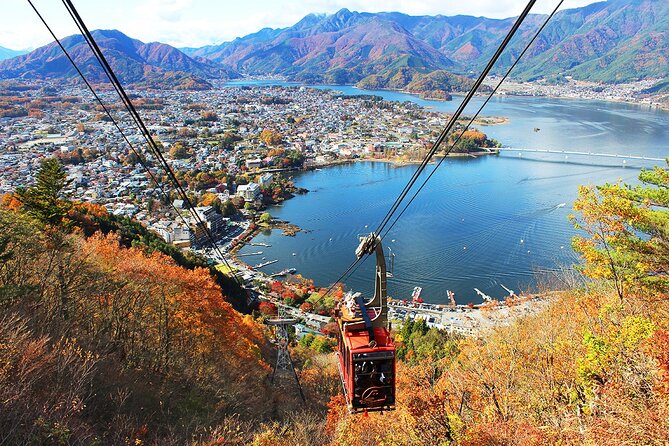
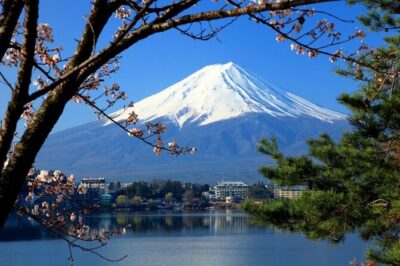
Lake Kawaguchiko receives the longest stop in the Fuji section, about 1 hour and 30 minutes. This is one of the Fuji Five Lakes, with paths, mountain views, possible boat rides, and seasonal flower displays.
I like the extra time here because it gives you room to do more than step out, take one picture, and climb back into the vehicle. You can walk beside the water and look for a clear view of Mount Fuji. The lake is also a practical place to pause during such a long day.
The exact activity is not spelled out, so do not assume a boat ride is included. Think of the time as an opportunity for lakeside scenery, with any optional ride or purchase handled separately.
A few more Tokyo tours and experiences worth a look

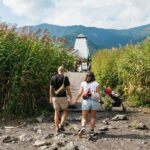
Oishi Park is a short but photogenic stop
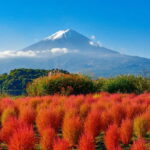
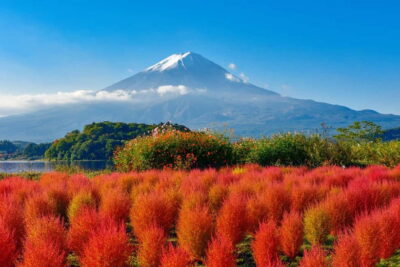
Oishi Park sits on the northern shore of Lake Kawaguchiko and is known for seasonal flowers and views across the lake toward Mount Fuji. Lavender is associated with summer, while other flowers change through the year.
You have 30 minutes here. That is enough for photographs and a quick walk, but not a long garden visit. The park works best when the flowers are in season and the mountain is visible. If cloud blocks Fuji, the plantings still give you something to see, but the famous view loses some of its force.
This is a good example of why the trip works better for people who accept weather and seasonal changes. You get a carefully chosen scenic setting, not a guaranteed postcard.
Mount Fuji 5th Station takes you higher
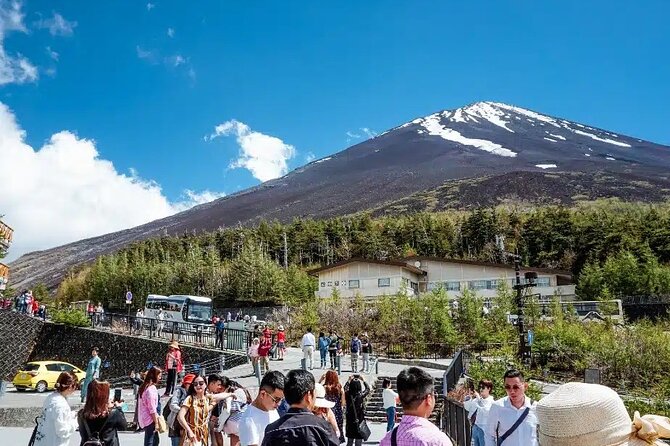
Mount Fuji 5th Station sits at roughly 2,300 meters, or about 7,500 feet, above sea level. It is a popular point on the route toward the summit and offers mountain views, shops, and rest areas.
The listed visit lasts 30 minutes, and admission is not included. A further complication is the separate ¥3,000-per-person bus charge for the ride to Mount Fuji. Ask exactly how that charge applies to your selected route, since the tour also includes private transportation.
At this height, conditions can feel different from Tokyo or the lakes below. The stop is short, so use your time for the view and a quick look around rather than expecting a mountain hike. This is a scenic access point, not a summit climb.
Hakone Shrine and Lake Ashi bring a different mood
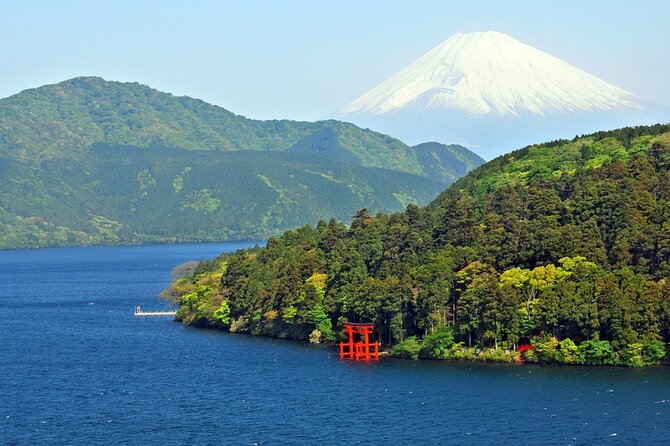
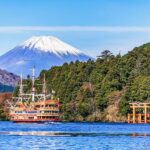
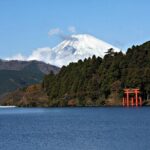
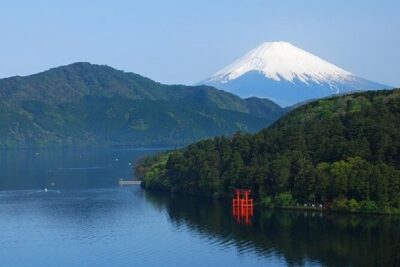
If you choose the Hakone route, Hakone Shrine is a strong opening. The shrine sits beside Lake Ashi in forest, with a well-known red torii gate standing in the water.
You have about 30 minutes, with admission included. The setting is calm and photogenic, though the most famous torii view can be a popular place to photograph. The stop is still worthwhile for the forest, the shrine grounds, and the connection between the sacred site and the lake.
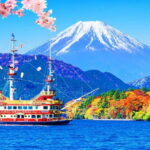
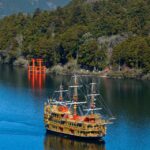
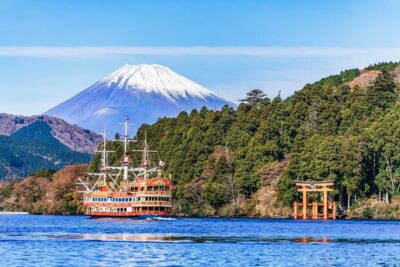
Lake Ashi receives another 30 minutes. This crater lake is surrounded by wooded mountain slopes and is known for views toward Mount Fuji and boat cruises. Again, a cruise is described as something available in the area, not as an included part of the private tour. Treat this as a short lakeside viewpoint unless your guide confirms another plan.
The Fuji view from Hakone is famously dependent on clear conditions. On a cloudy day, you still have the lake and shrine, but Fuji may not appear.
The Hakone Ropeway and Owakudani show volcanic Hakone
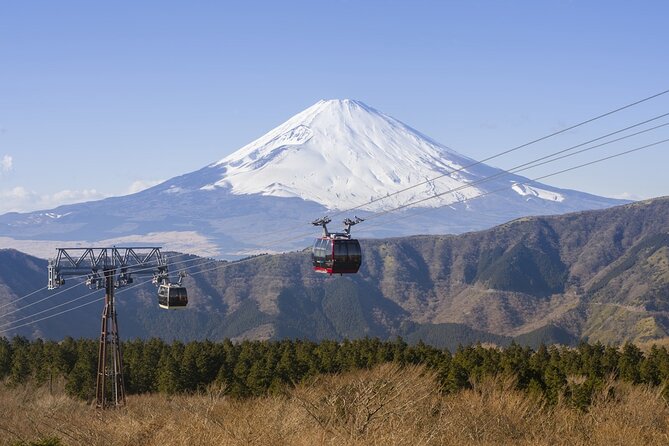
The Hakone Ropeway is one of the most distinctive parts of the Hakone option. The aerial ride passes above volcanic ground and offers views of Mount Fuji, Lake Ashi, and the surrounding mountains.
The planned time is about 30 minutes, and the ropeway ticket is not included. Check whether the stated 30 minutes covers only one section or a specific ride plan, since the information does not give a full transport breakdown. That detail matters when you are trying to fit five Hakone stops into one day.
Owakudani Valley is another 30-minute stop. This geothermal area has steam vents, hot springs, sulfur in the air, and broad views over the surrounding area. The smell can be strong, which is part of the experience rather than a flaw.
Owakudani gives you a look at Hakone’s volcanic character. It is more dramatic and unusual than a standard mountain viewpoint, but the short visit means you will only sample the area.
The Open-Air Museum adds art to the final five
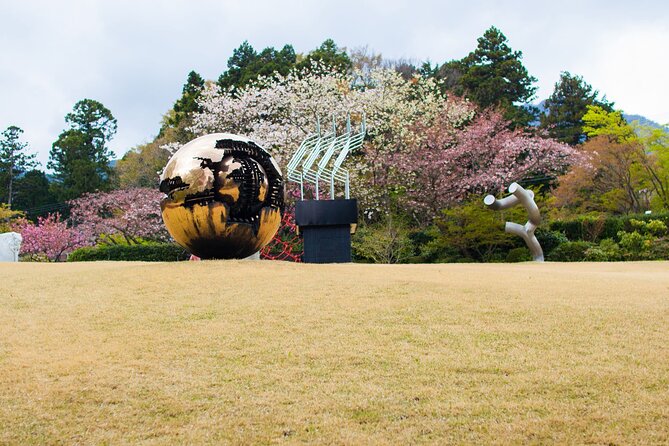
The Hakone Open-Air Museum places sculptures in an outdoor mountain setting. Its collection includes works by recognized artists, with nature forming part of the display.
Thirty minutes is a very short visit for a museum of this type. You can see a small selection and get a sense of the grounds, but you should not expect a full museum visit. Admission is not included, so add that cost to your budget if you choose the Hakone route.
This stop suits you if you like mixing art with scenery. If your main goal is Fuji photography or volcanic views, it may feel less essential than the shrine, lake, and ropeway.
Private transport is the real value
The price is $430 per group of up to five people. For a full-day private vehicle from Tokyo, that can be fair value when the cost is shared by a larger party. A group of five is effectively paying about $86 per person before extra charges. A couple pays much more per person, but gains a private setting and does not have to join a large bus group.
The air-conditioned vehicle matters on a 10-hour day. You can travel together from your hotel, avoid changing trains and buses, and keep your party in one place. Pickup is offered, though you should confirm the exact pickup details when booking.
The value is less clear if you are alone or traveling as a couple on a tight budget. Public transport or a regular group excursion may cost less, though those options will not give you the same private arrangement.
Lunch is not included. Several other costs are separate, including the ¥3,000-per-person Fuji bus ride and admission for the 5th Station, Hakone Ropeway, and Open-Air Museum. Set aside money for food and paid activities, and ask for a written cost breakdown before the day begins.
What the guide can add to the day
An English-speaking driver-guide is part of the experience. Aizaz is specifically named in one positive account, which describes him as extremely nice and willing to take the couple wherever they asked. That is exactly the sort of flexibility people seek in a private day trip.
The provider also says the driver-guide explains the route and points of interest. Still, the feedback is not entirely uniform. One very negative account raised concerns about extra fees and whether the guide spoke English well enough. The response disputed those points and said the itinerary and sights had been clearly explained.
That disagreement is a reason to confirm details rather than a reason to dismiss the tour outright. Ask who your guide will be, what level of English you can expect, which route you are choosing, and what charges will be collected on the day.
Timing, weather, and practical comfort
Mount Fuji sightseeing is weather-sensitive. If poor weather cancels the experience, you are offered another date or a full refund. That policy is helpful, but you should still avoid placing this tour on the final day of your Tokyo stay if seeing Fuji is a major goal.
The tour operates from 8:00 a.m. to 6:00 p.m. during the stated operating period, from April 17, 2025, through November 25, 2026. The experience itself lasts about 10 hours, so expect an early and full day depending on your pickup time.
Most people can participate, and service animals are allowed. The tour is near public transportation, but its main advantage is pickup and private transport rather than a need to navigate the public network.
I would bring comfortable shoes, water, and a light extra layer. The provided information does not give a detailed weather or clothing guide, but the route includes a high-altitude station, lakeside stops, forested shrine grounds, and outdoor viewpoints.
Who should book this experience
This tour suits you if you want Mount Fuji without joining a large coach group. It is especially practical for families, couples who value privacy, and groups of up to five who can share the $430 price.
It also suits photographers because the route offers several distinct compositions: pagoda and peak, ponds and village houses, lake and flowers, shrine gates, volcanic steam, and ropeway views.
You may prefer another option if you want a slow visit at every stop. The route contains many short 30-minute visits, and even the 1-hour-30-minute Lake Kawaguchiko stop will pass quickly if you want a boat ride, a long walk, or extended photography.
The tour is also less suitable if every cost must be known in advance and included in one payment. The separate Fuji bus fee and several admission charges need careful checking.
Should you book it?
Book this private day trip if your priority is flexibility, a private vehicle, and a broad look at Mount Fuji or Hakone from Tokyo. The strongest reason to choose it is not simply the number of stops. It is the chance to see major sights without spending the day with a large group.
Choose the Fuji route for Chureito Pagoda, Oshino Hakkai, Kawaguchiko, Oishi Park, the Sengen shrine, and the 5th Station. Choose Hakone for the shrine, Lake Ashi, Ropeway, Owakudani, and the Open-Air Museum.
Before booking, confirm your route, guide, pickup point, English-language support, and every extra fee. If the weather forecast is poor, use the flexible cancellation terms. With those points settled, this is a useful and scenic way to reach Japan’s most famous mountain from Tokyo.
FAQ
How long does the private Mount Fuji and Hakone tour last?
The experience lasts approximately 10 hours.
How many people can join the private tour?
The price covers one private group of up to five people.
Can I choose between the Mount Fuji and Hakone routes?
Yes. You can choose the first six Mount Fuji-area stops or the final five Hakone stops from the route described.
Is hotel pickup available?
Yes. Pickup is offered, and the experience includes private transportation in an air-conditioned vehicle.
Is lunch included?
No. Lunch is not included in the tour price.
Can I cancel for a full refund?
Yes, if you cancel at least 24 hours before the experience start time. Cancellations or changes made less than 24 hours before the start time are not refunded or accepted. If poor weather cancels the tour, you are offered another date or a full refund.
More Private Tours in Tokyo


More Hakone Day Trips in Tokyo
More Mt Fuji Day Trips in Tokyo
More tours in Tokyo we've reviewed





Mt Fuji Day Trips, compared.
 ★ 5.0Mt Fuji and Hakone 1-Day Bus Tour Return by Bullet TrainFrom $163
 ★ 4.0Mt Fuji & Hakone Cruise, Drum Show Bullet Train 1 Day from TokyoFrom $149
 ★ 4.4Tokyo Mt Fuji 5th St & Hakone Cruise Bus Tour w/Bullet TrainFrom $15410 hours
 ★ 4.5From Tokyo: Mount Fuji Full-Day Sightseeing TripFrom $6810 hours
 ★ 4.7Tokyo: Mt. Fuji Tour, Hakone Ropeway, Owakudani, Lake AshiFrom $5410 hours
 ★ 4.4Tokyo:Mt.Fuji,Kawaguchiko Oishi Park,Arakurayama Sengen ParkFrom $5410 hours