
Reviewed · UENO & YANAKA WALKS
Private Home Cooking in Yanaka – Local Flavors in a Warm Setting
Tokyo has plenty of cooking classes, but this one puts you in Yanaka, a low-rise neighborhood where old Tokyo still feels close at hand. In about two hours, you prepare everyday dishes such as miso soup, gyoza, bento, udon, okonomiyaki, or miso-glazed eggplant, then sit down to eat what you made.
I like the private instruction, which lets you ask questions and get hands-on help instead of watching a chef work across a crowded room. I also like the menu flexibility: tell the team about allergies, vegetarian or vegan needs, or preferred dishes up to two days ahead. The main drawback is finding the meeting point, since several people needed help locating the small studio near Yanaka Ginza.
In This Review
- Key points to know before booking
- Cooking everyday Japanese food in Yanaka
- Meeting near Yanaka Ginza
- What the two-hour class feels like
- Choosing Plan A, Plan B, or a custom menu
- The instructors make the difference
- A neighborhood class with a built-in Yanaka outing
- Is $122.23 per person good value?
- Who should book this cooking experience?
- Practical details that affect your day
- Should you book Private Home Cooking in Yanaka?
- FAQ
- Where does the cooking class meet?
- Where does the activity finish?
- How long does the cooking experience last?
- Can I choose lunch or dinner?
- Can I request a specific menu?
- Are allergies and vegetarian or vegan needs accommodated?
- Is this a private activity?
- Is the class taught in English?
- What is the cancellation policy?
Key points to know before booking
- Cook in the Yanaka area: The class is close to Yanaka Ginza and works well with a neighborhood walk.
- Meet English-speaking instructors: Yuki and other instructors explain recipes, tools, and techniques in clear English.
- Choose your menu: Plan A lets you select one main dish, while Plan B lets you choose two appetizers, with additional requests possible.
- Expect a generous meal: You prepare enough food to eat together, and several menus include multiple dishes.
- Good for solo visitors and families: A private booking means the instruction can match your pace and cooking level.
- Allow time to find the entrance: Meet at the Yanesen Tourist Information and Culture Center, and ask for help if needed.
Cooking everyday Japanese food in Yanaka
The appeal here is not learning a restaurant trick that requires rare equipment. You are working with familiar Japanese home food, the kind of meal you might otherwise overlook while chasing sushi counters and ramen shops.
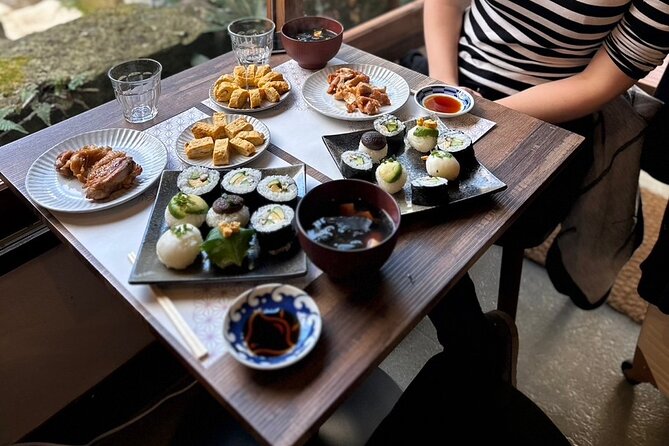
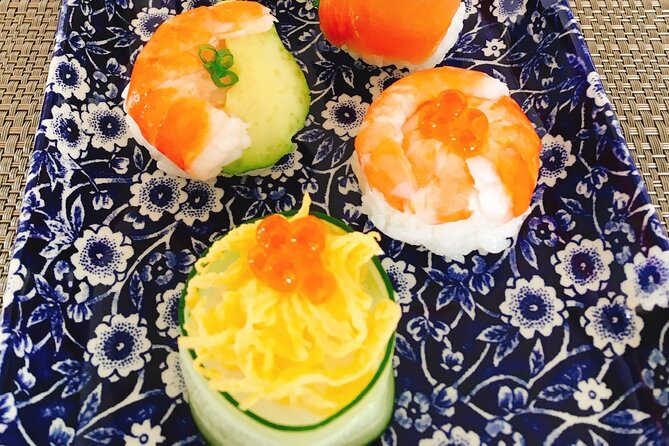
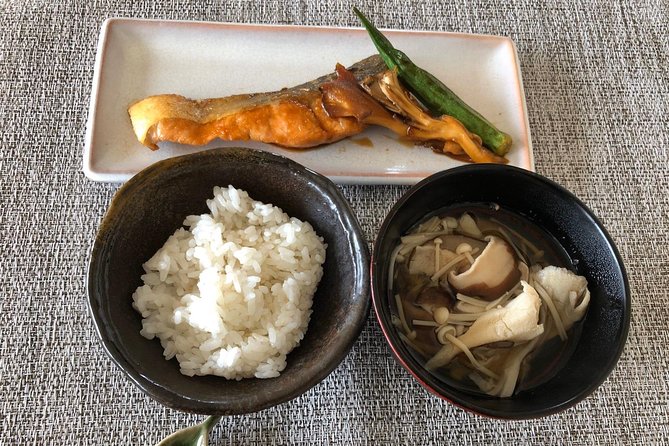
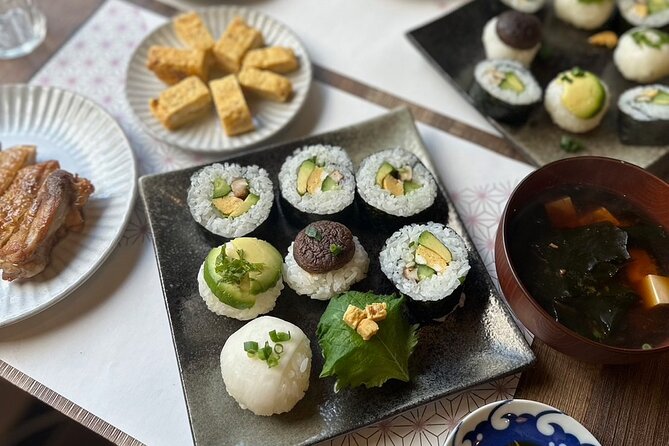
Depending on your menu, you might make oyakodon, a comforting bowl of chicken and egg over rice, or nikujaga, a home-style simmered dish of meat and potatoes. Other examples include tonkatsu, gyoza, tempura, rolled sushi, bento boxes, soba, udon, okonomiyaki, and nasu dengaku, eggplant finished with a sweet-savory miso glaze.
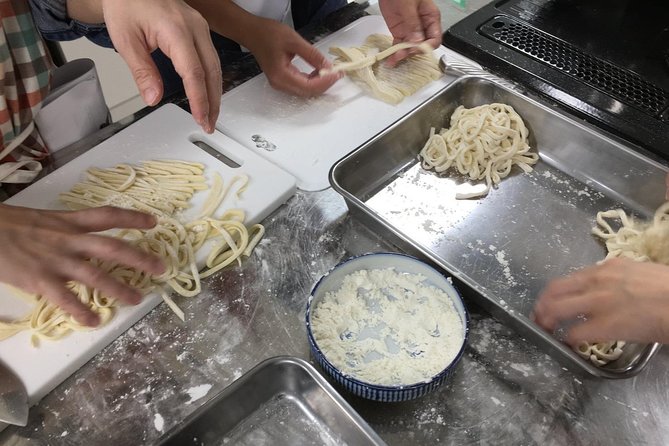
The menu changes the character of the class. A bento session gives you several small preparations and the fun of arranging them neatly. An udon class adds a memorable traditional touch: kneading the dough with your feet while it is protected in a bag. A miso soup class can take you into dashi, with ingredients such as bonito flakes, wakame, and kombu.
You are not simply handed a finished plate. You chop, slice, grind, mix, season, and cook, with the instructor correcting your technique as you go. That hands-on format matters, especially if you want to repeat the recipes at home.
A few more Tokyo tours and experiences worth a look
Meeting near Yanaka Ginza
The official meeting point is the YANESEN Tourist Information & Culture Center at 3-chōme-13-7 Yanaka, Taito City. The cooking location is about 100 meters from Yanaka Ginza, making this a useful pairing with a walk through the shopping street and nearby Yanesen neighborhoods.
The practical warning is simple: finding the exact entrance may take patience. The class is on a side street near Yomise Street, and some people have had trouble spotting it. A coffee shop called Ko Hi Ko Jo has been useful for directions, and staff there may guide you to the right place. If you are uncertain, call the operator rather than wandering around with the clock running.
I would arrive early enough to locate the meeting point before the class begins. This is especially important for a lunch booking, when you may have another activity afterward.
The setting is described as a private home kitchen, though one detailed account noted that it felt more like a small, homey studio than an actual private residence. That distinction is worth knowing. You get the friendly scale and personal contact of a home lesson, but do not book it expecting a formal visit inside a typical Japanese family home.
What the two-hour class feels like
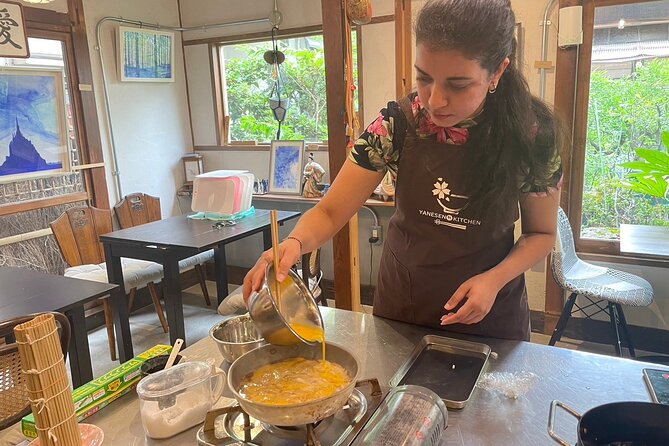
The class is short enough to fit into a busy Tokyo day, but the cooking keeps you active from start to finish. Your instructor prepares the ingredients and equipment, then brings you into the process instead of doing the work for you.
The teaching style is practical. You learn not only what to do, but why a step matters. That might mean understanding how dashi builds the base of miso soup, how to judge oil temperature for tempura, or how Japanese ingredients change from one region to another.
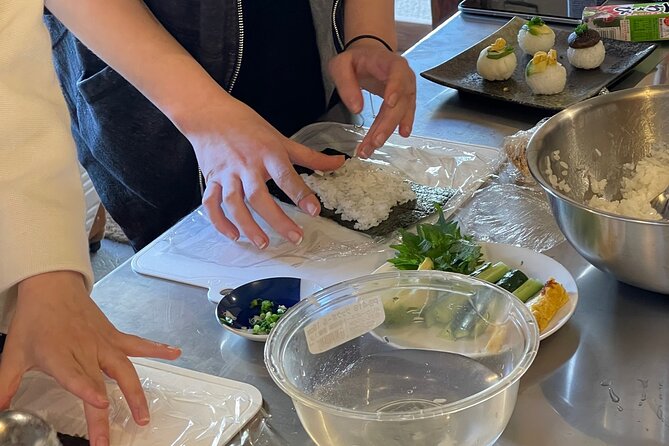
The instructors also explain tools and preparation methods. Rolled sushi, for example, becomes less mysterious once you learn how to handle the mat and place the fillings. Making a square omelet for a bento box gives you a small but useful skill that is hard to pick up by simply eating Japanese food.
The meal at the end is part of the experience, not an afterthought. Menus described in the available information include enough food for a satisfying lunch or dinner, sometimes with extra portions left over. You get to taste the results while the techniques are still fresh in your mind.
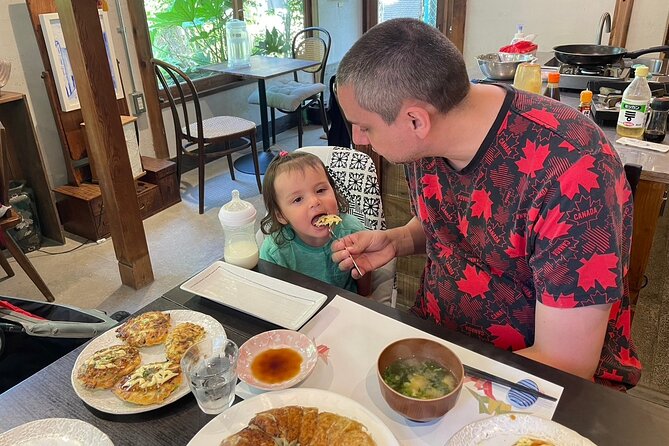
For children, the class can work well because the cooking is active and the English explanations are directed at the whole group. One family found the instructors especially clear with kids. Still, the private format means the cost can be high for a large family, so check whether a group discount applies to your booking.
Choosing Plan A, Plan B, or a custom menu
The simplest menu structure is:
- Plan A: Choose one main dish.
- Plan B: Choose two appetizers.
The exact dish list is not fixed in the information provided, so you should use the reservation request form to state what you want. Past menu examples give you a good idea of the range: sushi, gyoza, karaage, miso soup, tempura, udon, soba, okonomiyaki, tonkatsu, bento, and eggplant with miso.
This flexibility is one of the strongest reasons to book. If you already love Japanese food, request something you have always wanted to understand. If you are new to Japanese cooking, choose a basic combination such as miso soup plus a main dish.
Tell the operator about allergies and dietary needs when you reserve. Vegetarian and vegan arrangements are available, along with other requests. Menu discussions can be made through the contact form until two days before the cooking date, so do not wait until you arrive in Tokyo.
Be specific. If you have an allergy, explain the ingredient and how serious the restriction is. The available information confirms that requests can be arranged, but it does not promise that every possible menu will be available for every dietary need.
The instructors make the difference
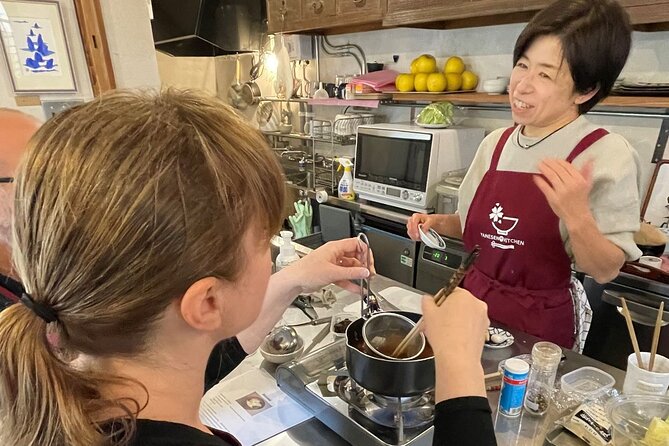
The main instructors associated with the class include Yuki, Yukiko-san, Yuli, and other members of the team. Yuki receives particular praise for her warm manner, clear English, patience, and ability to make first-time visitors feel at ease.
One solo participant had a class with Yuki and valued the one-on-one guidance. Another group appreciated that the instructor showed alternative ways to use fresh ingredients, rather than treating the recipe as a rigid set of rules.
English ability is a real advantage here. You can ask why bonito flakes are used, how miso differs by region, or what to substitute at home. The instruction also leaves room for conversation about life in Yanaka, local habits, food customs, and the instructors’ interest in your own culture.
That personal exchange may be the most memorable part of the class. You are not just copying a recipe. You are talking with someone connected to the Yanesen area and learning how ordinary meals fit into local life.
Other private tours in Tokyo




A neighborhood class with a built-in Yanaka outing
Yanaka is a good match for this kind of activity. The area has a calmer, residential feel than many central Tokyo districts, with small shops, local cafés, and the Yanaka Ginza shopping street nearby.
You can pair the cooking class with a walk before or after it. Keep the timing sensible, though. If you spend too long browsing Yanaka Ginza before a lunch class, you may arrive rushed. I would use the class as the fixed point in your schedule, then leave room afterward for shopping and a relaxed stroll.
The location also helps the class feel less like a stand-alone tourist appointment. You are cooking in a neighborhood where the subject of the lesson, everyday Japanese food, fits naturally with the surroundings.
Do not expect a guided sightseeing tour as part of the two hours. The area is a bonus, not a separate itinerary. You will need to explore Yanaka Ginza on your own.
Is $122.23 per person good value?
At $122.23 per person, this is not a cheap meal. You can eat excellent Japanese food for far less, and a standard cooking demonstration may cost less too.
The value comes from the amount of personal attention. This is a private activity for your group, not a large class where you watch from the back. You get ingredients, instruction, hands-on practice, a meal, cultural conversation, and recipes or notes you can use later.
The price makes more sense if you are booking for one or two people who want focused help. It may also work for a small group if the group discount lowers the per-person cost. For a larger party, compare the total price with a normal meal plus a less expensive class.
I would not choose this experience only for a single famous dish. Choose it if you want to understand Japanese home cooking and plan to use what you learn afterward. The ability to recreate dishes with ingredients available in ordinary markets at home adds lasting value.
Who should book this cooking experience?
This class suits you best if you want active participation, direct instruction, and a relaxed setting. It is particularly useful for:
- Solo visitors who want personal conversation and one-on-one teaching.
- Couples seeking an evening activity beyond restaurant dining.
- Families with children who enjoy chopping, shaping, mixing, and tasting.
- Home cooks who want to learn the reasons behind Japanese methods.
- First-time visitors who want an easy cultural introduction early in their Japan trip.
- Anyone already planning to visit Yanaka Ginza.
It may not suit you if you want a polished restaurant-style demonstration, a long market visit, or a full-day culinary program. Two hours passes quickly, especially when the menu includes several dishes.
The cooking itself is accessible to different skill levels. Experienced cooks can still learn about dashi, regional miso, Japanese tools, and oil temperature. Beginners benefit from the patient instruction and the chance to ask basic questions without feeling out of place.
Practical details that affect your day
You can choose a lunch or dinner time, which makes the class easy to fit around sightseeing. The activity ends back at the meeting point, so plan your next train or appointment from Yanaka rather than assuming you will finish somewhere else.
Mobile tickets are accepted, and confirmation is provided at booking. Service animals are allowed, and the location is near public transportation.
The class has received a 99 percent recommendation rate and a rating of 5 from 173 reviews, with many strong comments about the food, the instructors’ English, the relaxed atmosphere, and the practical recipes. One important exception involved a last-minute cancellation caused by an instructor illness. The operator requested a full refund in that case, but the incident shows why you should avoid scheduling an important connection immediately afterward.
Free cancellation is available up to 24 hours before the start time for a full refund. Changes or cancellations inside that window are not refunded, and the local cut-off time applies. The activity can also be canceled if poor weather or an insufficient number of bookings affects the session, with a different date or a full refund offered.
Should you book Private Home Cooking in Yanaka?
Book it if you want to cook your own Japanese meal, not just eat one. The private format, clear English instruction, custom menu requests, and connection to Yanaka make this more personal than a standard group cooking class.
The price is the chief caution, and the meeting point needs care. But if you value a small class, want recipes you can repeat at home, or are looking for a friendly first-day activity in Tokyo, this is a strong choice. Contact the operator about your menu and dietary needs before the two-day deadline, then combine the class with time around Yanaka Ginza.
FAQ
Where does the cooking class meet?
The meeting point is the YANESEN Tourist Information & Culture Center at 3-chōme-13-7 Yanaka, Taito City, Tokyo 110-0001, Japan.
Where does the activity finish?
The activity ends back at the meeting point.
How long does the cooking experience last?
The class lasts approximately two hours.
Can I choose lunch or dinner?
Yes. You can choose a lunch or dinner cooking class when selecting the experience.
Can I request a specific menu?
Yes. You can submit menu requests through the reservation request form and discuss them until two days before the cooking date.
Are allergies and vegetarian or vegan needs accommodated?
Yes. Allergies, vegetarian and vegan requests, and other dietary needs can be arranged if you provide the details when booking.
Is this a private activity?
Yes. Only your group participates in the private tour or activity.
Is the class taught in English?
The instructors, including Yuki, can provide instruction in English. The available information describes the instructors’ English as clear and suitable for explaining recipes and techniques.
What is the cancellation policy?
You can cancel at least 24 hours before the start time for a full refund. Cancellations or changes made less than 24 hours before the experience are not refunded. If the operator cancels because of poor weather or too few bookings, you can receive a different date or a full refund.
More Private Tours in Tokyo
More Ueno & Yanaka Walks in Tokyo
More tours in Tokyo we've reviewed











Ueno & Yanaka Walks, compared.
 ★ 5.0Eat and Drink Like a Local: Tokyo Ueno Food Tour-Taverns&RamenFrom $95
 ★ 4.5The Old Quarter of Tokyo – Yanaka Walking TourFrom $40
 ★ 5.0Yanaka Walking Tour: Historic and Traditional District of TokyoFrom $72
 ★ 4.8Tokyo: Old Quarter Yanaka Walking TourFrom $323 hours
 ★ 5.0Tokyo: Food Tour in Ueno with 10+ Tastings of Japanese ClassicsFrom $142
 ★ 4.9Tokyo:Stroll in Old traditional culture towns~Yanaka & NezuFrom $293h 30m