
Reviewed · WALKING TOURS
Private Harajuku Omotesando Architecture Walking Tour
The most rewarding part of this private Harajuku and Omotesando walk is how quickly Tokyo changes around you. One minute you are near the solemn forest of Meiji Jingu, and the next you are studying bold glass boutiques, underground buildings, and designer storefronts along Omotesando. The tour connects famous architecture with the small streets most first-time visitors miss.
I like the private, customizable format, especially if you already know which architects or design styles interest you. I also like the guide’s use of photographs, plans, and background material to explain buildings that can be hard to understand from the pavement. The main consideration is that this is a serious walking tour, and one past participant found it difficult to follow some of the English explanations, so it is worth sharing your interests and language needs when booking.
In This Review
- Key points about this Harajuku architecture walk
- Why this route makes Harajuku easier to understand
- From Meiji Jingu to Kenzo Tange’s Olympic landmark
- Omotesando’s designer buildings, one facade at a time
- Backstreets reveal a different side of Harajuku
- The cafe pause is more useful than it sounds
- What the guide adds to the buildings
- How much value do you get for $132.14?
- Who should book this private Tokyo walk?
- Practical details before you go
- Should you book it?
- FAQ
- How long does the Harajuku architecture tour last?
- Where does the tour start?
- Where does the tour end?
- Is this a private tour?
- What buildings are included?
- Is a guide included?
- Is a cafe break included?
- Is hotel transportation included?
Key points about this Harajuku architecture walk
- Yoyogi Gymnasium begins the architectural story: See Kenzo Tange’s famous Olympic-era building from the distance before moving into Harajuku and Omotesando.
- The route links major designer buildings: Expect exterior views of Prada, Dior, Louis Vuitton, Tod’s, The Iceberg, and SunnyHills, with other buildings added according to your interests.
- Private guiding makes a real difference: Guides including Yoshi, Yoko, Aki, Taka, Mari, and Eriko have adjusted pace, content, and indoor time for individual groups.
- Backstreets are part of the appeal: Side streets reveal a quieter, more residential side of the district and architecture you may pass without noticing.
- A drink break is included: You pause at a cafe or similar spot for conversation and refreshments.
- The walk ends in Aoyama: The final point is the Omotesando and Aoyama-dori intersection, near Mizuho Bank, rather than back at the starting shrine.
Why this route makes Harajuku easier to understand
Harajuku is often reduced to youth fashion, crowded lanes, and colorful shops. Omotesando gets a more polished label, with luxury stores and wide avenues. This tour gives you a better way to read both districts: as a meeting place of shrine grounds, postwar planning, international fashion, experimental architecture, and quiet local streets.
You begin at Meiji Jingu, near Harajuku Station. The shrine itself is not presented as a long formal sightseeing stop in the supplied route, but it gives the walk a useful opening contrast. You start beside one of Tokyo’s best-known traditional sites, then shift toward the clean lines and daring materials of contemporary Tokyo.
That contrast is one of the tour’s strongest ideas. You do not just look at isolated buildings. You see how old and new Tokyo occupy the same compact part of the city.
The experience is private, so your guide can spend more time on the subjects you care about. If you are an architect, designer, photographer, or simply someone who notices buildings before shop signs, tell the guide in advance. The route can include major works, lesser-known structures, interiors when possible, and side trips through the neighborhood.
Other walking tours we've reviewed in Tokyo
From Meiji Jingu to Kenzo Tange’s Olympic landmark
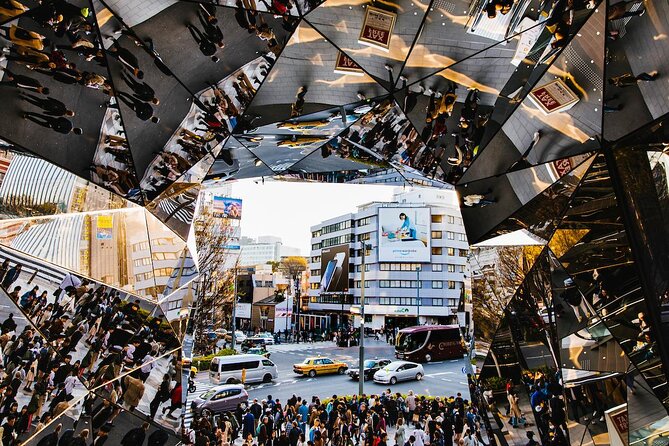
The walk starts in front of Meiji Jingu at 1 Yoyogikamizonocho. From there, the guide points out Yoyogi Gymnasium, also known as the National Yoyogi Gymnasium, designed by Kenzo Tange.
The building is admired from a distance on the listed route, so you should not expect a full interior visit here. Even so, it is an important first stop. Its sweeping form and Olympic connection give your guide a chance to explain the role of the 1964 Tokyo Olympics in shaping the city’s modern identity.
The tour is also described as having an Olympics theme, though the main value is architectural rather than sports-focused. If you have little interest in Olympic history but enjoy modern design, the building still gives you a strong starting point. If you are fascinated by Tokyo’s postwar development, ask your guide to spend more time on its background.
Several guides have used prepared photographs and other visual material to make this part clearer. Taka, described as a retired architect, used images of architects, floor plans, background information, and suggestions for the best viewpoints. Yoshi has also carried extensive photographs of the architects and their other work. Those tools matter because a building viewed from a sidewalk can otherwise seem abstract.
Omotesando’s designer buildings, one facade at a time
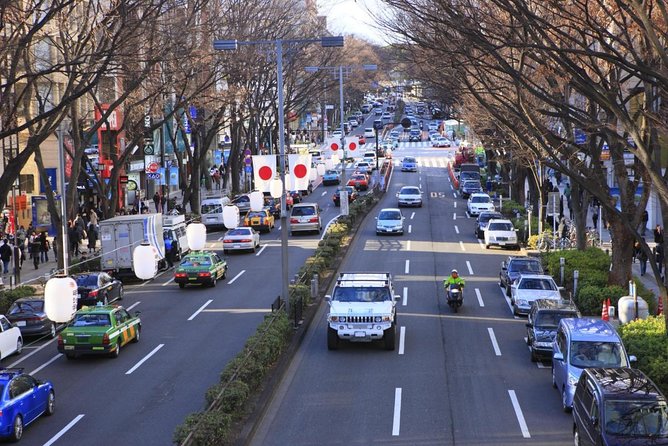
After the Olympic landmark, the route moves toward Omotesando and its famous fashion architecture. This stretch is sometimes compared with Rodeo Drive or the Champs-Élysées, but the comparison only goes so far. The avenue is not just a shopping strip. Its major brands use their buildings as large-scale design statements.
You can expect stops near:
- The Iceberg
- Dior
- Louis Vuitton
- Tod’s
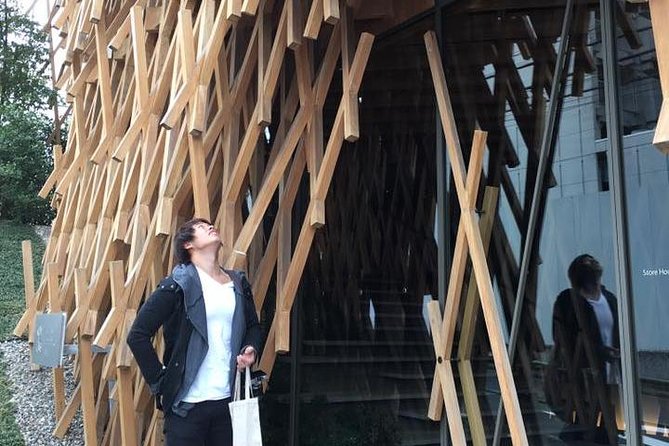
- SunnyHills
- Prada
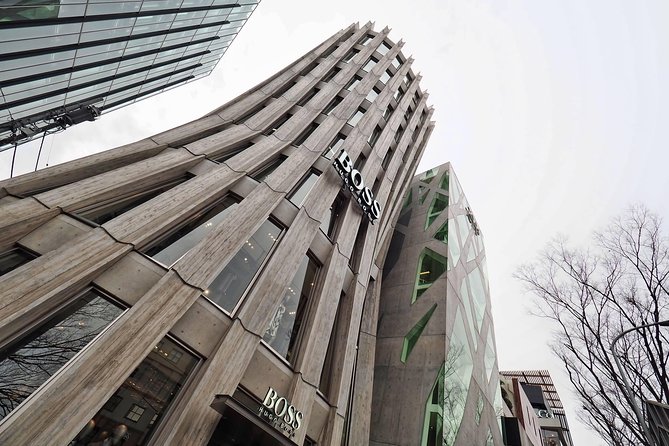
The guide explains the buildings rather than simply pointing out brand names. That is a key difference between this walk and an ordinary shopping stroll. You may learn to look at the building’s glass, structure, angles, materials, and relationship to the street.
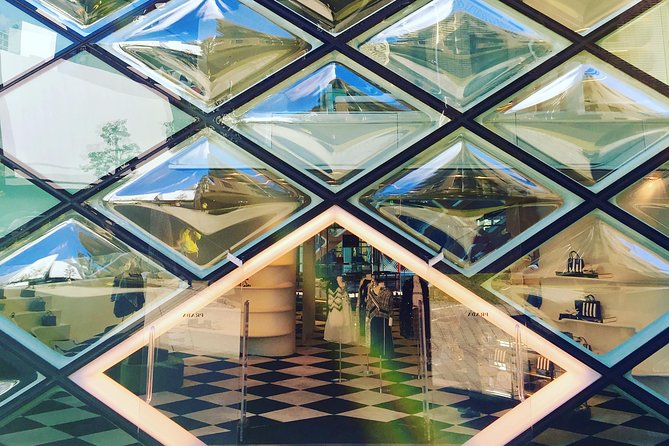
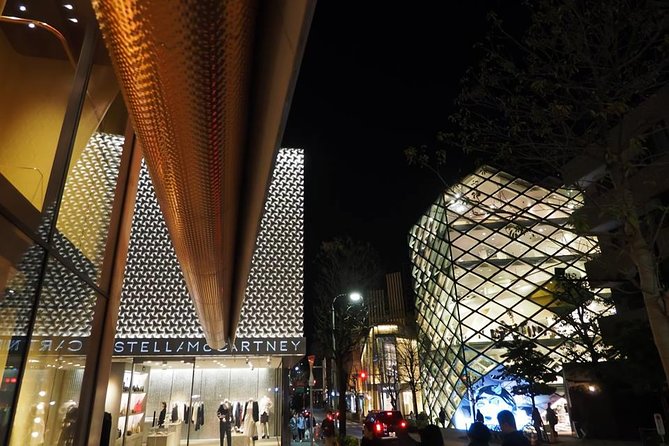
Prada is a particularly strong example. The building by Jacques Herzog and Pierre de Meuron uses convex and concave glass surfaces, creating a facade that changes as you walk past it. A guide can direct you to useful positions for photographs and explain why the building looks different from different angles.
The route can also include Tokyo Plaza Harakado, with its planted rooftop vertical garden, and Tadao Ando’s Collezione, where part of the building is underground. These examples show the range of modern architecture in the district. Some buildings announce themselves with dramatic surfaces, while others reveal their design through hidden levels, unusual proportions, or carefully controlled entrances.
The exact order and number of stops may vary. That is not a weakness. A private route works best when you avoid treating it like a fixed checklist. If you care most about Tadao Ando, Herzog and de Meuron, Kenzo Tange, or newer Japanese designers, make that clear at the start.
Backstreets reveal a different side of Harajuku
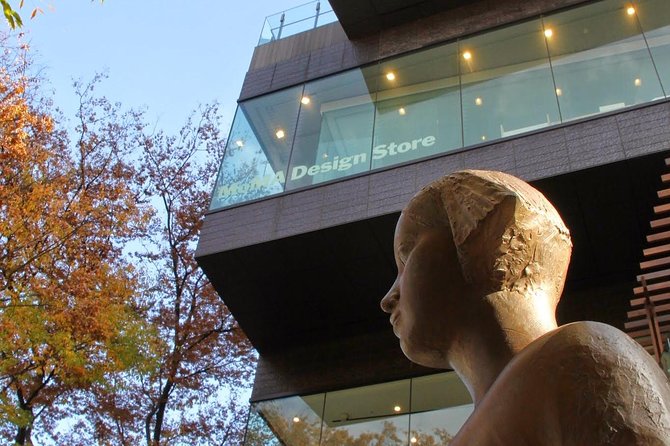
The avenue gets the attention, but the side streets are where this experience earns its price. Your guide can take you away from the main shopping route to see a quieter neighborhood and buildings that are easy to overlook.
This part helps explain why Harajuku and Omotesando feel so varied. Large international boutiques sit close to smaller businesses, homes, narrow lanes, and less obvious architectural projects. The change is not only visual. It gives you a sense of how Tokyo’s districts work in practice, with commercial streets and local neighborhoods pressed closely together.
The backstreet section also slows the pace. Instead of stopping every few minutes for another facade, you have room to talk with the guide and ask questions. The experience is not a race to collect photographs. It is a chance to understand why a building matters and how the neighborhood developed.
Several guides have added side trips based on the group’s interests. Junko, for example, adjusted explanations to the group’s level of architectural knowledge and welcomed detours. Other guides have taken groups through corners they would not have found alone. You should still remember that the route is a walking tour, not a general Harajuku food or shopping tour. Side streets support the architecture theme rather than replacing it.
The cafe pause is more useful than it sounds
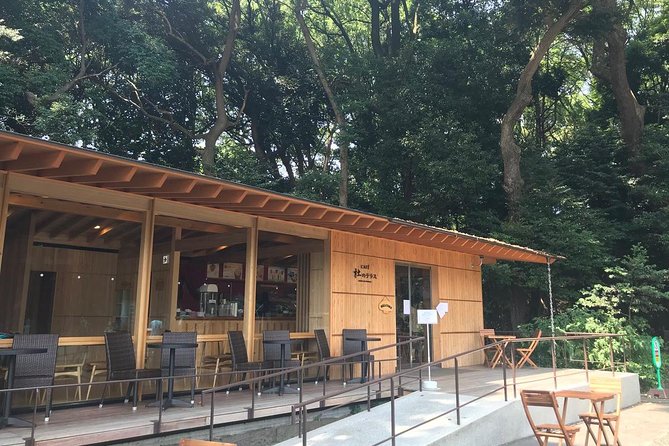
A short drink break is included during the walk. It provides a practical rest after the first part of the route and gives you time to speak with the guide in a less hurried setting.
This pause matters because the tour covers a lot of ground. One participant described it as a great deal of walking, in a good way, but you should still wear comfortable shoes and be ready to remain on your feet for much of the experience. The route lasts about three and a half hours, although the itinerary also describes approximately three hours of walking, so allow the larger time frame when planning your day.
The break is also a good moment to ask for changes. If you want more interiors, more design history, or more neighborhood context, bring that up here. One guide extended the indoor portion for a group visiting during very hot weather. That kind of adjustment is one of the clearest benefits of booking a private activity.
The drink itself should not be the reason you book. Think of it as a welcome pause and a chance for conversation, not a cafe tour.
Other private tours in Tokyo


What the guide adds to the buildings
The guides are the main variable in any private tour, and this experience has several names associated with strong architectural and cultural instruction. Yoshi has been praised for careful preparation and detailed visual material. Yoko has focused on design changes and how Harajuku developed from the 1960s to the present. Aki has been described as patient, adaptable, and able to connect local buildings with other places in Japan.
Taka’s background as a retired architect may appeal to people who want technical detail. Mari and Eriko have also led engaging walks with strong English and clear explanations. These names do not guarantee that you will receive a particular person, so treat them as examples of the guide pool rather than a promised assignment.
The best guides do more than recite architects’ names. They explain what to notice. That may include a facade’s shape, the use of glass, how a structure meets the pavement, where a building sinks below ground, or how a shop turns architecture into part of its identity.
A practical point: one participant had trouble understanding a guide’s English and felt that some information was lost. Most available feedback is highly positive, with a 4.9 rating and 99 percent recommendation figure, but communication still matters. At the beginning, tell your guide if you prefer slower speech, shorter explanations, or more visual examples.
How much value do you get for $132.14?
At $132.14 per person, this is not the cheapest way to see Harajuku. You are paying for a private licensed guide, a route shaped around your group, architectural preparation, and the convenience of covering several important buildings in one walk.
The value is strongest for two or more people who will actively ask questions and use the custom route. An architecture student, designer, photographer, or serious modern-building fan can get much more from this than someone who only wants a quick introduction to Harajuku fashion.
Group discounts may improve the cost for larger private parties. Since only your group participates, you do not have to wait for strangers or follow a pace that does not suit you. That can be especially useful when one person wants technical detail and another wants neighborhood history.
The value is weaker if you are mainly looking for shopping time, a shrine visit, or a food-focused introduction. The stores are important because of their buildings, not because the tour includes shopping assistance. You also do not receive hotel pickup or drop-off, and there is no listed admission charge included because the main activity is walking and viewing buildings from public areas.
Who should book this private Tokyo walk?
I would recommend it most strongly to:
- People who already enjoy architecture and design
- Visitors interested in Tokyo’s Olympic and postwar development
- Photographers who want help finding useful viewpoints
- Families or couples who prefer a private pace
- First-time visitors who want an orientation to the area with more depth than a standard city walk
- Anyone who wants to connect famous buildings with less obvious neighborhood streets
It also works well early in a Tokyo visit. Junko helped a group get oriented to Japanese history, culture, and etiquette, then assisted with subway navigation afterward. That extra help is not listed as a formal service, so do not book it expecting transport guidance, but a private guide can make the first days in the city feel less confusing.
You should think twice if walking for several hours is difficult or if your main goal is Harajuku’s food, pop culture, or shopping scene. The physical demand is moderate, and the tour may be less satisfying if building design is not part of your interest.
Practical details before you go
The tour begins at Meiji Jingu near Harajuku Station and finishes at the Omotesando and Aoyama-dori intersection, in front of Mizuho Bank. Plan your next activity from the end point rather than assuming you will return to Harajuku Station.
The experience is close to public transportation, but hotel pickup and drop-off are not included. Confirmation arrives when you book, and a mobile ticket is available. Free cancellation is allowed up to 24 hours before the start time. Changes or cancellations inside that period are not accepted for a refund.
Wear comfortable shoes and allow extra time for the cafe stop, questions, photographs, and possible route changes. Because the group is private, it is sensible to send your main interests ahead of time. Ask for a focus on Olympic architecture, luxury-store design, Japanese architects, interiors, backstreets, or photography viewpoints.
Should you book it?
Book this tour if you want to understand why Harajuku and Omotesando are important to modern architecture, not just where to find fashionable shops. The mix of Kenzo Tange’s Yoyogi Gymnasium, international designer buildings, Japanese architects, side streets, and a quiet pause creates a thoughtful half-day in central Tokyo.
The price makes sense for people who will use the private format. If you want a relaxed route, detailed explanations, and the freedom to ask questions, it offers good value. If you want a cheap overview or a food-and-shopping outing, choose something else.
My advice is to book it early if the dates matter, since it is commonly reserved well ahead of time. Then send the guide a short list of your favorite architects or design interests. That small step can turn a good walk into a much more personal one.
FAQ
How long does the Harajuku architecture tour last?
The experience lasts approximately three hours and 30 minutes. The walking portion is also described as about three hours, with a short pause included along the way.
Where does the tour start?
It starts in front of Meiji Jingu near Harajuku Station at 1 Yoyogikamizonocho, Shibuya, Tokyo 151-0052.
Where does the tour end?
The walk ends at the Omotesando and Aoyama-dori intersection, in front of Mizuho Bank, at 5-chōme-1-27 Minamiaoyama.
Is this a private tour?
Yes. Only your group participates in the activity.
What buildings are included?
The route includes Meiji Jingu, a distant view of Yoyogi Gymnasium, and modern fashion-related buildings such as The Iceberg, Dior, Louis Vuitton, Tod’s, SunnyHills, and Prada. The route is customizable, so additional buildings may be included according to your interests.
Is a guide included?
Yes. A local licensed tour guide is included.
Is a cafe break included?
Yes. The tour includes a cozy pause with drinks along the way.
Is hotel transportation included?
No. Hotel pickup and drop-off are not included. The tour is near public transportation, and you meet at Meiji Jingu and finish in Aoyama.
More Private Tours in Tokyo
More Walking Tours in Tokyo

More tours in Tokyo we've reviewed




Walking Tours, compared.
 ★ 5.0Tokyo Tsukiji Fish Market Food and Culture Walking TourFrom $99
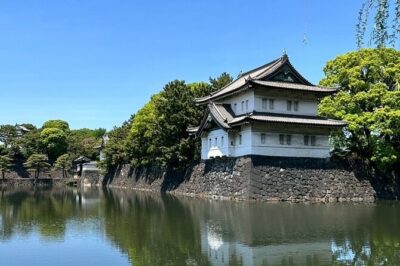 ★ 5.0Tokyo: Imperial Palace and Shogun Historical Walking TourFrom $22
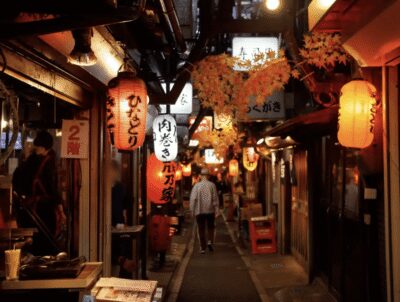 ★ 4.9Tokyo: Shinjuku Local Bar and Izakaya Guided Walking TourFrom $343 hours
 ★ 5.0Tokyo: Tsukiji Fish Market Food and Walking tourFrom $30
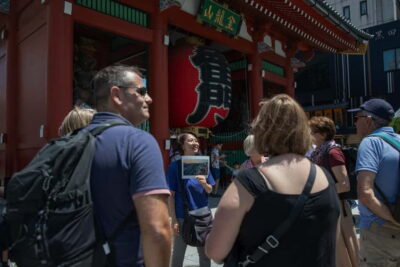 ★ 4.8Tokyo: Asakusa Walking Tour with Sensoji Temple VisitFrom $222 hours
 ★ 4.9Tokyo: Tsukiji Fish Market Guided Walking TourFrom $222 hours