
Reviewed · CRAFT WORKSHOPS
Calligraphy Culture SHODO Experience in Tokyo
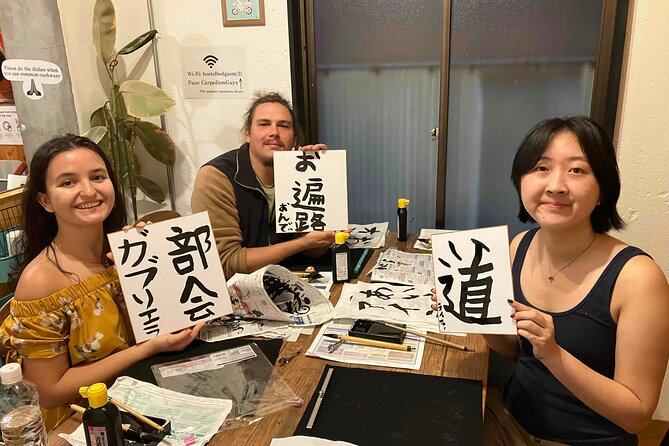
Japanese calligraphy turns a simple souvenir into something you make yourself. In this 90-minute class near Iriya Station, you practice brush control, learn how hiragana, katakana, and kanji differ, then write your name or favorite word on a board to take home. The small group size makes the lesson feel personal.
I like the patient teaching style reported for Sachie and Zuisen, both of whom can explain the art in English. I also like the practical result: you do not just watch a demonstration, you leave with your own calligraphy and a better sense of how Japanese writing works.
The main point to consider is the setting. The class takes place in a hostel, sometimes in a shared kitchen area, and one account describes interruptions from people cooking and doing laundry. If you need a quiet studio, this may feel informal rather than polished.
In This Review
- Key points at a glance
- What this Tokyo calligraphy class is really about
- The first strokes: posture, brush handling, and basic lines
- Hiragana, katakana, and kanji in one short lesson
- Creating the final autograph board
- The hostel classroom: friendly, but not perfectly quiet
- How much value do you get for $33.03?
- Who will enjoy the 90-minute format?
- Planning your visit around Iriya, Ueno, and Asakusa
- Cancellation and other practical points
- Should you book Tokyo Iriya Shodo Club?
- FAQ
- Where does the calligraphy experience take place?
- How far is the meeting point from Iriya Station?
- How long does the experience last?
- How many people can join the class?
- What will I learn during the lesson?
- Can I write my own name?
- Are calligraphy supplies included?
- Can I cancel for a full refund?
Key points at a glance
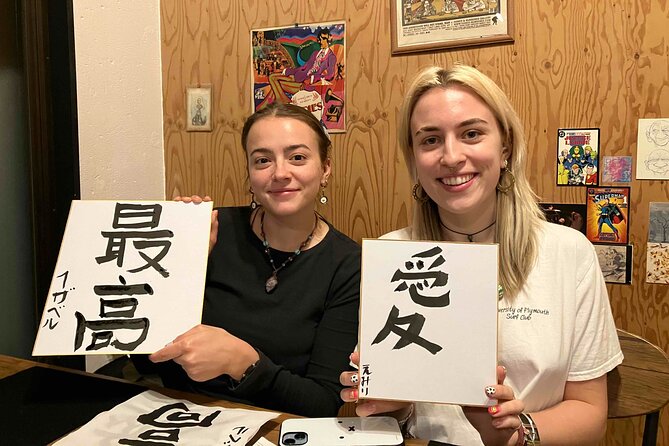
- Write your own name or favorite word: You can try Japanese writing that has personal meaning, including katakana names and kanji words.
- Small classes of up to five: The limited size gives the teacher time to correct your brush position and stroke technique.
- Teachers Sachie and Zuisen: Both are praised for clear English, patience, and an easy teaching manner.
- A 90-minute introduction: The class covers posture, brush handling, basic lines, and practice before the final piece.
- Supplies and a keepsake included: You receive the materials needed for the lesson and take home an autograph board with your work.
- Convenient Iriya location: The meeting point is about a five-minute walk from Iriya Station, with Asakusa and Ueno nearby.
What this Tokyo calligraphy class is really about
This is not a formal museum lecture or a long artistic course. It is a hands-on cultural lesson designed for visitors who want to try Japanese calligraphy without committing half a day.
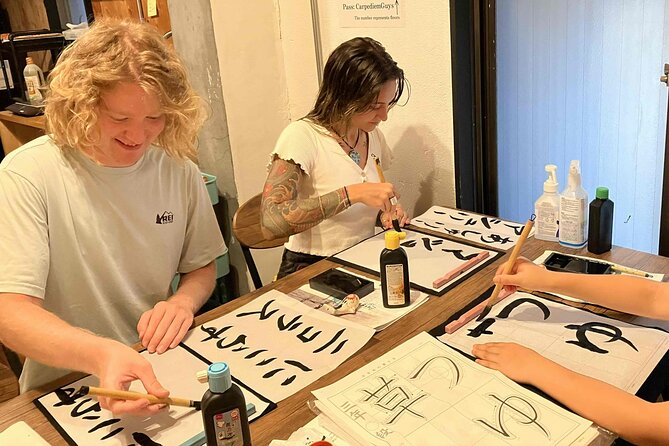
You start with the basics of shodo, the Japanese art of brush writing. That means learning how to hold the brush, how to sit or stand with suitable posture, and how to make clean lines. These details matter because calligraphy is less about drawing a pretty shape and more about controlling pressure, speed, and direction.
You then practice simple forms before moving on to words. The class can include hiragana, katakana, and kanji, three parts of Japanese writing that look and behave differently. That makes the lesson useful even if your final goal is simply writing your name.
The personal choice is important. You may write your name in Japanese, try a favorite word, or attempt a more complicated term. One participant chose knitting, which involves difficult characters. You should not expect perfect brushwork on your first try, but the teacher helps you make the attempt manageable.
A few more Tokyo tours and experiences worth a look

The first strokes: posture, brush handling, and basic lines
The opening section gives you the tools needed for the rest of the class. You learn how to hold the brush, position your body, and draw basic lines rather than immediately trying to copy a full character.
That slow start is a good thing. A visitor unfamiliar with Japanese calligraphy may assume the art is just careful handwriting. The early exercises show why it is different. A line can change depending on how much pressure you use and how quickly you move the brush.
This is also where a small group earns its keep. With a maximum of five people, the instructor has a better chance to notice if your grip is awkward or if your posture is making the brush harder to control. One booking had only a single student, which turned the lesson into a personal class. Group size can vary, but the stated limit is reassuring.
Sachie is described as friendly, patient, and keen to share the art. Zuisen is also praised for clear English and calm instruction. Those qualities matter more here than a long academic lecture. You need someone who can explain an unfamiliar technique, watch your attempts, and offer simple corrections without making the class feel like a test.
Hiragana, katakana, and kanji in one short lesson
A useful part of the class is the chance to see the difference between Japanese writing systems. Hiragana and katakana are syllabic scripts, while kanji characters carry individual meanings and can require more complex strokes.
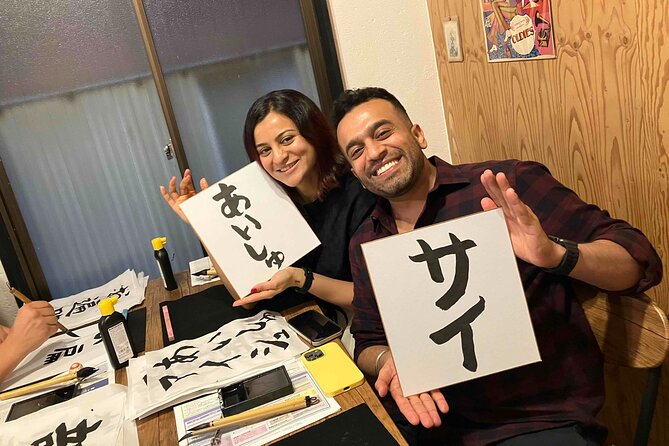
For a name written in a foreign language, katakana is often the practical choice. One participant wrote a name in katakana calligraphy and found that Google Translate recognized it. That is a small but satisfying test of whether your finished work is readable.
Kanji gives you a different kind of souvenir. You can choose a favorite word, but it is worth asking the teacher about the meaning and appropriate character before you begin. A word that looks attractive may have several possible translations, and a teacher can help you avoid taking home a character with an unintended meaning.
Do not judge the experience only by the final appearance. The class is also a short lesson in how Japanese writing is built. You see that characters have an order and rhythm, not just a fixed outline to trace.
Creating the final autograph board
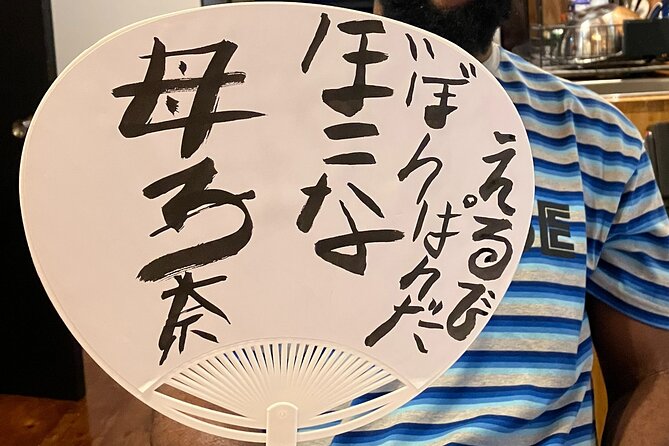
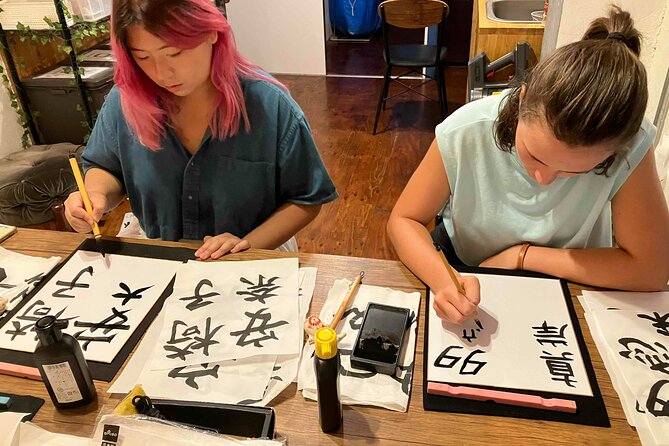
After practice, you select the word or name you want to put on the final board. You then use the techniques from the lesson to create a finished piece on nice cardboard paper or an autograph board.
This is the strongest practical feature of the class. Your souvenir is light, personal, and easy to pack. It also has a story attached to it: you learned the basic strokes, struggled through practice, and produced the final work yourself.
Expect the result to look like a beginner’s work, not a master’s scroll. That is part of the appeal. The teachers can help you produce something presentable, but the board should still feel like your own attempt.
If you are artistic, you may want to keep practicing after the class. One participant joked about becoming an artist but also recognized that more training was needed. That is a fair way to view the lesson. You get the basic tools and a taste of the discipline, not professional-level skill in an hour and a half.
The hostel classroom: friendly, but not perfectly quiet
The meeting point is Tokyo Iriya Shodo Club, at 2-29-2 Iriya, Taito City, Tokyo, on the second floor. It is about a five-minute walk from Iriya Station and close to the Asakusa and Ueno areas.
The location appears to be part of a hostel rather than a dedicated calligraphy studio. That gives the activity a local, lived-in quality. One class was held in a cozy room described as resembling an old Japanese school, while another took place in the hostel kitchen.
This informal setting can work in your favor. You may feel less like you are attending a staged tourist show and more like you have been welcomed into a working local space. It also makes the class easy to pair with time in Taito, where you can continue exploring after the lesson.
There is a tradeoff. A shared area can bring background activity. One account describes people cooking, washing clothes, and interrupting the class. That does not appear to be the normal focus of the experience, but it is a real possibility you should weigh if a quiet environment is important to you.
The meeting point may be inside the hostel, so allow a moment to find the right entrance and ask inside if needed. The activity ends where it begins, which keeps the transport plan simple.




How much value do you get for $33.03?
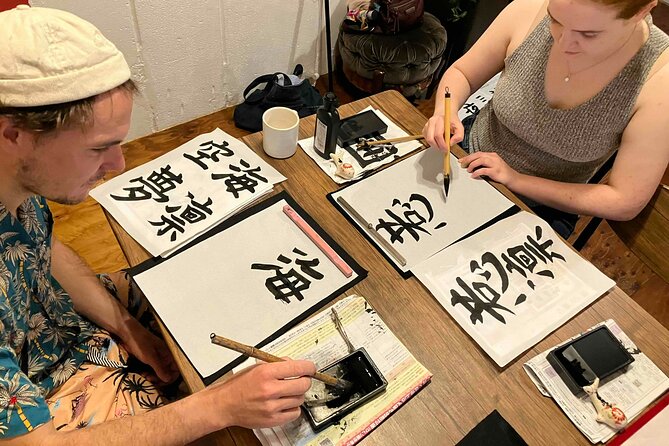
At $33.03 per person, this is reasonably priced for a guided cultural activity in central Tokyo. The fee includes calligraphy supplies, instruction, and the finished board you take home.
The value comes from the personal teaching rather than the number of sights covered. You are paying for a compact lesson with a teacher who can explain the writing systems and adjust the activity to your level. A basic demonstration without guidance would cost less, but it would not give you the same chance to produce a meaningful piece.
The maximum group size of five also helps the price feel fair. If the class is full, you are still in a small workshop rather than a large demonstration. If you happen to book a quieter session, you may receive much more individual attention, as one solo participant did.
I would compare this price with what you want from your souvenir. If you are looking for a quick, personal object connected to Japanese culture, the fee makes sense. If you want advanced calligraphy training, a formal studio, or a long artistic session, you may find the class too short and too casual.
Who will enjoy the 90-minute format?
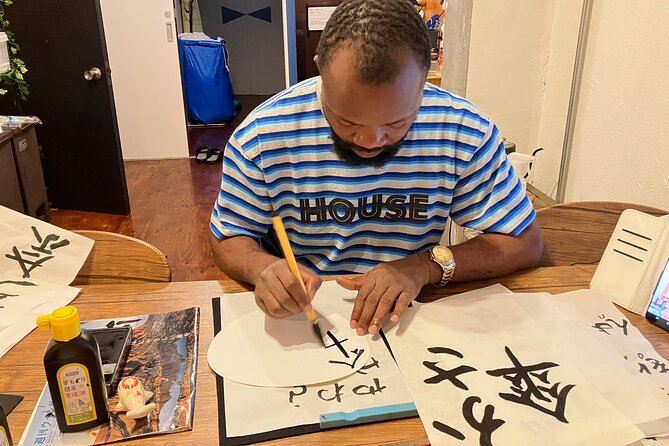
This experience suits first-time visitors who want a cultural activity that is easy to fit into a Tokyo schedule. Ninety minutes is long enough to learn the method and finish a board, but short enough to combine with sightseeing in Taito.
Families can also make good use of it. A family group enjoyed the class with Sachie, and the final boards give each person a separate result rather than one shared souvenir. Children may need help with brush control, but the lesson is built around practice and participation.
It is also a good choice for solo visitors. Small classes allow you to receive individual instruction, and a solo booking can turn into a private-feeling lesson if no one else has booked that time.
You should book with realistic expectations if your handwriting is not artistic. The class is designed to teach and encourage you, not to guarantee a flawless piece. The teachers are described as patient, including with students who consider themselves poor at art, which makes the experience less intimidating.
Planning your visit around Iriya, Ueno, and Asakusa
The Iriya location gives you useful options before or after class. You can plan the calligraphy session as a break from sightseeing, then continue through Taito toward Ueno or Asakusa.
Because the class begins and ends at the same meeting point, you do not need to arrange a second pickup location. The mobile ticket is convenient, and booking confirmation is provided at the time of booking.
The activity is near public transportation, with Iriya Station about a five-minute walk away. That makes it a practical choice if you do not want an experience that requires a long trip outside central Tokyo.
The exact schedule is not provided here, so check your selected start time carefully and use Tokyo local time for planning. You should also leave enough time to identify the hostel entrance and reach the second-floor meeting point without rushing.
Cancellation and other practical points
Free cancellation is available if you cancel at least 24 hours before the start time. Cancellations made less than 24 hours before the experience are not refunded, and changes inside that window are not accepted.
The activity is suitable for most people, and the group is limited to five. Calligraphy supplies are included, so you do not need to bring your own brush or ink. The main thing to prepare is a little patience. Brush writing feels unfamiliar at first, and your early practice lines may not look much like the teacher’s.
The class has a 4.9 rating from 66 reviews, with 97 percent recommending it. Those figures fit the strongest pattern here: warm, patient instruction and a finished piece that feels personal. They do not erase the possible noise of the hostel setting, so keep that one limitation in mind.
Should you book Tokyo Iriya Shodo Club?
I would book this class if you want to make a small Japanese souvenir rather than buy one. The combination of patient English-speaking teachers, a group capped at five, included materials, and a final autograph board gives you a lot for a 90-minute activity.
Choose it especially if you are staying near Ueno, Asakusa, or Iriya, or if you want a calm cultural break between larger Tokyo sights. Sachie and Zuisen appear to be the kind of teachers who make beginners feel comfortable.
I would hesitate only if you need a quiet, purpose-built studio. The hostel setting can include ordinary shared-space noise and interruptions. For most visitors, that is a minor imperfection in an otherwise friendly and hands-on introduction to Japanese calligraphy.
FAQ
Where does the calligraphy experience take place?
It takes place at Tokyo Iriya Shodo Club at 2-29-2 Iriya, Taito City, Tokyo, on the second floor.
How far is the meeting point from Iriya Station?
The meeting point is about a five-minute walk from Iriya Station.
How long does the experience last?
The activity lasts approximately 1 hour and 30 minutes.
How many people can join the class?
The maximum group size is five people.
What will I learn during the lesson?
You will learn basic calligraphy skills such as brush handling, posture, and drawing lines. You will also practice Japanese writing and may work with hiragana, katakana, and kanji.
Can I write my own name?
Yes. You can write your name in Japanese or choose a favorite word in kanji.
Are calligraphy supplies included?
Yes. Calligraphy supplies are included in the experience.
Can I cancel for a full refund?
Yes, if you cancel at least 24 hours before the experience start time. Cancellations or changes made less than 24 hours before the start time are not accepted for a refund.
More Craft Workshops in Tokyo

More tours in Tokyo we've reviewed




Craft Workshops, compared.
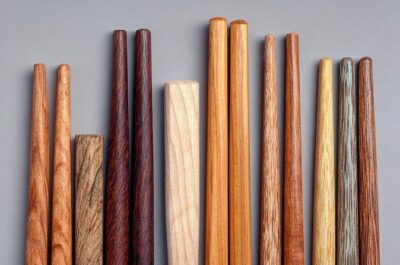 ★ 5.0Tokyo Shinjuku Chopsticks Making ClassFrom $20
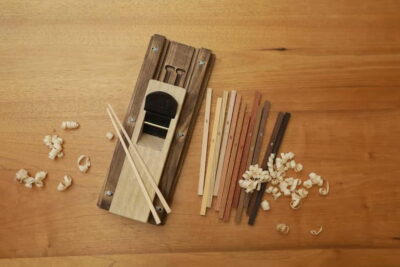 ★ 4.8Chopstick Making Workshop in GinzaFrom $251 hour
 ★ 5.0Kintsugi Experience: Art of Golden Joinery in TokyoFrom $59
 ★ 5.0Tokyo Chopstick Making Workshop with ArtisanFrom $26
Tokyo: Shinjuku Chopstick Making ClassFrom $121 hour
Tokyo: Chopstick-Making WorkshopFrom $61 hour
★ 5.0Tokyo Chopstick Making Workshop with ArtisanFrom $26
Tokyo: Shinjuku Chopstick Making ClassFrom $121 hour
Tokyo: Chopstick-Making WorkshopFrom $61 hour