
Reviewed · WALKING TOURS
Private Customizable Walking Tour of Tokyo
Tokyo is easier to understand when you can connect its very different districts in one day. This private tour lets you cross Shibuya, visit Meiji Jingu, browse Asakusa, learn the subway, or focus on food and local neighborhoods instead of following a fixed route. Your guide meets you at your hotel, then helps shape the day around your pace and interests.
I like the freedom to choose a half-day or full-day outing, and I like that the guide can help you buy the right travel pass and show you how Tokyo’s subway works. Guides including Paiva, Laura, and Miko have tailored outings for families, rainy-day plans, first visits, food needs, tea service, and even an extra boat ride. The catch is that the $202.18 per-person price does not include subway fares, food, drinks, or tickets for observation decks, and a four-hour tour cannot cover all of Tokyo.
In This Review
- Key points to know before booking
- A private Tokyo day built around your interests
- Shibuya, Harajuku, and Meiji Jingu in one western Tokyo route
- Shinjuku for neon, towers, and a citywide view
- Asakusa and Senso-ji, Tokyo’s traditional center
- Akihabara for anime, games, and electronics
- Marunouchi, Nihonbashi, and the Imperial Palace East Gardens
- Tsukiji, Yanaka, and Tokyo’s quieter side
- Choosing between Tokyo Tower, Skytree, and Shibuya Sky
- How the subway changes the value of the tour
- Price, group size, and who gets good value
- What the guides can add to your first day
- Timing, weather, and booking cautions
- Should you book this private Tokyo walking tour?
- FAQ
- Is this tour private?
- How long does the tour last?
- Does hotel pickup include private transportation?
- Are subway fares included?
- Are children free?
- Are Tokyo Skytree, Tokyo Tower, and Shibuya Sky included?
Key points to know before booking
- Hotel pickup still means a walking tour: You meet at your hotel, but travel between districts is by subway and on foot, not by private vehicle.
- You choose the route: Select from places such as Shibuya, Asakusa, Tsukiji, Yanaka, Akihabara, the Imperial Palace area, or Tokyo’s observation decks.
- The subway lesson is part of the value: Your guide can help you purchase a day pass and make the city’s transport system less daunting.
- Children 11 and under go free: You must tell the operator they are joining the tour.
- Paid viewpoints cost extra: Tokyo Skytree, Tokyo Tower, and Shibuya Sky require additional admission if added to your plan.
- You need to set priorities: The suggested stops range from 20 to 45 minutes, but the complete list is far too large for one normal outing.
A private Tokyo day built around your interests
The best reason to book this tour is not the number of sights. It is the chance to make sensible choices.
Tokyo can pull you in ten directions at once. A first-time visitor may want Shibuya Crossing, Meiji Jingu, Senso-ji, Tsukiji, and a high view. A family may prefer Harajuku, Akihabara, and stops for food. Someone returning to Tokyo may want Yanaka, Nihonbashi, or the Imperial Palace East Gardens.
A private guide can adjust the balance. You can ask for temples, modern architecture, shopping, anime, traditional crafts, local food, or a broad introduction to the city. The outing lasts about four to eight hours, so the length matters. A half day works best with one part of Tokyo, while a full day gives you room to connect several districts by subway.
The guide also explains what you are seeing. That matters in Tokyo, where a quiet shrine may sit minutes from a giant fashion street and an old market may be surrounded by high-rise offices. You get context instead of simply collecting photographs.
Other walking tours we've reviewed in Tokyo

Shibuya, Harajuku, and Meiji Jingu in one western Tokyo route
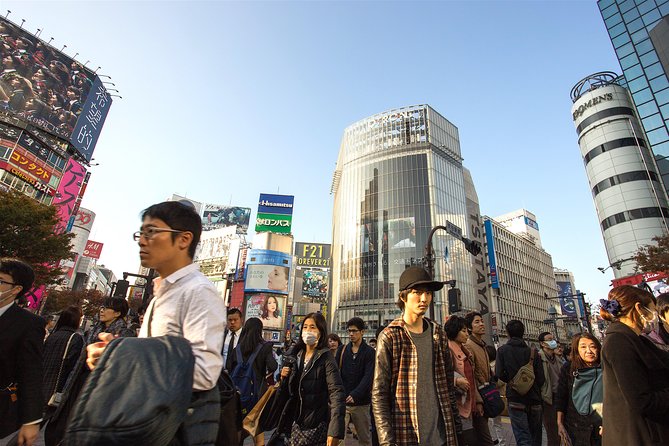
Shibuya is the obvious place to begin if you want Tokyo at full volume. You can cross Shibuya Crossing with the crowds, then see the bronze statue of Hachikō, the loyal dog remembered near the station. The stop is listed at about 30 minutes, so expect a quick introduction rather than a long shopping session.
Your guide can explain how the area became a center of fashion and modern city life. You will also get help with the practical side of the crossing, station area, and nearby streets, which can feel confusing on a first visit.
Harajuku changes the mood. Its backstreets are linked with youth fashion, street art, unusual cafes, animal cafes, and colorful food. The appeal is visual and social, but it can also be crowded and commercial. If you want to shop or pause for a snack, tell your guide early, since a short scheduled stop will not allow much browsing.
Right beside Harajuku is Meiji Jingu, set in a large forested area of about 700,000 square meters. This is where the guide can introduce Shinto practices and the role of a shrine in Japanese life. The contrast is the point: one moment you are among shops and bright youth style, and the next you are walking through a quiet wooded approach.
I would choose this trio for a first morning in Tokyo, especially if you want modern culture and traditional religion in the same part of the city. It is also a sensible pick for families, though the guide will need to keep the shrine portion active for younger children.
Shinjuku for neon, towers, and a citywide view
Shinjuku is Tokyo’s great entertainment district, filled with tall buildings, bright signs, restaurants, and late-night energy. The proposed stop lasts about 30 minutes, which is enough for an orientation walk but not a full evening out.
The Tokyo Metropolitan Government Building is a useful viewpoint because its observatory on the 45th floor offers a broad look over the metropolitan area. The information describes admission to the listed stops as free, but paid observation decks such as Tokyo Skytree, Tokyo Tower, and Shibuya Sky are separate additions. Confirm exactly which viewpoint your guide plans to use before you set your budget.
Shinjuku works well for visitors who want modern Tokyo rather than temples and markets. It may be less satisfying if you want a slow neighborhood walk, since the district’s appeal comes from scale, signs, movement, and architecture.
Asakusa and Senso-ji, Tokyo’s traditional center
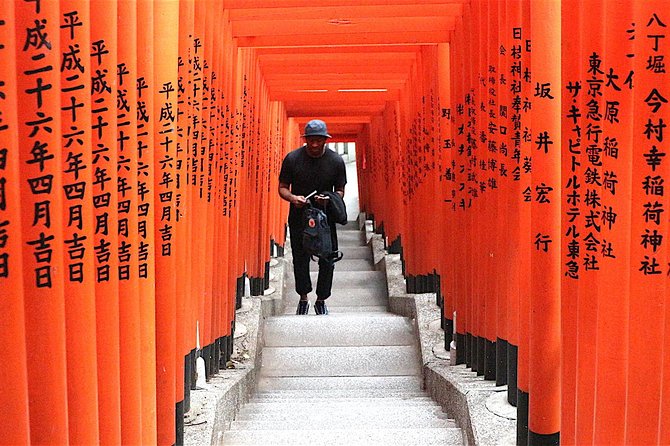
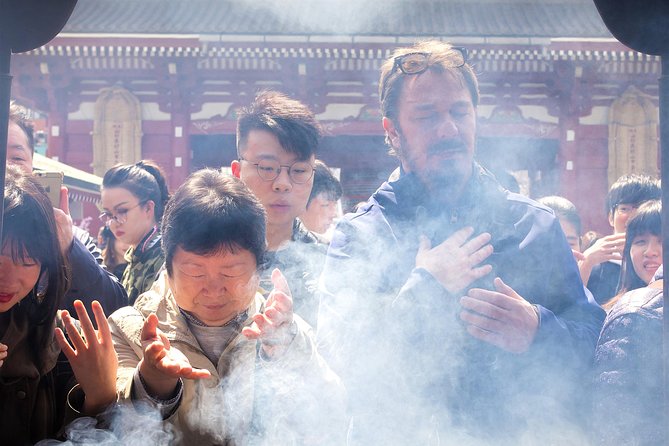
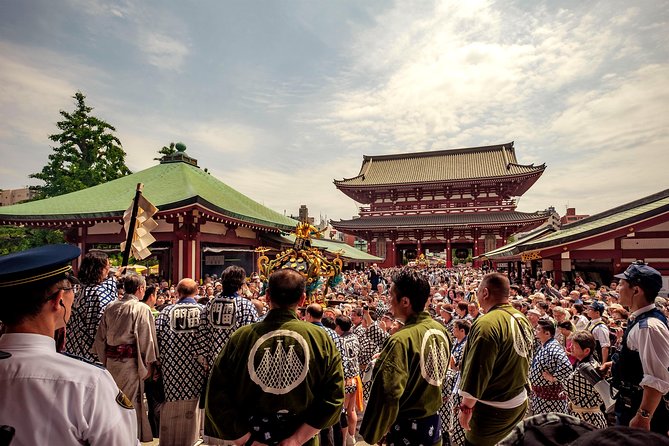
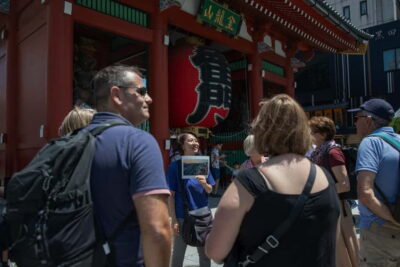
Asakusa gives you a very different Tokyo. It is described as the old center of the city, with traditional craft shops and the approach to Senso-ji, Tokyo’s oldest temple, dating to 628.
Nakamise Shopping Street runs about 250 meters toward the temple. It is a useful place for souvenirs and traditional snacks, though you should remember that a shop-lined approach is still a shopping street. Ask your guide to point out items with a clear connection to local crafts and customs rather than rushing through every stall.
At Senso-ji, your guide can explain Buddhist customs and the temple’s place in Tokyo. The listed visit is about 30 minutes, while the wider Asakusa stop is about 45 minutes. That gives you enough time for a quick look, but not necessarily a leisurely temple visit and extended shopping.
This is one of the strongest choices for a first visit. It gives you a recognizable temple, an older street pattern, and a chance to buy something more meaningful than a generic city souvenir.
Akihabara for anime, games, and electronics
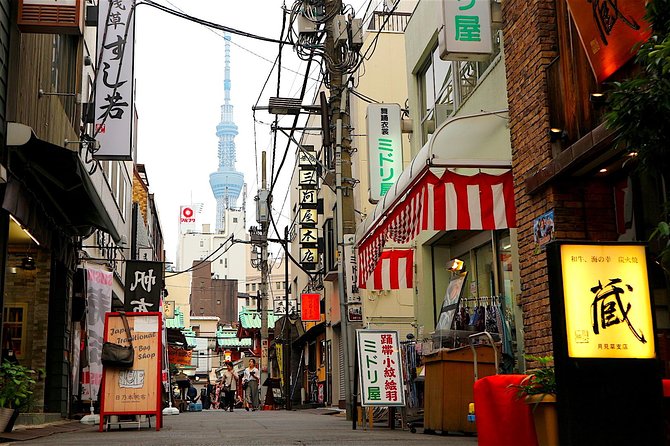
Akihabara is Tokyo’s center for anime, manga, video games, and electronics. The suggested stop is only about 20 minutes, so think of it as a first look at the district’s visual overload rather than a serious shopping trip.
This stop suits you if you already have a clear interest in Japanese pop culture. It can also be a useful family choice, especially when children need a change from shrines and formal gardens. If you want to browse stores, compare electronics, or search for a particular character or game, ask for more time and reduce the number of other stops.
The private format helps here. Your guide can adjust the pace based on your interests rather than giving everyone the same quick walk through the area.
Other private tours in Tokyo



Marunouchi, Nihonbashi, and the Imperial Palace East Gardens
Marunouchi surrounds the Imperial Palace and shows Tokyo’s polished business side. The route can include Tokyo International Forum, Tokyo Station, and the nearby KITTE building, with about 30 minutes for the area.
This is a good choice if you enjoy architecture, design, and the contrast between old imperial space and modern office towers. It is also convenient for a central orientation because Tokyo Station is one of the city’s major transport points.
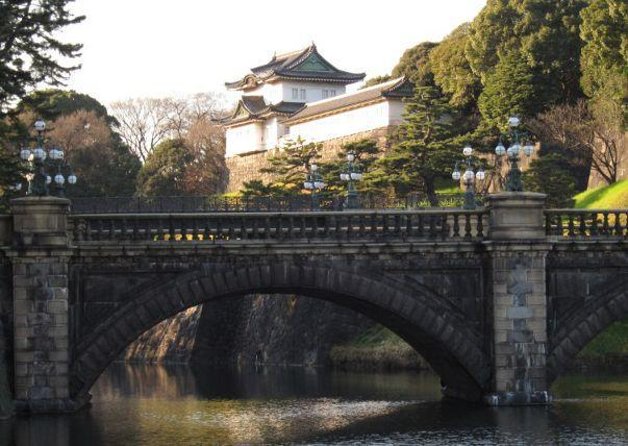
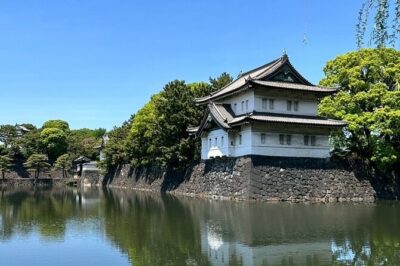
The East Gardens of the Imperial Palace offer a slower look at the remains of Edo Castle. You can see sections of moat walls and other remnants while learning how Tokyo developed from the Edo-period capital. The suggested visit is about 30 minutes.
One practical point matters here: a family outing began near the palace gardens, but the guide did not ask whether the family wanted to enter, and they did not realize it was an option. If the gardens interest you, say so clearly at the beginning. A private tour works best when you state your priorities, not when you wait for every option to be offered.
Nihonbashi gives you another link to the Edo period, from 1603 to 1868. It was the original center of trade and commerce, and the area still has traditional food and craft shops. The guide can explain the foundations of Japanese cooking, making this a smart selection for anyone who cares more about food culture than department stores.
Tsukiji, Yanaka, and Tokyo’s quieter side
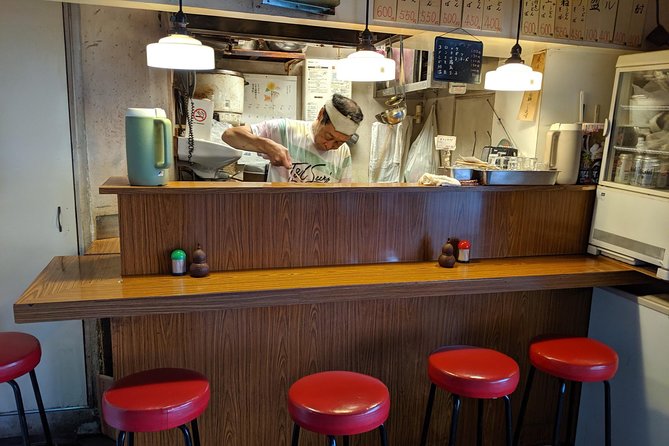
Tsukiji is no longer home to the main wholesale fish market or the famous tuna auction. Those operations moved to Toyosu, but the outer market remains, with fresh fish and food stalls.
That distinction is important. If you expect to see the old inner market in operation, you will be disappointed. If you want to sample the atmosphere, inspect food shops, and learn how the market fits into Tokyo’s cooking culture, the 30-minute stop can still be worthwhile. Food and drinks are not included, so budget separately for anything you taste.
Yanaka offers a more nostalgic downtown setting, with many temples, sweets, and a tea house where you can experience a traditional tea ceremony. A cemetery walk can also introduce Japanese customs around remembrance and community.
I would choose Yanaka over another major viewpoint if you have already seen Tokyo’s famous skyline and want a calmer district. A tea service can be added to the day, as can a boat ride, but confirm the extra cost and timing before finalizing your route.
Choosing between Tokyo Tower, Skytree, and Shibuya Sky
Tokyo has no shortage of places to look down on itself. Tokyo Skytree reaches 634 meters and is the tallest tower described for this experience. Tokyo Tower is the older symbol of Japan’s postwar economic rise. Shibuya Sky offers a 360-degree view from above the Shibuya district.
All three require added tickets. They also consume time, especially once subway travel and queues are considered. I would choose one rather than trying to fit in several.
Pick Skytree if the height itself appeals to you. Choose Tokyo Tower if you want a famous symbol with a clear connection to postwar Japan. Choose Shibuya Sky if you want the view tied to the crossing and the modern city around it.
A private guide can help with the route, but the guide cannot make a short day cover every major attraction. Treat a paid viewpoint as the main event for that part of the day, not as a quick extra squeezed between temples.
How the subway changes the value of the tour
Hotel pickup sounds like a car service, but this is a walking tour that uses Tokyo’s subway. You pay your own public transportation costs, and the guide can help you purchase a travel pass for the day.
That arrangement is useful. You learn how to move around Tokyo instead of being carried between sights. One visitor used the tour to gain confidence with the transport system, which can pay off for the rest of your trip.
There is also a tradeoff. Subway transfers and walking take time, and stations can be large. A route that looks simple on a map may feel tiring when you add stairs, platforms, and crowded corridors. Tell the guide about mobility concerns, food needs, or children’s limits before the route is set. Most people can participate, and service animals are allowed, but the tour remains an active day on foot.
Price, group size, and who gets good value
The price is $202.18 per person. Children aged 11 and under are free when included in the booking, and group discounts are available.
For one person, the cost is high compared with a standard group walk. The value improves when several people share a private guide and make good use of the customization. A couple on a first day in Tokyo may find the orientation useful, especially if they want help with food, temples, and transportation all at once.
Families may get particularly good value because children go free and the guide can adjust the pace. The experience also suits mixed-interest groups. One person can focus on shrines, another on food, and another on anime or city views, though you still need to agree on a manageable plan.
The price does not cover meals, drinks, subway fares, or paid observation decks. Add those costs before deciding. The strongest value comes from using the guide to understand Tokyo, not from trying to visit the largest possible number of places.
What the guides can add to your first day
The guides named in the provided information include Paiva, Laura, and Miko. Paiva has handled family needs and rainy conditions, while Laura helped a couple find places for food and drinks on their first day in Japan. Miko accompanied first-time visitors through the fish market, a tea house, temples, and the transport system.
These details point to the tour’s real strength: adjustment. The guide can alter the day when rain arrives, children lose interest, or your group wants more food and less architecture. An extra boat ride and tea service have also been included in some customized plans.
Do not leave the whole plan vague. Before the tour begins, name two or three must-sees, one food preference, and anything you do not want. That gives the guide a useful framework and reduces the risk of rushing past something important, such as the Imperial Palace gardens.
Timing, weather, and booking cautions
The experience lasts approximately four to eight hours. Since each listed stop takes about 20 to 45 minutes, the full menu is a list of possibilities, not a promise that you will visit all 15 places.
The tour requires good weather. If poor weather causes cancellation, you are offered another date or a full refund. The supplied booking information gives two different cancellation descriptions: one offers partial or full refunds based on how early you cancel, while another says the experience is non-refundable and cannot be changed. Confirm the current rule before paying, especially if your schedule is fixed.
Confirmation is received at booking. Pickup and drop-off are included, but your actual movement during the day is by subway and on foot.
Should you book this private Tokyo walking tour?
Book it if you want a personal introduction to Tokyo, need help with the subway, are traveling with children, or have a group with different interests. It is especially useful on your first day, when a guide can help you learn the city’s rhythm and point you toward food and districts you can revisit alone.
Skip it if you prefer to explore independently, want a vehicle between sights, or expect to see every major attraction in one day. You will need to pay for transit and optional tickets, and the private price only makes sense if you value advice, flexibility, and time saved.
For the best result, choose a half day for one area, or a full day built around three or four priorities. Tell the guide plainly what matters to you. That is how this tour changes from a checklist of Tokyo sights into a useful first chapter of your Japan trip.
FAQ
Is this tour private?
Yes. Only your group participates in the activity.
How long does the tour last?
You can choose an outing of approximately four to eight hours, depending on the plan you arrange.
Does hotel pickup include private transportation?
No. The guide meets you at your hotel, but this remains a walking tour. You travel between districts by subway and on foot.
Are subway fares included?
No. Public transportation costs are separate, and you need to purchase your own travel pass or tickets.
Are children free?
Children aged 11 and under are free of charge. You need to tell the operator that they are joining the tour.
Are Tokyo Skytree, Tokyo Tower, and Shibuya Sky included?
No. Tickets for these observation decks can be added to the tour, but admission is not included in the base experience.
More Private Tours in Tokyo
More Walking Tours in Tokyo


More tours in Tokyo we've reviewed


Walking Tours, compared.
 ★ 5.0Tokyo Tsukiji Fish Market Food and Culture Walking TourFrom $99
 ★ 5.0Tokyo: Imperial Palace and Shogun Historical Walking TourFrom $22
 ★ 4.9Tokyo: Shinjuku Local Bar and Izakaya Guided Walking TourFrom $343 hours
 ★ 5.0Tokyo: Tsukiji Fish Market Food and Walking tourFrom $30
 ★ 4.8Tokyo: Asakusa Walking Tour with Sensoji Temple VisitFrom $222 hours
 ★ 4.9Tokyo: Tsukiji Fish Market Guided Walking TourFrom $222 hours