
Reviewed · TOKYO FOOD TOURS
Tokyo: Asakusa Guided Food Tour with 12 Dishes & 3 Drinks
Asakusa’s best food lesson may be a moving one. This three-hour walk takes you from an old-downtown favorite serving monjayaki to a Japanese izakaya, a sake bar, Hoppy Street, and a fish-shaped waffle for dessert. You get 12 dishes and three drinks, so come hungry.
I like the broad menu, especially the mix of familiar food such as yakisoba with less obvious stops such as monjayaki and conbini ice cream. I also like the chance to sample sake from different parts of Japan in a bar that locals enjoy. The main consideration is that this is an English-only tour, and extra food or drinks require cash.
In This Review
- Key points at a glance
- Why this Asakusa food walk works well
- Meeting at Kaminarimon and starting in Asakusa
- Monjayaki and the flavors of old Tokyo
- An izakaya meal with three included drinks
- Hoppy Street and Asakusa’s drinking culture
- Conbini ice cream and the fish-shaped finale
- Is $82 a fair price?
- Who should book this food tour?
- Should you book the Asakusa food tour?
- FAQ
- Where does the Asakusa food tour meet?
- How long does the tour last?
- How many dishes and drinks are included?
- Is the tour conducted in English?
- Can people under 20 join?
- Are hotel pickup and drop-off included?
- Is the tour wheelchair accessible?
Key points at a glance
- Twelve dishes in three hours: The tasting list covers old-Tokyo comfort food, sweets, noodles, and snacks rather than one narrow style of Japanese cooking.
- Monjayaki in Asakusa: Try the savory pancake often linked with Tokyo’s old downtown neighborhoods.
- Three drinks included: The tour includes drinks, with sake featured at a bar offering selections from around Japan.
- Hoppy Street on foot: The walk gives you a look at one of Asakusa’s best-known drinking areas between food stops.
- A fish-shaped waffle to finish: Dessert comes in the form of a taiyaki-style waffle, a fun final bite after a substantial meal.
- Guide Rie received special praise: A verified booking specifically called Rie a fantastic guide, useful encouragement if she is leading your departure.
Why this Asakusa food walk works well
Asakusa is an easy place to enjoy on foot, but its food culture can be hard to read at first. A small shop may specialize in one dish, a standing bar may work best at a particular time, and a menu can offer items you have never seen before. This tour gives you a guide at your side while you sample a wide range of food.
The format is especially useful for a first visit to Japan. You do not need to choose between several restaurants, decode every menu, or order a full serving of something you may not like. Instead, you receive 12 recommended dishes in smaller tasting portions or shared servings, depending on how the food is served.
The experience also gives you practical Asakusa advice. The advertised focus includes tips for enjoying the district, so you should come away with more than a full stomach. You can ask your guide about the neighborhood, Japanese eating customs, and how to make the most of the area after the tour.
A five-star rating from six bookings gives the experience a strong early record, though the sample is small. Guide Rie is the only guide named in the available feedback, and the specific praise for her is worth noting. Still, the quality of a walking food tour depends on the guide’s pace, explanations, and handling of restaurant timing, so your exact experience may vary by departure.
A few more Tokyo tours and experiences worth a look
Meeting at Kaminarimon and starting in Asakusa
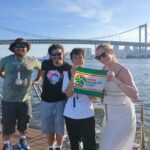
The meeting point is the Kaminarimon Police Box at 1-3-1 Asakusa, in Taito City. Look for a guide holding a sign marked Local Guide Stars. This is a clear landmark, but you should still allow time to find the police box before the scheduled start.
The tour does not include hotel pickup or drop-off. You need to reach Asakusa on your own and return from the neighborhood after the three-hour walk. That arrangement keeps the price focused on food, drinks, and guiding, but it means you should plan your route to the meeting point before the day begins.
Asakusa is one of Tokyo’s most visited districts, so the meeting area can feel busy. Keep the meeting instructions handy, and arrive ready to walk. The tour is wheelchair accessible, but you should tell the operator in advance so restaurant reservations can be adjusted as needed.
Monjayaki and the flavors of old Tokyo
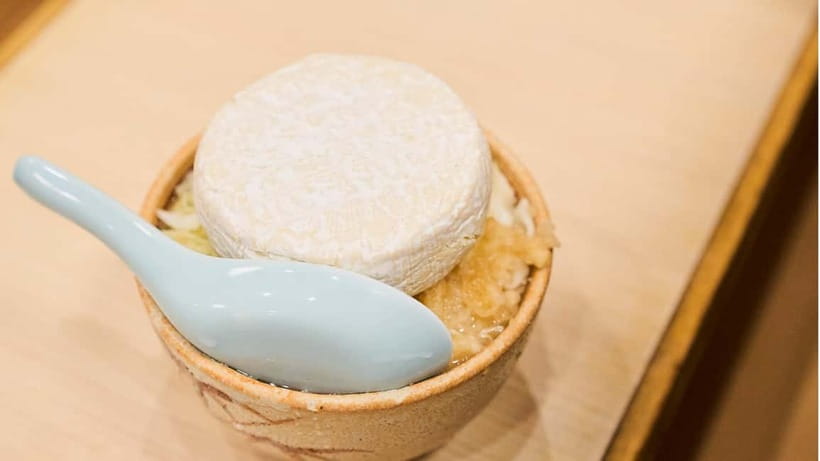
One of the most interesting dishes on the route is monjayaki, a savory pancake associated with old downtown Tokyo. It is related to okonomiyaki, but its texture is much softer and more runny. For many visitors, this is the food they are least likely to order without local help.
That makes it a smart choice for a guided tasting. You can try a dish tied to Tokyo’s working-class food traditions without committing to a large meal. The tour describes it as a soul food of old Tokyo, which gives you useful context for why it matters beyond its ingredients.
Yakisoba adds a more familiar point of reference. These Japanese stir-fried noodles are easy to recognize, but the flavor and preparation still fit the local food setting. Having both monjayaki and yakisoba in the same tasting gives you a simple comparison between two popular, filling dishes.
The food count matters here. You are not stopping for one signature plate and calling it a food tour. The 12-dish format lets you try several tastes, but it also means portions may be designed for sampling rather than for a single large entrée. Even so, the tour warns that you receive a generous amount of food, so eating a large breakfast beforehand would be a mistake.
An izakaya meal with three included drinks
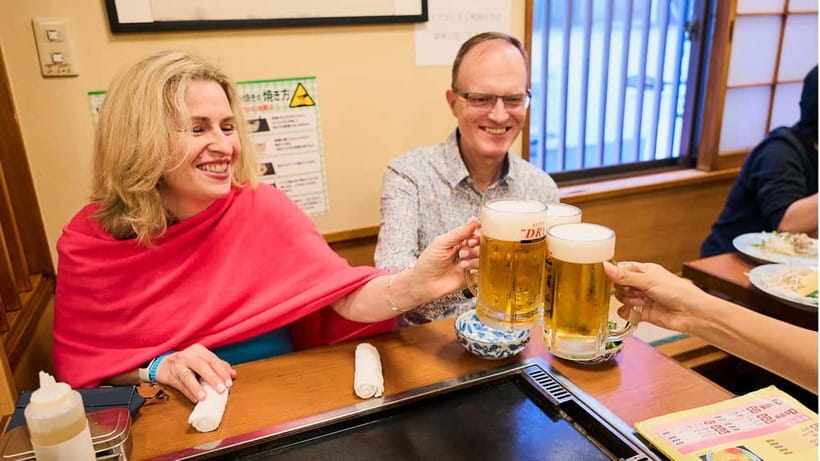
The route includes a Japanese izakaya restaurant described as a local favorite. An izakaya is a casual place where people order several dishes to share with drinks. That setting fits the tour well because you can sample more than one item instead of sitting down to a single course.
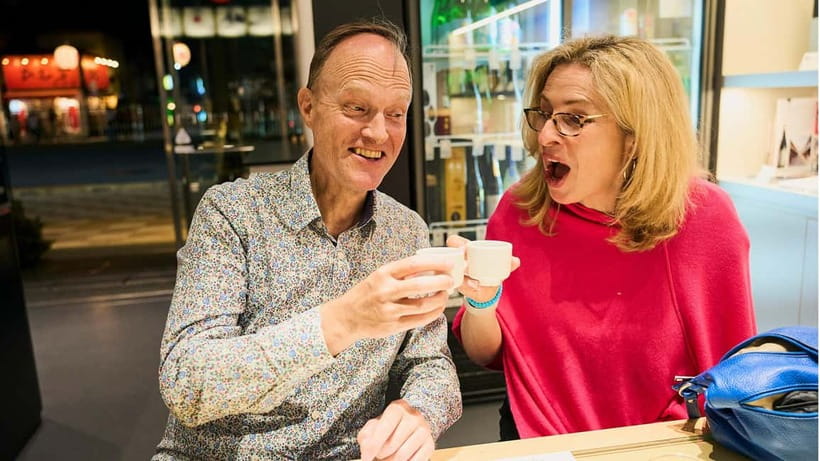
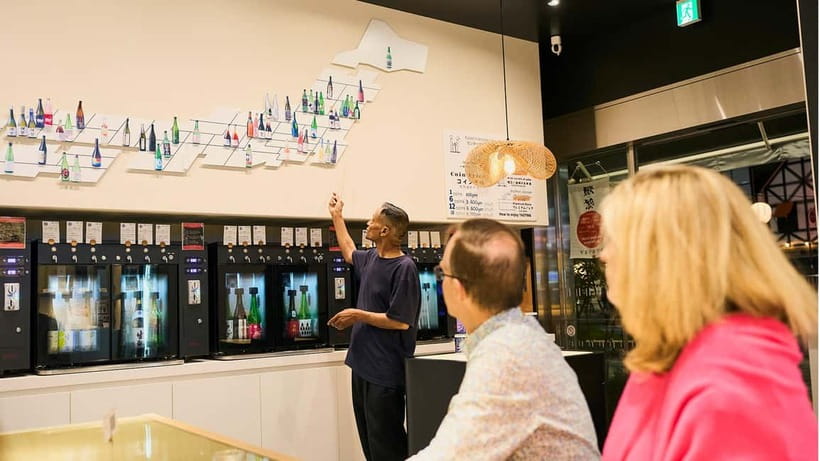
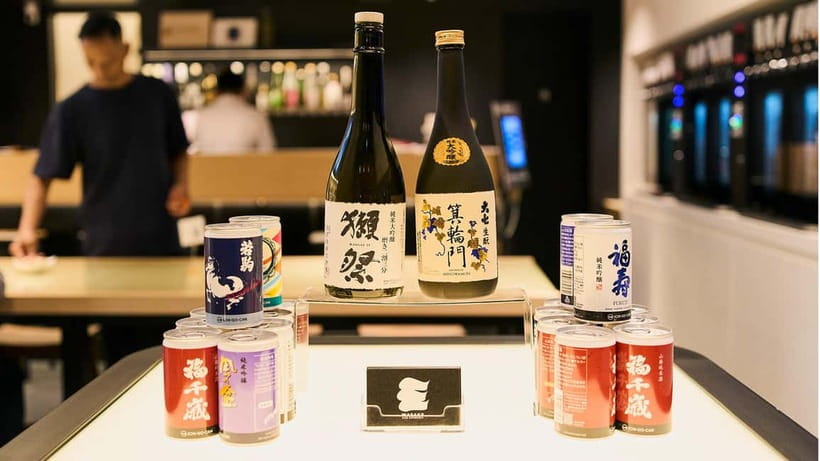
Three drinks are included in the price. Sake is part of the experience, and the tour also visits a sake bar with selections from across Japan. This is a useful introduction if you have only tried one type of sake, since sake can vary in taste and style depending on where it is made.
You should keep your expectations sensible. The information does not specify the exact sake labels, pours, or other two drinks, and restaurant menus can change. The safe assumption is that three drinks are included, while anything additional is your responsibility.
Participants under 20 can join, but they may not drink alcohol. The provided information does not list substitute drinks, so anyone under 20 should confirm the available nonalcoholic option before booking or at the start of the tour. This is also important for adults who do not drink alcohol.
Hoppy Street and Asakusa’s drinking culture
A walk along Hoppy Street adds a neighborhood feel to the food stops. The street is known for casual drinking and inexpensive local-style dining, making it a useful counterpoint to Tokyo’s polished restaurants and department-store food halls.
You are not simply moving between unrelated eateries. The route connects food with place: old-downtown dishes, casual izakaya dining, sake from around Japan, and a street where drinking is part of the local scene. That connection is one reason I think the tour suits someone who wants to understand how people eat socially in Tokyo.
The walk also breaks up the meal. Twelve dishes and three drinks over three hours could feel heavy if you remained seated the entire time. Moving through Asakusa gives you time between tastings and lets your guide add neighborhood tips along the way.
The tradeoff is that the route is not a private restaurant crawl built around long visits at each stop. You are following a set food walk, so you should expect a steady pace and a schedule shaped by restaurant reservations. If you prefer to linger over one meal, this format may feel rushed.
A few more Tokyo tours and experiences worth a look
Conbini ice cream and the fish-shaped finale
The tour includes conbini ice cream, a small but telling part of modern Japanese food culture. Conbini means convenience store, and Japanese convenience stores are known for offering far more than basic snacks. A convenience-store dessert may seem simple, but it shows how everyday food fits into the country’s wider eating habits.
Ending with a fish-shaped waffle gives the tour a more playful finish. This is a taiyaki-style sweet, usually made in a fish-shaped mold. The information does not specify the filling, so you should not assume whether it will be red bean, custard, or another flavor.
Dessert after 12 dishes may sound ambitious, but the fish shape makes it a memorable final stop. It also gives the experience a clear rhythm: savory old-Tokyo food, casual drinks, a neighborhood walk, a convenience-store treat, and a final sweet.
If you have allergies or dietary restrictions, ask before booking. The available details do not list vegetarian, vegan, gluten-free, or allergy-specific substitutions. The operator can adjust restaurant reservations for wheelchair access, but no specific food substitutions are promised.
Is $82 a fair price?

At $82 per person, the tour is not the cheapest way to eat in Asakusa. You are paying for 12 recommended dishes, three drinks, an English-speaking guide, and the convenience of having the route arranged for you.
The value improves if you are new to Japan or uneasy about ordering unfamiliar food. A guide can help explain what you are eating and steer you through places you might otherwise pass by. The included drinks also matter, since a sake tasting and several restaurant stops can add up quickly when booked separately.
The price is less compelling if you already know Asakusa well, speak Japanese, and enjoy choosing restaurants on your own. You may spend less by ordering small dishes independently, though you would give up the organized route and the guide’s explanations.
The tour also saves you from over-ordering. Twelve tastes can seem like a lot, but it lets you try different foods without ordering full plates at every stop. For a short visit, that variety can be worth more than a single restaurant reservation.
Who should book this food tour?
I would recommend this experience to first-time visitors who want a broad introduction to Japanese food in one compact outing. It suits curious eaters who want to try monjayaki, sake, convenience-store ice cream, and other dishes without planning every stop themselves.
It is also a good fit for solo visitors and people who like meeting others while walking and eating. The tour is promoted as a chance to meet fellow people on the route, though no group size is provided. You should expect a shared experience rather than a private guide.
Food-focused couples and small groups may enjoy the mix of eating and walking. The three-hour length fits neatly into a day of sightseeing in Asakusa, especially if you want an organized activity rather than another temple visit.
I would be more cautious if you have strict dietary requirements, dislike alcohol-centered settings, or want a slow, sit-down meal. The tour includes a sake bar and three drinks, and the available information does not guarantee dietary adaptations. Under-20 participants can attend but cannot consume alcohol.
Bring cash even though the tour price covers the listed food and drinks. Any extras must be paid in cash, and that small detail can save you an awkward moment at a bar or restaurant.
Should you book the Asakusa food tour?
Book it if you want a guided first taste of Asakusa and value variety over independence. The strongest reasons are the 12-dish lineup, the old-Tokyo monjayaki, the sake stop, Hoppy Street, and the practical neighborhood tips.
Skip it if you already have a carefully planned food itinerary or want to spend three hours at one restaurant. Also think twice if English-only guiding, alcohol-focused stops, or uncertain dietary options are a problem.
For most first-time visitors who arrive hungry, $82 is a reasonable price for a structured introduction to Asakusa’s everyday food culture. Check who is guiding your departure, and if it is Rie, you have a guide who has received particularly strong praise.
FAQ
Where does the Asakusa food tour meet?
The meeting point is Kaminarimon Police Box at 1-3-1 Asakusa, Taito City, Tokyo. Your guide will hold a sign that says Local Guide Stars.
How long does the tour last?
The guided food walk lasts three hours.
How many dishes and drinks are included?
The tour includes 12 recommended Japanese dishes and three drinks.
Is the tour conducted in English?
Yes. The tour has a live English-speaking guide, and Japanese language support is not available.
Can people under 20 join?
Yes, participants under 20 may join, but they are not permitted to consume alcohol.
Are hotel pickup and drop-off included?
No. You need to make your own way to the Kaminarimon meeting point, and hotel pickup and drop-off are not included.
Is the tour wheelchair accessible?
Yes, the experience is wheelchair accessible. You should inform the operator in advance so restaurant reservations can be adjusted if needed.
More Food Experiences in Tokyo

More Tokyo Food Tours in Tokyo
More Asakusa Tours in Tokyo
More tours in Tokyo we've reviewed











Tokyo Food Tours, compared.
 ★ 5.0Tokyo: Shinjuku Food Tour (13 Dishes at 4 Local Eateries)From $86
 ★ 4.9Tokyo: Shinjuku Food Tour (15 Dishes and 4 Eateries)From $853 hours
 ★ 5.0Best of Shinjuku: Izakaya Food Tour (4 Stops, 14+ Tastings)From $92
 ★ 5.0Tokyo Night Foodie Tour in Shinjuku – Seasonal Sushi, Wagyu BeefFrom $111
 ★ 5.0Eat and Drink Like a Local: Tokyo Ueno Food Tour-Taverns&RamenFrom $95
 ★ 5.0Tokyo: Shibuya Food Tour (13 dishes and 4 Eateries)From $77