
Reviewed · SUMO EXPERIENCES
Official Sumo Tournament Ticket with Guided Experience
Japan’s sumo tournaments combine sport, ceremony, and theater in a way few events can match. This five-hour experience gives you a reserved second-floor seat at Ryogoku Kokugikan, plus a guide who explains the ranking system, rituals, and rules before the bouts begin. I especially like the short introduction at Former Yasuda Garden and the stadium walk, since they help you understand what you are seeing rather than simply watching large men collide. I also like that guides such as George, Cesar, Lily, and Ethan have been praised for answering questions and making the customs easier to follow. The main drawback is the nonrefundable $209 price, along with the fixed tournament dates and the rule that you cannot bring food or drinks into the stadium.
- A real official tournament: Watch Japan’s top wrestlers compete at Ryogoku Kokugikan, Tokyo’s best-known sumo arena.
- A guide before the match: Learn the rules, ranks, rituals, and cultural background before the action gets fast.
- Three hours inside the stadium: The guided portion is short, leaving you plenty of time to enjoy the tournament at your own pace.
- Reserved B or C seating: Your ticket is on the second floor, with the exact class depending on the option selected.
- Small group format: The group can include up to 25 people, large enough for varied questions but still manageable.
- Best during official tournament dates: This is not a daily show, so your Tokyo schedule must match the sumo calendar.
In This Review
- Why live sumo is worth making room for
- Starting beside Former Yasuda Garden
- Walking through Ryogoku Kokugikan
- Three hours of official tournament action
- What you will actually learn
- The value of the $209 price
- Practical rules inside the arena
- Who will enjoy this experience most
- My call on booking
- FAQ
- Where does the sumo experience begin?
- Where does the experience end?
- How long does the experience last?
- How much time is spent watching the tournament?
- What type of seat is included?
- Is a guide included?
- Is food or drink included?
- Can I take photos inside the stadium?
- How large can the group be?
- Can I cancel or change my booking?
Why live sumo is worth making room for
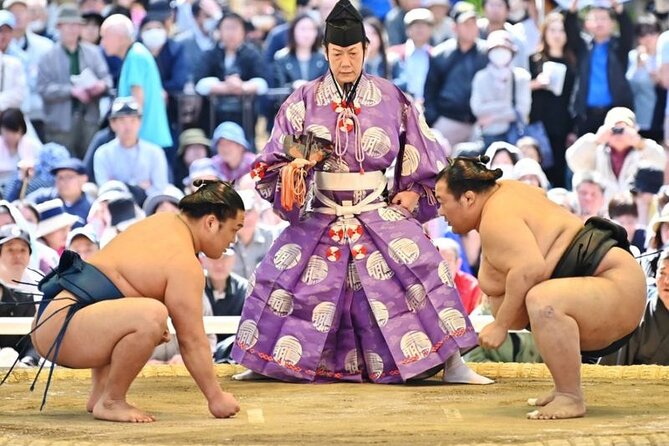
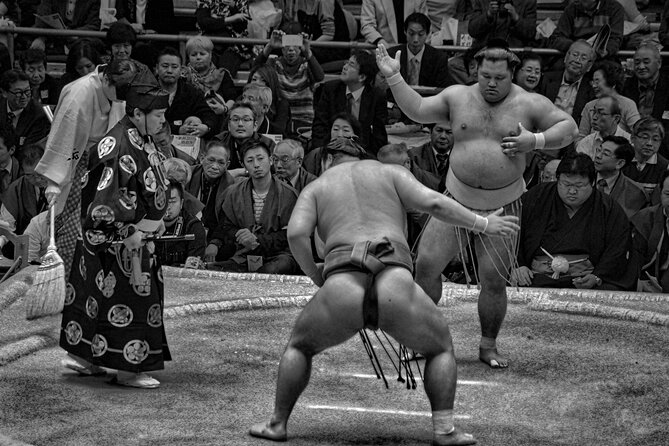
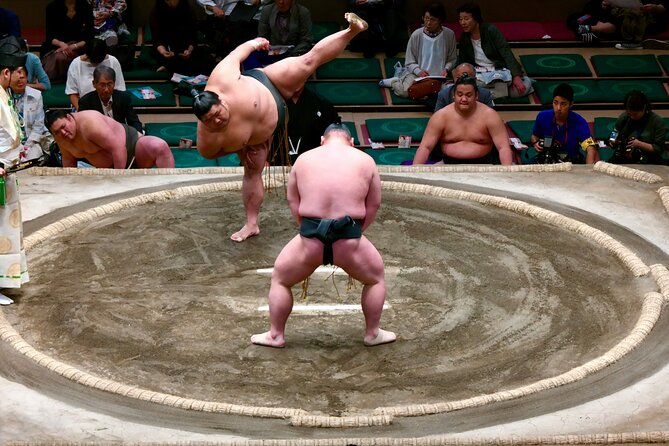
Sumo can look simple at first glance. Two wrestlers enter a circular ring, bow, and try to force one another out or make the other touch the ground. Yet the match is wrapped in gestures, clothing, rankings, movement, and ceremony that give every bout extra meaning.
That is why a guide helps. Without context, you may wonder why so much time passes before the wrestlers actually charge. With an explanation of the rituals and rank system, the pauses become part of the event rather than dead time. You begin to notice the difference between a quick slap attack, a forceful push, and a bout decided by balance.
This outing is also a practical answer to one of Tokyo’s trickier booking problems. Official sumo tournaments take place only on select dates, and tickets can be hard to secure through ordinary booking channels. The price is not small, but it combines entry to the tournament with reserved seating and several hours of guidance.
The supplied score is 4.7 from 19 ratings, with 95 percent recommending the experience. The strongest praise centers on the guides. George is repeatedly described as friendly and helpful, while Cesar receives credit for making the history easier to understand. Lily is praised for her enthusiasm and warmth, and Ethan for keeping the activity organized and informative.
Starting beside Former Yasuda Garden
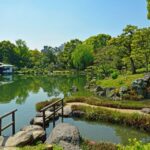
You meet at Former Yasuda Garden in the Yokoami area of Sumida City. The garden provides a quieter opening than the arena itself, giving your group a chance to gather and hear a roughly 30-minute introduction to sumo history.
This first talk matters because sumo is tied closely to Japanese tradition and ceremony. You are not simply being handed a ticket and sent into a sports hall. The guide sets up the basic ideas you will need later, including the importance of rank, the formal behavior around the ring, and the place of sumo in Japanese culture.
The garden stop is also useful for orientation. Ryogoku is Tokyo’s sumo district, and beginning near the arena helps you connect the neighborhood with the sport. Admission to the garden stop is included at no extra cost.
Do not expect a long sightseeing visit here. The garden portion is an introduction, not a full garden tour. If you want extensive details about the site itself, this experience is not designed for that. Its purpose is to prepare you for the tournament.
A few more Tokyo tours and experiences worth a look

Walking through Ryogoku Kokugikan
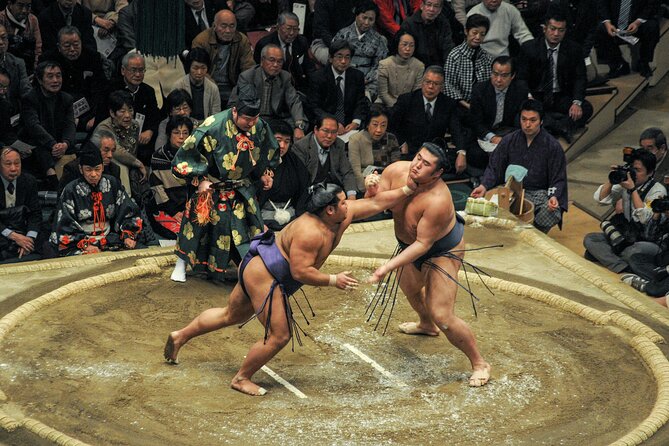
From the garden, you continue to Ryogoku Kokugikan for a guided stadium visit lasting about 30 minutes. This is where the event begins to feel real. The arena is not just a venue for wrestling. It is the setting for a formal display of custom, rank, and controlled power.
Your guide explains the stadium and points out details that are easy to miss when you enter on your own. You learn more about the sport’s traditions, unusual customs, and small facts that give the tournament its character. Guides such as Lily have been especially effective at turning this part into an energetic lesson rather than a dry briefing.
I like this arrangement because the explanations come before the three-hour match period. You can ask questions early, then watch for the answers in practice. If you are sitting in the arena and suddenly wonder why a wrestler performs a certain gesture, you have already received the basic framework for understanding it.
The group size can reach 25 people. That is not a private tour, so you should expect a shared experience rather than constant one-to-one attention. Still, a group of this size gives you a good chance to ask questions without the guide having to manage a huge crowd.
Three hours of official tournament action
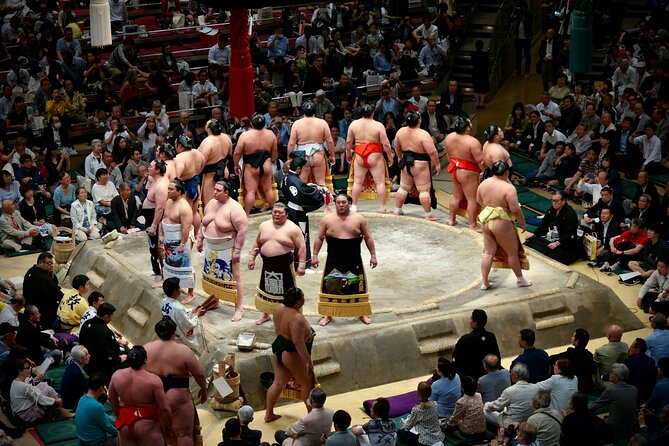
The heart of the outing is about three hours at Ryogoku Kokugikan. You watch an official tournament in Japan’s most prestigious sumo stadium, with a reserved second-floor B or C seat based on the option you choose.
A reserved seat removes one major worry. You do not need to arrive without knowing where you will sit or hope to find a good place after entering. The tradeoff is that B and C class seats are not the top seating category, and the second floor places you farther from the ring than premium lower-level seats.
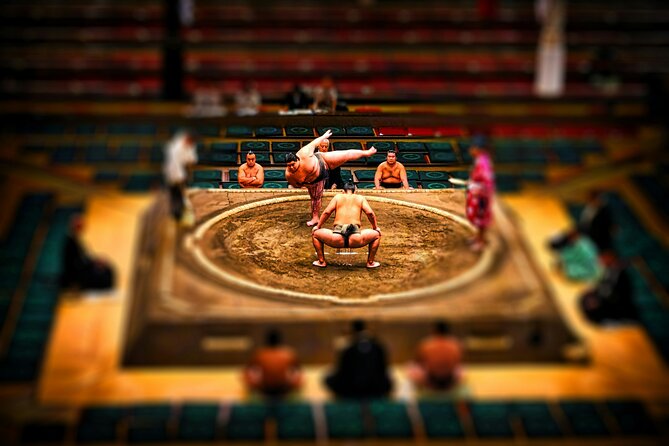
That distance is worth keeping in mind. Sumo wrestlers are large, but the arena is larger, and a second-floor view gives you a broader look at the full ring and surrounding ceremony. You may lose some close-up detail compared with a lower seat, yet you gain a useful view of the bout as a whole.
The guide remains available to answer questions during the matches. This is one of the strongest reasons to choose the guided option instead of buying admission alone. You can ask about a rule, a rank, or a ritual while the event is unfolding, when the answer has immediate meaning.
You also have freedom at the end. The official end point is Ryogoku Kokugikan, and you can enjoy the tournament for as long as you like. The advertised schedule allows about three hours of match viewing, but the arrangement does not force you to leave immediately after the guided portion.
What you will actually learn
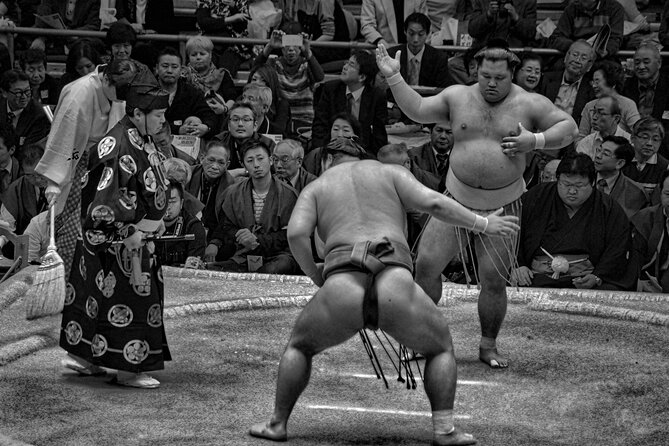
The guide’s role is not limited to pointing out the entrance. You should expect explanations in several areas:
- Rules and winning conditions: Learn what a wrestler must do to win and why a match can end quickly.
- Ranking: Understand why rank matters and how it shapes the significance of each bout.
- Ritual: Notice the formal actions before the physical contest begins.
- Cultural background: Place sumo within Japanese tradition rather than treating it as ordinary wrestling.
- Small details: Hear curious facts and anecdotes that make the event easier to remember.
The value here is interpretation. Sumo is a sport with many pauses and formal steps, and a first-time viewer may not know which parts are essential. A guide filters the experience for you, helping you focus on the moments that matter.
The guides named in the supplied information have different styles. George is described as friendly and ready to answer questions. Cesar is praised for explaining the past and making it useful to the day. Lily brings obvious excitement and has helped people move from casual curiosity to loud support for the wrestlers. Ethan is credited with keeping the activity well organized. The company may assign a different guide on your date, so treat these names as examples rather than a promise.
The value of the $209 price
At $209 per person, this is a costly half-day activity. You are paying more than the face value of a seat because the package also handles access to a difficult-to-book official event, supplies a reserved ticket, and includes a guide before and during the tournament.
The value depends on your priorities. If you already understand sumo, feel comfortable arranging your own ticket, and can secure a seat through official channels, you may find the price hard to justify. If this is your first tournament and you want the event explained in English or another supported language, the added guidance can make the cost easier to accept.
Ticket availability is a real part of the calculation. The experience is offered only on select dates during official tournaments in four major Japanese cities. In Tokyo, the venue is Ryogoku Kokugikan. For a visitor with a short stay, paying for a structured option may be preferable to spending valuable time trying to find a ticket.
I would think of it as a special-event purchase, not a routine Tokyo attraction. You are paying for access to something that does not run every day. The price makes the most sense if seeing live sumo is high on your Japan wish list.
A few more Tokyo tours and experiences worth a look



Practical rules inside the arena
Food and drinks are not permitted when entering the stadium. Plan accordingly, since the package does not include refreshments and you cannot simply carry your own into the arena.
Photos are allowed, but flash photography and bulky equipment that blocks another person’s view are not permitted. A phone or small camera is the sensible choice. Keep it low and discreet during the matches.
The atmosphere should be respectful. Avoid loud or disruptive behavior, and do not shout in a way that disturbs other spectators. Sumo rewards attention to ceremony, so this is not the place to treat the event like a rowdy Western sports game.
The meeting point is Former Yasuda Garden at 1-chome-12-1 Yokoami, Sumida City, Tokyo. The tour ends at Ryogoku Kokugikan at 1-chome-3-28 Yokoami. The area is near public transportation, which makes the start and finish practical for a day in Tokyo.
Confirmation is provided when you book. Most people can take part, and the group is limited to a maximum of 25 participants. The experience lasts about five hours, though you may remain at the stadium for as long as the arrangements allow after the guided portion.
Who will enjoy this experience most
I would recommend this to a first-time sumo viewer who wants the customs explained before the main event. It is also a strong choice if you have struggled to find official tournament tickets or are visiting Tokyo during a short window.
Families and mixed-age groups may appreciate the structure. The guide gives newcomers a way into the sport, while the live matches provide enough action to hold attention. Most people can participate, according to the supplied information, but you should be comfortable with walking between the garden and arena and spending several hours watching from a reserved seat.
This is less ideal for someone who wants a quick photo stop or a short introduction to sumo. The outing takes about five hours, and the ticket is tied to a real tournament schedule. It is also not the right pick if you expect food, drinks, premium ringside seating, or a private guide.
For serious sumo fans, the experience may still be useful when ticket access is difficult. For casual visitors, the guide is the main advantage. The explanations transform a potentially confusing event into one you can follow and appreciate.
My call on booking
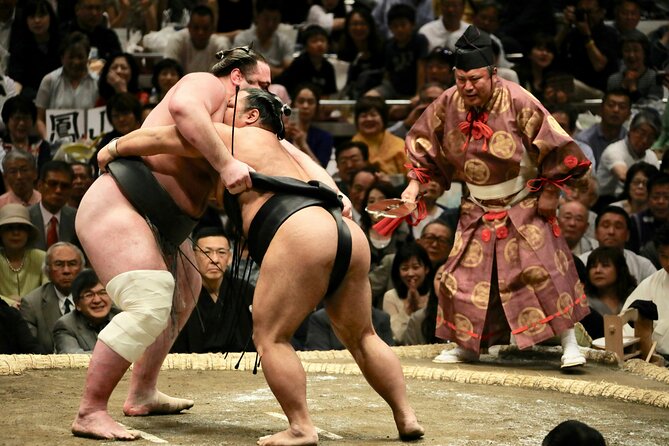
Book this if you want live sumo in Tokyo and value help with the rules, rituals, and ranking system. The strongest part is the combination of a real tournament with a guide who can answer questions as the bouts happen. The roughly three hours inside Ryogoku Kokugikan gives the outing enough time to feel like a genuine cultural event, not a quick demonstration.
Think twice if $209 is beyond your budget, if you need a refundable booking, or if second-floor B or C seating does not meet your expectations. Food and drinks are excluded and cannot be brought into the stadium, and the fixed tournament dates require careful planning.
For most first-time visitors who can match their schedule to an official tournament, I consider this a worthwhile splurge. Sumo is easier to appreciate once someone explains what you are watching, and this experience puts that explanation directly beside the action.
FAQ
Where does the sumo experience begin?
It begins at Former Yasuda Garden, 1-chome-12-1 Yokoami, Sumida City, Tokyo 130-0015, Japan.
Where does the experience end?
It ends at Ryogoku Kokugikan Sumo Arena, 1-chome-3-28 Yokoami, Sumida City, Tokyo 130-0015, Japan.
How long does the experience last?
The total duration is approximately five hours.
How much time is spent watching the tournament?
About three hours are scheduled for watching the live sumo tournament.
What type of seat is included?
The ticket includes a reserved second-floor B or C class seat, depending on the option selected.
Is a guide included?
Yes. An expert guide explains sumo traditions, rules, rankings, rituals, and cultural background.
Is food or drink included?
No. Food and drinks are not included, and access to the stadium with food and drinks is not permitted.
Can I take photos inside the stadium?
Yes. Photos are allowed without flash or bulky equipment that blocks another spectator’s view.
How large can the group be?
The activity has a maximum group size of 25 people.
Can I cancel or change my booking?
No. The experience is nonrefundable and cannot be changed for any reason.
More Tickets in Tokyo


More Tickets & Passes in Tokyo
More Sumo Experiences in Tokyo

More tours in Tokyo we've reviewed




Sumo Experiences, compared.
 ★ 4.8Tokyo: Sumo Show Experience with Chicken Hot Pot and a PhotoFrom $1032 hours
 ★ 4.8Tokyo: Sumo Show and Dining ExperienceFrom $7990 minutes - 2 hours
 ★ 5.0the SUMO showFrom $89
 ★ 5.0Tokyo Shinjuku Sumo Show & Experience with PhotoFrom $79
 ★ 4.8Tokyo: Sumo Show and Experience in ShinjukuFrom $691h 30m
 ★ 4.6Tokyo: Sumo Tournament Tour with Chair Seat TicketsFrom $141