
Reviewed · SAMURAI & NINJA EXPERIENCES
Ninja Lesson in Tokyo – 1 Hour Hands-On with Japanese Master
Tokyo has no shortage of costume activities, but this one goes beyond putting on a black outfit for a photo. You learn Kuji-In ninja meditation, handle traditional tools, and practice shuriken and blow darts under the eye of a Japanese sensei. The class is capped at six people, so you get real time to ask questions and correct your technique.
I like the small class size and the instructor’s patient, encouraging teaching style. I also like that the session is hands-on from start to finish, with clothing, weapons, demonstrations, and photo opportunities included. The main drawback is the short one-hour format: sword training may not fit into that version of the class.
In This Review
- Key points to know before booking
- What the one-hour ninja class is really like
- Dressing as a ninja before the lesson begins
- Kuji-In meditation and the ninja mindset
- Ninja tools, trick-house details, and demonstrations
- Shuriken practice and the most playful part of the class
- Blowgun practice with a surprising amount of focus
- Where sword training fits into the schedule
- Why the small group changes the experience
- Price, timing, and location in Tokyo
- Who will enjoy this most
- My take on the value
- Should you book the Ninja Lesson in Tokyo?
- FAQ
- How long does the Ninja Lesson in Tokyo last?
- What time does the class begin?
- Where does the experience meet and end?
- How many people can join the class?
- Is ninja clothing included?
- What happens if I need to cancel?
Key points to know before booking
- Up to six people: The small group gives you more individual attention than a large stage-style demonstration.
- A real hands-on lesson: You practice meditation, ninja tools, shuriken, and blow darts rather than simply watching a performance.
- Sword training may require more time: One account specifically notes that the one-hour class did not include sword practice.
- Ninja clothing is provided: You can take photos in the rented outfit during the session.
- English instruction: The lesson is designed for English speakers, though communication may vary slightly by instructor.
- Convenient late-afternoon timing: The class begins at 4 pm and ends back at the meeting point in Tokyo’s Shiomi area.
What the one-hour ninja class is really like
This is a compact training session, not a full day at a historical dojo. In one hour, you get an introduction to several parts of ninja practice, a demonstration, guided drills, and time with a range of weapons and tools.
The pace matters. You will not spend half the class sitting through a lecture. The instructor first shows you what to do, then guides you through the movements. That format works well for children, couples, friends, and solo visitors who want an activity with a clear beginning and end.
The class is taught in English by a Japanese sensei. The instructor’s style appears to be a major part of the appeal. The strongest descriptions focus on patience, encouragement, friendliness, and clear explanations. One participant found the English only passable, so you should expect usable instruction rather than polished classroom English in every session.
That said, the small group helps. With no more than six people, you can ask for a demonstration again or get help with a movement. This is especially useful if you have never handled a shuriken or blowgun before.
A few more Tokyo tours and experiences worth a look
Dressing as a ninja before the lesson begins
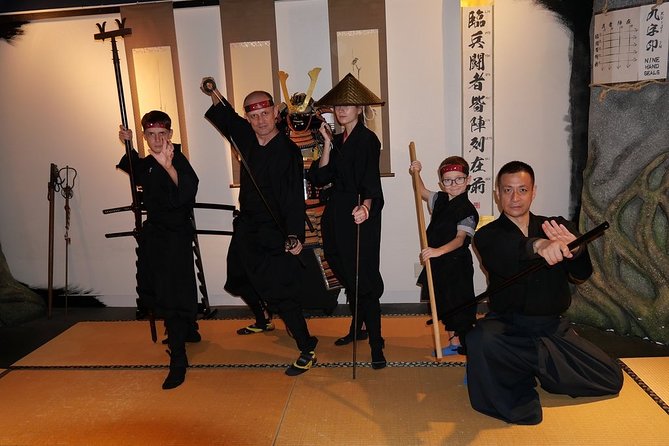
The experience includes ninja clothing rental during training. Putting on the outfit is more than a quick costume change. It helps set the mood and gives the class a clear break from an ordinary afternoon in Tokyo.
You may be shown how to put on the attire properly. Wear comfortable workout clothes underneath, since one participant specifically recommended doing so. The outer outfit may look light, but you will be moving, kneeling, and practicing techniques, so stiff clothing underneath could make the hour less comfortable.
You can also take photos in the ninja gear. This is a useful touch for families and groups, especially if you want a souvenir that feels connected to the activity rather than another generic Tokyo snapshot.
Still, keep your expectations sensible. The clothing is provided for the training session, not as a full historical costume package for an extended photo shoot. Your main purpose is to move and practice.
Kuji-In meditation and the ninja mindset
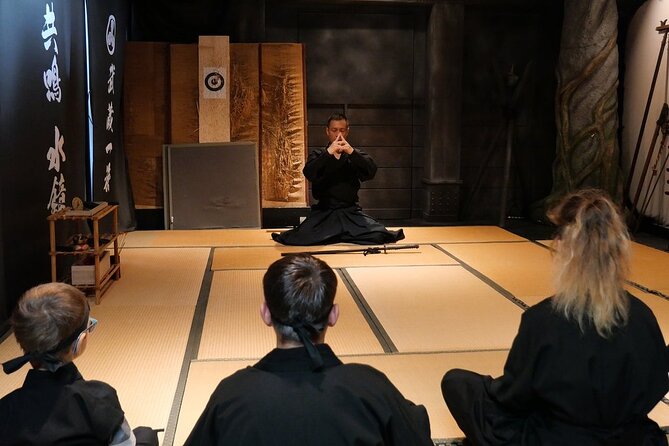
The class begins with an introduction to Kuji-In, a form of ninja meditation. This gives the session a little more depth than a weapons-only activity.
Meditation may seem like an unusual part of a ninja lesson, but it helps explain that ninja training was not only about throwing stars or fighting. Focus, calm, and control are part of the picture. Even in a short class, this opening can make the later physical exercises feel more connected.
The meditation is also a good way to settle a mixed group. Children may arrive eager to grab the weapons, while adults may be unsure what the activity involves. A quiet opening gives everyone a chance to listen and follow the instructor before the more active parts begin.
Do not book this expecting a long spiritual session. The overall class lasts about one hour, and meditation is one section of a broad introduction. Think of it as a short taste of the mental side of ninja practice.
Ninja tools, trick-house details, and demonstrations
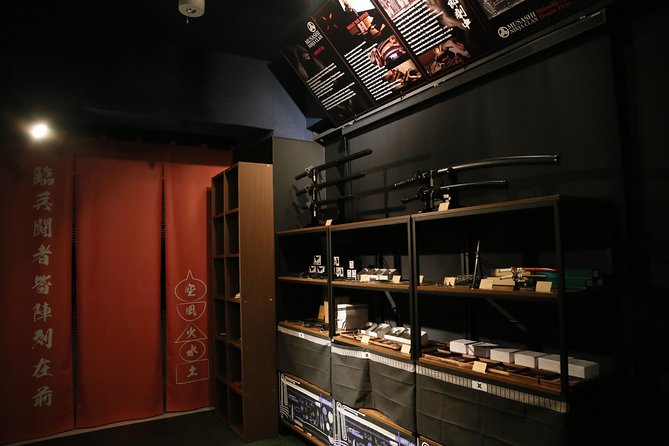
After the opening, you receive an introduction to ninja weapons and tools. The instructor also explains a gimmick connected with a ninja trick house. The available information does not spell out every mechanism, so you should treat this as an introduction rather than a complete tour of a large trick-house attraction.
The demonstrations are important because they show the proper way to handle each item before you try it. This is where the instructor’s attention matters most. A good demonstration gives you a target, a basic stance, and a clear idea of what success should look like.
You may also learn how ninjas used equipment with care and precision rather than simply waving weapons around. That distinction makes the activity more interesting for adults, while the chance to try the tools keeps children engaged.
The session is suitable for most people, and the teaching is adjusted as needed. Still, it remains a physical activity. Comfortable clothing is wise, and you should follow the instructor closely when handling any weapon.
Shuriken practice and the most playful part of the class
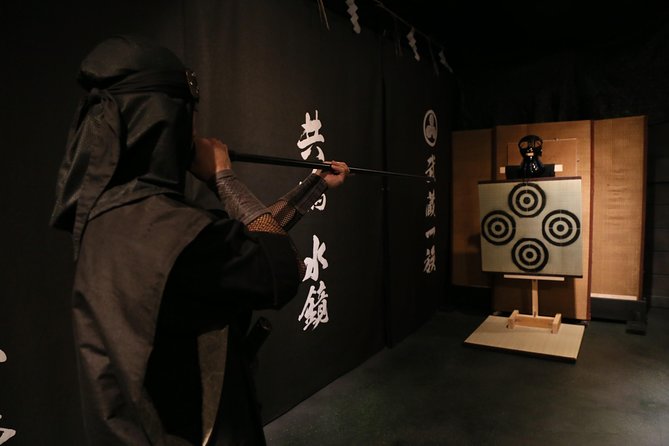
Shuriken, often called ninja stars, are one of the main attractions here. You get instruction, then a chance to practice throwing at a target.
This is the part most likely to bring out a competitive streak. Distance and accuracy are harder than they look, and the instructor can help you adjust your technique. The activity is not simply about landing a star on a target. It is about learning how body position, arm movement, and release affect the result.
The class gives you enough personal attention to make repeated attempts worthwhile. If your first throw goes wide, you are not left to guess what went wrong. The sensei can guide you through the next try.
For children, this is often the most exciting portion. For adults, it provides a pleasant challenge without requiring athletic skill. The short format also keeps the activity from becoming tiring.
You should not expect a large weapons range or advanced combat training in one hour. The value is in trying the technique safely and receiving direct instruction, not in becoming an expert.
A few more Tokyo tours and experiences worth a look




Blowgun practice with a surprising amount of focus
The ninja blowgun, or blow dart, session adds a different kind of challenge. Unlike shuriken, it depends on breath control and steady aim.
This exercise can be surprisingly difficult. You need to line up with the target, control your breathing, and blow with enough force. The distance from the target adds to the fun, and one participant particularly enjoyed how far away the target was.
The blowgun also gives the class some variety. You are not repeating one type of throwing drill for the whole hour. Switching from meditation to tools, then to stars and darts, helps the class move at a lively pace.
Because the lesson is short, you may only get a limited number of attempts. If blowguns are the main reason you want to book, consider asking about the longer class option. The available information confirms that the one-hour session can leave out sword training, so the full selection of activities may depend on the duration you choose.
Where sword training fits into the schedule
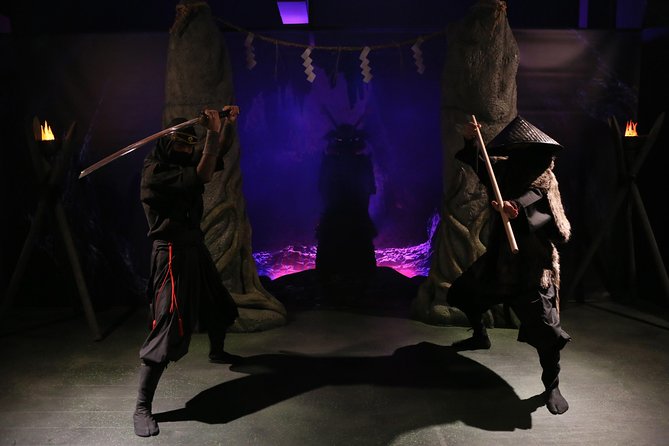
The program includes a demonstration and training for the ninja sword, but the one-hour version may not always reach that part. This is the clearest limitation to keep in mind before paying.
A family with children aged six to eight found the class so enjoyable that the children wanted more, and specifically noted that the one-hour session did not include sword training. That does not mean every one-hour lesson follows exactly the same order, but it does mean you should not assume every advertised element will fit comfortably into sixty minutes.
If swords are your top priority, ask the provider about a longer session before booking. If you mainly want a broad introduction, the one-hour class still covers meditation, tools, shuriken, and blowguns. The shorter option works best as a lively sampler.
This is also why the class should not be judged like a serious martial arts course. You are getting a guided introduction to several ninja-related skills, not a complete curriculum.
Why the small group changes the experience
The maximum group size is six people. That number makes a real difference when the activity involves throws, demonstrations, and individual corrections.
In a large class, you might spend much of the hour waiting for a turn. Here, you have a better chance to practice more than once and receive a useful comment from the instructor. Solo visitors also benefit because the class does not depend on arriving with a large party.
The format suits families particularly well. Children can participate, adults can try the same drills, and the instructor can offer encouragement across different skill levels. The class is also a good choice for couples who want something more active than another museum or shopping stop.
You should remember that a small class does not always mean a private lesson. Other participants may be present, and the group can include different ages and ability levels. The benefit is personal attention, not total control over the schedule.
Price, timing, and location in Tokyo
The listed price is $82.56 per person for about one hour. That is not a cheap quick activity, but the cost includes the English-language lesson, admission, ninja clothing rental, demonstrations, and hands-on practice with several tools.
I see the value most clearly for people who want an organized cultural activity with equipment included. You do not need to buy or prepare anything, and the small group gives the session more substance than a simple costume rental.
The class starts at 4 pm. That timing can work well after a morning of sightseeing, though you need to allow enough time to reach Shiomi. The meeting point is NINJA SAMURAI TOKYO, at 2-chōme 3-9 Bayfrere Shiomi, EAST 4階, Koto City, Tokyo 135-0052. The activity ends back at the same meeting point.
Public transportation is nearby. Private transportation is not included, and bottled water is also not included, so bring a drink. This is a practical tip worth following, especially if you plan to move through Tokyo before the lesson.
A mobile ticket is provided, and confirmation arrives at booking. The experience can be canceled free of charge up to 24 hours before the 4 pm start time for a full refund. Changes made inside that window are not accepted, and poor weather or failure to meet the minimum group size can lead to a rescheduled date or full refund.
Who will enjoy this most
I would recommend this class to families, couples, friend groups, and solo visitors who want an activity with a strong visual element and plenty of participation.
It is especially suitable if you like:
- Trying unfamiliar skills instead of only sightseeing
- Wearing themed clothing and taking photos
- Learning from a Japanese instructor in English
- Short activities that fit around a busy Tokyo schedule
- A small class where you can ask questions
Children can take part, and the combination of clothing, targets, stars, and blowguns gives them plenty to focus on. Adults should enjoy it too, particularly if they approach it as a playful introduction rather than a serious combat lesson.
I would be more cautious if you want detailed ninja history, a long meditation session, or guaranteed sword practice. The available session is built around action and variety. It gives you a taste of several skills, but it cannot explore each one at length.
The English should also be considered. The instructor is able to teach in English, and several accounts describe clear explanations. One person found the English passable rather than fluent, so visual demonstrations and hands-on practice carry much of the lesson.
My take on the value
The 4.9 rating from 52 ratings and 98 percent recommendation fit the main strengths of the activity: friendly instruction, a small group, and a fun mix of skills. The most consistently praised details are the instructor’s patience, the quality of the outfit and equipment, and the way the sensei encourages each person through the exercises.
The price makes more sense if you value the setting, instruction, and included equipment. You are paying for a guided activity with a Japanese sensei, not merely access to a costume and a target.
The one-hour limit is both a strength and a weakness. It is easy to fit into a Tokyo itinerary, but it may feel too short if you want sword work or more practice time. For many people, that brisk pace will be just right. If your children become absorbed in the activity, you may wish you had booked longer.
Should you book the Ninja Lesson in Tokyo?
Book it if you want a compact, unusual Tokyo activity with hands-on practice, an English-speaking Japanese sensei, and a maximum of six people. It is a strong pick for families and small groups, especially when you want photos, movement, and a little cultural context in the same hour.
Before booking, decide what matters most. If you want shuriken, blowguns, ninja clothing, and a friendly introduction, the one-hour class offers good variety. If sword training is essential, check the longer option first, since it may not fit into this session.
For an active late-afternoon break from temples, shops, and city streets, I would book it. Just wear comfortable clothes underneath the outfit, bring water, and treat the lesson as a lively introduction to ninja arts rather than a complete martial arts course.
FAQ
How long does the Ninja Lesson in Tokyo last?
The activity lasts approximately one hour.
What time does the class begin?
The listed start time is 4 pm.
Where does the experience meet and end?
You meet at NINJA SAMURAI TOKYO, 2-chōme 3-9 Bayfrere Shiomi, EAST 4階, Koto City, Tokyo 135-0052. The activity ends back at the same meeting point.
How many people can join the class?
The class has a maximum of six participants.
Is ninja clothing included?
Yes. Ninja clothes are provided for rental during the training.
What happens if I need to cancel?
You can cancel at least 24 hours before the start time for a full refund. Cancellations or changes made less than 24 hours before the experience are not refunded or accepted. If poor weather or an insufficient number of participants causes cancellation, you will be offered another date or a full refund.
More 1-Hour Experiences in Tokyo


More Workshops & Classes in Tokyo
More Samurai & Ninja Experiences in Tokyo
More tours in Tokyo we've reviewed







Samurai & Ninja Experiences, compared.
 ★ 4.5Tokyo: Samurai Restaurant Show Ticket with 2 DrinksFrom $551h 30m
 ★ 4.6Tokyo: Samurai Ninja Museum Guided tour and ExperienceFrom $27
 ★ 5.0Tokyo: Samurai Sword & Archery Class from Samurai DescendantFrom $1933 hours
 ★ 5.0Best Samurai Experience in TokyoFrom $65
 ★ 5.0Ninja Experience (Family Friendly) at Samurai Ninja Museum TOKYOFrom $47
 ★ 4.6Tokyo: Samurai Entertainment Night Show in Kanda ShrineFrom $412 - 3 hours