
Reviewed · JDM & CAR CULTURE
Best Price Daikoku Parking Tokyo Drift & APIT Car Meet Tour
Daikoku Parking is where Tokyo’s car culture feels most real: not a museum display, but a working rest area where tuned Japanese cars may gather after dark. With a local guide from the drifting scene, you visit APIT, then spend about an hour at the famous Daikoku meeting place.
I like the personal pickup, since you do not need to figure out a distant meeting point. I also like the local angle: guides such as Takeshi and Toshi can explain the car community instead of simply pointing at parked vehicles. The main consideration is that Daikoku is not guaranteed to be packed with rare cars, and heavy rain or snow cancels the outing.
In This Review
- Key points to know before booking
- Why Daikoku Parking matters to car fans
- APIT gives the tour a useful first stop
- Getting to Daikoku in a Lexus LS
- One hour among Japan’s tuned cars
- The return route adds a Tokyo finish
- What the $133 price really covers
- Who will get the most from this outing
- Extra car activities are possible
- Practical details for a smoother visit
- Should you book this Daikoku tour?
- FAQ
- Where does this Daikoku Parking tour take place?
- What is included in the $133 price?
- Can I be picked up from my hotel or preferred location?
- What vehicle is used for the tour?
- How long do you spend at Daikoku Parking?
- Is the tour private?
- Which languages are available?
- What happens if the weather is poor?
- Can I cancel and receive a refund?
Key points to know before booking
- Daikoku Parking is the main event: You get about one hour at one of Japan’s best-known JDM gathering spots.
- APIT comes first: Browse parts, apparel, books, toys, gadgets, and other car-related goods at a major auto store.
- Local guides lead the drive: Takeshi and Toshi are connected to the Japanese drifting and tuning scene.
- Pickup is flexible: The tour can collect you from your preferred location in a modified Lexus LS or Honda wagon.
- The ride includes Tokyo views: The return route passes Rainbow Bridge and Tokyo Tower.
- The tour can be tailored: You can discuss other car-related activities after booking, including drift rides or lessons.
Why Daikoku Parking matters to car fans
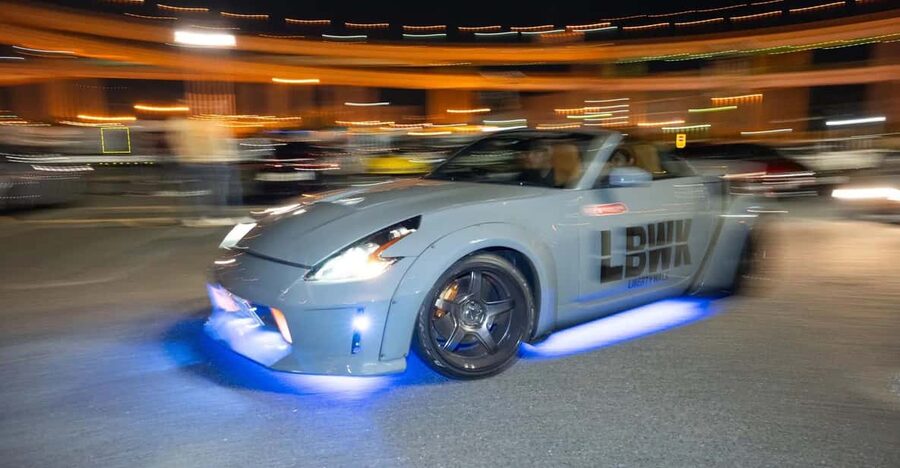
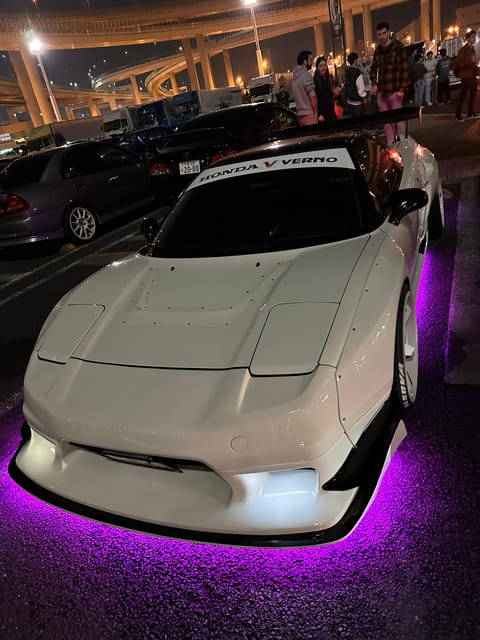
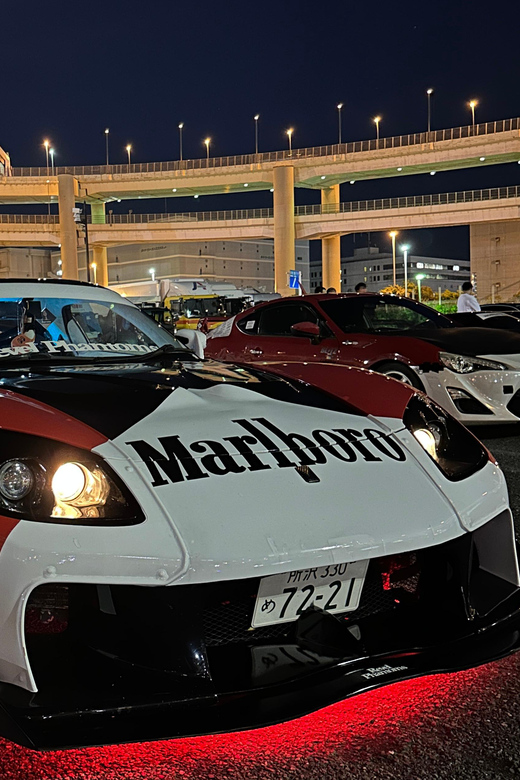
If you know Tokyo’s car scene mainly through films, games, or online clips, Daikoku Parking is the place that connects that image to everyday Japan. It is a large parking area in Yokohama, not a purpose-built attraction. Cars arrive, people talk, and the mood changes from one visit to the next.
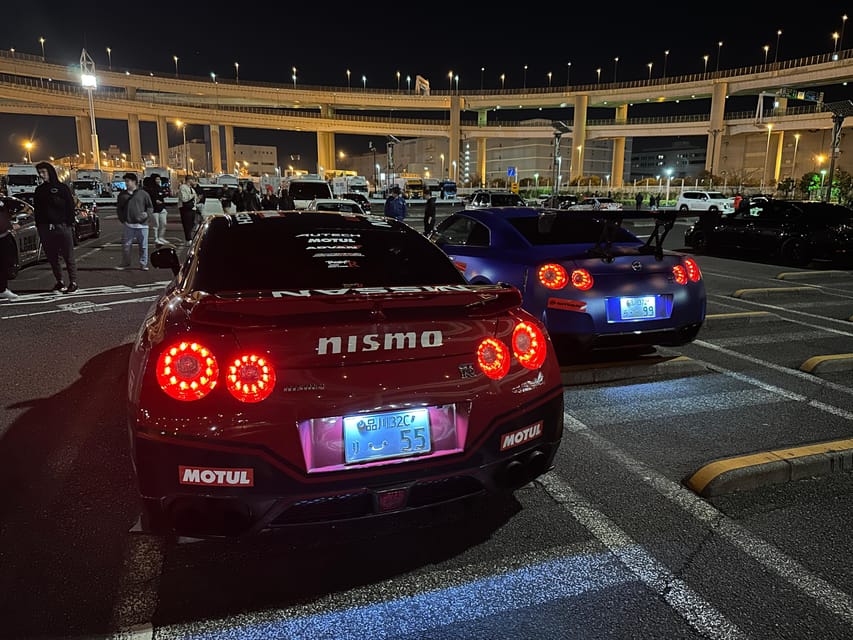
That unpredictability is part of the appeal. You are not entering a hall where a fixed collection waits under bright lights. You might find Japanese performance cars, modified street cars, or a smaller gathering than expected. The tour’s value comes from reaching the site with someone who understands the local scene and knows how to make sense of what you see.
The famous Tokyo Drift connection also helps explain the excitement, but you should keep expectations sensible. This is not a film set, and the tour does not promise a particular make, model, or number of cars. The best approach is to enjoy the setting, the machines that happen to appear, and the chance to ask questions while you are there.
A few more Tokyo tours and experiences worth a look


APIT gives the tour a useful first stop
The outing begins at APIT, described as the largest auto store in the Tokyo area. This is more than a quick place to stretch your legs before Daikoku. It gives you a look at how car culture is sold and enjoyed in Japan.
You can browse car parts, clothing, books, toys, gadgets, and other JDM-related items. Even if you are not shopping for a replacement part, the store helps you get your bearings. It shows that Japanese car enthusiasm covers far more than engines and exhausts. There are items for collectors, hobbyists, drivers, and fans who simply want a souvenir.
APIT is also a useful stop for anyone in your group who is less focused on drifting. Daikoku may appeal most to serious car fans, while APIT offers displays and products that are easier to enjoy at your own pace. You can look closely, ask your guide about unfamiliar items, and see what local enthusiasts buy.
One practical detail is worth noting: one account describes the first stop as Autobacs, while the tour information identifies it as APIT. Treat the stop as the APIT auto store named in the current tour details, and confirm the exact location after booking if the distinction matters to you.
Getting to Daikoku in a Lexus LS
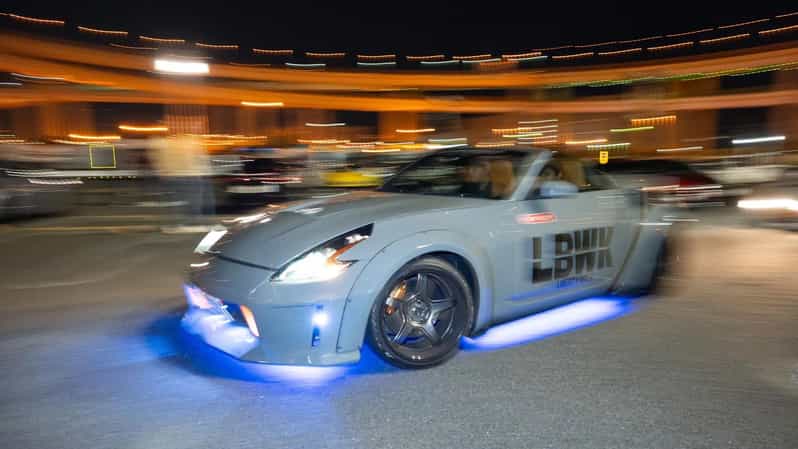
Transport is one of the strongest reasons to consider this experience. Pickup and drop-off are provided, and the operator says it can collect you from your preferred pickup location. That saves you from trying to reach an out-of-the-way parking area by public transport or arranging several taxi rides.
The standard vehicle is a modified Lexus LS or a similar car. A Honda wagon is used for a larger group. The car itself is part of the experience, especially for someone who enjoys Japanese vehicles beyond the cars parked at the meet.
The tour is described as private, but multiple bookings may sometimes share a ride. If having the car entirely to yourself is important, ask about that before you pay. Group size also affects the vehicle, conversation, and amount of personal attention you receive.
Your guide handles the transportation fees, so the $133 price per person is not just an admission charge. It covers the local guide, the ride to APIT and Daikoku, pickup and drop-off, and the return route through central Tokyo. That makes the price easier to justify than a simple visit to a parking area would be.
One hour among Japan’s tuned cars
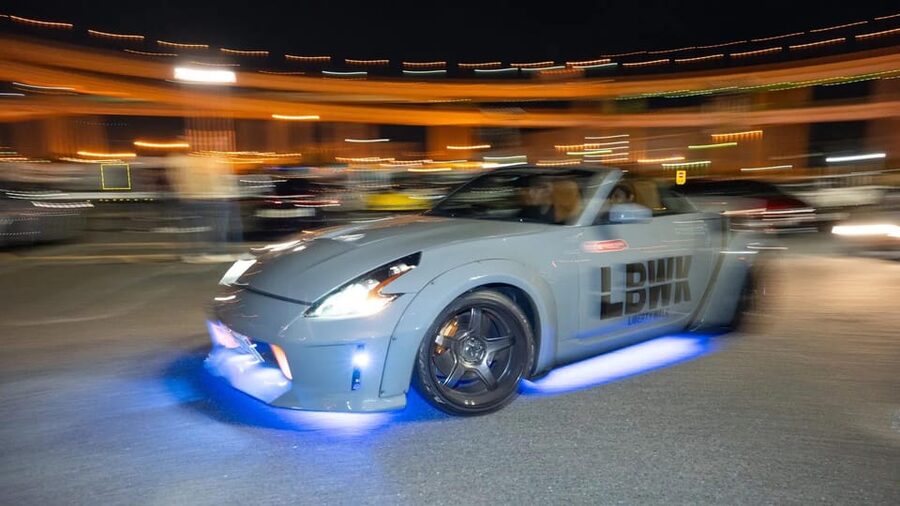
At Daikoku, plan on about one hour at the parking area. That is enough time to walk around, take in the cars, and talk with your guide, but it is not a full-night car photography session.
The biggest benefit of having a local guide is context. A guide from the drifting and tuning community can help you understand why a car is interesting, what modifications you are looking at, and how the meeting fits into local car culture. Takeshi is described as a regular part of the community, while Toshi is praised for being sociable and welcoming. The operator also offers English and Japanese, with fluent English-speaking guides available.
The atmosphere is meant to be relaxed and open to both serious gearheads and casual observers. You do not need to know every engine code to enjoy it. If you can identify a favorite model, ask about Japanese tuning, or simply appreciate a well-kept car, you have enough background to take part.
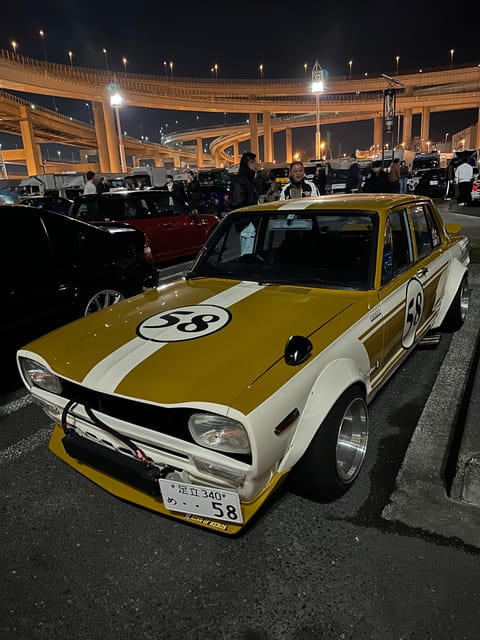
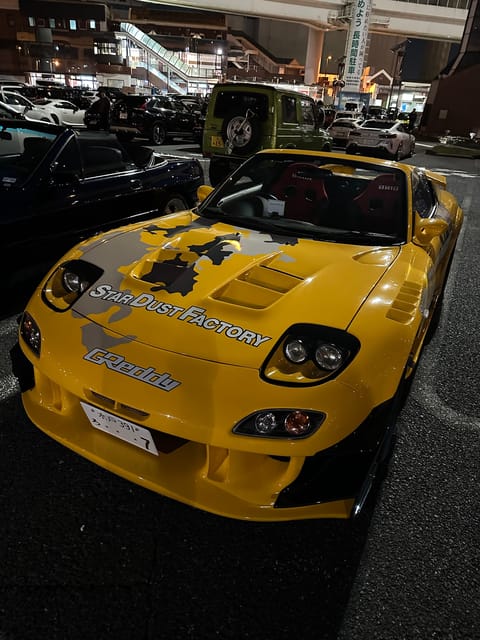
Still, Daikoku is not a guaranteed show. Car meets depend on timing, weather, and who happens to arrive. Some evenings may bring an impressive mix of JDM cars, while another visit may feel quieter. The tour should be booked for access and local insight, not a promise of a specific Skyline, Supra, RX-7, or drift build.
Respect matters here. The information provided does not promise a formal photo session or private access to vehicles, so ask before touching a car or taking close-up pictures. A calm, polite attitude is the best way to fit the setting.
The return route adds a Tokyo finish
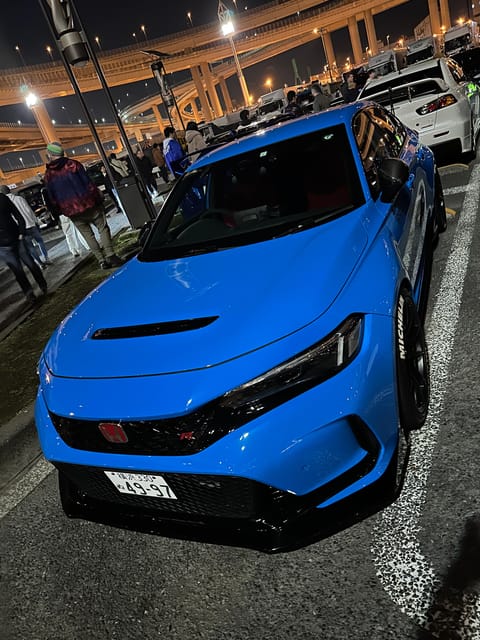
After Daikoku, the return drive passes Rainbow Bridge and Tokyo Tower. This is a smart way to finish the outing because it gives you a city view after the industrial and automotive setting of the parking area.
Rainbow Bridge provides a memorable connection between the bay and the city. Tokyo Tower then brings the route back to a familiar landmark. The skyline is especially useful if you are visiting Tokyo for the first time and want a little sightseeing folded into your car outing.
The route is part of the included transportation, not a separate sightseeing cruise or walking tour. You remain in the vehicle, so the value is in the view and the conversation rather than in extended stops at either landmark. If you want specific photo stops, mention that when arranging your custom plans.

What the $133 price really covers
At $133 per person, this is not the cheapest way to see a parking area. You are paying for transport, pickup flexibility, an English-speaking local guide, and access to a part of Japanese car culture that can be awkward to reach on your own.
I see the value most clearly for visitors who do not have a rental car, do not speak Japanese, or want someone to explain the scene. A taxi to a distant location might solve the transport problem, but it would not give you the same connection to local drifting and tuning culture. You also avoid spending time working out the route yourself.
The price is less compelling if you already have a car, know the Yokohama area, and only want to look around Daikoku for a short time. It is also a gamble for anyone who needs a guaranteed display of rare cars. The meeting is real, but the lineup changes.
The tour allows you to reserve now and pay later, and cancellation is available up to 24 hours in advance for a full refund. Heavy rain or snow cancels the outing, so keep an eye on the forecast and avoid building your entire evening around a fixed car lineup.
Who will get the most from this outing
I would choose this tour if you fit one or more of these groups:
- You follow JDM cars, Japanese tuning, or drifting.
- You want a local guide rather than a standard city sightseeing tour.
- You would like a ride in a Lexus LS or Honda wagon.
- You need pickup and drop-off from your own location.
- You want APIT included, not just a quick visit to Daikoku.
- You are curious about Tokyo Drift style car culture but do not know the local scene.
It also works for mixed groups. A dedicated car fan can focus on the vehicles, while a more casual companion can enjoy APIT, the guide’s stories, and the Tokyo skyline on the way back.
I would be more cautious if your main goal is professional photography, a long stay at Daikoku, or a specific car model. The stated stop is about one hour, and no particular cars are promised. For that kind of visit, ask about a longer or custom arrangement before booking.
Extra car activities are possible
Matenro Drift Racing also offers other car-related experiences, including drift riding and drift lessons. These are not described as part of the $133 APIT and Daikoku outing, so you should not assume they are included.
The useful point is that the tour can be customized. After booking, you can tell the operator what you want to do next. If you are interested in drifting rather than only looking at parked cars, ask about the separate options and costs before your visit.
That local connection is one of the tour’s best features. You are not limited to a fixed sightseeing script. You can use the first outing to decide if you want to spend more time around Japanese cars or try one of the operator’s other activities.
Practical details for a smoother visit
Choose a pickup location where you can be reached easily, and confirm the exact pickup time and vehicle before the day. The operator can collect you from your preferred location, but a clear meeting point will prevent needless waiting.
Ask who will guide your particular departure. Takeshi and Toshi are both named in the tour information and personal accounts, but the exact guide may vary. If fluent English is essential, confirm that your departure will have an English-speaking guide.
Wear comfortable clothes and shoes, since you will spend time moving around APIT and the parking area. Bring a phone or camera, but remember that cars and owners deserve the same courtesy you would expect at any private gathering.
Also ask about sharing the vehicle if you are booking during a busy period. The tour is presented as private, yet shared rides may be requested when there are multiple bookings. That is not necessarily a problem, but it changes the feel of the outing.
Should you book this Daikoku tour?
I would book it if you want more than a quick look at parked cars. The combination of APIT, local pickup, an English-speaking guide from the drifting community, Daikoku Parking, and a skyline drive gives you a well-rounded evening.
The strongest part is the human connection. Takeshi and Toshi are presented as people who know the local car scene, and the personal guidance can turn unfamiliar modifications and Japanese car customs into something you understand. The most praised qualities are punctual service, friendly conversation, good driving, and genuine access to the local community.
I would skip it if you need a guaranteed supercar lineup, a long photography session, or a strictly private vehicle with no chance of sharing. For everyone else, especially a first-time visitor who loves Japanese cars, $133 is a fair price for the transport and local access. Keep your expectations flexible, and Daikoku can be one of the most memorable car-focused evenings in the Tokyo area.
FAQ
Where does this Daikoku Parking tour take place?
The tour visits APIT and Daikoku Parking in the Tokyo and Yokohama area, with a return route passing Rainbow Bridge and Tokyo Tower.
What is included in the $133 price?
The price includes a local Japanese guide, fluent English-speaking guidance, pickup and drop-off, transportation to APIT and Daikoku, and transportation fees.
Can I be picked up from my hotel or preferred location?
Yes. The operator says pickup can be arranged from your preferred pickup location.
What vehicle is used for the tour?
Pickup is provided in a modified Lexus LS or a similar vehicle. A Honda wagon may be used for larger groups.
How long do you spend at Daikoku Parking?
The stated time at Daikoku Parking is about one hour.
Is the tour private?
The tour is described as private, but the operator may ask guests from multiple bookings to share a ride.
Which languages are available?
The listed languages are English and Japanese. The tour includes a fluent English-speaking local guide.
What happens if the weather is poor?
The tour is cancelled in cases of heavy rain or snow.
Can I cancel and receive a refund?
You can cancel up to 24 hours in advance for a full refund.
More JDM & Car Culture in Tokyo


More tours in Tokyo we've reviewed

JDM & Car Culture, compared.
 ★ 4.7FAST&FURIOUS EXPERIENCE Tokyo Car Club membershipFrom $138
 ★ 4.8GT-R35 800hp Club Membership – secret underground car meetFrom $205
 ★ 4.8Tokyo: Fast & Furious Tokyo Drift 3 Experience (Kaila Yu SP)From $157
 ★ 4.8Tokyo: Daikoku JDM Car Meet & Night Car Culture TourFrom $984 hours
 ★ 4.8Secret Car Meet: R34 Skyline Car Club MembershipFrom $236
 ★ 4.7Tokyo Drift: Daikoku PA Supreme Car Experience 大黒PAFrom $583 hours