
Reviewed · MT FUJI DAY TRIPS
Mount Fuji (Mt. fuji) private tour by car with pickup from Tokyo
Mount Fuji is best seen with room to change plans, and this private car tour gives you that freedom. From Tokyo, you can reach Chureito Pagoda, the Fuji Five Lakes area, Mount Fuji’s 5th Station, or the cool lava caves without dealing with crowded trains and several bus changes.
I like two things here: you can shape the day around your interests, and the driver handles the long roads, highway tolls, and parking logistics. Guides such as Attary, Faisal, Umar, Ali, and Faizyan have been praised for friendly service, local explanations, comfort, and taking good photos. The main catch is time. You cannot sensibly visit every listed stop in 8 to 10 hours, especially on weekends or holidays.
In This Review
- Key points to know before booking
- Why a private car makes sense from Tokyo
- Chureito Pagoda and the classic Fuji photograph
- Oshino Hakkai and its clear spring ponds
- Kitaguchi Hongu Fuji Sengen Shrine
- Lake Kawaguchiko, Oishi Park, and Fuji views
- Saiko Iyashi no Sato Nemba and traditional craft
- Lava caves at Narusawa and Fugaku
- Mount Fuji 5th Station at 2,300 meters
- Museums, parks, viewpoints, and the outlet stop
- Price, group size, and the real value
- How to plan the day without rushing
- Who should book this Mount Fuji tour
- Should you book it?
- FAQ
- How long does the Mount Fuji private tour last?
- How many people can join the private tour?
- Is pickup available in Tokyo?
- Is transportation included?
- Is an English-speaking driver provided?
- Is lunch included?
- Are the boat cruise and ropeway included?
- Can I choose which places to visit?
- Is admission included at every stop?
- What happens if the weather is poor?
Key points to know before booking
- Private transport from Tokyo: Your group of up to three has the vehicle to itself, with pickup from a Tokyo hotel or apartment.
- A flexible sightseeing day: Choose from shrines, lakes, parks, caves, museums, shopping, an onsen, and Mount Fuji viewpoints.
- Clear weather matters: Fuji can disappear behind clouds, so the best views are never guaranteed.
- Plan your priorities early: The long drive from Tokyo means five carefully chosen stops are more realistic than trying to collect them all.
- Several costs are extra: Lunch and admissions for places such as the caves, 5th Station, museums, ropeway, cruise, and onsen are not covered.
- One listed attraction is closed: Fuji-Q Highland is marked permanently closed and should not be part of your plan.
Why a private car makes sense from Tokyo
The trip from central Tokyo to the Mount Fuji area takes time, and the first sightseeing point can be about one hour and 40 minutes from the Tokyo Hilton, depending on traffic. A private vehicle saves you from piecing together trains and local buses once you leave Tokyo.
The practical benefit is not just comfort. You can bring your own small group, leave your bags in the car, and adjust the route as the day develops. If Fuji is hidden at one viewpoint, your driver can help you try another location. If you are more interested in shrines than shopping, you can make that choice.
The vehicle is air-conditioned, modern, and described as clean. Highway tolls, petrol, and private transport are included, as is an English-speaking driver. The driver is not presented as a formal museum guide at every stop, so you should think of this as a flexible driving and sightseeing service with local help rather than a tightly scripted walking tour.
Guides named in the feedback include Attary, Faisal, Faysal, Umar, Ali, and Faizyan. Their roles can vary by booking, but the strongest pattern is clear: good drivers help with route choices, explain the places you visit, keep the ride comfortable, and sometimes take photos for you.
A few more Tokyo tours and experiences worth a look
Chureito Pagoda and the classic Fuji photograph
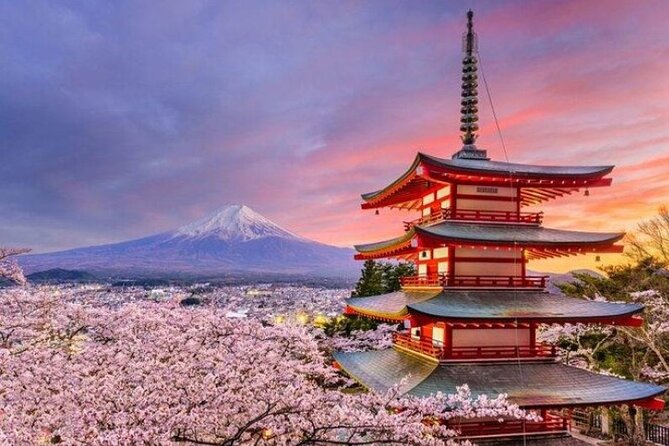
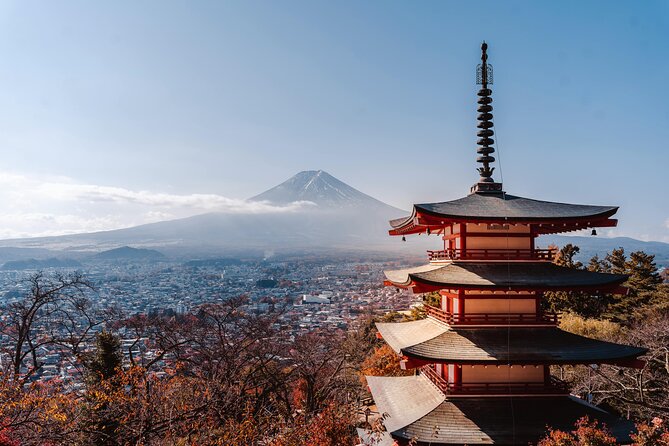
Chureito Pagoda is often the emotional high point of the day. The five-story red-and-white pagoda sits above Fujiyoshida City, with Mount Fuji in the distance when the air is clear.
Getting to the pagoda requires nearly 400 steps from the main buildings of Arakura Sengen Shrine. The climb takes effort, but it is also part of the setting. You pass through a hillside shrine area before reaching the famous viewpoint.
Give this stop about an hour. The admission is free, but the steps and crowds can slow you down. If Fuji is covered by cloud, the pagoda remains attractive, but the picture you came for may not appear. Your driver cannot control that part of the day, so keep your expectations weather-aware.
Oshino Hakkai and its clear spring ponds
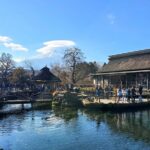
Oshino Hakkai is a small village area built around eight ponds. The water comes from snowmelt that filters through Mount Fuji’s porous lava for more than 80 years, producing exceptionally clear springs valued by local people.
This is a short stop of about 30 minutes, so use it for a quick look at the ponds and a Fuji view if the weather cooperates. It is a popular tourist area, not a quiet rural discovery. Still, the spring water and the volcanic setting give the place a strong connection to Fuji itself.
The stop works well if you want a brief nature break between larger sights. It is less suitable if you want a long walk or an extended village visit. Admission is free.
Kitaguchi Hongu Fuji Sengen Shrine
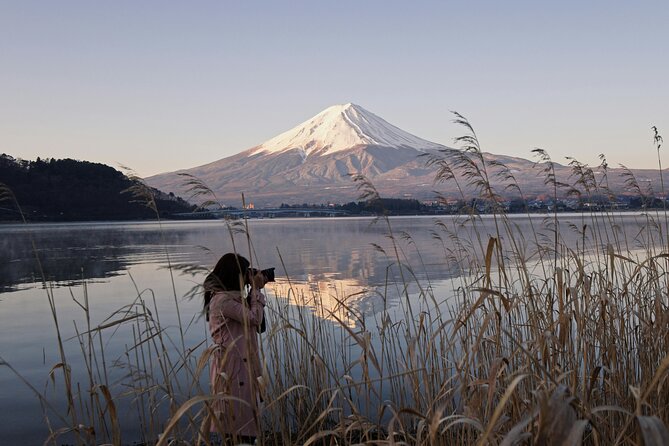
This shrine gives the day a more reflective pause. Kitaguchi Hongu Fuji Sengen Jinja, also called Fujiyoshida Sengen Shrine, is dedicated to Konohanasakuya-hime, the Shinto goddess associated with Mount Fuji.
The shrine is said to date to CE 100 and has played an important part in the religious life of the mountain’s northern side. You can expect a wooded approach, shrine buildings, and a calmer setting than the busiest photo stops.
Allow about an hour. This is a good choice if you want cultural context and not just viewpoints. It also pairs well with Chureito Pagoda, since both connect Mount Fuji with Shinto tradition. Admission is free.
Lake Kawaguchiko, Oishi Park, and Fuji views
Lake Kawaguchiko is one of the most useful bases for a Fuji day because it combines views, food, and optional activities. The lake sits at roughly 830 meters, giving the area cooler summers and icy winters.
You can stop for lunch here, with many restaurants in the area. Lunch is not included, so ask your driver about timing and location before the day gets crowded. You can also pay separately for a ship cruise or ropeway cable car, listed at about ¥1,000 per person.
Oishi Park, on the lake’s north shore, is an excellent optional addition because it can frame both the lake and Mount Fuji in one view. Allow about 30 minutes. If your main goal is photography, this may be a better use of time than adding several small stops.
A useful planning lesson comes from the trip’s timing: if you want to avoid a heavy return drive, aim to leave the Fuji area before 3:30 p.m. Traffic can turn a pleasant day into a long ride back to Tokyo.
Other private tours in Tokyo


Saiko Iyashi no Sato Nemba and traditional craft
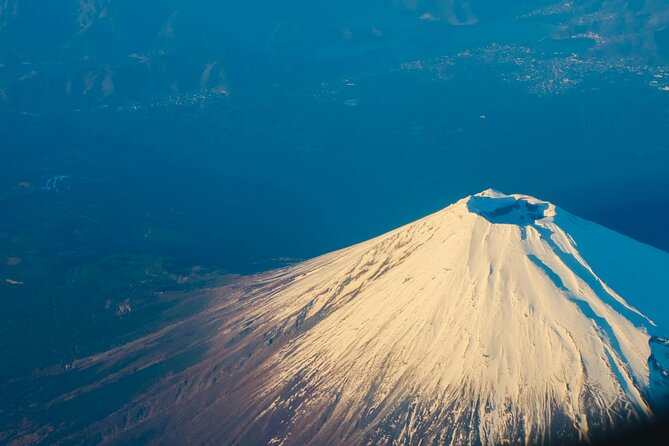
Saiko Iyashi no Sato Nemba is a reconstructed traditional village with old-style houses topped by straw roofs. It offers local craft, artists, rental kimonos, and samurai armor.
This is one of the more characterful stops because it gives you something to do beyond looking at Mount Fuji. You can browse handmade work, take photographs, and see a version of old rural architecture in a mountain setting.
The suggested visit is 30 minutes. Admission is not included. That short time is enough for a quick look, but you may want longer if you plan to rent clothing or spend time with the craft displays.
Lava caves at Narusawa and Fugaku
The optional caves add a geological side to the day. Narusawa Ice Cave is a lava tube in the Aokigahara forest and one of three larger lava tubes on Mount Fuji’s northern side. Fugaku Wind Cave is another lava formation nearby.
Fugaku Wind Cave stays cool even in summer, with an average temperature of about 3 degrees Celsius. It was once used to store silkworm eggs and is designated a Japanese natural monument. The cave extends 201 meters, reaches 8.7 meters in height, and has basalt walls that absorb sound rather than create a normal echo.
The sightseeing route inside Fugaku takes about 15 minutes, while the planned stop is 45 minutes. You may see lava shelves, rope-like lava, and ice pillars that remain even in summer. Narusawa Ice Cave also has a 45-minute suggested stop.
These are not ideal for every visitor. The ground can be uneven, and the cool, confined setting may not suit you. Admissions are extra. Tell the driver in the morning if you want to include either cave, since they are optional and must fit into the day’s route.
Mount Fuji 5th Station at 2,300 meters
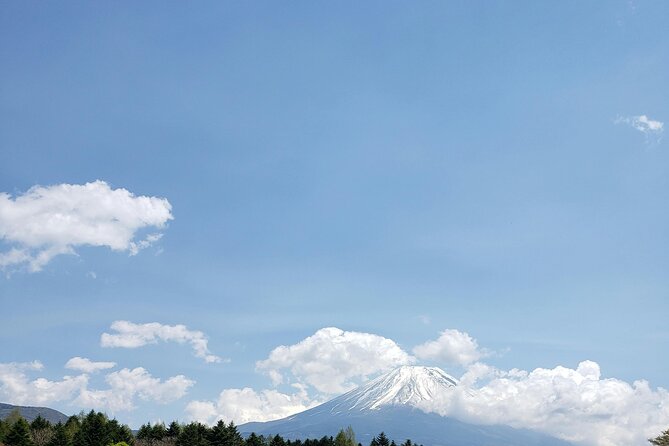
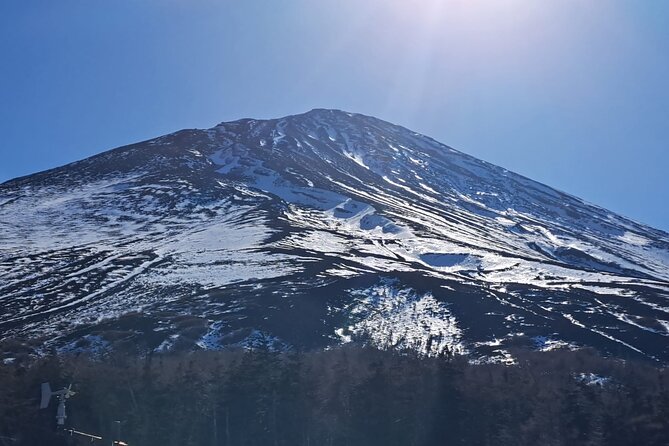
The 5th Station is the highest listed viewpoint on the mountain, at about 2,300 meters above sea level. It is a gateway to the Yoshida Trail, the most popular route for climbers, and has shops, restaurants, a Shinto shrine, and views over the surrounding area.
For a first-time visit, this stop gives you a sense of Mount Fuji as a mountain rather than only a distant cone across a lake. The suggested visit is 30 minutes, and admission is not included.
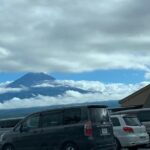
The important limitation is weather. You may reach the station and still find the summit hidden by cloud. It is also one of the stops most likely to be affected by road conditions or congestion, so discuss it with your driver early rather than assuming it will fit at the end.
Museums, parks, viewpoints, and the outlet stop
Kogamasao Memorial Park offers a quieter break, with Mount Fuji views, cherry blossoms in spring, picnic space, and walking areas. Allow 30 minutes, with admission not included.
The Itchiku Kubota Art Museum near Lake Kawaguchiko focuses on elaborate kimono art and the revived Tsujigahana dyeing technique. The architecture, gardens, and textile work make it the strongest cultural option for people who want art rather than another viewpoint. The listed admission is free, though you should still confirm details when booking.
Tenku no Torii is a hillside torii gate positioned for a Fuji view through the red shrine gate. It is especially suited to photography, with sunrise and sunset noted as good times. The suggested stop is 30 minutes, and admission is not included.
Gotemba Premium Outlets is a very different choice. With more than 200 stores, it works for shoppers and families who want branded goods, restaurants, and another Fuji view. It can easily consume more time than the suggested 30 minutes, so choose it only if shopping is a real priority.
Fuji Chobo no Yu Yurari Onsen offers indoor and outdoor baths, private baths, a sauna, a restaurant, and views toward Mount Fuji. It is a sensible way to end a day of sightseeing, but admission is extra and 30 minutes may feel rushed if you want a proper bath and meal.
Fuji-Q Highland is permanently closed according to the supplied details. Do not include it in your plan.
Price, group size, and the real value
The price is $465 per group of up to three people. For three people, that works out to $155 each. For two people, it becomes $232.50 each, and for a solo booking the value is much weaker.
That price includes the vehicle, private transport, highway tolls, an English-speaking driver, fuel, and air-conditioning. Those inclusions matter on a long day from Tokyo, especially when you compare the cost with separate train, bus, taxi, and admission expenses.
You still need to budget for lunch, cave admissions, the 5th Station, ropeway or cruise tickets, the museum or park options where applicable, and the onsen. The tour is strongest for three people who value time, privacy, and a route built around personal interests.
How to plan the day without rushing
Before pickup, choose your top three stops and two backups. A sensible first-time plan might combine Chureito Pagoda, Oshino Hakkai, Kitaguchi Hongu Fuji Sengen Shrine, Lake Kawaguchiko, and Oishi Park.
A nature-focused day could use Chureito, Lake Kawaguchiko, Oishi Park, Narusawa Ice Cave, and Fugaku Wind Cave. For culture, consider the shrine, Saiko Iyashi no Sato Nemba, Itchiku Kubota Art Museum, Lake Kawaguchiko, and Chureito.
Tell the driver your priorities in the morning. The route is flexible, but the clock is not. Golden Week and other busy periods can leave you with much more driving and fewer stops, so avoid building your plan around all 15 choices.
The experience requires good weather. If poor weather causes cancellation, you are offered another date or a full refund. You can also cancel for a full refund up to 24 hours before the start time. Changes or cancellations inside that 24-hour window are not accepted.
Who should book this Mount Fuji tour
I would choose this tour for a couple, family, or small group that wants a private day outside Tokyo without managing regional transport. It is also a good fit if one person wants shrines, another wants shopping, and someone else wants caves or an onsen.
It suits you especially well if you want help taking photos, need hotel or apartment pickup, or prefer a clean air-conditioned car over crowded connections. The guides named in the feedback, including Attary, Ali, Umar, Faisal, and Faizyan, were praised for comfort, helpful route advice, explanations, and photography.
I would be cautious if you want a slow visit at every location, a formal expert-led tour at each attraction, or guaranteed views of the summit. The day is flexible, but it is not limitless.
Should you book it?
Book it if you value privacy and want to see several parts of the Mount Fuji area in one day. At $465 for up to three people, it offers fair value when you use the vehicle, tolls, fuel, pickup, and route flexibility.
Make your stop list before pickup, leave the Fuji area by mid-afternoon when possible, and keep one or two options flexible for weather. If you do that, this can be a comfortable and practical way to see Fuji beyond the usual single viewpoint.
FAQ
How long does the Mount Fuji private tour last?
The tour lasts approximately 8 to 10 hours.
How many people can join the private tour?
The price covers one private group of up to three people.
Is pickup available in Tokyo?
Yes. Pickup is offered from a Tokyo hotel or apartment.
Is transportation included?
Yes. Private transportation in an air-conditioned vehicle is included, along with highway tolls, petrol, and gas.
Is an English-speaking driver provided?
Yes. An English-speaking driver is included.
Is lunch included?
No. Lunch is not included, but Lake Kawaguchiko has many restaurants.
Are the boat cruise and ropeway included?
No. The ship cruise and ropeway cable car cost extra. The supplied details list the price at about ¥1,000 per person.
Can I choose which places to visit?
Yes. The tour is customizable, and the optional stops can be discussed with the driver in the morning.
Is admission included at every stop?
No. Some stops are free, while admissions for places such as the caves, Mount Fuji 5th Station, Saiko Iyashi no Sato Nemba, Tenku no Torii, the outlets, and the onsen are not included.
What happens if the weather is poor?
If the tour is canceled because of poor weather, you can choose a different date or receive a full refund.
More Private Tours in Tokyo
More Mt Fuji Day Trips in Tokyo
More tours in Tokyo we've reviewed






Mt Fuji Day Trips, compared.
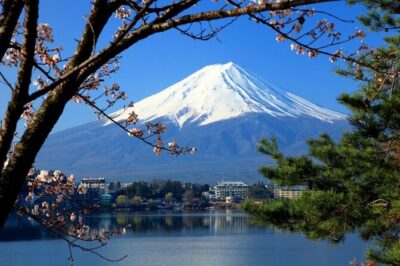 ★ 5.0Mt Fuji and Hakone 1-Day Bus Tour Return by Bullet TrainFrom $163
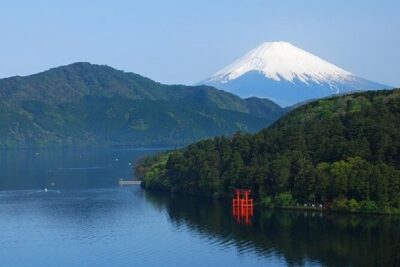 ★ 4.0Mt Fuji & Hakone Cruise, Drum Show Bullet Train 1 Day from TokyoFrom $149
 ★ 4.4Tokyo Mt Fuji 5th St & Hakone Cruise Bus Tour w/Bullet TrainFrom $15410 hours
 ★ 4.5From Tokyo: Mount Fuji Full-Day Sightseeing TripFrom $6810 hours
 ★ 4.7Tokyo: Mt. Fuji Tour, Hakone Ropeway, Owakudani, Lake AshiFrom $5410 hours
 ★ 4.4Tokyo:Mt.Fuji,Kawaguchiko Oishi Park,Arakurayama Sengen ParkFrom $5410 hours