
Reviewed · CRAFT WORKSHOPS
Japanese Calligraphy Experience
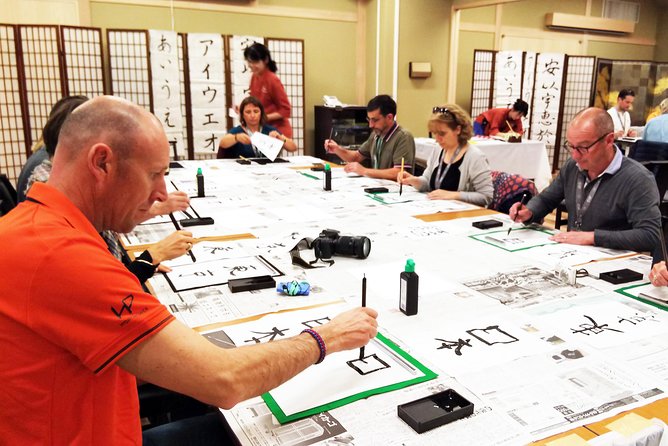
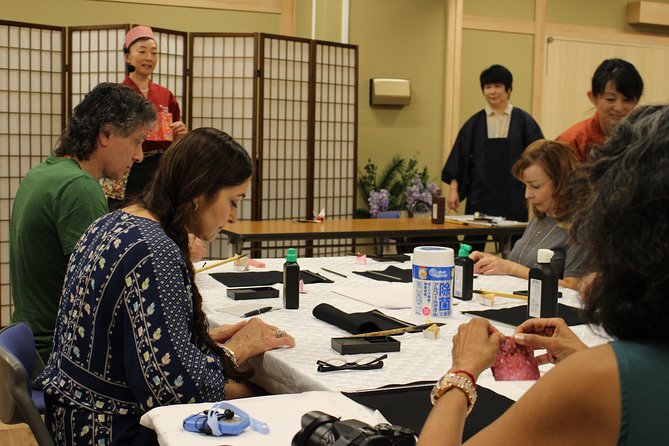
Japanese calligraphy becomes much more interesting when you stop looking at finished characters and try to make them yourself. In this 90-minute Tokyo workshop, an accredited instructor explains the writing system, demonstrates the tools, and gives you repeated practice before you create a souvenir board.
I like the way the class combines cultural background with hands-on work, rather than treating calligraphy as a quick photo opportunity. I also like the small maximum of 10 participants, which should give you more personal help with brush technique. The main consideration is price: at $77.26 per person, it is not a cheap craft activity, though the instruction, equipment, and finished board help explain the cost.
In This Review
- Key Points to Know Before Booking
- What You Actually Learn in 90 Minutes
- Why the History Lesson Improves the Activity
- Brush, Inkstone, and the Challenge of Control
- Writing Your Name in Japanese Characters
- Making the Souvenir Calligraphy Board
- Meeting in Shibakōen
- Group Size, Language, and Personal Attention
- Is $77.26 a Fair Price?
- Who Will Get the Most From This Workshop?
- Should You Book the Japanese Calligraphy Experience?
- FAQ
- How long does the Japanese calligraphy experience last?
- Where does the workshop meet?
- Does the activity include transportation?
- Are calligraphy tools provided?
- Do I get to take home anything I make?
- How many people can join the class?
- Can I cancel for a full refund?
Key Points to Know Before Booking
- Practice comes before the souvenir: You learn brush control and basic strokes before making your final calligraphy board.
- The Japanese writing system is part of the lesson: The instructor explains characters, names, and the different forms of Japanese writing.
- Inkstone and brush are supplied: Equipment rental is included, so you do not need to bring calligraphy tools.
- Small groups should mean better guidance: The class has a maximum of 10 participants.
- The meeting point is in Shibakōen: You make your own way to Kikai Shinkō Kaikan in Minato City.
- The final piece goes home with you: A souvenir calligraphy board is included in the price.
What You Actually Learn in 90 Minutes
This class is built in two clear parts. The first half gives you the basic tools and ideas, while the second half lets you use them on a finished piece. That structure matters because Japanese calligraphy is not simply a matter of copying a symbol with a wet brush.
You begin with an introduction to the history of Japanese calligraphy and the mechanics of writing. The instructor explains how the writing system works and helps you understand why Japanese characters can look so different from one another. For a first-time visitor, this context gives meaning to the marks you are about to make.
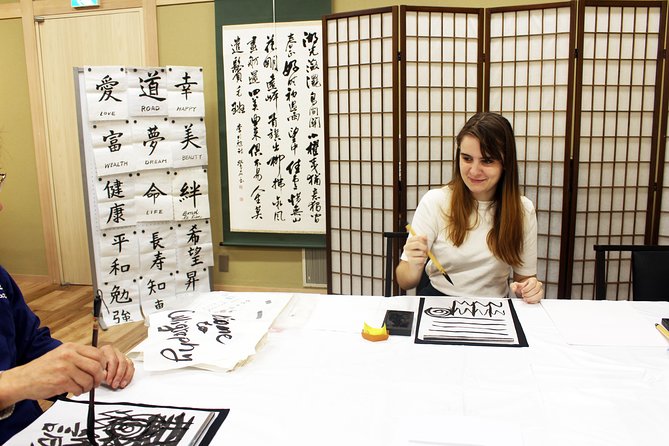
The lesson then moves to the equipment. You learn how to use an inkstone and brush, two objects that can seem simple until you try to control them. Brush pressure, direction, and movement all affect the result. The supplied equipment rental keeps the activity easy for you, since you do not need to purchase or pack anything in advance.
The early practice includes writing your name in Japanese characters. This is a useful personal touch. You are not only copying an abstract design, you are working with something connected to your own identity. The instructor also introduces basic brushstrokes, giving you a foundation before you attempt the final piece.
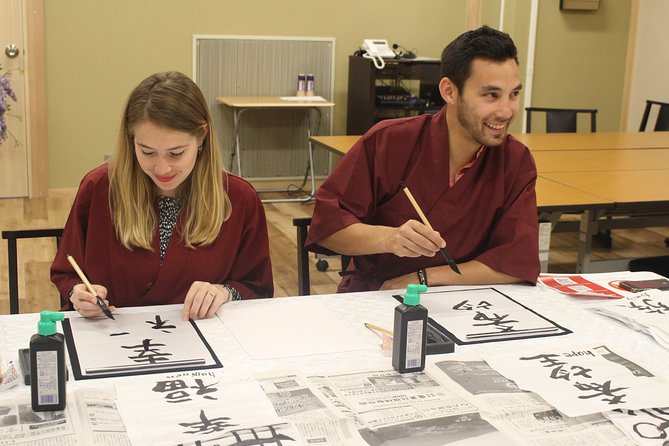
The second half is your chance to put the new skills to work. You create a calligraphy piece on a souvenir board, which is included in the price. It will not turn you into a master calligrapher in one sitting, but it gives the lesson a satisfying purpose and leaves you with something more substantial than a few practice sheets.
A few more Tokyo tours and experiences worth a look

Why the History Lesson Improves the Activity
The historical explanation is not just filler while supplies are arranged. Japanese calligraphy has its own traditions, tools, and visual logic, and the short introduction helps you see those details more clearly.
Without that background, it is easy to treat the characters as attractive shapes. With it, you begin to understand that the order and quality of each stroke matter. The class connects the physical act of writing with the culture behind it, which makes the practice feel less like a generic art lesson.
The historical portion also gives the activity a calmer pace. You are not rushed straight into producing a perfect souvenir. Instead, you first hear how the art developed and learn the basic mechanics. One participant specifically found the historical background a welcome part of the experience, and I can see why. It adds purpose to the practice.
You should still keep your expectations realistic. This is an introductory workshop, not a long course in Japanese calligraphy. The goal is to give you a working feel for the tools and strokes, along with a finished board you can keep.
Brush, Inkstone, and the Challenge of Control
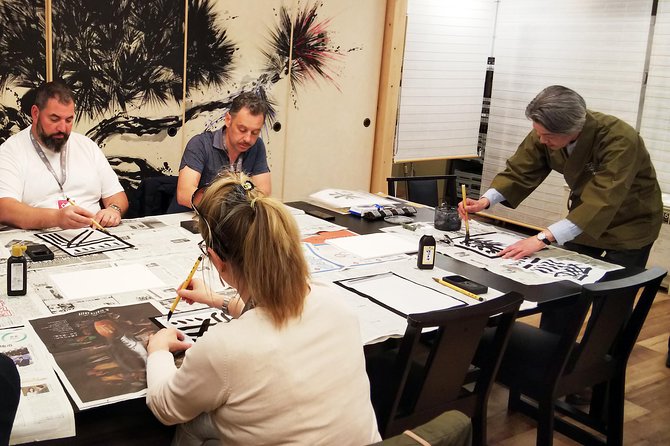
The brush is where the class becomes a real hands-on experience. A pen usually gives you a fairly predictable line. A calligraphy brush responds to pressure and movement, so your stroke can become wider, narrower, darker, or lighter as your hand changes.
That can be frustrating at first, especially if you are used to writing quickly. One participant praised the instructor’s patience and the clear demonstrations of different motions. That is an important detail for beginners. You do not need naturally good handwriting to take part, but you do need to accept that your first attempts may look uneven.
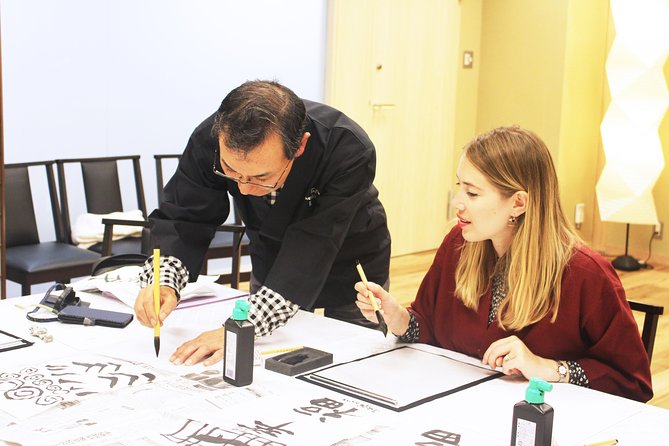
The instructor’s role is especially valuable here. Rather than simply showing you a finished character, the teacher can demonstrate how to begin a stroke, where to change direction, and how to finish it. The small group size should make it easier to receive corrections than in a large workshop.
You get to practice as much as possible during the first part of the session. That practice is where the value lies. The souvenir board is appealing, but the more useful result is learning how the brush behaves before you make your final work.
Writing Your Name in Japanese Characters
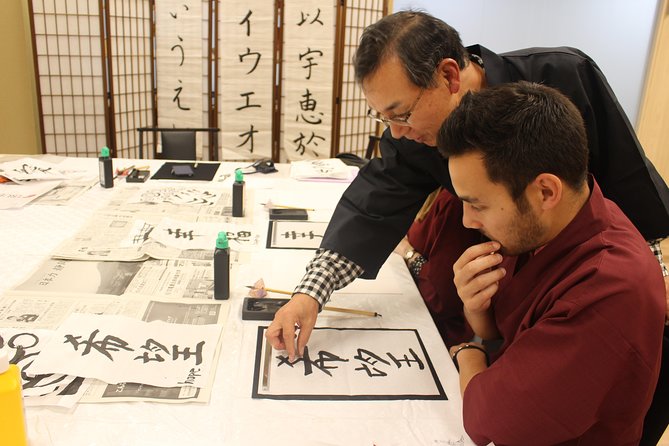
Writing your name gives the lesson a direct connection to you. You are introduced to Japanese characters and then use them to represent your own name, rather than copying only a traditional example chosen by someone else.
This also helps show the complexity of the Japanese writing system. The class covers different aspects of Japanese writing, so you gain a basic sense of why names and words can be represented in ways that do not match the Roman alphabet letter for letter.
The exact level of detail will depend on the instructor and the pace of the group. The available information does not specify which characters each person will use, so you should not expect a particular translation or spelling in advance. The important point is that your name becomes part of the practice.
Take your time at this stage. The final piece will look better if you pay attention to the individual movements instead of trying to finish quickly. The class is designed to teach basic methods, not to reward speed.
Making the Souvenir Calligraphy Board
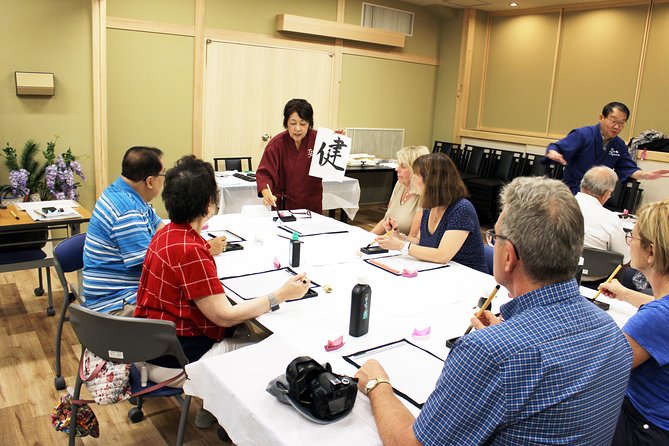
The final board is the part you can display at home, but it works best when you see it as the result of the lesson rather than the sole reason to attend. By this point, you have heard about the art, handled the tools, practiced brushstrokes, and worked with Japanese characters.
You then apply those skills to a calligraphy piece of your own. The instructor can guide you as you create it, and the small group limit should allow for personal attention. One participant said the instructors took the time to create what the group requested, which suggests that the activity can accommodate some personal choice within the class format.
The board is included, so there is no separate charge for the main take-home item. That improves the practical value of the $77.26 price. You are paying for instruction, equipment use, and the finished souvenir, not only for admission to a room where you watch someone else write.
Still, this is a handmade activity. Your result may show the learning process, and that is part of its charm. If you want a flawless piece produced by a professional, this is not the right expectation. If you want to understand the process and take home something you made with guidance, it makes much more sense.




Meeting in Shibakōen
The workshop begins and ends at Kikai Shinkō Kaikan, located at 3-chōme-5-8 Shibakōen, Minato City, Tokyo 105-0011. Transportation to and from the venue is not included, so you need to plan your own route.
The location is near public transportation, which makes it practical to reach within Tokyo. The activity does not include food or beverages, and the session is only about 90 minutes, so plan any meal or café stop separately.
Because the class returns to the meeting point, you do not have to arrange a second pickup location. That is helpful if you are fitting the workshop between other Tokyo plans. Give yourself enough time to arrive without rushing, since a calm start suits an activity that depends on careful hand movements.
The venue details are specific, but the supplied information does not identify a particular station or provide walking directions. Check the meeting point carefully after booking and allow time to find the building.
Group Size, Language, and Personal Attention
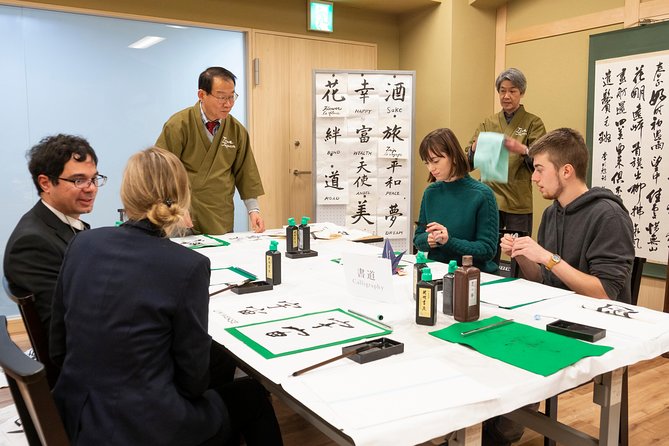
The maximum group size is 10 people. That is small enough to support an instructional feel, though it is not a private lesson. Your experience will depend partly on how many people attend and how much individual help each person needs.
The instructor is a nationally accredited tour guide-interpreter, and the workshop is led by professional calligraphers. The accreditation is reassuring for visitors who want more than a craft demonstration. You get cultural explanation along with the practical lesson.
English ability also matters in a class about precise movements and an unfamiliar writing system. One participant described the teacher as polite and well spoken in English, while another praised the patience shown during practice. Those details suggest that beginners who need clear explanations should feel more comfortable here, though no class can remove every language challenge.
The instructors are also described as friendly and willing to spend time helping participants. That combination of patience and instruction is one of the strongest reasons to choose this workshop over a less formal activity.
Is $77.26 a Fair Price?
At $77.26 per person, this is a midrange cultural activity rather than a budget souvenir stop. The price makes the most sense if you value instruction and want to make something yourself.
Your fee covers a nationally accredited guide-interpreter, calligraphy equipment rental, and a souvenir board. You also get roughly an hour and a half of teaching and practice. Since you do not need to buy ink, brushes, or other supplies, the included equipment removes some extra expense.
The price is harder to justify if you mainly want a quick photo or a professionally made piece. You could spend less on many casual craft activities in Tokyo, but they may not offer the same combination of cultural explanation, personal practice, and a take-home board.
Group discounts may be available, which could help if you are booking with family or friends. The activity is often booked about 53 days in advance, so popular dates may fill before a last-minute decision. Confirmation is sent within 48 hours of booking, subject to availability.
Free cancellation is available if you cancel at least 24 hours before the start time. Cancellations made later, and changes made less than 24 hours in advance, are not accepted for a refund.
Who Will Get the Most From This Workshop?
I would recommend this experience to first-time visitors who want a cultural activity they can actively participate in. It is also a good fit for couples, families, and small groups looking for a shared project that does not take up half a day.
You do not need previous calligraphy experience. The course starts with basic methods and includes practice before the final board. Most people can participate, according to the activity information, and the class is designed for beginners.
It may suit you especially well if you enjoy patient, detail-based activities. You should be ready to slow down, listen to instructions, and accept imperfect first attempts. If your Tokyo schedule is packed with major sights and you prefer high-energy activities, the quiet pace may feel less exciting.
The workshop also makes sense for anyone who wants a souvenir with a personal connection. A shop-bought print can be attractive, but making your own board gives you a story to attach to it.
Should You Book the Japanese Calligraphy Experience?
Book this workshop if you want to learn the basics of Japanese calligraphy, practice with traditional tools, and take home a board you made yourself. The strongest features are the patient instruction, the historical introduction, and the chance to practice before producing the final piece.
At $77.26, it is best viewed as a guided cultural lesson with a souvenir, not as a cheap craft class. You should also remember that transportation, food, and drinks are not included.
I would skip it only if you want a polished professional artwork, a private class, or a very short activity. For everyone else, especially small groups who enjoy learning by doing, this is a focused and personal way to spend 90 minutes in Tokyo.
FAQ
How long does the Japanese calligraphy experience last?
The activity lasts approximately 1 hour and 30 minutes.
Where does the workshop meet?
The meeting point is Kikai Shinkō Kaikan, 3-chōme-5-8 Shibakōen, Minato City, Tokyo 105-0011, Japan.
Does the activity include transportation?
No. Transportation to and from the venue is not included. The workshop begins and ends at the meeting point.
Are calligraphy tools provided?
Yes. Calligraphy equipment rental is included in the price.
Do I get to take home anything I make?
Yes. You create a calligraphy piece on a souvenir board, which is included.
How many people can join the class?
The activity has a maximum of 10 participants.
Can I cancel for a full refund?
Yes, if you cancel at least 24 hours before the experience start time. Cancellations made less than 24 hours in advance are not refunded, and changes made within that period are not accepted.
More Craft Workshops in Tokyo

More tours in Tokyo we've reviewed




Craft Workshops, compared.
 ★ 5.0Tokyo Shinjuku Chopsticks Making ClassFrom $20
 ★ 4.8Chopstick Making Workshop in GinzaFrom $251 hour
 ★ 5.0Kintsugi Experience: Art of Golden Joinery in TokyoFrom $59
 ★ 5.0Tokyo Chopstick Making Workshop with ArtisanFrom $26
Tokyo: Shinjuku Chopstick Making ClassFrom $121 hour
Tokyo: Chopstick-Making WorkshopFrom $61 hour