
Reviewed · TOKYO
Cook Everyday Japanese Home Meals with Your Tokyo Mom
The best part of this experience is the setting: you cook inside a real Japanese home, not a restaurant kitchen built for tourists. In a quiet Tokyo suburb, you will learn everyday dishes, handle familiar household tools, and sit down to eat what you made.
I like the hands-on menu and the small cultural details, such as removing your shoes and arranging the meal. I also like the friendly, beginner-friendly teaching associated with Aki-san, where even people who rarely cook can take part. The main drawback is the trip out to Koganei, plus the fact that transportation and alcohol cost extra.
In This Review
- Key points to know before booking
- A quiet suburban home instead of a staged kitchen
- Starting with dashi, the quiet foundation of Japanese cooking
- Choosing between Saikyo-yaki, teriyaki, or your own request
- Onigiri, tamagoyaki, and the art of a balanced meal
- What you learn beyond the recipes
- Why beginners should feel comfortable
- A small group makes the kitchen work
- Is $99 a fair price?
- Timing, transport, and practical details
- Who will enjoy this Tokyo cooking class most?
- Should you book Cook Everyday Japanese Home Meals with Your Tokyo Mom?
- FAQ
- Where does the cooking experience take place?
- How long does the experience last?
- What food will I prepare?
- Is an English-speaking instructor available?
- What is included in the price?
- How many people can join the class?
Key points to know before booking
- Cook in a lived-in Tokyo home: The setting may be a retro house or a cozy family home, giving the class a personal feel.
- Build the meal from dashi: You begin with seaweed and dried fish stock, the base for much Japanese home cooking.
- Choose your main dish: Pick Saikyo-yaki, teriyaki, or request another Japanese dish, then select meat, fish, or vegetables.
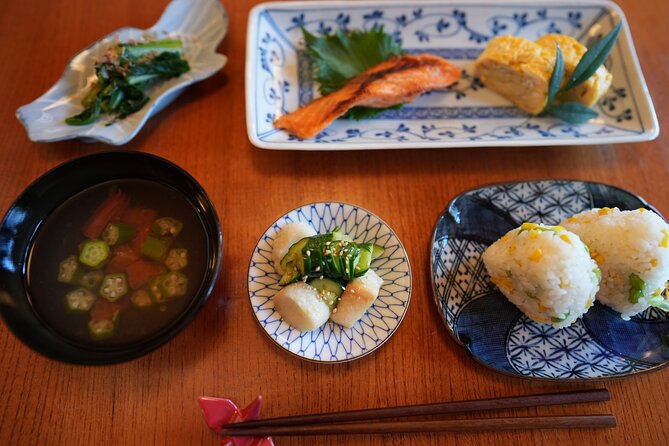
- Learn several useful staples: The menu includes onigiri, tamagoyaki, a seasonal vegetable dish, and miso soup.
- Small group, about 2.5 hours: A maximum of six people keeps the lesson practical and social.
- Pay for access to daily life: At $99 per person, the value is strongest if you want cultural contact and cooking skills, not just a meal.
A quiet suburban home instead of a staged kitchen
Tokyo can feel like a city of trains, towers, neon, and packed streets. This class gives you a different view. You head to Nakacho in Koganei, a quieter part of Tokyo Prefecture, and enter a Japanese home where the cooking happens with ordinary tools and everyday ingredients.
That change of setting matters. You are not watching a chef perform behind a counter. You are learning how a Japanese family meal comes together in a domestic space. Even simple acts, such as taking off your shoes at the entrance or helping arrange dishes on the table, become part of the lesson.
The home itself may be a charming older house or a lived-in family home. The exact setting can vary, so you should not book this expecting a polished cooking studio with identical equipment. That is also part of the appeal. The experience aims for daily life, not theatrical Japan.
The meeting point is 4-chōme-15-17 Nakachō, Koganei, Tokyo 184-0012. The activity ends at the same place. It is near public transportation, but private transportation, parking, and other travel costs are not included. Leave enough time to reach the suburb without rushing.
If you're still narrowing it down, here are other tours in Tokyo Prefecture we've reviewed.

Starting with dashi, the quiet foundation of Japanese cooking
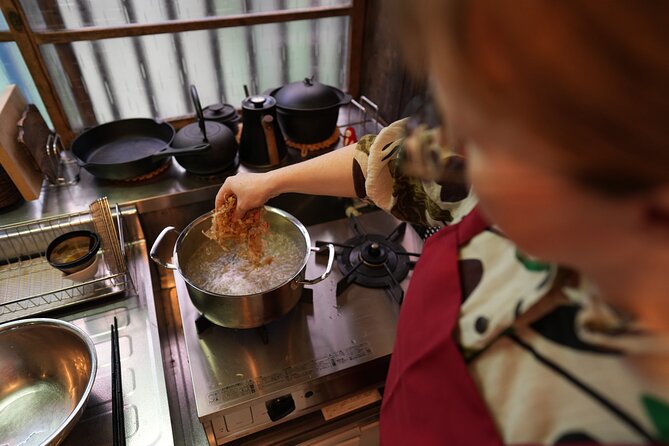
The class begins with dashi, a basic Japanese soup stock made from seaweed and dried fish. This is one of the most useful parts of the lesson because dashi gives many Japanese dishes their savory depth without requiring a heavy sauce.
You will see how a few simple ingredients create the base for miso soup and other home dishes. The teacher also connects the cooking to everyday Japanese food culture, including the role of seasonal ingredients and the balance of a home meal.
This is not a chef-training session. The aim is to help you understand techniques you can repeat at home. If you are new to Japanese cooking, dashi gives you a clear starting point. If you already cook, it may help you see how stock fits into several dishes at once.
Because the lesson covers a full menu in about two and a half hours, expect a practical pace. You will have several things happening in the kitchen, but the group size helps. With no more than six people, you should have room to participate rather than simply watch.
Choosing between Saikyo-yaki, teriyaki, or your own request
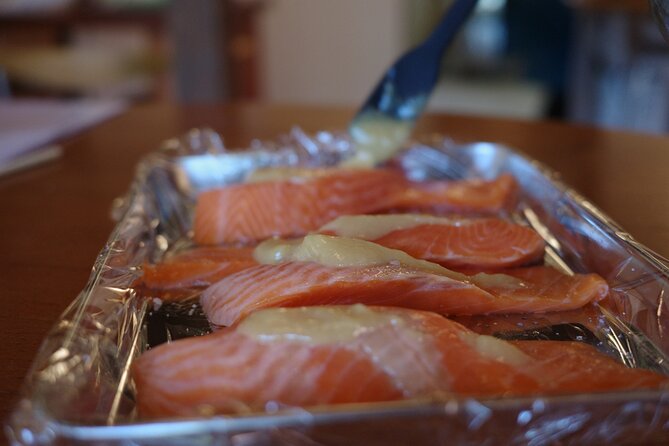
For the main dish, you choose one cooking style and one main ingredient. Saikyo-yaki uses a sweet white miso marinade before grilling, creating a delicate, savory flavor. Teriyaki uses a sweet and salty soy-based glaze.
You can prepare the chosen style with meat, fish, or vegetables. This flexibility makes the class easier to fit around your tastes. It also gives you a chance to compare Japanese cooking methods with ingredients you already know.
You may also request a favorite Japanese dish in advance or at the appropriate point in the planning. The kitchen will do its best to make it happen, but a request is not a guarantee. For a smooth experience, share your preference when booking or before the class so the menu can be considered.
Saikyo-yaki is a good choice if you want something less familiar than standard teriyaki. Teriyaki may suit you better if you want a technique that is easy to recognize and repeat at home. Vegetables work well if you prefer a plant-based main, though the supplied information does not specify a dedicated vegan or vegetarian menu.
Onigiri, tamagoyaki, and the art of a balanced meal
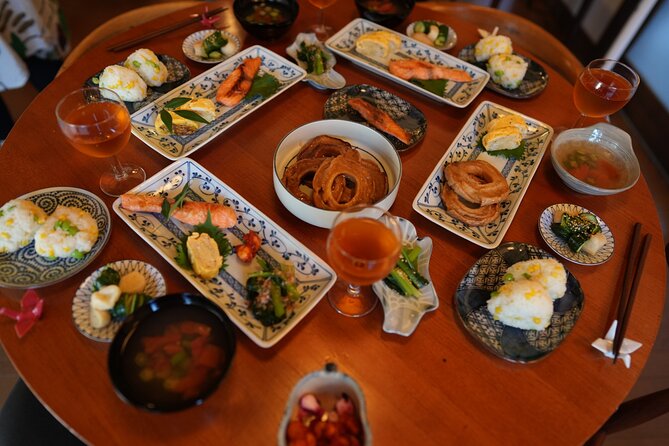
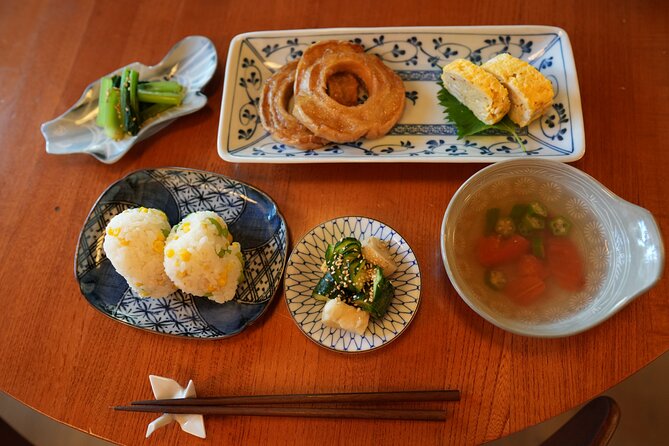
The main dish is only one part of the cooking. You will also make onigiri, Japanese rice balls shaped by hand and wrapped in seaweed. This is a simple food, but the shaping gives you a direct connection to the way ordinary Japanese meals and packed lunches are made.
You will prepare fluffy tamagoyaki, the rolled Japanese omelet. It looks easy until you try to create the neat layers, so this is one place where patient instruction helps. The finished omelet adds a soft, slightly sweet element to the meal.
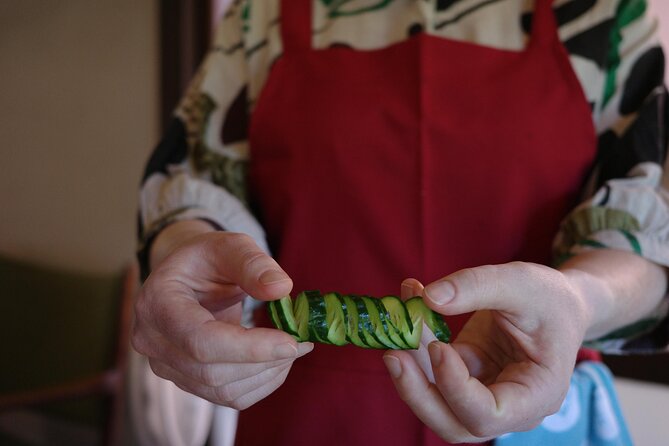
A seasonal vegetable dish rounds out the menu. The ingredients can change with the time of year, which means you may not receive precisely the same vegetable preparation on every date. That seasonal approach is useful because Japanese home cooking often depends on what is fresh and available.
Miso soup completes the table. Since you have already worked with dashi, you can better understand how stock, miso, and simple additions become a warm everyday soup.
The meal is not designed as a lavish tasting menu. It is a collection of dishes that make sense together: rice, soup, protein or vegetables, egg, and a seasonal side. I appreciate that balance because it shows how Japanese home cooking works beyond sushi and ramen.
What you learn beyond the recipes
The most worthwhile lessons may happen between the instructions. You will pick up practical customs tied to eating at home, including entrance manners, table arrangement, and the rhythm of preparing several dishes together.
These details are not separate lectures. They appear naturally as you move through the house and kitchen. You might find that they make the food easier to remember because each recipe comes attached to a setting and a routine.
The instructor also discusses the culture and health ideas connected with everyday Japanese cooking. The focus is warmth and practicality rather than restaurant technique. You are learning how food fits into ordinary life.
English-language instruction is available, and recipe and instruction materials are included. That matters if you want to recreate the dishes after returning home. Without written guidance, a cooking class can become a pleasant memory but a difficult recipe to repeat. Here, you leave with something more useful than photographs.
Aki-san is the guide name connected with the cooking classes, and the teaching style is suited to beginners. One class account describes homemade stock and ramen noodles made from scratch, while another class focused on seasonal autumn ingredients, miso soup, rolled omelet, rice balls, and university potatoes. The exact menu here is the one described above, but these details suggest that the kitchen can explain techniques in a friendly, adaptable way.
Why beginners should feel comfortable
You do not need to be a confident cook to book this. The class is structured around basic Japanese foods, and the teaching is intended to help people who do not cook often.
That does not mean you will simply stand by while someone else handles the difficult work. You can expect to shape rice balls, help make the omelet, work with the dashi, and take part in the preparation of the selected main dish. The apron and hand towels are provided, so you do not need to bring kitchen gear.
A beginner should still be ready to follow directions and share workspace. Cooking several dishes in a small home requires attention. If you prefer to sit back and watch, this may feel more active than you want.
The reward is a meal you helped create. The cooking itself becomes easier when you know you will soon eat the results, and the group setting can make the lesson feel relaxed rather than formal.
A small group makes the kitchen work
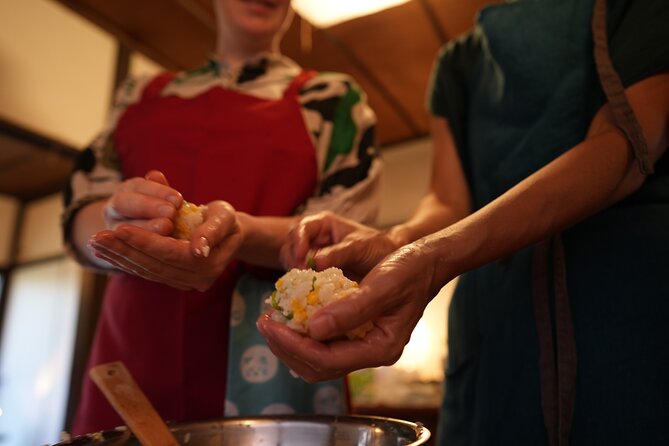
The maximum group size is six people. That is a useful limit for a home kitchen. You should have a better chance to ask questions, use the utensils, and receive help with tasks such as shaping onigiri or rolling tamagoyaki.
A small group also changes the social side of the experience. You share a table and a meal rather than moving through a large class with a crowd. The format suits solo visitors, couples, friends, and families who enjoy meeting people through food.
The tradeoff is that this is a shared experience, not a private class. Your requested dish may need to fit the overall meal and the time available. If privacy or a highly customized menu is essential, confirm those details before booking.
The total duration is about 2 hours and 30 minutes. That is long enough for a full lesson and meal, but short enough to fit into a larger Tokyo itinerary. I would avoid placing it directly before a fixed appointment, since cooking times and group questions can vary.
Is $99 a fair price?
At $99 per person, this is not the cheapest way to eat Japanese food. You could buy a good casual meal in Tokyo for much less. The price makes more sense when you value the setting, instruction, ingredients, recipe materials, and personal contact with a local host.
You are paying for more than the food on the plate. The experience includes all necessary ingredients, use of cooking utensils, an apron, hand towels, and an English-speaking instructor. You also receive a meal with several separate components rather than one prepared dish.
I see the strongest value in the cultural access. A restaurant can show you what Japanese food tastes like. This class shows you how a household meal is prepared and served. If you want to repeat the recipes at home, the written materials add further value.
The value is weaker if your main goal is simply to eat. You may also find the cost less attractive if you already know Japanese cooking well and do not need guidance with dashi, onigiri, or tamagoyaki.
Timing, transport, and practical details
The class begins and ends at the Koganei meeting point. Since the location is near public transportation, you can reach it without arranging private transport, but the cost of getting there is your responsibility.
Check your route carefully before leaving central Tokyo. Koganei is not the same kind of location as a central sightseeing district, and the suburban setting is part of the experience. Allow time for the journey, finding the address, and arriving ready to remove your shoes.
Confirmation is normally issued at booking. If you book within two days of the experience, confirmation may arrive within 48 hours and depends on availability. A mobile ticket is provided, so keep the booking accessible on your phone.
You can cancel for a full refund up to 24 hours before the start time. Cancellations or changes made less than 24 hours in advance are not accepted for a refund. The cut-off uses local Tokyo time.
Alcohol is not included. That is a minor point, since the focus is on food and home cooking, but plan separately if you want drinks with the meal.
Who will enjoy this Tokyo cooking class most?
I would recommend it to you if you want a slower, more personal side of Tokyo. It fits people who enjoy food, cultural customs, small groups, and learning by doing.
It is especially suitable for:
- Beginners who want clear help with Japanese recipes
- Couples or friends looking for a shared activity
- Solo visitors who enjoy meeting a local host and a small group
- Families with an interest in food and daily life
- Cooks who want to learn dashi, tamagoyaki, and onigiri
- Anyone who prefers a home meal to a formal restaurant setting
You should think twice if you want a central Tokyo activity, a private kitchen, a professionally staged class, or a large choice of alcoholic drinks. You should also check menu needs ahead of time if you have dietary restrictions, since the supplied details do not list allergy handling or special-diet guarantees.
Should you book Cook Everyday Japanese Home Meals with Your Tokyo Mom?
Book it if the idea of entering a Japanese home and helping prepare a complete meal sounds better than simply ordering one. The strongest features are the genuine domestic setting, the small group, and the chance to learn useful basics from dashi through dessert-like seasonal vegetables such as university potatoes in some classes.
The $99 price is reasonable for a two-and-a-half-hour cultural activity with food, instruction, equipment, and recipe materials. It is not a bargain meal, but it can be good value for an experience you can carry home.
My practical advice is to choose your main dish in advance, check the route to Nakacho, and leave plenty of time to arrive. If you want daily Japanese life rather than a polished tourist performance, this is a thoughtful choice.
FAQ
Where does the cooking experience take place?
It takes place at 4-chōme-15-17 Nakachō, Koganei, Tokyo 184-0012, Japan, in a Japanese home in a quiet Tokyo suburb.
How long does the experience last?
The cooking experience lasts approximately 2 hours and 30 minutes.
What food will I prepare?
The menu includes dashi, onigiri, tamagoyaki, a seasonal vegetable dish, miso soup, and one main dish. The main dish can be Saikyo-yaki, teriyaki, or a requested Japanese dish, using meat, fish, or vegetables.
Is an English-speaking instructor available?
Yes. An English-speaking instructor is available, and Aki-san is the guide name associated with the cooking classes.
What is included in the price?
The price includes ingredients, cooking utensils, recipe and instruction materials, an apron, and hand towels. Transportation, parking fees, and alcoholic beverages are not included.
How many people can join the class?
The activity has a maximum of six participants. It starts and ends at the Koganei meeting point.