
Reviewed · IMPERIAL PALACE & SHOGUN TOURS
Imperial Palace to Tokyo Station Historical Walking Tour
Tokyo’s past is easiest to grasp when you walk through it. This 2.5-hour route moves from Edo Castle’s stone walls and samurai guardhouses to the polished offices of Marunouchi, ending beneath Tokyo Station’s red-brick domes.
I like the compact group size, capped at 12 people, and the way the route links several different sides of the city. I also like that guides such as Naoki, Ms. Futami, Masa-san, and Mitsuko Shirai are described as patient, friendly, and ready to answer questions. The main consideration is that you visit the East Gardens, not the Inner Palace, which is closed to the public.
In This Review
- Key points to know before you book
- Why this Imperial Palace walk works
- Starting at Wadakura Fountain Park
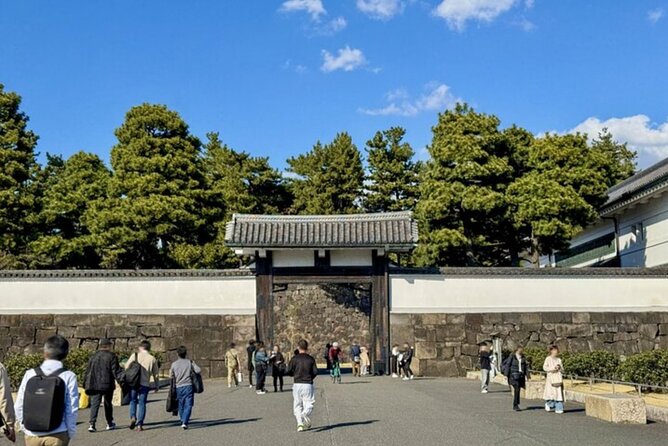
- Entering Edo Castle through Otemon Gate
- Samurai security at Hyakunin Bansho
- Ninomaru Garden and Suwa-no-chaya
- Plum trees and the lost castle keep
- Fujimi-yagura and the Honmaru grounds
- Palace views at Kokyo Gaien
- Marunouchi changes the mood
- Ending beneath Tokyo Station’s red brick
- Guides, group size, and the feel of the walk
- Practical value at $39.09
- Should you book this Imperial Palace to Tokyo Station walk?
- FAQ
- How long does the Imperial Palace to Tokyo Station tour last?
- How much does the tour cost?
- Where does the tour begin?
- Where does the tour end?
- Is admission included?
- Can I enter the Inner Palace?
- How many people can join the tour?
- Can I cancel for a refund?
Key points to know before you book
- Edo Castle remains: See gate ruins, guardhouses, stone foundations, a watchtower, and a model of the lost main keep.
- A calm start in central Tokyo: Wadakura Fountain Park and Ninomaru Garden offer a quiet break from the city around them.
- History with a modern finish: The route shifts from Tokugawa power to Marunouchi offices, shops, art, and Tokyo Station.
- Small-group format: The maximum of 12 people gives you a better chance to hear the guide and ask questions.
- Good value at $39.09: All stops are free, so your fee mainly pays for the guide, historical context, and a clear route.
- Plan for walking: The tour lasts about two and a half hours and includes outdoor paths, open plazas, and several stops on foot.
Why this Imperial Palace walk works
I like tours that give a city a beginning, middle, and end. This one starts beside the palace gardens, explains the military and political world of Edo Castle, then walks you into modern Tokyo’s business center.
That change is the point. You are not simply looking at old stones or taking photos of a famous station. You are watching Tokyo shift from shogun rule to imperial rule and then to the modern capital you see today.
The fee is $39.09 per person. Since the gardens, parks, gates, and station are free to enter, the price is not paying for admission. It pays for a local guide to explain what you are looking at and connect the pieces.
That makes the tour a good choice if you want context without committing to a full-day sightseeing program. If you already know Edo-period history well, or prefer to wander at your own pace, the price may feel less attractive.
A few more Tokyo tours and experiences worth a look

Starting at Wadakura Fountain Park
The meeting point is the Starbucks Coffee near Wadakura Fountain Park in Kokyogaien, at 3-1 Kōkyogaien, Chiyoda City. This is a practical place to begin because it sits close to the palace grounds and is easy to identify.
The park itself offers a soft opening to the walk. Its fountains date from 1961 and were created to mark the marriage of Emperor Akihito. You get a few minutes here to meet the guide, settle into the group, and look across a polished public space near the center of Tokyo.
Do not expect a long stop. The listed time is about five minutes, so use it to arrive early, check your mobile ticket, and get ready for the walking portion.
Entering Edo Castle through Otemon Gate
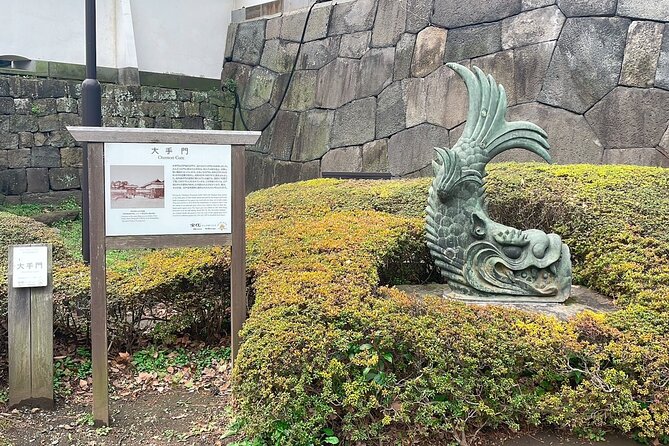
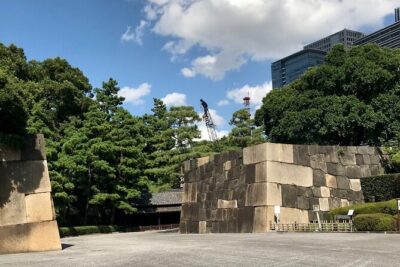
The next stop is Ōte-mon Gate, the main entrance to the Imperial Palace East Gardens. In the Edo period, this was an important approach to Edo Castle, the seat of the Tokugawa shoguns.
The gate helps you understand scale. It was not designed as a decorative welcome arch. It was part of a defensive system, and the heavy construction makes more sense once you know that the castle was the center of military and political power.
The guide spends about 10 minutes here. This is the sort of place where a short explanation adds real value, because much of the original castle complex is no longer visible to an untrained eye.
Near the gate, the Ote-San’no Gate ruins offer another brief look at castle defenses. Only a few minutes are planned, but the remains help show how entry points were controlled and why the castle was more than a residence.
Samurai security at Hyakunin Bansho
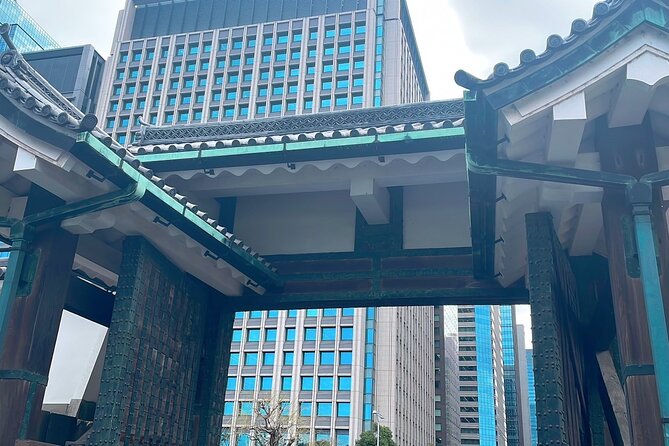
The Hyakunin Bansho Guardhouse is one of the more memorable stops for anyone interested in daily castle operations. Its name refers to the hundred samurai assigned to protect the inner sections of Edo Castle.
You get about 10 minutes here. The building gives the tour a human angle. Instead of thinking only about grand rulers and vast stone walls, you can picture the guards, rules, and checkpoints that kept the castle working.
This stop also helps explain why the East Gardens are worth more than a quick photo. They preserve pieces of a working fortress, not just pretty paths.
Ninomaru Garden and Suwa-no-chaya
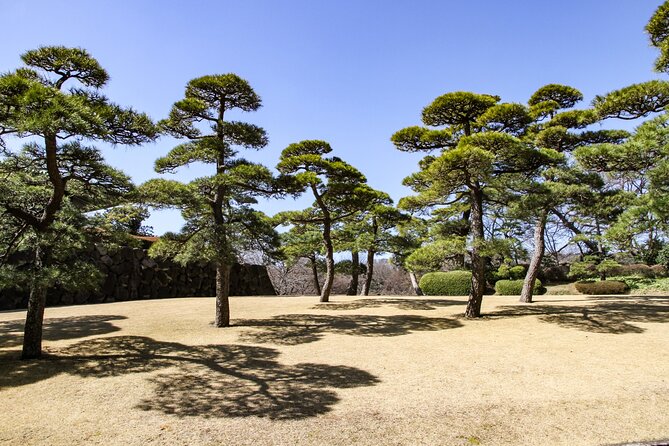
The route then slows down in Ninomaru Garden, a classic Japanese garden with seasonal plants, winding paths, and water features. This is one of the best parts of the walk for a change of pace.
The garden is carefully arranged, but it does not feel like a museum display. You can take in the balance of paths, plants, and water while the guide explains how garden design fit into the life of the castle.
Ten minutes is enough to appreciate the setting, though garden lovers may wish for more time. If photography is important to you, stay alert and use the short stop well.
At Suwa-no-chaya, the route pauses for about five minutes. The historic teahouse is not operating, so do not expect tea service or a refreshment break. Its value is cultural and visual, adding another reminder that castle life included ceremony as well as defense.
Food and drinks are not included anywhere on the tour. You will need to buy them yourself, either before the walk or after reaching Tokyo Station.
Other walking tours we've reviewed in Tokyo



Plum trees and the lost castle keep
Bairinzaka, or Plum Tree Hill, is a short climb with plum trees that bloom in season. The stop lasts about five minutes, and its appeal depends heavily on timing.
During bloom, the trees provide color and fragrance. Outside that period, the hill still contributes to the route, but it may not be a major highlight. This is a good example of why you should keep expectations flexible. The East Gardens change with the season.
The walk then reaches the ruins of the Edo Castle main keep at Takehashi Gomon. The original keep is gone, but the stone foundations and walls convey how large the former structure was.
The scale model of the Edo Castle keep adds useful detail. Historical records and drawings were used to reconstruct the model, giving you a clearer idea of the building that once dominated the castle grounds.
I find models especially helpful at places where only foundations remain. Without one, it can be hard to imagine the height and presence of a vanished building. Here, the model gives the ruins a visual frame.
Fujimi-yagura and the Honmaru grounds
Fujimi-yagura is one of the remaining watchtowers from Edo Castle. It was used for surveillance and defense, and its form shows how military needs shaped the castle.
The stop is scheduled for about 10 minutes. Your guide can help you read the structure as part of a wider defensive plan rather than as an isolated old building.
Next comes Honmaru, the former main compound of Edo Castle. This was the central area for the shogun’s residence and political headquarters. The original buildings are no longer intact, but the location gives you a strong sense of where power was concentrated.
The tour spends about 10 minutes here. This is where the earlier gate, guardhouse, gardens, and towers begin to fit together. You have moved from the outer defenses toward the heart of the old castle.
Palace views at Kokyo Gaien
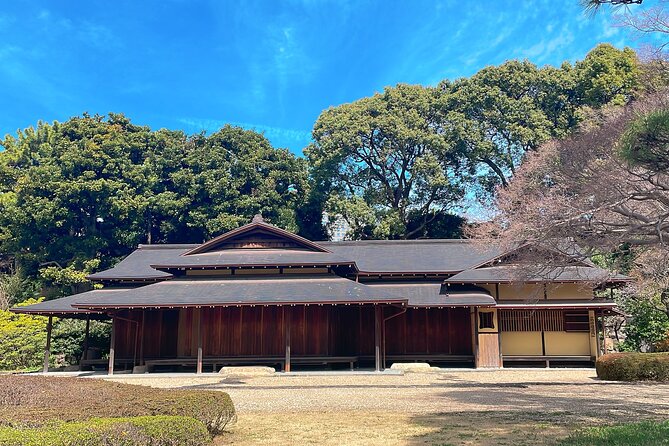
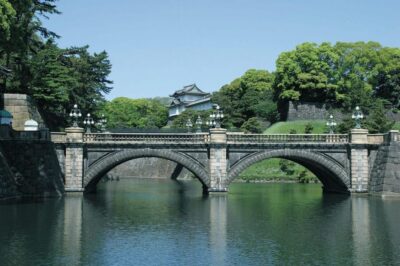
After leaving the East Gardens, you enter Kokyo Gaien National Garden, a broad open plaza with views toward the palace’s outer buildings and Nijubashi Bridge.
The openness is a welcome change after the garden paths. It also makes this one of the better photography points on the tour. You can take in the palace setting without entering the Inner Palace itself.
That distinction matters. This experience does not provide access to the private inner grounds. Palace access can also be affected by holidays, so the walk is best understood as an exterior and East Gardens tour.
One earlier tour experience had to adjust when the Imperial Palace was not open because of a holiday. The group still saw gates, bridges, and exterior buildings, but you should book this with the same expectation: the value comes from the public gardens, visible structures, and guide’s explanation.
Marunouchi changes the mood
From Kokyo Gaien, the walk continues into Marunouchi, Tokyo’s central business district. The change happens quickly. Palace walls and open gardens give way to office towers, upscale shops, restaurants, and public art.
This section makes the route more than a castle tour. You see how Tokyo places old power at the center of a modern commercial district. The contrast is useful, especially if this is your first visit to the city.
The tour information does not assign a separate time to every Marunouchi stop, so the pace here may depend on the guide and the group. You will want comfortable shoes and enough energy for the entire route, rather than treating the palace portion as a short stroll.
I also like ending in this district because you can continue your day easily. Marunouchi offers places to eat, shop, and look around, while nearby trains connect you to much of Tokyo.
Ending beneath Tokyo Station’s red brick
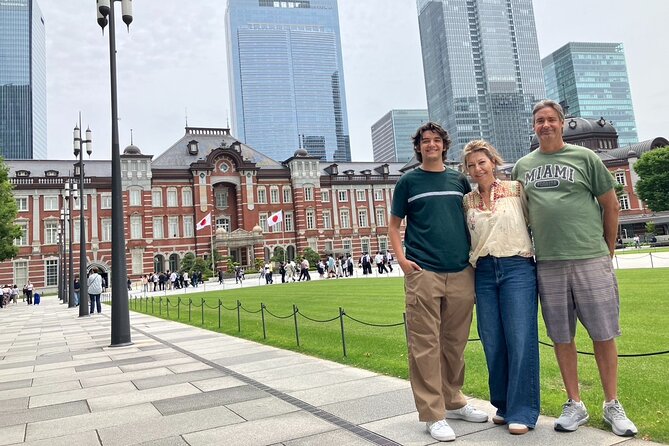
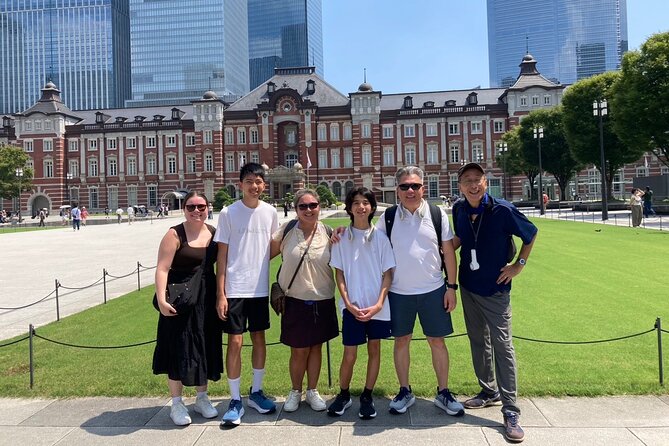
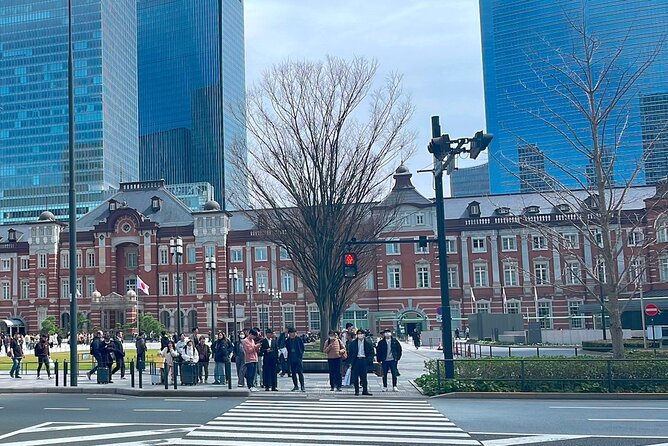
The final stop is Tokyo Station, about 20 minutes. Its restored red-brick exterior recalls the station’s 1914 appearance, while the inside functions as one of Tokyo’s major transport and commercial centers.
The station is a fitting end because it shows another stage of the city’s change. You began with a shogun’s castle, passed through imperial grounds, and finish at a railway station built for a modern capital.
Allow yourself time to look at both sides of the building. The exterior gives you the strongest historic image, while the interior offers shops, restaurants, and the practical energy of a major station.
The official end point is 1 Chome-9 Marunouchi, Chiyoda City. The guide can help with directions or recommendations after the tour, which is useful if you are not sure how to continue from the station.
Guides, group size, and the feel of the walk
The tour includes a local guide and accepts a maximum of 12 people. That is small enough to make questions realistic, though it is not a private tour.
The strongest guide feedback centers on patience, clear explanations, friendliness, and responsiveness. Naoki is described as patient when answering many questions. Ms. Futami is noted for an engaging, friendly approach. Masa-san worked well with a family that included teenage boys, and Mitsuko Shirai is described as kind and well informed.
Those details matter because the route covers several kinds of history. You need someone who can explain castle defenses, garden design, imperial buildings, and modern architecture without turning the walk into a string of dates.
If you want a private pace, this is not automatically the right product. One family particularly liked having a private tour because they could set their own speed, while this experience has a group limit of 12. Ask about private options if your family needs frequent pauses or wants a slower walk.
Practical value at $39.09
At $39.09, I see this as a guide-led orientation walk rather than an attraction ticket. You are paying for the route and the explanation, not for entry fees. Every listed stop has free admission.
The price makes the most sense for:
- First-time visitors who want Tokyo’s central districts explained
- History fans who want Edo Castle remains put into context
- Families and older children who benefit from a clear route
- People who prefer a short guided activity instead of a full-day tour
- Visitors who want to end near trains, restaurants, and shops
It is less useful if you only want a quick palace photo or if you plan to spend a full afternoon exploring every garden path. The scheduled stops are short, and the walk keeps moving.
The experience is confirmed at booking and uses a mobile ticket. It is near public transportation, service animals are allowed, and most people can participate. Since the tour is outdoors and lasts about two and a half hours, plan around the walking time rather than focusing only on the sightseeing stops.
Free cancellation is available up to 24 hours before the start time for a full refund. Changes or cancellations made inside that period are not accepted or refunded.
Should you book this Imperial Palace to Tokyo Station walk?
Book it if you want a compact, guided history lesson with a strong sense of place. The best feature is the sequence: Otemon Gate, samurai guardhouse, Japanese garden, castle foundations, watchtower, palace views, Marunouchi, and Tokyo Station.
I would especially recommend it to families, first-time visitors, and anyone who likes asking questions. The guides named above have handled family groups and detailed questions well, and the 12-person limit should keep the walk manageable.
Skip it if you need Inner Palace access, a private schedule, or long stops at each garden feature. For most people who want to understand how old and new Tokyo sit side by side, $39.09 is a fair price for two and a half hours of useful context.
FAQ
How long does the Imperial Palace to Tokyo Station tour last?
The tour lasts approximately 2 hours and 30 minutes.
How much does the tour cost?
The listed price is $39.09 per person.
Where does the tour begin?
It begins at Starbucks Coffee near Kokyo Gaien Wadakura Fountain Park, 3-1 Kōkyogaien, Chiyoda City, Tokyo 100-0002, Japan.
Where does the tour end?
The tour ends at Tokyo Station, 1 Chome-9 Marunouchi, Chiyoda City, Tokyo 100-0005, Japan.
Is admission included?
All listed tour stops have free admission. The experience includes a local tour guide, but it does not include food or drinks.
Can I enter the Inner Palace?
No. Access to the Inner Palace is not included, and the Inner Palace is not open to the public.
How many people can join the tour?
The tour has a maximum group size of 12 people.
Can I cancel for a refund?
Yes. You can cancel at least 24 hours before the local start time for a full refund. Cancellations or changes made less than 24 hours before the start time are not accepted.
More Historical Tours in Tokyo


More Walking Tours in Tokyo
More Imperial Palace & Shogun Tours in Tokyo

More tours in Tokyo we've reviewed










Imperial Palace & Shogun Tours, compared.
 ★ 5.0Tokyo: Imperial Palace and Shogun Historical Walking TourFrom $22
 ★ 4.9Tokyo: Imperial Palace Japanese History Walking TourFrom $32
 ★ 4.9Tokyo: Imperial Palace and Shogun Walking TourFrom $162 hours
 ★ 5.0Imperial Palace East Garden and Edo Castle Walking Tour in TokyoFrom $25
 ★ 4.8Tokyo: Imperial Palace East Gardens Walking TourFrom $192h 30m
 ★ 4.5Tokyo: Imperial Palace, Sensō-ji Temple, & Tokyo Tower TourFrom $404 hours