
Reviewed · WORKSHOPS
Tokyo: Traditional foot-kneaded Udon noodles class
The surprise here is right in the name: you make udon by kneading the dough with your feet. In Izumi’s ordinary home kitchen in Musashino, west of Tokyo, you shape your own noodles, cook them with dashi-based pork dipping soup, and finish with matcha and wagashi.
I like the small four-person limit, which keeps the class personal, and I like the connection to Musashino’s wheat-growing past. Izumi also brings warmth and humor to the lesson, with music ranging from Queen to Fujii Kaze. The main drawback is location: you must first reach Higashimurayama, and the trip takes you well beyond central Tokyo.
In This Review
- Key points
- Why Foot-Kneaded Udon Is Worth Your Time
- Inside Izumi’s Home Kitchen
- Mixing Dough and Taking the First Steps
- Learning Dashi, the Base of Japanese Cooking
- Rolling, Cutting, and Eating Your Own Noodles
- Matcha and Wagashi After Lunch
- What the 150 Minutes Actually Include
- Is $70 a Fair Price?
- Vegetarian and Vegan Options
- Who Will Enjoy This Class Most
- Getting to the Suburbs Without Losing the Day
- Booking, Cancellation, and Small-Group Practicalities
- Should You Book the Foot-Kneaded Udon Class?
- FAQ
- Where does the udon class take place?
- Where is the meeting point?
- Is transportation included?
- How long does the experience last?
- How many people can join?
- What languages does the instructor speak?
- Will I make my own udon noodles?
- What food will I prepare and eat?
- Is a vegetarian or vegan option available?
- What is included in the price?
Key points
- Foot-kneaded Musashino Udon: Work your own dough with your feet, then roll and cut it by hand.
- A real home kitchen: The class takes place in Izumi’s everyday Japanese house, not a large cooking studio.
- Dashi from scratch: Learn the stock that gives Japanese soups their savory base.
- Two-part meal: Pair cool, freshly made noodles with hot pork dipping soup.
- Tea to finish: A casual matcha ceremony includes wagashi, traditional Japanese sweets.
- Small and flexible: The class lasts 150 minutes, welcomes up to four people, and can be adapted for vegetarians and vegans with advance notice.
Why Foot-Kneaded Udon Is Worth Your Time
Udon dough is simple in theory: wheat flour, water, and salt. The fun comes from what happens next. Instead of relying only on your hands, you place the dough in a bag or other protective covering and work it with your feet. The pressure helps develop the dough’s firm, springy texture.
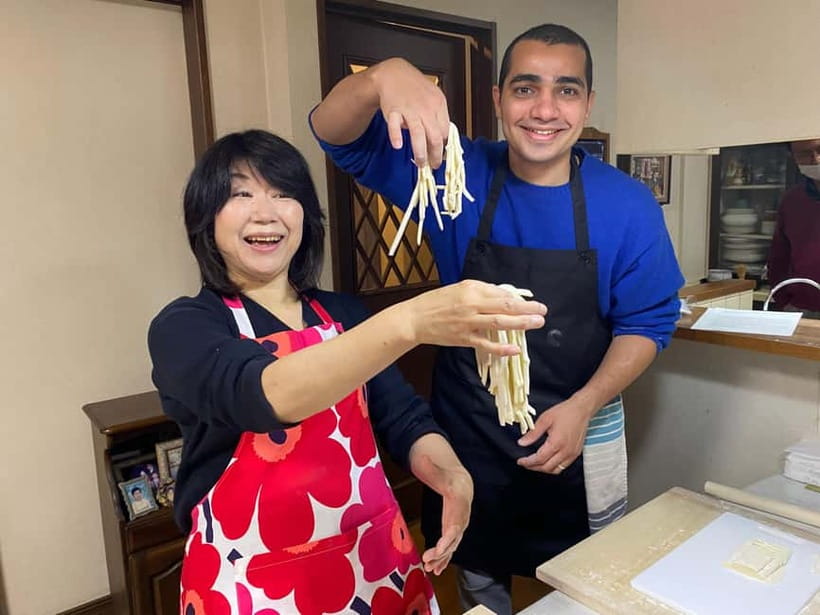
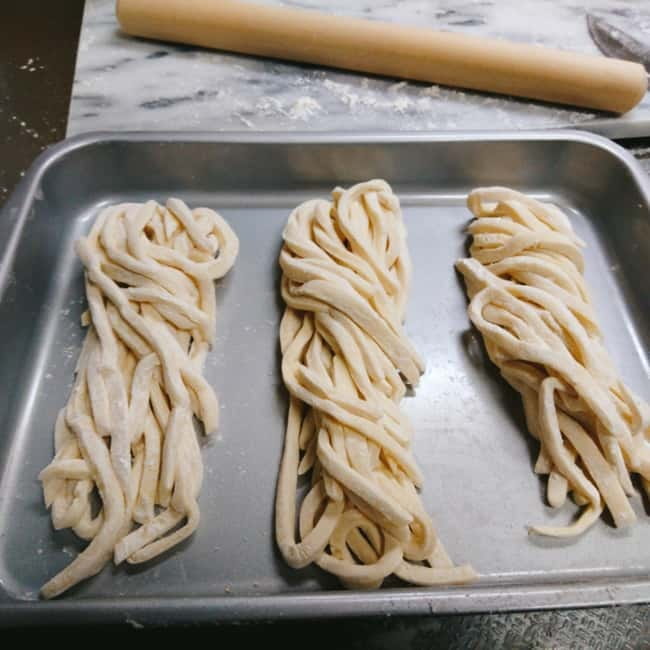
This is not a polished cooking demonstration where you watch someone else do the hard part. Each person makes their own udon. You will handle the dough, roll it into a large sheet, and cut it into noodles with a special udon knife.
The method is playful, but it also teaches you something useful. Good udon is not just thick pasta. Its texture depends on kneading, resting, rolling, and cutting. By doing each stage yourself, you can see how the final bite is built.
The class takes place in Musashino, an area west of central Tokyo with a long connection to wheat farming. Local udon has been made there for roughly four centuries. That background gives the cooking a stronger sense of place than a generic noodle workshop held anywhere in the city.
A few more Tokyo tours and experiences worth a look


Inside Izumi’s Home Kitchen
The setting is part of the appeal. You cook in Izumi’s own Japanese house, using the sort of practical kitchen environment that makes the lesson feel close to daily life. It is a more personal experience than sitting at separate workstations in a commercial school.
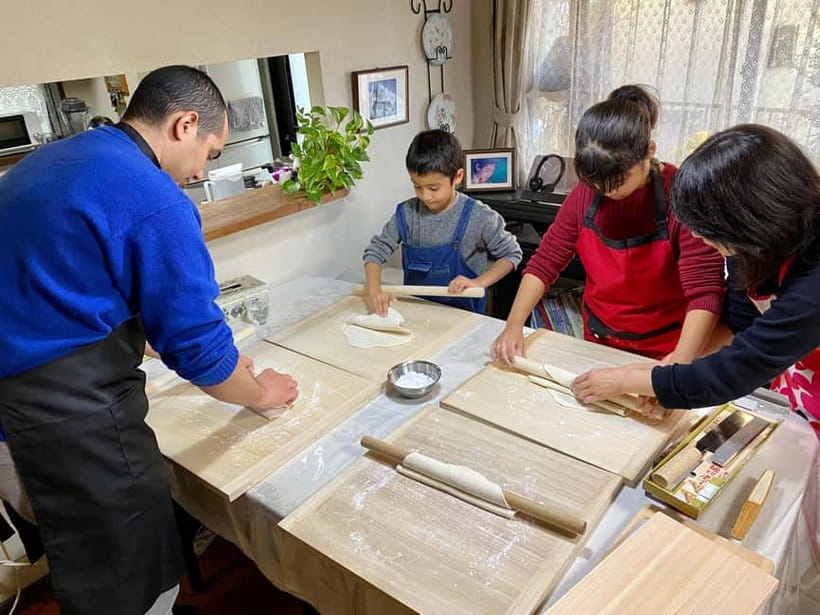
The group limit is four people. That matters here because the class uses large, traditional tools: a wooden kneading board, a long rolling pin, and a wide bowl for mixing the dough. With only a few people, you have room to work and time to follow the steps without feeling rushed.
Izumi teaches in English and Japanese. You can expect instruction on both technique and the story behind the food. Her teaching style includes family and community stories, along with an easygoing atmosphere. Music may be playing in the background, which helps keep the foot-kneading stage light rather than solemn.
Do not expect a formal restaurant or a staged cultural show. The charm comes from the ordinary setting and the chance to spend time with a local teacher. If you prefer a sleek studio with professional equipment and a strict timetable, this may feel informal. If you want a friendly home-based activity, the setting is a strong point.
Mixing Dough and Taking the First Steps
The class begins with udon dough. You learn how to combine the ingredients and bring them together into a workable mass. At this stage, the dough may look plain, but the texture will change as you work it.
Then comes the part you will remember: stepping on the dough with your feet. This is the class’s signature activity, and it is also the most amusing. You are not simply watching a traditional technique. You are using your own body to help create the chewy texture that makes udon distinctive.
The process can feel surprisingly relaxing. The steady pressure and repeated movement turn a basic cooking task into something physical and social. It is also a good choice if you want an activity that produces a meal rather than just a souvenir.
You should tell Izumi in advance about allergies or ingredients you cannot eat. The information supplied for the class does not list every ingredient in detail, so advance notice is the sensible way to handle dietary needs.
Learning Dashi, the Base of Japanese Cooking
After the dough work, you learn to prepare dashi. This stock is central to many Japanese dishes, and understanding it gives you a useful window into Japanese cooking beyond this one meal.
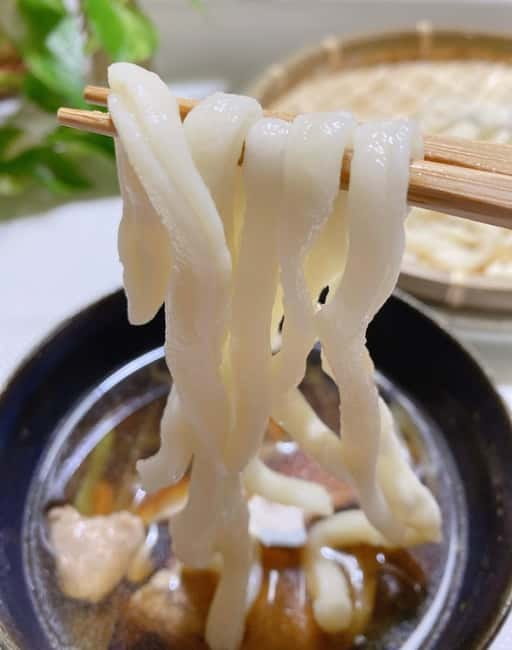
The lesson then uses the dashi in a pork soup served as a dipping sauce. You get a clear contrast between two temperatures and textures: cold, freshly made udon and a hot, savory soup. Instead of putting the noodles into the soup, you dip them as you eat.
That contrast is one of the meal’s best features. The noodles are plain enough to show off their texture, while the pork soup supplies depth and warmth. The result is more interesting than a bowl of noodles with one uniform broth.
The class is not only about producing lunch. It shows how Japanese cooking often builds flavor in layers. The noodles provide chew, the dashi provides a savory foundation, and the pork soup turns that foundation into a satisfying dish.
Rolling, Cutting, and Eating Your Own Noodles
Once the dough has been worked, you roll it into a broad sheet with a long rolling pin. This takes coordination. The goal is to create an even sheet without losing the firm texture developed during kneading.
Next, you cut the sheet into noodles with a special udon knife. The noodles may not all look identical, and that is part of the pleasure. You can see the direct result of your technique in every strand.
The finished Musashino Udon is served cold, with the hot pork soup alongside it. You dip each portion into the soup, balancing the cool noodles against the warm, rich sauce. This is the reward for the work, and it also helps you understand why fresh udon is worth making by hand.
The cooking portion is substantial, but it is not a professional skills course. You will learn a traditional method and leave with a recipe, not a certificate in noodle production. That is the right expectation for a relaxed cultural class.




Matcha and Wagashi After Lunch
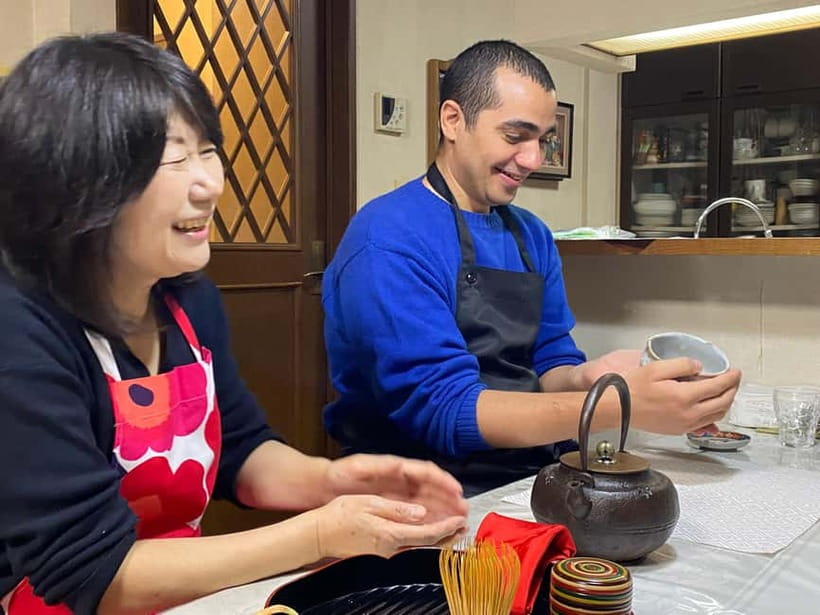
The experience ends with a casual Japanese tea ceremony. You prepare or enjoy matcha and pair it with wagashi, a traditional Japanese sweet.
This final section changes the pace. The noodle-making is active and sometimes noisy. Matcha gives you a quieter finish and lets you spend a little time with a familiar part of Japanese food culture in a home setting.
It is described as casual, so do not expect a highly formal tea-school ceremony with elaborate rules. That is likely a benefit for many people. You can learn the basic character of matcha and wagashi without worrying about performing every movement perfectly.
The pairing also makes sense after the meal. The slightly bitter tea and sweet wagashi offer a neat closing note after the salty, savory udon and pork soup.
What the 150 Minutes Actually Include
The full experience lasts 2.5 hours, or 150 minutes. That is enough time for a complete meal and several different activities, but you should keep your schedule reasonably open around it.
The class includes:
- Ingredients and kitchen equipment
- An apron
- Recipes
- The udon meal
- Matcha and wagashi
- A ride from the meeting point at Higashimurayama station to the venue
The host provides the ride from the station, which removes one awkward part of reaching a private home. Public transportation to Higashimurayama station is not included, so you still need to budget for that part of the journey.
This location makes the activity a better fit for a half-day plan in west Tokyo than for a quick add-on between major sights in central Tokyo. Check the starting time and allow enough time to reach the station without rushing.
Is $70 a Fair Price?
At $70 per person, this is not the cheapest meal you can buy in Tokyo. It is also not merely a meal. You receive 150 minutes of instruction, hands-on use of traditional tools, all ingredients, an apron, recipes, a substantial udon lunch, a matcha experience, wagashi, and pickup from Higashimurayama station.
The small group size improves the value. With no more than four participants, you are likely to spend much of the class actively making something rather than waiting for your turn. The personal setting also adds something that a restaurant meal cannot provide.
I would see the price as fair for someone who values time with a local teacher and wants to learn a method they can repeat at home. If your only goal is to eat excellent udon, a noodle shop will cost less and require far less travel. If you want food, conversation, and a hands-on cultural activity in one booking, the price makes more sense.
The included recipe is useful because it lets the class continue after your trip. You may not have the same large board or long rolling pin at home, but you will understand the basic sequence and the role of each stage.
Vegetarian and Vegan Options
A vegetarian udon lesson is available as an option, and vegetarian and vegan lessons can be arranged. You need to request this ahead of time.
That advance notice matters because the soup is normally made with pork and dashi. Dashi can also involve ingredients that do not suit every diet, so do not wait until you arrive to explain your needs.
The best approach is to give clear information about allergies, restrictions, and ingredients you cannot eat when booking. The class specifically asks you to share this information in advance.
Who Will Enjoy This Class Most
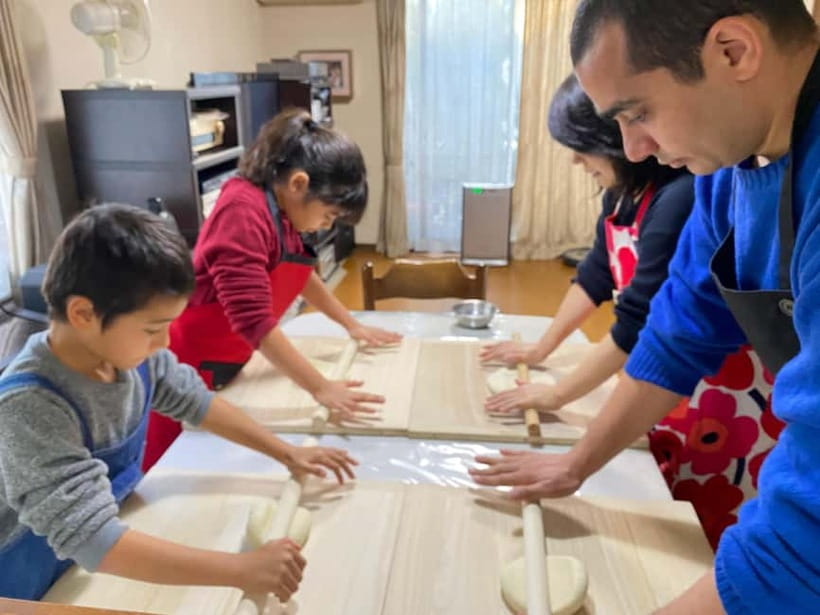
I would recommend this experience to you if you want a personal activity away from Tokyo’s busiest districts. It suits couples, families, solo participants, and small groups who enjoy making food together.
It is especially good for first-time cooking-class participants. The steps are clear, the foot-kneading is unusual without being intimidating, and the meal gives you a satisfying result at the end. You do not need to arrive with advanced cooking skills.
Food lovers will appreciate the focus on dashi and regional udon. People interested in daily Japanese life will like the home setting. Families should consider the group size and the physical nature of the class, but the playful dough work can be a hit with children who enjoy hands-on activities.
You may want to choose another activity if you dislike cooking, have difficulty standing or working with dough, or want a highly formal tea ceremony. The class is also less convenient if your Tokyo plans are concentrated around Asakusa, Shibuya, Shinjuku, or other central districts.
Getting to the Suburbs Without Losing the Day
The class meets at Higashimurayama station, where the host provides a ride to the house. You are responsible for reaching the station by public transportation.
That arrangement is helpful, but the station transfer still requires planning. Start by checking the class time and your route before booking. Since the activity lasts 150 minutes, add travel time on both sides and avoid placing an important timed reservation immediately afterward.
The west Tokyo setting is not a drawback for everyone. It gives you a look at a quieter part of the metropolitan area and connects the food to Musashino’s local wheat tradition. Think of the trip as part of the experience, not just an inconvenience.
Booking, Cancellation, and Small-Group Practicalities
You can reserve now and pay later, which is useful if your schedule is still changing. Free cancellation is available up to 24 hours in advance for a full refund.
The class is offered in English and Japanese. It is limited to four participants, so availability may be tighter than for a large group activity. Check the available starting times before building the rest of your day around it.
Remember that the station pickup is included, but your public transportation fare to Higashimurayama is not. Share allergy and dietary information before the class, especially if you want the vegetarian or vegan version.
Should You Book the Foot-Kneaded Udon Class?
Book it if you want more than a meal and you enjoy learning by doing. The combination of foot-kneaded noodles, dashi, pork dipping soup, matcha, and a home kitchen gives you several distinct parts in one 2.5-hour visit.
I would give it extra weight if you have already seen Tokyo’s major sights and want a slower, more local afternoon. Izumi’s personal teaching style, small group format, and memorable noodle method make this a strong choice for curious eaters.
Skip it if central Tokyo convenience matters most, if you want a formal tea ceremony, or if your dietary needs cannot be arranged in advance. For everyone else, $70 buys a meal, a lesson, and a story you are likely to remember every time you see udon again.
FAQ
Where does the udon class take place?
The class takes place in the instructor Izumi’s home kitchen in Musashino, a suburb in west Tokyo.
Where is the meeting point?
The meeting point is Higashimurayama station. The host provides a ride from the station to the venue.
Is transportation included?
The ride from Higashimurayama station to the venue is included. Your public transportation fare to the station is not included.
How long does the experience last?
The experience lasts 150 minutes, or 2.5 hours.
How many people can join?
The class is limited to four participants, making it a small-group experience.
What languages does the instructor speak?
The instructor teaches in English and Japanese.
Will I make my own udon noodles?
Yes. Each participant makes their own dough, kneads it with their feet, rolls it into a sheet, and cuts it into noodles.
What food will I prepare and eat?
You will make Musashino Udon, prepare dashi, and use it in a pork soup served as a dipping sauce for the noodles.
Is a vegetarian or vegan option available?
Vegetarian and vegan lessons are available as options. You should request the appropriate version in advance.
What is included in the price?
The price includes ingredients, kitchen equipment, an apron, recipes, the matcha tea ceremony, wagashi, and pickup from Higashimurayama station.
More Workshops & Classes in Tokyo

More tours in Tokyo we've reviewed










Workshops, compared.
 ★ 5.0Sushi Making Tokyo Roll and Authentic Japanese Sushi ClassFrom $59
 ★ 4.9Tokyo: Roll and Authentic Sushi Making Class in AsakusaFrom $581h 40m
 ★ 5.0Tokyo Shinjuku Chopsticks Making ClassFrom $20
 ★ 4.9Tokyo: Sushi Making Class in a Happi Coat near a Famous SpotFrom $421h 30m
 ★ 4.8Chopstick Making Workshop in GinzaFrom $251 hour
 ★ 5.0Tokyo Sushi Making Class in Tsukiji with Professional ChefFrom $49