
Reviewed · TRAIN EXPERIENCES
From Tokyo 1-Day Kyoto English-guided Tour by Bullet Train
Kyoto is close enough to Tokyo by bullet train to visit in a day, but the arithmetic is blunt: you spend about five hours on trains to get roughly half a day in the old capital. That trade-off makes this Kyoto express tour useful for a first visit, especially if you have no room for an overnight stay.
I like two things here: station escorts remove the stress of navigating Tokyo and Kyoto stations, and the afternoon hits three of Kyoto’s best-known religious sights with an English-speaking guide. The hotel lunch is another practical touch. The catch is a fast, crowded schedule, with limited time at each temple and possible waiting while a larger group gathers.
In This Review
- Key points at a glance
- The real trade-off: five hours on the train for Kyoto highlights
- Lunch at Miyako Hotel Kyoto Hachijo
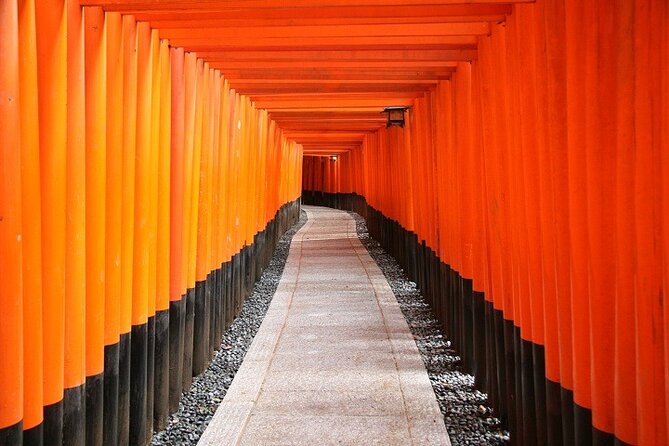
- Fushimi Inari Taisha and its orange torii gates
- Sanjusangen-do Hall and 1,001 Kannon statues
- Kiyomizu-dera for Kyoto views
- Why the guides matter on a compressed afternoon
- Group size, traffic, and the cost of convenience
- Important details before you reserve
- Who should book this Kyoto day trip?
- FAQ
- How long does the tour last?
- Where does the tour begin?
- Does the tour include Shinkansen tickets?
- Do guides ride the Shinkansen with the group?
- What sights are included in Kyoto?
- Is lunch included?
- Can I bring a large suitcase?
Key points at a glance
- A full Shinkansen day: Ride from Tokyo to Kyoto and back on the Nozomi, with each journey taking about 2 hours and 20 minutes.
- Three major Kyoto sights: Visit Fushimi Inari Taisha, Sanjusangen-do Hall, and Kiyomizu-dera in one afternoon.
- Helpful station handoffs: Staff guide you to the train in Tokyo, meet you at Kyoto Station, and help with the return departure.
- Lunch at Miyako Hotel Kyoto Hachijo: Expect a Western-style meal, with a semi-buffet format in 2025 and a vegetarian-friendly set menu in 2026.
- A guide-led introduction: Guides including Tammy, Yumi, KC, Momo, and Yamamoto have been praised for clear organization, humor, and cultural explanations.
- Not a relaxed Kyoto visit: Crowds, traffic, and a maximum group size of 40 can make the temple visits feel rushed.
The real trade-off: five hours on the train for Kyoto highlights
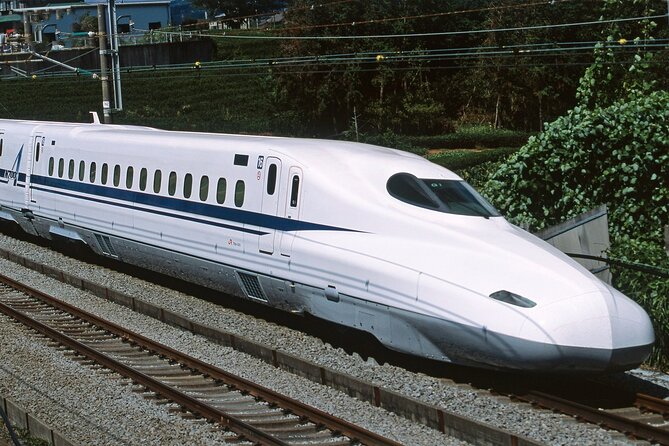
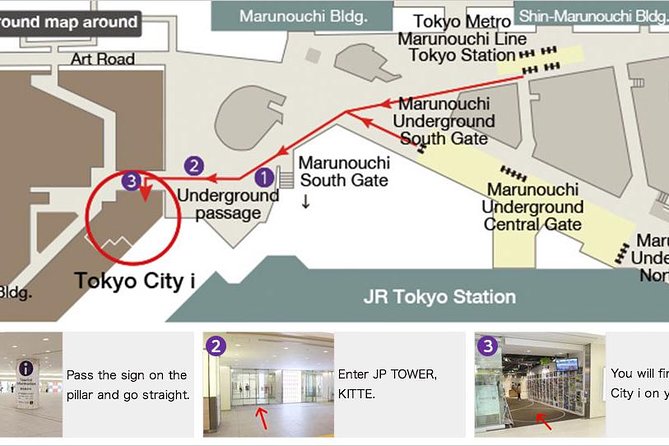
This outing begins at 9:20 am at Tokyo City i, in the basement of KITTE near Tokyo Station. An English-speaking tour conductor takes you to the Shinkansen platform and makes sure you board correctly. The staff do not ride in your carriage, so after the handoff, the train journey is independent.
That sounds more complicated than it is. Tokyo Station is huge, and finding the correct Shinkansen entrance, platform, and carriage can be intimidating if you are new to Japan. A staff member walks you to the train and provides instructions for meeting the Kyoto representative. This is one of the tour’s strongest practical features.
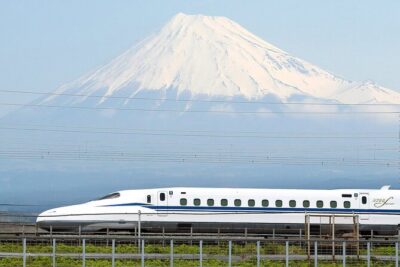
The ride to Kyoto takes about 2 hours and 20 minutes. On a clear day, look toward Mt Fuji from the train window. You will need luck and decent weather, but the view can be one of the day’s quieter pleasures. You can choose a standard-class or first-class, often called Green Car, ticket. The upgrade is worth considering because you spend more than four hours on the train in total, though it adds to an already high price.
At Kyoto Station, an English-speaking staff member meets you on the platform. You are escorted to lunch, then to the JTB Sunrise Tours Desk at Kyoto Avanti. This second meeting point is where the sightseeing group comes together, so you may have some waiting time before boarding the coach.
That handoff system is carefully organized, but it creates a relay of different staff members. One person handles Tokyo, another receives you in Kyoto, and a local guide leads the sightseeing. At the end, another escort helps with the return train. If you prefer independent travel, this may feel overmanaged. If you are nervous about Japanese stations, it is a major advantage.
Other guided tours in Tokyo

Lunch at Miyako Hotel Kyoto Hachijo
Lunch takes place at Miyako Hotel Kyoto Hachijo, near the station. In 2025, the meal is a Western-style semi-buffet. The main dish can be changed to a vegetarian option if you request it when booking. Same-day changes are not accepted.
For 2026, the meal is scheduled to become a vegetarian-friendly Western-style set menu. The supplied details do not promise a traditional Kyoto meal, so set your expectations accordingly. This is a convenient hotel lunch, not a carefully selected local-food excursion.
The meal has earned strong praise for its quality, with particular appreciation for fresh seafood, pastries, desserts, and the buffet selection. You get a comfortable break after the train ride, and the hotel setting is more predictable than trying to find a restaurant during a tightly timed afternoon.
The drawback is the time. Lunch is listed at about 40 minutes, and the group may need to wait afterward while people from another tour arrive. One departure reportedly spent extra time sitting on the coach before the sightseeing group was ready. That is frustrating when every minute in Kyoto matters.
Fushimi Inari Taisha and its orange torii gates
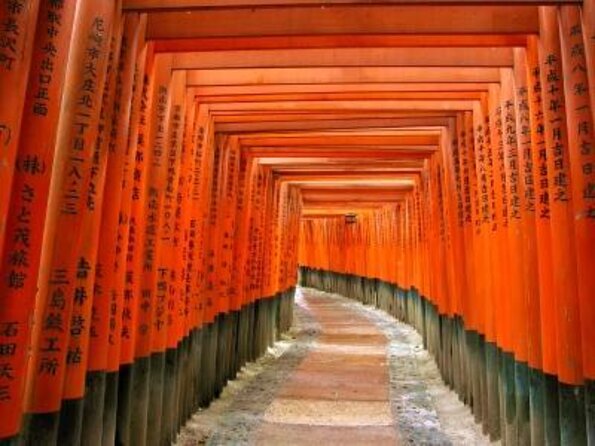
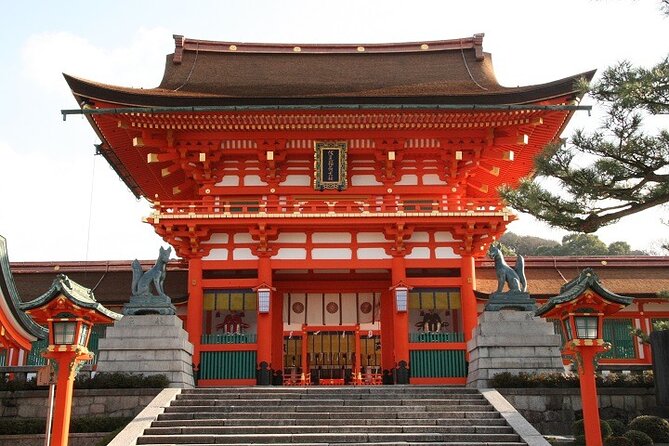
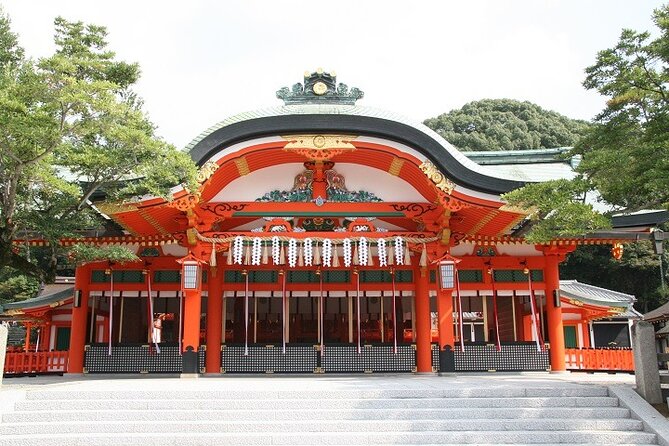
The first sightseeing stop is Fushimi Inari Taisha, the head shrine of roughly 40,000 Inari shrines across Japan. It is best known for the Senbon Torii, a long series of bright orange shrine gates climbing the lower slopes of Mt Inari.
The gates are the visual centerpiece, but the site is also an active Shinto shrine dedicated to Inari, associated with rice, prosperity, and business success. Your guide explains the meaning of the shrine and the customs you see there.
The tour gives you about 30 minutes at Fushimi Inari. That sounds reasonable until you factor in the walk from the parking area, the crowd near the entrance, and the time needed to get back to the bus. In practice, you may only have a short window for photographs at the first section of gates. You will not walk the full mountain route.
This is a good stop for a first look, but not for hikers. If your main goal is to explore the torii tunnels far beyond the entrance, you need a separate visit with more time. The crowds can also be intense, particularly around the most photographed gates. Stay close to your guide and watch the return time carefully.
Sanjusangen-do Hall and 1,001 Kannon statues
Sanjusangen-do offers a completely different experience. The hall is said to be Kyoto’s longest wooden structure, and inside are 1,001 life-size statues of the Buddhist bodhisattva Kannon, dating from the 13th century.
The scale is the point. You enter a long, dim interior lined with ranks of statues, each with its own expression and form. The colossal Thousand-Armed Kannon occupies the central altar, surrounded by the life-size figures. It is a place for quiet attention rather than quick snapshots.
Photography is not allowed inside, so this stop rewards looking rather than collecting pictures. Guides explain Buddhism, the statues, and the temple’s connection with archery. The visit lasts about 30 minutes, enough to grasp the hall’s power but not enough for a slow examination of every figure.
This temple is often the most distinctive stop of the three because it feels less dependent on a famous outdoor view. It also gives the afternoon some balance: Fushimi Inari is about gates and movement, while Sanjusangen-do is about concentration and scale.
Kiyomizu-dera for Kyoto views
The final temple is Kiyomizu-dera, one of Kyoto’s most recognizable sights. Built on a hillside, it gives you broad views over the city and a strong sense of how Kyoto’s temples occupy the surrounding slopes.
The approach is part of the experience. The historic shopping lane leading uphill is packed with souvenir shops, snacks, and small retail stops. You may enjoy browsing, but the schedule means you cannot linger freely. Keep an eye on the guide and the time.
The visit is scheduled for about 1 hour and 10 minutes, making it the longest temple stop. Even so, the crowds can turn the uphill walk into a slow shuffle. At busy times, simply reaching the main temple area can take much of your allotted period.
The views are the payoff. From the temple, you can look across Kyoto and understand why this site has remained so popular. The setting is beautiful, but popularity is also the problem. Some departures have reached Kiyomizu-dera late in the day, around 5 pm, when the light and remaining time were limited.
Allow enough energy for this stop. You will be walking from the coach area, uphill through crowded streets, and across temple grounds. Comfortable shoes matter more here than on the train.
A few more Tokyo tours and experiences worth a look


Why the guides matter on a compressed afternoon
A good guide can turn a rapid temple circuit into a useful introduction rather than a photo checklist. The guides do not simply point out the buildings. They explain Buddhist figures, Shinto practice, temple construction, and the customs connected with the sites.
Several guide names appear in the supplied information. Tammy is praised for an energetic and informative afternoon. Yumi is described as strong on temple explanations. KC is singled out for humor and enthusiasm in heavy crowds, while Momo is noted for clear local knowledge and helpful organization. Yamamoto is identified as the Kyoto arrival escort. Staff can change by departure, so these names are examples, not guarantees.
English ability may vary. One departure found the guide pleasant but difficult to understand, with less detail than expected about the sites. That is worth keeping in mind if temple architecture and religious history are your main reason for booking.
The guide also serves a practical role. Kyoto’s popular sites are crowded, and the group must stay together to make the return train. A guide who manages head counts and departure times is useful, even when the pace feels strict.
Group size, traffic, and the cost of convenience
The maximum group size is 40 people. That is not a tiny walking tour, and a group of this size can be slow at entrances, on narrow lanes, and when boarding the coach. Traffic between Kyoto Station and the temples can also cut into sightseeing time.
The listed price is $452.45 per person. That is a serious amount for a day trip, and the value depends on what you are buying. The cost includes round-trip Shinkansen fare, the Kyoto coach tour, admission to the listed sites, lunch, and English-speaking staff and guides. You are also paying for coordination in two major train stations, which has real value if this is your first time in Japan.
The price is harder to justify if you are comfortable arranging trains and local transport yourself. You could spend more time in Kyoto by traveling independently or staying overnight. You would also avoid being tied to a group timetable.
The first-class train option can make the long rail portion more comfortable, but check the final price before choosing it. The train itself is an attraction, and the round trip gives you a memorable look at Japan’s high-speed rail system. Still, the train occupies nearly half of the 12-hour day.
This is best understood as a time-saving introduction, not an efficient way to experience all of Kyoto. You pay for certainty, a reserved structure, and access to three famous places without planning the connections yourself.
Important details before you reserve
The tour is for international visitors, and residents of Japan cannot book it. Confirmation arrives within 48 hours, subject to availability. The tour is near public transportation, and most people can participate, but the schedule involves walking, station transfers, temple approaches, and crowded streets.
Large luggage is a problem. A suitcase whose total height, width, and length exceeds 160 centimeters cannot be brought onto the Shinkansen. Use a luggage delivery service on your own if you need to transport a large bag.
Children up to age five may join free, but they receive no Shinkansen or coach seat and no lunch. If you need those, book the child rate. Anyone under 18 needs written parental permission, and children under 15, or those not yet in middle school, must be accompanied by a parent or guardian.
The tour can end at Shin-Yokohama, Shinagawa, or Tokyo Station. The approximate arrival window is 8:30 pm to 9:30 pm, and train times or the order of activities can change because of timetable adjustments, traffic, or congestion.
Free cancellation is available until 24 hours before the start time. Changes or cancellations inside that window are not accepted for a refund.
Who should book this Kyoto day trip?
I would choose this tour if you are staying in Tokyo, have only one available day, and want a guided first look at Kyoto without handling the rail and bus connections yourself. It is especially suitable for first-time visitors who find Tokyo Station intimidating or who want staff to confirm every train handoff.
It also suits people who place a high value on seeing the Shinkansen. The bullet train is not merely transportation here. It is one of the main experiences, complete with the possibility of a Mt Fuji view.
I would not choose it for a slow temple visit, serious photography, extensive shopping, or a quiet Kyoto experience. You will see famous places, but crowds and the fixed schedule limit your freedom. If you can stay overnight, two days in Kyoto will give you a much better pace.
At $452.45, the tour is expensive for only a half-day in Kyoto. Yet the organization is strong, lunch is included, and the station escorts remove much of the stress. Book it when convenience and coverage matter more to you than time and independence. If you want to understand Kyoto rather than simply sample it, make room for an overnight stay instead.
FAQ
How long does the tour last?
The experience lasts approximately 12 hours. It begins at 9:20 am and usually finishes between 8:30 pm and 9:30 pm, depending on the return train and local conditions.
Where does the tour begin?
Meet at Tokyo City i in the basement of KITTE, at 2-chome 7-2 Marunouchi, Chiyoda City. The meeting point is near Tokyo Station.
Does the tour include Shinkansen tickets?
Yes. Round-trip bullet train fare between Tokyo and Kyoto is included. You can select standard class or first class when booking.
Do guides ride the Shinkansen with the group?
No. The English-speaking staff guide you to the train and provide the meeting instructions, but tour staff and guides do not ride in the Shinkansen carriage with participants.
What sights are included in Kyoto?
The tour visits Fushimi Inari Taisha, Sanjusangen-do Hall, and Kiyomizu-dera Temple. Admission to the listed sites is included.
Is lunch included?
Yes. Lunch is served at Miyako Hotel Kyoto Hachijo. In 2025 it is a Western-style semi-buffet, and in 2026 it is scheduled to be a vegetarian-friendly Western-style set menu.
Can I bring a large suitcase?
Not if the suitcase’s total height, width, and length exceeds 160 centimeters. Large luggage cannot be brought onto the Shinkansen, so you must arrange a delivery service yourself.
More 1-Day Tours in Tokyo
More Guided Tours in Tokyo

More tours in Tokyo we've reviewed






Train Experiences, compared.
 ★ 5.0Mt Fuji and Hakone 1-Day Bus Tour Return by Bullet TrainFrom $163
 ★ 4.0Mt Fuji & Hakone Cruise, Drum Show Bullet Train 1 Day from TokyoFrom $149
 ★ 4.4Tokyo Mt Fuji 5th St & Hakone Cruise Bus Tour w/Bullet TrainFrom $15410 hours
 ★ 4.2From Tokyo: Mt. Fuji & Hakone Tour w/ Return by Bullet TrainFrom $11711 hours
 ★ 4.0Mt. Fuji and Hakone Day Trip From Tokyo with Bullet Train OptionFrom $97
 ★ 4.5Mt. Fuji & Hakone Bus Tour Bullet Train Return & 28-Hotel Pick-upFrom $145