
Reviewed · CITY TOURS
Day Private City Tour of Tokyo with English speaking driver
Tokyo is too large to cover comfortably on foot, and its train network can eat up a surprising amount of a short visit. This private day tour solves that problem with a car, a driver, and a long list of major sights, from Senso-ji Temple and Tsukiji to Shibuya Crossing and the Tokyo Skytree.
I like two things right away: the customizable route and the easy pace for a small group. You can fit in far more than you could by walking or changing trains all day, and guides such as Vohra, Mazz, Faris, Abdul, Talil, and Miae have been praised for being helpful, flexible, and good at taking photos. The catch is that this is a basic English-speaking driver service, not a full guided tour at every stop. Site entry fees are extra, and the driver may need to wait in the car where parking is tight.
In This Review
- Key points to know
- A practical way to see Tokyo in one long day
- Tsukiji Fish Market brings food culture into the morning
- Shinjuku Gyoen offers a quiet break from the city
- Tokyo Skytree supplies the big city view
- Senso-ji Temple gives you Tokyo’s classic old-town scene
- Shibuya Crossing is brief but essential
- Takeshita Street is the longest browsing stop
- Meiji Jingu Shrine brings you into a wooded setting
- Shinjuku’s Godzilla and giant cat are fast photo stops
- The Tokyo Metropolitan Government Building keeps the view free
- What the English-speaking driver actually provides
- Timing, comfort, and who gets the most value
- What is included, and what you should budget extra
- My take on this Tokyo private car tour
- Should you book it?
- FAQ
- How long does the private Tokyo tour last?
- How many people can join the private tour?
- Is hotel pickup available?
- Are attraction admission fees included?
- Is a tour guide included?
- Can the itinerary be changed?
Key points to know
- Eight hours covers a wide sweep of Tokyo: You can reach Asakusa, Shibuya, Harajuku, Shinjuku, Tsukiji, and Sumida in one day.
- The route can be adjusted: The listed sights are a useful framework, but the day is intended to suit your interests and available time.
- A private car saves energy: This matters for families, small groups, cruise passengers, and anyone who finds Tokyo’s train transfers tiring.
- The driver is not automatically a site guide: Basic English commentary is provided, mainly between destinations, while individual tour guides cost extra.
- Tokyo Skytree is the major added expense: Admission is listed at ¥3,400 per person, while Shinjuku Gyoen costs ¥500 per adult.
- Timing affects the experience: An early schedule, such as 7 a.m. to 3 p.m., can help you avoid some crowds.
A practical way to see Tokyo in one long day
This is a sightseeing sweep, not a slow neighborhood walk. You spend much of the day getting out of the car, seeing a major Tokyo landmark, taking photos, and moving on to the next district.
That trade-off is useful if you have only one free day. Tokyo spreads across a huge area, and the route jumps from Tsukiji to Shinjuku, then to Skytree, Asakusa, Harajuku, and Shibuya. On public transport, those moves are possible, but you would spend more time finding stations, walking underground, and checking train routes.
The tour costs $400 per group of up to three people. For three people, that works out to about $133 each before admission fees. For one person, the price is much harder to justify, but for a small family or group it can compare well with the convenience of private transport and a full day of sightseeing.
The car is air-conditioned, and fuel is included. Pickup is offered from your Tokyo hotel, although the stated meeting point is at Kaminari-mon, 2-chome 3-1, in Asakusa. Confirm your pickup arrangement before the day begins, especially if you are not staying near Asakusa.
Other city tours we've reviewed in Tokyo


Tsukiji Fish Market brings food culture into the morning
The first listed stop is Tsukiji Fish Market, with about 30 minutes set aside. The former wholesale fish market moved to Toyosu, but Tsukiji remains a central food district with shops and eating spots.
Thirty minutes is enough for a quick look and perhaps a snack, but not a long food crawl. I would treat this as a short introduction rather than a full market visit. If fresh seafood, knives, kitchen tools, or Japanese food are high on your list, you may want to tell the driver early that this stop deserves more time.
The free admission keeps the stop simple. There is no ticket to buy, and you can use the short visit to get your first taste of Tokyo’s food scene before the tour moves inland.
Shinjuku Gyoen offers a quiet break from the city
Shinjuku Gyoen National Garden is scheduled for about 30 minutes. The garden was created for the Imperial family in 1906 and later opened to the public. It gives you a calm change of pace after the dense streets around Tsukiji and before the tall buildings of Shinjuku.
The main practical point is its Monday closure. If your tour falls on a Monday, this stop will need to be replaced or skipped. Admission is not included and is listed as ¥500 per adult.
Thirty minutes lets you see a small section and take a few photos, but it is not enough for a full stroll through the grounds. If flowers, open space, or seasonal scenery matter to you, ask to increase the time here and cut a less important stop. The route is flexible, so you do not have to treat every listed duration as fixed.
Tokyo Skytree supplies the big city view
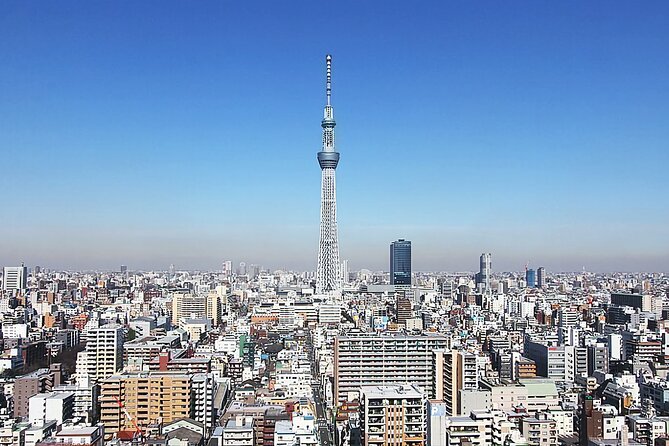
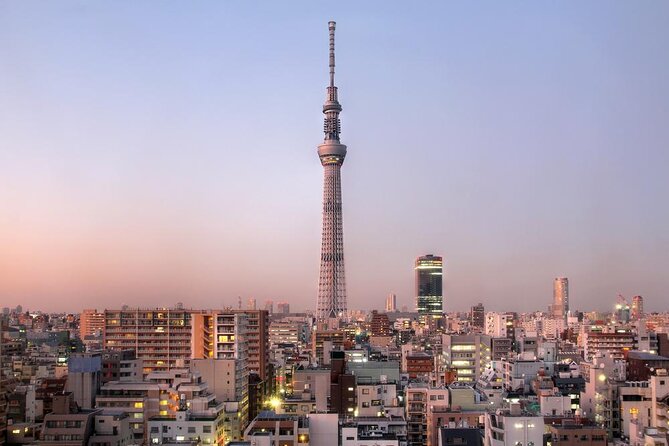
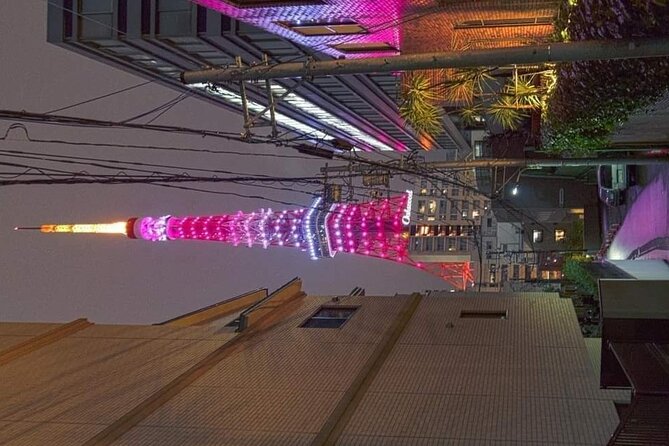
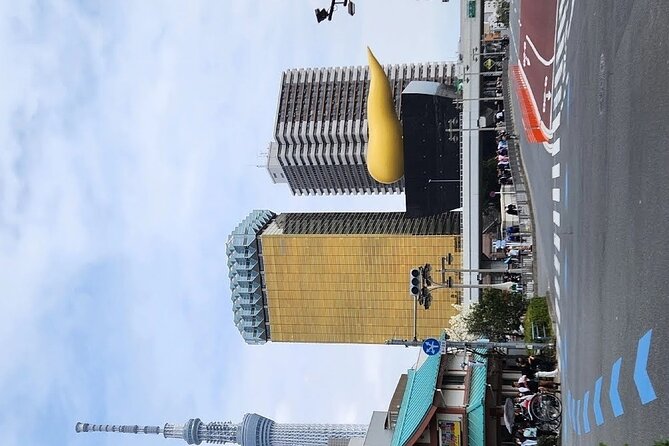
The Tokyo Skytree gets about one hour. At 634 meters, it is one of Tokyo’s most recognizable structures and the centerpiece of Tokyo Skytree Town in Sumida.
This is the tour’s main paid attraction. Admission is listed at ¥3,400 per person, and that fee is separate from the $400 vehicle price. For three people, that adds ¥10,200, so check the current ticket cost when planning your budget.
An hour is a sensible amount of time for the tower if you want the view but do not plan to spend much time shopping or eating nearby. On a clear day, the height gives you a strong sense of Tokyo’s scale. On a hazy or rainy day, the value depends more on your interest in the tower itself.
You can also decide to skip the observation deck and save the admission charge. The driver can still take you to the area, but the route should be discussed in advance if you want more time elsewhere.
Senso-ji Temple gives you Tokyo’s classic old-town scene
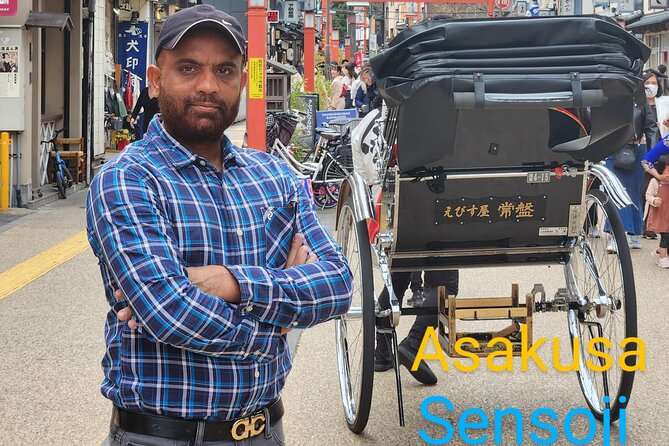
Senso-ji in Asakusa is one of Tokyo’s most colorful and popular Buddhist temples. The approach leads through the famous Kaminarimon gate and Nakamise shopping street toward the temple precinct.
The tour sets aside about one hour, which gives you time to walk through the main approach, see the temple, and take in the surrounding Asakusa streets. Admission is free, so this is one of the strongest-value stops on the day.
Asakusa is also the stated meeting point, which makes the area a logical beginning or ending place. If your hotel pickup is elsewhere, the route may begin with a transfer into the city before the sightseeing starts.
I like that Senso-ji balances the modern parts of Tokyo on this route. After the Skytree, billboards, and high-rise districts, Asakusa offers a more traditional setting. The area can be crowded, so keep an eye on the time if you stop for shopping or snacks.
Other private tours in Tokyo

Shibuya Crossing is brief but essential
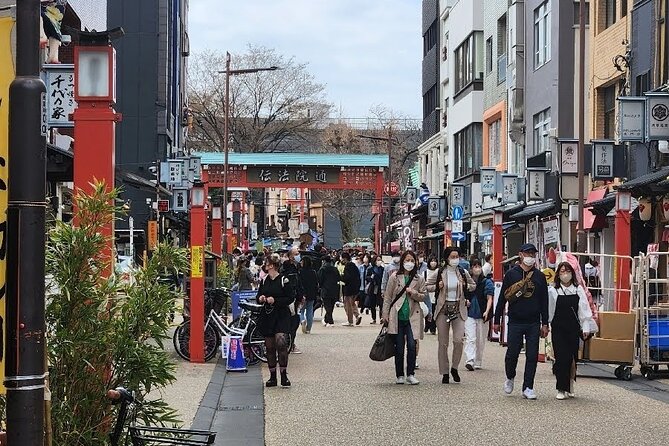
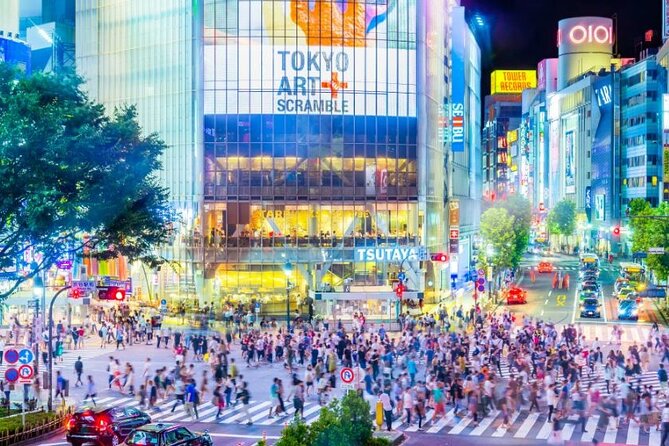
The tour allows about 20 minutes at Shibuya Crossing. That may sound short, but the crossing itself does not require a long visit. You can watch the signal change, cross with the crowd, and take photos from a nearby viewpoint.
Shibuya is one of Tokyo’s most recognizable modern sights, and it works well as a quick stop on a day built around highlights. Still, you should not expect a full exploration of Shibuya in 20 minutes. If you want shopping, cafés, or a longer look at the district, you will need to sacrifice time elsewhere.
This is a good example of the tour’s style: broad coverage rather than a deep look at one neighborhood. You get the famous intersection, then continue to Harajuku and Shinjuku.
Takeshita Street is the longest browsing stop
Two hours are assigned to Takeshita Street in Harajuku, making it the longest stop on the route. The street is known for youthful fashion, novelty shops, sweet street food, and window shopping.
The generous time works well if you are with teenagers or want a relaxed lunch and shopping break. You can browse without rushing, and the area gives you a different side of Tokyo from the temples and observation decks.
The drawback is that it can be crowded, especially at popular times. The street is also commercial and highly stylized, so it may not suit you if you prefer quiet lanes or traditional architecture. I would use the flexible schedule here according to your group. Families may appreciate the food and shops, while others may prefer to shorten this stop for more time at a garden or temple.
Meiji Jingu Shrine brings you into a wooded setting
Meiji Jingu Shrine receives about one hour and has no admission fee. It is dedicated to the deified spirits of Emperor Meiji and Empress Shoken, and it sits beside Harajuku Station, close to Takeshita Street.
The contrast is the point. In a short distance, you move from youth fashion and bright shopfronts into a shrine setting with broad paths and trees. The hour should give you enough time to reach the main shrine area and pause there, though your walking pace and crowd levels will affect how far you get.
I would not rush this stop just to squeeze in another photo opportunity. Meiji Jingu is one of the places where Tokyo’s size and variety make sense. You are still near one of the city’s busiest shopping districts, yet the atmosphere changes sharply.
Shinjuku’s Godzilla and giant cat are fast photo stops
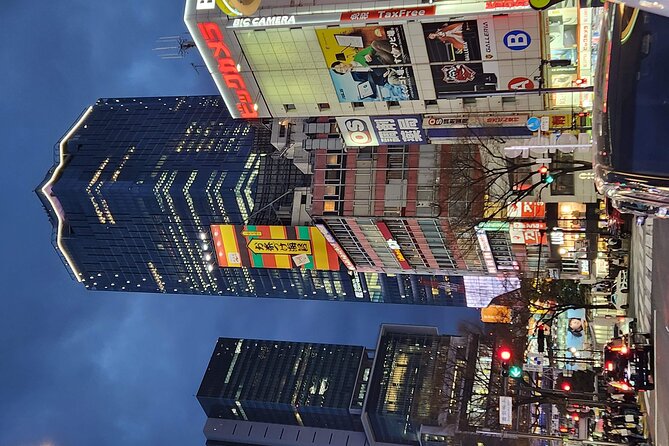
Two Shinjuku stops are designed to be quick. The Godzilla Head gets only a brief visit, while the giant 3D cat billboard is scheduled for about 10 minutes.
The Godzilla display is a fun, free photo opportunity near entertainment and shopping areas. At certain times, the head has an animated roar and smoke effect, so ask the driver about timing if that show matters to you. The display is visual rather than a full attraction, which is why a short stop works.
The giant cat billboard is another free photo stop. The calico cat appears to move, stretch, and meow on the large 3D screen. Ten minutes is enough to see the effect and take pictures, but not enough to explore Shinjuku.
These stops are best viewed as small extras. They add modern Tokyo character without requiring a ticket, but I would not give up major temple or garden time for them unless you have a strong interest in pop culture and digital displays.
The Tokyo Metropolitan Government Building keeps the view free
The Tokyo Metropolitan Government Building observation decks are allotted about 30 minutes, with no admission charge listed. The building is in Shinjuku and gives you another chance to look over Tokyo without paying the Skytree’s admission fee.
The two observation options serve different purposes. Skytree gives you height and a landmark experience, while the government building offers a free city view and can be a smart substitute if you are watching costs.
Half an hour is enough for a look and photos. As with Skytree, weather matters. If the air is clear, you get more from the stop. If visibility is poor, you may prefer to spend the time at Meiji Jingu, Takeshita Street, or Senso-ji.
What the English-speaking driver actually provides
The included service is a basic English-speaking driver, not a dedicated guide stationed beside you at every attraction. The tour description says that most insights are given in the car between destinations, and entry fees and individual site guides are not included.
That distinction matters. You get transport, route help, and some explanation as you move through Tokyo. You should not automatically expect a formal historical talk inside every temple, garden, or observation deck.
The quality of the day can also depend on which driver is assigned. Past guests have singled out Vohra for enthusiasm, flexibility, photos, and personal care. Mazz has been praised for getting out of the car and explaining the stops. Faris, Abdul, Talil, Miae, Khizar, and Shehzed are also named in positive feedback, with comments about friendly service, clear communication, and making the day easy.
Those names are useful, but you cannot assume a particular driver unless the operator confirms it. Ask about the driver’s role if detailed site history is important to you. You may also request a licensed guide, but that costs extra.
Parking is a real Tokyo issue. At some stops, the driver may need to remain with the vehicle rather than walk around the site with you. One account specifically noted this as a limitation, even while praising the driver’s help. You should be comfortable exploring some places independently.
Timing, comfort, and who gets the most value
The tour lasts about eight hours and is private for your group. That gives you control over breaks, stop lengths, and priorities, within the limits of traffic and opening hours.
An early start can be smart. A 7 a.m. to 3 p.m. schedule has been recommended for avoiding some crowds, especially at major photo stops and popular districts. It may also help you fit more into the day, though the tour does not promise a crowd-free Tokyo.
The private car is especially useful for:
- Families with children who tire during long train transfers
- Small groups sharing the $400 cost
- People with limited time before a cruise departure
- Older adults or anyone who finds extensive walking difficult
- First-time visitors who want Tokyo’s headline sights in one day
- People who prefer a flexible day over a fixed group itinerary
The tour is less suitable if you want long guided walks, detailed temple interpretation, or several hours in one neighborhood. It is also not the best fit if your main aim is to eat slowly and shop deeply at every stop.
The private format can help with mobility, but the attractions themselves still involve walking. The vehicle reduces transfers and gives you a place to return to, but it does not remove stairs, crowds, or uneven walking routes at every site.
What is included, and what you should budget extra
The $400 price includes the air-conditioned vehicle and fuel. It covers the group, up to three people, rather than charging each person separately.
You pay extra for Shinjuku Gyoen, listed at ¥500 per adult, and Tokyo Skytree, listed at ¥3,400 per person. Other site entry fees, if needed, are also outside the stated price. A formal guide at individual attractions is not included.
There is no stated meal inclusion, so plan to pay for food separately. Takeshita Street and Tsukiji are natural places to fit in a snack or meal, but the schedule is busy enough that you should not count on a long restaurant stop unless you arrange it.
Free cancellation is available up to 24 hours before the start time. Changes or cancellations inside that window are not accepted for a refund, so keep the local Tokyo time in mind.
My take on this Tokyo private car tour
I like this experience most as a first-day orientation to Tokyo. It gives you a practical sense of the city’s spread and lets you check off major sights without spending the whole day underground.
The strongest parts are the private transport, flexible route, air-conditioned car, and the chance to cover both old and new Tokyo. Senso-ji, Meiji Jingu, Shibuya Crossing, Skytree, and Shinjuku each show a different side of the city.
The main limitation is the driver-guide distinction. If you want detailed explanations at every stop, add a guide or choose a tour built around guided walking. Also keep admission fees in your budget, and confirm hotel pickup because the published start and end point is in Asakusa.
Should you book it?
Book this tour if you have one day, want to see Tokyo’s major sights, and value private transport over figuring out the train system yourself. It is particularly sensible for a group of three, a family with children, or a party with mixed walking abilities.
Skip it if you prefer slow neighborhood exploration or need a full-time expert guide at each site. For most first-time visitors with limited time, the tour offers a useful and flexible overview, as long as you accept that some stops are quick and some explanations happen mainly in the car.
FAQ
How long does the private Tokyo tour last?
The experience lasts approximately eight hours.
How many people can join the private tour?
The price covers one private group of up to three people.
Is hotel pickup available?
Yes, pickup from your Tokyo hotel is offered. The stated meeting point is Kaminari-mon, 2-chome 3-1, Asakusa, and the activity ends back at the meeting point, so confirm the exact pickup arrangement when booking.
Are attraction admission fees included?
No. Shinjuku Gyoen is listed at ¥500 per adult, and Tokyo Skytree admission is listed at ¥3,400 per person. Entry fees for attractions and guides at individual sites cost extra.
Is a tour guide included?
The package includes a basic English-speaking driver. Insights are given mainly while traveling between destinations. A separate guide at individual sites is not included.
Can the itinerary be changed?
Yes. The itinerary is customizable, so you can discuss your priorities and adjust the time spent at different stops. Shinjuku Gyoen is closed on Mondays, so that stop may need to be changed on that day.
More Private Drivers in Tokyo

More Private Tours in Tokyo
More City Tours in Tokyo

More tours in Tokyo we've reviewed


City Tours, compared.
 ★ 4.8Tokyo: Private City Highlights Tour with Local GuideFrom $1064 - 8 hours
 ★ 4.7Tokyo: Asakusa, Skytree & Akhihabara Go-Kart City ExperienceFrom $961h 10m
 ★ 4.8Tokyo: 3-Hour Bike or E-Bike City Highlights TourFrom $453 hours
 ★ 4.8Tokyo: Sumo Morning Practice Tour at Sumida CityFrom $1162 hours
 ★ 4.5Private Haneda Airport (HND) to Central Tokyo City TransferFrom $119
 ★ 4.8Tokyo: 3-hour Guided E-Bike Tour of the City’s Hidden GemsFrom $65