
Reviewed · ASAKUSA TOURS
Cherry Blossom Highlights, Asakusa, Ueno, Imperial Palace Garden
Tokyo’s cherry-blossom season is short, scattered, and wonderfully unpredictable. This private day tour helps you connect several of the city’s best viewing spots, from the old grounds of Edo Castle to Ueno Park and Senso-ji, while showing you how to get around by public transportation.
I like the private format, which lets your guide adjust the route to the flowers, your pace, and your interests. I also like the mix of famous sights and everyday Tokyo, especially Tsukiji’s food lanes and Ameyoko’s local shopping scene. The main drawback is that lunch and transport are not included, and the quality of the day depends partly on the guide’s English and the exact timing of the blossoms.
In This Review
- Key points
- A private cherry-blossom route across old and modern Tokyo
- The East Gardens of the Imperial Palace and Edo Castle ruins
- Tsukiji for sushi, tamagoyaki, and market food
- Senso-ji and the Nakamise approach
- Ueno Park, a classic blossom-viewing stop
- Ameyoko for Tokyo’s downtown side
- How much value does the $221.12 price offer?
- Guide quality and the importance of communication
- Who should book this Tokyo blossom tour?
- Should you book it?
- FAQ
- How long does the Cherry Blossom Highlights tour last?
- Is this a private tour?
- Which Tokyo places are included?
- Is lunch included?
- Is private transportation included?
- What happens if bad weather cancels the tour?
Key points
- Private, customizable sightseeing: Your group travels with a licensed guide rather than joining a large coach tour.
- Five distinct Tokyo stops: The route links the Imperial Palace East Gardens, Tsukiji, Senso-ji, Ueno Park, and Ameyoko.
- Useful public-transit coaching: Your guide helps you learn how to move around Tokyo by train or subway.
- Cherry blossoms are timing-sensitive: The exact garden choices can change if flowers fade early or bloom late.
- Food is part of the plan, but lunch costs extra: Tsukiji offers sushi, grilled foods, tamagoyaki, seafood, and other snacks.
- A full six to seven hours on foot: You should be ready for a moderate amount of walking and standing.
A private cherry-blossom route across old and modern Tokyo
The appeal here is not one single garden. It is the way the day moves through several sides of Tokyo.
You begin at 9 a.m., then spend the morning and afternoon linking imperial grounds, temple streets, food markets, park paths, and a shopping arcade. That gives you a useful first look at the city instead of keeping you in one neighborhood.
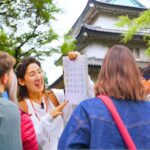
Because this is a private activity, your guide can respond to your questions. Nobuko Akimoto, for example, has been praised for adjusting the day to a guest’s cultural curiosity rather than simply following a fixed script. Hiroko has also guided this route, helping explain the city while covering a lot of ground.
The tour is especially useful if Tokyo is your first stop in Japan and you want help with public transportation. You are not simply taken from one sight to the next. You get practical guidance on how the system works, which can make the rest of your trip less intimidating.
Still, this is not a quiet garden walk from start to finish. Tokyo’s popular blossom sites can be busy, and the schedule includes several areas where you will walk, browse, and pause among other people.
A few more Tokyo tours and experiences worth a look


The East Gardens of the Imperial Palace and Edo Castle ruins
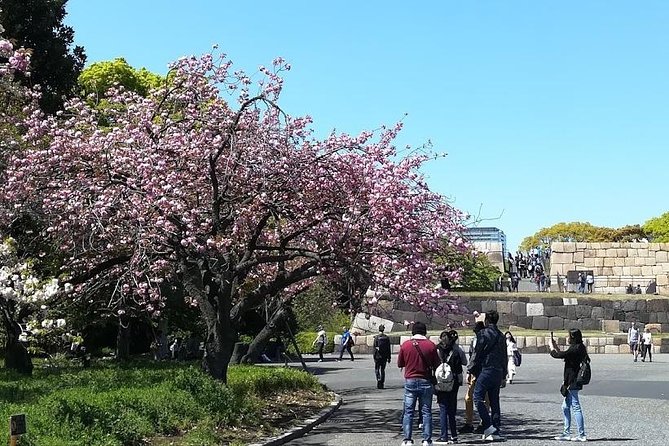
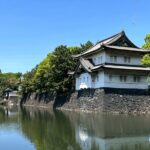
The day begins with a morning stroll through the East Gardens of the Imperial Palace. These grounds occupy part of the former Edo Castle site, with moats, stone walls, forested areas, and the remains of the old castle.
I like this opening because it gives you a sense of Tokyo’s scale and layers. The Imperial Palace area is in the middle of a huge city, yet the gardens provide a broad green break from traffic and towers. The grounds cover about 90 hectares, so the setting feels much larger than a simple urban park.
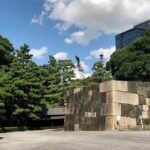
The Edo Castle ruins add a useful historical frame. You are not only looking at flowers. You are walking through a place tied to the Tokugawa shoguns and the political center of old Japan.
The scheduled stop is about one hour, and admission is free. That makes it an easy start, though one hour will not let you see every corner. Your guide’s explanations matter here, since stone walls, moats, and garden layouts can otherwise seem like attractive scenery without much context.
Cherry-blossom conditions can vary sharply by date. On one April 4 visit, the blossoms at the Imperial Palace had almost finished earlier than expected. The guide changed the plan to Hama-Rikyu Garden, where later-blooming trees were still in good condition. That flexibility is a real benefit of a private tour, but you should understand that the advertised flower stops are not guaranteed in an identical order.
Tsukiji for sushi, tamagoyaki, and market food
From the palace grounds, the tour continues to Tsukiji, described as a lively food area where narrow lanes are filled with traditional Japanese foods.
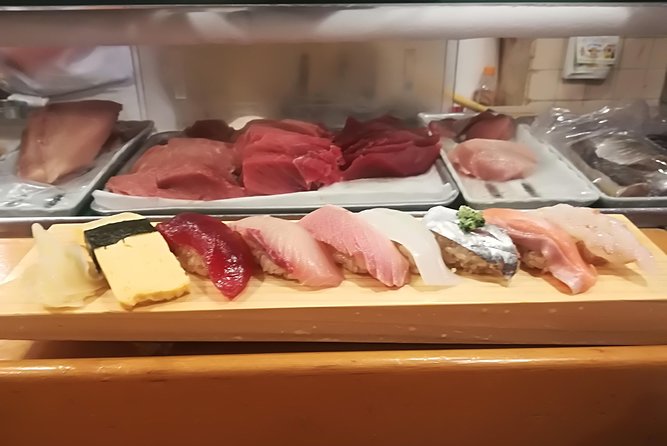
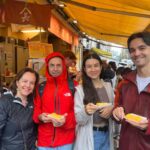
The outer market is the part you visit here. It is a good place to see how food remains part of daily city life, rather than treating Japanese cuisine as a formal restaurant experience. You might find sushi, grilled chicken, tuna, scallops, whale, and the thick rolled egg omelets known as tamagoyaki.
The stop lasts about one hour. That is enough time to look around and choose something to eat, but it may feel short if you want a leisurely meal and extensive browsing. The tour overview includes enjoying various sushi options, yet lunch itself is not included in the price. Plan to pay separately for food.
This is also the point where the advertised price needs a little interpretation. At $221.12 per person, the tour is not a budget sightseeing walk. The price buys a private licensed guide for six to seven hours, personal attention, route changes, and help with public transportation. Your group must still cover lunch and transit costs, so include those in your day’s budget.
Tsukiji works well as a midday stop because you can choose how much food to sample. If you want a full sit-down lunch, allow for the possibility that the one-hour schedule will feel brisk. If you prefer a few small bites, the market can give the day a welcome change of pace.
Senso-ji and the Nakamise approach
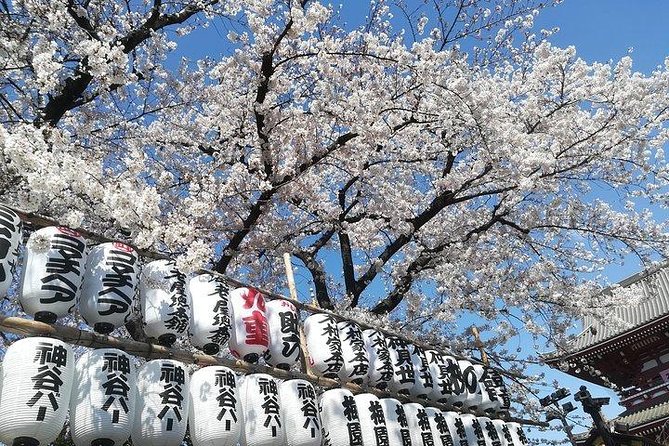
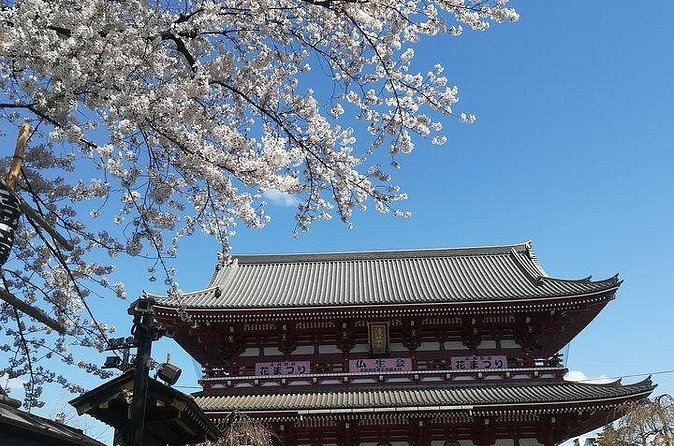
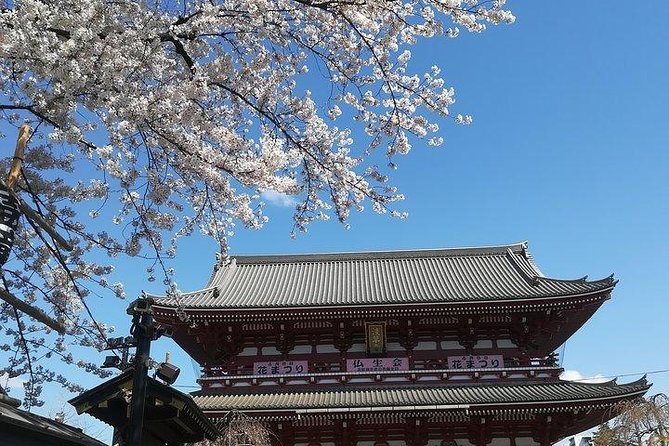
Senso-ji is one of Tokyo’s oldest temples and one of the most recognizable stops on the route. The temple is reached through the Thunder Gate and Nakamise Street, a long approach lined with shops selling traditional souvenirs and Japanese goods.
The two-hour allocation makes Senso-ji the longest stop of the day. That is sensible. You have more than a temple building to see here. The approach itself is part of the experience, and the shopping street gives you a chance to browse, ask questions, and look for small gifts.
During blossom season, the temple grounds add another layer of color. Your guide can help connect the architecture, religious setting, and seasonal customs, which is particularly useful if you are not familiar with how a Japanese Buddhist temple works.
The tradeoff is popularity. Senso-ji is a major Tokyo sight, so do not expect a private, empty temple visit. The value of having your own guide is not avoiding the crowd. It is getting help making sense of the place while you move through it.
Two hours also gives your group some room to follow personal interests. You can spend longer looking at the temple area, browse Nakamise, or ask cultural questions. Nobuko Akimoto has been singled out for taking such questions seriously and shaping the tour around curiosity. That kind of conversation may be one of the strongest reasons to choose a private day rather than a standard group outing.
Ueno Park, a classic blossom-viewing stop
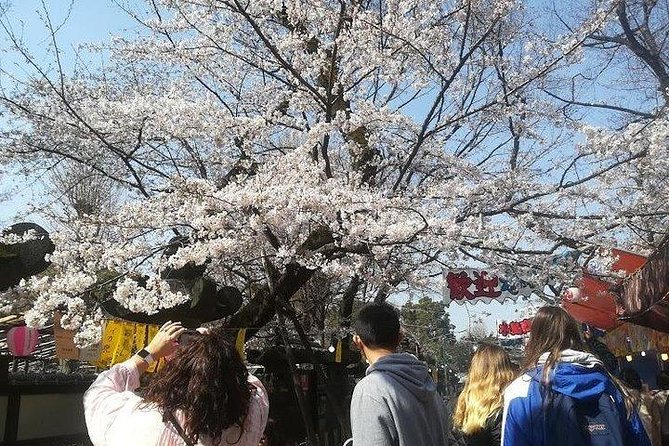
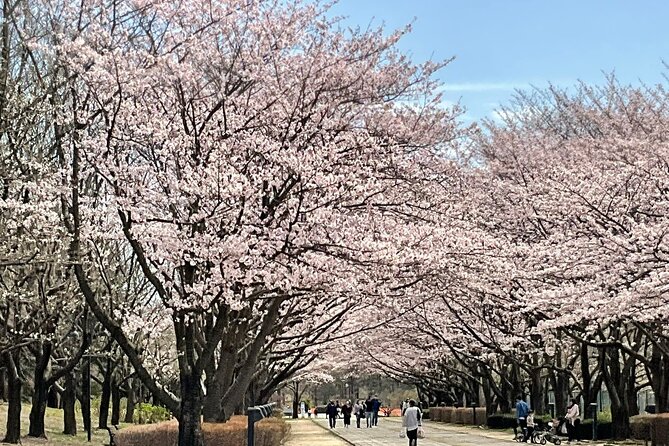
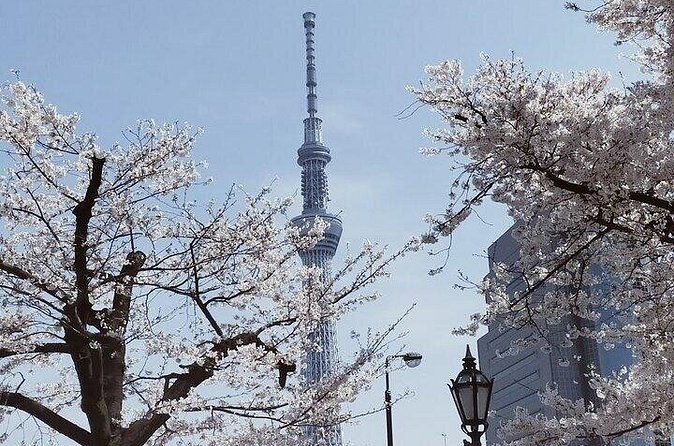
Ueno Park is one of the main reasons to book this experience during cherry-blossom season. More than a thousand cherry trees line parts of the park, creating one of Tokyo’s best-known spring settings.
The park is not only about flowers. You will also encounter reminders of the Tokugawa family, including Ueno Toshogu and Kiyomizu Kannnon Temple, along with Shinobazu Pond. That mixture of trees, water, religious buildings, and city life gives the stop more variety than a simple photo break.
The scheduled visit is one hour. That works for a guided overview, but Ueno is large enough that you will not cover every path in that time. Your guide can point you toward the strongest seasonal areas and explain what you are seeing, which saves you from wandering without a plan.
Ueno is also a place where crowds and weather can shape the mood. The blossoms may be at different stages across the park, and a windy or rainy day can change the experience quickly. The tour requires good weather, and poor conditions can lead to a new date or a full refund.
If you want a relaxed picnic-style afternoon under the trees, this schedule may feel too structured. If you want to compare several famous blossom areas in one day, the short stop is more useful.
A few more Tokyo tours and experiences worth a look
Ameyoko for Tokyo’s downtown side
The final listed stop is Ameyoko Shopping Street, also called Ameya Yokocho. Shops here sell fresh fish, food, daily goods, and souvenirs, while food stands offer places to eat and drink.
Ameyoko is a good counterpoint to the Imperial Palace and Senso-ji. You see a more commercial, everyday side of Tokyo, with narrow storefronts and informal food options. It is the kind of place where your guide’s local knowledge can help you notice what is worth browsing and how the area fits into the city.
The scheduled visit lasts one hour. You might use it for snacks, small gifts, or a final walk through the shopping arcade. Since lunch is not covered, this stop can also give you another chance to buy food if Tsukiji was too rushed or you wanted to compare the two areas.
The route’s five stops create a full day, but they also mean transitions. You will not spend a half-day in one park. You will trade depth for range, seeing several neighborhoods and learning how they connect.
How much value does the $221.12 price offer?
The cost is easiest to justify for two or more people who value personal attention. A private guide can change the route when blossoms are fading, slow down for cultural questions, and help your group use public transit. Those advantages are harder to get on a fixed group excursion.
The price is less attractive if you only want a quick cherry-blossom walk. You can visit the parks and temple areas independently, but the tour’s point is the combination of planning, explanation, and transport help.
Remember that the advertised rate is per person. Private tours can become better value when shared by a small group, especially if everyone wants the same pace and interests. Group discounts are offered, though the exact savings are not specified.
You also need to add the cost of lunch, snacks, and public transportation. There is no private vehicle included. That is not necessarily a weakness in Tokyo, since learning to use public transportation can be more helpful than sitting in a van, but it does mean you should be comfortable with a day that involves walking and transit.
Guide quality and the importance of communication
The experience includes a licensed tour guide, but no particular guide is guaranteed in the details provided. Hiroko and Nobuko Akimoto have both led this experience.
Nobuko Akimoto is a strong fit if you want a flexible cultural conversation. Her approach has included answering detailed questions and changing the focus to match a guest’s interests. Hiroko has also been praised for giving a good introduction to Tokyo and covering many sights in one day.
There is one important caution. One guest found the assigned guide’s English difficult to understand, even though the guide was kind and pointed out things that might otherwise have been missed. For a tour built around explanation, language clarity matters.
I would book this with the understanding that guide quality can vary. If you are mainly seeking transportation help and a broad route, that risk may be minor. If you want detailed historical interpretation, ask about guide language ability when booking if that option is available.
Who should book this Tokyo blossom tour?
I would recommend it most to:
- First-time Tokyo visitors who want a practical city orientation
- Couples, families, or small groups who prefer a private schedule
- People visiting during cherry-blossom season who want several viewing areas in one day
- Guests who want help using trains and public transportation
- Curious visitors who enjoy asking cultural questions
- Anyone who wants to combine gardens, temples, food, and shopping
I would be more cautious if you want a slow, single-neighborhood day, a guaranteed peak bloom at every stop, or an all-inclusive price. It is also not ideal for anyone who cannot manage moderate physical activity, since the day includes walking through several large and busy areas.
Confirmation is provided at booking. The tour begins at 9 a.m., lasts about six to seven hours, and offers pickup. Free cancellation is available up to 24 hours before the start time. If bad weather cancels the activity, you can receive a different date or a full refund.
Should you book it?
Book this tour if you want personal guidance and broad coverage during cherry-blossom season. Its best feature is the combination of flexible sightseeing, public-transit instruction, Tsukiji food, and Tokyo’s major historic areas.
Do not book it expecting a private car, included lunch, or a guaranteed identical route. The blossoms may shift the plan, and the guide’s English may affect how much you gain from the explanations.
For a first visit, I think the route offers good practical value when shared with a small group. It gives you a useful map of Tokyo, several strong spring sights, and enough freedom to ask questions or adjust the day. Just budget for food and transit, wear comfortable shoes, and treat the blossom schedule as flexible rather than fixed.
FAQ
How long does the Cherry Blossom Highlights tour last?
The experience lasts approximately six to seven hours and begins at 9 a.m.
Is this a private tour?
Yes. Only your group participates in the private activity.
Which Tokyo places are included?
The planned route includes the East Gardens of the Imperial Palace, Tsukiji, Senso-ji Temple, Ueno Park, and Ameyoko Shopping Street. The exact itinerary can change because of seasonal conditions.
Is lunch included?
No. Lunch is not included. Tsukiji offers sushi and other food choices, but you pay for your own meal.
Is private transportation included?
No. Private transportation is not included. Your licensed guide helps you use public transportation.
What happens if bad weather cancels the tour?
If poor weather causes cancellation, you will be offered another date or a full refund. You can also cancel for a full refund up to 24 hours before the experience begins.
More Imperial Palace & Shogun Tours in Tokyo
More Ueno & Yanaka Walks in Tokyo
More Asakusa Tours in Tokyo
More tours in Tokyo we've reviewed









Asakusa Tours, compared.
 ★ 4.8Tokyo: Japanese Dance Cabaret Theater Asakusa-Kaguwa TicketFrom $492 hours
 ★ 4.7Tokyo: Meiji Shrine, Asakusa, Skytree Bus Tour and CruiseFrom $12210 hours
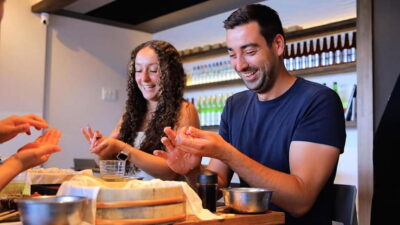 ★ 4.9Tokyo: Roll and Authentic Sushi Making Class in AsakusaFrom $581h 40m
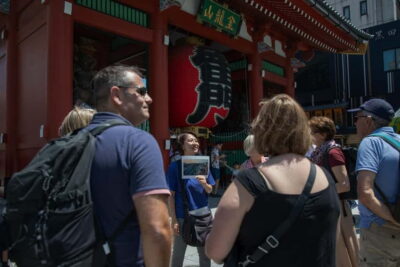 ★ 4.8Tokyo: Asakusa Walking Tour with Sensoji Temple VisitFrom $222 hours
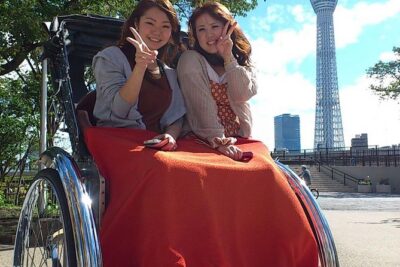 ★ 5.0Tokyo Asakusa Rickshaw TourFrom $42
 ★ 4.5Tokyo Panoramic 1 Day: Meiji Shrine, Asakusa, Odaiba and SKYTREE®From $85