
Reviewed · ASAKUSA TOURS
Tokyo Asakusa & Senso-Ji Walking tour With A Guide
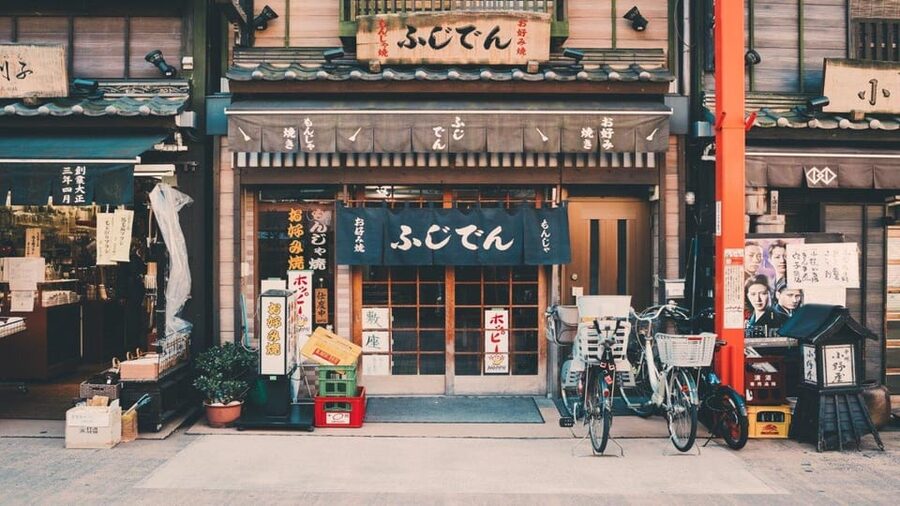
Asakusa gives you old Tokyo in a compact, walkable package: the giant red lantern at Kaminarimon, the stalls of Nakamise Street, the temple grounds of Senso-ji, and quieter lanes near the Sumida River. This two-hour private walk adds a local guide who can explain what you are seeing instead of leaving you to decode it alone.
I like the one-group-only format, especially for families or couples who want to stop, ask questions, and adjust the pace. I also like the chance to combine the main sights with Asakusa’s less polished backstreets, rather than spending the entire visit on the standard temple route.
The main concern is value. At $53 per person, the price can feel fair if your guide gives strong historical and cultural detail, but some guides may offer a lighter explanation. One Italian guest found the walk helpful but wanted more information, so your experience may depend heavily on the individual guide.
In This Review
- Key points to know before booking
- Why Asakusa makes a good first Tokyo walk
- Starting near Asakusa Station
- Tokyo Skytree: a modern counterpoint
- Asakusa beyond the postcard view
- A slower stretch at Sumida Park
- Entering Senso-ji through Kaminarimon Gate
- Nakamise Shopping Street and the main approach
- What the two-hour schedule really means
- Is $53 per person a fair price?
- Who should book this private walk?
- My booking advice
- FAQ
- How long does the Asakusa and Senso-ji tour last?
- What sights are included?
- Is the tour private?
- Can the tour be customized?
- Where does the tour meet?
- Which languages are available?
- Is food or a drink included?
- Is the tour wheelchair accessible?
- Can I cancel for a full refund?
Key points to know before booking
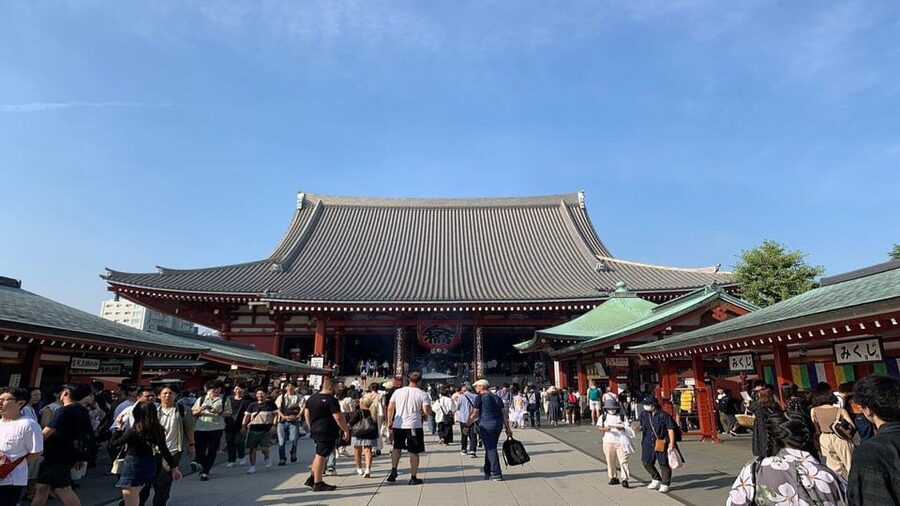
- Senso-ji is the centerpiece: You visit Tokyo’s oldest temple, Kaminarimon Gate, and Nakamise Shopping Street.
- The tour is private: Only your group joins, and the route can be adjusted to suit your interests.
- You get more than the temple: Sumida Park, the river area, Asakusa streets, and a Tokyo Skytree photo stop are included.
- Guide quality matters: Nicolas received particular praise for clear cultural and historical explanations, while other experiences were less detailed.
- Plan for a brisk overview: Four main stops are allotted about 30 minutes each within a two-hour walk.
- Languages and access are flexible: English, French, Spanish, and Italian guides are available, and the activity is listed as wheelchair accessible.
Why Asakusa makes a good first Tokyo walk
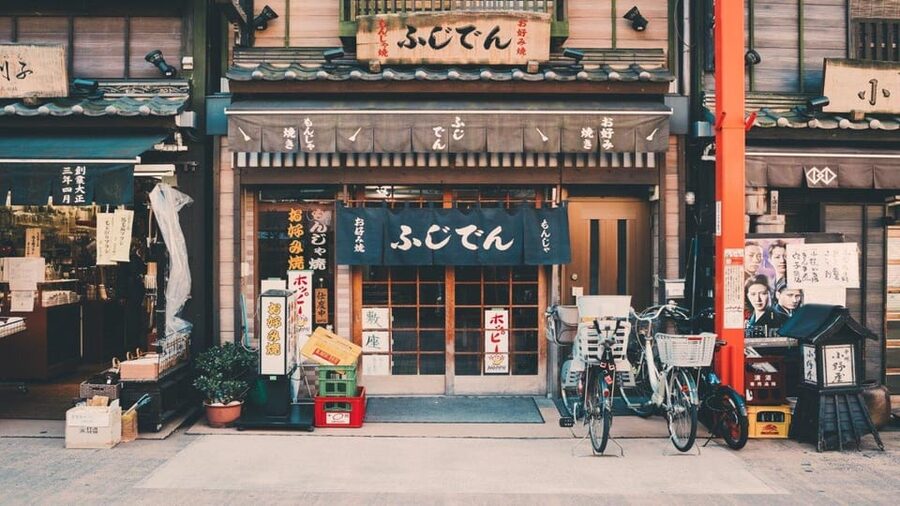
Asakusa is one of the easiest parts of Tokyo to understand on foot. You can move from a busy station area to temple gates, shopping stalls, a riverside park, and residential lanes without needing another train during the tour.
That change of scene is the real appeal. Tokyo can feel huge and hard to read at first. Asakusa gives you a clear introduction to several parts of Japanese city life: Buddhist worship, souvenir shopping, local streets, public parks, and views toward modern Tokyo.
I would book this early in a Tokyo visit. A good guide can point out other things to do afterward, and that advice may help you shape the rest of your time. The tour is also a useful way to get your bearings before returning to Asakusa on your own for food, shopping, or a slower temple visit.
The meeting point is in front of Asakusa at 1 Chome-8-13 Nishiasakusa, Taito City. Since the area has several major landmarks and transport points, check the exact meeting instructions carefully before setting out. You will be joining your guide near one of Tokyo’s busiest sightseeing districts, so allow enough time to locate the right spot.
A few more Tokyo tours and experiences worth a look


Starting near Asakusa Station
The walk begins at Asakusa Station, described as the front of Asakusa. This is a practical starting point because the district’s major sights are close together, and the guide can take over the navigation from there.
A private start also gives you a chance to explain what you want from the next two hours. Tell your guide if you care most about temple customs, local architecture, photography, shopping, or general Tokyo advice. The tour includes customization, so this is not the moment to remain silent and hope the route matches your interests.
The first few minutes may feel crowded and energetic, particularly around the main approach to Senso-ji. That is part of the setting, but it also means the walk is not a quiet historical stroll from the start. Comfortable shoes will help, and you should expect to spend much of the activity standing or walking.
Tokyo Skytree: a modern counterpoint
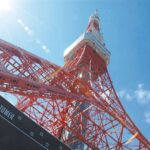
The Tokyo Skytree stop is listed as a 30-minute guided visit and photo stop. The tower gives the route a modern reference point, balancing the older temple district with one of Tokyo’s most recognizable pieces of contemporary architecture.
The information provided does not say that this tour includes entry to the Skytree observation decks. Treat this as an exterior sightseeing and photography stop unless your booking details state otherwise. That distinction matters because a 30-minute stop is better suited to viewing and photos than to a full tower visit.
This part of the route can help you see how Asakusa fits into Tokyo. Senso-ji represents centuries of religious and neighborhood life, while the Skytree points to the city’s modern scale. A guide can make that contrast easier to understand than a quick photograph taken without context.
If you want extensive Skytree time, ask about the planned route before booking. The tour’s central focus is Asakusa and Senso-ji, not a long tower experience.
Asakusa beyond the postcard view

The general Asakusa stop also receives about 30 minutes. This is where the private format can make a real difference. The guide can focus on the parts of the district that match your pace, then add local streets and daily-life details that are easy to miss when you follow only the main road.
You may pass traditional buildings, small lanes, and neighborhood spaces away from the largest crowds. The supplied details do not promise named shops, food tastings, or a particular backstreet route, so do not book this expecting a fixed list of secret addresses. Instead, think of this section as a flexible look at Asakusa away from the headline sights.
I like this part because it gives the temple district some context. Senso-ji is not an isolated monument. It sits inside a living neighborhood, and the surrounding streets show how old customs and present-day Tokyo occupy the same space.
This is also the best time to ask for practical advice. You can ask your guide what else to see in Asakusa, how to spend more time in the area, or which parts of Tokyo might suit your interests next. The tour specifically highlights advice about other activities, making the conversation useful beyond the scheduled walk.
A slower stretch at Sumida Park
The itinerary allows 30 minutes at Sumida Park, along the Sumida River. This gives the tour a welcome change from gates, shops, and temple crowds.
The park is especially appealing during cherry blossom season, when the river setting may be framed by blossoms. Since seasonal conditions vary, do not count on flowers during your visit. Even without them, the park offers a more open place to pause and see Asakusa from a different angle.
A riverside stop also helps break up the pace. Two hours can pass quickly when every minute is spent at major sights, so this section gives you time to look around and take photographs without the same pressure as the shopping street.
The park is still a sightseeing stop rather than a long rest break. With four main sections in a two-hour tour, you will want to keep the walk moving. If you have mobility concerns, mention them when arranging the tour. The experience is listed as wheelchair accessible, but your guide should know in advance if you need a slower pace or route adjustments.
Other walking tours we've reviewed in Tokyo



Entering Senso-ji through Kaminarimon Gate
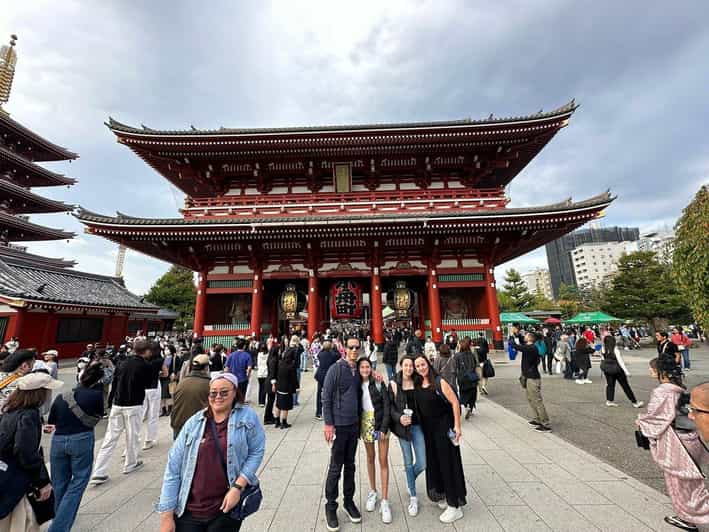
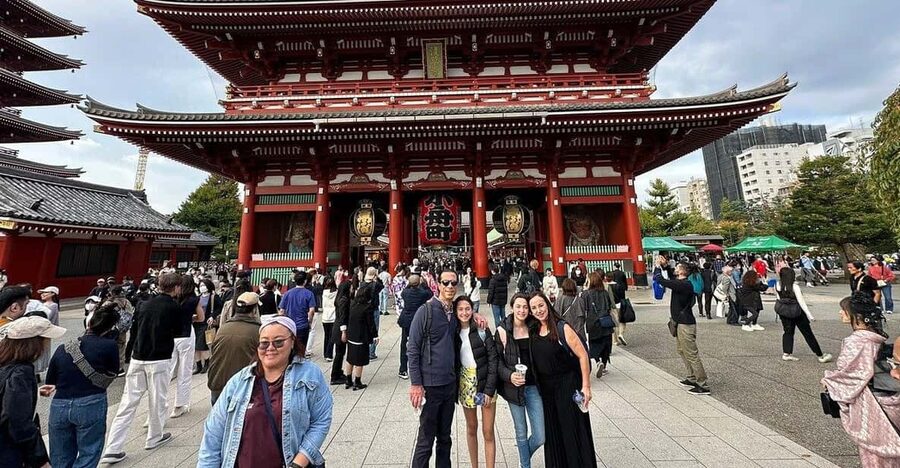
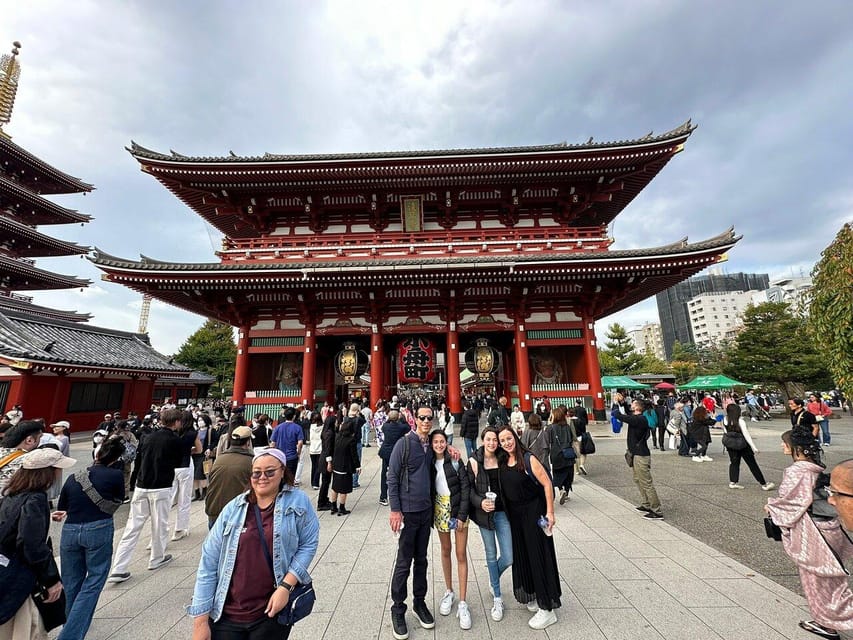
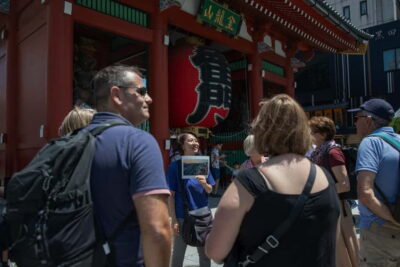
Senso-ji is the heart of the experience. Tokyo’s oldest temple is approached through Kaminarimon Gate, marked by its huge red lantern. This is one of the most familiar views in Asakusa, but seeing it with an explanation can add meaning to a scene that otherwise risks becoming just another photograph.
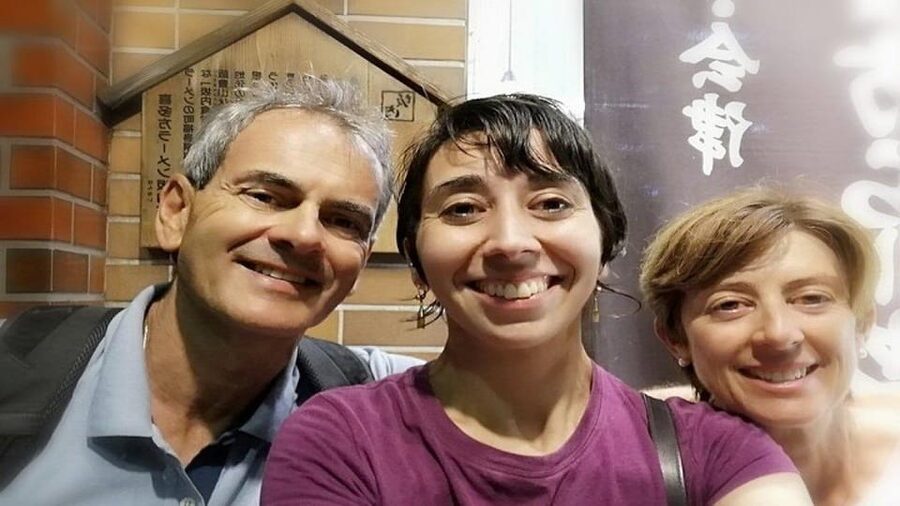
Your guide can explain the place of Senso-ji in Asakusa and share cultural details as you move through the temple area. The precise depth of that explanation is the key variable in this tour. One particularly strong experience came from Nicolas, who provided clear information about Japanese culture and the country’s past. Other guests found the guide pleasant but wanted a fuller explanation of the district and its points of interest.
That difference is worth keeping in mind. The tour promises a live guide in English, French, Spanish, or Italian, but it does not guarantee a certain speaking style or level of academic detail. If history is your main reason for booking, ask for a guide who enjoys detailed cultural commentary.
Senso-ji is also an active religious site, not simply a monument. You should follow your guide’s instructions and watch how people around you behave. The temple visit is more rewarding when you treat the space as part of local life rather than only as a backdrop for photos.
Nakamise Shopping Street and the main approach
Nakamise Shopping Street leads toward Senso-ji and is filled with stalls selling Japanese souvenirs, snacks, and crafts. It is a natural part of the walk because it connects the gate and temple while showing the commercial side of Asakusa.
This is a good place to browse without committing to a separate shopping trip. You might see traditional-style goods and local snacks, but food and drinks are not included in the tour price. If you want to sample something, bring money and use the stop as an opportunity to ask your guide what an item is or how it is normally eaten.
The street can be crowded. Your guide should help keep the group together, but you may not have time to examine every stall. If shopping matters to you, use this tour as an introduction, then return later when you can move at your own speed.
The private setup helps here. You can ask questions about an object before buying it, or tell the guide that you would rather keep moving. A large shared group would offer less control over those small choices.
What the two-hour schedule really means
The four listed sightseeing sections each receive about 30 minutes: Tokyo Skytree, Asakusa, Sumida Park, and Senso-ji Temple. The schedule is easy to understand, but it is also fairly full once walking and transitions are counted.
You should expect an overview rather than a long temple study. There may be time for photographs, explanations, and a few questions at each stop, but not unlimited time at every location. The tour works best when you want a well-shaped introduction and a guide’s perspective, not when you plan to inspect every shop or linger at every shrine feature.
The private format may soften that time pressure. You can discuss your priorities at the start and ask the guide to spend more time where it matters most. Customization is included, but it is still sensible to confirm how much the route can change within the fixed two-hour period.
If you are traveling with children, older relatives, or anyone who prefers a measured pace, explain that before the walk begins. A private guide can respond more easily than a guide managing a full group.
Is $53 per person a fair price?
At $53 per person, this is not the cheapest way to see Senso-ji. You can walk through Asakusa independently, take your own photographs, and enter the public areas without paying for a guided tour.
The price buys three things: a private guide, a route that combines several nearby sights, and the ability to customize the experience. For a couple, family, or small group, that may be worthwhile because you are not sharing the guide’s attention with strangers. It is also useful if you want advice about the rest of your Tokyo visit.
The value depends on the quality of the commentary. One Italian guest felt the price was high for the amount of information provided, while another experience praised Nicolas for making Japanese culture and history clear. That spread tells you how to judge the booking: you are paying mainly for interpretation and personal attention, not for admission tickets or included refreshments.
I would consider the price reasonable for first-time visitors who want help understanding Asakusa and who will use the guide’s local suggestions afterward. Independent walkers, repeat Tokyo visitors, and people who mainly want photographs may find better value by exploring on their own.
Who should book this private walk?
This tour suits you if you want a short introduction to Asakusa without joining a large group. It is particularly useful for first-time visitors, families who need flexible pacing, and people who want to ask practical questions as they walk.
It also suits you if you enjoy seeing major sights but do not want to stop there. The mix of Senso-ji, Nakamise Street, Sumida Park, the Skytree view, and backstreets gives you several sides of the district in one outing.
You may want another option if you need a highly detailed lecture on Japanese Buddhism, a dedicated Skytree visit, or a food-focused tour. The experience includes no food or drinks, and the guide’s depth can vary. Ask for a history-focused guide if that is your priority, and make clear which sights matter most to you.
Languages offered are English, French, Spanish, and Italian. The activity is available as a private group and is listed as wheelchair accessible. Free cancellation is available up to 24 hours before the tour, and you can reserve while paying later, which helps if your Tokyo plans are still shifting.
My booking advice
I would book this tour early in your stay if you want a friendly orientation to Asakusa and useful suggestions for the days ahead. Start the conversation by naming your interests, then ask for more explanation if the commentary feels too light.
The strongest reason to choose it is the private format. You can see the essential sights, walk beyond the main route, and set the pace with your own guide. The main caution is that $53 per person is a serious price for a two-hour walk with no food or admission included, so the experience needs to deliver good storytelling to feel worthwhile.
Book it if personal guidance and flexibility matter more to you than the lowest possible cost. Skip it if you are happy to explore Senso-ji independently and mainly want a quick photo stop.
FAQ
How long does the Asakusa and Senso-ji tour last?
The walking tour lasts two hours.
What sights are included?
The route includes Tokyo Skytree, Asakusa, Sumida Park, and Senso-ji Temple, with photo stops, guided sightseeing, and walking at each area.
Is the tour private?
Yes. It is a private and exclusive tour, so no one outside your group joins you.
Can the tour be customized?
Yes. Customization is included, allowing you to discuss your interests and needs with the guide.
Where does the tour meet?
The meeting point is in front of Asakusa at 1 Chome-8-13 Nishiasakusa, Taito City, Tokyo 111-0035.
Which languages are available?
Guides are available in English, French, Spanish, and Italian.
Is food or a drink included?
No. Food and drinks are not included in the tour price.
Is the tour wheelchair accessible?
Yes. The activity is listed as wheelchair accessible.
Can I cancel for a full refund?
Yes. You can cancel up to 24 hours in advance for a full refund.
More Guided Tours in Tokyo

More Walking Tours in Tokyo
More Asakusa Tours in Tokyo
More tours in Tokyo we've reviewed


Asakusa Tours, compared.
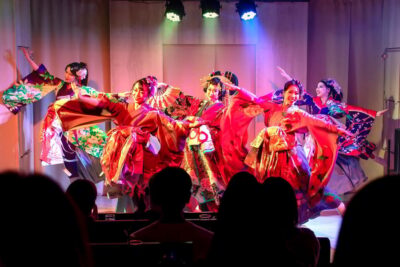 ★ 4.8Tokyo: Japanese Dance Cabaret Theater Asakusa-Kaguwa TicketFrom $492 hours
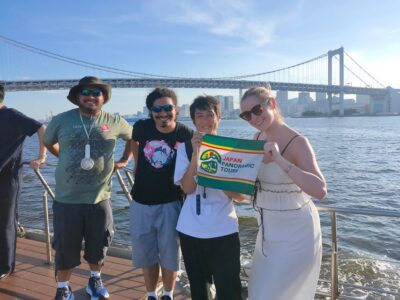 ★ 4.7Tokyo: Meiji Shrine, Asakusa, Skytree Bus Tour and CruiseFrom $12210 hours
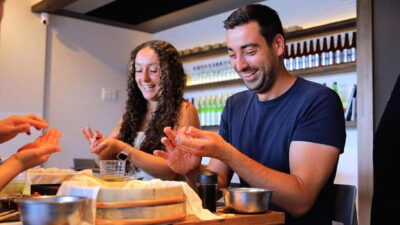 ★ 4.9Tokyo: Roll and Authentic Sushi Making Class in AsakusaFrom $581h 40m
 ★ 4.8Tokyo: Asakusa Walking Tour with Sensoji Temple VisitFrom $222 hours
 ★ 5.0Tokyo Asakusa Rickshaw TourFrom $42
 ★ 4.5Tokyo Panoramic 1 Day: Meiji Shrine, Asakusa, Odaiba and SKYTREE®From $85