
Reviewed · TEA CEREMONY & MATCHA
A perfect Japanese experience: Tea Ceremony and Mochi Forming
The most memorable part of this Tokyo activity is the setting: you make nerikiri wagashi inside a century-old antique store, then carry your handmade sweets into a dedicated tea room for matcha. It feels far more personal than a standard sightseeing stop.
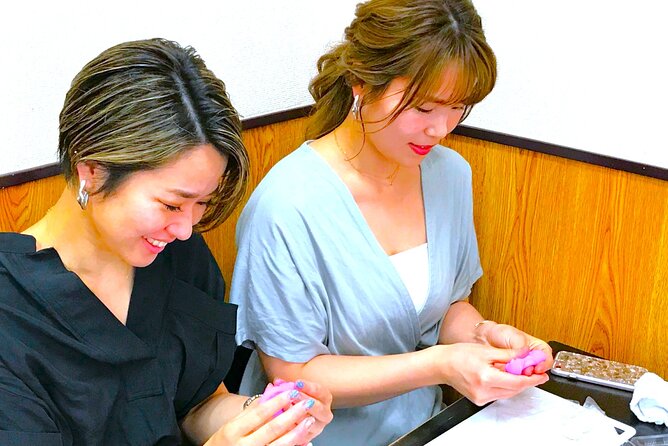
I like the hands-on craft, which is closer to working with colorful clay than tackling a difficult recipe. I also like the small group, capped at five people, and the way your sweets become part of the tea ceremony. The main caution is communication: your host is a Japanese artisan who may speak limited English, so demonstrations and gestures may do some of the work.
In This Review
- Key points
- Making Sweets in an Antique Tokyo Shop
- What Nerikiri Is and Why It Matters
- The Workshop: From Colored Dough to Seasonal Forms
- Sitting Down for Matcha
- Why the Small Group Matters
- Price, Timing, and Practical Value
- Who Will Enjoy This Experience Most
- A Thoughtful Taste of Tokyo Craft
- FAQ
- Where does the tea ceremony and mochi forming experience take place?
- How long does the experience last?
- What will I make during the workshop?
- Is tea included?
- How many people can join?
- What is the minimum age?
- Can I cancel or change my booking?
Key points
- Century-old Yanaka setting: Begin among antique Japanese tableware before the workshop starts.
- Seasonal nerikiri craft: Shape mochi-flour sweets into designs inspired by the time of year.
- Tea ceremony included: Eat one of your creations with confection and real, unsweetened matcha.
- Small group format: A maximum of five people gives the session a quiet, personal feel.
- Short but full experience: Allow about 1 hour and 40 minutes from meeting point to return.
- Strict booking terms: The activity is non-refundable, and late arrivals lose part of the scheduled time.
Making Sweets in an Antique Tokyo Shop
This is not a class held in a plain rented room. You meet at 6-chōme-2-40 Yanaka in Taito City, where the activity takes place inside an antique store that has served as a quiet backdrop for local craft and tea experiences.
On arrival, take a little time to look at the antique tableware. That opening matters. It gives you a sense of Japanese food culture before you sit down with the sweets, and it makes the workshop feel connected to its surroundings rather than dropped into a generic classroom.
The shop is described as a century-old space, and it has also received attention from CNN. Do not expect a large commercial studio with polished presentations and a staff of instructors. The appeal is the opposite: a compact shop, a local artisan, and a small table where you can focus on the work.
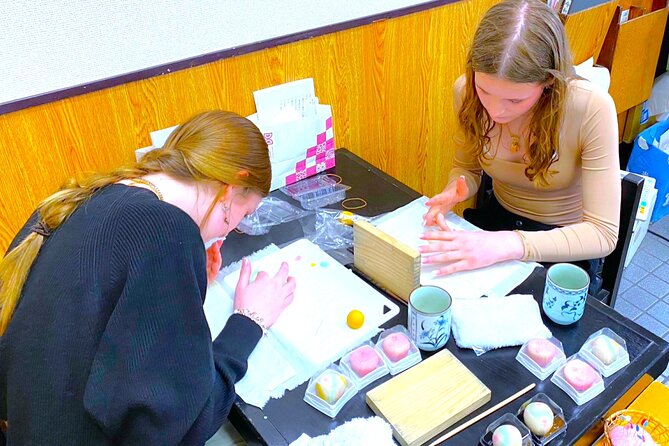
The maximum group size is five. That is a strong feature for this kind of activity. You are forming delicate shapes with your hands, so a crowded room would make it harder to see the demonstration or ask for help. A tiny group also suits the calm pace of a tea setting.
The tradeoff is that the atmosphere may feel informal. The host is not a commercial-style operator, and English may be limited. You should be ready to watch closely, copy the movements, and ask short questions. If you need a highly scripted class with detailed English explanations at every step, this may not be the right fit.
A few more Tokyo tours and experiences worth a look


What Nerikiri Is and Why It Matters
The sweets you make are called nerikiri, a type of Japanese wagashi. The activity describes mochi flour as the main ingredient, with colored materials shaped into seasonal figures. In practice, the work is less about baking and more about form, color, balance, and patience.
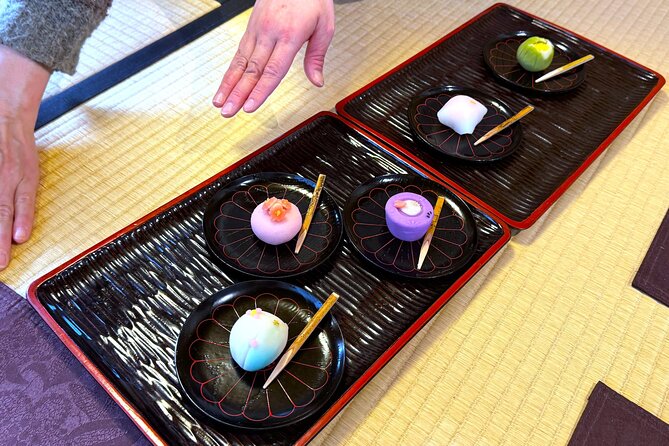
You are not simply mixing ingredients and waiting for an oven. The central task is to turn small portions of sweet dough into something that resembles a flower, fan, plum, hydrangea, or another seasonal design. One session produced a fan and a flower, while another focused on a plum and a hydrangea. The exact designs can change with the season and the host’s selection.
That seasonal element gives the class more meaning. Japanese wagashi often reflects the natural calendar, so the shape on your plate may suggest spring blossoms, summer flowers, or another time of year. You are learning a small piece of how Japanese sweets connect food with the changing seasons.
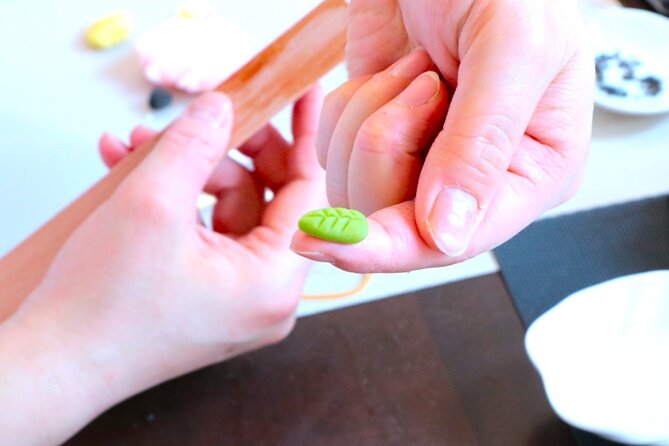
The process is described as easy and fun, similar to working with colorful clay. That is good news if you have no cooking experience. You do not need to arrive with a steady pastry hand. Still, the finished shapes can be intricate, so your first attempt may look more handmade than shop-perfect. That is part of the charm.
All tools and ingredients are supplied. You do not need to pack special equipment, an apron, or materials. The finished sweets contain no artificial additives and last only two days when refrigerated, so think of them as a short-lived food souvenir rather than something to carry through the rest of a long trip.
The Workshop: From Colored Dough to Seasonal Forms
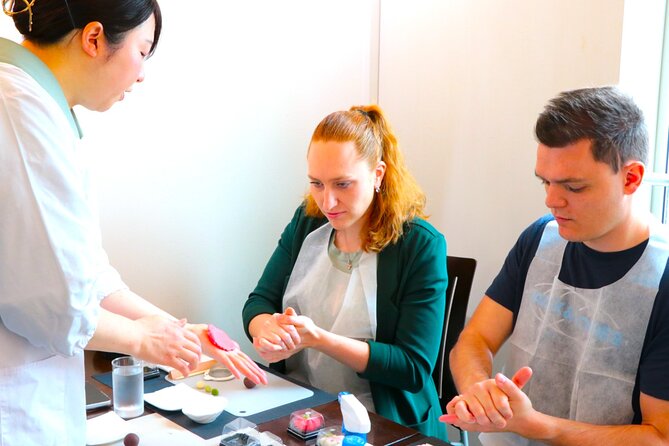
Once you are seated at your station, the host demonstrates how to handle the sweet material. The class focuses on several different styles of wagashi, with four seasonally inspired sweets described as part of the experience. However, the precise number of finished designs can vary. Some sessions have centered on two main forms, such as a fan and flower or a plum and hydrangea.
That difference is worth knowing before you book. You should expect a selection of designs rather than a fixed menu guaranteed for every date. The season, supplies, and artisan’s plan shape the lesson.
The work is tactile. You separate colors, form the pieces, and bring them together to create the target figure. You will likely spend much of the session watching a movement, trying it yourself, and adjusting the shape. This is a pleasant pace for anyone who likes crafts, but it may feel slow if you want a quick cooking demonstration with little participation.
I like that the activity lets you see the gap between a professional sweet and your own first attempt. The shapes may look simple from across a shop counter, yet creating clean petals or balanced layers takes care. That small struggle helps you appreciate the skill behind Japanese wagashi.
The class also works well for people who do not eat meat or who prefer a non-alcoholic cultural activity, but the provided information does not list every ingredient or dietary accommodation. If you have an allergy or strict dietary need, ask before booking rather than guessing.
At the end, you get to taste at least one of your creations. The point is not only to make something pretty. Nerikiri is food, and the tasting lets you notice the soft texture and sweetness after all that shaping.
Sitting Down for Matcha
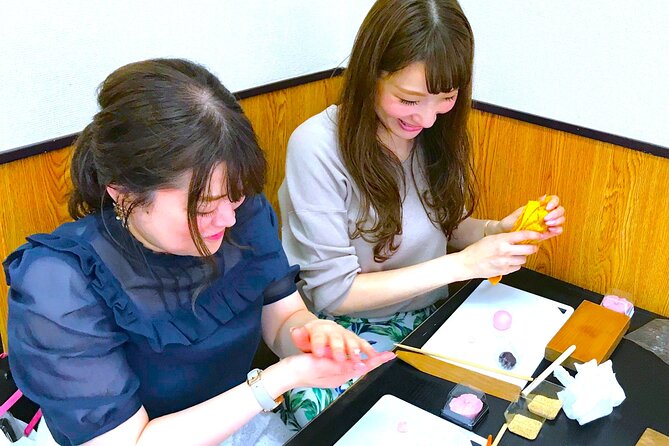
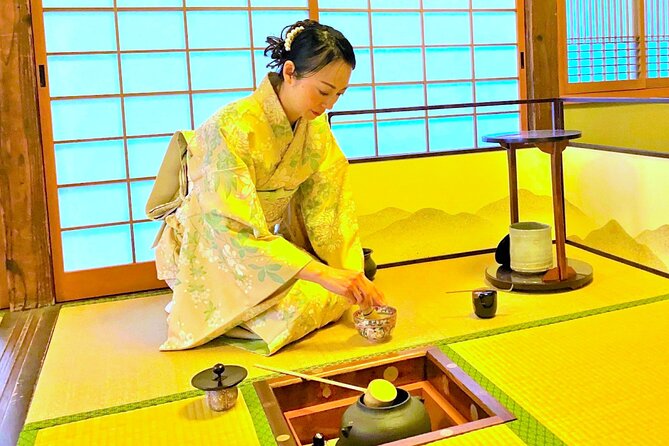
After forming the sweets, you move to a dedicated tea room. The room is designed for the tea ceremony while sitting in a chair, a useful detail if kneeling on the floor would be uncomfortable or impractical.
The host serves you confection followed by real matcha. The matcha is not sweetened, so expect a grassy, bitter flavor rather than the mild taste of a sugary café drink. Eating the sweet first gives the tea ceremony its proper contrast: delicate sweetness followed by a sharper tea.
This part of the experience is not presented as a long formal ceremony with a large audience. It is a compact introduction tied directly to the sweets you have just made. You get to see how confection and tea work together, and you can focus on the etiquette and rhythm without needing to attend a full ceremonial performance.
The tea room also changes the mood. The workshop involves handwork and concentration. The tea portion asks you to slow down and pay attention to the serving order, the bowl, and the taste. Even if you forget some of the details later, the shift from making to sitting gives the activity a satisfying shape.
Because the host may not speak English fluently, do not expect a lengthy lecture on every tea custom. Watch the serving gestures and follow along. The experience is best approached as a demonstration you join, not as an academic lesson.
Why the Small Group Matters
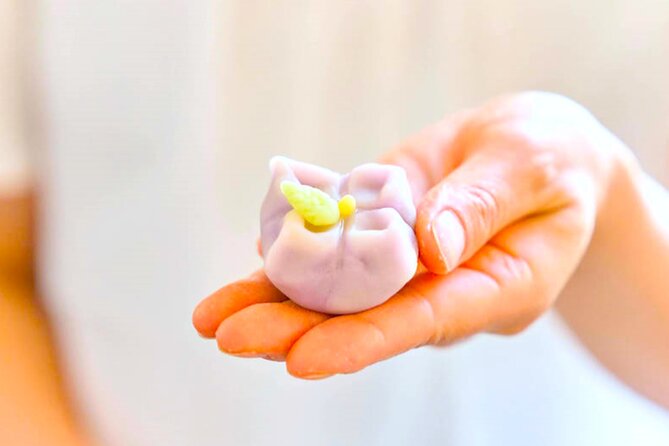
A five-person limit is one of the strongest practical reasons to choose this activity. Wagashi forming involves small movements, and you want a clear view of the host’s hands. In a group of five or fewer, the atmosphere can stay quiet enough for you to work without feeling rushed by a crowd.
The small size also makes this a better choice for couples, friends, and families with older children. Participants must be at least 13, and anyone under 18 must attend with an adult. It is not designed as a drop-in children’s activity or a large family production.
The compact format has a second side. You may have less anonymity than in a big class. If your group is quiet, the session may feel calm. If you are paired with outgoing people, there may be plenty of laughter and shared trial and error. One particularly lighthearted account described the class as funny and full of comic moments, which suggests the informal host can make the language gap less awkward.
The activity lasts about 1 hour and 40 minutes. That is enough time for the craft and tea without consuming half a day in Tokyo. You return to the same meeting point, so you do not need to arrange a separate pickup or find your way across town afterward.




Price, Timing, and Practical Value
At $55.38 per person, this is not the cheapest way to drink tea in Tokyo. You are paying for more than a cup of matcha: the instruction, ingredients, equipment, antique-shop setting, several sweet designs, tasting, and tea ceremony are bundled into one short experience.
I see the price as fair if you value participation and a small group. A museum ticket can show you Japanese craft, but it will not let you shape your own seasonal sweet. A tea demonstration can show you ceremony, but it may not give you a personal connection to the confection. Here, the two parts support each other.
The value is weaker if you mainly want to eat wagashi or watch someone else work. You will spend much of the time making sweets, and handmade results can be uneven. You also need to accept that the exact designs may differ by date.
This activity is booked, on average, 16 days ahead. That is useful planning information, especially if your Tokyo schedule is tight. Reserve early rather than waiting until the day before, but remember that confirmation arrives within 48 hours and depends on availability.
Arrive on time. The session ends at its originally scheduled time even if you are late, and the booking terms are strict. The activity is non-refundable and cannot be changed for any reason, so check your Tokyo itinerary carefully before paying.
A mobile ticket makes entry simple, and the meeting point is near public transportation. The supplied information does not give a detailed route from a specific hotel or station, so use the full Yanaka address when planning your journey.
Who Will Enjoy This Experience Most
I would choose this for you if you like making things with your hands, enjoy sweets, or want a cultural activity that does not feel like a standard sightseeing stop. It also suits anyone curious about Japanese seasonal design and the relationship between food, tea, and presentation.
It is a particularly good fit for:
- Couples looking for a quiet shared activity
- Families with children aged 13 or older
- Visitors who enjoy crafts more than fast-paced tours
- People who want a small group rather than a large class
- Anyone interested in traditional Japanese tea and confection
You may want to skip it if you dislike sweet bean-based confections, need detailed English instruction, or prefer a fully flexible schedule. The no-refund rule also makes this a poor choice for plans that may change.
The experience is not described as wheelchair accessible, and no detailed accessibility information is provided. The tea room does use chairs, which removes the need to kneel, but you should contact the provider about other mobility needs before booking.
A Thoughtful Taste of Tokyo Craft
The best part of this activity is its balance. You get a small lesson in wagashi, a chance to make something yourself, a look at an old shop, and a tea ceremony that gives the finished sweet a purpose.
The workshop does not promise perfection, and that is fine. Your flower may have uneven petals. Your plum may look a little more abstract than expected. The host’s limited English may require patience. Those are real considerations, not reasons to dismiss the experience.
I would book it if you want a personal, low-key introduction to Japanese craft and do not mind a little uncertainty about the exact designs. You receive the most value when you treat the class as an encounter with an artisan, not as a polished cooking show.
FAQ
Where does the tea ceremony and mochi forming experience take place?
It takes place at 6-chōme-2-40 Yanaka, Taito City, Tokyo 110-0001, Japan, inside a century-old antique store.
How long does the experience last?
The activity lasts approximately 1 hour and 40 minutes.
What will I make during the workshop?
You will make seasonal nerikiri wagashi, a type of Japanese sweet made with mochi flour. The designs can vary by season, with examples including flowers, fans, plums, and hydrangeas.
Is tea included?
Yes. After the sweet-making session, you enter a dedicated tea room and are served confection followed by unsweetened matcha.
How many people can join?
The maximum group size is five participants.
What is the minimum age?
Participants must be at least 13 years old. Anyone under 18 must be accompanied by an adult.
Can I cancel or change my booking?
No. The experience is non-refundable and cannot be changed for any reason.
More Tea Ceremony & Matcha in Tokyo

More tours in Tokyo we've reviewed










Tea Ceremony & Matcha, compared.
 ★ 5.0Matcha Making Class in Tokyo with Authentic Japanese Sweets SetFrom $21
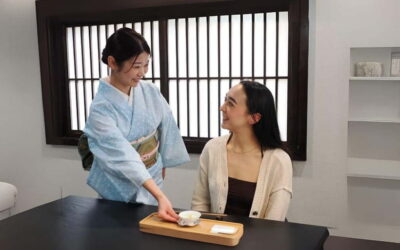 ★ 5.0Tokyo: Traditional Tea Ceremony with a Tea MasterFrom $381 hour
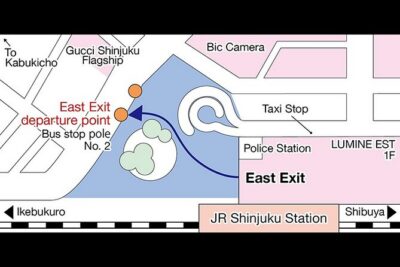 ★ 4.5Dynamic Tokyo: Tokyo Tower, Tea Experience, Bay Cruise Day TourFrom $99
 ★ 4.9Tokyo: Matcha Making Experience with Mochi Sweets in AsakusaFrom $221 hour
 ★ 4.7Tokyo: Matcha and Kimono ExperienceFrom $57
 ★ 5.0Tea Ceremony Workshop in Tokyo by the Experienced InstrucorFrom $38