
Reviewed · TEA CEREMONY & MATCHA
【NEW】Matcha Making Experience and Matcha Comparison in Tokyo
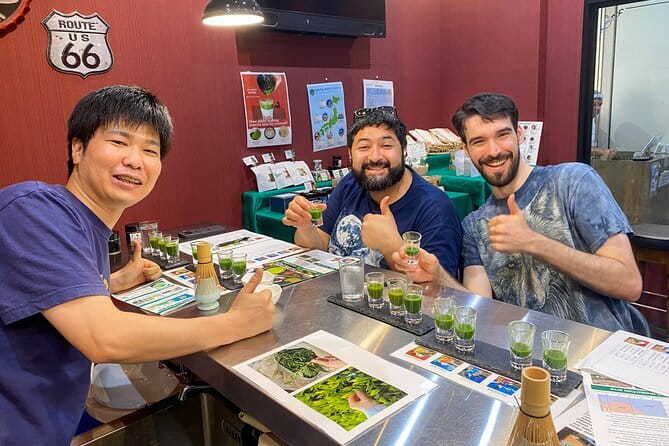
The most interesting part of this Tokyo experience is the side-by-side tasting. You compare 10 matcha teas from five Japanese tea regions, including two products sold as matcha worldwide but not officially defined as matcha in Japan. That makes this more than a tea ceremony. It is a practical lesson in what you are actually buying and drinking.
I like the expert teaching team and the small group size, capped at five people. Chisei, the main instructor, worked as a Kyoto tea farmer for six years and has a bachelor’s degree in agricultural science. I also like that you do not just watch: you choose a favorite and whisk your own bowl. The main consideration is the price, $62.12 per person, which is fair for a specialized tasting but high if you only want a quick cup of green tea.
In This Review
- Key points
- Why the Matcha Comparison Matters
- Meeting Chisei and the Small Teaching Team
- Finding the Meeting Point in Taito City
- Starting With a Welcome Drink and Tea Basics
- Comparing Kyoto, Shizuoka, Aichi, Fukuoka, and Kagoshima
- Choosing a Favorite and Whisking Usucha
- Finishing With a Matcha Latte and Sweets
- Is $62.12 a Fair Price?
- Who Will Get the Most From This Experience?
- Booking Details Worth Knowing
- Should You Book the Matcha Comparison?
- FAQ
- Where does the matcha experience take place?
- What time does the experience start?
- How long does the activity last?
- How many people can join?
- How many kinds of matcha are served?
- Which tea-producing areas are represented?
- Do I get to make matcha myself?
- Is a guide included?
- Are drinks and food included?
- Can I cancel for a full refund?
Key points
- Ten matcha samples from five regions: Compare teas from Kyoto, Shizuoka, Aichi, Fukuoka, and Kagoshima.
- A former Kyoto tea farmer teaches: Chisei explains cultivation, soil, processing, and matcha’s place in Japanese tea culture.
- Two samples challenge the definition of matcha: You see how products sold internationally may differ from Japanese standards.
- You make your own bowl: Pick the tea you prefer, then whisk it into usucha with a bamboo tea whisk.
- A small group keeps it personal: The experience accepts no more than five people.
- The tasting ends sweetly: Try an original matcha blend as a latte, with matcha sweets.
Why the Matcha Comparison Matters
Many people know matcha as a bright green powder used in lattes, cakes, and health products. That broad label can hide major differences in production, quality, flavor, and even definition.
This experience gives you a useful way to sort those differences out. Instead of tasting one tea and being told it is special, you taste several in one sitting. Color, aroma, bitterness, sweetness, texture, and aftertaste become easier to notice when the cups are lined up for comparison.
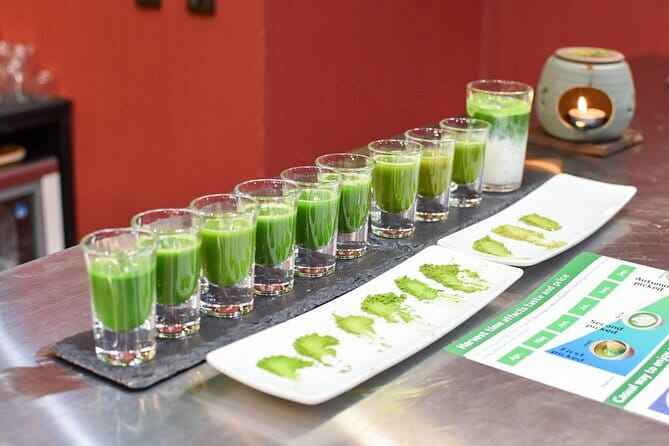
The formal comparison includes eight types. Six are ceremonial-grade matcha, while two are not defined as matcha but are sold as matcha in many parts of the world. The full session serves 10 kinds overall, with the additional teas included as part of the wider tasting and making experience.
That distinction is valuable if you buy matcha outside Japan. You may have seen bright green tins with matcha on the label and wondered why one tastes smooth while another is harsh or flat. This session does not leave the word matcha as a vague marketing term. It gives you a clearer standard to take home.
A few more Tokyo tours and experiences worth a look
Meeting Chisei and the Small Teaching Team
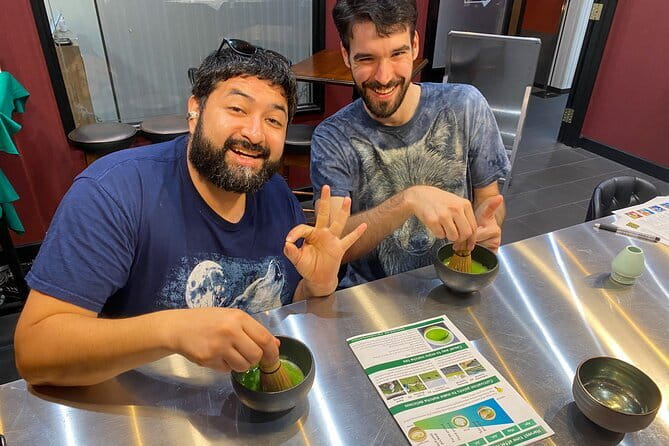
The main instructor, Chisei, brings unusual first-hand experience. He studied agricultural science, then spent six years growing tea in Kyoto and taking part in the process from cultivation through processing. His background includes soil science, an often overlooked part of the subject.
That matters because matcha flavor does not begin with a whisk. It begins in the field. Soil, growing conditions, shading, harvesting, and processing all shape the powder in your bowl. Chisei’s background lets the lesson connect farming decisions with what you taste.
Rina is also part of the team, and the experience includes English and Japanese guidance. The assistant has a bachelor’s degree in pharmacy and works as a practicing pharmacist. You get a mix of tea production knowledge and careful attention to the drink itself.
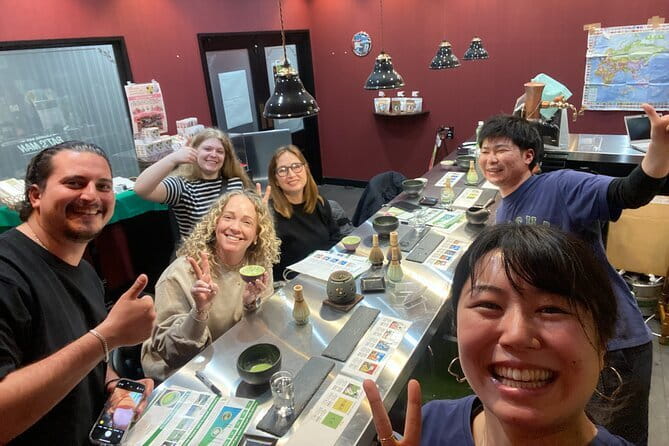
The group limit is five people. That is a real advantage here. A tasting works best when you can look closely at the powder, ask questions, compare impressions, and get help with the whisk. A larger group would make the session feel more like a demonstration and less like a guided tasting.
One useful sign of Chisei’s teaching style comes from his response to a guest who asked many questions about tea and shared information about Indian tea. He noted that once he starts talking about tea, an hour and a half can pass quickly. If you enjoy asking questions, allow yourself to take part rather than simply waiting for the next scheduled step.
Finding the Meeting Point in Taito City
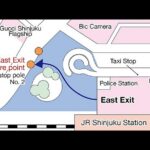
The meeting point is matcha tripJapan at Henn Na Hotel in Tokyo’s Taito City, at 3-19-8 Kotobuki. The activity takes place on the second floor at Sports Bar Leaf.
The start time is 9:30 a.m., and the experience returns to the same location. Since the session lasts about 90 minutes, you can plan another morning activity afterward without giving up half the day.
The mobile ticket is convenient, and confirmation is provided when you book. The venue is near public transportation, though the supplied details do not name a specific station or give walking directions. I would check the exact map pin before leaving and allow a few extra minutes to find the second-floor space inside the hotel.
The setting is practical rather than formal. You are meeting in a tea bar inside a hotel, not in a historic tea house. That may disappoint you if you expect tatami, gardens, or a traditional ceremony room. On the other hand, the casual setting suits a tasting focused on production, flavor, and hands-on practice.
Starting With a Welcome Drink and Tea Basics
The session begins with a welcome drink. While you enjoy it, the team explains the history and production of the matcha used during the experience.
This opening gives you a foundation before the tasting begins. You learn what matcha is, how it is cultivated, and how its production differs from ordinary loose-leaf green tea. The lesson also sets up the later comparison, so you know what to look for instead of simply deciding that one cup tastes good.
The subject can become technical, especially with soil science and farming methods. That is a plus for anyone who wants more than a pretty tea ritual, but it may feel like a lot if you prefer a quick introduction. The format is best for people who enjoy understanding how a food or drink is made.
The history section also gives the tasting a wider setting. Matcha is not just a modern wellness powder. It has a long place in Japanese food and tea culture, and the session connects that past with how matcha is grown and sold today.
Comparing Kyoto, Shizuoka, Aichi, Fukuoka, and Kagoshima
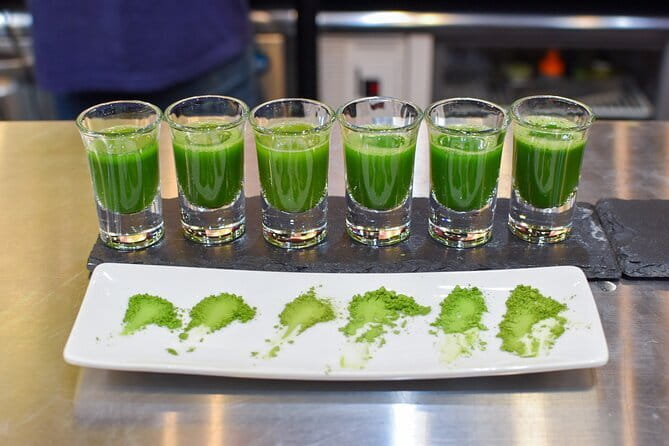
The heart of the experience is the regional comparison. You taste matcha from Kyoto, Shizuoka, Aichi, Fukuoka, and Kagoshima.
These five areas give you a broad look at Japanese production. The point is not to declare one region the winner. It is to notice how much variety can exist inside one category of tea.
Before each sample is served, you look at the color of the powder. Then the team prepares the tea so you can assess its fragrance and flavor. Pay attention to how the aroma changes once water is added, how the tea feels in your mouth, and how long the taste remains.
The portions are small. That is exactly right for this format. Ten full bowls would be too much, and small servings allow you to compare without becoming overloaded. You can focus on distinctions rather than simply trying to finish a large quantity.
The six ceremonial-grade matchas give you a chance to compare products that meet the Japanese definition. The two other samples provide a useful contrast. They are sold as matcha around the world, but they are not defined as matcha under the standards discussed in the session.
That part may be especially useful if you shop in North America or Europe. The tea you find in a supermarket or online store may use the word matcha more loosely than a Japanese producer would. Tasting both types side by side can make labels and marketing easier to judge later.
A previous participant described being surprised by how different these teas were from matcha commonly available in Western stores. That is a reasonable expectation here. You should not assume every green powder will have the same balance of aroma, bitterness, sweetness, and texture.

Choosing a Favorite and Whisking Usucha
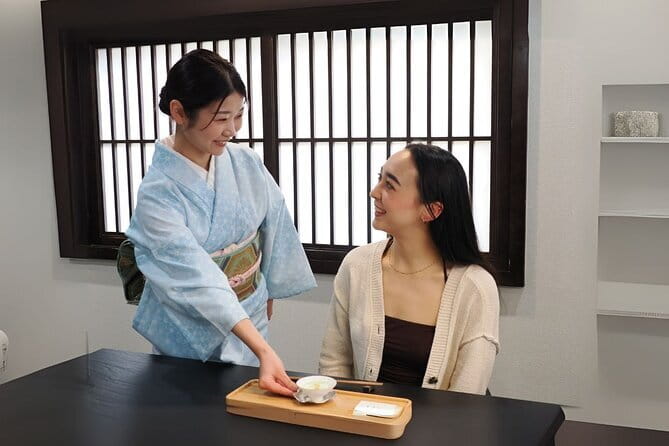
After the comparison, you choose the matcha you like best. Then you make it yourself.
The final tea is usucha, the lighter style of matcha commonly associated with everyday whisked preparation. You use a bamboo tea whisk and learn a method you can repeat at home.
This is where the tasting becomes useful beyond the 90 minutes. You are not only told which tea is good. You identify the style you prefer and practice preparing it. If you like a smooth, gentle cup, you can remember that preference. If you prefer a stronger, more bitter taste, you can choose accordingly.
The bamboo whisk also changes the experience from simply stirring powder into water. Proper whisking helps create the familiar foamy surface and distributes the tea through the water. The team guides you through the process, so you do not need prior experience.
Do not expect to become a tea master in one sitting. The value is simpler and more practical. You leave knowing the basic technique and having made one bowl yourself. The experience gives you a starting point for preparing matcha at home instead of treating the whisk as a mysterious piece of equipment.
Finishing With a Matcha Latte and Sweets
The final food and drink pairing moves away from traditional usucha. You enjoy a matcha latte and matcha sweets made with an original blend designed to work well with milk and sugar.
This is a smart finish because not every matcha tastes best on its own. A tea that is ideal for whisking with water may not be the right choice for a latte. Milk and sugar can soften bitterness and change how the tea’s aroma comes through.
The latte also makes the session accessible if you are unsure about straight matcha. You get to compare the more direct taste of the whisked tea with a familiar café-style preparation.
The supplied details do not name the specific sweets or describe their ingredients, so you should not book this expecting a particular dessert. The clear promise is matcha sweets and a latte using the original blend. If you have food allergies or dietary restrictions, ask the provider before booking.
Is $62.12 a Fair Price?
At $62.12 per person, this is not a cheap beverage stop. You are paying for a guided tasting, instruction, ten matcha samples, one matcha-making session, a latte, sweets, and a small group capped at five people.
I consider the price reasonable if you are genuinely interested in Japanese tea. The former tea farmer’s background adds substance, and the regional comparison would be difficult to recreate on your own during a short visit to Tokyo. You would need to find several teas, understand their labels, prepare them correctly, and compare them while they are fresh.
The value is weaker if you only want to try matcha once or take a quick souvenir photo. The experience spends much of its time on production, definitions, and tasting differences. That is the reason to book it, but it is also the reason to skip it if you want a brief, purely visual tea ceremony.
The small group helps justify the cost. With no more than five people, the guide can answer questions and help you with your own bowl. You are buying access to a focused lesson, not simply a cup of tea.
Who Will Get the Most From This Experience?
I would choose this for you if you like food education, Japanese agriculture, regional products, or hands-on cultural activities. It also suits anyone who already drinks matcha and wants to understand why different tins taste so different.
It works well for curious first-timers too. You do not need to know the vocabulary before arriving. The comparison gives you a simple way to form your own opinion, and the latte and sweets provide a gentler option at the end.
This may not suit you if you dislike bitter drinks, want a full traditional tea ceremony, or prefer an activity with more sightseeing. The session remains at one meeting point and concentrates on tea. There are no gardens, temples, neighborhood walks, or other stops included.
The 9:30 a.m. start is useful for building a full day in Tokyo, but it may be inconvenient if you prefer slow mornings. The 90-minute length is compact enough to fit into a busy schedule, and the return to the same meeting point makes planning easier.
Booking Details Worth Knowing
You can cancel for a full refund if you do so at least 24 hours before the 9:30 a.m. start time. Cancellations or changes made less than 24 hours before the experience are not accepted for a refund, and cut-off times follow Tokyo local time.
The activity accepts service animals and is near public transportation. Tips are not included. English and Japanese guidance is provided.
Only seven ratings are shown, all at five out of five, so the rating is encouraging but based on a small number of responses. One detailed response praised the contrast between these teas and matcha commonly sold in Western shops, and Chisei’s reply made clear that questions and conversation are welcome.
Should You Book the Matcha Comparison?
Book this if you want to understand matcha rather than simply consume it. The strongest reasons are the five-region comparison, the two samples that test the loose international use of the word matcha, and Chisei’s experience as a former Kyoto tea farmer.
I would especially recommend it early in your Tokyo stay if you plan to buy matcha afterward. The tasting can help you recognize the flavors and styles you prefer before you spend money on tea to take home.
Skip it if your ideal tea activity is a formal ceremony in a traditional setting, or if $62.12 feels too high for a 90-minute indoor session. For everyone else, this is a focused, unusually personal way to learn why Japanese matcha tastes the way it does, then make a bowl with your own hands.
FAQ
Where does the matcha experience take place?
It takes place at matcha tripJapan, inside Henn Na Hotel at 3-19-8 Kotobuki, Taito City, Tokyo. The activity is on the second floor at Sports Bar Leaf.
What time does the experience start?
The experience starts at 9:30 a.m.
How long does the activity last?
It lasts approximately 1 hour and 30 minutes.
How many people can join?
The activity has a maximum of five participants.
How many kinds of matcha are served?
You enjoy 10 kinds of matcha during the experience. The formal comparison includes eight types, with six ceremonial-grade matchas and two products that are sold as matcha but are not defined as matcha.
Which tea-producing areas are represented?
The teas come from Kyoto, Shizuoka, Aichi, Fukuoka, and Kagoshima.
Do I get to make matcha myself?
Yes. After comparing the teas, you choose the matcha you like best and prepare usucha with a bamboo tea whisk.
Is a guide included?
Yes. Local guidance is provided in English and Japanese.
Are drinks and food included?
Coffee and tea are included. The experience serves the matcha samples you taste, one matcha you prepare yourself, a matcha latte, and matcha sweets.
Can I cancel for a full refund?
Yes, if you cancel at least 24 hours before the experience start time. Cancellations or changes made less than 24 hours before the start are not accepted for a refund.
More Tea Ceremony & Matcha in Tokyo

More tours in Tokyo we've reviewed






Tea Ceremony & Matcha, compared.
 ★ 5.0Matcha Making Class in Tokyo with Authentic Japanese Sweets SetFrom $21
 ★ 5.0Tokyo: Traditional Tea Ceremony with a Tea MasterFrom $381 hour
 ★ 4.5Dynamic Tokyo: Tokyo Tower, Tea Experience, Bay Cruise Day TourFrom $99
 ★ 4.9Tokyo: Matcha Making Experience with Mochi Sweets in AsakusaFrom $221 hour
 ★ 4.7Tokyo: Matcha and Kimono ExperienceFrom $57
 ★ 5.0Tea Ceremony Workshop in Tokyo by the Experienced InstrucorFrom $38