
Reviewed · HALF-DAY
Private Tokyo Custom Half-Day Tour by Chartered Vehicle
Tokyo is easiest to enjoy when you do not spend half your day changing trains. This private four-hour charter tour lets your group choose the sights, then moves you between them by limo, van, or bus. You can aim for temples, food, gardens, modern architecture, or a little of each.
I like the freedom to shape the route and the comfort of a private vehicle with central pickup and drop-off. I also like that you can choose a guide, with praised guides including Seiko, Sho, Naomi, Syun, Emiko, and Fumiko. The catch is the price: at $849.17 for up to five people, it makes sense mainly for a group that values time and convenience.
In This Review
- Key points to know before booking
- A private way to get your Tokyo bearings
- Asakusa and Sensoji, Tokyo’s traditional opening act
- Tokyo Skytree, modern Tokyo from 634 meters
- Tsukiji, a food-focused stop with a practical limit
- Meiji Jingu and the Imperial Palace as alternate choices
- What the private vehicle is really worth
- Price, group size, and value at $849.17
- Guide quality and how to shape the day
- Timing, pickup, and cancellation details
- Who should book this Tokyo tour?
- FAQ
- How long is the private Tokyo tour?
- How many people can join the private tour?
- Is hotel pickup included?
- Is the tour private?
- Can I choose the Tokyo sights?
- Is a guide included?
- Are admission fees and food included?
- Can wheelchair users join?
- Should you book it?
Key points to know before booking
- Your group controls the route: Choose from places such as Asakusa, Tokyo Skytree, Tsukiji, Meiji Jingu Shrine, and the Imperial Palace.
- A private vehicle saves energy: Your driver handles the city transfer while you stay with your own group.
- A guide is optional: The guide option costs extra, but it can add context and help keep a short itinerary moving.
- Four hours goes quickly: Three major stops can work, but long visits, shopping, meals, and observation decks may require trade-offs.
- The tour suits mixed-age groups: Families, older adults, and at least one wheelchair user received useful support, including an accessible van.
- Late arrival can hurt the day: One booking lost nearly an hour after the group overslept, so treat the start time seriously.
A private way to get your Tokyo bearings
Tokyo can feel like several cities stitched together. Traditional Asakusa, shrine-filled Harajuku, the Tsukiji food district, and the Imperial Palace area each have a different mood. On public transport, crossing between them takes planning. In a private vehicle, you can use the four hours for seeing places rather than working out transfers.
That convenience is the main product here. You are not joining a large group with a fixed script. You get a driver, transport for your party, and pickup and drop-off from a designated central Tokyo meeting point. Depending on your selection, a local guide joins you.
I would think of this less as a fully narrated sightseeing tour and more as a custom Tokyo sampler. A guide can make the stops far more useful, but the quality of the day depends on the route you choose, the time available, and the guide assigned.
The strongest guide experiences have come from several different people. Seiko was praised for warmth and strong local information. Sho put together a good first-day route, while Naomi tailored the outing closely to a family’s wishes. Syun was especially useful for combining food, gardens, temples, Japanese history, and architecture. Fumiko also helped a wheelchair user with conversational English and an accessible van.
That range is encouraging, though it also tells you to be clear about what you want. If you select a guide, explain your priorities at booking or at the start: traditional Tokyo, food, shopping, gardens, family sights, photography, or a broad introduction.
Other private tours in Tokyo


Asakusa and Sensoji, Tokyo’s traditional opening act
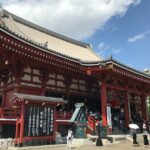
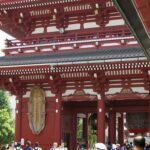
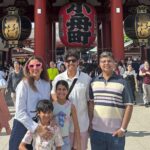
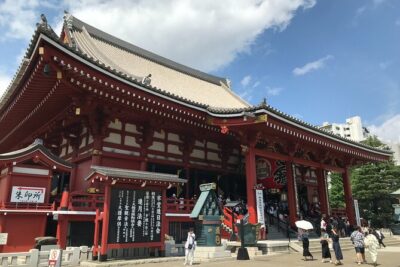
Asakusa is the most natural first stop for a short introduction to old Tokyo. Sensoji, also called Asakusa Kannon Temple, is a major Buddhist temple with a bold entrance and a long approach along Nakamise, a shopping street stretching for more than 200 meters.
You can expect about an hour here. That is enough to see the temple precinct, walk along Nakamise, and take in the contrast between religious buildings and souvenir shops. It is also a good place to ask your guide about temple customs, the meaning of the gates, and how to behave respectfully.
The free admission keeps this stop simple. You do not need to spend money to enjoy the setting, though Nakamise naturally invites browsing. With only four hours, keep shopping under control unless it is one of your main goals.
Asakusa works well for families and older adults because it offers a clear sense of place without requiring a long museum visit. It also gives you photographs that feel distinctly Tokyo: a traditional temple foreground with the modern city close behind.
The limitation is crowding and timing. The area is popular, and a one-hour visit will feel like an introduction rather than a thorough exploration. If you want a slow temple visit, street food, and shopping, you may need to remove another stop.
Tokyo Skytree, modern Tokyo from 634 meters
Tokyo Skytree reaches 634 meters and has two observation decks. It is Japan’s tallest structure, designed with traditional Japanese influences and modern earthquake-resistant engineering.
The attraction is listed as a one-hour stop, but remember that the tour price does not include admission fees. If you want to go up, confirm the ticket cost and allow time for entering, elevators, and the visit itself. A one-hour slot can work for a quick look, but it leaves little room for delays.
The view is the obvious reason to choose Skytree. You get a broad look at Tokyo’s scale, which can help you understand how the neighborhoods fit together. For a first visit, that bird’s-eye view can be useful before you continue at street level.
I would choose Skytree if modern Tokyo matters to you, if you enjoy city views, or if someone in your group prefers architecture to temples. I would skip it if your priority is food, gardens, or historic districts. The tower can consume a large share of a half-day once admission and access time are counted.
You should also decide in advance if everyone wants to pay for the observation decks. Since admission is not included, the group may prefer to admire the structure from below and use the saved time elsewhere.
Tsukiji, a food-focused stop with a practical limit
Tsukiji is included as a possible one-hour stop, with the broader Tsukiji area listed rather than a specific paid attraction. That makes it a flexible choice for a group interested in Japanese food and market streets.
Food and drinks are not included, so plan to pay directly for anything you eat. With only an hour, you can get a taste of the area, but this is not a long food tour. Your guide may help explain what you are seeing and suggest a way to use the time, but the exact experience depends on the route and guide option you select.
Tsukiji pairs well with Asakusa because the two stops offer different sides of Tokyo. One centers on temple precincts and traditional streets, while the other gives you a chance to think about ingredients, snacks, and everyday Japanese food culture.
The drawback is simple: eating takes time. If your group wants to stop at several stalls, sit down for a meal, and shop, you may not have room for Skytree or another major sight. Tell the operator if food is a priority, rather than treating Tsukiji as a quick add-on.
Meiji Jingu and the Imperial Palace as alternate choices
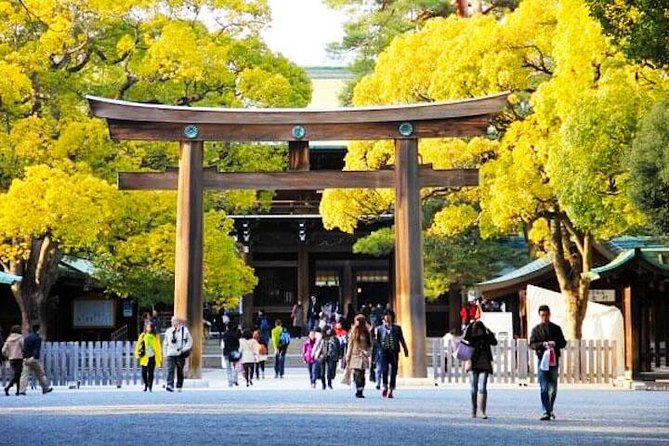
The tour description also lists Meiji Jingu Shrine and the Imperial Palace among the places you may choose. These are useful alternatives when your group wants open spaces, national landmarks, or shrine architecture instead of a tower or market.
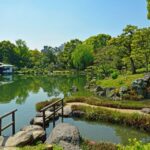
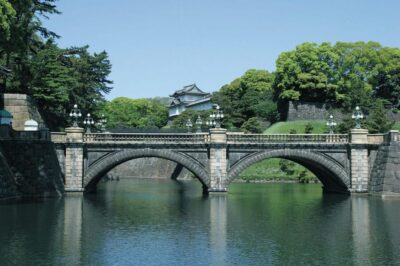
Meiji Jingu gives the route a strong shrine focus. It fits a visitor interested in Japanese religious traditions and the wooded setting around the shrine. The Imperial Palace area offers a different look at Tokyo, linking the capital’s modern streets with the country’s central imperial institution.
The important point is that these are choices, not guaranteed additions to every outing. You cannot reasonably expect to explore every named location in four hours, especially if you want time at Skytree or Tsukiji.
I would plan two major stops and one lighter stop. For example, Asakusa plus Tsukiji gives you temples and food. Asakusa plus Skytree gives you old and new Tokyo. Meiji Jingu plus the Imperial Palace may suit a group that wants a calmer, more formal sightseeing day.
Ask for a realistic route. The private vehicle helps, but Tokyo traffic can still affect how much time you have on foot.
A few more Tokyo tours and experiences worth a look

What the private vehicle is really worth
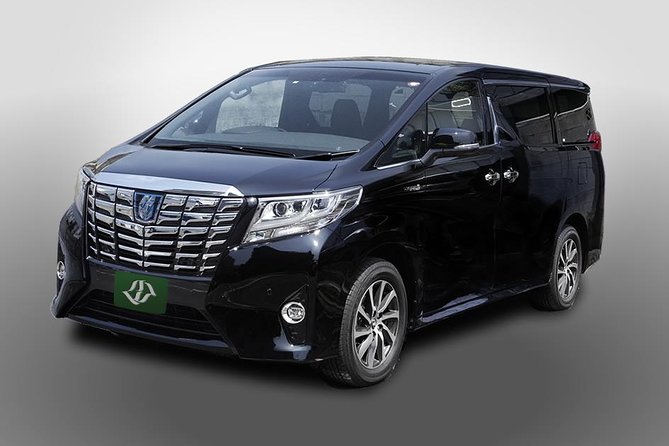
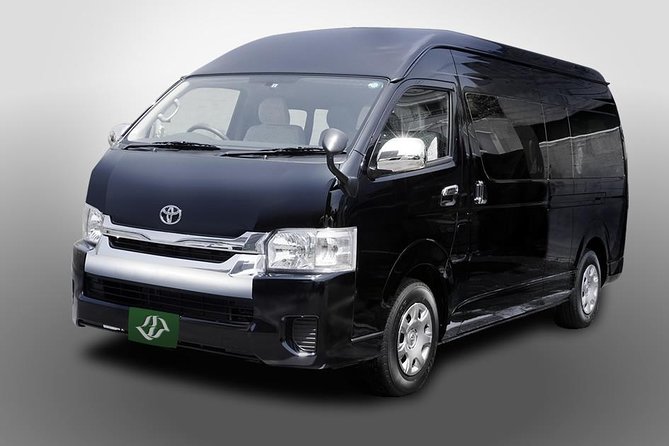
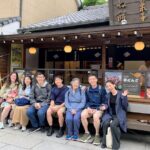
The vehicle is a limo, bus, or van selected for your group size. You are not sharing the ride with strangers, and the driver handles the transfers. That matters most for families with children, older adults, groups carrying luggage, and anyone who finds Tokyo’s rail system tiring.
A family with a two-year-old and parents over 60 found the format worthwhile. That is easy to understand. A private vehicle allows the group to stay together, reduces station changes, and provides a more controlled pace.
The accessible transport is another strong point. One booking used a wheelchair-accessible van without needing to request it separately. Do not assume every reservation will receive the same vehicle, however. If accessibility is important, state it clearly before confirmation and verify the arrangement.
There is a trade-off. A private vehicle is convenient, but it does not automatically make the tour informative. One unhappy booking felt that the group could have taken a taxi because the explanations were limited. That is why the guide option and your requested topics matter.
If you choose no guide, you are mainly paying for private transport, a driver, and a custom route. That may be exactly right for an independent group. If you want shrine customs, food context, architecture, or help with an efficient plan, the guide is likely the better choice.
Price, group size, and value at $849.17
The listed price is $849.17 per group of up to five people, not per person. Split five ways, that is about $170 per person before any guide or admission costs. For two people, the per-person cost is much higher.
That price can be fair when you have a short stopover, a family with mixed mobility, or a group that wants to avoid Tokyo’s complex transfers. It can also be useful on a first day, when a good route helps you understand the city quickly. Several guide experiences were praised for keeping the group on track and fitting a lot into the half-day.
The value is weaker if you are comfortable using trains, have plenty of time, or mainly want one neighborhood. Tokyo public transport can get you to individual areas for far less. A taxi-based day without a guide may also seem more economical, especially if your group does not need interpretation or historical context.
Admission fees are extra, including guide fees if you choose that option. Food and drinks are also extra. Build those costs into your comparison before booking.
For the best value, fill the vehicle. A group of four or five can share the fixed cost and gain the most from the private format. A solo visitor or couple should compare this carefully with public transport, a small-group tour, or a focused private walking tour.
Guide quality and how to shape the day
The guide is where this experience can move from simple transport to a useful introduction to Tokyo. Seiko, Sho, Naomi, Syun, Emiko, and Fumiko were all singled out for positive qualities such as warmth, punctuality, clear information, flexibility, and help with family needs.
Syun’s route is a good model for a balanced half-day: food, gardens, temples, Japanese history, and architecture. Naomi’s approach shows the value of telling the guide exactly what your group wants. Fumiko’s support for a wheelchair user also shows why it helps to share practical needs early.
At the same time, a guide is not a guarantee of a set level of commentary. One booking found the guide pleasant but received too little information at the sights. To avoid that, ask direct questions and state that you want explanations, not only transport.
The operator also had one difficult cancellation after the assigned guide became ill. A fast refund was provided, but the group lost its only Tokyo sightseeing window. This is a reminder that illness can affect any guided activity. If Tokyo time is extremely limited, keep a backup plan for the same day.
Timing, pickup, and cancellation details
The tour lasts about four hours and offers pickup and drop-off from a designated central Tokyo meeting point. Confirmation is sent within 48 hours of booking, subject to availability. The tour is private, and only your group participates.
The experience is near public transportation, and most people can take part. Pickup details matter, so read the confirmed meeting instructions carefully and arrive early. One group was almost an hour late after oversleeping, which put pressure on the entire schedule.
You can cancel for a full refund up to six full days before the local start time. Cancelling two to six full days before the start gives a 50 percent refund. Less than two full days before the start is nonrefundable, and late changes are not accepted.
Who should book this Tokyo tour?
I would recommend it to a group of four or five that wants comfort, a flexible route, and a quick first look at Tokyo. It is especially practical for families, older adults, and groups with mobility concerns.
It also suits a first day in the city. A guide such as Sho or Syun can help connect temples, food, gardens, and architecture, while the vehicle keeps the route moving.
I would hesitate if you are a couple on a tight budget, want a slow visit to one district, or are happy planning your own rail route. In that case, the fixed group price may not feel worthwhile.
FAQ
How long is the private Tokyo tour?
The tour lasts approximately four hours.
How many people can join the private tour?
The listed price covers a group of up to five people.
Is hotel pickup included?
Pickup and drop-off are offered from a designated meeting point in central Tokyo.
Is the tour private?
Yes. Only your group participates in the activity.
Can I choose the Tokyo sights?
Yes. The tour is customizable, and possible sights include Asakusa, Tokyo Skytree, Tsukiji, Meiji Jingu Shrine, and the Imperial Palace.
Is a guide included?
A local guide is included only if you select the guide option. The driver and private vehicle are included.
Are admission fees and food included?
No. Admission fees, guide fees when applicable, food, and drinks are not included.
Can wheelchair users join?
Most people can participate, and an accessible van has been provided for a wheelchair user. If you need accessible transport, confirm the arrangement when booking.
Should you book it?
Book this tour if your group values time, comfort, and control more than the lowest possible price. Choose a guide, name your priorities, and limit the route to two major sights plus one quick stop. That is the best way to make four hours feel useful.
Skip it if you are traveling alone or as a couple on a tight budget and are comfortable with Tokyo’s trains. For a full group, a first-day overview, or a family with mixed needs, the private vehicle and flexible plan can make the high fixed price worthwhile.
More Half-Day in Tokyo
More Private Tours in Tokyo

More tours in Tokyo we've reviewed



Half-Day, compared.
 ★ 4.0Half-day Tokyo Afternoon Tour by Hato BusFrom $41
 ★ 4.6Tokyo: A Half-Day Trip Bus Tour in the MorningFrom $404 hours - 270 minutes
 ★ 4.0Half-day Tokyo Morning Tour by Hato BusFrom $41
 ★ 5.0Tokyo Private Half-Day Tour with a Local – Secrets & HighlightsFrom $143
 ★ 5.0Private Hakone Half-day Car Tour with Hotel Pickup – Local GuideFrom $277
 ★ 4.9Old and Nostalgic Tokyo: Half-Day Yanaka Walking TourFrom $833h 30m