
Reviewed · SUSHI MAKING CLASSES
【Private】Premium Fish filletting sushi making course
The unusual part comes first: you do not simply roll prepared ingredients. You learn to fillet a whole fish, using traditional knife work before turning it into sushi. A sushi master with Michelin-starred restaurant experience demonstrates each movement, then guides you through the cuts and preparations.
I like the private format, which gives your group room to ask questions and adjust the class to your interests. I also like the focus on ingredient care, from fish sourced through ports or Toyosu to the effects of marinating, curing, and aging. The main drawback is the price: at $260.61 per person, this is a serious splurge for a three-hour meal and lesson.
In This Review
- Key points to know before booking
- Why filleting the fish changes the class
- A private class at A-PULSE AZABU STUDIO
- Watching professional knife work up close
- From whole fish to prepared sushi topping
- Cutting precise neta for nigiri
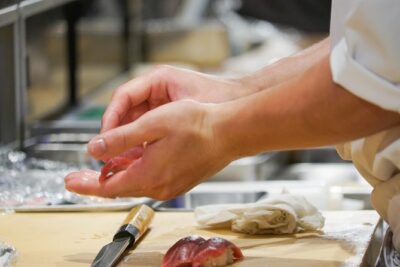
- Shaping nigiri by hand
- Is $260.61 a fair price?
- Who will get the most from this workshop?
- Practical details that affect your decision
- Should you book this private sushi class?
- FAQ
- How long does the sushi-making class last?
- What time does the experience begin?
- Where does the sushi class meet?
- Where does the activity end?
- Is this a private experience?
- What does the course include?
- Are alcoholic drinks included?
- Can I cancel for a full refund?
Key points to know before booking
- Whole-fish preparation: You learn the knife work behind Edomae sushi, not just the final assembly.
- Private three-hour class: Only your group takes part, with fully bilingual staff guiding every step.
- Professional instruction: The sushi master has experience at a Michelin-starred restaurant and demonstrates both fish cutting and nigiri shaping.
- Three fish preparations: The course covers methods such as marinating, curing, and aging before the fish becomes sushi topping.
- Flexible focus: You can request rice preparation or ask the instructor to spend more time on particular skills.
- Central Tokyo setting: The class starts at A-PULSE AZABU STUDIO in Nishiazabu and ends at the same place.
Why filleting the fish changes the class
Many sushi classes begin with neat slices of fish waiting on a tray. This one takes you further back in the process. You work with the preparation that gives Edomae sushi much of its character: separating the fish cleanly, treating it correctly, and cutting each portion for its final use.
That matters because sushi is not only about fresh fish placed on rice. Knife angle, pressure, grain, thickness, and timing all affect texture. A poorly cut piece can feel tough or fall apart. A precise cut can make the same ingredient seem softer, sweeter, and more balanced.
I like this approach because it gives you a better sense of what a sushi chef actually does. You are not expected to master professional knife work in three hours, but you can see why it takes years to build speed and control. The opening demonstration is likely to be one of the most memorable parts, with smooth knife movements, exact cuts, and careful rice shaping performed close in front of you.
You should also expect the lesson to move at a measured pace. Whole-fish preparation takes time, and the purpose is not to rush you toward a large plate of sushi. If your main goal is to eat as much sushi as possible, a restaurant meal will offer better value. If you want to understand the work behind each piece, this class makes more sense.
A few more Tokyo tours and experiences worth a look
A private class at A-PULSE AZABU STUDIO
The meeting point is A-PULSE AZABU STUDIO, at 3-chōme-8-18 Nishiazabu in Minato City. The start time is 12:00 pm, and the activity lasts about three hours. It ends back at the studio, which keeps the day simple and avoids a second meeting point across Tokyo.
The location is near public transportation, but you should still allow time to find the studio. Tokyo addresses can be confusing, especially when you are following small street signs or relying on a map pin. I would arrive early rather than turn up at noon with your attention already spent on navigation.
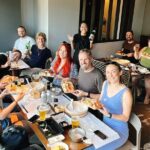
Private participation is a real advantage here. Your group does not share the workspace with strangers, so the instructor can answer questions without stopping for a large crowd. That also makes the course a better match for families, couples, small groups of friends, or serious food lovers who want to set the pace.
The private format does not mean the class is fully free-form. You will still follow the core sequence of fish preparation, seasoning or curing, slicing, and nigiri assembly. But the course can be adjusted to include rice preparation or to focus more closely on the skills your group wants to practice.
Watching professional knife work up close
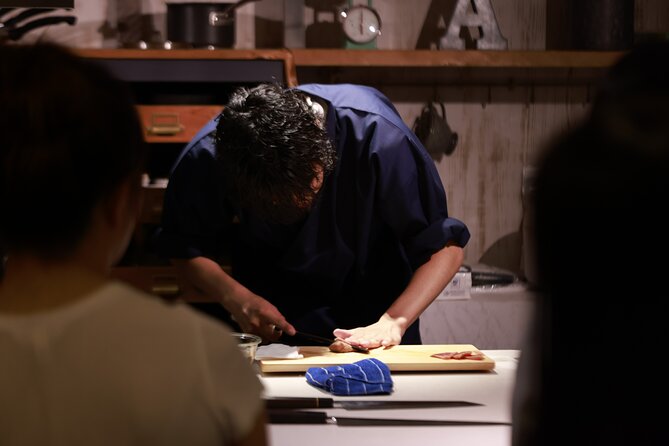
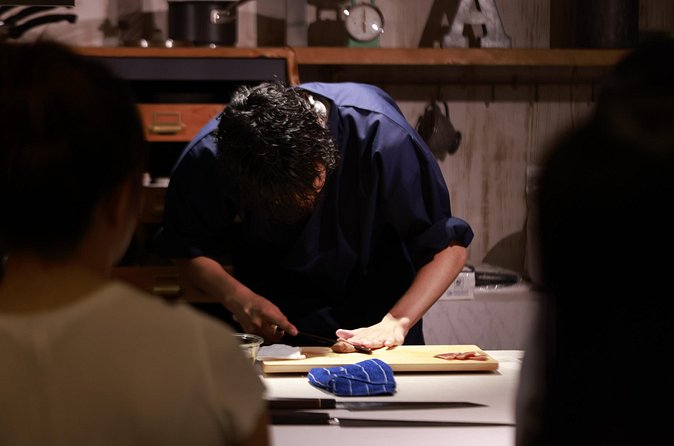
The demonstration sets the tone. The sushi master shows how a professional handles the fish, then explains the purpose behind the movement rather than asking you to copy a blur of fast cuts.
You will see why a sushi knife is treated as a precision tool. The aim is not brute force. It is clean contact, steady control, and respect for the structure of the fish. This is especially useful if you have watched online sushi tutorials and wondered why your slices never look quite right.
The demonstration also gives you a visual lesson in restraint. Professional sushi can look simple because the chef removes unnecessary movement. The rice is shaped with care, the topping is cut to suit it, and the final piece is made to be eaten in one or two bites.
I would pay close attention before picking up the knife. Watch how the chef positions the fish, how the blade travels, and how much pressure is used. Small details are easier to understand once you have seen the complete movement. The class is suitable for beginners, but it still has enough technical depth to interest someone who already makes sushi at home.
From whole fish to prepared sushi topping
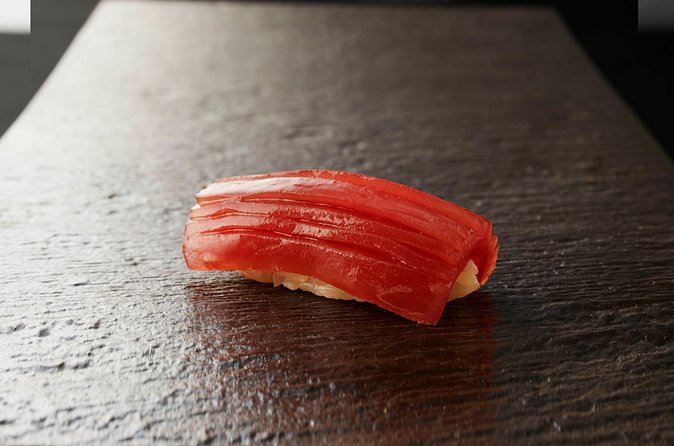
After filleting, the course turns to classic fish treatments. The stated methods include marinating, curing, and aging. These are not decorative extras. They can change firmness, flavor, moisture, and the way the fish works with seasoned rice.
This is where the class moves beyond a basic cooking demonstration. You begin to see that sushi preparation is partly about managing time. Some fish may be served at once, while other preparations are used to create a different texture or bring out a fuller taste.
The ingredients are selected for the class rather than treated as an afterthought. Fish is sourced directly from ports or from Toyosu, and the chef takes care with its condition before you work with it. Rice is described as carefully seasoned, while vegetables add crisp texture and color to the meal.
That quality matters at this price. Premium ingredients help you taste the effect of the techniques, but they also mean you should not compare this experience with a low-cost roll-making class. You are paying for instruction, private attention, and the chance to work with restaurant-grade components.
You may not know every fish or preparation used on your date. The available information does not provide a fixed species list, so I would not book this expecting one particular fish. The benefit is a lesson in technique and seasonality rather than a guaranteed menu of named ingredients.
Cutting precise neta for nigiri
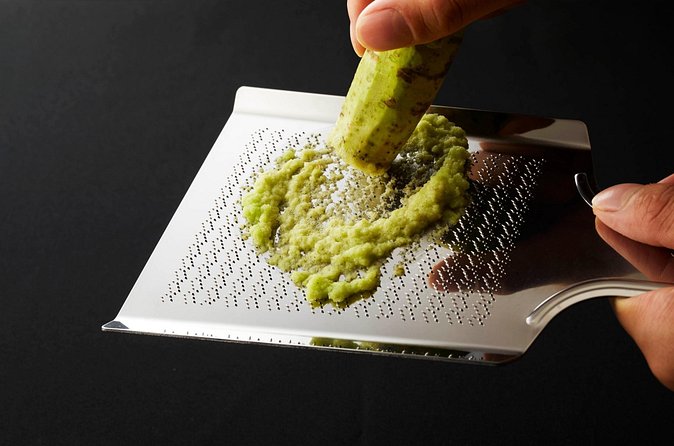
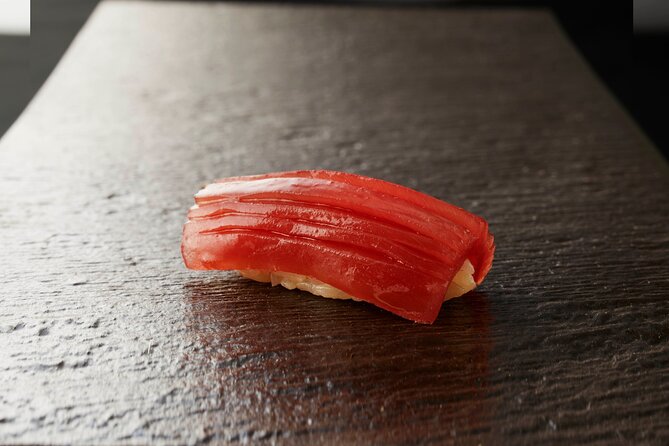
Once the fish has been prepared, you learn to cut neta, the topping used for sushi. This stage may look straightforward, but the slice has to suit the rice beneath it. Thickness, shape, and direction all affect the bite.
A good instructor can show you details that are hard to pick up from a recipe. The cut must be clean, but the topping also needs to sit naturally on the rice. A slice that is too thick can overpower the rice. One that is too thin may lose its texture and flavor.
The course links the knife work to the final eating experience. That is useful because it keeps the lesson practical. You are not cutting fish merely to practice a technical skill. You are preparing each piece for balance.
The emphasis on seasonality also gives the class a wider food lesson. Ingredients are not fixed objects. Their quality changes with timing, condition, and handling. The course connects that care with sustainability and respect for what you consume, a welcome touch in a class that could otherwise focus only on polished technique.
Other private tours in Tokyo




Shaping nigiri by hand
The final craft lesson is nigiri. You form rice by hand, place the topping, and learn how to create a piece that holds together without becoming dense.
For many people, this will be the most satisfying part. Nigiri looks modest, but the rice must have enough structure to hold its shape while remaining light. Too much pressure produces a hard mouthful. Too little leaves the piece unstable.
The instruction is designed to support first-time learners. You can ask questions throughout, and the class is presented as friendly rather than intimidating. That does not remove the challenge, but it makes the challenge manageable.
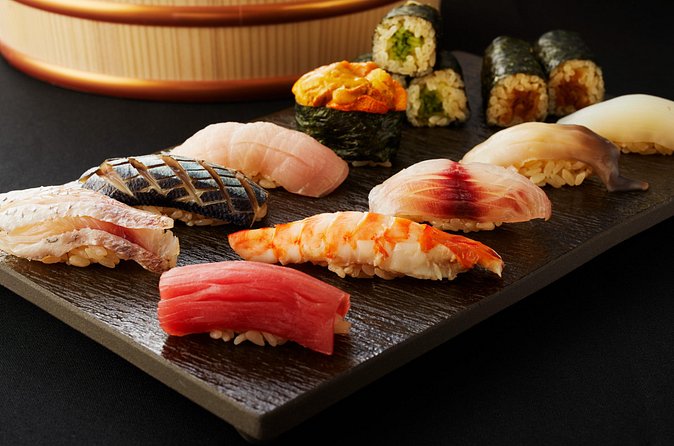
The course includes three different nigiri preparations. The exact varieties are not specified, so you should think of this as a chance to compare methods rather than a promise of three named sushi styles. The contrast should help you notice how preparation and handling change the finished piece.
I like that you eat what you make. The meal is not separate from the lesson. After working through the fish and rice, you photograph and savor the finished sushi. That final bite gives every earlier step a purpose.
Is $260.61 a fair price?
At $260.61 per person, this is expensive for Tokyo. The value depends on what you are comparing it with.
For a simple sushi-making class using prepared ingredients, the price would be hard to justify. For a private lesson that includes whole-fish filleting, professional demonstrations, several fish treatments, precise topping cuts, nigiri practice, meals, and bilingual guidance, the calculation is more reasonable.
You are also paying for privacy. A shared class may cost less, but you would likely have less time with the instructor and fewer chances to ask about your own knife work. Here, the small-group setup is central to the experience rather than a minor detail.
The Michelin-starred background adds appeal, but I would not treat it as a guarantee that the class will match the price of a restaurant tasting menu. This is a hands-on lesson, not a long chef-led dinner. The food is part of the value, but the real purchase is access to professional technique and personal instruction.
I would recommend the splurge for someone who places high value on food craft, Japanese culinary tradition, or a private activity during a special Tokyo trip. I would skip it if you want a quick, casual activity or if your budget is tight.
Who will get the most from this workshop?
This class suits you best if you:
- Want to learn how sushi begins with fish preparation
- Enjoy hands-on food experiences rather than passive demonstrations
- Prefer a private setting with room for questions
- Are curious about Edomae methods and ingredient seasonality
- Want to improve knife control or nigiri shaping
- Appreciate premium ingredients and a slower, careful pace
It is also suitable for complete beginners. You do not need to arrive with professional knife skills. The instructor starts with the basics and guides you through each stage.
Experienced home cooks may find the class useful for a different reason. You can ask for more attention to a specific skill, such as fish cutting, rice preparation, or nigiri form. The course can be customized, although you should request your priority when booking or at the beginning of the session.
This is less suitable for someone who dislikes raw fish, wants a broad tour of Tokyo, or expects a large group social event. It takes place in one studio, and the focus stays firmly on sushi.
Practical details that affect your decision
Your booking confirmation arrives at the time of booking, and the experience uses a mobile ticket. The class begins at noon, so it can fit well into a day that starts with sightseeing elsewhere, provided you leave enough time to reach Nishiazabu.
Meals are included. Alcohol is not included, but optional drinks can be purchased for an extra charge. If you want alcohol with the meal, budget for that separately.
You can cancel for a full refund up to 24 hours before the start time. Changes made within 24 hours are not accepted, and cancellations inside that period are not refunded. The cut-off follows Tokyo local time, which is important if you are booking from another time zone.
The activity is near public transportation, but no specific station or route is provided. Use the studio address and allow extra time for the last part of the walk.
Should you book this private sushi class?
I would book this if you want the uncommon version of a sushi lesson, one that begins with a whole fish and explains why preparation matters. The private format, bilingual guidance, premium ingredients, and Michelin-starred instruction make it a strong choice for a special occasion or a food-focused Tokyo itinerary.
I would not book it simply because you want lunch. At $260.61, the meal alone does not make the price attractive. Book it for the knife work, the Edomae methods, and the chance to shape nigiri under close guidance.
If you are a beginner, do not let the professional setting put you off. The class is structured to be approachable, and you can ask for rice preparation or another area of focus. If you already cook, use the private format to press for the small technical details that ordinary online lessons rarely explain.
FAQ
How long does the sushi-making class last?
The workshop lasts approximately three hours.
What time does the experience begin?
The class starts at 12:00 pm.
Where does the sushi class meet?
It begins at A-PULSE AZABU STUDIO, 3-chōme-8-18 Nishiazabu, Minato City, Tokyo 106-0031, Japan.
Where does the activity end?
The class ends back at the meeting point.
Is this a private experience?
Yes. Only your group participates in the activity.
What does the course include?
Meals are included. The workshop covers fish filleting, traditional preparation methods, precise sushi topping cuts, and three nigiri preparations.
Are alcoholic drinks included?
No. Alcoholic drinks are optional and cost extra.
Can I cancel for a full refund?
Yes. You must cancel at least 24 hours before the experience start time for a full refund. Cancellations or changes made less than 24 hours before the start time are not accepted for a refund.
More Private Tours in Tokyo
More Sushi Making Classes in Tokyo
More tours in Tokyo we've reviewed











Sushi Making Classes, compared.
 ★ 5.0Sushi Making Tokyo Roll and Authentic Japanese Sushi ClassFrom $59
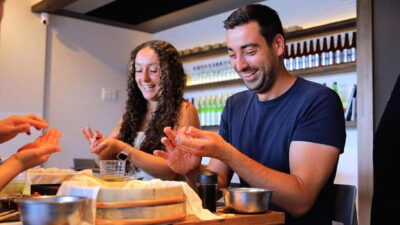 ★ 4.9Tokyo: Roll and Authentic Sushi Making Class in AsakusaFrom $581h 40m
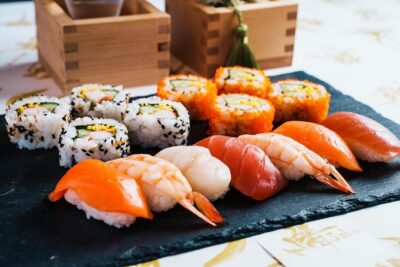 ★ 5.0Make Sushi and Create Unforgettable Memories in TokyoFrom $79
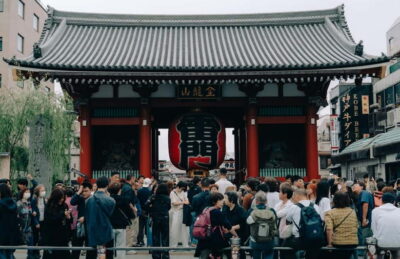 ★ 4.9Tokyo: Sushi Making Class in a Happi Coat near a Famous SpotFrom $421h 30m
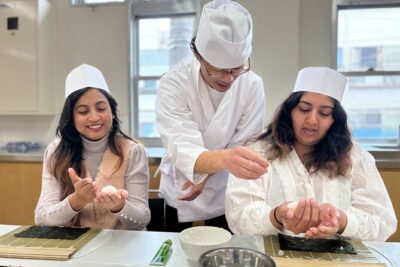 ★ 5.0Tokyo Sushi Making Class in Tsukiji with Professional ChefFrom $49
 ★ 5.0Tokyo Night Foodie Tour in Shinjuku – Seasonal Sushi, Wagyu BeefFrom $111