
Reviewed · TOKYO FOOD TOURS
Tsukiji Fish Market Food Tour: Seafood, Street Food & Hidden Gems
Tsukiji is best approached with an appetite and a plan. This 2.5-hour food walk takes you through the old market area for sushi, sashimi, mochi, soup, and other seafood-focused bites, with a guide steering you to more than four local vendors. The small group, capped at six, is a real advantage in tight market lanes.
I like the generous amount of food and the personal guidance from hosts such as Chambliss, Rie, Chihiro, Shiro, and Kaz. I also like that you can avoid guesswork at the stalls, with the guide handling the language barrier and pointing out foods you might otherwise pass by. The main catch is that this is not a tuna auction or Toyosu Market visit, and some people may find the price high for a walking tour centered on the market’s surrounding food streets.
In This Review
- Key points to know before you book
- What this Tsukiji food tour really is
- Starting at 9 a.m. in the old market district
- More than four vendors, with enough food for lunch
- Sushi, sashimi, mochi, and surprise soup
- The guide makes the difference
- The market’s past, without a museum-style lecture
- The main limitation: old Tsukiji, not Toyosu
- Is $91.17 a fair price?
- Who will get the most from this morning
- How to prepare for the 9 a.m. start
- Should you book the Tsukiji Fish Market Food Tour?
- FAQ
- Where does the Tsukiji Fish Market food tour start?
- Where does the tour end?
- What time does the tour start?
- How long does the experience last?
- How many people can join the tour?
- How much food is included?
- Does the tour include the tuna auction?
- Does the tour visit Toyosu Market?
- Can the tour accommodate dietary restrictions?
- Can I cancel for a refund?
Key points to know before you book
- Five or more full-size tastings: This is intended to replace lunch, not simply offer a few sample bites.
- Small groups of up to six: You get room to ask questions and keep track of the guide in crowded lanes.
- A food-first look at Tsukiji: Expect sushi, sashimi, mochi, soup, and street food rather than a tour of working wholesale auctions.
- Guides help with local ordering: This matters if you cannot read Japanese or do not know which stalls are worth your time.
- The 9 a.m. start suits hungry early risers: Tsukiji’s food activity is strongest in the morning.
- Dietary limits need advance notice: Vegetarian, vegan, and gluten-free choices are limited, and requests made at the last minute may not be possible.
What this Tsukiji food tour really is
Tsukiji Fish Market once served as Tokyo’s central wholesale fish market. The wholesale operation and famous tuna auction moved to Toyosu, but Tsukiji remains a major food stop, with retail stalls, small restaurants, kitchen shops, and street vendors spread through the old market district.
That distinction matters. You are not signing up for a behind-the-scenes auction visit. You are getting a guided food walk through the Tsukiji area, with the emphasis on eating and orientation.
The tour lasts about 2 hours and 30 minutes, although one account describes the food experience stretching close to three hours. The advertised start is 9 a.m. at 4-chōme-8-1 Tsukiji, and the walk ends near Tsukiji Station at 3 Chome-9 Tsukiji.
I see the tour as a practical introduction for a first morning in Tokyo. You get a structured route, a meal, and some market context without having to decode every sign or decide which of the many stalls deserves your time.
A few more Tokyo tours and experiences worth a look



Starting at 9 a.m. in the old market district
The morning start is not a minor detail. Tsukiji is a food market, so an early visit makes sense. You begin when the area is active and when many food sellers are ready for the day’s trade.
Your guide helps you orient yourself among more than 250 fish stalls. That can be useful even if you are comfortable eating on your own. The market lanes can feel confusing at first, and the best place to eat is not always the stall with the longest line or most obvious sign.
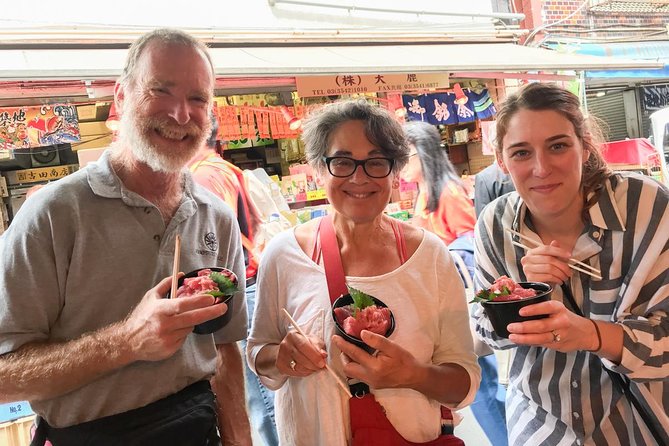
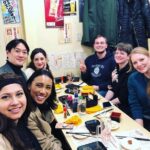
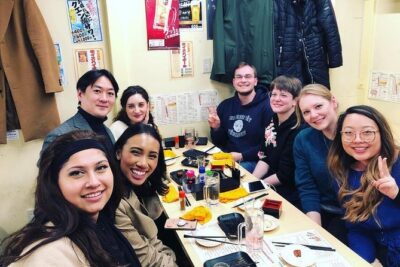
The group limit of six is one of the tour’s strongest practical features. A guide can keep a small party together more easily, and you can ask why a particular fish, preparation, or snack matters without holding up a large group. Small groups also make it easier to stand at a counter or move through narrow passages.
The meeting point is near public transportation, and the tour finishes at Tsukiji Station. Your mobile ticket is accepted, and confirmation is provided at booking. You should still allow enough time to find the starting point, since a late arrival could be awkward once the group has moved into the market.
More than four vendors, with enough food for lunch
The central promise is food, and the portion size appears generous. You receive lunch-size tastings at five or more vendors, rather than a handful of tiny samples. That makes the $91.17 price easier to assess, especially in Tokyo, where buying several separate dishes can add up quickly.
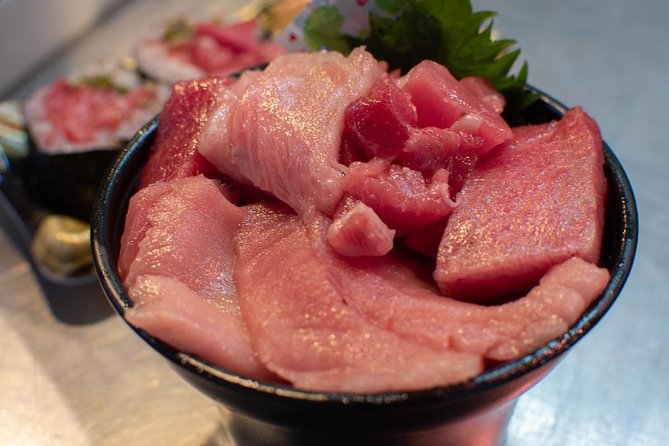
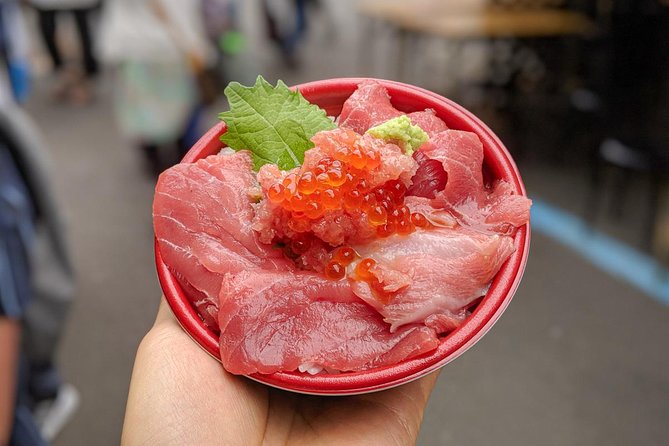
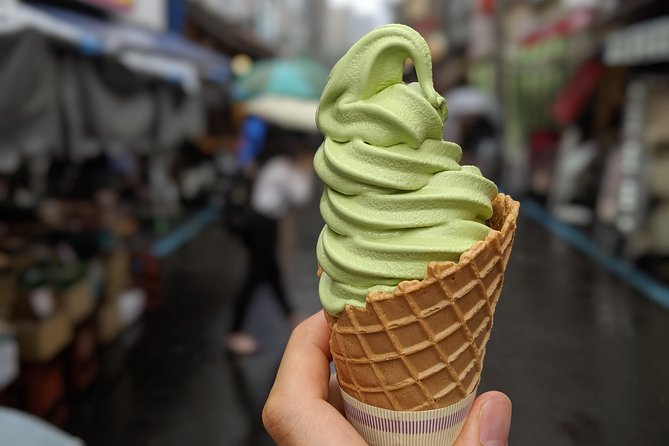
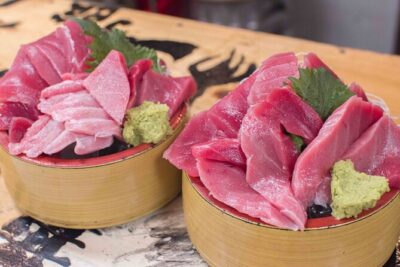
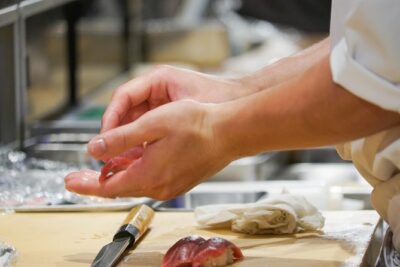
The exact menu is not fixed in the details provided, but the food examples are clear. You might taste sushi, sashimi, mochi, fresh seafood, and an impromptu soup. The route may also include street foods and other local specialties selected by the guide.
This format gives you variety without requiring you to commit to one full restaurant meal. You can compare different preparations and see how Tsukiji’s food culture works across small sellers.
The tour is also designed to keep the group moving. One of the useful advantages is that the guide can take you to vendors without leaving you to wait in every line. That saves time and helps the 2.5-hour schedule deliver a substantial meal.
Come hungry. Several accounts describe the food as plentiful, and the tour is clearly meant to function as lunch. If you eat a large breakfast, you may find yourself too full to appreciate later tastings.
Sushi, sashimi, mochi, and surprise soup
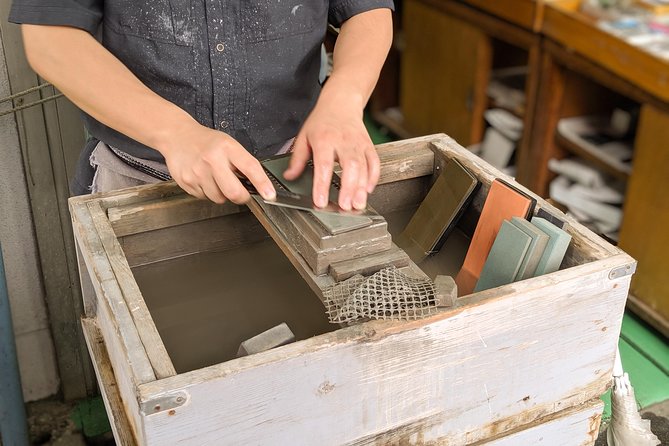
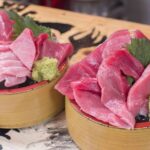
Sushi and sashimi are natural highlights here, but the experience is not limited to raw fish. Mochi adds a sweet change of pace, and a surprise soup tasting has been memorable enough that one participant went back to buy a packet afterward.
That kind of unscheduled stop is part of the appeal. A good market guide notices what is fresh, popular, or easy to miss. You may get a better sense of ordinary market eating from a small soup or snack than from a famous dish chosen only for its name.
The food also gives your guide something useful to explain. You can ask about ingredients, preparation, and the difference between foods sold for local workers and foods aimed mainly at sightseeing crowds. The guide’s role is not only to hand you food. It is to give each tasting a little context.
The seafood may be the main attraction, but the changing rhythm of the meal matters. A series of savory bites, sweet food, and small local specialties is more interesting than five similar plates of sushi.
The guide makes the difference
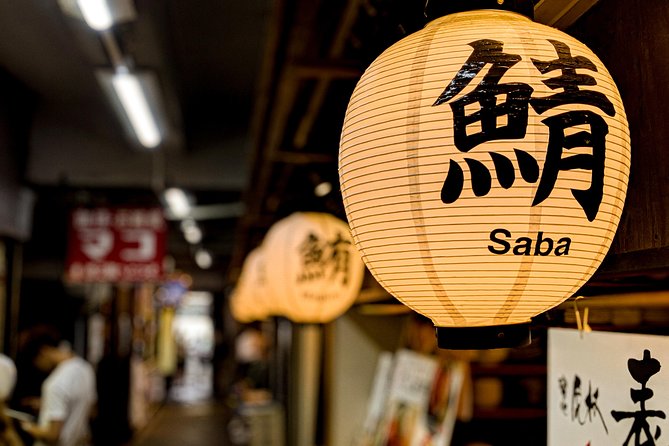
This tour depends heavily on the person leading it. The strongest guide names associated with the experience include Chambliss, Rie, Chihiro, Shiro, Kaz, and Chi. Specific praise has focused on their friendly manner, clear English, market knowledge, and ability to explain both food and local history.
Chambliss has been singled out for taking groups to about five locations and explaining the market as they went. Chihiro has been noted for handling family food preferences and finding less obvious places. Shiro has been praised for explaining the market’s past, answering questions, and selecting unusual tastings. Kaz has made a strong connection with visitors from California, which shows how a guide’s personality can shape the morning.
You should not assume you will have one particular guide. The useful point is that the operator has several guides who can make the route feel personal. Ask questions as you go, especially if you want to know why a stall is important or how to identify a food you may want to buy later.
A guide also helps bridge the language gap. Tsukiji is easier if you can read Japanese or already know how the market works. If you cannot, the guide can help you understand what is being offered and keep the meal from becoming a series of random guesses.
A few more Tokyo tours and experiences worth a look


The market’s past, without a museum-style lecture
The tour includes some history of Tsukiji, but food remains the main event. You will get enough background to understand why the district matters and how the market fits into Tokyo’s food culture.
This balance works well for most people. You are not spending the morning listening to a long lecture while hungry. Instead, the historical details arrive while you move between food stops.
Still, set your expectations correctly. This is not a formal historical tour of every phase of the market. If your priority is architecture, wholesale systems, or a detailed account of the move to Toyosu, you may want a separate visit or a different tour.
The short history component is most useful as orientation. It helps you see Tsukiji as more than a collection of food stalls and understand why the district continues to attract people after the wholesale market moved.
The main limitation: old Tsukiji, not Toyosu
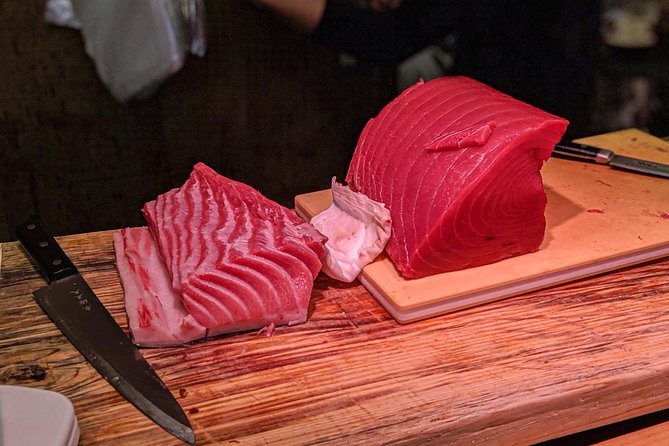
The biggest potential disappointment is simple: the tour does not include the tuna auction or Toyosu Market.
Some people picture Tsukiji as a working wholesale market filled with dramatic auction activity. That picture is outdated. The experience described here focuses on the old Tsukiji area and its retail food vendors.
One account expected more of the market’s live action and found the tour concentrated around the surrounding streets. That is a fair caution. You will see a lively food district, but you should not book this expecting access to the wholesale auction floor.
For many people, this is not a serious flaw. If you want to eat well, learn how the area works, and find stalls you might miss alone, the retail district is exactly the point. If your main goal is the tuna auction, this is the wrong booking.
Is $91.17 a fair price?
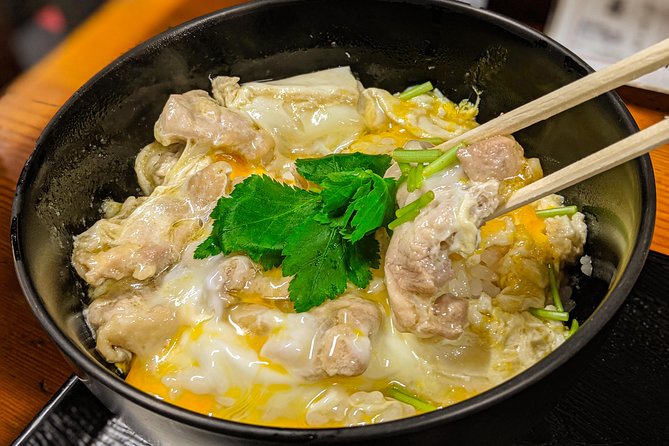
At $91.17 per person, this is not a cheap breakfast. The value rests on three things: the amount of food, the number of vendors, and the help of a guide in a place that can be confusing for first-time visitors.
Five or more lunch-size tastings make the cost more reasonable. You are not paying only for a walk. You are paying for a meal spread across several stops, plus the guide’s time and the convenience of avoiding some waits.
The price is harder to justify if you are already comfortable navigating Japanese food markets or if you would happily choose your own sushi and snacks. One person found the tour somewhat expensive for the amount of sightseeing involved. That criticism makes sense because the attraction is mainly the food route, not a long list of monuments or formal exhibits.
I would compare the cost with what you value most. If you want a relaxed introduction and would rather have someone choose the stops, the price may be fair. If you want maximum food quantity per dollar, eating independently will likely cost less.
Who will get the most from this morning
This tour is a strong match for:
- First-time visitors to Tokyo who want help understanding Tsukiji
- People who enjoy seafood and Japanese street food
- Anyone who likes tasting several dishes instead of sitting down for one meal
- Small families or couples who want a guide’s attention
- Visitors who cannot read Japanese and feel unsure about ordering
- Food lovers who want local specialties beyond standard restaurant sushi
It is less suitable if you want the tuna auction, Toyosu Market, a long historical tour, or a completely self-directed morning.
It may also be a poor fit for strict dietary needs. You must send food restrictions at least a week before the date. Vegan, vegetarian, and gluten-free choices are limited, and last-minute requests cannot be counted on. One gluten-free participant received advance contact and careful checking from the guide, but that should be treated as a reason to communicate early, not as a promise of broad menu choice.
How to prepare for the 9 a.m. start
Wear shoes that are comfortable for walking and standing. The tour is only about 2.5 hours, but you will be moving among several stalls and eating along the way.
Do not plan a large breakfast beforehand. The food is described as a full lunch, and the variety is one of the tour’s main benefits.
Keep your schedule flexible after the tour. The end point is near Tsukiji Station, which makes it easy to continue sightseeing, but the exact pace can vary depending on food stops and market conditions.
If you have allergies or restrictions, contact the operator at least a week ahead. The earlier you explain what you cannot eat, the more useful the guide can be when planning the route.
The experience requires good weather and a minimum number of participants. If poor weather or low enrollment cancels the tour, you are offered another date or experience, or a full refund. You can cancel for a full refund up to 24 hours before the local start time.
Should you book the Tsukiji Fish Market Food Tour?
Book it if you want Tsukiji to be your first serious food stop in Tokyo and you prefer guidance over guesswork. The small group, generous tastings, and personal attention from guides such as Chambliss, Rie, Chihiro, and Shiro give the morning real practical value.
Skip it if you are mainly chasing the tuna auction, Toyosu, or a cheap self-guided meal. Also think twice if you need a strict vegan, vegetarian, or gluten-free menu.
For most seafood fans, this is a useful first taste of Tsukiji. Just arrive hungry, expect a food walk through the old market district, and do not confuse it with a wholesale auction tour.
FAQ
Where does the Tsukiji Fish Market food tour start?
The tour starts at 4-chōme-8-1 Tsukiji, Chuo City, Tokyo 104-0045, Japan.
Where does the tour end?
The tour ends near Tsukiji Station at 3 Chome-9 Tsukiji, Chuo City, Tokyo 104-0045, Japan.
What time does the tour start?
The scheduled start time is 9:00 a.m.
How long does the experience last?
The tour lasts approximately 2 hours and 30 minutes.
How many people can join the tour?
The group has a maximum of six participants.
How much food is included?
The experience includes lunch-size food tastings at five or more vendors.
Does the tour include the tuna auction?
No. The tuna auction is not included.
Does the tour visit Toyosu Market?
No. A visit to Toyosu Market is not included.
Can the tour accommodate dietary restrictions?
You must provide food restrictions at least one week before the tour. Vegan, vegetarian, and gluten-free options are limited, and last-minute food requests may not be accommodated.
Can I cancel for a refund?
Yes. You can cancel at least 24 hours before the start time for a full refund. Changes or cancellations made less than 24 hours before the start time are not accepted for a refund.
More Food Experiences in Tokyo
More Tokyo Food Tours in Tokyo
More Tsukiji Market Tours in Tokyo

More tours in Tokyo we've reviewed











Tokyo Food Tours, compared.
 ★ 5.0Tokyo: Shinjuku Food Tour (13 Dishes at 4 Local Eateries)From $86
 ★ 4.9Tokyo: Shinjuku Food Tour (15 Dishes and 4 Eateries)From $853 hours
 ★ 5.0Best of Shinjuku: Izakaya Food Tour (4 Stops, 14+ Tastings)From $92
 ★ 5.0Tokyo Night Foodie Tour in Shinjuku – Seasonal Sushi, Wagyu BeefFrom $111
 ★ 5.0Eat and Drink Like a Local: Tokyo Ueno Food Tour-Taverns&RamenFrom $95
 ★ 5.0Tokyo: Shibuya Food Tour (13 dishes and 4 Eateries)From $77