
Reviewed · TEMPLES & MEDITATION
Tokyo Zen Meditation at Private Temple with Monk
The rare part of this Tokyo experience is not simply sitting quietly. You enter Kinryu-ji Temple, a 400-year-old Buddhist temple in Asakusa that is not open to the general public, then speak directly with a monk through an English-speaking guide. The visit gives you a look at religious practice that ordinary sightseeing rarely provides.
I like the personal scale and the range of activities. You learn the basics of zazen, practice seated meditation, try calligraphy or sutra copying, and finish with matcha and questions. I also like that guides such as Kazu and Tamami help bridge the language gap without taking attention away from the monk.
The main consideration is time. At about 90 minutes, this is an introduction rather than a long retreat. The meeting address also deserves care, since one visitor found the initial directions pointed to the wrong Family Mart. Confirm the exact spot before you leave and arrive early.
In This Review
- Key details at a glance
- Entering a private temple in Asakusa
- How the 90-minute Zen session works
- Calligraphy turns quiet attention into an activity
- Matcha, sweets, and an open conversation
- What makes the English support useful
- Is $56.16 per person a fair price?
- Group size, timing, and meeting-point advice
- Who will enjoy this experience most
- Small details that improve the visit
- Should you book the Tokyo Zen Meditation?
- FAQ
- Where does the Zen meditation experience take place?
- How long does the experience last?
- Is the activity available in English?
- Do I need prior meditation experience?
- What activities are included?
- Is transportation included?
- How many people can join the activity?
- Can I cancel for a full refund?
Key details at a glance
- A private temple visit in Asakusa: Kinryu-ji is not generally open to the public, making the setting more personal than a standard temple stop.
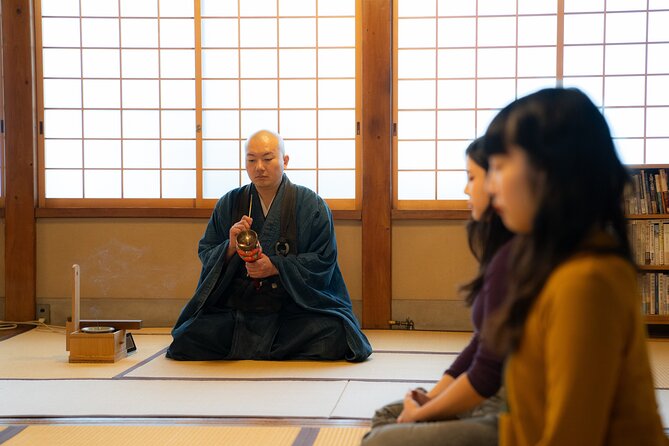
- A real conversation with a monk: Monk Namiki explains Zen, answers questions, and welcomes discussion beyond meditation.
- Several hands-on activities: Expect zazen, breathing instruction, calligraphy or sutra copying, prayer, matcha, and traditional sweets.
- English support throughout: Guides including Kazu and Tamami interpret and explain Japanese customs for first-time visitors.
- A compact 90-minute program: It fits neatly into a Tokyo sightseeing day and requires no private transport.
- Strong value for culture seekers: At $56.16 per person, the cost covers temple access, instruction, tea, snacks, English support, and photos with the monk.
Entering a private temple in Asakusa
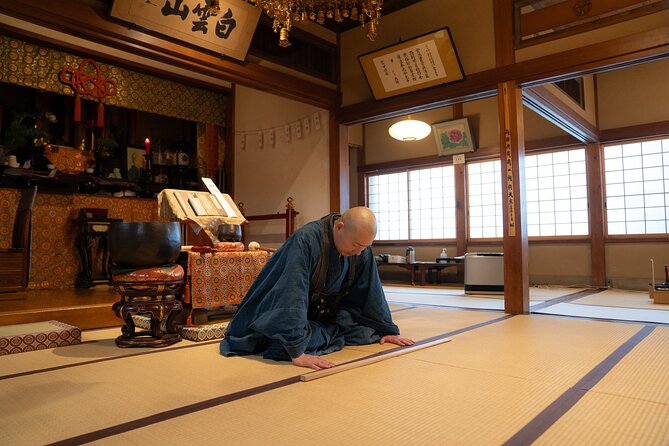
Asakusa is famous for Senso-ji and its busy shopping streets, but this experience takes you to a quieter religious setting nearby. The meeting point is in Taito City, close to public transportation, and the activity begins and ends there.
The distinction matters. At a famous public temple, you can observe architecture, incense, and worship from the outside. Here, you have a scheduled place inside a working temple and a monk who explains what you are seeing. That creates a more direct cultural exchange.
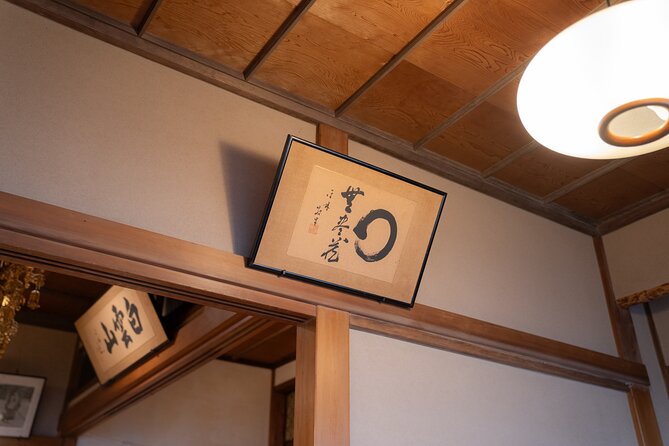
Kinryu-ji has a history spanning more than 400 years. You should not expect a large sightseeing complex with a long list of buildings to explore. The appeal is the hall, the calm setting, and the chance to take part in a guided practice rather than rush through with a camera.
Photography is allowed within the temple, including pictures with the monk. Your guide can also take photographs during the visit, which is useful if you are traveling as a couple or family and want everyone in the frame. Keep the mood respectful: this is a place of worship first and a photo opportunity second.
A few more Tokyo tours and experiences worth a look

How the 90-minute Zen session works
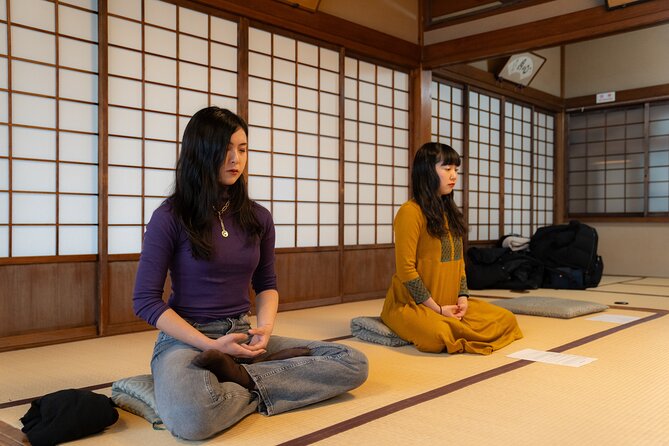
The visit starts with a short introduction to Japanese culture and Zen Buddhism. This gives you basic context before the meditation begins. You do not need previous meditation experience, and you do not need to know Buddhist customs in advance.
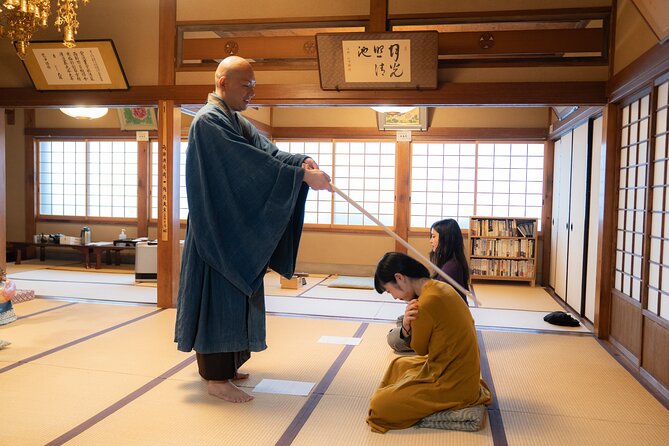
The monk then explains zazen, or seated meditation. The lesson covers the principles of the practice, body position, breathing, and how to handle the mind when it wanders. The instruction is aimed at beginners, so you are not expected to arrive with a polished meditation routine.
You then sit and practice. The session is likely to feel different from a wellness-class meditation because it takes place in a Buddhist temple, with a monk explaining the practice in its religious and cultural setting.
For some participants, the most memorable moment is the silence. For others, it is the chance to ask why the practice is done in a certain way. The guide helps translate the monk’s comments and makes sure the explanation is clear in English.
One aspect that may surprise first-time visitors is the occasional use of a meditation stick, called a kyosaku, in Zen practice. One person described being struck by the monk as part of the experience. If this is offered during your session, ask your guide to explain the custom and what to expect. You should never feel embarrassed about asking for clarification before taking part.
Calligraphy turns quiet attention into an activity
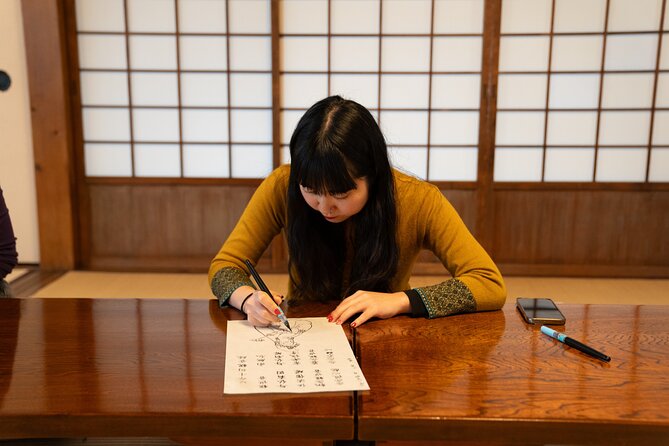
The meditation portion is followed by a writing exercise. Depending on the session, this may involve Japanese calligraphy or copying a Buddhist sutra. It is not presented as an art lesson aimed at producing a perfect finished piece.
The value is in the slow process. You hold the brush, pay attention to each stroke, and focus on a simple action instead of trying to see all of Tokyo in one day. If you have never tried calligraphy, the activity gives you a gentle way to continue the calm mood without needing special skill.
Sutra copying also helps explain why writing can be treated as a form of meditation. The act is repetitive and careful, so it gives your mind something concrete to follow. Families and couples may find this section easier to share than a long silent sitting.
Do not judge the experience by the quality of your handwriting. The point is attention, not a souvenir worthy of a gallery. Still, your finished work can become a personal reminder of the visit.
Matcha, sweets, and an open conversation
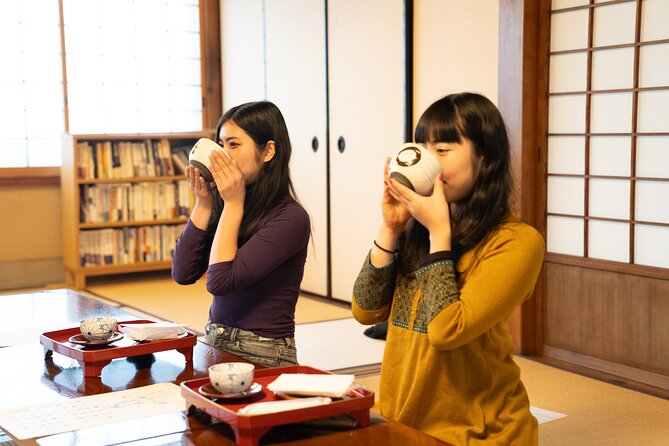
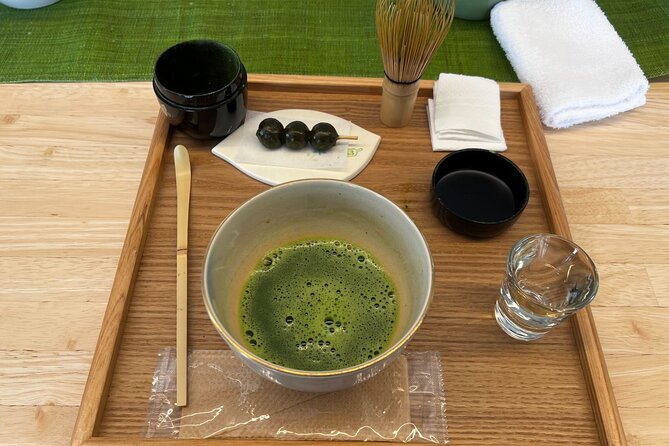
The final section is a short matcha tea ceremony with traditional sweets. This is not a full tea-school demonstration lasting several hours. It is a compact introduction to the gestures, flavors, and manners connected with matcha.
The tea gives the program a natural ending. After sitting quietly and concentrating on calligraphy, you have time to relax and speak. The monk takes questions, and the discussion is not limited to meditation technique.
You can ask about Zen Buddhism, temple customs, prayer, Japanese religious life, or the monk’s own work. The open question period is one of the strongest parts of the experience because it turns a formal lesson into a human conversation.
The monk, Namiki, is described as warm, humorous, and willing to answer direct questions. Your guide remains important here. Kazu and Tamami have both been praised for clear English, friendly presentation, and good interpretation. Tamami is also noted for taking photographs during the visit.
The tea and sweets are included, but they should be viewed as part of the cultural lesson rather than a meal. If you arrive hungry, eat beforehand.
What makes the English support useful
Zen terms and Buddhist customs can be hard to follow through a quick translation app. This experience includes an English-speaking guide who introduces the history, explains the meditation instructions, and interprets the monk’s answers.
That support is especially valuable during the more subtle sections. For example, you may understand how to sit but still wonder why posture, breathing, and attention matter. A good interpreter can make the difference between copying instructions and understanding their purpose.
The guide also helps with social details. You may not know when to bow, how to approach the temple space, or what is appropriate during prayer and photography. Instead of guessing, you can ask.
Names matter here because the guides are part of the experience, not just people who lead you to the door. Kazu is described as warm and clear, while Tamami brings an upbeat manner and helps keep the group moving. The exact guide may vary, so do not book solely on the hope of meeting one particular person.
Other private tours in Tokyo


Is $56.16 per person a fair price?
At $56.16 per person, this is not the cheapest way to see a Tokyo temple. You can visit major public temples for little or no entrance cost. Those visits, however, do not normally include a private monk-led lesson, English interpretation, meditation instruction, tea, calligraphy, snacks, and photographs.
The price makes the most sense if you want participation rather than observation. You are paying for access, time, translation, and a structured encounter. The 90-minute length also keeps the cost manageable for a first introduction to Zen.
For a family, the total can add up quickly. Yet the mix of activities helps justify the expense for people with different interests. One person can focus on meditation, another on calligraphy, and everyone can join the tea and question period.
I would not choose this solely for the temple architecture. If your priority is grand gates, extensive grounds, or a long historical tour, a major public temple will offer more to see. Choose this one for the monk, the private setting, and the chance to try several practices in one sitting.
Group size, timing, and meeting-point advice
The maximum group size is 15 people. That is small enough for a guided session but not the same as a one-on-one retreat. If the group fills, the question period may need to be shared, and the meditation room will have a group atmosphere rather than complete solitude.
The activity lasts about 90 minutes and returns you to the meeting point. Since private transportation is not included, plan to reach the start by train, subway, or on foot from another Asakusa sight.
Check the meeting details carefully before setting out. The listed address is Japan, 111-0042 Tokyo, Taito City, Kotobuki, 2-chome 1-13, Kairaku Building. One useful precaution is to contact Travel Japan Together Tokyo if the directions seem unclear, especially if your confirmation mentions a convenience store landmark. Arrive early rather than trying to solve the location problem at the scheduled start.
The activity is near public transportation, and most people can participate. The supplied information does not give detailed instructions about kneeling, chairs, footwear, or physical accommodations, so contact the provider if you have concerns about sitting on the floor or taking part in the meditation posture.
Who will enjoy this experience most
I would recommend it to you if you want a cultural activity with a personal exchange. It works particularly well for:
- First-time meditators who want clear instruction
- Visitors curious about Japanese Buddhism
- Couples looking for a quieter Tokyo activity
- Families who want more than a sightseeing photo stop
- People who enjoy calligraphy, tea, and thoughtful conversation
- Anyone who wants English guidance inside a private temple setting
It may not suit you if you dislike sitting still, prefer a fast-moving itinerary, or want a long formal tea ceremony. The meditation is central, so you should be willing to pause and take part rather than simply watch.
It is also not a substitute for an extended Zen retreat. The program introduces the ideas and gives you a taste of the practice, but the schedule leaves limited time for sustained silence or advanced instruction.
Small details that improve the visit
Wear something that allows you to sit comfortably. The supplied information does not specify the exact seating arrangement, but seated meditation and calligraphy both require some time in one position.
Keep your questions ready. The free talk with the monk is a rare chance to ask about subjects that standard tours usually skip. Write down two or three questions before arrival so you do not forget them once the conversation begins.
Treat the temple as a religious place. Follow the guide’s instructions about prayer, posture, photography, and speaking volume. The chance to take photographs is welcome, but it should not turn the meditation hall into a studio.
Allow extra time for the meeting point. The experience itself is short and fixed, so a late arrival can cut into the meditation or tea session. A confirmed address and early arrival will make the first few minutes much calmer.
Free cancellation is available if you cancel at least 24 hours before the local start time. Changes or cancellations made inside that window are not accepted for a refund.
Should you book the Tokyo Zen Meditation?
Book this if you want a compact, English-supported introduction to Zen with genuine access to a monk. The strongest reasons are the private Kinryu-ji setting, the friendly guides, the chance to ask direct questions, and the way meditation, calligraphy, prayer, and matcha fit into one 90-minute visit.
Skip it if your ideal Tokyo day means constant movement or major landmark sightseeing. The experience asks you to slow down, sit still, and respect a religious setting.
For most culture-focused visitors, the $56.16 price is reasonable because it buys far more than temple admission. Confirm the meeting point, arrive early, and come prepared to participate. You will get the most from it if you treat the visit as a conversation and practice session, not just another stop for photographs.
FAQ
Where does the Zen meditation experience take place?
The activity takes place at Kinryu-ji Temple in Asakusa, Tokyo. The temple has a history spanning more than 400 years and is not open to the general public.
How long does the experience last?
The experience lasts approximately 1 hour and 30 minutes. It ends back at the meeting point.
Is the activity available in English?
Yes. An English-speaking guide provides explanations and interpretation during the visit, including the monk’s meditation lesson and question period.
Do I need prior meditation experience?
No. The monk teaches the principles and techniques of zazen, or seated meditation, and the activity is suitable for beginners.
What activities are included?
The experience includes Zen meditation, instruction from a monk, matcha tea and snacks, temple admission, photographs with the monk, and an English-speaking guide. The session may also include calligraphy or sutra copying, prayer, and questions with the monk.
Is transportation included?
No. Private transportation is not included. The activity is near public transportation, and it starts and ends at the listed meeting point.
How many people can join the activity?
The maximum group size is 15 people.
Can I cancel for a full refund?
Yes, if you cancel at least 24 hours before the experience start time. Cancellations or changes made less than 24 hours before the start are not accepted for a refund.
More Private Tours in Tokyo
More Temples & Meditation in Tokyo
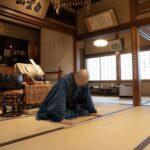
More tours in Tokyo we've reviewed











Temples & Meditation, compared.
 ★ 4.7Tokyo: Meiji Shrine, Asakusa, Skytree Bus Tour and CruiseFrom $12210 hours
 ★ 4.8Tokyo: Asakusa Walking Tour with Sensoji Temple VisitFrom $222 hours
 ★ 4.6Nikko: Kegon Falls, Lake Chuzenji & Toshogu TempleFrom $8911 hours
 ★ 4.5Tokyo: Kamakura & Enoshima Day Trip including Temple TicketsFrom $589 hours - 570 minutes
 ★ 4.5Tokyo: Nikko Toshogu Shrine and Kegon Waterfall TourFrom $8410h 30m
 ★ 4.5Tokyo Panoramic 1 Day: Meiji Shrine, Asakusa, Odaiba and SKYTREE®From $85