
Reviewed · FOOD & DRINK
Tokyo Wagyu Culinary Tour Cooking Culture and Tasting
Tokyo Wagyu is more than a costly steak. In this small cooking class, you learn why different cuts behave differently, watch butchery up close, then cook sirloin and tenderloin yourself. The useful part is that the lessons apply to steak at home, not just to one fancy meal.
I like the six-person maximum, which gives the class a more personal feel than a large demonstration. I also like the practical focus on seasoning, timing, and heat control, the details most likely to improve your own cooking.
The main drawback is the price: $920 is a serious outlay for about two hours. You should also be comfortable making your way to Oshiage, rather than expecting a tour that begins in central Tokyo or includes broader sightseeing.
In This Review
- Key points at a glance
- Why this Wagyu class is different from a simple steak meal
- Starting in Oshiage at 3-chōme-25-17
- A seasonal welcome before the beef begins
- Understanding Wagyu origins and grading
- Sirloin, tenderloin, and the lesson of the cut
- Watching the butchery demonstration
- Learning heat control before taking the pan
- Cooking the cuts yourself
- Tasting your cooking with complementary drinks
- The cultural conversation at the end
- Is $920 a fair price?
- Who should book this experience?
- Should you book the Tokyo Wagyu Culinary Tour?
- FAQ
- Where does the Wagyu cooking class begin?
- Where does the activity end?
- How long does the experience last?
- How many people can join the class?
- Can dietary restrictions be accommodated?
- What is the cancellation policy?
Key points at a glance
- Cook several Wagyu cuts: Compare sirloin and tenderloin, then prepare them with guidance.
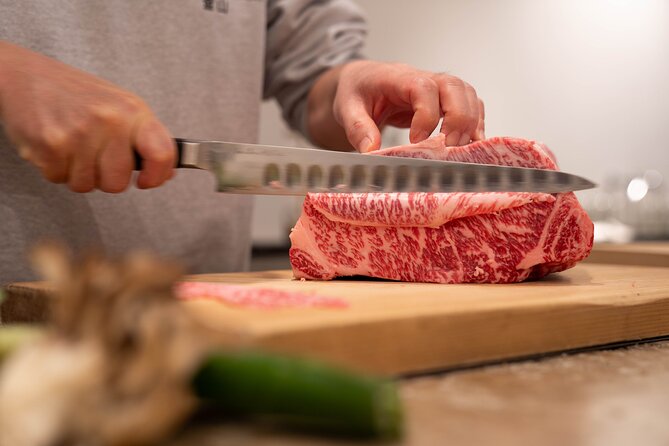
- See the butchery process: Watch how the cuts are prepared before they reach the pan.
- Learn Wagyu grading: Get a clear introduction to origins, quality, and what makes Wagyu distinct.
- Taste with paired drinks: Finish your own cooking with beverages selected to suit the beef.
- Small group setting: The class accepts no more than six people.
- Useful Tokyo guidance: Mike can add recommendations for food and activities around the city.
Why this Wagyu class is different from a simple steak meal
A restaurant meal can show you what excellent Wagyu tastes like. This class goes one step further by showing you what to do with the meat before and during cooking.
You begin with a seasonal welcome drink inspired by Japanese flavors. That is a small touch, but it sets the tone: this is not simply a slab of beef placed in front of you. The class connects the ingredients, cooking methods, and eating customs to Tokyo’s food culture.
The session lasts about two hours, so it is focused rather than sprawling. You will not spend half a day moving between several restaurants or markets. Instead, you stay with one subject and build your understanding from the first explanation to the final tasting.
I see the format working best for people who enjoy knowing why a dish tastes good. If you only want to eat Wagyu and move on, a restaurant may be the better use of your time. If you want to understand the meat and gain skills you can use later, the class offers more.
If you're still narrowing it down, here are other tours in Tokyo we've reviewed.


Starting in Oshiage at 3-chōme-25-17
The meeting point is at 3-chōme-25-17 Oshiage, Sumida City, Tokyo 131-0045. Oshiage is not presented as a sightseeing stop within this activity, so you should treat the address as the place to arrive for the lesson, not as part of a guided tour around the neighborhood.
That location matters when planning your day. Give yourself enough time to reach the address and arrive ready to begin. The activity ends back at the same meeting point, which makes it easy to pair with another plan afterward, provided you allow time for transport.
Your booking confirmation arrives at the time of booking, and the mobile ticket keeps the practical side simple. Still, a phone ticket does not remove the need to check the exact address and local start time before setting out.
A seasonal welcome before the beef begins
The first taste is a welcome drink based on seasonal Japanese flavors. It gives you a gentle introduction before the heavier food arrives and may help frame the meal as part of a wider Japanese cooking tradition.
Do not expect the welcome drink to be the main event. Its value is in the transition. You move from arriving in Tokyo to paying attention to the ingredients and customs that shape the meal.
This opening also leaves room for the host to explain how the class will work. Since the group is limited to six, you can expect a setting designed for conversation and participation rather than a distant presentation.
Understanding Wagyu origins and grading
The next stage introduces Wagyu beef, including its origins, special qualities, and grading. This is important because the word Wagyu is often treated as a magic label, when the useful question is how the beef is classified and how that affects cooking and taste.
You will get the basic framework needed to compare the cuts later. Grading helps explain why one piece may have a different texture, fat content, or recommended cooking approach from another.
The class does not only tell you that Wagyu is prized. It links the beef to the care behind each slice and to the standards used to assess it. That context makes the tasting more useful. You are not just asking if the meat tastes good. You are learning to notice what the cut and grade contribute.
For a first introduction to Wagyu, this is one of the strongest parts of the program. It gives you language and structure for buying or ordering beef in the future.
Sirloin, tenderloin, and the lesson of the cut
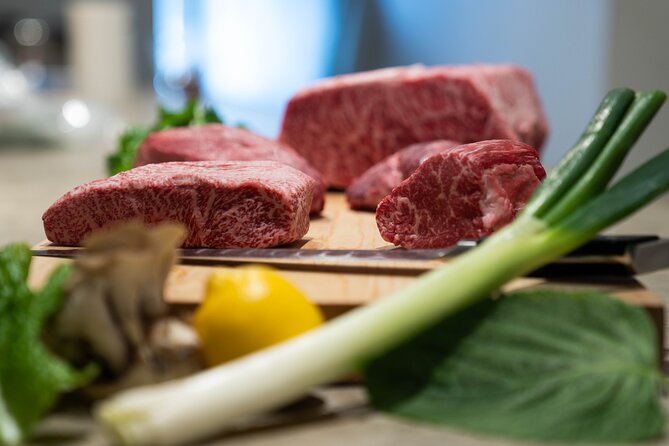
You are shown several cuts, including sirloin and tenderloin. The point is not simply to present a lineup of expensive meat. You learn how the cuts differ and what each is suited to do.
That distinction matters at home. A tenderloin and a sirloin should not automatically be treated in the same way. Their shape, texture, and fat distribution can affect how you season them, how much heat they need, and how closely you watch the cooking time.
The class gives you a chance to compare those differences directly. You can look at the cuts before cooking, prepare them with guidance, and then taste the results. That sequence helps connect appearance and technique to the final bite.
The use of more than one cut also keeps the class from becoming a single-note tasting. You gain a better sense of why Wagyu cooking is about precision rather than simply turning up the heat and hoping for the best.



Watching the butchery demonstration
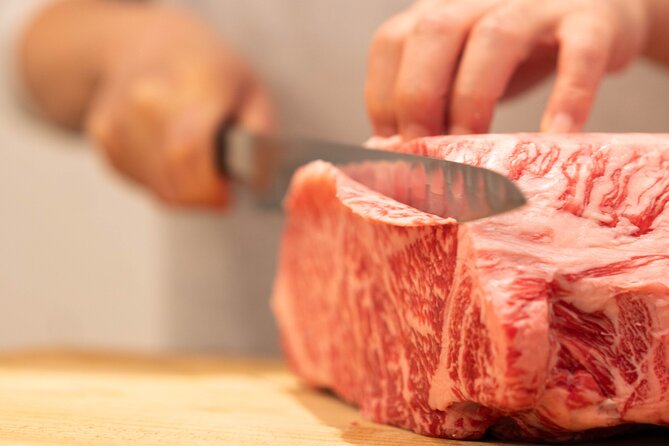
Before you cook, you watch a butchery demonstration showing how the cuts are prepared. This is a practical bridge between the whole piece of beef and the portion that reaches your plate.
Butchery can seem like a behind-the-scenes detail, yet it affects cooking. The way meat is trimmed and portioned influences how it sits in the pan and how evenly it cooks. Seeing the preparation helps you understand why each cut has its own shape and recommended use.
This is also one of the more cultural parts of the class. Wagyu craft is tied to care at every stage, not just the final cooking. The demonstration makes that care visible.
The limitation is that the supplied details do not specify the exact length of the demonstration or every cut shown. You should expect an explanation of the preparation process, but not assume it is a full professional butchery course.
Learning heat control before taking the pan
The cooking demonstration focuses on temperature control and timing. These sound basic, but they are the skills most likely to separate tender, flavorful steak from dry or uneven meat.
Wagyu needs attention. The class shows you how to manage the heat so the meat is cooked properly, rather than relying on a single fixed temperature or a long cooking time. You also learn how seasoning fits into the process.
This is where the class earns some of its practical value. A lesson about Wagyu can easily become a luxury-food lecture. Here, the techniques are presented as useful for Wagyu and for other steaks you cook at home.
You may not leave able to reproduce every detail perfectly without practice. Cooking depends on the meat, the pan, the heat source, and your timing. But you should leave with a better method and a clearer idea of what to watch.
Cooking the cuts yourself
After the demonstration, you cook different cuts with help from the chefs. This hands-on stage is the heart of the activity.
Watching someone else prepare beef is useful. Cooking it yourself is better for learning. You feel how much seasoning you use, manage the heat, and make decisions about timing with a chef close by to guide you.
The small group helps here. With no more than six people, the session is set up for participation rather than passive observation. You have a reasonable chance to ask questions and receive direct help, though the exact amount of individual attention can vary.
Dietary restrictions should be shared in advance. The experience states that accommodations can be made, but it does not provide a full list of alternatives or explain how every restriction is handled. Give the provider clear information before the class so the cooking portion can be planned properly.
Tasting your cooking with complementary drinks
Once the cooking is finished, you taste the dishes you prepared. The beef is paired with beverages chosen to complement its flavor.
This part rewards the earlier lessons. You can compare the cuts after cooking and notice how seasoning and heat affected the result. It is also a more satisfying way to finish than simply receiving a plate prepared entirely by someone else.
The beverage pairings add another layer, but the available information does not specify what drinks are served. Do not book this expecting a named wine, sake, or particular cocktail unless the provider confirms it directly.
The tasting is likely to be most useful if you pay attention to contrasts. Notice the difference between sirloin and tenderloin. Think about texture, richness, and how the drink changes the meal. Those observations are more valuable than simply deciding which bite you liked best.
The cultural conversation at the end
The class closes with a discussion of Wagyu’s place in Japanese culture. This gives the session a wider frame after the technical cooking work.
The cultural section matters because Wagyu is not just an expensive ingredient. Its value is connected to production, care, grading, presentation, and the way food is treated in Japan. The talk helps tie those ideas together.
You also receive practical tips for cooking Wagyu at home. That takeaway is central to the experience. You are not only paying for a meal in Tokyo. You are paying for instruction that can influence future meals after you return home.
Mike is also noted for offering recommendations for food and activities in Tokyo. That can be useful if you have questions about what to do next, though his suggestions are an added benefit rather than a separate sightseeing service.
Is $920 a fair price?
At $920, this is not a casual add-on. The value depends on what the price covers and how much you care about the teaching.
If you compare it with the cost of buying a good Wagyu meal, the class gives you more than food. You receive an introduction to grading, a butchery demonstration, instruction on several cuts, guided cooking, a tasting, paired beverages, and a cultural discussion. The small group is another part of the value.
Still, two hours is a short period for such a high price. If you mainly want to sample Wagyu, you can likely find a more direct restaurant experience. If you want expert-led practice, personal questions, and techniques to take home, the calculation changes.
I would consider it for a special occasion, a food-focused trip, or a visitor who places a high value on private-feeling instruction. I would hesitate if your budget is tight or if you already cook steak with confidence and do not need help with the basics.
The maximum of six is important when judging the price. A small class can offer a more direct experience than a crowded cooking school, but you should still confirm exactly what the $920 covers before booking, especially if the price is not clearly stated as per person or per group.
Who should book this experience?
This Wagyu cooking class suits you if you:
- Want to cook Japanese beef instead of only ordering it
- Enjoy small-group food experiences
- Are curious about cuts, grading, and butchery
- Want cooking tips that work with steak at home
- Prefer one focused activity to a packed sightseeing schedule
- Have dietary needs you can explain to the provider in advance
It may not suit you if you want a long Tokyo tour, a broad food crawl, or a low-cost tasting. The activity stays focused on Wagyu and lasts about two hours.
Free cancellation is available if you cancel at least 24 hours before the local start time. Cancellations within 24 hours are not refunded, and late changes are not accepted, so keep that cutoff in mind when arranging your Tokyo schedule.
Should you book the Tokyo Wagyu Culinary Tour?
Book this experience if the cooking lesson matters as much to you as the meal. The best parts are the small group, the chance to prepare several cuts yourself, and the clear focus on seasoning, timing, and heat control.
Skip it if $920 feels out of proportion to a two-hour activity or if you only want to eat Wagyu without instruction. For the right food-minded visitor, this is a focused way to connect a prized ingredient with Japanese technique and culture. For everyone else, a good Wagyu restaurant may offer better value.
FAQ
Where does the Wagyu cooking class begin?
It begins at 3-chōme-25-17 Oshiage, Sumida City, Tokyo 131-0045, Japan.
Where does the activity end?
The class ends back at the meeting point.
How long does the experience last?
The experience lasts approximately two hours.
How many people can join the class?
The activity has a maximum of six travelers.
Can dietary restrictions be accommodated?
Yes. You should notify the provider about your dietary restrictions so accommodations can be arranged.
What is the cancellation policy?
You can cancel at least 24 hours before the local start time for a full refund. Cancellations or changes made within 24 hours are not accepted and are not refunded.
More tours in Tokyo we've reviewed





Food & Drink, compared.
 ★ 5.0Tokyo: Shinjuku Food Tour (13 Dishes at 4 Local Eateries)From $86
 ★ 5.0Tokyo Tsukiji Fish Market Food and Culture Walking TourFrom $99
 ★ 4.9Tokyo: Shinjuku Food Tour (15 Dishes and 4 Eateries)From $853 hours
 ★ 5.0Best of Shinjuku: Izakaya Food Tour (4 Stops, 14+ Tastings)From $92
 ★ 5.0Tokyo: Tsukiji Fish Market Food and Walking tourFrom $30
 ★ 5.0Eat and Drink Like a Local: Tokyo Ueno Food Tour-Taverns&RamenFrom $95