
Reviewed · SAKE TASTING
Experience a western twist on Japanese sake snacks
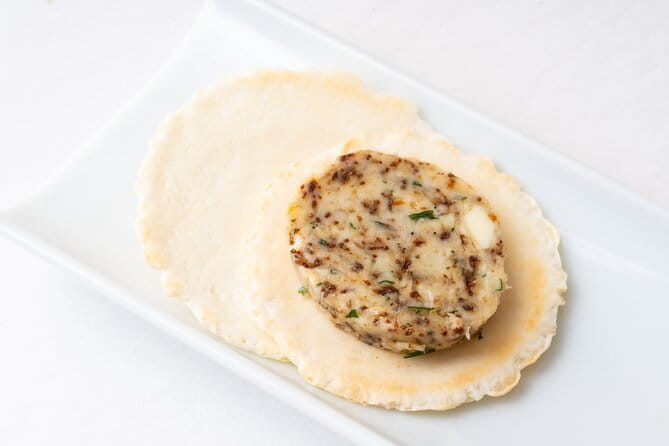
The most interesting part of this Tokyo tasting is the food itself: tsukudani, seafood simmered and preserved in a sweet-salty sauce since the Edo period. At Shinbashi Tamakiya, founded in 1782, you do not just sample it from a tray. You learn how the shop uses it in traditional rice dishes and in modern pairings with pasta, nuts, wine, and sake.
I like the private format, which gives you room to ask questions and shape the tasting to your interests. I also like the clear progression from the shop’s story and secret sauce to three signature tsukudani, then to creative ways of eating it. The main consideration is that this is a focused 90-minute food lesson, not a broad Tokyo sightseeing tour, and the seafood-based flavors may not suit every palate.
In This Review
- Key points at a glance
- Why tsukudani makes a smart Tokyo food stop
- Entering Shinbashi Tamakiya, founded in 1782
- The three signature tsukudani tasting
- Rice, furikake, pasta, and nuts
- Sake or wine with preserved seafood
- A private 90-minute format
- Price and what you receive
- Who should book this tasting?
- Final call: a thoughtful food stop for curious eaters
- FAQ
- Where does the tsukudani tasting begin?
- How long does the activity last?
- Is the tasting private?
- What food is included?
- Are drinks included?
- Can I choose a morning or afternoon time?
- Does the activity return to the starting point?
- What is the cancellation policy?
Key points at a glance
- Taste three signature tsukudani at Shinbashi Tamakiya, a shop established in 1782.
- Try the secret sauce and learn how this preserved seafood is made and served.
- Compare old and new styles, from rice and furikake to pasta and nuts.
- Pair the food with sake or wine, with brunch, snacks, and alcoholic drinks included.
- Enjoy a private tasting for only your own group, with morning and afternoon times available.
- Plan around a 90-minute visit near public transportation in Shinbashi.
Why tsukudani makes a smart Tokyo food stop
Tokyo cuisine is not only sushi, ramen, and tempura. Tsukudani offers a look at a quieter part of everyday Japanese food culture. The basic idea is simple: seafood is cooked in a concentrated sauce so it keeps well and develops a strong, savory flavor.
That method gives tsukudani its character. A small serving can add a lot of flavor to plain rice, which helps explain why it has long been treated as a practical staple rather than a restaurant showpiece. The tasting at Tamakiya lets you see both sides of the food: its traditional role and its newer use with Western ingredients.
I find this useful for anyone who wants more than a familiar tourist menu. You are tasting a food connected to home cooking, preservation, and the history of a long-running neighborhood shop. The food may look modest, but the lesson gives it context.
The format also keeps things manageable. You have about an hour and a half, so you can fit it between other plans in Tokyo without giving up half a day. Since the activity ends where it begins, you do not need to arrange a separate return transfer or worry about a complicated route at the end.
If you're still narrowing it down, here are other tours in Tokyo we've reviewed.


Entering Shinbashi Tamakiya, founded in 1782
The tasting begins at Shinbashi Tamakiya, located in Shinbashi, Minato City, at 4-chome 25. The shop was established in 1782, giving the opening explanation real weight. You are not hearing a general introduction to tsukudani in an unrelated cooking studio. You are learning about the food at a specialist shop with a long connection to it.
The first part focuses on the shop’s background and the history of tsukudani. This is important because the dish can be unfamiliar at first glance. Understanding why it was preserved, how it was used, and why it remains part of Japanese food culture makes the tasting easier to appreciate.
You will also taste the secret sauce. That is a particularly good touch. Sauce is the backbone of tsukudani, and sampling it on its own gives you a reference point for the flavors that follow. Expect the explanation to focus on how the sauce shapes the seafood, rather than on a broad cooking class where you prepare everything yourself.
The private setting is helpful here. Your group can ask about ingredients, serving ideas, and the difference between traditional and modern versions without having to fit into a large public demonstration. The activity is available for your group only, which makes it a better match for couples, families, or friends who want a slower food stop.
The three signature tsukudani tasting
After the introduction, you taste three of Tamakiya’s signature tsukudani. This is the heart of the visit. Three samples give you enough range to compare flavors without turning the meal into a long parade of similar bites.
Tsukudani is concentrated food, so portion size matters. You are not likely to need a large serving to understand it. The point is to notice how the seafood, sauce, and preparation work together, then see how a small amount can season rice or another dish.
The tasting also provides a useful lesson in texture. Preserved seafood is not meant to be judged by the same standard as a delicate piece of raw fish. Its appeal comes from its strong seasoning and its role as an accompaniment. If you go expecting sushi-style freshness, you may be surprised. If you approach it as a savory pantry food, the format makes more sense.
I would pay attention to the differences between the traditional and modern selections. The information provided does not name each seafood variety, so you should not arrive expecting a particular fish or shellfish. Instead, treat the tasting as a comparison of styles, guided by what is available at the shop.
Rice, furikake, pasta, and nuts
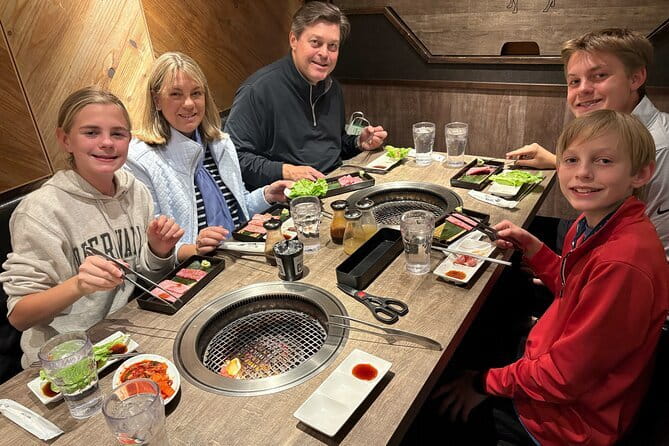
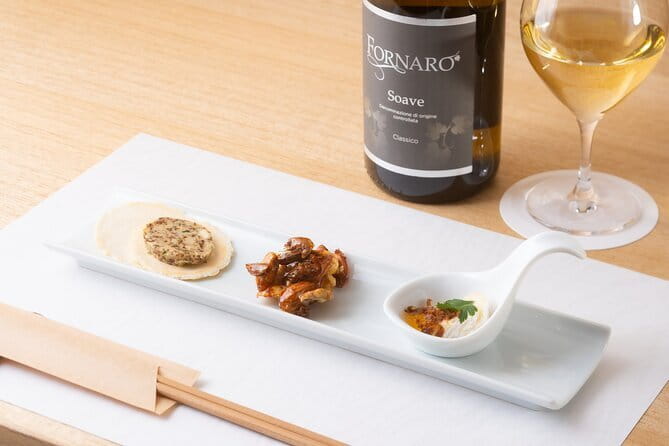
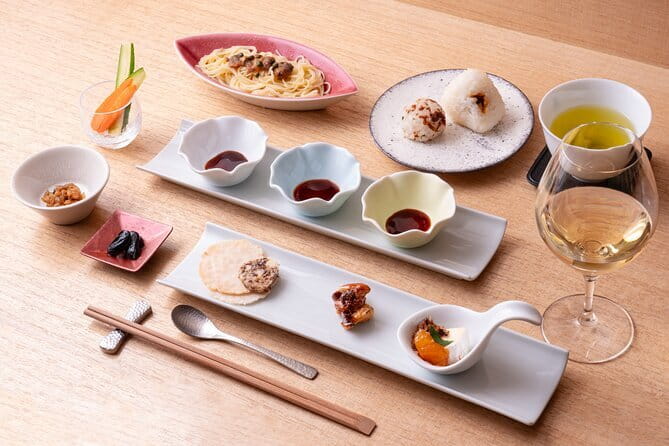
The next step shows you how tsukudani works with other foods. You taste rice with tsukudani and furikake seasonings, then try the preserved seafood with ingredients such as pasta and nuts.
This is where the experience takes its western twist. Rice is the natural traditional partner, and furikake adds another familiar Japanese seasoning layer. Pasta and nuts show that tsukudani can be used as a strong accent in a less expected setting.
For you, the value is practical. A food tasting is more useful when it tells you how to eat the product after you leave. The session gives you several serving ideas rather than presenting tsukudani as a single fixed dish. You may find that the same sample feels different with rice than it does beside a Western ingredient.
The pasta pairing may appeal to visitors who are unsure about traditional preserved seafood. It places the flavor in a more familiar format without removing its Japanese identity. The nuts offer another contrast in texture. These combinations are not meant to replace the traditional serving style. They show how an old food can be adapted for modern tables.
Brunch and snacks are included, so this is more than a few tiny tastes with a drink. Still, you should think of it as a guided tasting rather than a full restaurant meal. The available details do not promise a large breakfast or lunch, and the 90-minute length points to a compact meal built around the samples.
Sake or wine with preserved seafood
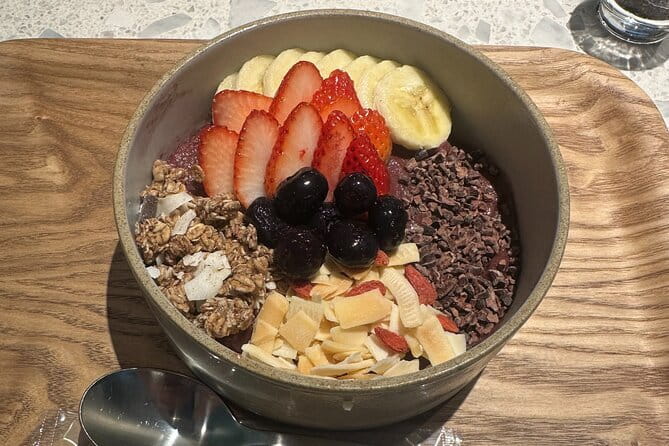
Alcoholic drinks are included, with sake or wine used as pairings. That choice fits the purpose of the activity. Tsukudani has a concentrated flavor, and a drink pairing lets you compare how the food changes with different styles of refreshment.
Sake is the most natural choice if you want to keep the tasting close to Japanese food culture. Wine gives the session its western angle and may help you think about tsukudani as a small savory dish rather than only as a rice topping.
The supplied details do not specify the exact sake, wine, or number of pours, so you should not book this expecting a formal winery-style or brewery-style tasting. The focus is the food, with the drinks supporting it.
Alcohol is not the only reason to choose this activity. The core value comes from the explanation, tasting sequence, and serving ideas. If you do not drink, the experience may be less suitable because alcoholic beverages are part of what is included, and there is no stated nonalcoholic pairing option.





A private 90-minute format
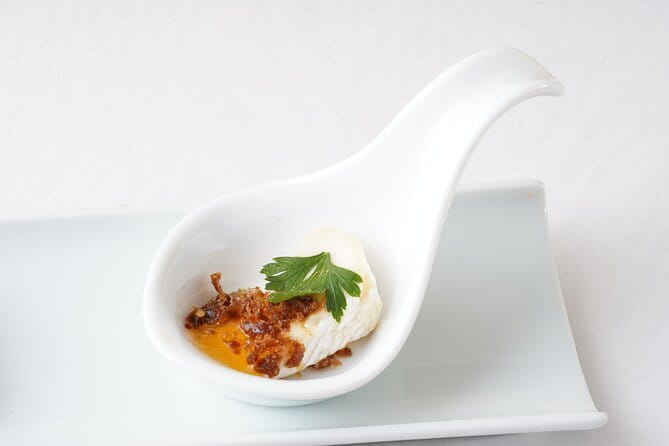
The private format is one of the strongest features. Only your group participates, so the session can feel more personal than a standard food tour with a fixed crowd. You can ask about the sauce, the preservation method, or the best way to serve the food at home.
The length is also well judged for this subject. Ninety minutes gives you time to hear the background, taste the sauce, sample three tsukudani, and compare the traditional and modern presentations. It is long enough to feel like a real appointment but short enough to combine with other plans in Tokyo.
Morning and afternoon tasting times are available. That makes it easier to use the visit as a late breakfast or brunch, or as a pause before an evening meal. The listed inclusions specifically mention brunch, snacks, and alcoholic beverages, so the morning option may be especially useful if you want a food-focused start to the day.
The meeting point is near public transportation, but the supplied details do not name a particular station or give walking directions. Check the exact map location before setting out. Tokyo’s Shinbashi area has dense streets and multiple transit options, so allowing a little extra time to find the correct building is sensible.
The activity ends back at the meeting point. That is convenient if you want to continue exploring Shinbashi afterward, but it also means the tasting does not include a guided walk to another neighborhood or attraction.
Price and what you receive
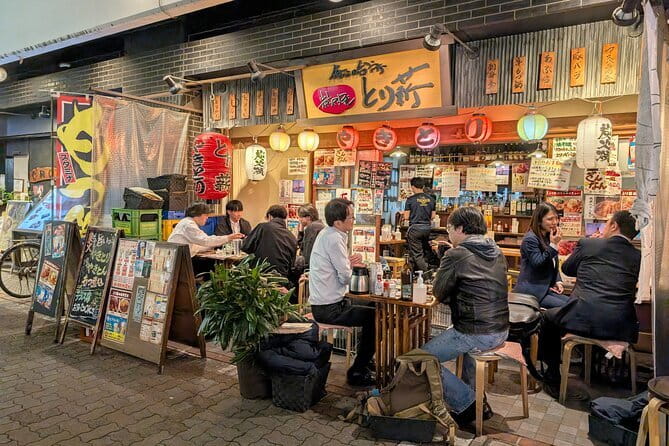
The listed price is $36.24 per person. For a 90-minute private tasting in Tokyo, that price deserves a closer look rather than a simple yes or no.
You are paying for more than food portions. The price includes the private format, the historical and culinary explanation, all tsukudani tastings, brunch, snacks, and sake or wine pairings. If you value personal attention and want a structured introduction to a food you may not encounter elsewhere, the package offers solid value.
The price is less compelling if you only want to grab a small snack. You could spend less on a casual rice dish or packaged food, but that would not include the shop’s story, the secret sauce tasting, or the guided comparison of traditional and modern uses.
The activity is often booked well in advance, with an average booking lead time of 59 days. That suggests you should not leave it until the last few days of a Tokyo trip, particularly if you need a specific morning or afternoon slot. Confirmation is sent within 48 hours of booking, subject to availability.
Free cancellation is available when you cancel at least 24 hours before the start time. Cancellations or changes inside that window are not refunded or accepted. Keep the local Tokyo start time in mind when making changes.
Who should book this tasting?
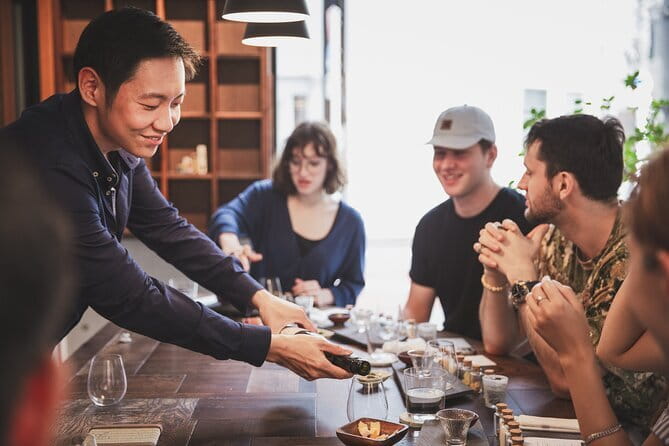
I would recommend it to you if you enjoy food with a strong sense of place, want to try something beyond standard Japanese dishes, or like learning how a traditional product fits into daily life. It also suits visitors who prefer a private appointment to a large group food walk.
Couples and small groups can get good use from the format. Families may also participate, since most travelers can take part and service animals are allowed. The activity is near public transportation, which helps, although the provided details do not describe specific stroller or wheelchair arrangements.
This may not be the right choice if you dislike seafood, avoid alcohol, or want a full cooking class. You also should not expect a broad tour of Tokyo. The subject is narrow, and that is both its appeal and its limitation.
The highly positive response is worth noting. The experience carries a 4.9 rating from 32 reviews, with 100 percent recommending it. The strongest praise focuses on the welcoming teaching style and the informative presentation. That matches the design of the visit: it is built around explanation and guided tasting, not just a quick sample handed over at a counter.
Final call: a thoughtful food stop for curious eaters
Book this tasting if you want to understand a traditional Japanese food through several serving styles. The combination of Tamakiya’s 1782 origins, three signature tsukudani, secret sauce, rice, furikake, pasta, nuts, and sake or wine gives you a clear sense of how the dish works.
Skip it if you want a large meal, a general sightseeing tour, or a tasting centered on sushi and fresh seafood. For the right audience, though, this is a compact and personal way to meet a less familiar side of Tokyo food culture. The private setting, useful serving ideas, and welcoming instruction make the $36.24 price easier to justify.
FAQ
Where does the tsukudani tasting begin?
The activity begins at Shinbashi Tamakiya, at 4-chome 25 Shinbashi, Minato City, Tokyo 105-0004, in the Ishida Building on the first floor.
How long does the activity last?
The tasting lasts approximately 1 hour and 30 minutes.
Is the tasting private?
Yes. Only your group participates in the private tasting.
What food is included?
The experience includes all tsukudani tastings, brunch, and snacks. You also taste rice with tsukudani and furikake, along with tsukudani paired with ingredients such as pasta and nuts.
Are drinks included?
Yes. Alcoholic beverages are included, with sake or wine pairings.
Can I choose a morning or afternoon time?
Yes. Morning and afternoon tasting options are available.
Does the activity return to the starting point?
Yes. The activity ends back at Shinbashi Tamakiya.
What is the cancellation policy?
You can cancel at least 24 hours before the start time for a full refund. Cancellations or changes made less than 24 hours before the start time are not refunded or accepted.
More tours in Tokyo we've reviewed







Sake Tasting, compared.
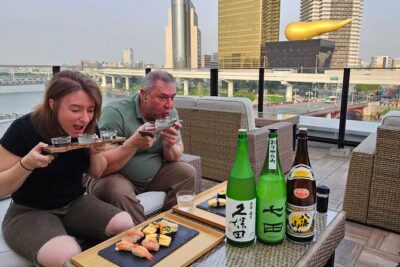 ★ 5.0Ramen and Sushi Cooking Class with Sake Pairing Set in TokyoFrom $79
 ★ 5.0Sake Tasting Masterclass in Shinjuku (8+ Varieties with a Pro)From $72
 ★ 5.0Sake Omakase in Tokyo: Guided Tasting by Certified SommeliersFrom $79
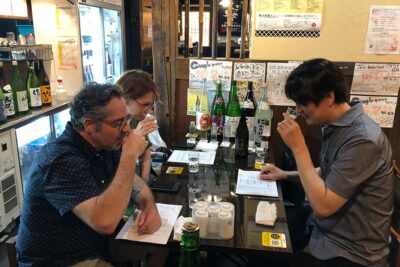 ★ 5.0Tasting All Types of Sake with SommelierFrom $62
 ★ 5.0Wagyu & Sake Pairing in Shinjuku – Steak, Shabu-Shabu & MoreFrom $148
 ★ 5.0Tokyo Wagyu & Sake Pairing Tasting Experience with Local FlavorsFrom $151