
Reviewed · MARKETS
Traditional Antiques Market Tour Tokyo
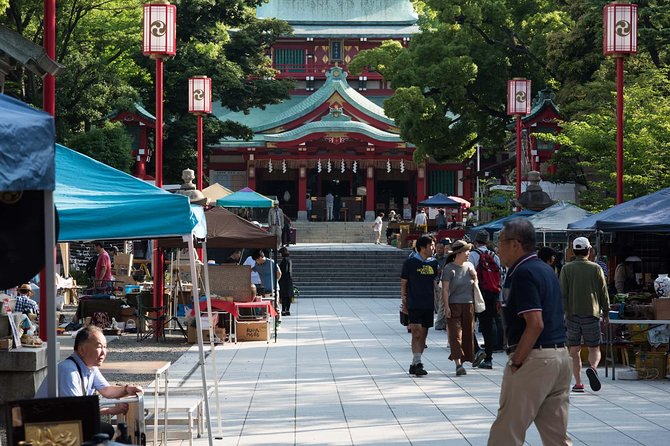
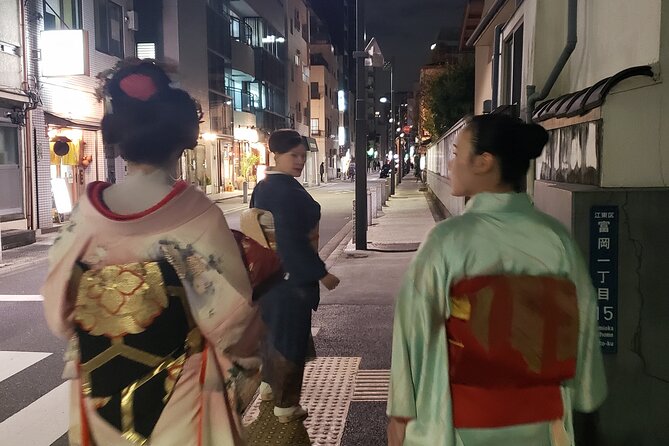
Tokyo souvenir shopping gets more interesting when you leave the standard department stores behind. This morning walk with Sayuki, a geisha guide, takes you to an outdoor market near one of Tokyo’s shrines, where stalls may hold kimono robes, samurai swords, geisha pillows, and other Japanese collectibles.
I like two things here: the chance to shop for objects with a real connection to Japanese arts, and the practical help with bargaining. The main concern is important: the market is not held every week, even though this activity may be offered weekly, so you should confirm the market date before paying.
In This Review
- Key points at a glance
- A shrine market instead of a standard souvenir shop
- What Sayuki adds to the morning
- The Tomioka Hachiman Shrine meeting point
- Browsing for kimono, swords, and smaller curiosities
- Bargaining with help at your side
- Why the experience costs $170.60 per group
- The market-date warning you should not ignore
- How the two-hour visit works
- Who will get the most from this tour
- Smart preparation for the morning
- The experience’s best qualities and real limits
- Should you book the Traditional Antiques Market Tour Tokyo?
- FAQ
- Where does the tour begin?
- What time does the tour start?
- How long does the experience last?
- Where does the tour end?
- What can I look for at the market?
- Is market entry included?
Key points at a glance
- Meet at Tomioka Hachiman Shrine: The tour begins at 9:00 a.m. in Koto City and returns to the same place.
- Shop with a geisha guide: Sayuki explains the stalls and Japanese arts while helping you choose suitable purchases.
- Look for traditional objects: Possible finds include kimono robes, samurai swords, geisha pillows, antiques, and collectibles.
- Bargaining is part of the service: Sayuki can negotiate for you and help you pay a fair price.
- Small-group pricing: The $170.60 cost covers a group of up to four people, with a maximum group size of 20.
- Confirm the market date first: A missed market can mean a wasted journey and a difficult refund situation.
A shrine market instead of a standard souvenir shop
The appeal of this experience is simple: you are not being led through a shop designed for tourists. You are going to one of Tokyo’s outdoor shrine markets, where the stock changes and the atmosphere depends on what sellers bring that day.
That makes the shopping less predictable. You might find a handsome kimono robe, an old household object, a decorative geisha pillow, or a collectible tied to samurai culture. You might also find that the best item for you is something smaller and less dramatic. The point is the search.
The tour begins at Tomioka Hachiman Shrine, at 1-chōme-20-3 Tomioka in Koto City. The meeting time is 9:00 a.m., and the visit lasts about two hours, though the overall activity is described as roughly two to three hours.
That early start matters. You get the shopping finished before the middle of the day, leaving time for another part of Tokyo afterward. It also means you should arrive ready to walk, with comfortable shoes and enough room in your day for the meeting point and market visit.
Other shopping tours in Tokyo



What Sayuki adds to the morning
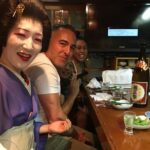
The guide is presented as Sayuki, a geisha guide who may be an apprentice geisha. That is a distinctive part of the experience, not just a decorative detail in the description.
A geisha guide can give the market visit a cultural frame that you would not get from wandering between stalls alone. You can ask about traditional objects, Japanese arts, and the role of flea markets around shrines. The information provided does not promise a lecture or a fixed talk, so think of this as an informal explanation while you browse.
I especially like the practical role Sayuki is meant to play. Bargaining can feel awkward if you do not speak Japanese or do not understand the local rhythm of a sale. The guide can negotiate on your behalf and help you pay a fair price.
That does not mean every purchase will be cheap. A valuable antique is still valuable, and the tour cannot guarantee a particular discount. The benefit is having someone help you avoid an uncomfortable guessing game and make a more informed offer.
The Tomioka Hachiman Shrine meeting point
Tomioka Hachiman Shrine is both the starting point and the end point. This keeps the outing straightforward, since you do not need to arrange a second pickup location across Tokyo.
The shrine is in Koto City and is near public transportation. The exact transport route is not supplied, so check your own route before the morning of the tour rather than assuming the station connection will be obvious.
Arrive with your mobile ticket ready. Confirmation is sent when you book, and the activity accepts mobile tickets. Comfortable walking shoes are specifically recommended, which is sensible for an outdoor market with time spent standing and moving between stalls.
The market itself is the key variable. You are not simply meeting at the shrine and entering a permanent antique hall. The market schedule can change, and the activity information indicates a serious mismatch between weekly tour availability and a market that is not held every week.
Browsing for kimono, swords, and smaller curiosities
The advertised shopping list gives you a useful idea of the range. You may see traditional kimono robes, samurai swords, geisha pillows, antiques, and collectibles.
Do not treat that list as a guarantee. Outdoor markets depend on individual sellers and the stock available that day. If you are coming specifically for a sword or a kimono, the tour may disappoint if that item is absent.
For a flexible shopper, this uncertainty is part of the fun. You can compare objects, ask questions, and look for something that fits your budget and luggage. A small collectible may be easier to carry home than a robe or large antique, and Sayuki can help you judge what seems suitable.
I would set a spending limit before you arrive. The tour price pays for the experience and guide service, but it does not give you a shopping allowance. The items you choose are separate purchases, so decide in advance how much you want to spend.
You should also ask about any object that looks old, valuable, or culturally important before buying it. The supplied details do not explain shipping, export rules, age verification, or documentation for antiques and swords. Those questions are especially important for a large or expensive purchase.
Bargaining with help at your side
The included bargaining service is the most concrete practical advantage of this tour. Sayuki is meant to negotiate for you and help secure a fair price.
That can make a difference in two ways. First, you avoid having to negotiate alone. Second, you have someone who can help judge the tone of the exchange, which is useful when you are unsure how firmly to bargain.
Still, keep expectations realistic. The phrase save big bucks is a promise of intent, not a guaranteed result for every item. Bargaining works best when you actually want the object and are ready to accept the seller’s final price or walk away.
I would not pressure the guide to bargain aggressively over every small purchase. A fair price is the goal, not winning a contest. Let Sayuki handle the conversation, then decide calmly if the item is worth buying.
This part of the experience may be most useful for a first visit to Japan, or for anyone who feels uncertain about flea-market customs. If you already speak Japanese and regularly bargain at markets, you may place less value on this feature.
A few more Tokyo tours and experiences worth a look




Why the experience costs $170.60 per group
The price is $170.60 for up to four people, not $170.60 per person. For a full group of four, that works out to about $42.65 each. For one person, the same group price is much harder to justify.
The value depends on what you want from the morning. You are paying for a private-feeling shopping service with a guide, cultural context, and bargaining help, rather than paying an entrance fee to a market. There are no market entry fees listed.
The maximum group size is 20, so the experience is not guaranteed to be private. If the group fills, the personal attention may be more limited than the group price suggests. A group of four sharing the cost gets the strongest value, while a solo shopper should compare this price with simply visiting a Tokyo market independently.
The cost also makes the market-date problem more serious. A missed market is not just an inconvenience after a long ride across Tokyo. Since the cancellation policy says the experience is non-refundable and cannot be changed for any reason, you need to confirm that the market is actually scheduled before booking.
The market-date warning you should not ignore
This is the most important practical issue. The activity can appear on the calendar every week, but the antique market at the shrine is not held every week.
A reported booking went badly when the buyer crossed Tokyo, arrived at the temple, and found no market. Attempts to contact the tour operator went unanswered, and a refund had to be pursued through Viator customer support.
That account does not prove every departure will fail. It does show that you should not rely on the weekly booking pattern alone. Before committing your money, confirm three things:
- The antique market is scheduled for your exact date.
- The guide is expecting the tour that morning.
- The meeting point remains Tomioka Hachiman Shrine.
Keep a record of any confirmation you receive. This is especially wise because the stated cancellation terms offer no refund for cancellation or amendments.
The market schedule is not a minor footnote. It is the difference between a useful shopping morning and an expensive trip to a shrine with no stalls.
How the two-hour visit works
The published plan has one main stop: an outdoor shrine market in Tokyo. You meet at 9:00 a.m., spend about two hours browsing and learning, then return to the meeting point.
That single-stop format is worth understanding. This is not a broad city tour with several shrines, neighborhoods, and shops. Its focus is narrow and practical: find the market, examine the goods, ask about Japanese arts, and buy something if the right object appears.
The format should suit you if you want a short morning activity. It leaves the rest of the day open and avoids the fatigue of a full-day shopping excursion.
The drawback is that the experience has little backup if the market is thin or closed. There is no second market or alternate attraction described. If the stalls are not operating, the core purpose of the outing is lost.
The end point being the same as the start keeps the logistics tidy. You will not need to collect bags at another location or work out a new meeting point after shopping.
Who will get the most from this tour
I would consider this experience for a small group of friends or family members who want unusual souvenirs and enjoy browsing without a rigid sightseeing schedule. The group price becomes more reasonable when four people share it.
It may also suit you if you like traditional Japanese objects but do not know where to begin. Sayuki’s role gives you someone to ask about the goods and someone who can handle bargaining.
This is less suitable if you need a guaranteed shopping list. The descriptions mention swords, kimono, pillows, antiques, and collectibles, but market stock changes. No specific item can be promised.
It is also a poor fit if your schedule is tight and you cannot tolerate uncertainty. A confirmed market date is essential, and the non-refundable terms leave little room for a change of plans.
Most people can participate, and service animals are allowed. The activity is near public transportation, but you should still plan the route carefully because the meeting time is early and the tour begins at a specific shrine address.
Smart preparation for the morning
Wear comfortable walking shoes. Even a short market visit can involve standing, slow browsing, and moving between stalls.
Bring your mobile confirmation and decide what kinds of objects interest you before arriving. You do not need a strict shopping list, but knowing your priorities helps when the stalls are crowded with choices.
I would also prepare a few practical questions for Sayuki:
- Is this item suitable to take home?
- Is the price reasonable?
- Is there any concern about age, condition, or care?
- Can the seller provide anything needed for transport or purchase?
The supplied tour details do not say that the guide provides shipping, translation paperwork, or advice on exporting antiques. If you are considering a sword or a costly antique, ask about those matters before handing over money.
Pack lightly. A flexible bag is useful for small purchases, while large or fragile objects may be difficult to carry after the tour. The tour does not state that storage or delivery is available.
The experience’s best qualities and real limits
The strongest part is the combination of specialist cultural guidance and hands-on shopping help. You are not just looking at objects behind glass. You have a guide who can explain the setting and bargain for you.
The shrine-market setting is another genuine advantage. It gives you access to a type of shopping that feels more local than a standard souvenir counter, even though the selection cannot be guaranteed.
The weak point is reliability. A market-based activity must match the market calendar, and the information supplied leaves that point uncertain. The low overall rating and the serious account of an empty shrine should make you cautious, not dismissive, about booking.
The group-size limit also deserves attention. Up to 20 people may participate, so the quality of the interaction could depend on how many people arrive. The advertised price for four people is attractive, but the experience is not necessarily a private tour for your party.
Should you book the Traditional Antiques Market Tour Tokyo?
Book it if you are traveling with up to four people, want traditional Japanese souvenirs, value help with bargaining, and can confirm that the Tomioka Hachiman Shrine market is operating on your date.
I would not book it on the assumption that a weekly departure guarantees a weekly market. Confirm the market schedule and guide availability first. If you cannot get a clear confirmation, the non-refundable policy makes this a risky purchase.
For a flexible shopper, this could be a memorable two-hour morning, especially if you find a kimono robe, collectible, or other object that connects with your time in Japan. For a solo visitor, a strict-budget shopper, or anyone seeking a guaranteed antique, the $170.60 group price may not offer enough certainty.
FAQ
Where does the tour begin?
It begins at Tomioka Hachiman Shrine, 1-chōme-20-3 Tomioka, Koto City, Tokyo 135-0047, Japan.
What time does the tour start?
The start time is 9:00 a.m.
How long does the experience last?
The visit is planned for about two hours, while the overall duration is approximately two to three hours.
Where does the tour end?
The activity ends back at the meeting point at Tomioka Hachiman Shrine.
What can I look for at the market?
You might find traditional Japanese items such as kimono robes, samurai swords, geisha pillows, antiques, and collectibles. Specific items are not guaranteed.
Is market entry included?
There are no fees to enter the market. The tour price is $170.60 per group of up to four people, and the activity does not include the cost of items you choose to buy.
More Markets in Tokyo
More Shopping Tours in Tokyo
More tours in Tokyo we've reviewed







Markets, compared.
 ★ 5.0Tokyo Tsukiji Fish Market Food and Culture Walking TourFrom $99
 ★ 5.0Tokyo: Tsukiji Fish Market Food and Walking tourFrom $30
 ★ 4.9Tokyo: Tsukiji Fish Market Guided Walking TourFrom $222 hours
 ★ 5.0Tsukiji Fish Market Guided Tour and Sushi Making with Pro ChefFrom $104
★ 4.7Tokyo: Tsukiji Fish Market Food and Culture Walking TourFrom $963 hours
 ★ 5.0Tsukiji Fish Market: Street Food & Culture Walking TourFrom $33