
Reviewed · SAMURAI & NINJA EXPERIENCES
Tokyo: Taishu Engeki Show with Kimono and Sword Lesson
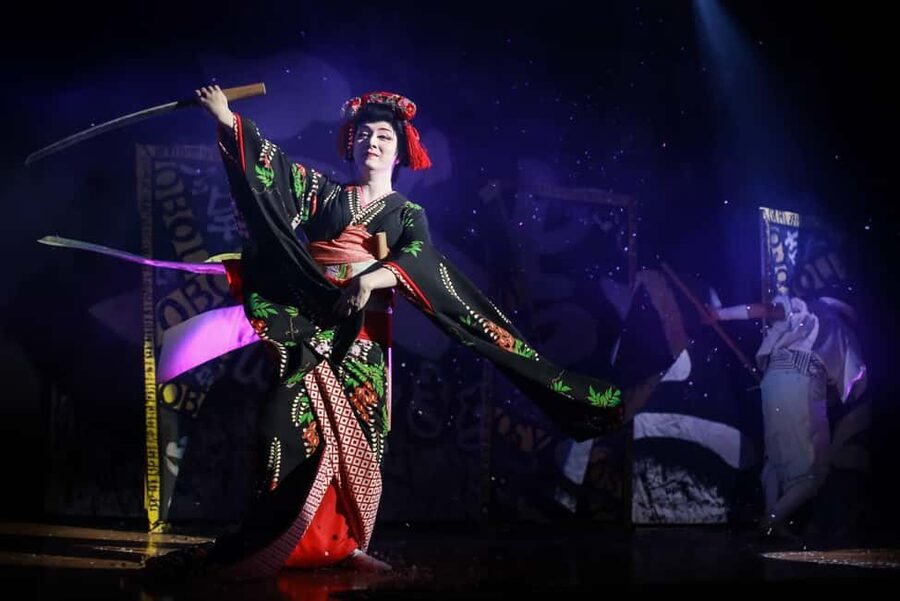
Taishu Engeki gives you a close-up look at a less familiar side of Japanese theater: emotional drama, music, swordplay, and graceful dance performed for local audiences. Then you put on a kimono, handle a folding fan and practice choreographed samurai swordplay with a professional dancer.
I like the unusual pairing of a real theater performance with a hands-on lesson, and I like the small group size, limited to six people. The main drawback is that the schedule is tight, with a 5 to 7 minute walk between venues, so punctuality matters. Flashing lights and loud sounds are also used during the show.
In This Review
- Key points at a glance
- What Taishu Engeki is really like
- Meeting in Asakusa at Mokubakan Theater
- The afternoon schedule: show first, workshop second
- The evening schedule reverses the order
- Putting on a kimono in a tatami room
- Learning fan dance and chanbara
- Photos in costume, with room for a little fun
- Is $12 good value?
- Who will enjoy this most
- Small details that make the experience work
- Cancellation and booking flexibility
- Should you book this Asakusa theater experience?
- FAQ
- How long does the Taishu Engeki experience last?
- How much does the experience cost?
- Where does the afternoon program meet?
- Where does the evening program meet?
- What happens during the workshop?
- Is the activity available in English?
- Can I cancel for a refund?
Key points at a glance
- Watch Taishu Engeki at Mokubakan: See a theatrical form built around music, dance, sword fights, expressive movement, and male actors performing female roles.
- Change into a traditional kimono: The workshop begins with dressing for the part, followed by time in a tatami room.
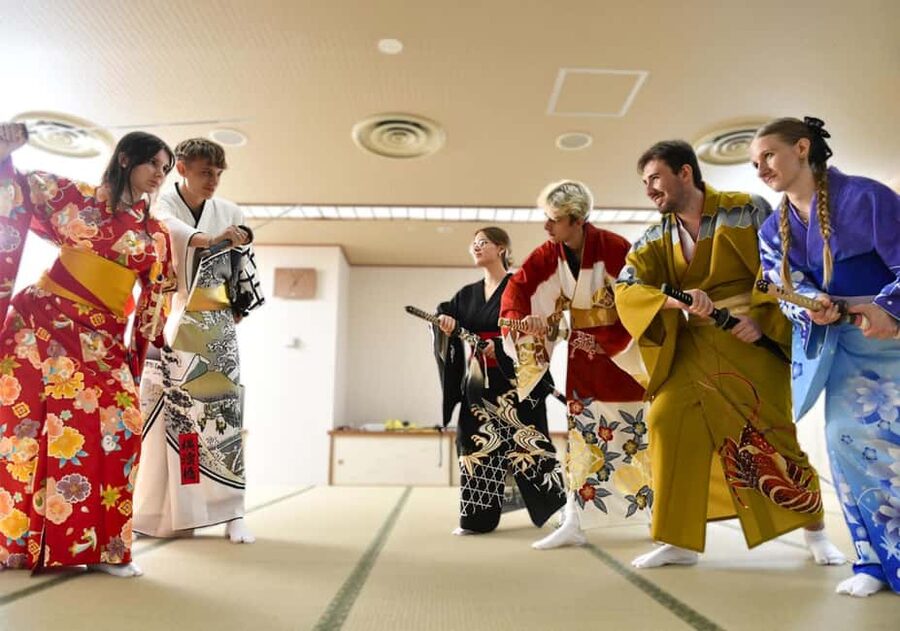
- Learn two stage skills: A local professional dancer teaches beginner-friendly fan movements and choreographed swordplay known as chanbara.
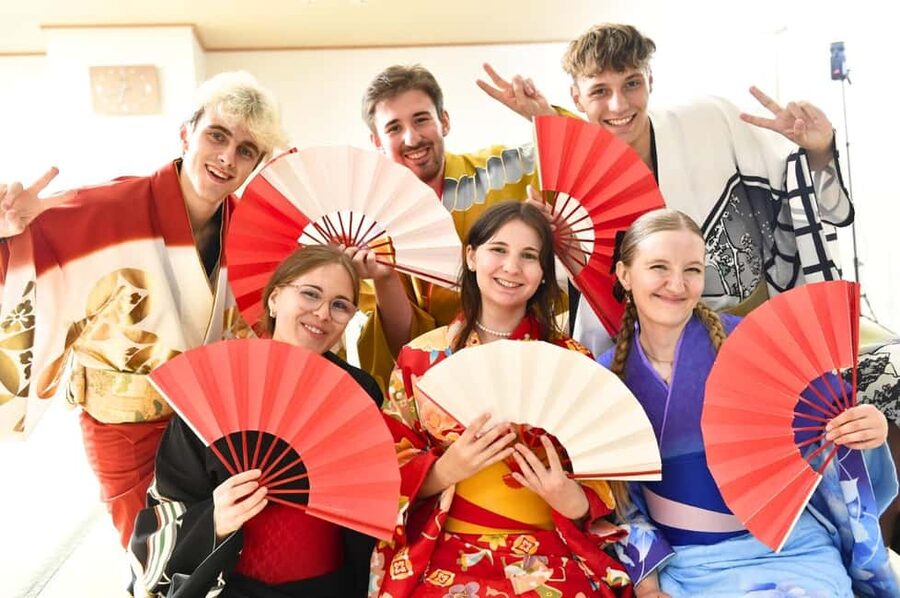
- Keep photo memories: The session ends with a commemorative photo shoot in your kimono, with staff helping capture photos and videos.
- Choose the order that suits your day: The afternoon program watches the show first, while the evening program holds the workshop before the performance.
- Pay little for a lot of variety: At $12 per person, this three-hour activity offers theater, costume, instruction, and photographs at a remarkably low price.
What Taishu Engeki is really like
If Kabuki feels formal and Noh seems highly restrained, Taishu Engeki offers a more accessible stage experience. It is popular theater designed around immediate emotion and visual action. You do not need to understand every line to follow the broad feeling of a scene.
Music, body language, dance, and swordplay carry much of the story. That makes the performance a good choice if you want traditional Japanese theater but worry about a language barrier. The show is not presented as a quiet museum piece. It is live, physical, and close enough that you can feel the movement from the audience area.
One of the art form’s distinctive features is the onnagata tradition. Male performers portray female characters with elaborate movement, poise, and theatrical elegance. For many visitors, this becomes one of the most memorable parts of the show because it reveals how performance, costume, and gesture can communicate character without relying on spoken explanation.
The Mokubakan Theater has been dedicated to Taishu Engeki since 1977. That focus matters. You are not being sent to a generic stage show built mainly for sightseeing. You are entering a theater associated with this particular style of popular performance in Asakusa.
A few more Tokyo tours and experiences worth a look
Meeting in Asakusa at Mokubakan Theater
The program leader meets you in front of Asakusa Mokubakan Theater. The afternoon meeting time is 2:20 p.m. The evening program meets at 5:40 p.m. at a different address, 1 Chome-38-6 Asakusa, Taito City, Tokyo 111-0032.
Check your selected time carefully before setting out. The meeting point is not a detail to leave until the last minute, especially because the program depends on moving as a group. Arrive early enough to find the leader and settle in before the theater portion begins.
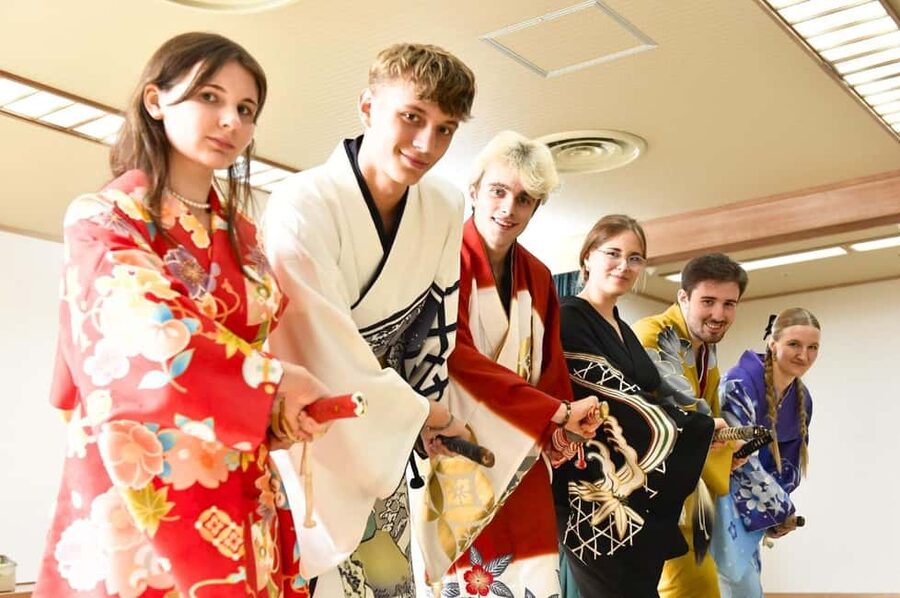
The group is limited to six people, which is a real advantage here. A small party makes it easier to hear the introduction, ask questions, follow the costume instructions, and get individual help during the workshop. It also keeps the photo session from feeling like a production line.
The program is offered with an English- or German-speaking instructor. If you want explanations in one of those languages, select the appropriate option when booking.
The afternoon schedule: show first, workshop second
The afternoon version begins with an introduction to Mokubakan and the world of Taishu Engeki. Your international program leader explains the theater and the customs connected with the performance.
You then watch the professional show, the same type of experience enjoyed by Japanese audiences at the theater. The exact performance content and schedule can change without notice, so you should come ready for the theater rather than expecting a fixed story or set list.
A small token of appreciation is included in the program. You are also guided through the local custom of offering a small gift or tip to a favorite performer, known as ohana o okuru. This is a useful cultural detail because it helps you understand how audiences may show support in this theater tradition. You are not simply watching from a distance. You are learning a small piece of theater etiquette as well.
After the show, the group walks for about 5 to 7 minutes to a separate cultural venue. The distance is short, but you need to stay with the group and keep the transition moving. Comfortable shoes are sensible, particularly if you are wearing clothing suited to a full day around Tokyo.
The evening schedule reverses the order
The evening program uses the same basic elements but changes the sequence. You meet at 5:40 p.m., take part in the cultural workshop first, and then attend the performance.
This order may suit you if you prefer to learn the movements before seeing the professionals perform them. Once you have tried a fan sequence and a choreographed sword action yourself, you may notice stage gestures and timing more clearly during the show.
The tradeoff is simple: the afternoon program lets you watch the art form before handling its props, while the evening program gives you a practical introduction first. Neither version is described as better. Choose based on your wider Asakusa plans and the time you want to spend at the theater.
Putting on a kimono in a tatami room
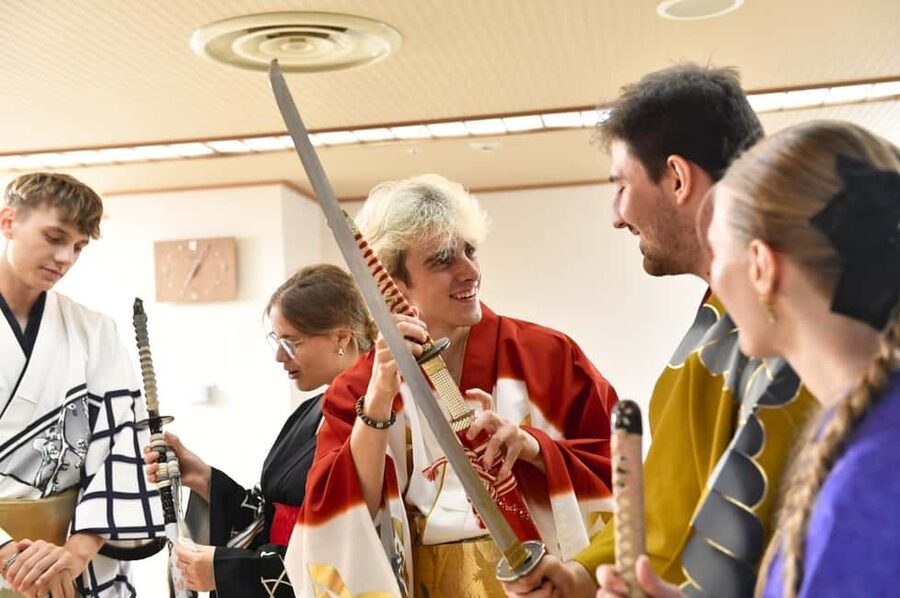
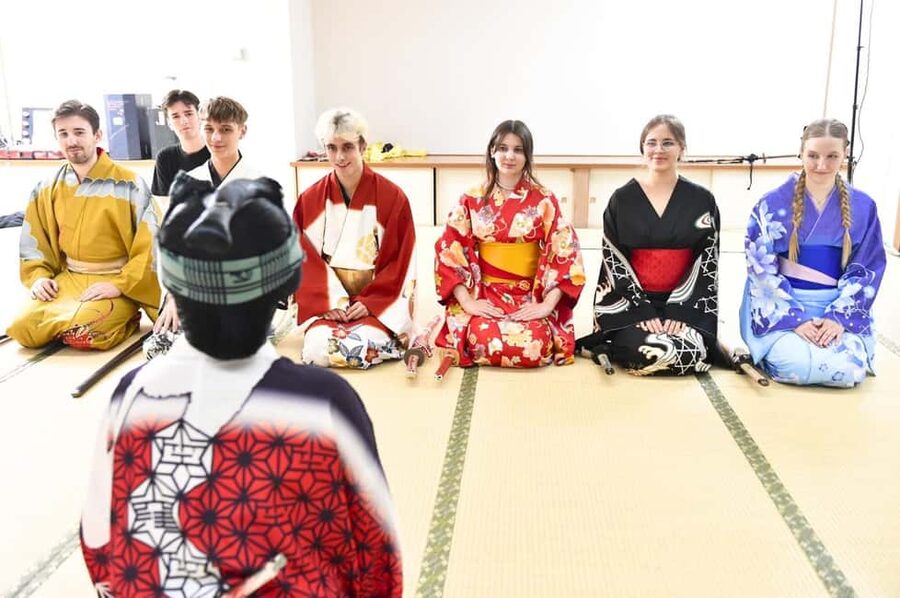
After the short transfer, you change into a traditional kimono. The clothing is not just a photo prop. It changes how you stand, walk, and move your arms, which gives the workshop a stronger sense of connection to stage performance.
You then enter a traditional tatami room for the lesson. The setting helps separate this part of the program from an ordinary dance class. Expect a cultural workshop built for enjoyment rather than difficult choreography.
The costume portion is also one reason to allow the full three hours. Dressing takes time, and the photo session comes after the instruction. This is not a quick costume rental followed by a rushed snapshot. The program gives you a sequence of activities that work together: dress for the role, learn a few movements, then record the result.
Practical note: the activity is physically active. Tell staff immediately if you feel dizzy, sick, or unwell. Pregnant women should not book this experience.
A few more Tokyo tours and experiences worth a look



Learning fan dance and chanbara
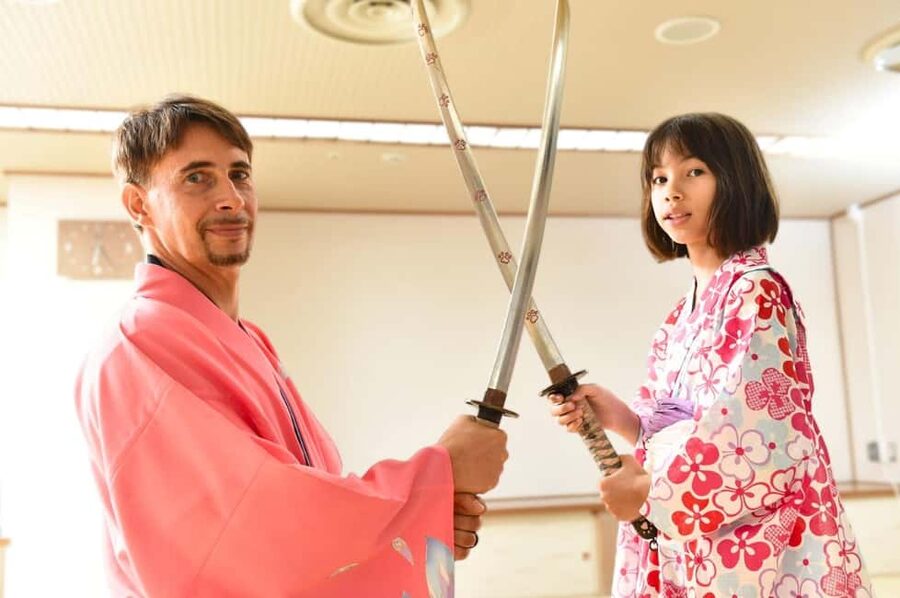
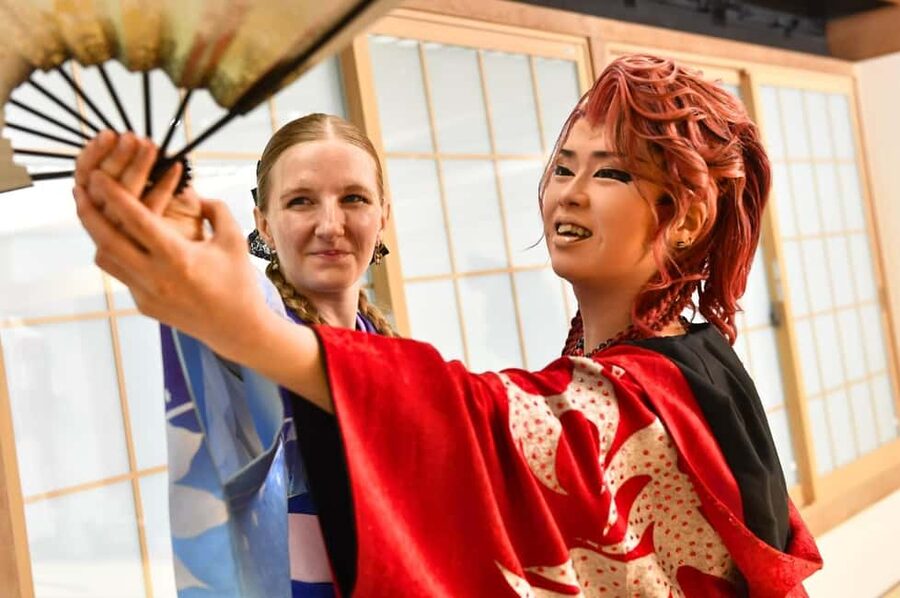
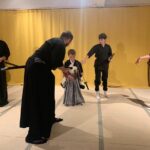
The local professional dancer teaches two forms of stage movement. The first uses a sensu, the Japanese folding fan. The second is chanbara, a choreographed combat dance using a samurai sword.
The lesson is meant for beginners. You do not need previous dance or martial arts training, and the movements are taught without pressure. The goal is not to master a demanding routine in one session. Instead, you learn enough timing, posture, and gesture to take part in a short performance-style sequence.
Fan dance can look simple from the audience, but small movements matter. How you open the fan, angle it, hold your body, and turn your wrist all affect the image. The kimono adds another layer because large, casual movements do not suit the clothing or the style.
The sword section supplies the drama. Chanbara here is stage combat and dance, not a fighting lesson. The actions are choreographed, so you should follow the instructor closely and treat the sword as a performance tool. The appeal is visual: a few controlled movements can make you feel like part of a samurai scene without claiming to teach real combat.
The teacher’s patient, easy-to-follow approach is important for the experience. In a group of six, you should have a reasonable chance to see the movements and receive help if your timing goes off. The workshop is active enough to keep you engaged, but it is not presented as an athletic test.
Photos in costume, with room for a little fun
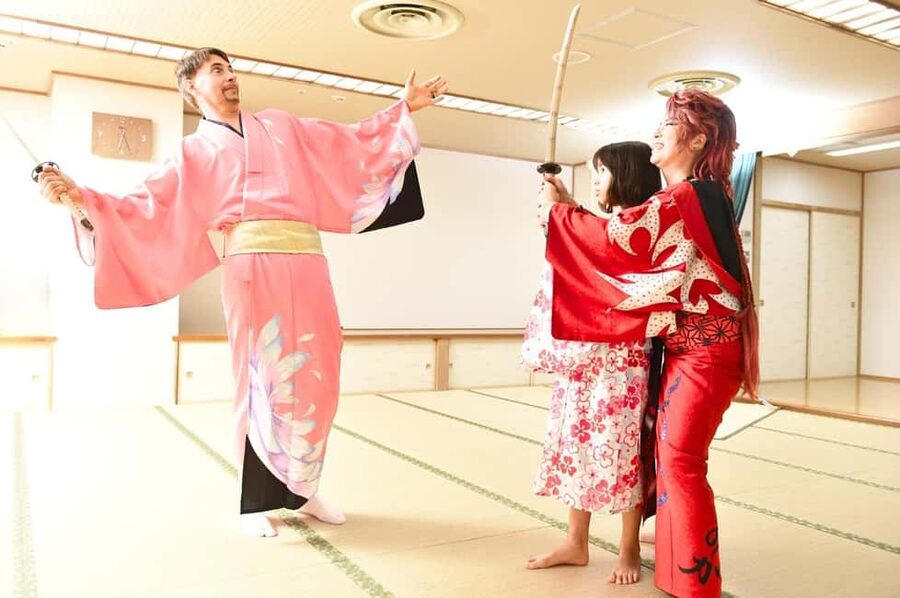
The program ends with commemorative photos in your kimono. Staff help with photos and videos, giving you a record of the fan and sword movements as well as the costume itself.
This is a useful finishing touch because the workshop is visual. A written explanation cannot recreate the image of you holding a sensu or performing a choreographed sword pose. The photos also give solo visitors and small groups a chance to leave with something more personal than a standard theater ticket.
Do not expect a formal studio portrait package unless the operator specifies one separately. The information promises a commemorative photo shoot and assistance with photos and videos, not a large set of edited professional prints. Think of it as a well-planned memory of the activity.
Is $12 good value?
At $12 per person, this is unusually inexpensive for a three-hour Tokyo activity. The price includes the Taishu Engeki performance, the cultural workshop, kimono dressing, instruction in fan dance and chanbara, and commemorative photos. A small token of appreciation for the performers is also included.
The value is strongest if you want variety. A theater ticket alone would give you the show, but not the costume or lesson. A kimono experience alone would give you dressing and photographs, but not a live performance at a theater devoted to Taishu Engeki. This program combines both.
There are limits. The low price does not mean you should expect a long private lesson or a highly customized costume session. The group can include up to six people, and the schedule must accommodate the performance, transfer, dressing, instruction, and photographs.
Still, the price makes the activity easy to add to an Asakusa day. It is especially useful for visitors who want a cultural experience but do not want to commit to an expensive full-night show, formal tea ceremony, or longer class.
Who will enjoy this most
I would recommend this to first-time visitors who want traditional Japanese culture in a format that feels active and easy to understand. You get visual theater, a costume, movement instruction, and photos without needing specialist knowledge.
It also suits friends and couples who want a shared activity. The lesson has enough participation to keep everyone involved, and the small group size should make it easier to help one another with poses and photos.
Solo visitors can enjoy it too. The staff assist with photos and videos, and the group format gives the workshop a social setting without the scale of a large tour.
Families should think about the physical and theatrical elements before booking. The sword movements are choreographed, but the activity is still active. Anyone sensitive to strobe effects or loud sound should contact the operator beforehand. Those effects are limited to the professional performance, not the workshop.
This is less suitable if you want a quiet, highly formal theater recital or a detailed historical lecture. The program favors action, showmanship, participation, and visual storytelling.
Small details that make the experience work
Arrive on time. The show and workshop run on a set sequence, and a late arrival can affect the group, especially during the walk between venues.
Do not drink alcohol before the activity, and drugs are not allowed. The operator can end your participation for harassment, offensive behavior, conduct that makes others uncomfortable, or intentional property damage.
The performance may use flashing or strobe lights and loud sounds. If these affect you, contact the operator before booking. You can still take part in the workshop and other sections because those effects are not used there.
Finally, keep your expectations flexible. Performance content and scheduling may change without notice. That is normal for a live theater program, but it means you should not plan the rest of your day around a particular scene or exact show length.
Cancellation and booking flexibility
You can cancel up to 24 hours in advance for a full refund. The reserve-now, pay-later option lets you hold a place without paying immediately, which is helpful when your Tokyo schedule is still shifting.
Because the group is capped at six people, booking ahead is sensible if you want a specific afternoon or evening slot. Check the meeting address for your chosen time, since the evening program uses a different meeting point.
Should you book this Asakusa theater experience?
Book it if you want an affordable, active introduction to Japanese performing arts rather than a show you only watch from your seat. The strongest parts are the close Taishu Engeki performance, the kimono setting, and the chance to practice fan dance and choreographed swordplay with a professional instructor.
At $12, the activity offers a lot for the money. You should be comfortable with a tight schedule, an active lesson, loud theater effects, and a performance that may change. If those points suit you, this is a smart Asakusa pick, especially for first-time visitors and anyone who wants photos that record more than a standard sightseeing stop.
FAQ
How long does the Taishu Engeki experience last?
The full program lasts three hours.
How much does the experience cost?
The listed price is $12 per person.
Where does the afternoon program meet?
The afternoon program meets in front of Asakusa Mokubakan Theater. The afternoon meeting time is 2:20 p.m.
Where does the evening program meet?
The evening program meets at 1 Chome-38-6 Asakusa, Taito City, Tokyo 111-0032, at 5:40 p.m.
What happens during the workshop?
You change into a kimono, enter a tatami room, and learn folding-fan dance and choreographed samurai swordplay, known as chanbara, from a local professional dancer.
Is the activity available in English?
The instructor and program support are available in English and German.
Can I cancel for a refund?
Yes. You can cancel up to 24 hours in advance for a full refund.
More Shows & Entertainment in Tokyo
More Shows & Performances in Tokyo
More Samurai & Ninja Experiences in Tokyo
More tours in Tokyo we've reviewed








Samurai & Ninja Experiences, compared.
 ★ 4.5Tokyo: Samurai Restaurant Show Ticket with 2 DrinksFrom $551h 30m
 ★ 4.6Tokyo: Samurai Ninja Museum Guided tour and ExperienceFrom $27
 ★ 5.0Tokyo: Samurai Sword & Archery Class from Samurai DescendantFrom $1933 hours
 ★ 5.0Best Samurai Experience in TokyoFrom $65
 ★ 5.0Ninja Experience (Family Friendly) at Samurai Ninja Museum TOKYOFrom $47
 ★ 4.6Tokyo: Samurai Entertainment Night Show in Kanda ShrineFrom $412 - 3 hours