
Reviewed · SAMURAI & NINJA EXPERIENCES
Tokyo: Best Samurai Experience
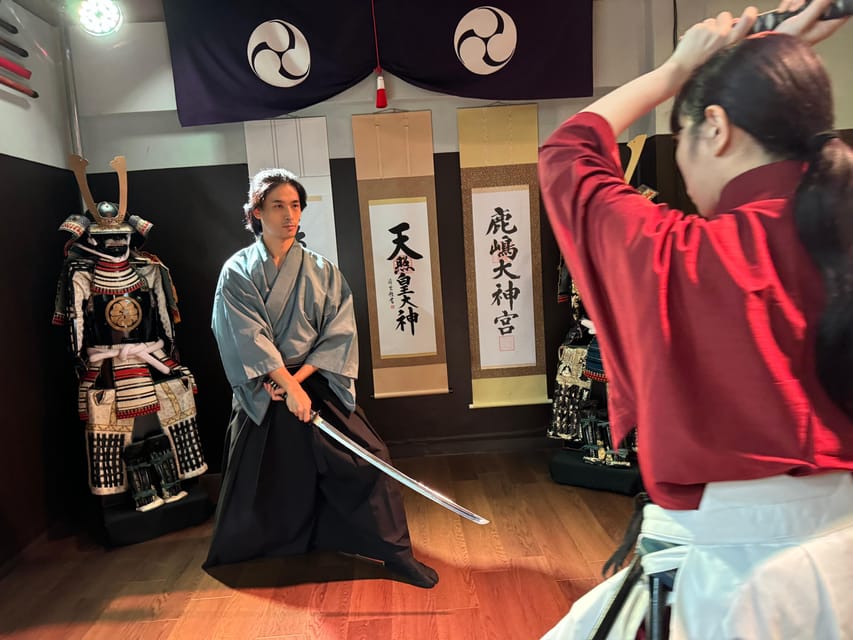
Tokyo’s samurai costume and sword session gets to the fun quickly. You choose a kimono and hakama, learn how to draw, hold, swing, and return a sword, then use those moves in a choreographed fight set to music. The teachers have appeared in Japanese dramas and films, and they keep the action lively without treating beginners like stunt professionals.
I like the small groups, limited to 10 people, and the fact that assistants take photos and videos on your phone while you perform. I also like the balance between real instruction and theatrical fun. The main drawback is the short one-hour format: you get a memorable introduction, not a full martial-arts course, and the armor display costs extra to wear.
In This Review
- Key points at a glance
- Entering a Tokyo dojo filled with samurai gear
- Choosing a kimono and hakama before the lesson
- Learning the sword from the handle to the return
- Practicing chanbara with the samurai
- The music-backed finale and camera time
- What the $63 price really covers
- Who will enjoy this most
- A realistic one-hour schedule
- Should you book Tokyo’s Best Samurai Experience?
- FAQ
- Where is the meeting point?
- How long does the experience last?
- What languages are available?
- How many people can join the group?
- Is the sword real?
- Is costume rental included?
- Can I cancel or pay later?
Key points at a glance
- Choose your own kimono and hakama: You change into a samurai costume before handling the practice sword.
- Learn named sword movements: The class covers sword parts, stance names, drawing, swinging, fighting, and returning the sword.
- Use a safe fake sword: The sword cannot cut, making the activity suitable for beginners who want staged action rather than weapons training.
- Perform a music-backed finale: After practice, you take part in a simple chanbara scene against samurai.
- Small groups keep it personal: A maximum of 10 participants allows the instructor and assistants to guide poses and movements.
- Photos and videos are part of the memory: Bring a charged smartphone so the staff can record your action.
Entering a Tokyo dojo filled with samurai gear
The experience takes place at Samurai Theater Tokyo in Honshu, Japan. To find the meeting point, search Google Maps for Samurai Theater Tokyo. That exact search matters, since the meeting instructions do not provide a street address in the supplied details.
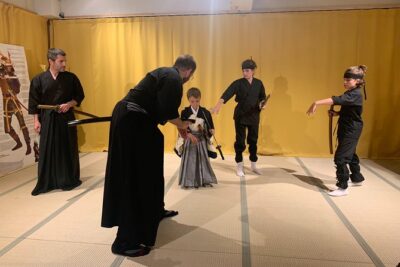
Inside, you find a setting designed to feel far removed from a modern Tokyo studio. Swords, spears, and armor are displayed around the dojo. You are not simply handed a costume in an empty room and sent toward a photo backdrop. The weapons and armor give the short session a clear sense of place, even though the activity itself is a theatrical introduction rather than a museum visit.
You can join alone, which is useful if you are traveling independently. The group limit is 10 people, so the class has enough energy for a staged fight without feeling like a large production line. A family or group of friends can also take part together, and the instructors adjust the atmosphere so quiet participants can join without needing to perform for the whole room.
The class is offered in English and Japanese. You should still expect demonstrations and visual instruction to do much of the work, as sword movements are easier to copy when you can see them. The activity provider is 株式会社テイク.
A few more Tokyo tours and experiences worth a look

Choosing a kimono and hakama before the lesson
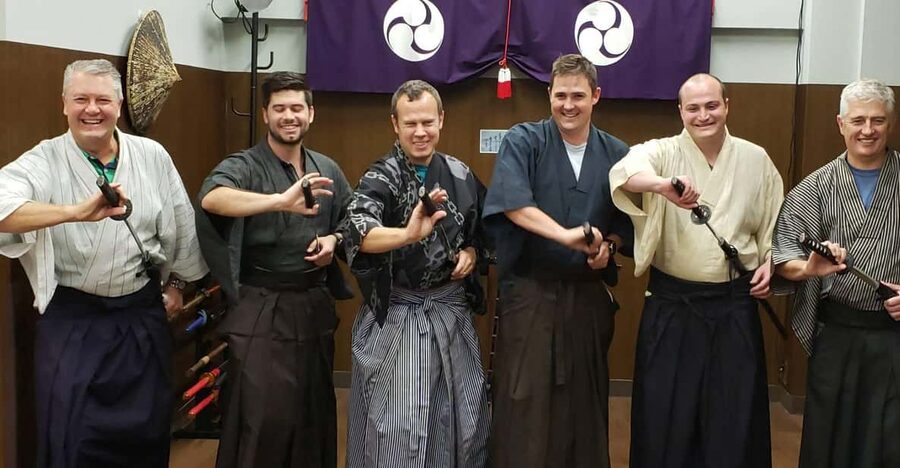
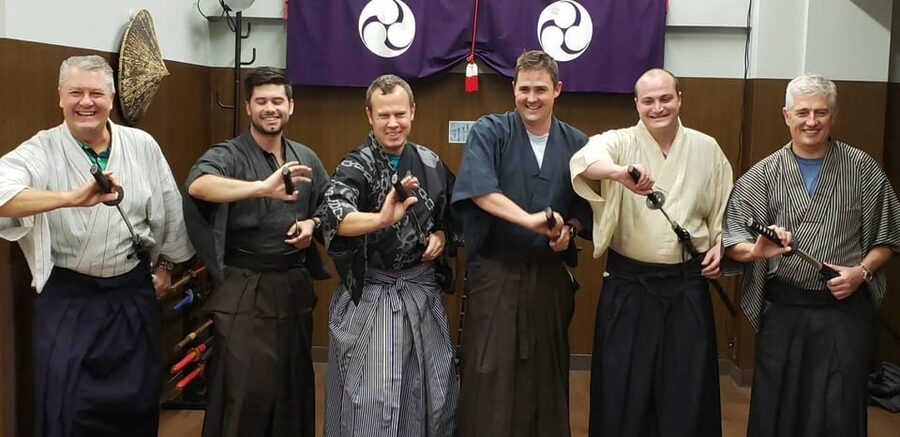
The first practical step is changing into a kimono and hakama. You choose your preferred costume, then staff help you get dressed. The hakama gives the outfit its distinctive samurai shape, while the kimono completes the period-style appearance.
This part is more important than it may seem. The costume changes the feel of the session from a basic sword lesson into a performance. It also creates better photos, particularly when the entire group is dressed for the scene. If you are booking for a family, this is likely to be one of the most entertaining parts for children old enough to participate.
The activity includes costume use, but wearing the armor on display requires an additional fee. That is worth noting before you arrive. You can enjoy the main class without paying for armor, so the extra charge is optional rather than a requirement for taking part.
Comfort and movement matter here. You will be standing and moving your arms while wearing traditional-style clothing, so avoid arriving in anything that makes movement difficult. The supplied information does not give detailed changing-room or clothing instructions, so keep your preparation simple and practical.
Learning the sword from the handle to the return
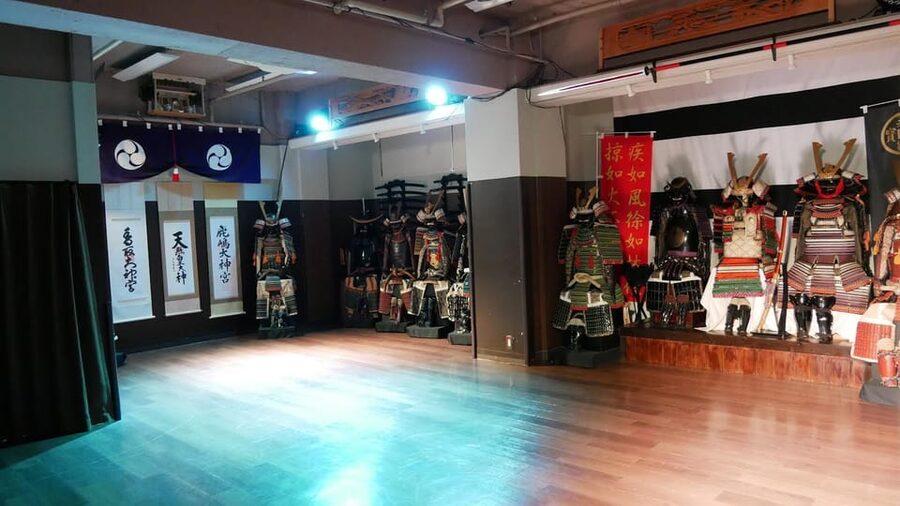
The instructor begins with the parts of the sword. You learn basic terms in Japanese, then work through the foundations: how to draw the sword, how to hold it, how to swing it, and how to return it to its sheath.
That sequence gives the hour a useful structure. You are not just waving a prop for photographs. You first learn a few clear actions, then link them together. Several participants particularly valued learning the names of stances and movements, since those details make the lesson feel more like a cultural activity than a costume photo session.
The sword is a fake sword that cannot cut. That makes the session safer for a first-time participant and keeps the focus on form, timing, and performance. You should not expect instruction in handling a live blade, historical swordsmanship, or combat technique. This is a controlled, choreographed activity using a non-cutting prop.
The instructor demonstrates each movement, and you copy it. The teaching style is energetic and patient, with assistants helping participants follow along. If you have never held a sword before, the short lesson gives you enough structure to feel involved without loading you down with technical detail.
The limitation is time. One hour is enough to learn a small set of movements and perform them, but not enough to build serious skill. I would treat the lesson as a lively first look at samurai performance and sword etiquette, not as a replacement for a longer martial-arts class.
Practicing chanbara with the samurai
Once you know the basic movements, you practice a simple chanbara, or staged sword fight. The word is often associated with Japanese sword-fighting films, and that cinematic quality is exactly the point here. You are learning a short routine that looks dramatic while remaining controlled.
The staff guide you through offensive and defensive movements. You do not need previous fencing, martial-arts, or acting experience. The instructors put energy into the scene and help you keep the sequence moving, which is useful if you lose track of the order.
The sword fight is designed to feel exciting without being a real fight. You are using a non-cutting sword and following a routine. That distinction is important for parents and for anyone expecting historical combat training. The value comes from learning a few recognizable actions, working with the instructor, and seeing the scene come together.
This is also the moment when the group dynamic helps. A maximum of 10 participants means you can see what others are doing and join the shared performance. It is not a private lesson, but it is small enough for the teachers to offer guidance and keep the pace friendly.
The activity welcomes solo participants, too. You may arrive alone, but the format gives you a group scene to join rather than leaving you to pose by yourself. That makes it a sensible choice for independent visitors who want an interactive activity.
The music-backed finale and camera time
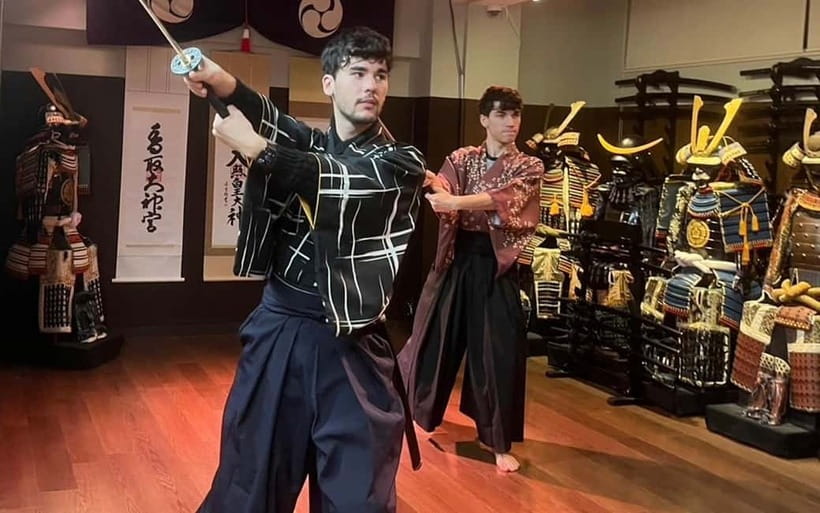
The session builds toward a finale in which you try to defeat the bad guys to music. This is the most theatrical part of the experience. Lighting and soundtrack help turn the learned movements into a short performance, giving you something more memorable than a sequence of classroom drills.
You can use your smartphone to take photos and videos. Assistants record the action for you, which solves the usual problem of trying to film yourself while holding a sword. They also help with photos alongside the samurai.
Bring your phone with enough battery and storage. The staff can capture the moments, but the supplied information does not promise professional photography, edited video, or a separate download service. Think of the benefit as hands-on help with your own device.
The camera work is one of the strongest practical features for a visitor. You get evidence of the costume, the sword movements, and the final fight, rather than relying on one posed portrait. It also helps family members who want to watch the performance later.
You should be comfortable being photographed and recorded during the session. If you prefer a quieter cultural activity with no performance element, this may feel too playful. If you like dressing up, staged action, and a bit of show business, the finale gives the one-hour class a satisfying finish.





What the $63 price really covers
At $63 per person, the experience is not the cheapest way to spend an hour in Tokyo. Its value depends on how much you want from the package. You are paying for the costume change, instruction, a practice sword, a choreographed fight, a photo with a samurai, and staff assistance with photos and videos.
The small group adds value. With no more than 10 participants, the instructors can demonstrate, correct movements, and help with poses. A larger class might lower the price, but it could also make the sword practice and filming less personal.
I see the price as reasonable for a short, packaged cultural activity that combines teaching and entertainment. It is especially good value if you want a ready-made memory for a family or group and would otherwise pay separately for costume rental and a themed photo session.
The price does not include the optional armor fee. The supplied details also do not list meals, transport, or professional media packages, so you should not expect those extras to be part of the $63. The focus is one concentrated hour in the dojo.
Free cancellation is available up to 24 hours before the activity for a full refund. You can also reserve now and pay later, which helps if your Tokyo schedule is still shifting. Same-day reservations may be possible, but you should check availability rather than count on a last-minute place.
Who will enjoy this most
I would recommend this for:
- First-time visitors who want a hands-on introduction to samurai culture
- Families with children who meet the age and height requirements
- Fans of samurai films, Japanese drama, martial arts, or costume photography
- Solo visitors who want a social activity in a small group
- Couples and friends looking for photos and video rather than a lecture
- Older participants who can stand and move comfortably
The experience has worked well for older adults. A 61-year-old participant described it as a blast, which suggests that you do not need to be young or athletic to enjoy the session. The key requirement is being able to take part in the movements and staged fight.
It is not suitable for pregnant women, wheelchair users, visually impaired participants, babies, children under the listed minimum ages, people under 90 centimeters tall, or people over 95 years old. The supplied restrictions list children under 2, 3, and 4 separately, so families should confirm the applicable minimum age when booking. The activity information also lists babies under 1 year as unsuitable.
If you dislike dressing up, staged combat, or being filmed, choose a different cultural activity. If you enjoy playful participation, you are likely to get more from this than from a passive demonstration.
A realistic one-hour schedule
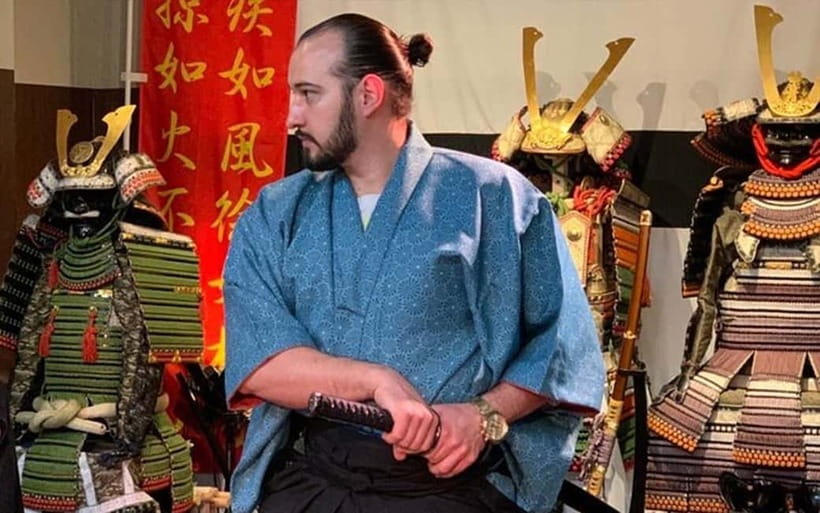
The exact starting times depend on availability, but the experience lasts one hour. A typical flow looks like this:
- You arrive at Samurai Theater Tokyo and choose your kimono and hakama.
- Staff help you change into the costume.
- The instructor explains the sword parts and demonstrates basic handling.
- You practice drawing, holding, swinging, and returning the fake sword.
- You learn stance names and a simple sequence of offensive and defensive movements.
- You rehearse the chanbara fight with the samurai.
- You perform the final music-backed scene.
- You take photos and videos, including a photo with a samurai.
This outline shows why the short duration works. Every part supports the final scene. You learn just enough to make the performance feel earned, then finish while the energy is still high.
You should arrive ready to follow directions and share the space with other participants. The staff are there to make the experience entertaining, but you still need to pay attention during sword practice. A choreographed scene only works when everyone keeps the timing and spacing.
Should you book Tokyo’s Best Samurai Experience?
Book it if you want an active, photo-friendly hour that combines Japanese costume, basic sword movements, and a playful stage fight. The strongest reasons are the small group, patient instruction, cinematic finale, and staff help with filming. You also get more than a costume photo because you learn a routine and perform it.
Skip it if you are looking for serious swordsmanship, a long historical lesson, or a quiet museum-style visit. The sword is a safe fake weapon, the fight is choreographed, and the whole experience is built for fun.
For most visitors, $63 is a fair price for a polished one-hour memory, especially if you are traveling with family or friends. Search Google Maps for Samurai Theater Tokyo, check the age and mobility rules, bring a charged phone, and leave room in your Tokyo schedule for a little theatrical swordplay.
FAQ
Where is the meeting point?
Search Google Maps for Samurai Theater Tokyo. The supplied meeting instructions identify the venue by this name.
How long does the experience last?
The activity lasts one hour. Starting times depend on availability.
What languages are available?
Instruction is available in English and Japanese.
How many people can join the group?
The group is limited to 10 participants.
Is the sword real?
No. You use a fake sword that cannot cut.
Is costume rental included?
Yes. Changing into a kimono and hakama is included. An optional additional fee is required if you want to wear the armor on display.
Can I cancel or pay later?
You can cancel up to 24 hours in advance for a full refund. Reserve now and pay later is also available.
More Samurai & Ninja Experiences in Tokyo
More tours in Tokyo we've reviewed











Samurai & Ninja Experiences, compared.
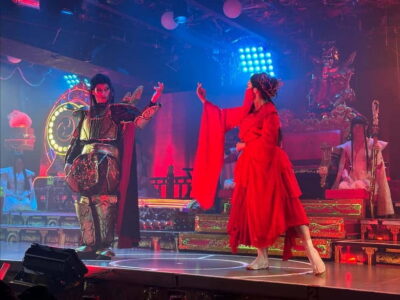 ★ 4.5Tokyo: Samurai Restaurant Show Ticket with 2 DrinksFrom $551h 30m
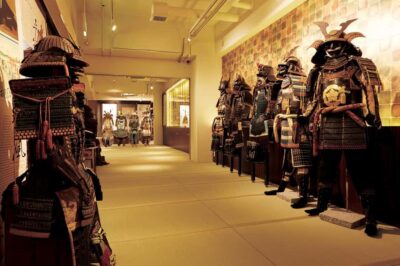 ★ 4.6Tokyo: Samurai Ninja Museum Guided tour and ExperienceFrom $27
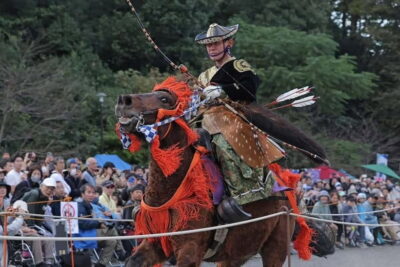 ★ 5.0Tokyo: Samurai Sword & Archery Class from Samurai DescendantFrom $1933 hours
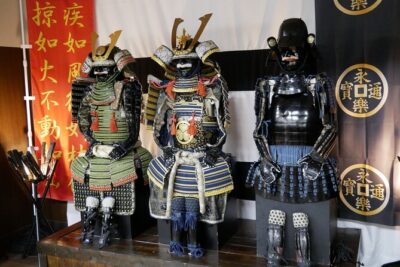 ★ 5.0Best Samurai Experience in TokyoFrom $65
 ★ 5.0Ninja Experience (Family Friendly) at Samurai Ninja Museum TOKYOFrom $47
 ★ 4.6Tokyo: Samurai Entertainment Night Show in Kanda ShrineFrom $412 - 3 hours